Forest Lake woman organizes Vietnam veterans program one last time before passing torch

posted in: Politics | 0

Veterans who served during the Vietnam era will be honored again this weekend in Forest Lake — thanks to Diane Finnemann.

This will be Finnemann’s last year organizing the Vietnam Veterans Day celebration after founding it 17 years ago. Finnemann, a resident of Forest Lake, started the celebration in 2007 and pushed for the Minnesota Legislature to pass a bill in 2008 declaring March 29 Vietnam Veterans Day in Minnesota. She also was a state volunteer for the Vietnam Veterans Memorial Fund, a nonprofit organization that oversaw the construction of the Vietnam Veterans Memorial in Washington, D.C.

Diane Finnemann in 2013 holding a photo of her brother Wallace ‘Skip’ Schmidt, a Vietnam War veteran who suffered from post traumatic stress disorder. (Jean Pieri / Pioneer Press)

“This all started when I saw an opportunity for our society to make up for the wrong that was done and show our respect and gratitude to our Vietnam veterans,” said Finnemann, whose brother Wallace “Skip” Schmidt died by suicide in 1972, four years after returning from Vietnam. “It still amazes me that with zero budget, we were able to pull together some very interesting and moving programs. We found out that people really do care.”

Hundreds of people have attended the celebration through the years, and Finnemann said the response from veterans “kept my passion alive.”

“I witnessed first-hand veterans letting their guard down and opening up about their service,” she said. “They went from not talking at all to being proud of their service.”

One year, a Vietnam veteran from southern Minnesota approached Finnemann to tell her that hearing Schmidt’s story had affected him so deeply “that he finally went for help for his own PTSD,” she said. “He told me that he believed Skip’s story saved his life.”

Shannon Monahan, Finnemann’s and Schmidt’s youngest sister, will be taking over the organizing of the event, she said.

This year’s celebration will be at 2 p.m. Sunday at American Legion Post No. 225.

Retired Col. Wilbur Joseph Latham Jr., recipient of the Distinguished Flying Cross and Silver Star medals, will be the featured speaker. Latham, of Marshalltown, Iowa, flew more than 100 missions over North Vietnam in 1966 as an Air Force fighter pilot.

The winner of a $500 scholarship also will be announced on Sunday; the scholarship fund, sponsored by Minnesota Vietnam Veterans Charities, has given out $7,500 to graduating senior high school students since 2008.

This year’s scholarship will be given in memory of U.S. Army veteran David Guerrette, 76, of Hinckley, Minn., who died on Oct. 16, 2023. Guerrette was a longtime supporter of Vietnam Veterans Day and a member of the Forest Lake American Legion and Forest Lake VFW, where he actively participated in the Honor Guard and Color Guard, paying tribute to fallen comrades, Finnemann said.

The program is free and open to the public; doors will open at 1 p.m.

For more information, contact Finnemann at 651-464-4721 or dfinnemann@msn.com.

Suicide prevention information

If you need help: If you are in crisis, call 988 or text “Hello” to 741-741 for free, 24/7 support from the Crisis Text Line. Or, call the National Suicide Prevention Lifeline at 1-800-273-TALK (8255).
If you want to help: Five steps to help others as well as yourself at Take5tosavelives.org.
Please stay: Read survivor stories at Livethroughthis.org: “Our stories can save lives. You are not alone. Please stay.”
Local resources: More local resources at Suicide Awareness Voices of Education (SAVE) at Save.org.

Related Articles

Local News |


Scandia: Two children evaluated for possible minor injuries after school bus crash

Local News |


Smart thermostat alerts Lower St. Croix firefighter to his own house fire

Local News |


Afton gold medalist Jessie Diggins makes Nordic skiing history once again

Local News |


Scandia Heritage Alliance survey open until March 24

Local News |


Stillwater: ‘House of Broken Angels’ by Luis Alberto Urrea is this year’s ‘Valley Reads’ pick
Knees stiff with arthritis? This company is studying whether fat injections can improve motion

posted in: News | 0

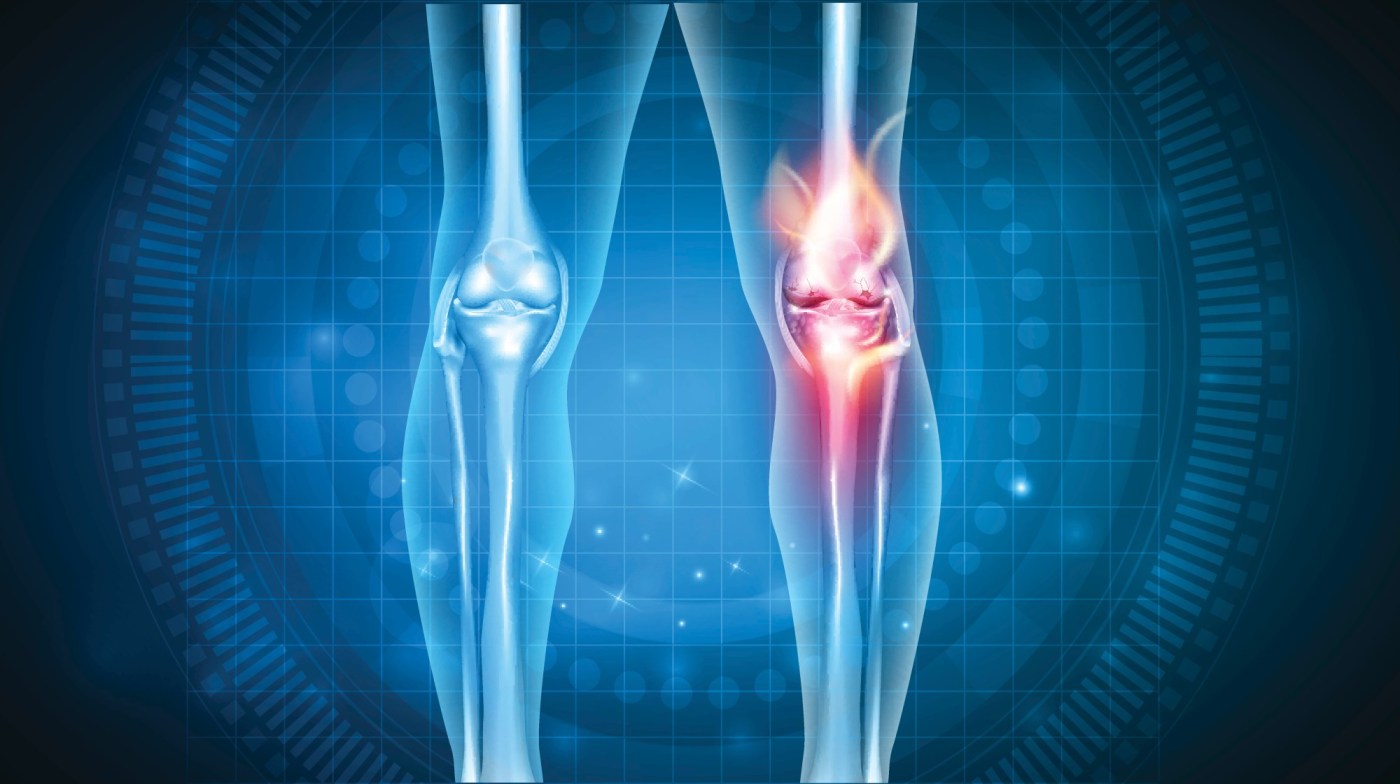
A Louisville company is studying whether cells taken from patients’ fat could reduce knee pain and improve motion in people with arthritis.

GID BIO is conducting a phase 3 trial of a process that extracts fat from the patient, uses a chemical reaction to isolate cells believed to have regenerative properties and injects them into the patient’s knee.

Related Articles

Health |


Following measles outbreaks, scientists grow wary of renewed threat

Health |


A new $16,000 postpartum depression drug is here. How will insurers handle it?

Health |


Intermittent fasting linked to heart risks in research surprise

Health |


Operating in the red: Half of rural hospitals lose money, as many cut services

Health |


How the anti-vaccine movement pits parental rights against public health

Phase 3 trials typically follow hundreds or thousands of volunteers over at least one year to determine whether a treatment is effective and clarify what side effects it can cause, according to the U.S. Food and Drug Administration.

The trial isn’t enrolling patients in Colorado, but if the therapy gets FDA approval, doctors offices could easily adopt it here and around the country, said William Cimino, CEO of GID BIO.

While fat tissue may not appear interesting at first sight, it includes several types of cells, including ones that help rebuild connective tissue and blood vessels, Cimino said. Those same cell types are available elsewhere in the body, but they are highly concentrated in fat, and most people don’t mind giving up a bit of that particular tissue, he said.

Studying cell-based therapies in arthritis is difficult because people tend to report significant relief from placebos, creating a challenge in sorting out whether they experienced relief from the treatment because they thought they would, said Dr. Cato Laurencin, CEO of the Cato T. Laurencin Institute at the University of Connecticut, who studies fat-derived therapies but isn’t affiliated with the GID BIO trial.

That said, studies taking different approaches have shown indications that some of the chemicals produced in fat can help with tissue regeneration, he said.

“There is absolutely tremendous potential,” he said.

People think of the breakdown of cartilage — the cushion between bones — as what’s causing their arthritis, but often that’s not the most important factor, since bone and connective tissue also break down, Cimino said. Cartilage can’t regenerate, but the bones themselves and the tendons holding them together can, he said.

Patients wouldn’t see any difference in images of their knees after the injections, but have reported reduced pain and better functioning in the smaller studies before the current trial, Cimino said.

“This is unquestionably a cellular-level repair,” he said.

Lottery jackpot approaches $1 billion

posted in: News | 0

By Taryn Phaneuf | NerdWallet

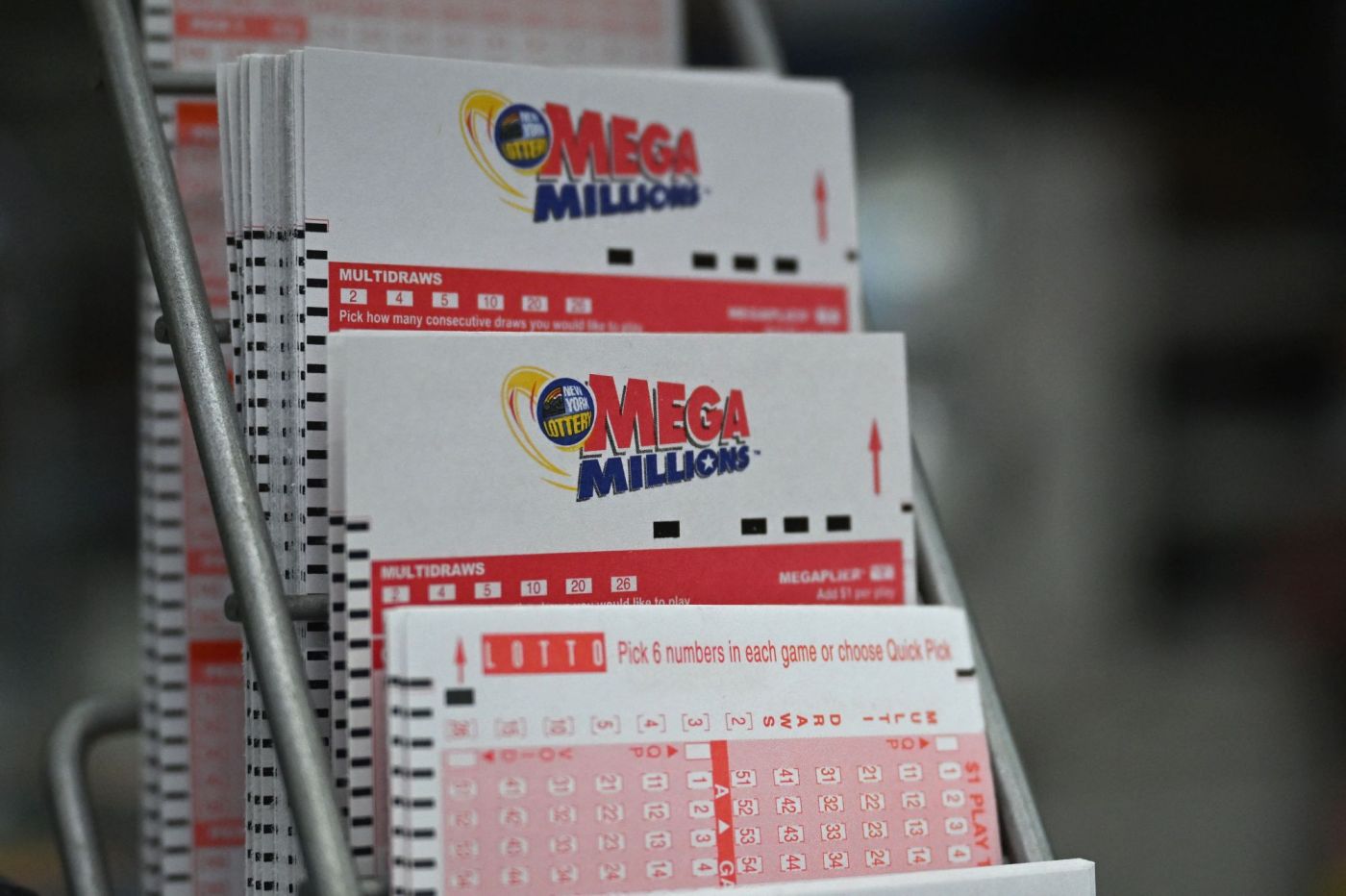
Both major national lottery jackpots continued their march upward after drawings Monday and Tuesday, with Mega Millions inching tantalizingly close to an estimated $1 billion top prize. Only five previous Mega Millions jackpots have hit that mark.

The Powerball jackpot rolled over again on Monday night and now stands at an estimated $687 million, with its next drawing tonight (Wednesday, March 20).

Mega Millions: $977 million estimated jackpot, next drawing Friday, March 22.
Powerball: $687 million estimated jackpot, next drawing Wednesday, March 20.

If either or both continue to elude a winner in upcoming draws, 2024 could see its first billion-dollar-plus jackpot, a mark that has become more common in recent years. Powerball had a $1.765 billion jackpot (won by a single ticket) as recently as October 2023.

Powerball and Mega Millions tickets are sold for $2 apiece in 45 U.S. states, as well as Washington, D.C., and the U.S. Virgin Islands.

To play Mega Millions, pick five numbers between 1 and 70, and a sixth number between 1 and 25. If you don’t want to pick the numbers yourself, you can get a set of numbers generated for you.
To play Powerball, pick five numbers between 1 and 69 and a Powerball number from 1 to 26 (or have them randomly generated).

How much is the Mega Millions jackpot?

The current jackpot is estimated at $977 million.

Winners can opt to take their winnings in the form of an annuity or as a single lump sum, known as the cash option. The cash option for the current jackpot is estimated at $461 million.

By taking the annuity option, the winner would get the full jackpot advertised by Mega Millions, but it would be spread out in payments over 30 years.

No matter how lucky you are, you won’t get around paying taxes on a lottery jackpot. After mandatory federal income tax withholding, you’d get roughly $350 million, if you took the cash option. How much more you’d pay come tax time depends on whether you take where you bought the ticket — and where you live. To prepare, make sure you know the ins and outs of how the lottery works.

When is the next Mega Millions drawing?

The winning numbers will be drawn Friday, March 22 at 11 p.m. Eastern Time.
If there’s still no jackpot winner, the grand prize will continue to grow.
The odds of winning the jackpot are roughly 1 in 303 million.

How much is the next Powerball jackpot?

The current jackpot is estimated at $687 million.

Like Mega Millions, winners of Powerball can choose between an annuity that pays out over 30 years or a single lump sum. The cash option for the current jackpot is $327.3 million. After mandatory federal taxes, the holder of a single winning ticket would keep about $248.7 million, minus any state taxes.

When is the next Powerball drawing?

The winning numbers will be drawn Wednesday, March 20 at 11 p.m. Eastern Time.
If there’s still no jackpot winner, the grand prize will continue to grow.
The odds of winning the jackpot are roughly 1 in 292 million.

The jackpot isn’t the only way to win. Both games have prizes for ticket holders whose chosen numbers match the drawing in a variety of combinations.

10 largest lottery jackpots

$2.04 billion (Powerball, Nov. 8, 2022 — one winning ticket).
$1.765 billion (Powerball, Oct. 11, 2023 — one winning ticket).
$1.586 billion (Powerball, Jan. 13, 2016 — three winning tickets).
$1.58 billion (Mega Millions, Aug. 8, 2023 — one winning ticket).
$1.537 billion (Mega Millions, Oct. 23, 2018 — one winning ticket).
$1.348 billion (Mega Millions, Jan. 13, 2023 — one winning ticket).
$1.337 billion (Mega Millions, July 29, 2022 — one winning ticket).
$1.08 billion (Powerball, July 19, 2023 — one winning ticket).
$1.05 billion (Mega Millions, Jan. 22, 2021 — one winning ticket).
$977 million (Mega Millions, pending).


Taryn Phaneuf writes for NerdWallet. Email: tphaneuf@nerdwallet.com.

As car incentives return, here’s how to find them and save money

posted in: News | 0

By Shannon Bradley | NerdWallet

Car incentives nearly vanished during the past several years, thanks to pandemic-driven supply chain issues for auto manufacturers. As vehicle inventories dwindled and consumer demand outweighed supply, automakers had no reason to offer incentives like rebates or low-rate financing. The good news is that auto incentives, while still below prepandemic levels, are starting to return.

According to Kelley Blue Book, a Cox Automotive company, auto incentives — as a percentage of the average new-vehicle price buyers paid — reached 5.9% in February 2024. That’s compared with a general range of 10% to 11% before COVID-19 hit and 2% in fall 2022. In February, auto manufacturers spent an average of $2,808 per vehicle in incentives, up 88% from a year ago.

With inventories returning to normal and some auto manufacturers again sweetening deals to move vehicles, here’s how you can find and possibly save with car incentives.

Tips for saving with auto incentives

Although new car prices have declined since peaking in late 2022, the average price a buyer pays remains around $47,000. Incentives are one way to whittle down that price tag, and certain strategies can help maximize savings.

Be flexible about the vehicle you buy

Traditionally, auto dealers strive to have 60 selling days’ worth of cars in stock. As auto production has returned, some manufacturers — like Toyota — remain well below the 60-day mark, while others — including Ford, Nissan and Buick — are overstocked and more likely to offer incentives and discounts to move cars.

“The key right now is to be flexible about which vehicle you consider,” says Sean Tucker, senior editor for data company Cox Automotive. “If you had your heart set on something from Toyota, you’re probably not going to find a great deal. They just don’t have trouble selling cars right now.”

Auto manufacturer websites are a good place to research auto deals and incentives — including cash rebates, low-rate financing and lease deals — that are available for various makes and models. Such incentives often vary regionally, so you can usually narrow a search by ZIP code. Also, auto research companies like Edmunds maintain webpages with current car deals and incentives by carmaker.

Tucker suggests that incentives for leasing and electric vehicles are both good sources for saving in the current market. Auto dealerships are trying to restore the leasing cycle that feeds the used car market, so many dealerships are offering lease deals.

“It’s actually relatively easy right now to get a good lease on an EV,” Tucker says. “And that might even be a good idea just from a technology standpoint, because three years from now, when your lease is likely coming up, there may be far better EVs on the market.”

Know what incentives you qualify for

To ensure you receive every incentive available to you, know exactly which incentives you qualify for before engaging with a car dealer. Joseph Yoon, consumer insights analyst at Edmunds, recommends telling the dealer upfront what you expect in the way of incentives.

“The dealer is not going to offer it to you unless they’re deeply desperate to get the deal done,” Yoon says.

As part of your research, be aware of the different types of incentives available, because in some cases they can be combined.

Auto rebates provide a certain dollar amount to reduce your overall cost of buying, financing or leasing a vehicle. The rebate reduction should be on top of any other discount you’ve negotiated.
Low-rate financing is an incentive offered by automaker captive lenders — although you’ll need to have good or excellent credit to qualify and may be limited on loan length. As of March 5, 2024, Cox Automotive reported that 14.2% of new vehicle financing transactions had an APR of 3% or less. Only 3.2% of transactions had a 0% APR. While low-rate offers are available, they aren’t plentiful.
Loyalty incentives may be available if you have a certain car brand and want to buy or lease another one from the same manufacturer.
Demographic-focused incentives — for example, if you’re a recent college graduate, military member or educator — are also offered by some auto manufacturers and dealers.

Related Articles

Business |


The evolution of retirement — and what it might mean for you

Business |


What the big realtors settlement means for home buyers and sellers

Business |


American debt stings like never before in new era for households

Business |


Wendy’s isn’t the first: Dynamic pricing is everywhere

Business |


Airfares have dropped. Here’s why they could go even lower in 2024

Stacking more than one incentive, when possible, can help you take advantage of every dollar available to you. If you have to choose between multiple incentives, for example, either a rebate or low rate from the same manufacturer, use an auto loan calculator to run each scenario and see which will save you the most money in the long run. Also, consider whether taking a cash rebate at the dealer and financing elsewhere could save you even more.

When you buy or lease an EV, stacking manufacturer and other incentives can result in major savings. If you and the vehicle qualify, you can claim the federal EV tax credit of up to $7,500. On top of that, you may find EV incentives from your electric company or state and local governments. The Energy Department’s Alternative Fuels Data Center enables users to search and filter by state and utility/private incentives.

About EVs, Yoon says auto manufacturers and dealers are motivated right now to offer savings on top of the federal incentive, because “there’s still a little bit of inventory left from 2023 that they really, really, really want to get rid of as the 2024 models [are starting to] hit.”

Plan to negotiate and comparison shop

If you know you qualify for a $1,500 car rebate, don’t assume that’s the best you can do — even if the dealer tells you it is. The ability to negotiate car prices for some models has also reappeared, and incentives should be in addition to any amount you negotiate off the manufacturer’s suggested retail price. You can use valuation tools on car-buying sites to see what people are paying for the car you want and whether negotiating a lower price is realistic.

Finally, if you can find more than one dealership with the vehicle you want, present the deal you expect to each and let them compete for your business. Dealers receive factory-to-dealer discounts to help move certain vehicles, usually slower-selling ones. They can choose whether to pass these savings on to you and may be more motivated to do so if they know you’re shopping for the same car elsewhere.

Yoon says if a dealership isn’t willing to “play ball,” you shouldn’t hesitate to walk away. “Cars cost literally more than they have ever cost the consumer, and so you should, rightfully so, fight for every dollar that you can save.”


Shannon Bradley writes for NerdWallet. Email: sbradley@nerdwallet.com.