Nearly 8 in 10 AAPI adults in the US think abortion should be legal, an AP-NORC poll finds

posted in: News | 0

By GRAHAM LEE BREWER and AMELIA THOMSON-DEVEAUX (Associated Press)

WASHINGTON (AP) — With abortion rights poised to be one of the major issues in the 2024 election, a new poll shows that Asian Americans, Native Hawaiians and Pacific Islanders in the United States are highly supportive of legal abortion, even in situations where the pregnant person wants an abortion for any reason.

The poll from AAPI Data and The Associated Press-NORC Center for Public Affairs Research finds that nearly 8 in 10 Asian Americans, Native Hawaiians and Pacific Islanders think abortion should be legal in all or most cases. They’re also supportive of federal government action to preserve abortion rights: Three-quarters of AAPI adults say Congress should pass a law guaranteeing access to legal abortions nationwide.

By comparison, an AP-NORC poll conducted last June found that 64% of U.S. adults think abortion should be legal in all or most cases, and 6 in 10 U.S. adults overall say Congress should pass a law guaranteeing access.

AAPI adults are more likely than Americans overall to identify as Democrats, which may partially explain why their levels of support for legal abortion are higher than among the general population. But even among Democrats, AAPI adults are more supportive of legal abortion later in pregnancy. AAPI Democrats are especially likely to support legal abortion without any limits — more than half of this group say abortion should be legal in all cases, compared to 40% of Democrats overall.

AAPI Republicans are also more likely than Republicans overall to support a law guaranteeing access to legal abortion nationwide. More than half (57%) of AAPI Republicans think abortion should be legal in at least some cases, compared to 38% of Republicans in general. About half (51%) of AAPI Republicans also think Congress should pass a law guaranteeing access to legal abortion nationwide, while only 32% of Republicans overall want this to happen.

Although AAPI voters are a fast-growing demographic with a particularly large presence in states like California, Texas and New York, their attitudes can often not be analyzed in other surveys because of small sample sizes, among other issues. This survey is part of an ongoing project focusing on AAPI Americans’ views.

High turnout in areas with large AAPI communities could help Democrats in competitive House districts, and a broader conversation about whether nonwhite voters are shifting to the right may lead to more courting of AAPI voters. The survey’s findings suggest that abortion could be a strong issue for Democratic candidates who are looking to reach AAPI communities, and a challenge for Republicans.

“It saddens me how politics got involved in this, and they really shouldn’t have,” said Debra Nanez, a 72-year-old retired nurse in Tucson, Arizona, and an Independent voter. Nanez identifies as Asian, Native American and Hispanic. “It’s a woman’s body. How can you tell us what we can do with our bodies, what we can keep and what we cannot keep? It’s ridiculous.”

While an AP-NORC poll conducted in October 2022 found that more than 4 in 10 Americans overall trust Democrats to do a better job of handling the issue of abortion, while only 2 in 10 have more trust in Republicans, the poll released Thursday shows that the trust gap between the parties is wider for AAPI adults. Fifty-five percent of AAPI adults trust Democrats on abortion policy, while only 12% trust Republicans.

Related Articles

National Politics |


No Labels struggles to recruit US presidential nominee

National Politics |


Election misinformation is a problem in any language. But some gets more attention than others

National Politics |


Biden tells Latino voters they’re the reason he defeated Trump in 2020 and says, ‘I need you back’

National Politics |


Judge clears way for Trump to appeal ruling keeping Fani Willis on Georgia 2020 election case

National Politics |


How Texas’ plans to arrest migrants for illegal entry will work

More than half of AAPI adults were born outside the U.S., according to the survey. For many of those immigrants and their first-generation American children, abortion isn’t just viewed as health care — it can also be seen as a right that was not afforded to them in their countries of origin, said Varun Nikore, executive director of AAPI Victory Alliance, a progressive political advocacy organization.

“I think it has to do with some sort of home country attitudes that are sort of pervasive, but also the strong feeling we’ve had rights and we’ve had access to health care, and now we don’t want to lose something that we had. And it could be that we also came to this country to have better access to health care than we did before,” Nikore said.

Nearly 6 in 10 AAPI adults don’t want Congress to pass a law preserving states’ ability to set their own laws allowing or restricting abortion, and only 14% support the passage of a law banning access to abortions nationwide.

Joie Meyer, 24, is a health care consultant in Florida, where abortions are prohibited after 15 weeks of pregnancy. She said that given that other nearby states like Alabama and Georgia have even more restrictive abortion laws, she would have to travel far to receive the procedure.

“I’m 24 and maybe some people my age are having children, but if I were to get in that position to be pregnant, I don’t think I would feel ready,” she said. “So, that would be something that I would have to think about.”

Meyer, who was born in China but has lived in the U.S. since an infant, has made plans with a friend in California in case she does need an abortion. Flying across the country might be more time-consuming than driving to the nearest state that provides abortion, but she said she wants to know that she’ll be with someone who can take care of her during the recovery.

“Even if there’s a closer state, would I want to do that alone and have to really navigate that physical and emotional pain alone? Not really,” Meyer said.

The poll of 1,172 U.S. adults who are Asian American, Native Hawaiian and Pacific Islanders was conducted from Feb. 5-14, 2024, using a sample drawn from NORC’s probability-based Amplify AAPI Panel, designed to be representative of the Asian American, Native Hawaiian and Pacific Islander population. The margin of sampling error for all respondents is plus or minus 3.9 percentage points.

Graham Lee Brewer is an Oklahoma City-based member of AP’s Race & Ethnicity team. Amelia Thomson-DeVeaux is AP’s polling editor.

Apple has kept an illegal monopoly over smartphones in US, Justice Department says in antitrust suit

posted in: News | 0

By MICHAEL LIEDTKE, LINDSAY WHITEHURST and MIKE BALSAMO (Associated Press)

WASHINGTON (AP) — The Justice Department on Thursday announced a sweeping antitrust lawsuit against Apple, accusing the tech giant of engineering an illegal monopoly in smartphones that boxes out competitors and stifles innovation.

The lawsuit, filed in federal court in New Jersey, alleges that Apple has monopoly power in the smartphone market and uses its control over the iPhone to “engage in a broad, sustained, and illegal course of conduct.”

The lawsuit — which was also filed with 16 state attorneys general — is the latest example of the Justice Department’s approach to aggressive enforcement of federal antitrust law that officials say is aimed at ensuring a fair and competitive market, even as it has lost some significant anticompetition cases.

Apple called the lawsuit “wrong on the facts and the law” and said it “will vigorously defend against it.”

President Joe Biden has called for the Justice Department and the Federal Trade Commission to vigorously enforce antitrust statutes. The increased policing of corporate mergers and business deals has been met with resistance from some business leaders who have said the Democratic administration is overreaching, but it’s been lauded by others as long overdue.

The case is taking direct aim at the digital fortress that Apple Inc., based in Cupertino, California, has assiduously built around the iPhone and other popular products such as the iPad, Mac and Apple Watch to create what is often referred to as a “walled garden” so its meticulously designed hardware and software can seamlessly flourish together while requiring consumers to do little more than turn the devices on.

The strategy has helped make Apple the world’s most prosperous company, with annual revenue of nearly $400 billion and, until recently, a market value of more than $3 trillion. But Apple’s shares have fallen by 7% this year even as most of the stock market has climbed to new highs, resulting in long-time rival Microsoft — a target of a major Justice Department antitrust case a quarter-century ago — to seize the mantle as the world’s most valuable company.

Apple said the lawsuit, if successful, would “hinder our ability to create the kind of technology people expect from Apple — where hardware, software, and services intersect” and would “set a dangerous precedent, empowering government to take a heavy hand in designing people’s technology.”

“At Apple, we innovate every day to make technology people love — designing products that work seamlessly together, protect people’s privacy and security, and create a magical experience for our users,” the company said in a statement. “This lawsuit threatens who we are and the principles that set Apple products apart in fiercely competitive markets.

Apple has defended the walled garden as an indispensable feature prized by consumers who want the best protection available for their personal information. It has described the barrier as a way for the iPhone to distinguish itself from devices running on Google’s Android software, which isn’t as restrictive and is licensed to a wide range of manufacturers.

Fears about an antitrust crackdown on Apple’s business model have contributed to the drop in the company’s stock price, along with concerns that it is lagging Microsoft and Google in the push to develop products powered by artificial intelligence technology.

But antitrust regulators made it clear in their complaint that they see Apple’s walled garden most as a weapon to ward off competition, creating market conditions that enable it to charge higher prices that have propelled its lofty profit margins while stifling innovation.

“Consumers should not have to pay higher prices because companies violate the antitrust laws,” Attorney General Merrick Garland said in a statement. “We allege that Apple has maintained monopoly power in the smartphone market, not simply by staying ahead of the competition on the merits, but by violating federal antitrust law. If left unchallenged, Apple will only continue to strengthen its smartphone monopoly.”

With the attempt to rein in Apple’s dominance, the Biden administration is escalating an antitrust siege that has already triggered lawsuits against Google and Amazon accusing them in engaging in illegal tactics to thwart competition, as well as unsuccessful attempts to block acquisitions by Microsoft and Facebook parent Meta Platforms.

Apple’s business interests are also entangled in the Justice Department’s case against Google, which went to trial last fall and is headed toward final arguments scheduled to begin May 1 in Washington, D.C. In that case, regulators are alleging Google has stymied competition by paying for the rights for its already dominant online search engine to be the automatic place to handle queries on the iPhone and a variety of web browsers in an arrangement that generates an estimated $15 billion to $20 billion annually.

Now that the Justice Department is mounting a direct attack across its business, Apple stands to lose even more.

The Justice Department is following up an other recent attempts to force Apple to change the way it runs the iPhone and other parts of its business.

Epic Games, the maker of the popular Fortnite video game, filed an antitrust lawsuit against Apple in 2020 in an effort break down the barriers protecting the iPhone App Store and a lucrative payment system operating within it. Apple has long collected commissions ranging from 15% to 30% on digital transactions completed within apps, a setup that Epic alleged was enabled by an illegal monopoly that drives up prices for consumers.

After a monthlong trial in 2021, a federal judge ruled mostly in favor of Apple with the exception of deciding that links to competing payment options should be permitted inside of iPhone apps. Apple unsuccessfully resisted that portion of the ruling until the U.S. Supreme Court refused to hear an appeal in January, forcing the company to relent. But the concessions that Apple made to comply with the ruling are still facing a “bad faith” challenge from Epic, which is seeking an April 30 hearing to ask U.S. District Judge Yvonne Gonzalez Rogers to order more changes.

Apple also had to open up the iPhone to allow apps to be downloaded and installed from competing stores in Europe to comply with a new set of regulators called the Digital Markets Act, or DMA, earlier this month but its approach is being pilloried by critics as little more than an end-around the rules that will enable it to continue to muscle out real competition. European Union regulators already have vowed to crack down on Apple if it finds the company’s tactics continue to thwart true consumer choice.

All of this comes on top of a $2 billion (1.8 billion euro) fine that European regulators slapped on Apple earlier this month after concluding that the company had undermined competition in the music streaming through the iPhone, despite Spotify being the leader in that market.

___

Liedtke reported from San Francisco.

US Jews upset with Trump’s latest rhetoric say he doesn’t get to tell them how to be Jewish

posted in: Politics | 0

By PETER SMITH and TIFFANY STANLEY (Associated Press)

Since the start of his political career, Donald Trump has played on stereotypes about Jews and politics.

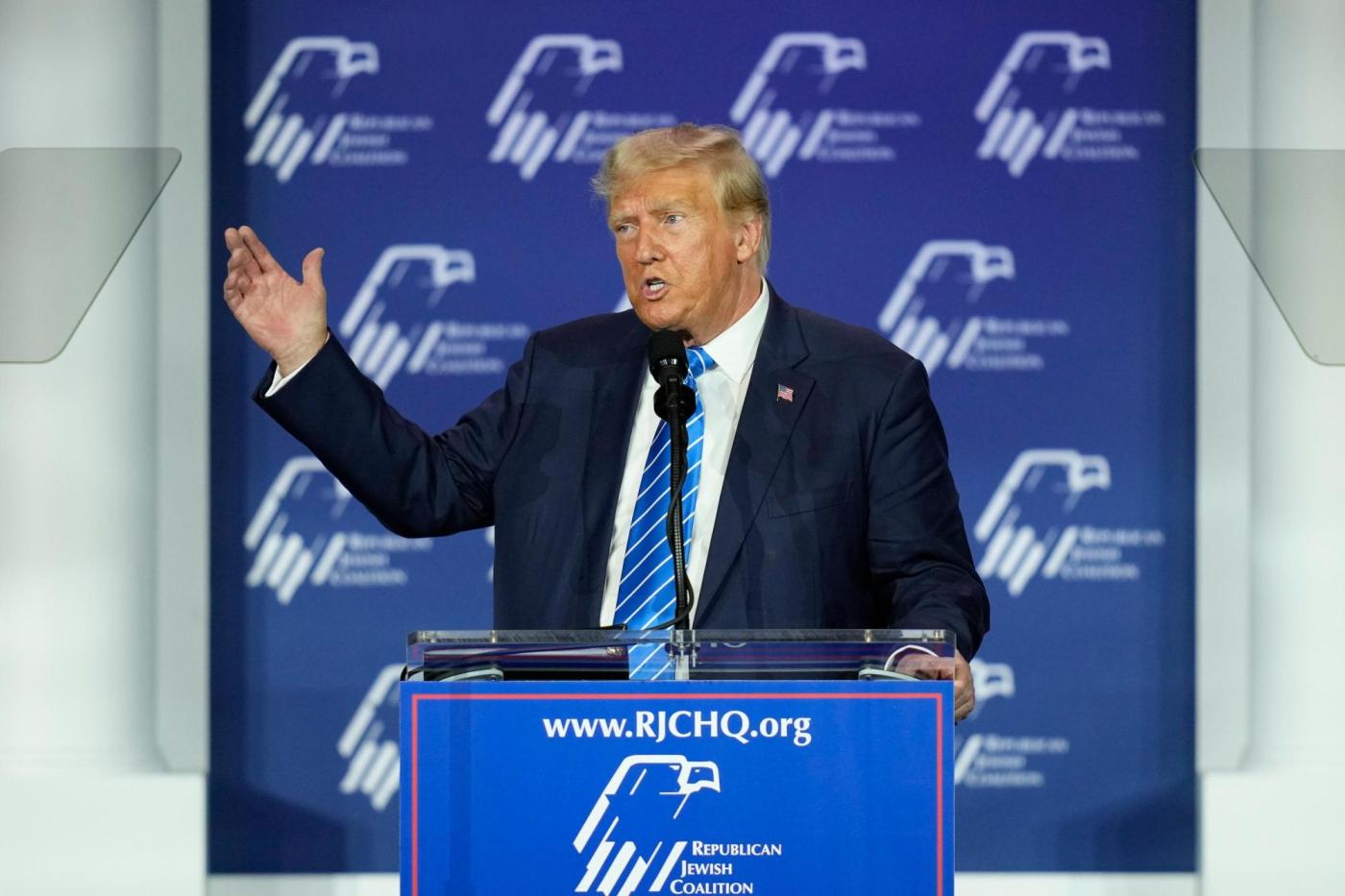
He told the Republican Jewish Coalition in 2015 that “you want to control your politicians” and suggested the audience used money to exert control. In the White House, he said Jews who vote for Democrats are “very disloyal to Israel.”

Two years ago, the former president hosted two outspoken antisemites for dinner at his Florida residence.

And this week, Trump charged that Jewish Democrats were being disloyal to their faith and to Israel. That had many American Jews taking up positions behind now-familiar political lines. Trump opponents accused him of promoting antisemitic tropes while his defenders suggested he was making a fair political point in his own way.

Jonathan Sarna, American Jewish history professor at Brandeis University, said Trump is capitalizing on tensions within the Jewish community.

“For people who hate Donald Trump in the Jewish community, certainly this statement will reinforce their sense that they don’t want to have anything to do with him,” he said. “For people who like Donald Trump in the Jewish community, they probably nod in agreement.”

To many Jewish leaders in a demographic that has overwhelmingly identified as Democratic and supported President Joe Biden in 2020, Trump’s latest comments promoted harmful antisemitic stereotypes, painting Jews as having divided loyalties and that there’s only one right way to be Jewish religiously.

“That escalation of rhetoric is so dangerous, so divisive and so wrong,” said Rabbi Rick Jacobs, president of the Union for Reform Judaism, the largest U.S. Jewish religious denomination. “This is a moment when Israel needs there to be more bipartisan support.”

But Matt Brooks, CEO of the Republican Jewish Coalition, said the president’s comments must be heard in context of the Israel-Gaza war and Democratic criticisms of the state of Israel.

“What the president was saying in his own unique style was giving voice to things I get asked about multiple times a day,” Brooks said. “How can Jews remain Democrats in light of what is going on?” He contended the Democratic Party is “no longer the pro-Israel bastion it used to be.”

More than 31,800 Palestinians have been killed in the Israeli offensive that followed Hamas’ Oct. 7 attack on southern Israel, in which militants killed some 1,200 people and took hostages. Much of northern Gaza has been leveled, and officials warned famine is imminent.

Trump’s comments followed a speech by Senate Majority Leader Chuck Schumer, the country’s highest-ranking Jewish official. Schumer, a Democrat, last week sharply criticized Prime Minister Benjamin Netanyahu ’s handling of the war in Gaza. Schumer called for new elections in Israel and warned the civilian toll was damaging Israel’s global standing.

“Any Jewish person that votes for Democrats hates their religion,” Trump retorted Monday on a talk show. “They hate everything about Israel.”

A cascade of Jewish voices, from Schumer to the Anti-Defamation League to religious leaders, denounced Trump’s statement.

In a statement to The Associated Press on Wednesday, the Trump campaign doubled down, criticizing Schumer, congressional Democrats’ support of Palestinians and the Biden administration’s policies on Iran and on aid to Gaza.

“President Trump is right,” said Karoline Leavitt, national press secretary for the Trump campaign.

Jeffrey Hert, an antisemitism expert at the University of Maryland, disagrees with Schumer’s call for a ceasefire in Gaza, but believes most Democrats support Israel — and he said a second Biden term would be better for it than a second Trump one.

“If (Trump) loses the 2024 election, his comments prepare the way for blaming the Jews for his defeat,” Herf said. “The clear result would be to fan the flames of antisemitism and assert that, yet again, the Jews are guilty.”

Sarna saw Trump as trying to appeal to politically conservative Jews, particularly the small but fast-growing Orthodox segment, who see Trump as a defender of Israel.

Also, about 10% of U.S. Jews are immigrants, according to a 2020 Pew Research Center report. Sarna said significant numbers are conservative.

At the same time, Democrats face the tension between their Jewish constituency, which is predominantly pro-Israel, and its progressive wing, which is more pro-Palestinian.

Sarna said that while it may seem odd to focus so much attention on subsections of a minority population, “elections in America are very close, and every vote counts.”

Conservative commentator Ben Shapiro said Tuesday on his podcast that Trump “was making a point that, frankly, I have made myself, which is that Jews who are voting Democrat do not understand the Democratic Party.” Shapiro, who practices Orthodox Judaism, contended the party “overlooks antisemitism” within its ranks.

Rabbi Jill Jacobs, the CEO of T’ruah, a rabbinic human rights organization, said Trump has no business dictating who’s a good Jew.

“By insinuating that good Jews will vote for the party that is best for Israel, Trump is evoking the age-old antisemitic trope of dual loyalty — an accusation that Jews are more loyal to their religion than to their country, and therefore can’t be trusted,” she said. “Historically, this accusation has fueled some of the worst antisemitic violence.”

In his own time in office, Trump’s policy “of supporting Prime Minister Netanyahu and the settler agenda only endangered Palestinians and Israelis and made peace more difficult to achieve,” Jacobs said.

Pittsburgh-based journalist Beth Kissileff — whose husband, a rabbi in the Conservative denomination of Judaism, in 2018 survived the nation’s deadliest antisemitic attack — said it was highly offensive for Trump to be a “self-appointed arbiter” of what it means to be Jewish.

“Chuck Schumer had every right to say what he said,” Kissileff added. “Just because we’re Jews, it doesn’t mean we agree with everything the (Israeli) government is doing. We have compassion for innocent Palestinian lives.”

Brooks, of the Republican Jewish Coalition, defended the former president against antisemitism charges, pointing to his presidential record as an example of proof.

Trump pursued policies that were popular among American Christian Zionists and Israeli religious-nationalists, including moving the U.S. embassy to Jerusalem and supporting Jewish settlements in occupied territories. His daughter Ivanka is a convert to Orthodox Judaism, and her husband and their children are Jewish. The couple worked as high-profile surrogates to the Jewish community during Trump’s administration.

Trump’s core supporters include white evangelicals, many of whom believe the modern state of Israel fulfills biblical prophecy. Prominent evangelicals who support Zionism have also been criticized for inflammatory statements about Jewish people.

Sixty-nine percent of Jewish voters in 2020 supported Biden, while 30% supported Trump, according to AP VoteCast, a survey of the electorate conducted in partnership with NORC at the University of Chicago. That made Jewish voters one of the religious groups where support for Biden was strongest. Also, 73% of Jewish voters in 2020 said that Trump was too tolerant of extremist groups.

Rabbi Bradley Shavit Artson said Trump’s comments are “in a complex middle zone” — not explicitly antisemitic, but reliant on such tropes.

American Jews base their votes on a complex mix of issues and values, “among them inclusion, diversity, climate change, civil rights,” said Artson, a leader within Conservative Judaism. “While they love Israel diversely, many of us also care about the wellbeing and self-determination of Palestinians.”

___

Associated Press reporters Mariam Fam and Amelia Thomson DeVeaux contributed to this report.

Related Articles

National News |


Judge clears way for Trump to appeal ruling keeping Fani Willis on Georgia 2020 election case

National News |


Jay Ambrose: The test Biden can’t pass

National News |


Thomas Friedman: What Schumer and Biden got right about Netanyahu

National News |


Trump suggests he’d support a national ban on abortions around 15 weeks of pregnancy

National News |


Trump asks Supreme Court to dismiss case charging him with plotting to overturn 2020 election

Congress unveils $1.2 trillion plan to avert federal shutdown and bring budget fight to a close

posted in: Politics | 0

By KEVIN FREKING (Associated Press)

WASHINGTON (AP) — Lawmakers introduced a $1.2 trillion spending package Thursday that sets the stage for avoiding a partial government shutdown for several key federal agencies this weekend and allows Congress, nearly six months into the budget year, to complete its work in funding the government through September.

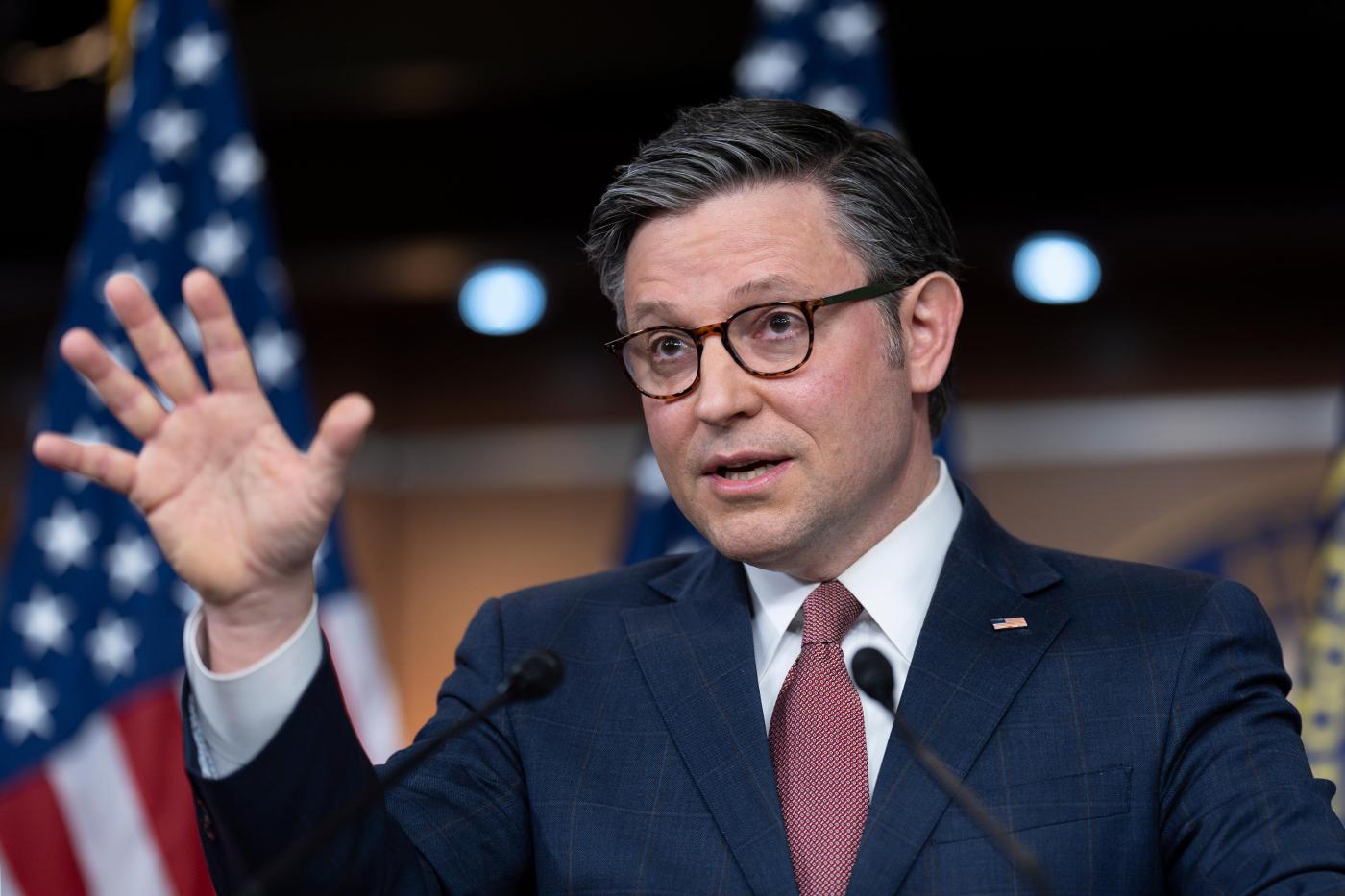
Democrats were largely able to swat back hundreds of policy mandates and some of the steeper budget cuts that House Republicans were seeking to impose on nondefense programs, though House Speaker Mike Johnson, R-La., highlighted some policy wins, including a nearly 24% increase in detention beds for migrants awaiting their immigration proceedings or removal from the country.

This year’s spending bills were divided into two packages. The first one cleared Congress two weeks ago, just hours before a shutdown deadline for the agencies funded through the bills.

Now Congress is focused on the second, larger package, which includes about $886 billion for the Defense Department, about a 3% increase from last year’s levels. The 1,012-page bill also funds the departments of Homeland Security, Health and Human Services, Labor, and others.

Nondefense spending will be relatively flat compared with the prior year, though some, such as the Environmental Protection Agency, are taking a hit, and many agencies will not see their budgets keep up with inflation.

When combining the two packages, discretionary spending for the budget year will come to about $1.66 trillion. That does not include programs such as Social Security and Medicare, and financing the country’s rising debt.

The House is expected to take the measure up first, on Friday. Then it would move to the Senate where senators would have to agree on taking it up expeditiously to avoid a partial shutdown. Usually, such agreements include votes on proposed amendments to the bill.

Johnson promoted the bill as a serious commitment to strengthening national defense by moving the Pentagon toward a focus on its core mission while expanding support for those serving in the military. The bill provides for a 5.2% pay increase for service members.

One of the changes Johnson cited for Republicans was prohibiting funding through March 2025 for the U.N. Relief and Works Agency, which is the main supplier of food, water and shelter to civilians in Gaza.

Republicans are insisting on cutting off funding to the agency after Israel alleged that a dozen employees of the agency were involved in the attack that Hamas conducted in Israel on Oct. 7.

But the prohibition does concern some lawmakers because many relief agencies say there is no way to replace its ability to deliver the humanitarian assistance that the United States and others are trying to send to Gaza, where one-quarter of the 2.3 million residents are starving.

Democrats also emphasized that humanitarian assistance will increase overall, though.

Sen. Patty Murray, the chair of the Senate Appropriations Committee, also highlighted a $1 billion increase for Head Start programs and new child care centers for military families. And Democrats played up a $120 million increase in funding for cancer research and a $100 million increase for Alzheimer’s research.

“We defeated outlandish cuts that would have been a gut punch for American families and our economy,” said Murray, D-Wash.

She also said Democrats successfully fought off scores of policy measures, known as riders, that House Republicans were seeking to add.

“From Day 1 of this process, I said there would be no extreme, far-right riders to restrict women’s reproductive freedoms — and there aren’t, she said.

Among the few policy provisions that House Republicans did secure was a requirement that only allows for the American flag and “other official flags” to fly over U.S. diplomatic facilities. Under the Biden administration, U.S. embassies have been invited to fly the pride flag or light up with rainbow colors in support of the LGBTQ community.

There is also a provision that prevents the Consumer Product Safety Commission from banning gas stoves. But the White House has said President Joe Biden would not support a ban, and the commission, an independent agency, says no such ban was in the works.

The spending in the bill largely tracks with an agreement that former Speaker Kevin McCarthy worked out with the White House in May 2023, which restricted spending for two years and suspended the debt ceiling into January 2025 so the federal government could continue paying its bills.

McCarthy, R-Calif., was ousted from the speaker’s role a few months after securing the debt ceiling deal. Eight Republicans ended up joining with Democrats in removing McCarthy as speaker. And some of those unhappy with that debt ceiling deal also expressed misgivings about the latest package.

“I hope there will be some modest wins. Unfortunately, I don’t expect that we will get much in the way of significant policy wins based on past history and based on our unwillingness to do use any kind of leverage to force policy wins, meaning a willingness to walk away and say no,” said Rep. Bob Good, R-Va.

Work on the spending bills has been more bipartisan in the Senate. Murray issued a joint statement after the bill’s release with Sen. Susan Collins, R-Maine, praising the package of bills and urging colleagues to vote for it.

“There is zero need for a shutdown or chaos — and members of Congress should waste no time in passing these six bills, which will greatly benefit every state in America and reflect important priorities of many Senators,” Murray and Collins said.

Johnson said that after the spending package passes, the House would next turn its attention to a bill that focuses on aiding Ukraine and Israel, though lawmakers are scheduled to be away from Washington for the next two weeks. The Senate has already approved a $95.3 billion aid package for Ukraine, Israel and Taiwan, but Johnson has declined to bring that up for a vote.