Opinion: Mayor’s Budget Dance Leaves Nonprofits–and New Yorkers–in the Lurch     

posted in: News | 0

“Too many nonprofits are waiting on money owed by the same city that tells nonprofits to prepare to do more with less, again and again.”

John McCarten/NYC Council Media Unit

A budget-related rally last year.

CityViews are readers’ opinions, not those of City Limits. Add your voice today!

If you’re only reading headlines and press releases from the Mayor’s Office, you might feel relieved that the city’s budget challenges have been overcome. Maybe you’ve also read that the Independent Budget Office, the Mayor’s Office of Management and Budget, and City Council have all projected a surplus in the fiscal year 2024 budget rather than a deficit. And in January, you may remember Mayor Eric Adams talked about restorations and canceling cuts that had been scheduled for April.

That all sounds good—but unfortunately it’s not the whole story. Instead of feeling relief, nonprofits across the sector are deeply anxious on behalf of their staff and the people they serve —hundreds of thousands of New Yorkers who engage with city-funded programs. The recent 3 percent cost of living adjustment (COLA) announced for human services workers is a great start and win, but our work is not over.

As a city councilmember and as Nonprofit New York’s vice president of policy, we constantly hear from our constituents about the precarious position they are in due to the Adams Administration’s budget dance. These nonprofits range from preschool and afterschool providers, to organizations that operate food pantries or older adult centers; from nonprofits that care for our parks to those creating opportunities in the arts. They are all struggling in this environment.

A remarkable lack of transparency around the numbers and rationales for cuts means these organizations cannot plan. This has real consequences on the people they serve. Our communities have faced unnecessary, severe service disruptions when the city asks organizations to develop and implement plans with unacceptably limited information.

To make matters worse, many of these nonprofits are still waiting for long-overdue payments from the city, compounding the financial distress that threatens their missions. For those that can, they take out loans to make payroll and rent. Those that can’t brace for operation pauses and prepare painful remarks about not being able to make payroll within weeks. Too many nonprofits are waiting on money owed by the same city that tells nonprofits to prepare to do more with less, again and again.

We have been disappointed to see how messaging from the Adams administration glosses over deep and harmful cuts made in November and January to nonprofit services, which have not been restored. Even worse, at the City Council’s budget hearing on March 4, the administration again suggested further cuts may be coming.

Here’s what we know so far: in September, Mayor Adams announced the city budget would be cut by 15 percent across the board, and the nonprofit sector anxiously waited for information about what this would mean for current and future contracts. In November and January, the city released budget documents that provided some more information, but little clarity or certainty.

The November documents included immediate programmatic cuts to services that are important to huge swaths of New Yorkers. These include: language access and legal services ($600K); environmental protection ($4M); Department of Education after school community programs ($10M); library services ($23.6M); cultural development and cultural institutions ($8.6M); as well as the popular participatory budget program, racial equity initiatives, and civic engagement efforts ($643K total), among other services.

The November release also included a significant cut to the Department of Youth and Community Development, which funds programs that families rely on for youth services, educational enrichment, and more. The organizations that run these programs include many culturally specific, BIPOC-led organizations. The $4 million cut for this year was followed by news of an additional cut of $32.5 million for the next fiscal year.

In January, the city’s budget documents included more devastating news. Three major parks programs were cut by $10.9 million in fiscal year 2025; arts and cultural institutions were hit again, with a cut of $11.6 million. The Department of Probation’s Impact program was eliminated, and older adult centers were cut by $18.8 million.

Those numbers seem at odds with the administration’s messaging. During the January budget address and the State of the City, Mayor Adams made it a point to acknowledge the importance of the nonprofit sector. He recognized the critical work nonprofits do to make New York City all that it is. These words are welcomed, and we are very encouraged human services workers will finally receive a COLA, but nonprofits and New Yorkers need this recognition to be backed up with action.

New York City’s nonprofits need the restoration of the November and January budget cuts. We need meaningful, substantive partnership with the administration and city agencies that rely on nonprofits to provide critical services, and increased transparency in the budgeting process. We need structural changes that finally fix the pattern of years-long contract delays, not just temporarily clearing a backlog.

The city relies on nonprofits to provide essential services, care for our communities, and make us a cultural capital. Nonprofits, and the New Yorkers they represent, should be able to rely on the city.

Councilmember Shekar Krishnan represents the 25th District in Queens. Chai Jindasurat-Yasui is the vice president of policy at Nonprofit New York.

Column: Think small when packing your self-care products

posted in: News | 0

Myscha Theriault | Tribune News Service (TNS)

Raise your hand if you love dealing with liquids and carry-on bag restrictions when flying. Your hand didn’t go up? You’re not alone. Two-plus decades of juggling various bottle shapes and airline-dependent luggage rules have taken their toll on many of us. I don’t know a single traveler who isn’t completely over it.

Factor in product availability and lost itinerary time searching for replacements, and packing becomes even more of a logistical puzzle. As someone who carries most of my life on the road for long stretches of time using only a personal item and a carry-on bag, I’ve devised a few tricks over the years which have served me well. Following are my top tips to save space so you can pack more of what you want.

Repurpose contact lens containers to save space when it comes to dental floss. (Myscha Theriault/TNS)

Alternatives

When perfecting your personal care packing, keep all your options on the travel table. Product formula, tools, application method and storage containers are all fair game. Everyone has at least one frustration that arises every trip. For my husband and me, it’s shaving cream. I don’t mind using soap. He does. Airline compliant cans cost the same as large ones for his preferred brand, and their size is still significant. He’s tried the solid bar and brush approach to shaving and isn’t a fan. Recently, I pitched him on unpressurized shave gel. Ladies and gentlemen, we have a winner! It gives him the experience he wants and decants easily into alternative storage.

I’ve had additional wins with both nail and dental care. For starters, the new glass files on the market have one side that serves the same function as a four-way buffer. Not only does this reduce my kit by one item, but it saves cash as well. Miniature buffers are priced at a premium compared with large ones, and they need frequent replacing. A second search found nail clippers half the size of my old set. Minimizing my nail brush took a bit more effort. The smallest ones I’ve found on the market still have curved handles which make packing other grooming items problematic. My solution? Sawing the entire handle off a toothbrush and using a lighter to burn off the rough bits. This one tiny tool lets me deal with both nails and laundry stains.

A full spool of dental floss fits easily into the circumference of a contact lens container cover. (Myscha Theriault/TNS)

A shortened toothbrush for dental use is too much wrist strain for me, but I have had a rather exciting breakthrough on dental floss. Miniature boxes still waste a degree of space, and require restocking more often than I’d like. To address this, I remove the floss spool from the inside of a regular container and the metal cutting tool from the top. Using two round covers from an extra contact lens container, I cut corresponding slots on each cover for the floss to come through and press the cutter onto the outside edge of one cover. Placing the spool inside and securing both covers together with electrical tape produces a usable solution a fraction of the original size.

Decanting

Further downsizing can be achieved by rethinking your product receptacles. Traditional travel bottles have their place but can be too large for the amount of liquid you need. With creative decanting, you can bring more of what you want in the brands you prefer. For those with special hair and skin concerns, this is a game changer.

Cosmetics containers designed for industry use are available in a range of sizes far smaller than the airline limit, and they don’t need to be purchased a thousand at a time. Multipacks in manageable amounts are readily available online. These spray, pump and roller bottles provide compact, usable storage without the need to spend more per ounce just to get packaging that will fit in your liquids bag. Clear lip gloss squeeze tubes allow for precise application of product, plus a view of how quickly it’s being consumed. They’re also well-suited for more viscous fluids not easily dispensed otherwise.

Related Articles

Travel |


8 of the best ways to use points and miles for travel

Travel |


Travel: 3 bachelorette party destinations for nature lovers

Travel |


Is it safe to travel to Egypt? The data — and travelers — say yes

Travel |


Napa Valley weekend: Wineries, eateries and shopping abound in Yountville

Travel |


The top trends inspiring travel in 2024

The same principle applies to nail polish packaging. Ever tried finding miniature bottles not grouped in multipacks of colors you have no interest in wearing? And have you ever compared that per-bottle size and pricing to a single full container of your favorite brand and shade? The two professional-grade polishes I consistently purchase charge roughly $5 for the tiniest bottle, and approximately $10 per full bottle containing three times the amount. Neither brand offers the smaller option for my chosen colors. Even if they did, I’d still be throwing down 10 bucks since I own only one nude shade and a clear top coat. My multipack of six smaller bottles sunk me $9 and left me with enough extra to decant further colors in the future.

Sometimes, you’ll want to think even further outside the box in order to fit essential toiletries into odd spaces. Dawn Dewitt, professional body painter and frequent traveler, counts on craft supply departments when it comes to packing toiletries. Round, flat bead tins with screw-on lids are her container of choice for transporting solid deodorant, which she decants from the standard packaging. It means applying with fingertips, which isn’t for everyone. For Dewitt however, it’s worth the extra trouble. This downsizing hack helped her take an extended trip to Portugal with only a small backpack and a day pack. Says Dewitt, “It lasted a whole month, with leftovers to spare!”

Nearly empty product tubes often contain enough to last a few weeks on the road, if properly decanted. Needless kitchen syringes and silicone cosmetic spatulas help salvage every last drop. (Myscha Theriault/TNS)

Tools

Some of your products will easily decant directly into the opening of your chosen vessels. Others won’t. That’s when it’s helpful to have some specific decanting tools to make the job easier. The three main items I use for more technical decanting are a mini funnel, a small silicone cosmetic spatula, and a needleless syringe about the size you would use for children’s medication. Thinner liquids can funnel easily into smaller tubes, but more viscous ones are more easily transferred by adding them into the syringe tube first and using the plunger to push them through. When it comes to getting every last drop out of a makeup or lotion tube, the skinny silicone spatulas are absolutely your best friend.

Designed to function like the ones used to thoroughly remove cake batter from a mixing bowl, they let you thoroughly scrape the inside of the packaging. You might need to cut the tube to get every last bit, but doing so can mean skipping a trip to the store before your flight. These spatulas can also save you serious money on a regular basis, even if you aren’t taking a trip. I purchased a four pack for $5 online, while my funnel and syringe were included with one of my cosmetic container orders.

Eye drops are consumed rather slowly. Decant into much smaller bottles for a travel win. (Myscha Theriault/TNS)

Consumption

How quickly you use up various products plays a huge part of your personal packing equation. If a small tube of topical ointment for insect bites lasts you a year or more at home, chances are a tube one third the size will last a few months abroad. Ditto with things like eye drops and concealer. On the other hand, some supplies are consumed more quickly. For example, my husband’s a runner who consistently uses medicated body powder. As a couple, we also keep mouthwash in supply for dental hygiene. While full-size versions of these are a no-go on planes, we do pack the full airline-allowed amount versus the miniature tubes we carry for other supplies.

For long trips, it’s helpful to remember that after a few weeks, you’ll be replacing basic items from the local economy anyway. So it’s best to make your peace with alternative brands of toothpaste, deodorant and other essentials ahead of time. On the other hand, heading to a remote location and packing as though you’ll only need to handle a 12-hour flight delay is an exercise in hubris. Decide carefully.

With any trip, there are things to consider which will be specific to you and your itinerary. How far away will you be from retail infrastructure, and for how long? How difficult will it be to find replacements based on public transportation, time restrictions and other factors? Do you want to spend your limited time searching for things not readily available? Which items will be available where you are staying, such as shampoo, soap and supplemental wound care supplies?

While there’s much to consider as you develop your packing plan, having what you need without interrupting your vacation is worth its weight in gold. Certain commonly accepted travel wisdom would have many believe that traveling in a space-efficient manner means packing as you would for a remote mountain hike. I respectfully disagree. With a bit of effort, it’s not only possible to bring what you want, but save space and money as well.

(Lifestyle and travel expert @MyschaTheriault blends thrift and luxury to live well for less around the world.)

©2024 Tribune Content Agency, LLC.

8 of the best ways to use points and miles for travel

posted in: News | 0

Ariana Arghandewal | (TNS) Bankrate.com

If I had a point for every time I got asked about the best way to use points for travel, I’d have enough to fly around the world — twice. After over a decade in which I turned an interest in loyalty programs into a full-time job, I know how to stretch my points as far as possible.

Used correctly, points can be more valuable than cash. You can use them for everything from a staycation at an extended-stay hotel to a first-class trip to the Maldives. You can plan a cross-country road trip with motel pit stops or literally fly around the world. The key is to know what your points are worth and use them wisely. As a general rule, you should aim to get at least 1 cent of value out of each point (though that won’t always be possible).

If you’ve been saving up your points and wondering how best to use them for travel, we’ve got you covered. Here’s everything you need to know about maximizing value from your points and miles:

1. Use points and miles for international business- and first-class tickets

International business- and first-class tickets typically offer the highest-value return for your points and miles. For example:

—A round-trip business-class ticket to Europe typically costs between 80,000 and 140,000 points or miles, while a cash fare for the same route will typically set you back about $5,000.

—An economy-class ticket to Europe typically costs between 30,000 and 60,000 miles round-trip, with cash fares often going as low as $400 during the off-peak season.

As you can see, you’re more likely to get more value for your miles on a premium cabin redemption than on a coach redemption. However, international business- and first-class travel doesn’t just provide the highest redemption value for your rewards — it’s also something most people can’t afford without points and miles. That’s why they’re considered to be the best use of points and miles for travel, as they allow you to keep your expenses low and access travel opportunities that would otherwise be out of reach.

Some of my best mileage redemptions have been flying business and first class. It’s a memorable experience that I’ll never take for granted, and the few times I’ve been able to share it with family members have been equally rewarding. Starting your trip off on a comfortable note with a flatbed seat that lets you rest and enjoy a flight is a special experience that’s worth the splurge.

2. Book luxury (or all-inclusive) hotels and resorts

Luxury hotels can also offer a tremendous return on your points. The Maldives, for example, is a popular destination for maximizing hotel points. Hotels in the Maldives can go well over $1,000 per night, making them a great place to use hotel points and free-night awards.

But one aspect that often gets overlooked is that these “free” luxury hotel stays often come with many additional expenses. Even if you don’t pay for your hotel room, food can be expensive in these remote destinations, and boat and seaplane transfers can cost over $500 per person. Unless you were planning to pay out of pocket for the room anyway, you may not save much money on this type of redemption.

A high-value alternative would be to book all-inclusive hotels closer to home (i.e., Mexico and the Caribbean). Hyatt, Hilton and Marriott all have all-inclusive resorts that require a reasonable amount of points. Hyatt’s all-inclusive hotels start at 12,000 points per night (in the off-peak season). You can easily accumulate enough points for five free nights using the welcome bonus from the World of Hyatt Credit Card* or Chase Sapphire Preferred® Card.

To elaborate, the World of Hyatt Credit Card currently offers up to 65,000 bonus points — you can earn 35,000 points after you spend $3,000 in the first three months of account opening, plus up to 30,000 more points by earning 2X points on purchases (that normally earn 1X points) during the first six months after opening the card (on up to $15,000). The Chase Sapphire Preferred, on the other hand, currently offers 60,000 bonus points after you spend $4,000 in the first three months of account opening.

It’s worth noting this 12,000-point rate is for two people per room. Hyatt charges an additional 6,500 to 22,000 points per night for each additional person staying in the same room. That said, the great thing about Hyatt’s all-inclusive hotels is that all meals and accommodations are included, making it possible to check out with a $0 bill. That’s not always possible at luxury resorts, where even a trip to the minibar can put a serious dent in your wallet. All-inclusive hotels like these are ideal for budget-conscious travelers who want to enjoy themselves without going overboard.

3. Use hotel points for low-category extended hotel stays for families and large groups

There’s more than one way to get value out of hotel points, and I’m a firm believer that extended-stay hotels can be an excellent use of points.

Extended-stay properties tend to be some of the cheapest hotels, often requiring a fraction of the points required by their luxury counterparts. But lower redemption rates don’t impact value. In fact, these affordable hotels often offer high-value perks that will improve your hotel experience.

For example, complimentary breakfast is typically standard at these types of properties, along with free or cheap parking. Thanks to larger beds and additional sofas, these properties can usually accommodate more than two guests per room. This makes extended-stay properties ideal for families and large groups, allowing them to fit into one room instead of two.

4. Look for great deals on peak travel bookings

During peak travel seasons — including summer, spring break and the holidays — everything from airfare to hotel rates skyrocket. This can be a great time to utilize points and miles to keep your costs down.

It’s worth noting that an increasing number of airline and hotel loyalty programs — many of which are highlighted in Bankrate’s travel toolkit — are moving toward dynamic pricing. That means redemption rates will fluctuate based on the cost of airfare and room rates. However, you can still put your points and miles to good use in spite of dynamic pricing.

Hotel loyalty programs serve as an example of how these redemptions can work out favorably. For example, a stay at the Westin New York Grand Central over Christmas and New Year’s could cost well over $6,000. The same stay could run you roughly 480,000 Marriott Bonvoy points, giving you a value of 1.25 cents per point. That’s a fantastic value for a Marriott redemption, if you’re able to get the points.

Award pricing goes up during peak travel season, but that doesn’t mean the math won’t add up favorably. It’s always a good idea to compare redemption rates against cash prices to determine if that’s the case. Recently, I was able to book a $750 domestic United flight for just 20,000 Aeroplan points, getting me well over 3.75 cents per point on a peak-travel economy-class ticket.

5. Travel during off-peak seasons and be flexible with your travel dates

While expensive peak-season travel bookings can increase the value of your rewards, off-peak award redemptions can save you points and miles.

Case in point: American Airlines is one of the few major airlines that still publishes an award chart, which includes off-peak travel dates for its own awards and partner awards. You may be able to save around 20% on an award ticket by traveling during the off-season. For example, a one-way economy class fare to Europe typically costs 30,000 miles on the airline. The same award costs about 22,500 miles if you’re willing to travel during off-peak dates.

The same goes for fare-based programs like Southwest Rapid Rewards. By searching through the airline’s low-fare calendar, you can score incredible deals on off-peak award tickets. If you can afford to be flexible with your travel dates, you can stretch your points and miles even further by booking off-peak travel.

6. Look for sweet-spot redemptions with different airlines and hotels

Sweet-spot awards are one of the best-kept secrets of airline and hotel loyalty programs. A “sweet spot” refers to an award that’s offered at a significantly lower price compared to most other programs. Familiarizing yourself with sweet-spot redemptions is a great way to get more travel out of a limited points or miles balance.

For example, United MileagePlus often requires over 160,000 miles for a round-trip business-class ticket to Europe. Meanwhile, fellow Star Alliance carrier All Nippon Airways (ANA) requires just 88,000 miles for the same flight. ANA typically gives you a free stopover on these awards itineraries too, allowing you to book multiple trips for the cost of one.

Award tickets to Hawaii are always in demand, and even off-peak travel from the West Coast can cost 40,000 AAdvantage miles or more round-trip. However, British Airways Executive Club has a sweet spot for West Coast travelers starting at just 13,000 Avios each way.

Air France and KLM’s joint loyalty program, Flying Blue, doesn’t get much mainstream recognition, but it’s packed with sweet spots that can save you miles and cash. For instance, you can book a ticket between the U.S. and North Africa for just 100,000 miles. Considering most other programs require 160,000 or more miles for the same award, that’s a fantastic deal.

7. Take advantage of consecutive-night discounts

Numerous hotel loyalty programs offer the fourth or fifth night free when you book consecutive nights. By booking longer stays, you can stretch your hotel points much further.

The Marriott Bonvoy on Sept. 14, 2023, in central London. (Dreamstime/TNS)

As an example, Marriott Bonvoy offers the fifth night free on award stays for all members, while Hilton Honors limits this benefit to those who hold their co-branded credit cards and those who earn Silver Elite status or higher. Additionally, IHG One Rewards provides the fourth night free on consecutive-night bookings for members with an IHG co-branded credit card like the IHG One Rewards Club Premier credit card.*

8. Redeem rewards for good-enough value when needed

While following the above advice will ensure maximum value for your points and miles, you should use your rewards however you see fit. If redeeming Chase Ultimate Rewards points for a New Orleans ghost tour makes you happy, then go for it. If using your American AAdvantage miles for a rental car keeps cash in your pocket, do it.

While the best way to use points and miles usually involves redeeming them for international business- and first-class flights, the best way for you to use your own points and miles may differ. Your rewards are yours to use, so you may want to ignore what the influencers are doing and do whatever works best for you.

However, points and miles devalue over time — they may even expire after an extended period of time — so the absolute best way to redeem them is as quickly as possible, for the best value you can get. Don’t hoard them, and don’t let them accumulate and devalue before you have a chance to use them. Further, consider redeeming them for lower-value awards like gift cards if they’re about to expire and you’re not able to keep them active.

The bottom line

The best way to use points and miles for travel comes down to your personal preferences. However, by redeeming them strategically, you can stretch their value further. Take advantage of sweet spot awards, splurge on luxury travel and redeem your points either during peak or off-peak travel seasons.

By planning ahead and comparing cash rates to award prices, you can save money on travel and make the most of your points and miles.

_____

FAQs

—Credit card points and miles are types of credit card rewards that you can earn for all eligible spending with your card. These types of rewards structures are usually a feature of travel credit cards.

—Whenever you swipe your travel rewards credit card, you’ll earn points or miles for all eligible purchases. For example, you might earn a higher points or miles rate for select types of purchases (such as airfare, rideshares or dining) along with a fixed rate on all other purchases.

—Many points and miles cards allow you to redeem your rewards for different types of travel, cash back, merchandise and gift cards, but redemption options will vary from card to card. Since credit card points and miles are usually a feature of travel credit cards, you’ll typically get the best value for travel-related redemption options.

—The information about the World of Hyatt Credit Card and the IHG One Rewards Club Premier credit card has been collected independently by Bankrate.com. The card details have not been reviewed or approved by the card issuer.

_____

©2024 Bankrate.com. Distributed by Tribune Content Agency, LLC.

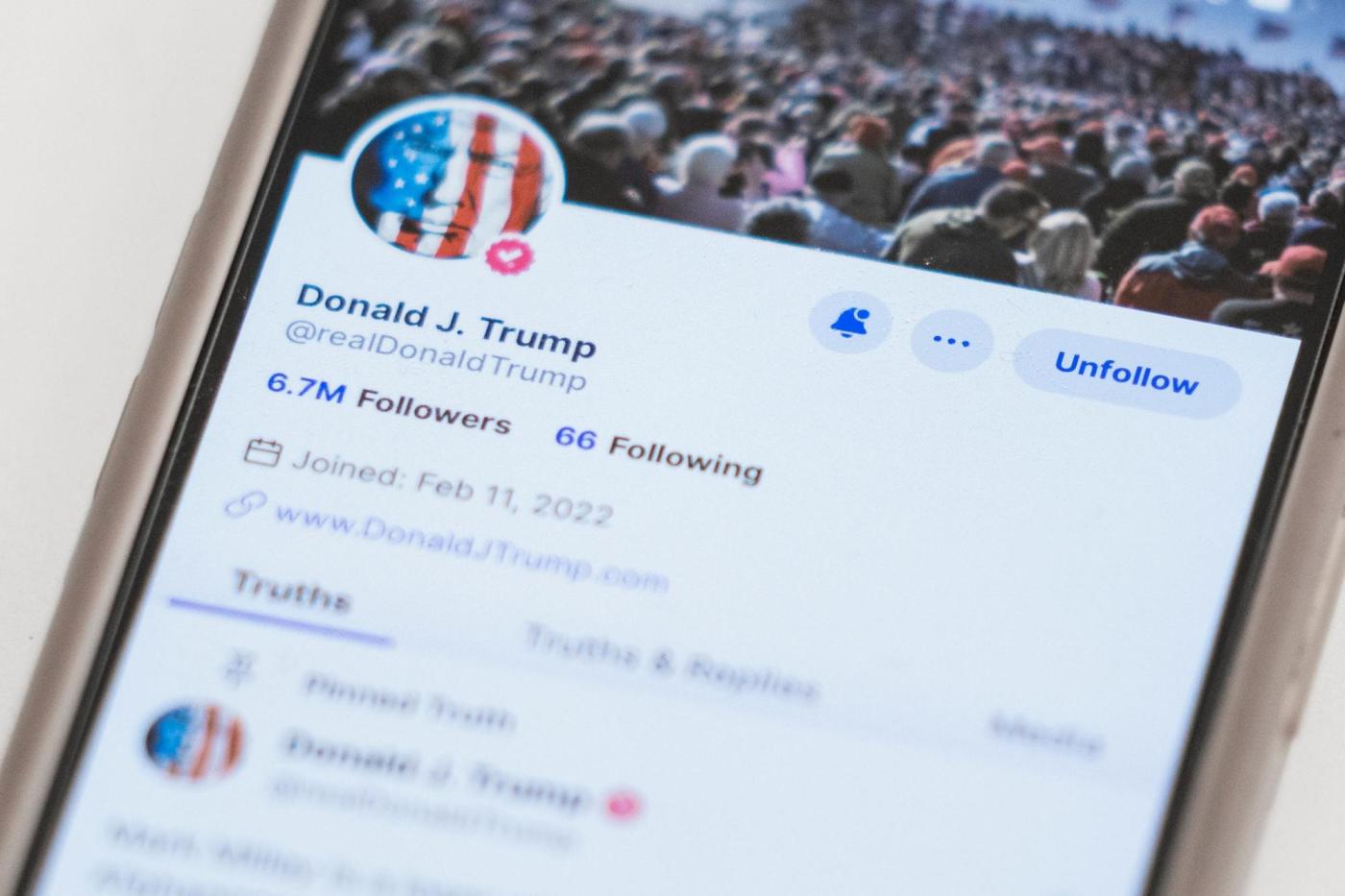
Wall Street debut of Trump’s Truth Social network could net him stock worth billions on paper

posted in: Politics | 0

By Stan Choe, AP Business Writer

NEW YORK (AP) — The Wall Street debut of Donald Trump’s Truth Social network could give him stock worth billions of dollars on paper. But the former president probably will not be able to cash it out right away, unless some things change.

The longer-term outlook for the business is highly questionable. Trump’s company has said it expects to continue losing money for a while, and at least one expert says it’s likely worth far less than the stock market suggests.

Trump’s pending return to Wall Street comes down to a vote scheduled for Friday by shareholders of a company named Digital World Acquisition Corp., which at the moment is essentially just a pile of cash. The corporation hopes to merge with Trump Media & Technology Group, the company behind Truth Social that goes by TMTG. If the shareholders approve the deal, TMTG could soon see its stock trading on the Nasdaq in Digital World’s place.

Here’s a look at the proposal and Trump’s role in it.

WHAT HAPPENS FRIDAY?

Shareholders of Digital World are scheduled to vote on whether to approve a merger with TMTG, where Trump is the chairman. Digital World is what’s called a special purpose acquisition company, or SPAC, or “blank-check company.”

Related Articles

National Politics |


9 takeaways from California, Illinois and Ohio elections

National Politics |


National poll finds Biden-Trump tie. State of the Union didn’t help president.

National Politics |


US Jews upset with Trump’s latest rhetoric say he doesn’t get to tell them how to be Jewish

National Politics |


Nearly 8 in 10 AAPI adults in the US think abortion should be legal, an AP-NORC poll finds

National Politics |


No Labels struggles to recruit US presidential nominee

SPACs raise cash and then hunt for companies to merge with. Such deals give the target companies a potentially quicker and easier way to get their stocks onto the New York Stock Exchange or Nasdaq. The arrangement lets them avoid some of the paperwork associated with traditional initial public offerings of stock, or IPOs.

For investors, SPACs offer a way to get into hyped, potentially faster-growing companies such as TMTG, the DraftKings betting service or SoFi banking.

DO SHAREHOLDERS EVER SAY NO?

It happens, but only rarely. This vote looks likely to pass given how high Digital World’s stock has jumped on excitement about Trump. It was trading Thursday above $40 per share. It’s already up roughly 140% so far this year, towering over the 10% gain for the S&P 500 index.

Many of Digital World’s investors are small-time investors who are either fans of Trump or trying to cash in on the mania, instead of big institutional and professional investors.

WHAT HAPPENS IF THE SHAREHOLDERS APPROVE?

Digital World will merge with TMTG. The stock will continue to trade under Digital World’s ticker, DWAC, possibly for a couple of days to a couple of weeks, experts say. Then at some point, companies in SPAC deals usually announce that their stock will begin trading under the new ticker symbol.

Trump’s company hopes to trade under the ticker symbol DJT, the former president’s initials. The same ticker symbol was used by Trump Hotels & Casino Resorts before it filed for Chapter 11 bankruptcy protection in 2004.

HOW MUCH WILL TRUMP GET?

Trump will own most of the new, combined company, or nearly 78.8 million shares, which would account for at least 58%. Multiply that by Digital World’s current stock price of more than $40, and the total value could surpass $3 billion.

TRUMP NEEDS CASH, RIGHT? CAN HE SELL RIGHT AWAY?

Trump faces a $454 million judgment in a fraud lawsuit, among other financial burdens. But he cannot sell easily for at least six months. That’s because major TMTG shareholders will be under what’s called a “lock-up” provision, a common restriction on Wall Street that keeps big, early investors from immediately dumping their shares. Such sales could tank the stock’s price.

Investors under the lock-up deal cannot sell, lend, donate or encumber their shares for six months after the close of the deal. Legal experts say “encumber” is a powerful word that could prevent Trump from using the stock as collateral to raise cash before six months have elapsed.

There are a few exceptions, such as by transferring stock to immediate family members. But in such cases, the recipients would also have to agree to abide by the lock-up agreement.

SO DEFINITELY NO CASH RIGHT AWAY?

Digital World could waive the lock-up agreement before the deal closes. Or, in what some legal experts say could be a more likely path, the new company’s board could decide to alter the lock-up agreement after the deal closes.

Such a decision by the board could open those directors up to legal scrutiny. They would need to show they’re doing it to benefit shareholders.

But if the value of Trump’s brand is key to the company’s success, and if easing the lock-up agreements could preserve that brand, it could make for a case that would at least spare board members’ lawyers from getting laughed out of court immediately.

Some companies’ boards in the past have altered lock-up agreements to allow investors to sell earlier.

WHO WILL BE ON THIS COMPANY’S BOARD?

Mostly people put forth by TMTG, including the former president’s son, Donald Trump Jr., if all goes as expected. Former Republican Rep. Devin Nunes would be a director and the company’s CEO.

Also on the board would be Robert Lighthizer, who served as Trump’s U.S. trade representative, and Linda McMahon, who ran the Small Business Administration under Trump.

IS THIS A SAFE INVESTMENT?

Every stock has risks. Digital World has filed 84 pages with U.S. regulators to list many of its risks and those of TMTG.

One risk, the company said, was that as a controlling stockholder, Trump would be entitled to vote his shares in his own interest, which may not always be in the interests of all the shareholders generally.

It also cited the high rate of failure for new social media platforms, as well as TMTG’s expectation that the company will lose money on its operations “for the foreseeable future.” The company lost $49 million in the first nine months of last year, when it brought in just $3.4 million in revenue and had to pay $37.7 million in interest expenses.

“It’s losing money, there’s no way the company is worth anything like” what the stock price suggests, said Jay Ritter, an IPO specialist at the University of Florida’s Warrington College of Business.

“Here, given the stock price is so divorced from fundamental value, it’s kind of the same issue that came up with meme stocks,” he said, recalling companies whose share prices once soared far beyond what professionals considered rational. “With AMC and GameStop, the price was way above fundamental value, and there’s the question of: Can you get out before the music stops?”