Boston city councilor won’t lose election after Israel-Hamas remarks, observers say

posted in: Politics | 0

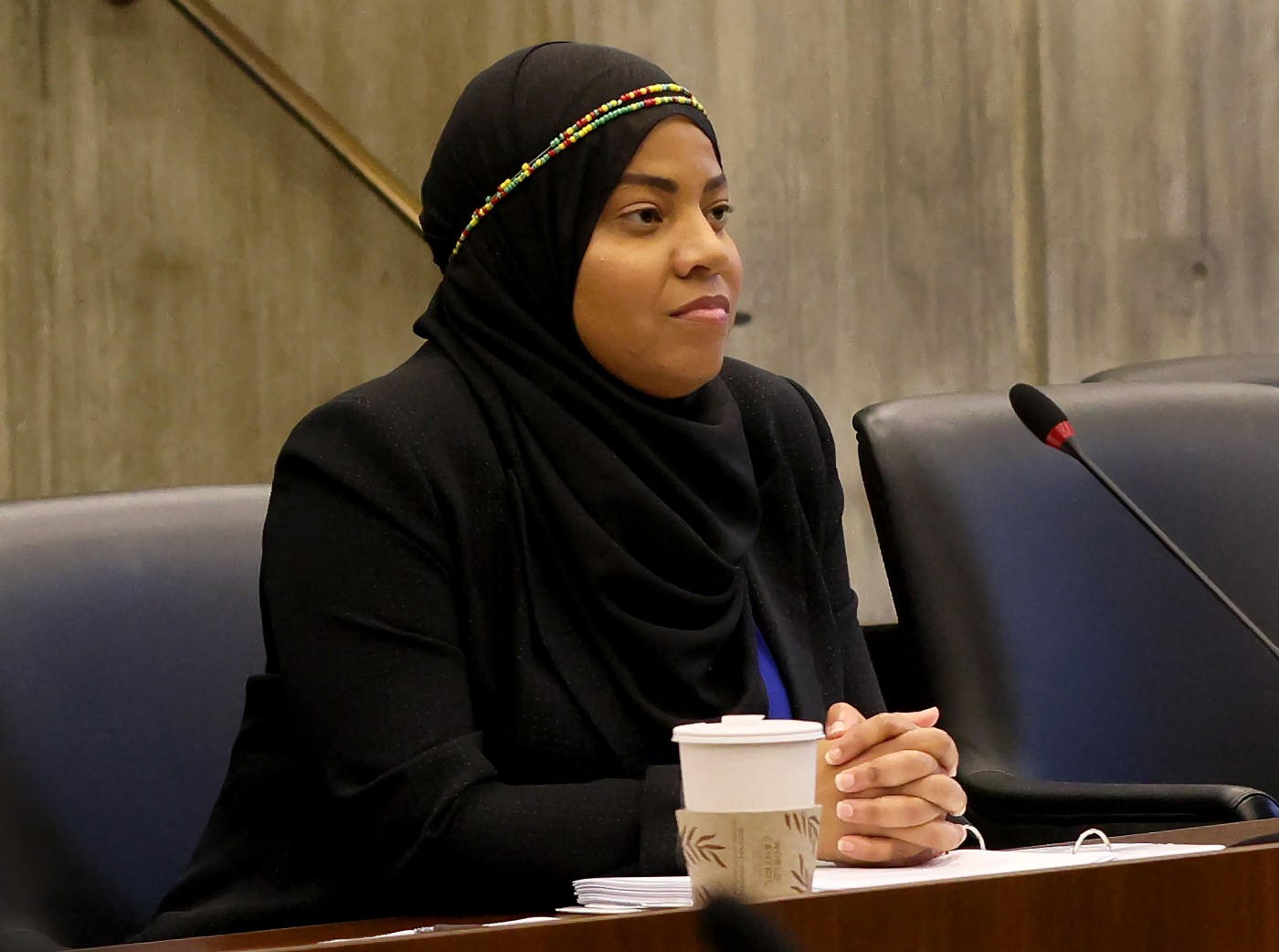
Boston City Councilor Tania Fernandes Anderson is expected to sail through in next month’s election, but political observers say her comments on the Israel-Hamas war could be a factor in two years if she faces a stronger opponent.

Her description of the Hamas terrorist organization as a “militant group” and characterization of the Oct. 7 attack that killed more than 1,400 Israelis as a “military operation” last Wednesday was heavily criticized, but isn’t expected to turn off a majority of voters in District 7, two former city councilors said.

“Do I think it’s going to impact her election? Probably not,” Michael McCormack, an attorney who served five terms on the City Council, told the Herald. “I think she wins with so few votes that the people who vote for her are probably just as uninformed as she is with respect to what she filed and her comments.”

Also working in her favor is the “very weak” opponent she’s running against, McCormack said, referring to Althea Garrison, a perennial candidate who was trounced by Fernandes Anderson in the September preliminary.

He noted that Fernandes Anderson benefited from facing another weak opponent two years ago, stating that had she faced strong opposition like the other district councilors, “she probably would not have been elected in the first place.”

“She’s probably the one who does as little as possible and who in her representation of her constituents is the weakest of the district city councilors,” McCormack said. “But she’s running against someone who historically just runs and runs, and that’s Althea Garrison who will not beat Fernandes, in large part because no one votes in her district. Simple as that.”

The progressive Fernandes Anderson was elected to represent District 7, which includes Roxbury, Dorchester, Fenway and part of the South End, in 2021.

She was heavily criticized by some of her colleagues for her description of Hamas and the terrorist attack it carried out on Israel, in a resolution she filed calling for de-escalation and a cease-fire in Israel and “occupied Palestine” at last week’s City Council meeting.

Comments made by Fernandes Anderson as part of a discussion on the resolution were also described by two Jewish groups as “antisemitic.”

Related Articles

Politics |


Kendra Lara faces fewer charges related to June crash into Jamaica Plain home

Politics |


Battenfeld: Boston city councilors hand out big, taxpayer-funded bonuses to staffers

Politics |


Boston city councilor slammed for ‘antisemitic’ remarks on Israel-Hamas war

Politics |


Boston rabbi recounts horrors of Hamas terror attack in Israel

Politics |


Pro-Palestine demonstrators arrested for trying to enter Sen. Elizabeth Warren’s office

“I think the likelihood of this impacting her is slim,” Larry DiCara, a former city councilor and longtime observer of Boston politics, told the Herald. “But that does not mean that two years from now, there may be an effort to move her out, and then some people may step up and put some money behind it.”

He said he wasn’t surprised by the comments, however, saying that Fernandes Anderson identifies as a Muslim, who has a tendency to speak from the heart and a different way of viewing things going on in the Middle East.

“Certainly my Jewish friends are all up in arms about it,” DiCara said. “It may be just one of many things that will hurt her down the road.”

Both McCormack and DiCara said the City Council should have stayed away from weighing in on the Israel-Hamas war, with DiCara stating, “I wouldn’t have touched it with a 10-foot pole.”

“We have enough problems that we don’t have to delve into the problems of the rest of the world,” DiCara said.

Fernandes Anderson filed her resolution in response to one made by Councilor Michael Flaherty, who wanted to condemn “Hamas and their brutal terrorist acts against Israel,” and express solidarity with the state of Israel and Israeli people.

McCormack said he didn’t like Fernandes Anderson’s comments “on a personal level,” but was more broadly struck by how she “has no idea what her role is as a city councilor,” which is to deal with city issues, “not make comments that are at best just fatuous and a waste of time.”

Michael Ross, an attorney who served for 14 years on the City Council, declined to comment on the upcoming election, but did speak to the councilor’s remarks, and other left-leaning criticism of Israel in the wake of this month’s attack.

“As a progressive Jewish person, I am heartbroken that some on the left are incapable of standing with the Jewish people during the worst attack against them since the Holocaust,” Ross told the Herald. “Israel is not perfect, but what happened on Oct. 7 defies geopolitics, and demands humanity’s collective outrage for the perpetrators and support for its victims.”

Boston City Hall (Amanda Sabga/Boston Herald, file)
Biden names technology hubs for 32 states and Puerto Rico to help the industry and create jobs

posted in: All news | 0

By DARLENE SUPERVILLE (Associated Press)

REHOBOTH BEACH, Del. (AP) — The Biden administration is designating 31 technology hubs touching 32 states and Puerto Rico to help spur innovation and create jobs in the industries that are concentrated in these areas.

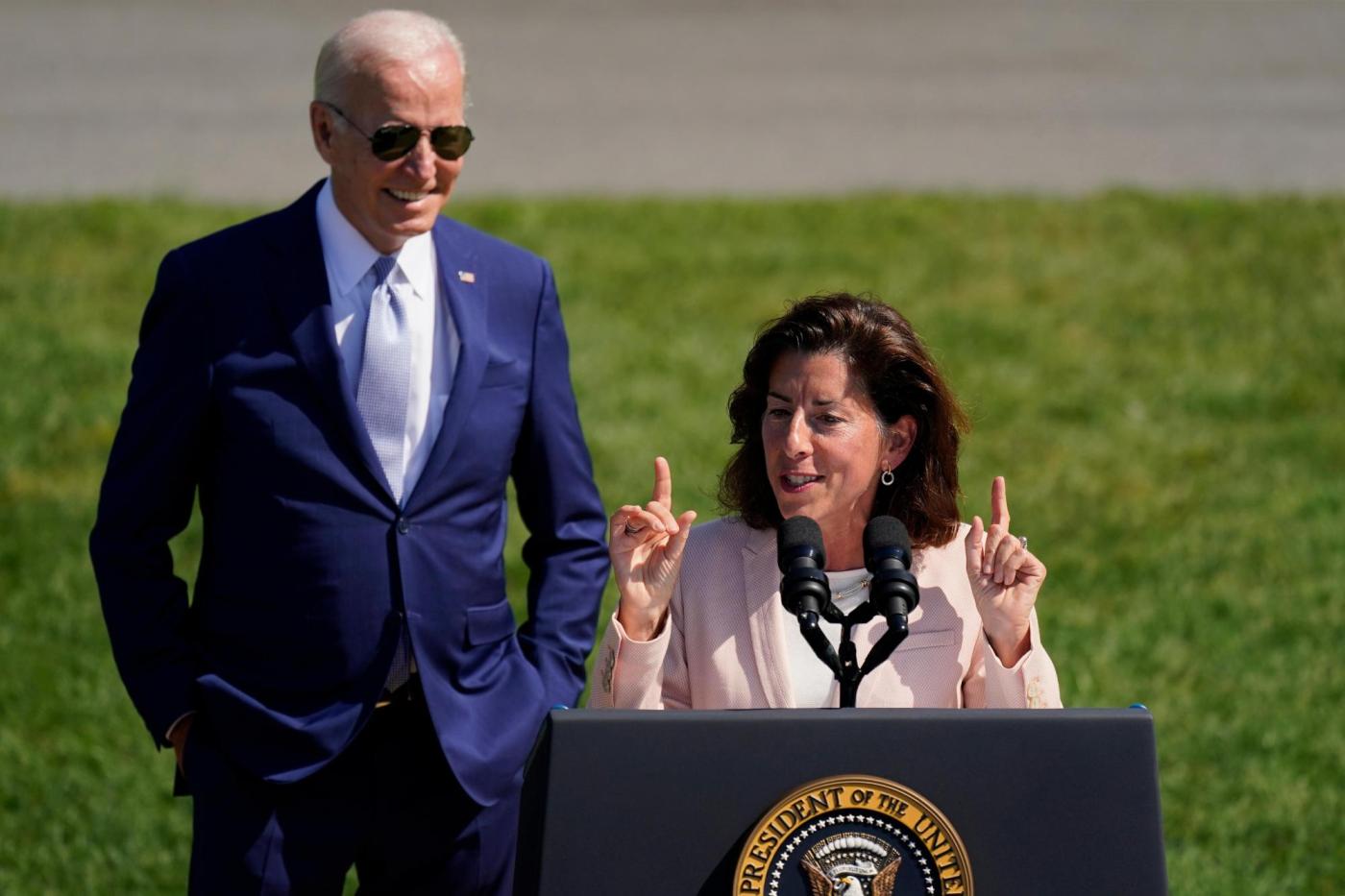
President Joe Biden is set to announce the hubs on Monday at the White House with Commerce Secretary Gina Raimondo.

“I have to say, in my entire career in public service, I have never seen as much interest in any initiative than this one,” Raimondo told reporters during a Sunday conference call to preview the announcement. Her department received 400 applications, she said.

“No matter where I go or who I meet with — CEOs, governors, senators, congresspeople, university presidents — everyone wants to tell me about their application and how excited they are,” said Raimondo.

The tech hubs are the result of a process Raimondo’s department launched in May to distribute a total of $500 million in grants to cities.

The $500 million came from a $10 billion authorization in last year’s CHIPS and Science Act to stimulate investments in new technologies such as artificial intelligence, quantum computing and biotech. It’s an attempt to expand tech investment that is largely concentrated around a few U.S. cities — Austin, Texas; Boston; New York; San Francisco; and Seattle — to the rest of the country.

The program, formally the Regional Technology and Innovation Hub Program, ties into the president’s economic argument that people should be able to find good jobs where they live and that opportunity should be spread across the country, rather than be concentrated. The White House has sought to elevate that message and highlight Biden’s related policies as the Democratic president undertakes his 2024 reelection bid.

“These Tech Hubs will catalyze investment in technologies critical to economic growth, national security, and job creation, and will help communities across the country become centers of innovation critical to American competitiveness,” the White House said Monday in an emailed statement.

The 31 tech hubs reach Oklahoma, Rhode Island, Massachusetts, Montana, Colorado, Illinois, Indiana, Wisconsin, Virginia, New Hampshire, Missouri, Kansas, Maryland, Alabama, Pennsylvania, Delaware, New Jersey, Minnesota, Louisiana, Idaho, Wyoming, South Carolina, Georgia, Florida, New York, Nevada, Missouri, Oregon, Vermont, Ohio, Maine, Washington and Puerto Rico.

MLB Offseason: Key dates to know as Red Sox enter pivotal winter

posted in: News | 0

Right now all eyes are on the MLB playoffs, and for the next two weeks the focus within the sport will be on who emerges as this year’s World Series champion.

But once the Fall Classic ends, the baseball world will quickly shift into offseason mode, and for the Red Sox these coming months could chart the franchise’s course for years to come.

When can fans expect to see players start switching teams? How about other big decisions and deadlines that loom once the offseason officially begins? Here’s a quick primer on the offseason schedule and how things should play out this winter.

When does free agency begin?

Free agency and the trade market officially opens the day after the World Series ends, but free agents cannot sign with new teams until five days afterwards. During that five-day stretch clubs have exclusive rights to sign their own players, which for Boston will include James Paxton and Adam Duvall, along with likely Justin Turner, Corey Kluber and Joely Rodriguez, who have options that aren’t expected to be exercised.

Option decisions must also be made within five days of the end of the World Series. Turner has a $13.4 million player option with a $6.7 million buyout, Kluber has an $11 million club option and Rodriguez a $4.25 million club option.

If clubs wish to extend a qualifying offer to any of their free agents, they must also do so within the five-day window. The qualifying offer is a one-year offer worth the mean salary of MLB’s 125 highest-paid players, which for this season will be set at $20.5 million. Players who receive a qualifying offer will have until Nov. 14 at 4 p.m. to accept, and if they reject the offer and wind up signing with a different team, their original team will receive draft pick compensation.

Last year the Red Sox extended qualifying offers to Xander Bogaerts and Nathan Eovaldi, both of whom rejected and went on to sign elsewhere. This year the Red Sox don’t have any obvious qualifying offer candidates.

Salary arbitration?

Throughout the offseason players who have three or more years but less than six years of big league service time, along with a small group of players with between two and three years, are eligible for salary arbitration if they haven’t already agreed to a long-term contract extension with their club.

The Red Sox currently have five arbitration-eligible players: Alex Verdugo, Nick Pivetta, Reese McGuire, John Schreiber and Luis Urias.

If arbitration-eligible players and their clubs haven’t agreed to a contract by Jan. 12, they will submit salary figures for the upcoming season and an arbitration hearing will be held between Jan. 20 and Feb. 16 to determine the player’s salary. The panel of arbitrators will then select either the player’s figure or the club’s, and nothing in between.

Clubs can decline to tender a player on their 40-man roster under team control a contract for the upcoming season. Those players are “non-tendered” and become free agents, and the deadline to tender player contracts this offseason is Nov. 17.

Winter Meetings and more

In addition to qualifying offer decisions, Nov. 14 is also the deadline for clubs to protect eligible players from the Rule 5 Draft by adding them to the 40-man roster. The Rule 5 Draft is held annually and allows clubs to identify and offer a big league opportunity to prospects they believe have been held back elsewhere.

The idea behind the Rule 5 Draft is to keep teams from hoarding MLB-ready players in the minors, and the Red Sox acquired right-hander Garrett Whitlock in the Rule 5 Draft three years ago.

This year’s Rule 5 Draft will take place on Dec. 6 during the MLB Winter Meetings, which will take place in Nashville between Dec. 4-7. Candidates to be added to the Red Sox 40-man roster this year include pitching prospects Wikelman Gonzalez, Luis Perales and Shane Drohan.

The MLB Draft Lottery will also occur at the Winter Meetings on Dec. 5, and by finishing with the 12th-worst record in baseball the Red Sox have a 1.1% chance of landing the No. 1 overall pick and a 9.9% chance of moving into the top six. The more probable outcome is Boston picks at No. 12 overall, though they could also pick later if clubs behind them jump into the lottery.

Before the Winter Meetings, MLB’s top executives will also gather at the GM Meetings in Scottsdale, Arizona, from Nov. 7-9. At the moment the Red Sox are still without a head of baseball operations and the club has indicated the GM Meetings won’t be a deadline to make a hire if they believe they need more time to bring in the right person.

Weed wins galvanize Capitol Hill’s anti-cannabis club

posted in: News | 0

Fighting weed legalization on Capitol Hill can feel like a lonely struggle these days.

Marijuana is just as popular as ever. More than half of Americans now live in states where adults can legally possess the drug, and just over two-thirds support federal legalization. In Congress, more and more lawmakers — on both sides of the aisle — express some form of support for legal cannabis in the states.

Yet a small but vocal, ad-hoc coalition of lawmakers — almost all Republicans — is keeping the anti-weed fight alive in Washington. And they’re not exactly losing.

The lawmakers, while still disorganized, scored several notable victories in recent months, thwarting progress on key cannabis bills and leaving die-hard supporters of federal legalization conceding they had been briefly outmaneuvered.

“We have entered the ‘fight you’ stage,” said Justin Strekal, founder of a pro-legalization PAC and former political director at the National Organization for the Reform of Marijuana Laws. The losses to the conservative lawmakers, Strekal said, offered a reminder that things “can go very wrong at the very end.”

A late 2022 deal between Majority Leader Chuck Schumer and Sen. Steve Daines (R-Mont.) to move a trio of cannabis bills through the Senate seemed to galvanize the long-existing opposition.

Then, in April, many were surprised when a bill that would instruct the Department of Veterans Affairs to research the use of marijuana on ailments like PTSD — which passed unanimously out of committee — was derailed after facing conservative pressure. The methodology and necessity of the research proposed in the bill was criticized heavily by Sen. James Lankford (R-Okla.) during a GOP caucus meeting.

More recently, 14 lawmakers led by Lankford and Rep. Pete Sessions (R-Texas) signed a letter to the DEA asking the agency to reject the Department of Health and Human Services’ recommendation to loosen federal marijuana restrictions. Sens. Daines and Cynthia Lummis (R-Wyo.) introduced a similar bill soon after to require congressional approval of any decision to change marijuana’s federal categorization.

“I just look at the cultural effects and the legal outcomes of this,” Lankford said in an interview, “and think, why would we as a nation say, ‘this is going so well we should do more of it’?”

Despite the setbacks, there is still significant momentum behind cannabis legislation on the Hill. A bill to expand access to banking services for the cannabis industry progressed out of the Senate Banking Committee last month with bipartisan support. That same bill passed the House twice in recent years with more than 100 Republicans voting in favor. And earlier this year, President Joe Biden signed the first-ever standalone cannabis bill, which will expand medical marijuana research.

The anti-weed caucus, despite growing more vocal, lacks the cohesive strategy their counterparts in the pro-cannabis caucus have employed for years.

“It’s not coordinated,” said Lummis, who led the DEA bill but said she was not looped in with signers of the DEA letter.

Some long-time weed foes — Reps. Sessions and Andy Biggs (R-Ariz.) and Sen. Tom Cotton (R-Ark.) — have been involved in recent efforts to stymie cannabis policy changes.

Lankford, meanwhile, has long been outspoken on cannabis, and has emerged as a leader among the anti-weed lawmakers in the last 12 months. He successfully whipped against the veterans research bill and organized the letter asking the DEA to reject HHS’ rescheduling recommendation.

Lankford’s motivation comes from a very similar place to lawmakers who have advocated for veterans’ access to cannabis or for medical marijuana use: anecdotes from his constituents. In his more than 20 years working as a youth pastor, he said he cannot remember a time when using marijuana made things better for a kid or their family — and countless times that it made a situation worse. Lankford also referenced the explosion of illicit marijuana cultivation in Oklahoma following medical marijuana legalization in 2018.

“We’ve opened up marijuana without any kind of regulation of any significance for what the product is and how it’s delivered,” he said. “And we’ve accelerated through that door.”

Lankford and nearly a dozen other members of the House and Senate said in interviews that none of the recent steps taken to fight new cannabis laws has translated into a concerted effort to organize against legalization.

“I can’t tell you what others are doing, but I can tell you that I’m opposed,” Sen. Ted Budd (R-N.C.) — who signed the DEA letter — told POLITICO.

Rep. Buddy Carter (R-Ga.), a pharmacist who is in favor of marijuana research and medicinal use, also signed the rescheduling letter — but didn’t know who circulated it.

“I am in favor of the medicinal use of the basic ingredients — but I’m not in favor of the recreational use of marijuana,” Carter said. “Most people know that and that’s probably why they circulated it to me.”

Contrast that with the organized efforts of pro-cannabis advocates: Legislative staff and a wide range of stakeholders regularly meet to game out strategy. The SAFE Banking Act in particular has the might and money of the American Bankers Association and Scotts Miracle-Gro behind it, and legalization is supported by other influential K street groups like the Wine and Spirits Wholesalers of America.

The Congressional Cannabis Caucus has existed for multiple congresses and is chaired by two Democrats and two Republicans. Rep. Earl Blumenauer (D-Ore.), one of the caucus co-chairs and Congress’ unofficial cannabis policy czar, created a blueprint to legalization that advocates and lobbyists still reference when discussing the path forward.

Most of the cohesion in the anti-weed movement — said Luke Niforatos, executive vice president of Smart Approaches to Marijuana, the leading anti-legalization advocacy group — comes from advocates and lobbying groups, not lawmakers’ offices themselves. He said SAM worked with Lankford on the letter and regularly connects offices they know are opposed to marijuana legislation.

“While I don’t think there’s like some master plan document, there’s a lot of very sophisticated communication and coordination in terms of the end goal,” said Niforatos.

The conservative advocacy groups Eagle Forum and Family Research Council are also working on this issue on Capitol Hill, he said. Family Research Council confirmed it is working against federal cannabis legislation, including the SAFE Banking Act. But neither group listed cannabis in their recent lobbying disclosures, and Eagle Forum did not respond to requests for comment.

“By definition, when you’re playing defense, you’re waiting to see what the offense is going to do,” Niforatos said. “So you’re a little bit behind the people that are trying to pass something, pretty much always.”

Further complicating collective action are the often-overlapping shades of support and opposition for cannabis policy on Capitol Hill. The line of delineation between the two sides weaves and curves from bill to bill.

Lawmakers like Carter strongly oppose legalization but are open to medical marijuana in certain situations. Conversely, strong supporters of the cannabis banking bill — including Lummis, Daines and Sen. Kevin Cramer (R-N.D.) — are opposed to federal decriminalization. And Rep. Dave Joyce (R-Ohio) supports decriminalization but opposed a House bill to do so that did not include a regulatory and taxation framework for the new industry.

“This highlights the growing fracture within the Republican caucus,” Strekal said, “on those who want to double down on criminalization versus those who want to accept the legitimacy of states legalizing marijuana.”