Chevron buys Hess for $53 billion, 2nd buyout among major producers this month as oil prices surge

posted in: News | 0

By MICHELLE CHAPMAN (AP Business Writer)

Chevron is buying Hess Corp. for $53 billion and it’s not even the biggest acquisition in the energy sector this month as major producers seize the initiative while oil prices surge.

Crude prices rose sharply in early 2022 with Russia’s invasion of Ukraine and are hovering around $90 per barrel after ticking another 9% higher this year, meaning big drillers are flush with cash and looking for places to invest piles of cash.

The Chevron-Hess deal comes less than two weeks after Exxon Mobil said that it would acquire Pioneer Natural Resources for about $60 billion.

Upward pressure on oil prices are being applied from a number of fronts including the war in Ukraine. Oil markets are being stretched by cutbacks in oil production from Saudi Arabia and Russia, and now, a war between Israel and Hamas runs the risk of igniting a broader conflict in the Middle East. While attacks on Israel do not disrupt global oil supply, according to an analysis by the U.S Energy Information Administration, “they raise the potential for oil supply disruptions and higher oil prices.”

Chevron said Monday that the acquisition of Hess adds a major oil field in Guyana as well as shale properties in the Bakken Formation in North Dakota. Guyana is a South American country of 791,000 people that is poised to become the world’s fourth-largest offshore oil producer, placing it ahead of Qatar, the United States, Mexico and Norway. It has become a major producer in recent years with oil giants, including Exxon Mobil, China’s CNOOC, and also Hess, squared off in a heated competition for highly lucrative oil fields in northern South America.

“This combination is aligned with our objective to safely deliver higher returns and lower carbon,” Chevron Chairman and CEO Mike Wirth said in prepared remarks. “In addition, Hess increases Chevron’s estimated production and free cash flow growth rates over the next five years, and is expected to extend our growth profile into the next decade supporting our plans to increase our peer-leading dividend growth and share repurchases.”=

Chevron is paying for Hess with stock. Hess shareholders will receive 1.0250 shares of Chevron for each Hess share. Including debt, Chevron valued the deal at $60 billion.

And even with alarms being raised over climate change after a summer of record-smashing temperatures, elevated energy prices have driven more exploration and more drilling, and big payouts for investors.

There have been a number of acquisitions focused on U.S. shale fields and another round of consolidation in the energy sector began during the pandemic as big producers sought to cut costs. In the summer of 2020, Chevron announced that it was buying Noble Energy for $5 billion. Chevron made the deal when crude prices were down more than 30% in the midst of the coronavirus pandemic. That same year, ConocoPhillips bought shale producer Concho Resources in an all-stock deal valued at $9.7 billion.

Last month Britain gave the go-ahead for a major oil and gas project in the North Sea, ignoring warnings from scientists and the United Nations that countries must stop developing new fossil fuel resources if the world is to avoid catastrophic climate change.

Chevron said the deal will help to increase the amount of cash given back to shareholders. The company anticipates that in January it will be able to recommend boosting its first-quarter dividend by 8% to $1.63. This would still need board approval. The company also expects to increase stock buybacks by $2.5 billion to the top end of its guidance range of $20 billion per year once the transaction closes.

The boards of both Chevron and Hess have approved the deal announced Monday after six months of negotiations, and is targeted to close in the first half of next year. It still needs approval by Hess shareholders. John Hess, the company’s CEO, is expected to join Chevron’s board. His family owns a large chunk of Hess.

Shares of Chevron Corp., based in San, Ramon, California, declined more than 2% before the opening bell Monday. Share of Hess Corp., based in New York City, fell slightly.

The tech-friendly lawyer hidden behind a letter to Congress on AI

posted in: Politics | 0

The message in the open letter sent to Congress on Sept. 11 was clear: Don’t put new copyright regulations on artificial intelligence systems.

The letter’s signatories were real players, a broad coalition of think tanks, professors and civil-society groups with a stake in the growing debate about AI and copyright in Washington.

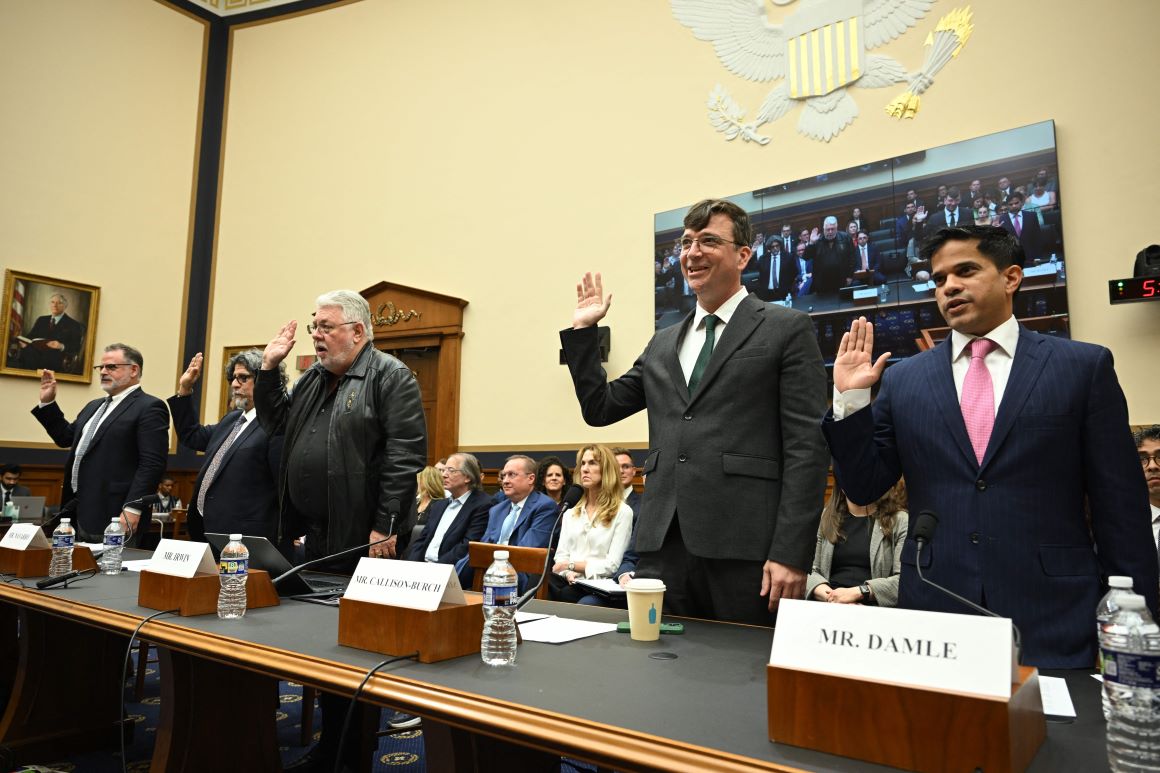
Undisclosed, however, were the fingerprints of Sy Damle, a tech-friendly Washington lawyer and former government official who works for top firms in the industry — including OpenAI, one of the top developers of cutting-edge AI models. Damle is currently representing OpenAI in ongoing copyright lawsuits.

Damle did not sign the letter, and did not reply to multiple attempts to contact him with questions about his involvement. But data contained in a publicly posted PDF of the letter show the document was authored by “SDamle,” and three signatories confirmed to POLITICO that Damle was involved in its drafting and circulation. Two of them said they were first made aware of the letter by Damle, and signed it at his invitation.

The letter’s covert origin offers a window into the deep and often invisible reach of Big Tech influence in the Washington debate over AI — a fast-moving part of the policy landscape where Congress is hungry for outside advice, and which is still new enough to create strange political bedfellows. Signatories included the American Library Association, the progressive nonprofit Public Knowledge and the free-market R Street Institute.

Damle is a partner at law firm Latham & Watkins and former general counsel at the U.S. Copyright Office. He is one of several Latham & Watkins lawyers named in an August legal filing submitted on behalf of OpenAI. The company is being sued by comedian Sarah Silverman and other authors for allegedly infringing their copyrights by using their books to train ChatGPT, OpenAI’s large language model.

In addition to his work for OpenAI, Damle represented venture capital firm Andreessen Horowitz in an April discussion held by the Copyright Office about generative AI’s impact on copyright protections for literary works. He also testified against AI-driven changes to copyright law at a May hearing held by a House Judiciary subpanel.

Andreessen Horowitz spokesperson Paul Cafiero said the VC firm, which has invested in OpenAI and other leading AI companies, “didn’t have any involvement in drafting or commissioning this letter.”

A spokesperson for OpenAI declined to comment.

The effort by an OpenAI lawyer to covertly sway Congress against new laws on AI and copyright comes in the midst of an escalating influence campaign — tied to OpenAI and other top AI firms — that critics fear is shifting Washington’s attention away from current AI harms and toward existential threats posed by future AI systems.

The letter was sent to all members of the House and Senate. The signatories exhorted Congress not to pass new copyright laws aimed at generative AI, arguing that existing law can handle any legitimate copyright concerns raised by the emerging technology. They warned lawmakers against passing bills that would introduce “onerous new copyright restrictions” for AI developers.

Corynne McSherry, legal director at the Electronic Frontier Foundation, said Damle was “involved in circulating and revising the letter after input.” R Street spokesperson William Gray said that Wayne Brough, the organization’s technology lead on copyright policy issues, “was invited by Sy Damle to sign onto the letter, and after review, decided to add our name.”

Jason Schultz, director of NYU’s Technology Law and Policy Clinic, said Damle reached out to him about the letter weeks before it was sent. “I looked at a draft and made some comments and then, when I was satisfied with the content, agreed to sign on,” Schultz said. Like some other signatories, Schultz stressed that he signed the letter because he agreed with its arguments.

Many of the points made in the September letter echo those made recently by Damle in other venues, including an argument comparing the rise of AI to the invention of photography.

Damle isn’t the only former copyright official to weigh in on generative AI — and his arguments are disputed by at least one of them. Jon Baumgarten, who also formerly served as general counsel at the Copyright Office, rejected Damle’s recent claim that the ingestion and processing of written works by generative AI is “fair use” under existing copyright law. In a letter to the House subpanel that hosted Damle in May, Baumgarten said Damle’s argument is at best “over-generalized, oversimplified and unduly conclusory.”

Lucas: ‘Right to shelter’ not meant for migrants

posted in: Politics | 0

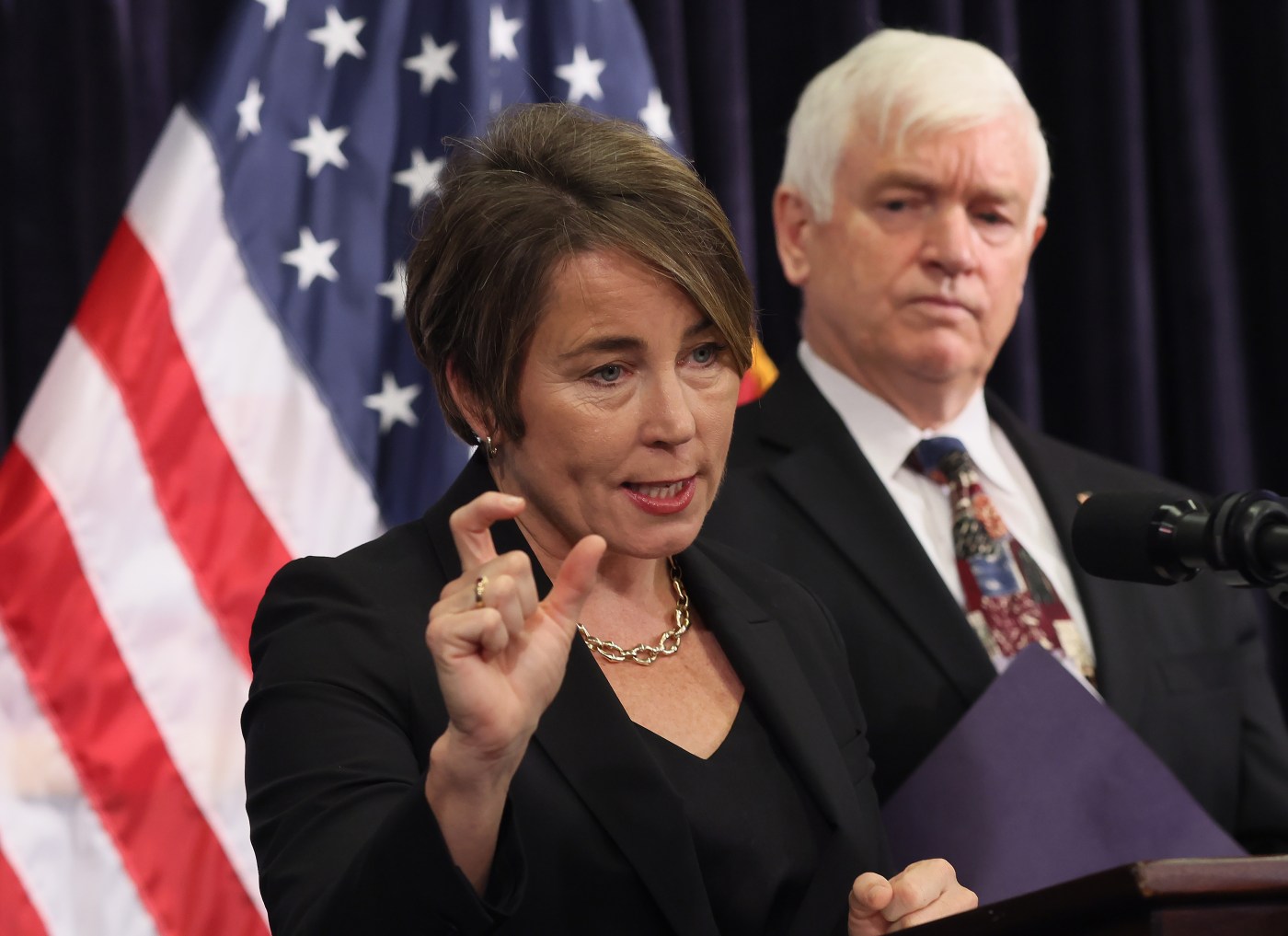
Gov. Maura Healey does not have to amend or repeal the state’s “right to shelter” law.

All she needs to do is enforce it.

The law as written, and passed forty years ago, was never intended to house and feed the explosion of migrants from around the world storming into Massachusetts.

It was passed and signed into law by liberal Democrat Gov. Michael Dukakis in 1983 to deal with the relatively small number of homeless families and pregnant women who were residents of Massachusetts, not residents of other states or countries.

But the law has not been interpreted or enforced the way it was written. Instead, progressives have proudly waved it as a banner of compassion and an invitation to migrants from around the world to come to Massachusetts where they will be cared for.

Liberal Massachusetts is the only state in the union with such a law.

The word eventually went out that Massachusetts was a soft touch. So the mostly illegal immigrants came, and are coming, to the point that Healey had to call a state of emergency and bring out the National Guard to help deal with the influx of all the foreigners making their way to Massachusetts.

The situation has gotten so bad, and so costly, that Healey last week announced that the state can no longer guarantee shelter or housing for any more arrivals.

She made no mention of the social impact the immigrants have had on the communities where they are being housed in motels, or what will happen to immigrants who keep on coming.

Currently there are some 7,023 immigrant families in the state’s shelter/welfare system, or some 23,000 people. Of the number, 3,300 families are living in motels and hotels and the rest are in shelters.

Healey last week announced that the state has run out of shelter space, service providers or funding to continue housing immigrants. On Nov.1 it will not add any more shelter units and limit the number of families housed in the system.

The Healey administration will soon have spent all the $325 million appropriated in January to deal with the immigrant crisis. Healey, meanwhile, has requested another $250 million from the Legislature.

“This level of growth is not sustainable,” Healey said. Then, in a mixed message, she said, “We are not ending the right to shelter law. We are being very clear, though, that we are not going to be able to guarantee placement to those who are sent here after the end of the month.”

Healey, however, doesn’t have to end the shelter law, she just needs to enforce the way it was written to cover homeless Massachusetts residents, not outsiders.

The 1983 law, in defining a resident, states that “any such person who enters the Commonwealth solely for the purposes of obtaining such benefits under this chapter shall not be considered a resident.”

The law also provides help for pending homeless families with money for rent, utility bills, home heating bills, moving expenses and furniture storage, none of which would appear to apply to illegal immigrant coming to Massachusetts from countries around the world.

It is good, but probably futile, to keep asking President Biden for financial aid to deal with the immigration problem.

“We need everyone to understand that we are entering a new phase of this shelter challenge,” Healey said. “Massachusetts will continue to rise to this challenge. That’s who we are. But I want there to be no doubt. This is a federal problem that demands a federal solution.”

For Biden, to come up with billions in federal money for Massachusetts and other states burdened with illegal immigrants, is to admit he created the problem in the first place by opening the borders and allowing people in who do not belong here.

Healey would have been better off if she demanded Biden shut down the border.

It is just too bad that Healey is still not attorney general.

That way she could sue Joe Biden for not enforcing Donald Trump’s strict border laws – the way she used to sue President Trump for enforcing them.

For Democrats, though, the law, like beauty, is in the eye of the beholder.

Peter Lucas is a veteran Massachusetts political reporter and columnist.

Denis Poroy/ The Associated Press

A U.S. Border Patrol agent directs asylum-seekers waiting between the double fence along the U.S.-Mexico border near Tijuana, Mexico earlier this year. (AP Photo/Denis Poroy, file)

‘People Are Hurt and Scared’: How a Muslim American Leader in Georgia Is Confronting the War

posted in: Politics | 0

The war between Israel and Hamas has torn through American politics, disturbed communities across the country and unsettled political coalitions in both parties. Over the past two weeks, Muslim American voters and leaders have been increasingly outspoken about their fears of violent backlash and political exclusion in this wrenching crisis.

Among many Muslim American Democrats, there has been a sense of frustration about the Biden administration’s handling of the conflict. On Thursday, President Joe Biden made his most explicit appeal to Muslim Americans in his speech from the Oval Office, denouncing Islamophobia and deploring the murder of a 6-year-old Illinois boy, Wadea Al-Fayoume, by a man allegedly motivated by anti-Muslim paranoia.

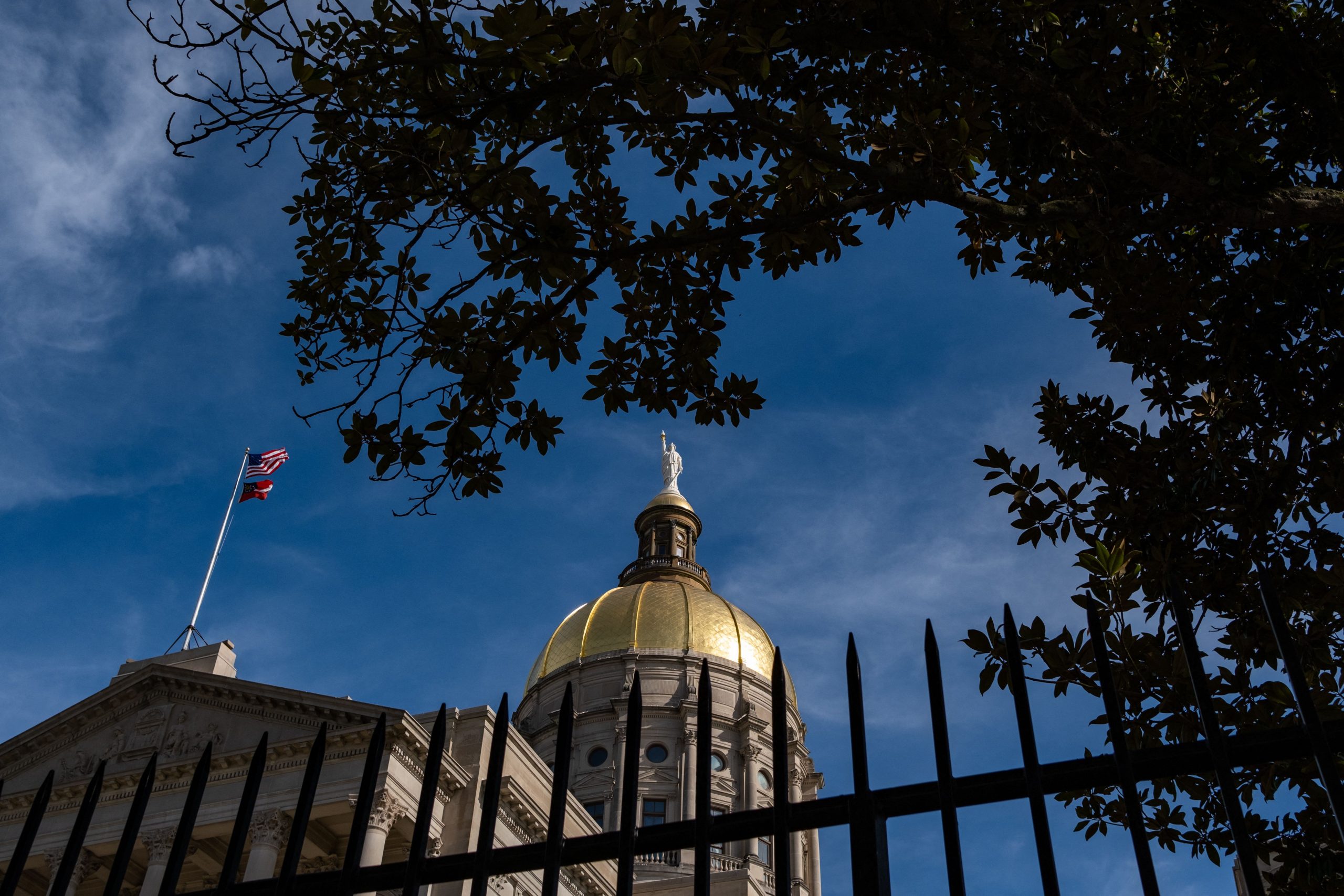
To better understand Muslim American politics in this moment, POLITICO Magazine spoke Friday with Georgia State Sen. Nabilah Islam Parkes. The daughter of immigrants from Bangladesh, Islam Parkes, a former campaign strategist, became the first Muslim woman and the youngest woman elected to the Georgia legislature when she won one of the most competitive races in the state in 2022.

This conversation has been edited for length and clarity.

Alexander Burns: It’s been two weeks since the Hamas attack and since the war started. I’m wondering if you can give me a sense of what those two weeks have been like for you as a Muslim American elected official.

Islam Parkes: Emotions are very raw right now. Listening to my community and how they’re feeling in this moment: They feel otherized, they feel left behind. I’m listening to parents who are worried about their kids that are potentially going to be bullied. People worried about losing their jobs. Folks are in fear of their safety. People are hurt and scared right now. And in my role, I’m trying to be there for them as much as I can, to let them know that they’re not alone and to lift their voices and make sure that they’re heard. I see that as a responsibility as a Muslim American elected official, to be there for my community in this very charged moment.

Burns: When you talk about the community — are you hearing from people who are your literal constituents, mostly, or do you feel like you have a broader responsibility than that?

Islam Parkes: I hear from constituents. I have a lot of Muslim Americans that live in this district. But I also do feel like I have a broader responsibility as well to be a voice for a community that just recently elected, for the first time, Muslim Americans to their state legislature. I definitely feel like there’s a bigger responsibility on my shoulders to uplift everyone’s voice in the state and I’m trying to do that.

Burns: Can you give me a sense of how you are doing that?

Islam Parkes: Well, I’m reaching out to folks and trying to find out, what are some things that they need right now? Whether it’s to stand with them in solidarity, to organize, raising funds. We’re having different events at mosques — and to just be there with them and to pray with them and to pray for peace in the community. I just don’t want people to feel like they’re alone right now.

Burns: Are you hearing from people who are currently being bullied or being marginalized in their workplace? How much is that already happening, versus people are just really scared because they’ve seen this kind of moment before and they feel like it’s inevitable?

Islam Parkes: I think people are just really scared. I was talking to many people about this, other Muslim Americans and other Palestinians in the state — it feels like it’s post-9/11 with the Islamophobic rhetoric. Or it feels like how it felt before we went to war in Iraq. There is this feeling that Muslims have to — whenever there’s a terrorist attack, the Muslim community feels like there’s an onus on them, like a target on them to respond and to justify and reaffirm that they oppose violence, that they oppose terrorism. Right now, we feel like our language is policed all the time. And it’s not healthy for democracy or for real dialogue. It’s like having to constantly prove that we, too, are Americans. No other group has to go through an experience like that, to have to reaffirm: Hey, we are against terrorism, and if we don’t say that, then somehow we are for terrorism. People are feeling very, very — they’re very scared right now about how our community is going to be marginalized. And as Islamophobia is increasing, they’re scared for their children and for themselves.

Burns: Did you watch the president’s speech last night?

Islam Parkes: I did not. I did not watch it.

Burns: I don’t know if you read the coverage of that speech or if you followed coverage of his remarks in general. I wonder how you would assess his message to Muslim Americans, his relationship with the Muslim American community?

Islam Parkes: Especially in Georgia, the Muslim community’s been huge allies to the Biden administration. We organized and we were very much part of that slim margin that helped him get elected. And I think overall, the Muslim community does feel a little — there’s a level of erasure that we feel, especially at the beginning of this — from two weeks ago. Folks don’t feel like their voices are being heard.

The tone of a leader really matters. And I will say that there are a lot of people in the Muslim community that feel like the president let them down. People are dying on both sides here, and our blood is the same color. We’ve lost — I think it’s been over 5,000 Israelis and Palestinians. And so there are a lot of people that are upset.

Burns: How much is the part they’re upset with the policy and how much is the part they’re upset with — when you say “erasure,” is it that the president has not done enough to address Muslim Americans directly?

Islam Parkes: I think that the president is trying to address Muslim Americans directly, and I encourage that level of engagement with the Biden administration in the Muslim community. And we need to see more of it. Right now, Muslims, Palestinians are being dehumanized in the press. There’s a lot of rhetoric that’s flying around that’s conflating terrorism to Muslims. And we need our leaders to make it very clear that there’s a difference between what a terrorist is and what an American Muslim is — or just Muslims in general. And we saw earlier that the poor 6-year-old child was stabbed to death by his landlord who was radicalized by listening to the radio and was paranoid that the Palestinians were out to get him.

We just need strong leadership to recognize the humanity on both sides — that people are grieving in the Muslim community and the Jewish community and that we’re going to get through this together. Right now, there’s a lot of divisive language, and it’s not helping.

Burns: I know you said you didn’t watch the president’s speech last night. I thought that there was a section of his speech where he did exactly what you’re talking about, and it was quite effective. And I also wonder what kind of difference it would have made if it had happened 11 days earlier.

Islam Parkes: I’ll speak to that. Muslim civic engagement has increased over the past 20 years, significantly, since post-9/11. Post-9/11, a lot of Muslims went into hiding, changed their names, hid their face. But now we feel like we’re part of the American political process. There’s over 60,000 registered Muslims in Georgia, and thousands of them organized, knocked on doors, made phone calls, voted for this president because we felt like this was an administration that respected our community and respected our input. And I think at the beginning of this, we were taken aback — it felt more one-sided from the beginning. It would have helped if the president had made it clear that this wasn’t Palestinians versus Israelis; this was very much a barbaric terrorist attack from Hamas.

Recognizing the humanity in the Gaza Strip would have gone a long way. I know that he’s trying to address that now, and I appreciate that and he should. But I think our emotions are very raw. People are very emotional right now. And he needs to continue to do that and keep reaching out to us in that manner.

Burns: Can I ask you — you’re Muslim American, you’re not Palestinian and you’re not Arab American. How much do you feel like this is a political moment that you want to be a part of, and how much do you feel like it’s actually something that because of certain cultural norms and expectations, you’re forced to be in?

Islam Parkes: In the past five years, I have felt a Muslim community starting to feel more a part of this American political process. We’re running for office. There’s a lot of firsts everywhere — people getting elected, whether it’s Congress or the legislature or school board.

We’re proud of those achievements, and this is a moment where we have harnessed political power and we need to use it. We need to use it so that our communities don’t feel like they have to go back into hiding. In fact, we’re leaning into it. And as a Muslim American elected official, as the first Muslim woman in the State Senate in the state of Georgia, I carry that on my back, right? That I have to be present and vocal and continue to make sure that our voices are heard, so that we’re not marginalized moving forward in the way that we were 20 years ago.

Burns: It was a small but significant group of Muslim American candidates who were elected for the first time in 2022 in a number of states, and I wonder — is there any kind of conversation among elected officials about navigating the dynamics you’re talking about?

Islam Parkes: You mean naturally or just locally?

Burns: Either.

Islam Parkes: I think we’re all evaluating how to talk about this, respective to our communities. We all live in different parts of this country, and we’re trying to figure out the best ways to engage in this conversation. We don’t want our Jewish friends to feel isolated. We don’t want our Muslim friends to feel isolated. We’re all grieving and we should be grieving together. On my end, I want to be a coalition builder and to let everyone know we’re in this together, that we all want peace, that we don’t want more civilians dying. We’re friends, we’re neighbors, we’re colleagues. And at the end of the day, we are all Americans, grieving and trying to find a better way.