How Gavin Newsom became a climate change crusader

posted in: Politics | 0

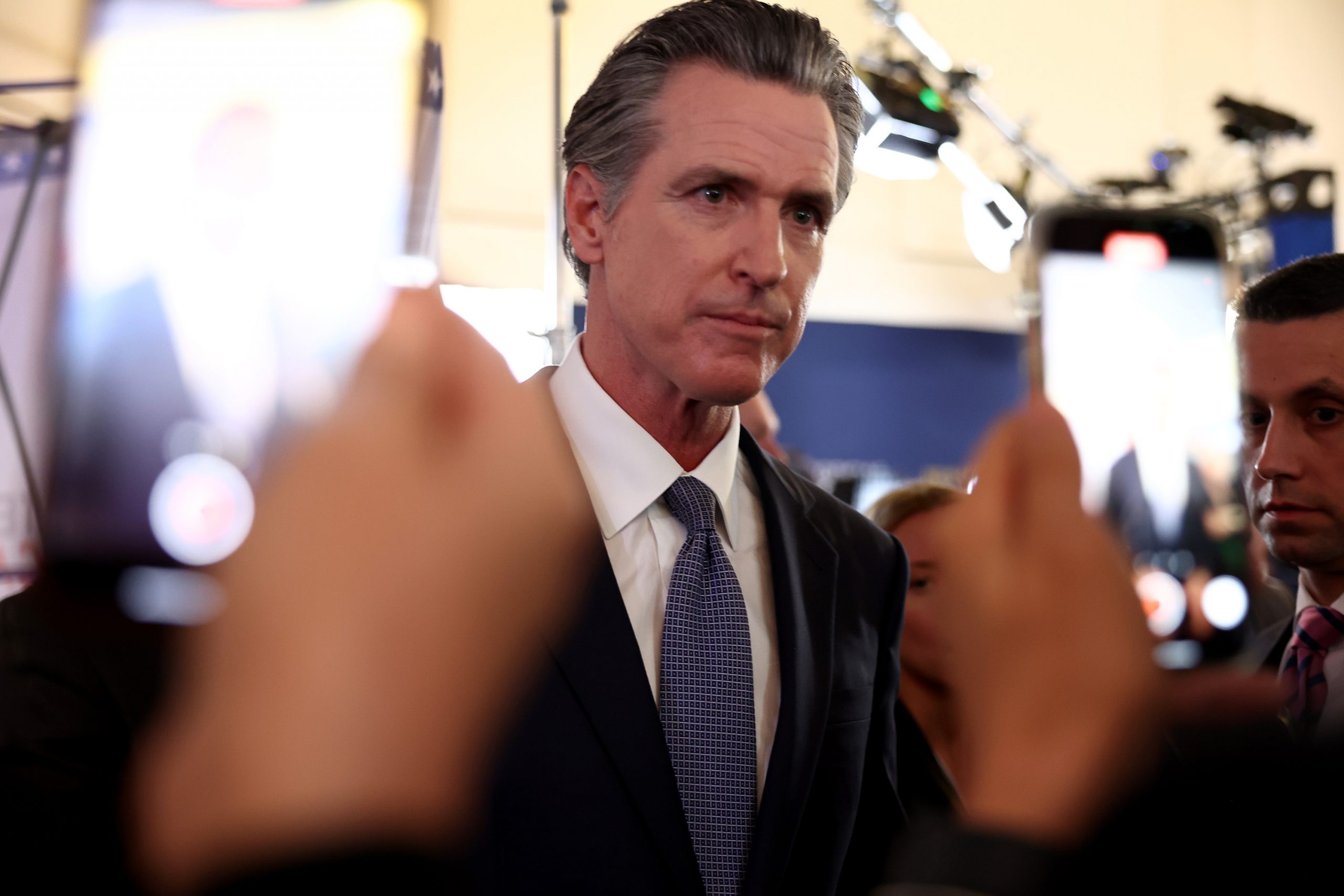
SACRAMENTO — He’s brought oil companies to heel in Sacramento and railed against their role in causing climate change at the United Nations. Now he is evangelizing environmentalism in China.

Gavin Newsom is fully embracing the role of climate governor.

The California Democrat’s trip to China this week, where he’ll focus almost exclusively on climate change, cements his evolution into a full-blown climate champion. It follows his lawsuit against oil conglomerates and a spate of bill signings that increase costs and environmental restrictions on oil companies.

Newsom’s interest in cutting emissions is natural for the leader of a state that suffers from increasingly intense wildfires, drought and storms. But it’s also smart politics.

“You have all these Republicans and fossil fuel companies that are not going to be doing what needs to be done,” former California Gov. Jerry Brown said in an interview. “So it gives the governor of California a real opportunity. He’s got many punching bags.”

Fighting climate change is a political winner in deep-blue California, where support for ambitious climate policies has risen markedly over the last decade. A clear majority of voters now say those policies are worth the cost. Newsom’s dominance on the issue — and his desires to be a global leader on climate — could help him stand out in a crowded Democratic presidential primary in 2028.

Back home in California, a spate of destructive wildfires has fueled the electorate’s sense of urgency around what many see as an existential issue.

“For independent voters and younger voters and Democratic voters, they view this as a crisis that needs to be solved and I don’t think that was always the case,” said Danielle Cendejas, a Southern California-based political consultant. “We are seeing this in every candidate running for the Legislature, for state, local, federal office, being asked whether they are committed to a fossil-fuel-free future.”

It’s not a full pivot for Newsom, who has championed climate policies for years. But his rhetoric has sharpened recently as he’s pushed climate change toward the top of his agenda.

“It all is very sudden, the interest in climate,” said Sierra Club California Director Brandon Dawson. “As someone who’s painted himself as a climate enthusiast who wants to tackle climate change, the pressure required to get him there is more than expected.”

Environmentalists haven’t been happy with all of Newsom’s moves. The governor won extensions for nuclear and gas-powered plants after heat waves strained the state’s electrical grid and threatened power outages. While critics accused Newsom of backsliding, Democrats remembered that rolling blackouts helped topple former Gov. Gray Davis in 2003.

“It does appear that Newsom is considering running for president in 2028,” said RL Miller, a prominent California Democratic Party environmental activist. “I think he wants to be known as a governor who did a lot of things on climate in California without raising peoples’ rates or jeopardizing the grid.”

Green groups have oscillated between praise for Newsom’s sometimes ambitious swings and exasperation at his otherwise halting or pragmatic approach. But lately he’s been feeling the warmth.

“He is doing more than any previous governor, including Jerry Brown, who was universally regarded as the climate governor,” said David Weiskopf with the left-leaning nonprofit NextGen Policy. “What we have in Gov. Newsom is someone who wants to be seen globally as a climate leader and is building the record to justify that.”

Newsom has pursued a green agenda since his days as mayor of San Francisco, but he spent much of his early gubernatorial tenure managing climate-driven crises like catastrophic wildfires that drove Pacific Gas and Electric into bankruptcy.

Newsom’s first two years as governor also overlapped with the tail end of former President Donald Trump’s term, forcing him to play defense. The state sued the federal government dozens of times, including by fighting to protect California’s stringent vehicle emissions standards.

“He was in response and resilience and recovery mode for the first few years,” said Kate Gordon, who served as Newsom’s top climate adviser during his first term. “It was crisis after crisis after crisis.”

Automobiles became a critical inflection point: Newsom infuriated Trump by recruiting major automakers to align with California’s tougher rules. In a defining moment, he banned sales of new gas-powered vehicles by 2035, marshaling California’s economic influence to reshape a carbon-heavy industry.

“That was the moment where he was able to find his voice” on climate issues, said Jared Blumenfeld, who led California’s Environmental Protection Agency during Newsom’s first term. “Against that backdrop of having to defend California values, one of those values is the environment.”

The momentum built. As the coronavirus pandemic receded, a gargantuan budget surplus allowed Newsom to commit an unparalleled $54 billion to climate programs in a time of federal inaction (that number was trimmed by billions last year as revenues dipped). And after he decisively defeated a recall push in 2021, he was freer to move to the left, Gordon said.

“There’s a lot of political capital he got from that,” she said. “And then a couple of years of much less significant climate impacts and a decent budget gave him a lot of runway to do some of the things we’d been talking about from the beginning of his administration.”

Newsom also gained an ally in the White House after President Joe Biden ousted Trump. With a federal foe gone, Newsom turned his attention to another opponent: the oil industry, which despite California’s green image is still active enough to make the Golden State the seventh-largest crude oil-producing state.

But Newsom has worked to hasten the industry’s demise. After multiple false starts in the Legislature, he banned hydraulic fracturing. The state issued almost no permits for new oil wells in the first half of 2023, in a plummet from the thousands handed out in prior years.

In the summer of 2022, an industry group ran ads in Florida assailing Newsom’s climate agenda — an imitation of Newsom’s tactic for provoking Gov. Ron DeSantis that both angered and galvanized Newsom as he prepared a climate push.

Newsom urged lawmakers later that summer to send him a sweeping package of climate bills — and spent political capital to get it done, spurring them to resurrect and pass measures to slash emissions and ban wells near schools and homes over fierce opposition from unions and energy companies.

“There’s no way we would’ve gotten that climate package done last year” without the governor’s engagement, said state Sen. Henry Stern (D-Sherman Oaks). “You’re against these big powers, so unless it’s got supercharged attention and spotlight, these things tend to die.”

Newsom’s advisers said he was motivated by the mounting toll from years of wildfires, droughts, and floods, and his repeated visits to communities reeling from the impacts.

“He has been more aggressive on the policy side and in the rhetoric,” said spokesperson Anthony York. “It’s been a natural evolution, and as the crisis intensifies, the governor’s desire to take action has intensified.”

After Newsom and his team whipped the votes to pass bills vehemently opposed by oil companies, the governor took a victory lap during last year’s Climate Week in New York, telling an audience that “big oil lost, and they’re not used to losing.”

“It was listening to people consistently use old arguments from the oil industry that were analogous to the tobacco world,” said Jim DeBoo, who was Newsom’s chief of staff during the legislative push. “I think you get frustrated and want to push back and call bullshit.”

The governor followed up by calling a special session to clawback oil industry profits that had soared as gas prices spiked. He won a diluted law allowing penalties for excessive earnings that he still trumpeted as proof “we can actually beat big oil.” A few months later, he was touting a lawsuit against the “shameful” companies.

Climate advocates are still wary of Newsom’s support for contested technologies like hydrogen and carbon capture. While he approved a sweeping corporate climate disclosure law, his signing message warning of financial impacts — echoing opponents — raised eyebrows.

And Newsom angered climate advocates by pushing this year to speed clean energy projects by softening environmental laws. But Newsom said California could not achieve its renewable energy targets otherwise. The bigger context: Newsom is increasingly binding his political reputation, and his future, to his climate agenda.

“He has a career ahead of him, a trajectory,” Brown said. “Now whether climate is a great issue for running for president — that I can’t tell you. That’s going to unfold.”
Battleground Dem senators consider bucking Biden on border, Iran

posted in: News | 0

Battleground Senate Democrats are weighing a break with President Joe Biden on both border security and Iran — just as the two political issues move to the front of the upper chamber’s agenda.

In interviews, a trio of Democratic senators from GOP states, all of whom are up for reelection next year, criticized Biden’s handling of the border and indicated they are considering signing onto Republican-pushed legislation to freeze $6 billion in Iranian assets. Centrist Democrats had already quickly coalesced behind calling on Biden to stop that money to Iran — legislation would be the next level.

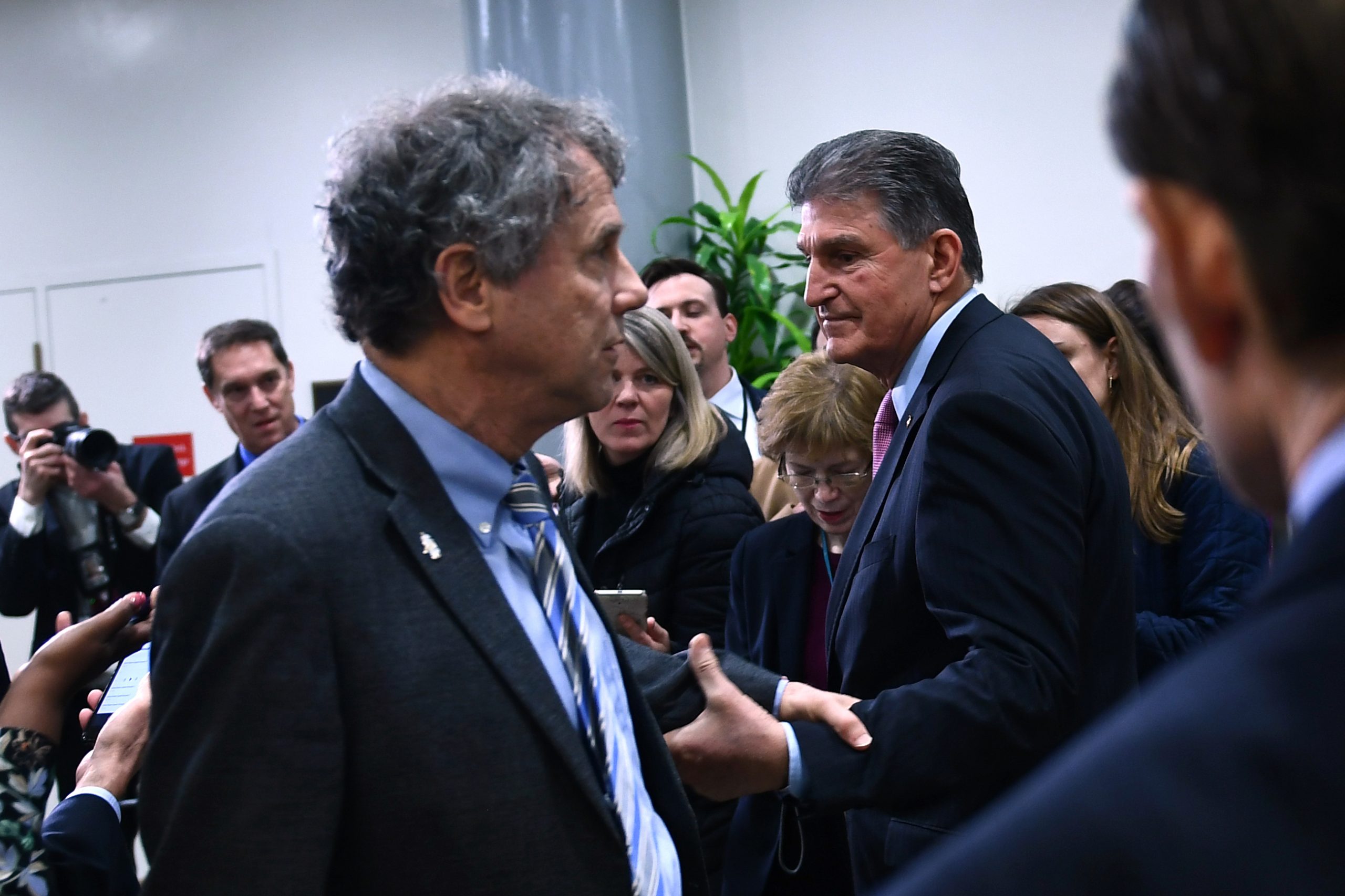
Senate Democrats can only afford to lose one seat next year and still keep their majority. So while senators might typically face significant heat to back party priorities, Sens. Jon Tester of Montana, Joe Manchin of West Virginia and Sherrod Brown of Ohio are instead free to chart their own course.

Manchin already signed on to two separate bills that would freeze the Iranian cash that’s set to unlock after a hostage swap with the country, and Brown and Tester are considering joining him. Brown said both Biden and former President Donald Trump “have failed to secure the border well enough,” comments that both Manchin and Tester agreed with.

“The prisoner swap, the $6 billion, I never was for that,” said Manchin, who has not yet announced plans to run for reelection. But he had a warning for his colleagues: “If Democrats don’t get serious about border security, they’re screwed. They’re screwing themselves.”

What’s more, Biden’s persistently low polling numbers give those senators — as well as the next tier of Democratic incumbents from purple states — plenty of room to stake out their differences with the administration. Independent Sen. Kyrsten Sinema of Arizona is making similar public and private moves, as she mulls another run.

Battleground Democrats breaking with Biden isn’t exactly a new phenomenon. Several Democrats up for reelection last cycle, like Sens. Maggie Hassan of New Hampshire and Mark Kelly of Arizona, strategically distanced themselves from Biden and the rest of the party. But it’s an even trickier balance for the three red-state Democrats up this cycle, given more difficult election prospects and the narrow Senate majority.

In a signal that party leaders are giving their members space, Democratic Senatorial Campaign Chair Gary Peters (D-Mich.) said senators “are going to do what they think is right.”

Red-state Democrats regularly break with presidents of their own party, though Democrats’ Senate map is particularly difficult this cycle. In a statement, White House spokesman Andrew Bates said, “President Biden and Senate Democrats from every corner of the party have built an historic record together despite one of the narrowest majorities in history,” citing efforts to lower drug costs and a new gun safety law.

There could be ample opportunities for these Democrats to make good on their rhetoric, though the party’s more centrist members face a tough squeeze between the president of their own party and conservative-leaning voters who will determine whether they return to office. Many battleground Democrats sought to keep pandemic-era migration limits in place, only to find themselves summarily ignored. And many centrists are still trying to walk a fine line on Iran, given expected deference to the Democratic president.

The Senate may take up the border security debate later this fall as part of a broad national security package, testing the potent politics of each issue. Aid for Israel is a major component of that package, potentially giving Congress a parallel opportunity to confront Iran. Republicans are already challenging Democrats on the floor.

“We want to be sure that we’re not doing anything to support Iran in this time or giving Hamas or Hezbollah any assets or any support, which we know that they’re both proxies of Iran,” said Sen. Jacky Rosen (D-Nev.), a former synagogue president who is up for reelection. “I’m confident that we’ll have a freeze on it.”

The tension between Biden’s own run and the need to keep the Senate in Democratic hands — an absolute must for governing — goes far beyond Iran and immigration. Tester, Manchin, Sinema and Sen. Angus King of Maine all voted to roll back a bank data collection rule just this week, the latest time a handful of Democrats have sided with Republican efforts to nullify Biden regulations. Manchin’s been on the warpath regarding the administration’s energy policies all year.

Critically, Democrats need to make sure their actions aren’t seen as political. Brown said that’s in part why he’s not immediately supporting bills to freeze the Iran assets: “I’m not just gonna say, out of political reasons, to do this.”

“Look at my record and why I do things and how I do things. I’ve never had a reputation of doing that,” Brown said in an interview, sticking his finger into the air for effect. As chair of the Senate Banking Committee, Brown could himself outsize sway over sanctioning Iran or other states that back terrorism.

Tester said that he would sign onto legislation freezing the Iranian assets if there is proof that Iran directed the terrorist attacks in Israel. He said that if evidence emerges that Iran is behind the killing of more than 1,500 Israelis “then I become much more frustrated” with the Biden administration’s handling of Tehran.

Save for four Democrats, including Manchin, Senate Democrats broadly supported the nuclear deal with Iran and have taken several votes over the past 10 years that Republicans may use to try to portray the party as weak on Iran. National Republican Senatorial Chair Steve Daines (R-Mont.) said any action now by Democrats is “too little, too late.”

“The American people understand that the appeasement strategy with Iran was a dangerous strategy that failed and the Biden border policy has completely failed,” Daines said. Democrats are “waking up and seeing reality,” he added.

Two Republican senators, granted anonymity to discuss internal party strategy, said they were wary of pursuing border security this fall, worried Democrats would only agree to new funding and use it for their own political and policy priorities. Sen. Joni Ernst (R-Iowa), the No. 4 leader, said Republicans need Democratic votes to beef up border security so she is “OK” with trying to work with them on it.

She also drew some nuance between the two issues, saying cracking down on Iran after the Hamas terrorist attack on Israel is “just sensible.”

“But the fact that they have pushed so hard against any sort of border security in the past, and now they’ve done this big flip-flop, it’s all political,” Ernst said.

Of course, most of the Democrats up for reelection supported the 2013 comprehensive immigration bill, which included billions for border security. The House’s snub of that bill has essentially frozen bipartisan legislative efforts on immigration now for more than a decade. Now, those moderate Democrats have little hope of expanding legal immigration along with stricter border policies.

“If we were to be able to get a comprehensive immigration bill passed with funding to secure the border, that would be a positive thing that we can hold people accountable on. Unfortunately, we don’t,” Tester said. Montanans, he added, are “concerned about folks coming across the line; we don’t know who they are. So am I, by the way.”

Beyond legislation, there’s the broader question of whether to appear with the president or not during campaign season, a question that will fall more to purple-state Democrats than those from red states. Biden is unlikely to campaign in Ohio, let alone West Virginia or Montana.

Still, some of those at-risk Democrats are welcoming Biden to their stomping grounds. The president’s almost certain to go to Pennsylvania and likely to states like Wisconsin and Nevada as well. Best not to make it awkward.

“We’re a state where results matter. And there is a proud record of accomplishment — infrastructure bill, Inflation Reduction Act,” Sen. Tammy Baldwin (D-Wis.) said. “And so I welcome President Biden to visit Wisconsin early and often.”

‘The man broke my heart’: Biden’s Arab-American boosters begin to leave his side

posted in: News | 0

Maysoon Zayid, a Palestinian American comedian, did everything she could to get Joe Biden elected in 2020.

She starred in a comedy event boosting him. She spoke on a call organized by the Biden campaign featuring Arab women supporting him. Biden’s team even touted her endorsement in a press release.

But after watching how Biden has navigated the Israel-Hamas war over the last two weeks, Zayid said she can no longer vote for him in 2024.

“The man broke my heart,” she said.

As Israel prepares for a likely ground invasion to retaliate against Hamas’ surprise attack on Oct. 7, Zayid is among the many fearful of what’s to come for Gaza. She has a 7-year-old godson in the region.

She wants Biden to push for a ceasefire. She is also scared for Palestinians and Muslims in the United States, some of whom have faced increased hatred and violence since the war began, and feels that Biden has talked about the conflict in a way that has inflamed tensions.

“I never in my life thought the empathizer-in-chief would sound the way he did. The Palestinians were given no humanity,” she said. “Joe Biden should spend every breath he has condemning Israel’s genocide with the same zeal he condemned Hamas’ massacre of civilians, that same zeal. And we get nothing. 1,000 children are dead, and we get nothing.”

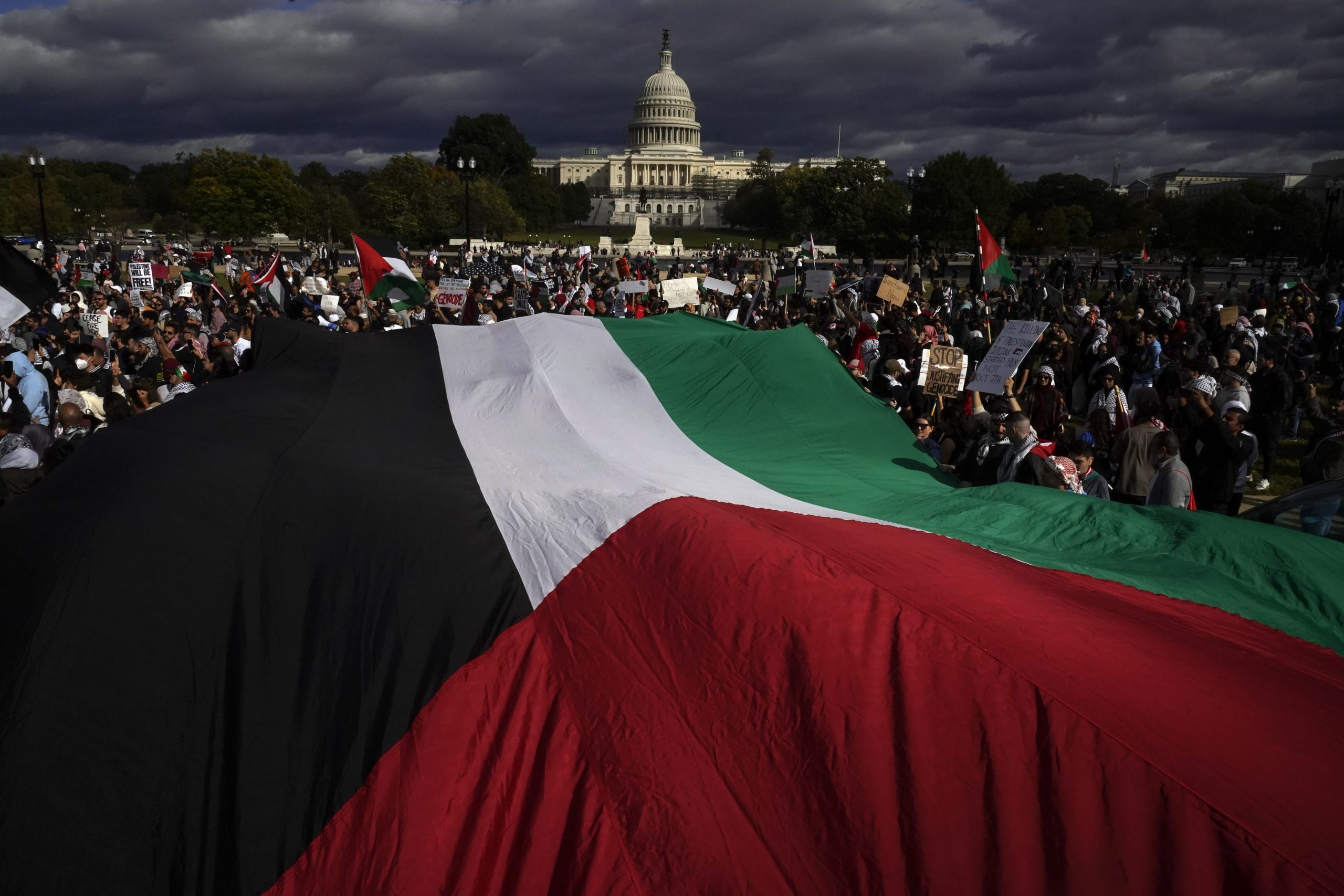
In the days since Oct. 7, Biden has enjoyed broad support among voters for his embrace of Israel and condemnation of the Palestinian militant group Hamas. But he is facing anger from many Arab Americans, Muslims and their progressive allies over what they see as an uneven response and failure to push for deescalation.

Hala Hijazi, a Democratic donor and fundraiser who attended the Eid al-Fitr celebration at the White House this year, said she is considering leaving the national finance network that supports Biden over his handling of the war. She said several of her family members have been killed in Gaza since the conflict began, and fears for the lives of more of them.

“I have been one of his biggest fans,” she said of Biden. “I feel betrayed. I feel like my humanity is not equal to anyone else’s humanity.” She doesn’t often speak to the press, she said, but “my family is going to be dead [in the coming days] and I can’t be silent.”

Though Biden strongly condemned Islamophobia and expressed sympathy for Palestinian civilians in a primetime Oval Office speech Thursday, many in Arab and Muslim American communities believe the president and his aides have been reckless in their language, especially initially.

Increasingly, they have amplified their warnings, telling Biden’s team that frustrations among Arab Americans and Muslims could hurt him in the presidential race next year. While those voters make up a small portion of the electorate, they can be a key bloc in tightly contested battleground states like Michigan and Pennsylvania. Exit polls show a clear majority of Muslims voted for Biden in 2020.

The argument being made is not that this bloc will suddenly swing to former President Donald Trump, who has pushed for an expanded Muslim travel ban in recent days. Instead, in more than a dozen interviews with POLITICO, Arab American and Muslim leaders and their allies said they are afraid some voters will sit the election out altogether or vote for a third-party candidate.

“The voters are heartbroken. They don’t want to vote for Trump. But right now they’re asking themselves, ‘How can we vote for the other side given the refusal to call upon Israel to abide by a ceasefire and the continued rhetoric that we’re seeing here domestically?’” said Wa’el Alzayat, CEO of the Muslim advocacy group Emgage. “What I’m most concerned about is actually not whether they’re going to vote for Trump or not, but whether these voters are going to stay home.”

Alzayat, a former U.S. State Department official, said that his group and others have “communicated directly” with the Biden campaign about their worries over 2024 and the administration’s wartime policies.

Biden officials believe that the American public is behind the president in his embrace of Israel. They are also adamant that Biden has been a staunch advocate for Arab and Muslim Americans, in recent days as well as years before the war, and that the contrast between him and Trump on that front is stark.

“The president and this administration have been unequivocal: There is no place for Islamophobia, xenophobia or any of the vile racism we have seen in recent weeks,” said Ammar Moussa, a spokesperson for the Biden campaign. “As MAGA Republicans continue to run on an openly Islamaphobic platform — including renewed support for Donald Trump’s Muslim ban — the stakes of next year’s election could not be more consequential.”

But for Arab and Muslim American leaders, the issue isn’t what Biden’s record was before the war, it’s what it’s been since then.

In the immediate aftermath of Hamas’ attack, which Israeli authorities said left some 1,400 dead, Biden and his administration expressed unqualified support for Israel. Biden’s only mention of Palestinians in a major speech a few days after the attack was to say that Hamas “does not stand for the Palestinian people’s right to dignity and self-determination” and uses “Palestinian civilians as human shields.” Arab American and Muslim leaders felt that didn’t go far enough to make clear to the public that Hamas doesn’t represent Palestinian civilians.

More recently, Biden’s tone has evolved, and he has repeatedly said Hamas doesn’t represent the Palestinian people and expressed concern for Palestinian civilians. He and his top aides have also personally pushed Israel to allow humanitarian aid into Gaza, including during his visit to the country.

Behind the scenes, top White House officials have made efforts to make Arab Americans and Muslims in their administration feel more included, after many complained they were being neglected. The president’s senior aides are, among other things, directing cabinet secretaries to reach out to their staff and holding daily calls focused on sensitive messaging.

In his speech Thursday, Biden spoke at length about Palestinians, both in the U.S. and in Gaza.

“I know many of you in the Muslim American community or the Arab American community, the Palestinian American community, and so many others are outraged and hurting, saying to yourselves, ‘Here we go again,’ with Islamophobia and distrust we saw after 9/11,” he said, decrying the death of Wadea Al-Fayoume, a 6-year-old Palestinian American boy who was killed this month in what law enforcement officials said was a hate crime.

“To all of you hurting — those of you who are hurting, I want you to know: I see you,” he added. “You belong. And I want to say this to you: You’re all America. You’re all America.”

But some Arab American and Muslim leaders have dismissed Biden’s recent remarks as too little, too late. Others said that while they appreciate Biden’s comments expressing concern for Palestinian civilians, they recoiled at the actions of his administration, which includes sending weapons to Israel and asking Congress for $14 billion for the country. (Biden’s team has also asked for funding for humanitarian aid for Gaza.)

Hani Almadhoun, a Washington, D.C.-based humanitarian worker, said he is part of a WhatsApp group that used to be a place for pro-Biden activists and fundraisers to talk. It was called “Arab Americans for Biden.”

But since the war began, he said, it was renamed “Arab Americans Forward.” He said the group’s members are furious with Biden, and called the space “basically a Let’s Go Brandon situation.”

Adrian Hemond, a Michigan-based Democratic strategist, cautioned that there is a lot of time between now and Election Day in which voters could change their minds as passions cool. And, he said, voters are highly sympathetic to Israel right now, which could benefit Biden politically.

At the same time, he said, the anger among Arab Americans and Muslims in his state could be a problem for Biden given how close the race is expected to be.

“Look, the president’s margin for error is pretty small,” he said. “He’s not in a super strong position for reelection as it stands right now. And anything that potentially makes that worse is a concern for Democrats.”

Live updates | Israeli warplanes strike targets ahead of expected ground offensive in Gaza

posted in: All news | 0

By The Associated Press

Israeli warplanes are striking targets across Gaza ahead of an expected ground offensive in the besieged Hamas-ruled territory. Fears of a widening war have grown as Israel struck targets in the occupied West Bank, Syria and Lebanon and traded fire with Lebanon’s Hezbollah militant group.

Two aid convoys arrived in the Gaza Strip over the weekend through the Rafah crossing from Egypt. Israel said the trucks carried food, water and medical supplies. Israel has not allowed in fuel, which is critically needed for water and sanitation systems and hospitals.

The war, in its 17th day Monday, is the deadliest of five Gaza wars for both sides. The Hamas-run Health Ministry said Monday that at least 5,087 Palestinians have been killed and 15,270 wounded. In the occupied West Bank, 96 Palestinians have been killed and 1,650 wounded in violence and Israeli raids since Oct. 7.

More than 1,400 people in Israel have been killed, mostly civilians who died in the initial Hamas rampage into southern Israel. In addition, 222 people including foreigners were believed captured by Hamas during the incursion and taken into Gaza, Israel’s military has said. Two of those have been released.

Currently:

Here’s what’s happening in the latest Israel-Hamas war:

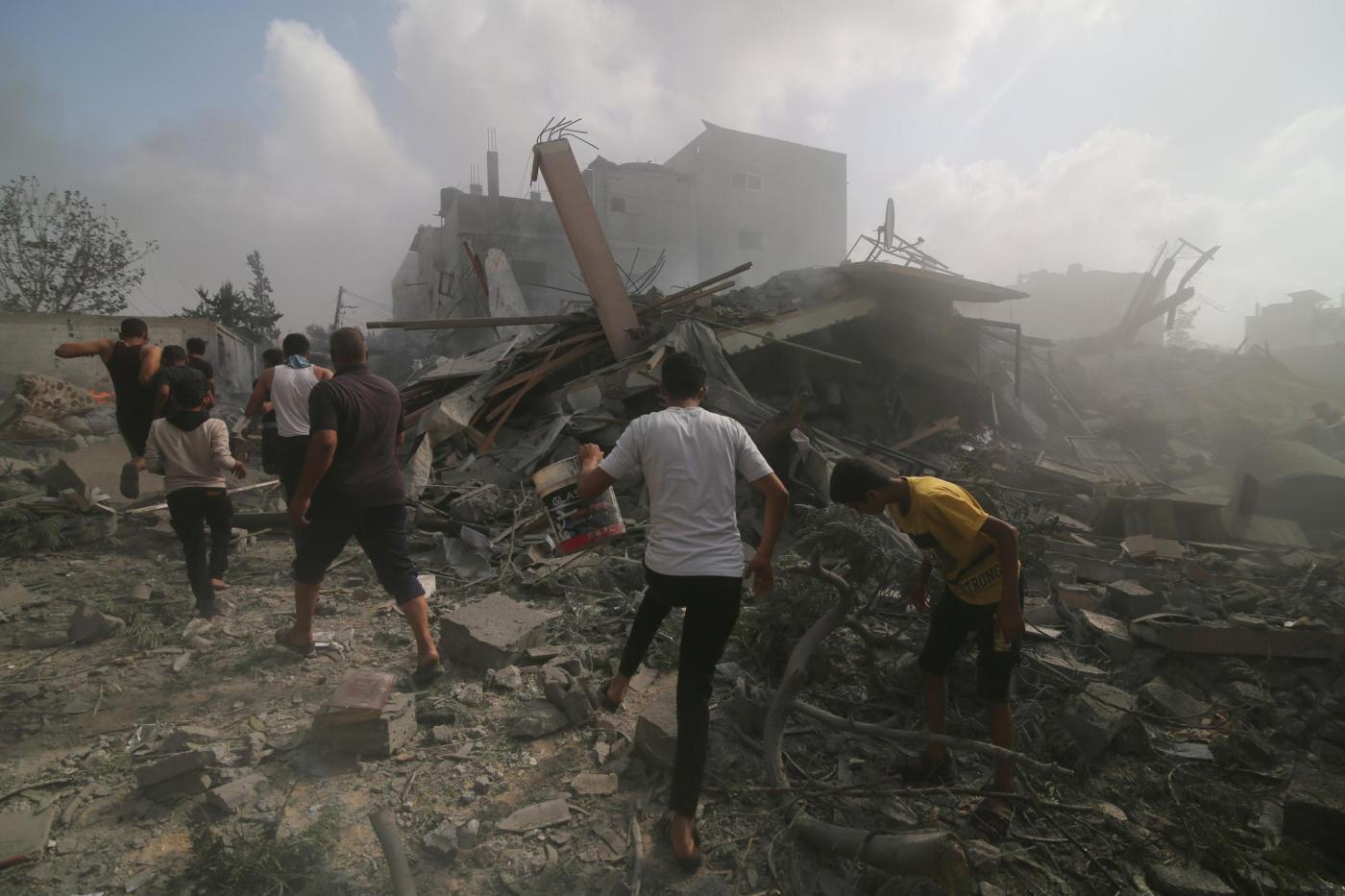
RAFAH, Gaza Strip — Gaza’s Hamas-run Interior Ministry said at least 18 people were killed in Israeli attacks on neighborhoods in Rafah city on Monday. It said scores of Palestinians were also wounded.

An airstrike hit a residential building about 200 meters (yards) from the U.N. headquarters in Rafah on Monday, killing and wounding several people, according to an Associated Press reporter at the scene, underscoring the perils of humanitarian operations.

Videos released by the Israeli military showed airstrikes decimating buildings in the Gaza Strip. The military said the videos showed attacks on Hamas infrastructure but did not specify the locations.

Flashes of yellow light were followed by an explosion sending gray smoke and debris shooting upward as multistory buildings collapsed or toppled over.

The explosions could be seen from Israel.

CAIRO — The death toll in Gaza has climbed to at least 5,087 Palestinians since the war between Israel and Palestinian militant groups broke out on Oct. 7, the Hamas-run Health Ministry said Monday.

Ashraf al-Qidra, a spokesperson for the ministry in Gaza, said the fatalities included 2,055 children and 1,119 women.

More than 15,270 others were wounded, he said.

The tally includes the disputed toll from a hospital explosion last week, which the two sides have traded blame for.

More than 1,400 people in Israel have been killed — mostly civilians slain during the initial Hamas attack. At least 222 people were captured and dragged back to Gaza, including foreigners.

DEIR AL-BALAH, Gaza Strip — As conditions rapidly worsen, Gaza’s Hamas-run Health Ministry appealed on Monday for blood donations for hospitals in the besieged territory that are suffering from dire shortages of blood and medical supplies.

The ministry urged residents to rush to hospitals and blood banks across Gaza for blood donations and called for the International Committee of the Red Cross to bring blood to the territory.

BRUSSELS — Ireland is calling for an immediate cease-fire in Gaza so that civilians can get access to desperately needed aid and supplies.

Irish Foreign Minister Micheal Martin said “this is a matter of the utmost urgency. The loss of life is enormous, is at a scale that has to be stopped.”

Speaking Monday in Luxembourg at a meeting of European Union foreign ministers, Martin called for food, water and medical supplies to be allowed into Gaza at an “accelerated and comprehensive scale.”

“We understand Israel’s need to deal with Hamas, because it was an appalling attack. But the degree of suffering now -– the innocent civilians in Gaza suffering -– is just not acceptable at all,” he said.

BAGHDAD — Iraq’s army spokesperson says the state will go after militants who have carried out attacks against army bases housing U.S. troops in the country.

Maj. Gen. Yahya Rasoul said in a statement Monday that military advisers from the U.S.-led coalition are in the country “at the invitation of the government” and their mission is to train Iraqi forces.

Rasoul said the prime minister has ordered the country’s security agencies to go after those who carried out attacks and prevent any attempt to harm Iraq’s national security.

Over the past week, several bases housing U.S. troops in Iraq came under rocket and drone attacks that were believed to have been carried out by Iran-backed groups.

There are about 2,500 U.S. troops in Iraq, whose main mission to train Iraqi forces and prevent a resurgence of the Islamic State group.

BRUSSELS — European Union foreign ministers are meeting Monday to discuss ways to help vital aid get into Gaza, particularly fuel, after two convoys entered over the weekend.

EU foreign policy chief Josep Borrell said that “in normal times, without war, 100 trucks enter into Gaza every day. So it’s clear that 20 is not enough.”

Borrell said the emphasis must be on getting power and water-providing desalination plants running again. “Without water and electricity, the hospitals can barely work,” he told reporters in Luxembourg, where the meeting is taking place.

He said the ministers will also look at ways to resolve the conflict between Israel and the Palestinians longer term.

“The great powers have forgotten about the Palestinian issue, thinking it was going to be solved alone, or it doesn’t matter. Yes, it matters,” Borrell said.

Israel says Sunday that a second batch of humanitarian aid was allowed into Gaza, at the request of the U.S. and according to instructions from other political officials.

On Saturday, 20 trucks entered in the first shipment into the territory since Israel imposed a complete siege two weeks ago. Sunday’s batch included only water, food, and medical equipment, with no fuel, Israel said.

U.S. President Joe Biden and Israel Prime Minister Benjamin Netanyahu of Israel “affirmed that there will now be continued flow of this critical assistance into Gaza,” the White House said in a statement after a phone call between the leaders.

The Israeli military said the humanitarian situation in Gaza was “under control,” even as the U.N. called for 100 trucks a day to enter.

Hospitals say they are scrounging for generator fuel in order to keep operating life-saving medical equipment and incubators for premature babies.

On Sunday, Associated Press journalists saw seven fuel trucks head into Gaza. Juliette Touma, spokeswoman for the U.N. agency for Palestinian refugees, and the Israeli military said those trucks were taking fuel that had been stored on the Gaza side of the crossing deeper into the territory, and that no fuel had entered from Egypt.

AMMAN, Jordan — The U.N. agency for Palestinian refugees says it will run out of fuel in Gaza in three days.

“Without fuel, there will be no water, no functioning hospitals and bakeries. Without fuel, aid will not reach many civilians in desperate need. Without fuel, there will be no humanitarian assistance,” Philippe Lazzarini, the UNRWA Commissioner General, said in a statement Sunday.

A first delivery of aid that was allowed to cross into Gaza from Egypt on Saturday did not include any fuel.

“Without fuel, we will fail the people of Gaza whose needs are growing by the hour, under our watch. This cannot and should not happen,” Lazzarini said.

He called on “all parties and those with influence” to allow fuel into Gaza immediately, while ensuring that it is only used for humanitarian purposes.

Several world leaders on Sunday spoke about the war between Israel and Hamas, reiterating their support for Israel and its right to defend itself against terrorism and called for adherence to humanitarian law, including the protection of civilians.

U.S. President Joe Biden, Prime Minister Justin Trudeau of Canada, President Emmanuel Macron of France, Chancellor Olaf Scholz of Germany, Prime Minister Giorgia Meloni of Italy and Prime Minister Rishi Sunak of the United Kingdom also welcomed the release of two hostages and called for the immediate release of all remaining hostages.

They committed to close coordination to support their nationals in the region, in particular those wishing to leave Gaza.

The leaders welcomed the announcement of the first humanitarian convoys to reach Palestinians in need in Gaza and committed to continue coordinating with partners in the region to ensure sustained and safe access to food, water, medical care and other assistance required to meet humanitarian needs.

They also said they would continue close diplomatic coordination, including with key partners in the region, to prevent the conflict from spreading, preserve stability in the Middle East, and work toward a political solution and durable peace.

Israeli Prime Minister Benjamin Netanyahu visited troops stationed near the border with Lebanon, where the Israeli army and Iran-backed Hezbollah militants also have traded fire during the Hamas-Israel war.

A top official with Iran Hezbollah vowed Saturday that Israel would pay a high price whenever it starts a ground offensive in the Gaza Strip and said Saturday that his militant group based in Lebanon already is “in the heart of the battle.”

Speaking to troops in the north on Sunday, Netanyahu said Israel would react more fiercely than it did during its short 2006 war with Hezbollah, which is based in Lebanon.

“If Hezbollah decides to enter the war, it will miss the Second Lebanon War. It will make the mistake of its life. We will cripple it with a force it cannot even imagine and the consequences for it and the Lebanese state are devastating,” the Israeli leader said.