Texas Still Issues Thousands of Permits for Natural Gas Flaring

posted in: News | 0

This article originally appeared on Inside Climate News, a nonprofit, independent news organization that covers climate, energy and the environment. It is republished with permission. Sign up for their newsletter here.

At a Railroad Commission meeting last month, Commissioner Jim Wright chastised Callon Petroleum for flaring natural gas at a drilling site, saying it should “find a better solution.”

But his comment came after he voted to grant the Houston-based company a flaring permit that allows Callon to continue flaring gas at the Crockett 15 well in the Permian Basin into the seventh consecutive year.

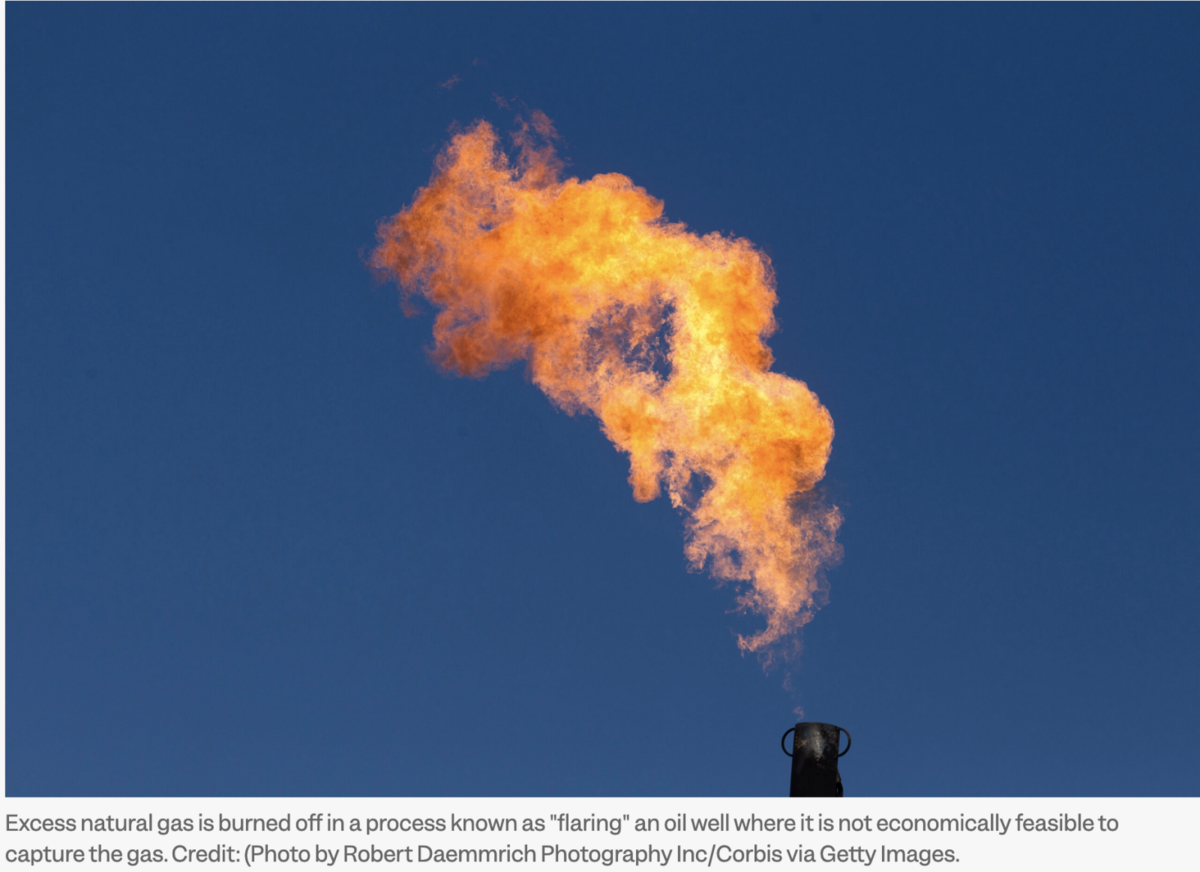
In Texas, State Rule 32 prohibits flaring, or burning off, natural gas at the wellhead except under a few specific conditions. Oil and gas companies are sometimes forced to flare gas during emergencies, to release high pressure in pipes, but more often they flare unwanted gas that comes to the surface in the oil drilling process. Flaring contributes to local air pollution and greenhouse gas emissions. 

Since 2019, when the Texas Methane and Flaring Coalition, an industry group, was formed and the Railroad Commission appointed a “Blue Ribbon Task Force” on flaring in 2020, the practice has received more scrutiny in Texas.

But whatever the reason for flaring, the Railroad Commission has granted companies wide leeway to apply for exceptions to this rule and has long approved almost all of their flaring requests.

The RRC has granted thousands of Rule 32 exceptions so far this year, requiring companies to provide little evidence that they tried to prevent flaring. 

Advocates say the permit process is a “rubber stamp” that makes the anti-flaring rule useless.

One acceptable justification for flaring, according to the RRC, is that following the anti-flaring rule would limit gas production. Advocates say the permit process is a “rubber stamp” that makes the anti-flaring rule useless.

“If, at the end of the day, [regulators] don’t have the wherewithal to say, ‘No, I’m not approving this flaring exception,’ then there might as well not even be a rule,” said Virginia Palacios, executive director of Commission Shift, an advocacy organization focused on reforming the Railroad Commission, the state agency responsible for regulating the oil and gas industry.

A spokesperson for the Railroad Commission said the agency “strictly enforces the statewide flaring rule.”

Commissioners vote for permits despite concerns

In addition to releasing methane and other hazardous air pollutants, including volatile organic compounds, flaring contributes to ground-level ozone, which causes respiratory illness and heart disease. Flaring has also been linked to pre-term births.

Methane’s contribution to climate change in the short term is more potent than carbon dioxide. The oil and gas industry is the second-largest source of industrial methane emissions in the United States, after agriculture.The Environmental Protection Agency is finalizing methane regulations this year for the oil and gas industry, but in the meantime a patchwork of state regulations govern flaring.

In Texas, State Rule 32 prohibits flaring natural gas because of its economic value, while the Texas Commission on Environmental Quality regulates air pollution from oil and gas facilities. The rule allows natural gas flaring for the first 10 days after a well is completed and when necessary to ensure safety. 

Requests for flaring exceptions are usually placed on the “consent agenda” of RRC meetings and voted through without discussion. At the Sept. 19 meeting, Commissioner Wright called out Callon Petroleum for two permit applications. Callon Petroleum applied for an 18-month flaring permit for the Crockett 15 and Durham-East drilling sites northeast of Pecos in Ward County.

The wells are connected to a low-pressure gathering line owned by Kinetic Energy Services, which will route gas to flare if the pressure becomes too great. Callon’s requests stated that flaring is necessary during maintenance or when there is insufficient gas to keep the compressor station running. 

Wright pointed out the natural gas Callon flares is “fully marketable.” He also noted the company was requesting a “sizable increase” in the amount of permitted flaring. The new permits more than double the volume of gas Callon can flare at the drilling sites, compared to previous permits.

“I find this particular situation troubling,” Wright said. “I would suggest that this operator and its vendors attempt to find a better solution to eliminate the need to keep coming back to the commission to administratively forgive the waste of our natural resources.”

Crockett 15, a horizontal gas well, has received 16 different flaring exceptions dating back to 2018. Between July 1, 2022 and June 30, 2023, Callon reported that over nine percent of the gas produced at the well was flared.

The Railroad Commission ruled that the permits are “necessary for Callon to produce recoverable hydrocarbon liquids.” In other words, the RRC determined that maintaining natural gas production at the site overrode compliance with State Rule 32.

A spokesperson for Wright said the commissioner’s comments “reflect his strong desire that both Callon and the gas gatherer work together to improve efficiencies where possible.”

“If Commissioner Wright believed it was right and proper to reject the application, then he would have of course voted to do so,” the spokesperson said.

In 2021, soon after he was elected to the RRC, Wright issued a statement explaining how he would review applications for flaring. 

“Flaring is a necessary last resort during an upset, and we have work to do internally at the commission to ensure that we are not approving requests that go beyond that,” he said.

Callon representatives did not respond to requests for comment. In its 2021 sustainability report, Callon set  the goal to reduce all flaring to less than one percent of gas production by 2024. The company’s 2022 sustainability report modified the goal to reduce “Callon-controlled flaring” to less than one percent. The report attributes an increase in flaring at Callon facilities between 2022 and 2021 to “flaring caused by or exacerbated by force majeure conditions and third-party operational issues.”

The third-party issues referenced can include midstream companies that transport oil and gas from Callon drilling sites to processing and refining facilities.

“Our efforts to find solutions will continue, but we remain partially reliant on our midstream partners’ performance to reduce flaring,” the 2022 report states.

The company has requested more than 500 flaring exceptions from the RRC since May 2021, according to the RRC database. 

Advocates criticize railroad commission flaring record

During the Sep. 19 meeting, Palacios of Commission Shift urged the commissioners to take decisive action.

“I really appreciate your comments and your suggestions for the company to not flare that gas and to find a better way to use that gas…” she said, speaking to Wright. “But you could take things a step further as the commissioner, all three of you could, and not approve those permits when it’s not appropriate for them to be approved.”

The number of flaring permits issued by the Railroad Commission peaked in 2019 at 6,972. After declining for several years, the total is creeping back up. Permits increased from 3,351 in fiscal year 2021 to 3,667 in 2022. Initial data shows fiscal year 2023 is on track to surpass 2022.

Since the Railroad Commission launched a flaring exemption database in May 2021, the records include only 44 applications that were denied and more than 8,000 that were approved.

The RRC spokesperson disputed that the high approval rate means applications are rubber stamped.

“The Commission always rejects flaring applications when it is not meeting the requirements of the application and the operator must resubmit the application after corrections are made,” the spokesperson said. “Sometimes it takes several rejections before the flaring permit is approved.”

The RRC spokesperson cited the percentage of natural gas flared out of total gas produced in Texas—0.77 percent in May 2023—as “an indication of the efforts by the RRC and the oil and gas industry to reduce flaring in the state.”

However, most flared gas comes from oil wells, known as casinghead gas, not from natural gas wells. Palacios and other advocates say the rate of casinghead gas flared is a better measure of progress, or lack thereof. In May 2023, according to RRC data, approximately 2 percent of casinghead gas was flared.

Gunnar Schade, associate professor of atmospheric sciences at Texas A&M University, said that flaring rates in Texas follow the booms and busts of oil production. Schade, who has studied unreported flaring, pointed to RRC data that showed flaring has increased as the industry recovered from the decline in production at the start of the pandemic in 2020. He said lowering the flaring rate is only part of the equation; if gas and oil production continues to increase, so will overall methane emissions.

“Higher production means higher methane emissions,” Schade said. “Net U.S. methane emissions have not dropped as the industry only decreased methane intensity, counteracting their own production growth.”

The 2021 report Flaring in Texas, by Sharon Wilson and Jack McDonald, outlined problems with the permitting process. 

“Rule 32 outlines a series of flaring justification examples, but does not actually articulate any standard for determining when a flaring permit should be granted,” they wrote. “In practice this means the RRC has ceded flaring permit decision making to each individual operator, effectively preventing the RRC from denying flaring permits.”

The report also documents numerous flares in the Permian Basin for which companies had no permits. Advocates also warn flaring is underreported in Texas because the RRC relies on companies self-reporting.

“Wright knows that the industry doesn’t act on suggestions,” Wilson said, in reference to the RRC commissioner’s recent comments. “Any changes need to be mandated and rigorously enforced.”

Wilson, who now directs the organization Oilfield Witness, said public pressure has increased on companies to stop flaring. But she warned that companies may resort to venting—releasing methane directly into the atmosphere—which does not create the tell-tale flame of a flare, to avoid scrutiny. Methane, a climate super-pollutant, is over 80 times more warming than carbon dioxide over a 20-year period. 

“Because the methane is invisible, no one is likely to know,” she said. “The best way to stop flaring is to stop oil and gas expansion and keep the methane gas in the ground.”
Bill Belichick gives more context to key Patriots personnel switch in win over Bills

posted in: News | 0

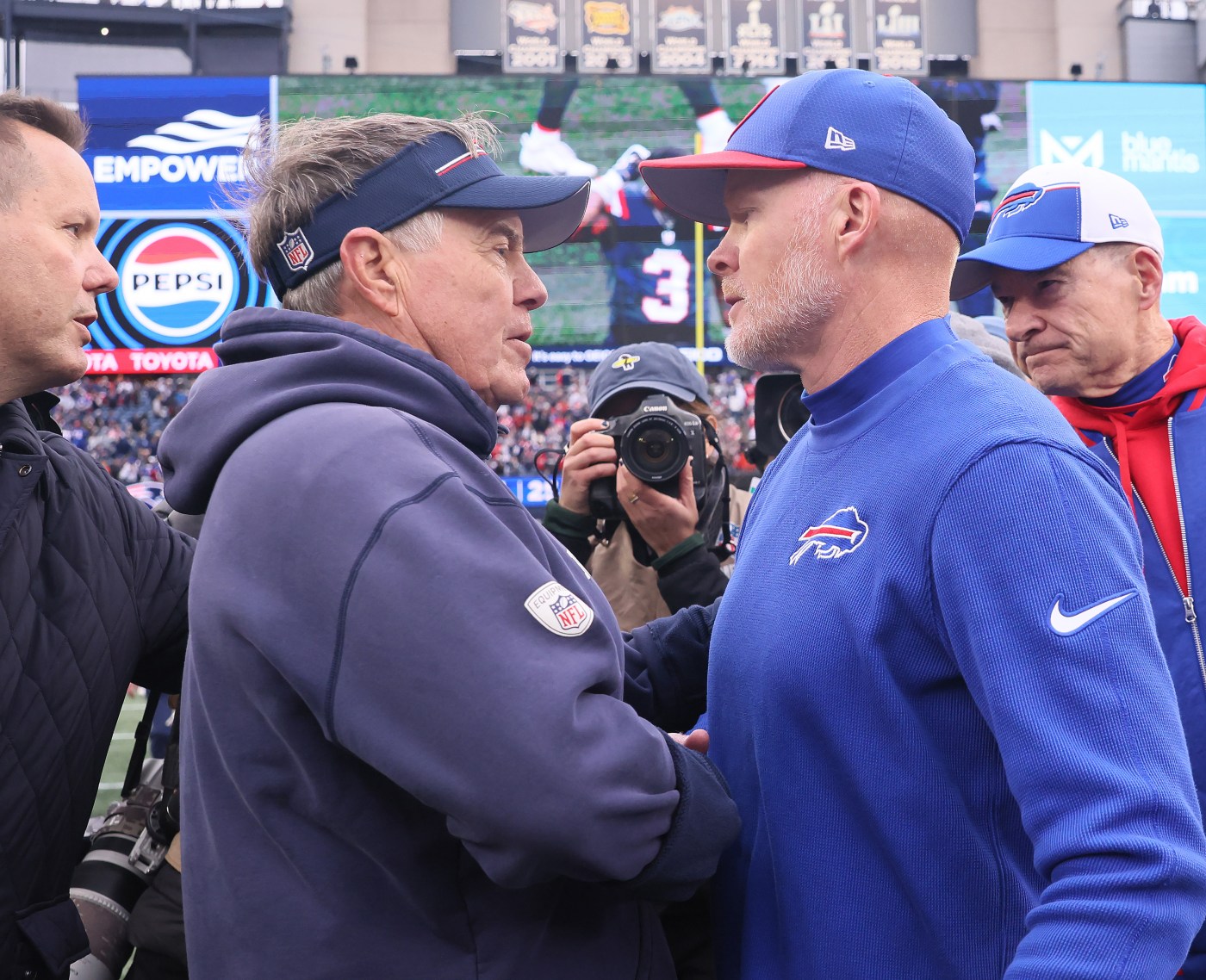
It seems the Patriots finally found an offensive line combination capable of keeping Mac Jones upright and allowing him time to make plays.

It took moving Mike Onwenu from his natural position of right guard over to tackle in Sunday’s win over the Bills, and head coach Bill Belichick provided more detail on the decision Monday morning.

Related Articles

New England Patriots |


Callahan: Patriots scored a throwback win in home upset of Bills

New England Patriots |


Demario Douglas sparks Patriots’ offensive rejuvenation in win over Bills

New England Patriots |


Patriots made key personnel changes in comeback win over Bills

New England Patriots |


What changed for Mac Jones in Patriots’ first game-winning drive in over two years

New England Patriots |


Mac Jones delivers signature win with 29-25 comeback victory over Bills

“There were a number of things involved but had a good conversation with Mike after the Raider game and ultimately I think everyone thought that was the best thing for us to do at this time,” Belichick said. “Went with it, had a good week. I thought he did a good job for us.”

The Patriots have had something of a revolving door at right tackle since the spring. Free-agent addition Riley Reiff was the first option to play at right tackle, but he moved to guard during the spring before a knee injury landed him on injured reserve before the season. He played one game in Week 5 before being placed back on injured reserve.

Conor McDermott was next in line for right tackle snaps, but he also suffered an injury during the summer. He was released with an injury settlement but is back with the team on the practice squad now. Rookie Sidy Sow then received snaps at right tackle this summer, but he’s been moved back to his college position of guard, where he started at Onwenu’s old post on the right side Sunday. The Patriots began the season with Calvin Anderson at right tackle, but he was benched after two games. Then Vederian Lowe, who was acquired via trade before the season, started the next four games at right tackle but struggled.

Prior to Sunday’s win over the Bills, Onwenu had only played right guard for the Patriots this season. He had previously thrived at right tackle but hadn’t lined up at the position in a regular season game since 2021, when he played left guard, right guard and right tackle. He also played all three positions as a rookie in 2020.

“Smart kid that understands all the different positions on the offensive line,” Belichick said Monday. “Pretty good fundamental player and obviously has good strength.”

Now the biggest question is whether Onwenu will start at right tackle or if the team will move him back to right guard and have McDermott play right tackle.

The Patriots’ offensive line held up better in Sunday’s game than they had all season, so it seems worth sticking with Trent Brown at left tackle, Cole Strange at left guard, David Andrews at center, Sow at right guard and Onwenu at right tackle.

Strange, who appears to have bulked up while recovering from a knee injury, returned and played well Sunday.

Ravens still searching for answers on offense: ‘There’s no way around it. We’ve got to be better’

posted in: News | 0

Ravens coach John Harbaugh said the offense is still “a work in progress.”

Quarterback Lamar Jackson’s assessment: “Inconsistent.”

Running back Gus Edwards? “It’s kind of like a fire right now and everybody is eager to put it out.”

Six games into the season, Baltimore’s offense is still trying to find its footing.

The Ravens are 15th in scoring with 22.2 points per game, which ranks behind the Houston Texans and is tied with the Washington Commanders. They’re only marginally better in FTN Fantasy’s Defense-adjusted Value Over Average, ranking 10th. And their 339.2 yards per game is only 11th-most, behind the Indianapolis Colts and barely ahead of the Minnesota Vikings.

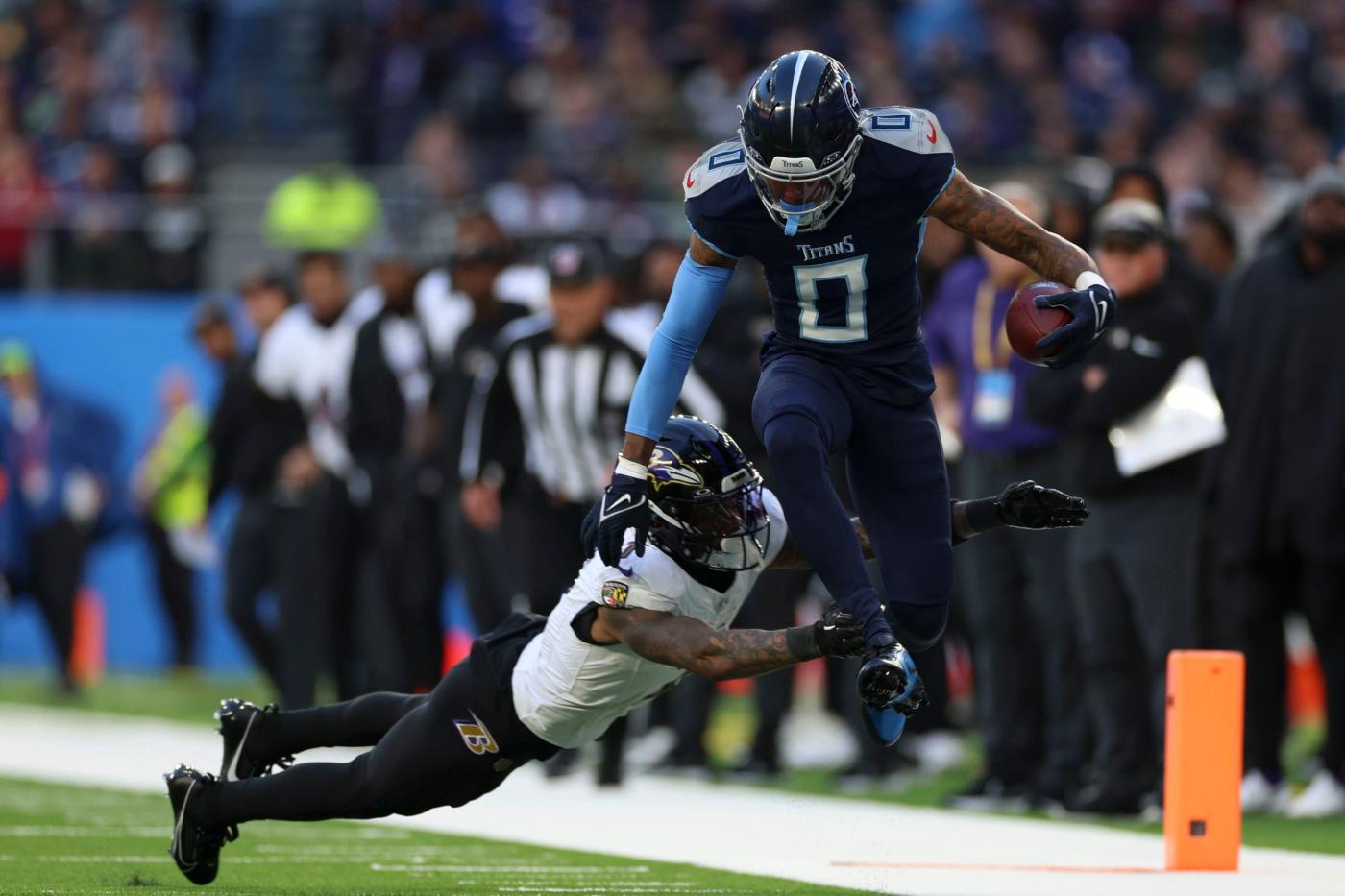
Most glaring are their passing numbers; the Ravens’ 194.3 yards per game rank lower than the 1-5 New England Patriots and the 0-6 Carolina Panthers.

There are other issues that have stood out as well. Last week in London, the Ravens were just 1-for-6 scoring touchdowns in the red zone despite entering the game with the league’s top offense inside the opponent’s 20-yard line. The week before, in a loss to the Pittsburgh Steelers, they had seven dropped passes. Turnovers have also proved costly at times. And while the Ravens have started fast, they have also fizzled as games wear on, scoring the third-most points in the league in the first quarter and the 25th-most in the fourth.

“Teams do a great job of adjusting,” Jackson said. “[They’re] changing up their defenses on us in the second half, and then I’ll say, it takes us a little bit of time to catch up to them.”

The Ravens can at least take some solace knowing they are not alone, as scoring is down leaguewide.

Through the first six weeks, the NFL average of 20.62 points per game is the second-lowest output of the past 10 seasons. The average explosive play rate of 10% is also the lowest through six weeks since the start of TruMedia’s play data in 2000. Quarterbacks are averaging the lowest expected points added per dropback and per pass attempt in history. And success rates running the ball are near the NFL average over the past two decades.

Still, the Ravens spent more money on offense than any team in the league and haven’t had much to show for it. Jackson, in the first season of his five-year, $260 million contract, has only thrown five touchdown passes.

“We’ve got to do a better job of scheming it, do a better job of executing when we have those opportunities,” first-year offensive coordinator Todd Monken said Thursday of the Ravens’ red-zone woes from a week ago. “We’ve done a good job the last couple of weeks of moving the football. That has not been the issue. We’ve solved some of those things in terms of being more explosive, creating an identity, having a better rhythm. But turnovers and execution at the wrong time have hurt us. There’s no way around it. We’ve got to be better.”

Monken also pointed to second-half struggles, which cost the Ravens in their losses to the Indianapolis Colts and Pittsburgh Steelers and nearly did so against last week against the Titans.

Now the 5-1 Detroit Lions, tied for the best record in the NFL, come to M&T Bank Stadium. In addition to featuring one of the league’s best and most dynamic offensive attacks under coordinator Ben Johnson, they are also drastically improved on defense.

Last season, the Lions were last in the league in defensive expected points allowed. This year, they’re 10th, which is tied with the Cleveland Browns for the biggest jump this season.

Much of their success can be attributed to star edge rusher Aidan Hutchinson and rookie defensive back Brian Branch, who memorably returned an interception for a touchdown in Detroit’s season-opening win over the defending Super Bowl champion Chiefs in Kansas City. But the overall scheme has changed, too, with a significant shift from man coverage to zone.

Detroit has also generated the sixth-highest pressure rate this year despite having the fifth-lowest blitz rate, and it boasts the second-stingiest run defense in the NFL, allowing just 64.7 yards per game.

Yet the Ravens enter Sunday’s game feeling as if they gave away both of their losses, games they led by double digits but ultimately failed to finish despite several opportunities to do so.

“I think it’s just don’t let off the gas,” wide receiver Odell Beckham Jr. said. “I feel like [if] you let off the gas … This is the National Football League; every team is capable of winning any Sunday. So just finding ways to close those games off.

“This is a team in here that’s 4-2; it feels like [we] should be 6-0. And maybe those two losses were the best things that happened for us to allow us not to take any moment for granted — or opportunity — and just being able to capitalize when we do have that time.”

Seven weeks in would be a good time to do so. The schedule will only get harder the rest of the way.

“Not turning it over, being explosive, converting on third down [and] scoring touchdowns in the red zone are all big part of what makes an offense successful and all the ways why [a] defense is successful,” Monken said. “All those things correlate, and we’re close.”

We’ll find out just how close — or how far — come Sunday.

Week 7

Lions at Ravens

Sunday, 1 p.m.

TV: Ch. 45

Radio: 97.9 FM, 101.5 FM, 1090 AM

Line: Ravens by 3

()

Tom Emmer scrambles to fix his Trump problem

posted in: Politics | 0

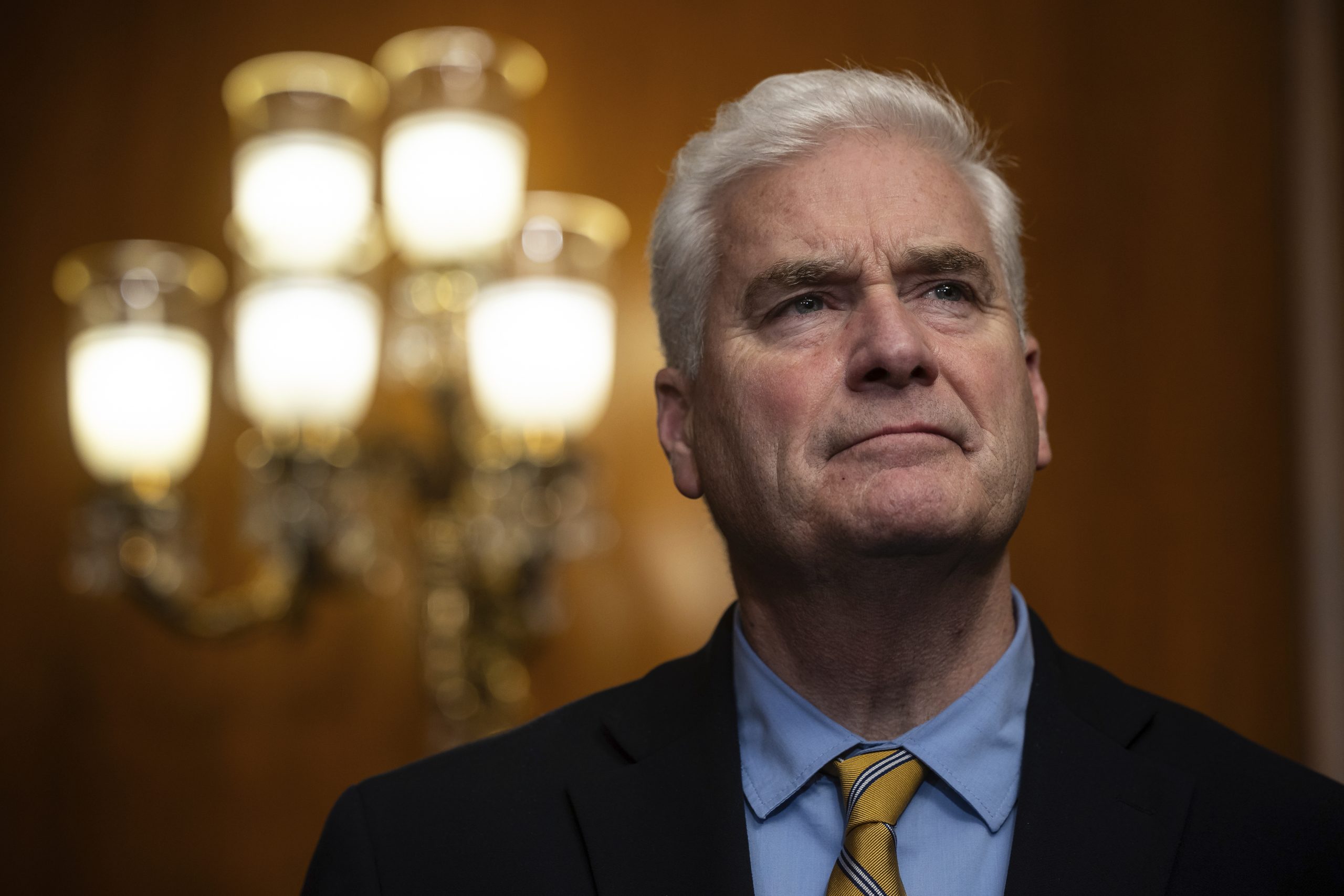
As House Republicans sort through a field of short-timers and back-benchers to pick their next speaker, Majority Whip Tom Emmer stands out.

The Minnesota Republican helped the GOP claw its way back into the majority as a two-time NRCC chair. Not only has he won chits from colleagues by raising money and campaigning across the country, he has spent the past nine months as whip building relationships among conservatives and centrists alike.

But Emmer has a Donald Trump problem.

The former president has told associates that he doesn’t want Emmer for the job. And Trump’s allies have already taken to social media and talk radio to pan him as too out of step with the leader of their party.

“He’s openly hostile to Trump, which isn’t helpful since Trump will be the nominee,” said one anti-Emmer member. “It’s laughable that he, at the end of the day, would end up being the speaker of the House. Even if he gets the majority of the majority, he will come far short for members who won’t vote for him on the floor.”

To be sure, Emmer has shown a willingness to buck Trump when other top Republicans wouldn’t. He was one of the few senior GOP leaders, for instance, who voted to accept the electoral votes that clinched President Joe Biden’s victory.

But Emmer world is pushing back hard on the whisper campaign against him, and his allies have a retort for every charge — from the fact that Emmer supported both of Trump’s presidential bids to one ally’s insistence that he’s “never heard him say a negative thing about Trump” to the autographed photo of the two of them that Emmer keeps in his office.

Rather, they say, the entire conflict has been concocted by his foes in the House who have grievances that have nothing to do with Trump.

They point to Rep. Jim Banks (R-Ind.), who narrowly lost the contentious whip race last year even after many MAGA world figures weighed in against Emmer. And to allies of Conference Chair Elise Stefanik (R-N.Y.), whose orbit has also clashed with Emmer’s, dating back to when the two sparred over her push for more women campaign recruits.

“Banks … activated Trump world against Emmer, and a lot of that was unfounded,” one Emmer ally said. “But there’s still lingering false narratives from that race. It didn’t work for Banks. It’s not going to work now to paint Emmer as if he’s a Never Trumper.”

The issue for Emmer is that narratives can be hard to change, particularly if Trump himself is buying them. One Emmer critic predicted there will be “at least 10 hard nos” ready to oppose him in a floor vote.

But that isn’t stopping Emmer world from responding, point by point, to the allegations being made against him:

Charge No. 1

As head of the NRCC, Emmer told GOP candidates to distance themselves from Trump on the campaign trail.

The response: Emmer denied the allegation, which appears to stem from a 2022 CNN story, during a Fox News interview where he likewise praised Trump as a “fantastic ally” for the House GOP. Instead, he said, he told candidates to “know your district” and how best to win.

Either way you put it, it’s only common sense to counsel candidates running in swing districts away from hugging Trump. Doing otherwise would almost be malpractice.

Emmer’s allies also note that Emmer not only invited Trump to fundraisers but invited the former president’s inner circle — including Stephen Miller, Susie Wiles, Brian Jack and Chad Wolf — as guests during their regular Sunday night calls with candidates.

Charge No. 2

Emmer hasn’t endorsed Trump for president.

The response: True, but neither have other senior GOP leaders, including former Speaker Kevin McCarthy or Majority Leader Steve Scalise — who have all tried to stay inside political Switzerland as the presidential race swirls around them. Emmer’s allies say he’ll endorse whomever wins the nomination, Trump included, when the time comes.

Charge No. 3

Emmer’s office was behind a whisper campaign during the whip race accusing Banks of hiring Tucker Carlson’s son, Buckley, to win favor from conservative media.

The response: Emmer has denied that the blind quotes in question came from him — including to Tucker Carlson himself. Indeed, the anonymous comments could have come from anywhere: Many GOP lawmakers said much the same thing about Banks to reporters around that time.

Charge No. 4

Emmer didn’t do enough to help Rep. Jim Jordan (R-Ohio) win the speaker’s gavel, since he was angling for his own bid.

The response: “That is sooo B.S.,” one Emmer ally told us. His inner circle noted they allowed Jordan to use the whip’s office conference room to meet with holdouts and that, at one point, Jordan’s foes even yelled at Emmer’s team to stop calling them about changing their minds.

What’s next for Emmer

Even Emmer’s allies aren’t sure he’ll win the nomination on the first ballot in Tuesday’s conference election, given the nine-candidate field. But they’re confident other candidates’ backers will ultimately turn to the whip and push him over the top. Emmer has already been seeking commitments from lawmakers for the second and even third ballots, according to people familiar with his operation.

Then comes the hard part: pinning down 217.

It might all come down to what Trump himself does. The former president hasn’t weighed in against Emmer publicly, and he isn’t yet making calls to whip opposition, people knowledgeable about the race said.

Will that change if Emmer wins the nomination? Some in the whip’s orbit hope he might stay neutral — particularly after his backing for Jordan failed to anoint him speaker.

Emmer has some hard-right allies who might help. Rep. Andy Biggs (R-Ariz.), the former House Freedom Caucus chair who helped oust McCarthy, broached Emmer as a potential alternative. Rep. Matt Gaetz (R-Fla.) has also been acting as a bit of a go-between between Emmer and Trump world — though one Emmer critic argued Gaetz’s assistance might backfire given his toxic standing among most House Republicans right now.

Rep. Troy Nehls (R-Texas), who has been pushing a long-shot effort to seat Trump himself as speaker, offered a peek at how the MAGA bloc is viewing Emmer. The attacks aren’t looking good, he said, casting doubt on whether Emmer could ever win enough votes on the floor.

But Emmer can take heart that Nehls would not be personally willing to tank his speaker dreams: “If Tom Emmer can get to 217, I’ll back him.”

Like this content? Sign up for POLITICO’s Playbook newsletter.