Five things we learned from the Ravens’ 38-6 win over the Detroit Lions

posted in: News | 0

The Ravens met their greatest test of the season with their best performance, beating the Detroit Lions, 38-6, thanks to imaginative offense and a vicious pass rush.

Here are five things we learned from the game.

This was the complete effort the Ravens had been after

They had chased this feeling.

The Ravens came into this season believing they were designed for greatness. For six weeks, however, every step in that direction was undercut — by injury, by carelessness, by lack of imagination. They outplayed each opponent, but their record, solid as it was, did not reflect this.

Tight end Mark Andrews called them a “sleeping giant.”

They knew they could not afford to be their own worst enemies against the Lions. Strange as it sounds to fans who have followed football for the past 60 years, no team was playing better than Detroit on both sides of the ball. Every metric said a new NFL power had roared forth from the Motor City.

The Ravens, by contrast, seemed like an afterthought in discussions of possible Super Bowl contenders. They did not have a signature win to push them to the forefront.

Now, they do.

The score, against an opponent that had won each of its past four games by at least two touchdowns, was impressive enough. But the Ravens did so many things so well. That’s what will resonate as we consider their potential going forward.

Their ballyhooed receivers dashed into open spaces. Their big men owned both lines of scrimmage. They shook the efficiency right out of the Lions’ passing game with pressure. They finished each relentless drive in the end zone. Lamar Jackson was equal parts sharpshooter and puppet master.

Lions coach Dan Campbell put it more succinctly: “They kicked our [butts]. It’s a credit to them.”

Was it a grand statement? “We’re just going to define it in terms of what we think we’re capable of playing like,” coach John Harbaugh said. A good answer.

Did the Ravens become a closer team in London, sifting through the ashes of their terrible collapse against the Pittsburgh Steelers? Several players suggested they came back from their overseas trip with more cohesion and purpose.

“I can tell you right now, the focus throughout the week — in walk-throughs and meetings, players asking questions, clarifying what needed to be done, things that need to be fixed — when you can do that as a collective group, you know you’re always striving to get better,” right tackle Morgan Moses said.

Many teams take a bye to recover from the long journey, but the Ravens were too concerned about the Lions, 5-1 thanks to an efficient offense and a punishing defense, to worry about jet lag. They knew that if they did not play with purpose, they could be embarrassed. Instead, they did the embarrassing.

The giant stayed wide awake for 60 minutes.

Execution matched design on a pristine day for Todd Monken’s offense

Here, finally, the Ravens brought to vivid life the vision that had danced in fans’ heads since Monken replaced Greg Roman as offensive coordinator.

Pass fed into run, fed back into pass. Every trick produced magic. Jackson had as much time and as many free targets as he needed.

The Lions had allowed 4.7 yards per play over their first six games. The Ravens averaged 9.6 in the first half. Jackson’s full-game high coming in was 237 passing yards. He threw for 255 before halftime. Only his botched exchange with running back Justice Hill kept the Ravens from scoring on their first five drives.

Harbaugh gave Monken and his staff a game ball afterward.

“We took advantage of what Todd saw,” Andrews said. “He called a really good game.”

Jackson made a sharp read to get their initial drive going, pulling up on what looked like a run and flicking the ball to Odell Beckham Jr. for 11 yards. On the very next play, Zay Flowers found a vast opening in the middle of Detroit’s zone, and Jackson found him for 46 yards. The Ravens were in danger of stalling in the red zone, as they had too often over the previous two weeks, but Harbaugh went for it on fourth-and-1, and Jackson scored easily off a bootleg.

By their third drive, the Ravens felt comfortable digging deep into their bag. Fullback Patrick Ricard rumbled 28 yards after Jackson found him with no defender in sight. Rookie running back Keaton Mitchell, playing the first offensive snaps of his career, lined up in the slot, then motioned toward Jackson to take a jet sweep for 9 yards.

The fourth time they had the ball, it was a running back party, with Gus Edwards and Hill gashing the Lions for gains of 20 and 27 yards, respectively.

On the Ravens’ first drive of the second half, Jackson drew the Lions to him with the threat of a run, then lofted the ball to Edwards, who had run behind the entire defense, for an 80-yard gain to set up another touchdown. It was a nifty play that leveraged Jackson’s best qualities, though he hinted there was improvisation involved.

“We had a success with it,” Jackson said with an eyebrow raised. “So I’m gonna say it was schemed up.”

Campbell watched Jackson toy with his defense in a way no quarterback, not even Patrick Mahomes, had all season. “Lamar beat us,” he said. “He hammered us with his arm. He threw the ball extremely well. He ran when he needed to, and we did not handle it well.”

Monken would be the first to say he merely sets up the canvas on which Jackson performs his artistry. Credit is irrelevant. Both men worked at their highest levels against Detroit.

The offensive line deserved its own game ball

Monken’s designs could not have sprung to life if Jackson had no time to orchestrate them against a rugged Detroit front. He frequently had eons to dance around, waiting for a receiver to pop open.

The Lions, fifth in pass DVOA through six games, finished with no sacks and one quarterback hit. Their rising superstar, defensive end Aidan Hutchinson, hardly got near Jackson. You don’t get much cleaner than that.

“Ten out of 10,” Andrews said when asked to grade the offensive line’s performance.

They had foreshadowed this effort with a stellar pass blocking performance in London against the Tennessee Titans. All five starters were healthy for the second week in a row, vital for a unit that depends on chemistry more than any other on the team.

“We’re jelling, man,” Moses said. “That’s the part of offensive line, right, you’ve got to grow; you’ve got to jell. We operate as five, not as one individual. When Tyler [Linderbaum] gets up there and gives us the calls, and we’re all in one sync, we can play a lot faster.”

With five sacks against a top offensive line, the Ravens showed their pass rush can’t be called a fluke

The Ravens came in tied for the league lead in sacks. Detroit’s offensive line had pass blocked about as well as any in the league.

Defensive coordinator Mike Macdonald attacked this problem with his usual array of stunts and simulated pressures, at times loading his pass rushers on one side to create mismatches. His tactics worked like a charm, fueling talk that he will be a head coaching candidate sooner rather than later. The Ravens put immediate heat on Jared Goff, one of the league’s most accurate passers when he’s in rhythm.

“Mike [Macdonald] reiterated all the time throughout the week that if you startle Goff early, he starts to get panicky,” defensive tackle Justin Madubuike said. “That’s exactly what happened.”

Madubuike sacked Goff to close out Detroit’s first drive, continuing his quiet ascent as one of the league’s most productive interior pass rushers. Cornerback Arthur Maulet picked up his second sack in the past three weeks off a blitz the Lions simply did not pick up. Odafe Oweh dropped Goff in his first game back from a bad ankle sprain. Kyle Van Noy, an astute free agent addition prompted by the injuries to Oweh and David Ojabo, picked up his second and third sacks of the season.

In this case, Harbaugh did not want the kudos going to his staff or the scheme. “Just give the guys credit,” he said. “Start talking about them.”

It’s a fair point. Just because the Ravens do not have a Myles Garrett or a T.J. Watt (or a No. 2 overall pick such as Detroit’s Hutchinson) does not mean they lack talented pass rushers. They have a lot of them, from Madubuike on the interior to Van Noy, Oweh and Jadeveon Clowney on the edges to Patrick Queen at inside linebacker to half the secondary. Their threat does not come from one point but from many, and opponents have yet to discover a counter. Only in their Week 2 win over the Cincinnati Bengals did they pile up fewer than three sacks. They have done it against so-so offensive lines and excellent ones.

Analysts looked at this defense before the season and saw the potential for mediocrity, noting a lack of proven talent on the edges and suspect depth in the secondary. Well, the Ravens had allowed 4 yards per pass attempt coming in, and they just rattled one of the hottest quarterbacks in the sport. Questions answered.

Now that the Ravens played the game they’ve chased, they have to forget it

This performance evoked memories of two others from earlier in Jackson’s career.

The first was the Ravens’ 45-6 annihilation of the Los Angeles Rams on “Monday Night Football” in which they rolled up more than 400 yards before halftime. That was the apotheosis of their 14-game winning streak to close out the 2019 regular season. The other, from 2021, was their 34-6 beatdown on the Los Angeles Chargers, who arrived in Baltimore 4-1, riding a wave of Justin Herbert hype. That victory did not foreshadow a wondrous streak; they lost 41-17 to the Cincinnati Bengals the next week.

The point is that for now, we should not treat this as anything more than an exceptionally good week. We know the Ravens are good enough to run away from a quality opponent, but they’ll have to show they can do it twice.

They’re well aware, hence the lack of euphoria from Jackson and his mates in the wake of their masterpiece. Asked why he wasn’t bubbling over, Jackson said, “I’m all right with winning, but still it’s [the] regular season. We made strides for improvement last week and earlier in the season. I believe we did, but it’s just one regular-season game.”

They will be heavily favored when they travel to Arizona to play the Cardinals next weekend, but they need only look back to their squandered opportunities against the Steelers and the Indianapolis Colts to remind themselves how little that means.

Harbaugh likes to say the story of the NFL changes every week, and it’s a message his team takes to heart. They’ve answered questions about moving on from dreary weeks. Now, they must put a splendid one behind them.

“There’s a lot of things we still think we can better at, and that’s the beauty of it, right?” Moses said. “We fixed some things that we lacked last week in the red zone. Every week, there’s something we’ve got to work on.”

Week 8

Ravens at Cardinals

Sunday, 4:25 p.m.

TV: CBS

Radio: 97.9 FM, 101.5 FM, 1090 AM

()
Opinion | American Jews Won’t Abandon the Left. Will It Abandon Us?

posted in: Society | 0

In the aftermath of the Six-Day War in 1967, many American Jews grappled with a challenge that the Talmudic scholar Hillel had posed 1,900 years earlier: “If I am not for myself, who will be? … If I am only for myself, what am I?”

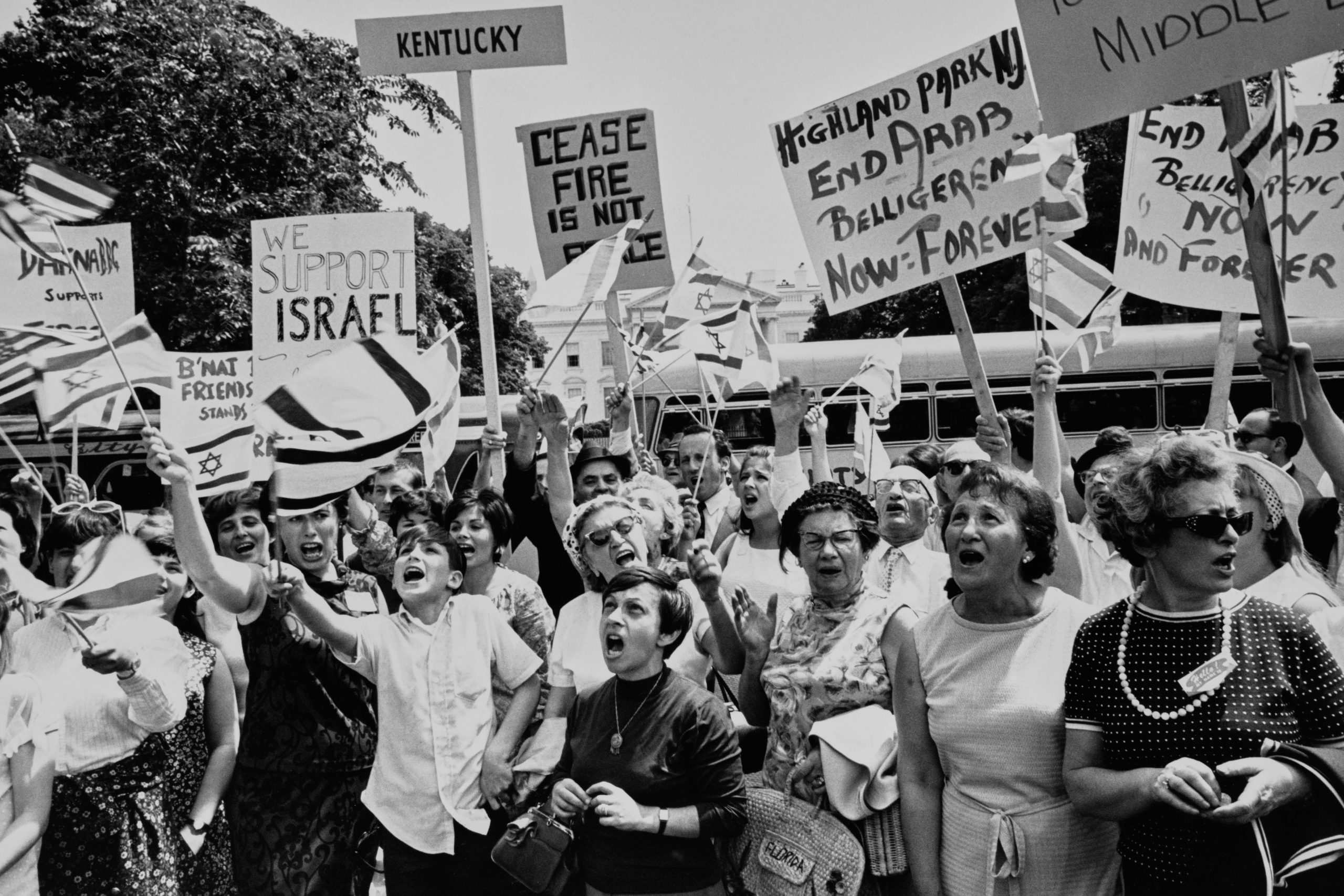
In the late 1960s and early 1970s, Jewish lay and religious leaders commonly invoked that famous philosophical question from synagogue bimahs, at political conferences and in newspaper editorials. They had been shocked at their apparent abandonment by many American liberals — particularly liberal Christians — who voiced greater concern and affinity for hostile Arab countries than for the state of Israel. The whiplash from this abandonment led many American Jews to reevaluate their political allegiances. Could they stand up for themselves, even if doing so meant breaking with former allies, and still stay true to their liberal values?

It’s that same feeling of abandonment that many American Jews, particularly the community’s majority of political liberals, are struggling with today. In the two weeks since Hamas unleashed a brutal attack against Jewish and non-Jewish Israelis — a modern-day pogrom that included rape, the murder of babies, the kidnapping of young and old civilians by the hundreds and gangland executions of innocents — many American Jews are writhing in anger at self-styled progressives who strike them as wholly insensitive to Jewish suffering and trigger-happy not just to decry Israel’s military response but to deny its very right to exist.

“I am in such a state of despair,” said Nick Melvoin, a member of the Los Angeles Unified School Board and current candidate for Congress. “In my generation, we have been warned how quickly people would turn on us and we just thought no way.” A rabbi and progressive activist in LA put the matter in sharper relief when she observed that the “clear message from many in the world, especially from our world — those who claim to care the most about justice and human dignity — is that these Israeli victims somehow deserved this terrible fate.”

We’ve been here before. If history is a guide, American Jews won’t switch their political allegiances, though Republicans have been anticipating such a defection for a half-century, every four years, like clockwork. But they may react in ways that reshape Democratic politics, activism and fundraising. They may cool their ardor for “progressive” causes and organizations, move more firmly to the center and urge the Democratic Party to follow suit. Certainly, their relationship with the left will never be the same.

To understand why, we need to wind the clock back to 1967.

In late May 1967, the armies of Jordan, Egypt and Syria encircled Israel at its borders and choked off its access to international waterways. As the United Nations quietly submitted to Egyptian President Gamal Abdel Nasser’s demands that it withdraw international peacekeepers from the Sinai Peninsula, a terrified American Jewish community braced itself for sweeping physical destruction and human losses in Israel. American Jews took seriously Nasser’s threat to drive Israel into the sea. They expected nothing short of a second Holocaust.

“Give As You Never Gave Before,” pleaded the United Jewish Appeal (UJA) in newspaper advertisements that ran nationwide. American Jews responded to the call. At an emergency meeting in New York, attendees pledged $1,000,000 per minute for 15 minutes to the Emergency Israel Fund. In Baltimore, a UJA volunteer recalled staffing tables at city banks where donors lined up to liquidate their accounts and, in some cases, emptied the contents of their safety deposit boxes directly into the hands of collection agents. Time magazine reported that contributions arrived so fast “that officials often had no idea how much they had collected.” A small Jewish congregation of Okmulgee, Oklahoma, even sold its synagogue and wired the revenues to Tel Aviv. American Jews saw the greatest existential threat to their co-religionists since the Holocaust, which was still very much a recent memory.

Of course, the war ended differently than expected. After Israel launched a preemptive strike, it took the small Jewish state just six days to drive back its three assailants and capture East Jerusalem, including the Old City, the West Bank, the Golan Heights, the Sinai Peninsula and the Gaza Strip.

American Jews were relieved and elated. But many of them were also angry. Most American Jews then (as now) identified as liberals. And as longtime anchor participants in a host of progressive movements — from civil rights and social welfare, to interfaith tolerance and peace (particularly during the Vietnam War) — Jewish liberals recoiled at the silence or outright betrayal of former allies.

Like the 2,000 delegates to the New Politics Convention that fall, in Chicago. Originally conceived as an organizing platform to recruit an anti-war challenger to President Lyndon Johnson, the convention adopted a resolution denouncing the “imperialistic Zionist war.”

Or the Student Nonviolent Coordinating Committee (SNCC), once a mainstream civil rights organization, which published a broadside asserting that “Zionists conquered the Arab homes and land through terror” and that “the famous European Jews, the Rothschilds, who have long controlled the wealth of many European nations, were involved in the original conspiracy … to create the ‘State of Israel.’” These claims ran beside a cartoon of Israeli Defense Minister Moshe Dayan, with dollar signs plastered to his epaulets and a rendering of a hand bearing a Star of David and a dollar sign, tightening a noose around the necks of Egyptian President Nassar and the boxer Muhammad Ali.

The New Left — a hodgepodge of younger activists, precursors to today’s self-identified “progressive” activists — was one matter. More disappointing was the seeming silent betrayal of friends closer to the center left, particularly Christian lay and religious leaders who had been longtime partners in a variety of reform movements.

In late 1967, the American Jewish Committee reported that while “there were a number of open declarations of support from individual Christian leaders” that past June, “such public statements from Christian institutional bodies were noticeably rare.” In particular, the “reluctance of the two powerful ‘umbrella’ organizations — the National Council of Churches and the National Conference of Catholic Bishops … to commit themselves unequivocally on the basic question of Israel’s survival … came as a surprise to many Jewish leaders.” Time similarly observed that many Jews had not failed to notice that “the majority of Christian Churchmen [had] either remained silent, or failed to protest strongly when Arab nations threatened to annihilate Israel.”

“American Jews are taking a new — and long — look at the practice of holding dialogues — discussions — with Christian churchmen,” declared the Union of American Hebrew Congregations (UAHC), Reform Judaism’s principal religious organization. “[T]he Six Day War had a chilling effect on American-Christian relations” and “many Jews, already cool toward what they consider unwarranted ‘ecumania’ [a term signaling ardor for interfaith cooperation and action] … are now turning to us with an ‘I told you so’ tone, asking: ‘Where was the Christian community during the past few weeks when Israel and the cause of world peace so desperately needed visible support?’” Longtime partners in civil rights and peace, the mainline churches seemed eerily quiet when Jewish lives, and Jewish security, were on the line.

“There is evidently much fence-straddling and conscience grappling, a pro-Arab undercurrent,” reported the Anti-Defamation League. Particularly enraging was a declaration by the National Council of Churches that “with due consideration for the right of nations to defend themselves, the NCC cannot condone by silence [Israeli] territorial expansion by armed force.” The organization particularly opposed “Israel’s unilateral annexation of Jordanian portions of Jerusalem. The historic city is sacred not only to Judaism, but also to Christianity and Islam.”

These were the very early days of the occupation, in the immediate aftermath of a coordinated effort to wipe Israel off the map. This was before there was a serious movement within Israel to keep and settle these lands. The country was still in a state of war with its neighbors. For many American Jews, it seemed wildly offensive for the NCC to demand that the Jewish state unilaterally retreat to its June 1967 borders. Voicing “due consideration” for the right of Israelis to defend themselves seemed like a throwaway line.

Liberal Christian leaders “worried about Arab refugees … but not about clear pledges to exterminate and massacre the people of Israel,” observed the UAHC — arguably the most liberal of the major American Jewish religious movements. “Was the Christian conscience so ambivalent on the question of Jews that, once again, a pall of silence would hang over the specter of Jewish suffering, until later, condolences and breast-beating and epitaphs and the croak of guilty conscience would fill the air?”

The standard historiographical narrative used to hold that American Jews turned inward and rightward after the Six-Day War. That interpretation doesn’t stand the test of time. Mainstream Jewish organizations continued to engage in anti-poverty, anti-war and civil rights work, and most Jews continue to this day to identify as liberal (50 percent) or moderate (32 percent) Democrats. To be sure, there were signs of ideological fracture — from the rise of a small but vocal neoconservative movement among Jewish intellectuals to the creation of Jewish vigilante and terrorist groups like the Jewish Defense League. Mainstream Jewish organizations also broke with civil rights allies over questions like affirmative action in the late 1970s, a break that might have come on its own but which was made easier by the fracture of the late 1960s.

But Jews remained a core component of the Democratic base, partly because the party increasingly drifted to the center in the 1970s, while left-leaning organizations became a more marginal force in politics. It was easy for Jews to maintain their political identity and home, if they didn’t have to share that space with perceived antisemites in the New Left.

The problem today is similar, but different. In 1967 Israel achieved its greatest triumph. Today, Israel — and its American Jewish cousins — are reeling from the single greatest act of violence committed against Jews since the Holocaust. As the journalist Michael Cohen observed, “the key difference is that in 1967 American Jews felt pride over Israel’s military accomplishment. Today it’s just anguish, not just at the murder and massacre of Jews but at the lack of solidarity from our supposed allies on the left.”

Furthermore, if the New Left became largely inconsequential to Democratic politics by the 1970s, the same is not true of self-styled progressives today. Grassroots movements like Black Lives Matter (BLM), and organizations like the Democratic Socialists of America (DSA), may still play at the margins of party politics, but they have a seat at the table in a way their New Left predecessors never really did.

For many Jewish liberals who strongly disapprove of the Israeli occupation, hunger for a two-state solution, feel sick about what the people of Gaza are experiencing (even if some believe that Iran and Hamas are principally responsible for that suffering) and loathe Benjamin Netanyahu, it has been a clarifying two weeks.

Clarifying, when a Chicago BLM chapter and some student activists incorporated renderings of a hang glider in their pro-Palestinian flyers — a savage celebration of the Hamas terrorists who swooped into a concert and murdered 260 civilians, some of whom they sexually assaulted. BLM Chicago’s response? “Yesterday we sent out msgs that we aren’t proud of,” the organization wrote on X. “We stand with Palestine & the people who will do what they must to live free. Our hearts are with, the grieving mothers, those rescuing babies from rubble, who are in danger of being wiped out completely.” That’s what we call a non-apology apology.

Clarifying, when academic activists like Zareena Grewal, a professor at Yale, tweeted that “Israel is a murderous, genocidal settler state and Palestinians have every right to resist through armed struggle, solidarity.” Or when 30 student leaders at Harvard issued a letter asserting that Israelis are “entirely responsible for all unfolding violence.” Or when Russel Rickford, a historian at Cornell university, described the rape, murder and kidnapping of Jews as “exhilarating” and “energizing.”

Clarifying, when the Democratic Socialists of America — an organization with deep hooks in the progressive wing of the Democratic party — chanted, “from the river to the sea, Palestine will be free” — a genocidal motto for driving all Jews from Israel proper (not just the West Bank).

Even more so when over 260 former staffers on Sen. Elizabeth Warren’s presidential campaign issued a public letter excoriating Israel as a criminal state guilty of war crimes (and calling Warren complicit in those alleged crimes, given her support of Israel) — making only passing mention of the rape, torture, murder and kidnapping of Israeli civilians — and demanding that she call for an immediate cease-fire.

On X, formerly known as Twitter, prominent journalists and political activists casually accuse Israel of “genocide,” “war crimes” and “ethnic cleansing” — words that cease to have real meaning if they’re applied to every single action that Israel takes to defend its citizens, but not to Hamas and its Iranian patrons.

As in 1967, many liberal Jews feel the pain of erasure — of not being seen or heard. Non-Jews on the left strike them as blissfully unaware of, even disdainful of, the experience of American Jews viewing imagery of fellow Jews being hunted house-to-house, carted away on trucks, shot, sexually assaulted and murdered. For American Jews, whose synagogues have been under armed guard for several years, at least since the massacre at the Tree of Life congregation in Pittsburgh — many of whom are the children and grandchildren of Holocaust victims — this act of erasure isn’t just a form of disappointment. It’s enraging.

Jen Bluestein, a veteran Democratic operative who served until recently as a top strategist at NARAL Pro-Choice America, gave voice to this sentiment last week when she tweeted: “On every single social media platform I’m on, I’m experiencing anti-semitism by totally well-intentioned people who probably share many of my values. It is exhausting to be Jewish right now. It’s also heartbreaking & infuriating what’s happening in Gaza. But if your feelings about Gaza lead you say things that your Jewish friends and colleagues hear as deeply anti-Semitic, you may want to listen and learn more than you talk.”

As in 1967, it’s improbable that Jews will swing to the Republican party, a political organization thoroughly in the thrall of white Christian nationalists whom many Jews view as a much more immediate threat to their communities. But the tragedy of Oct. 7, 2023, was something very different from the triumph of the Six-Day War.

Why Patriots first-round flier ate into DeVante Parker’s snaps in win over Bills

posted in: News | 0

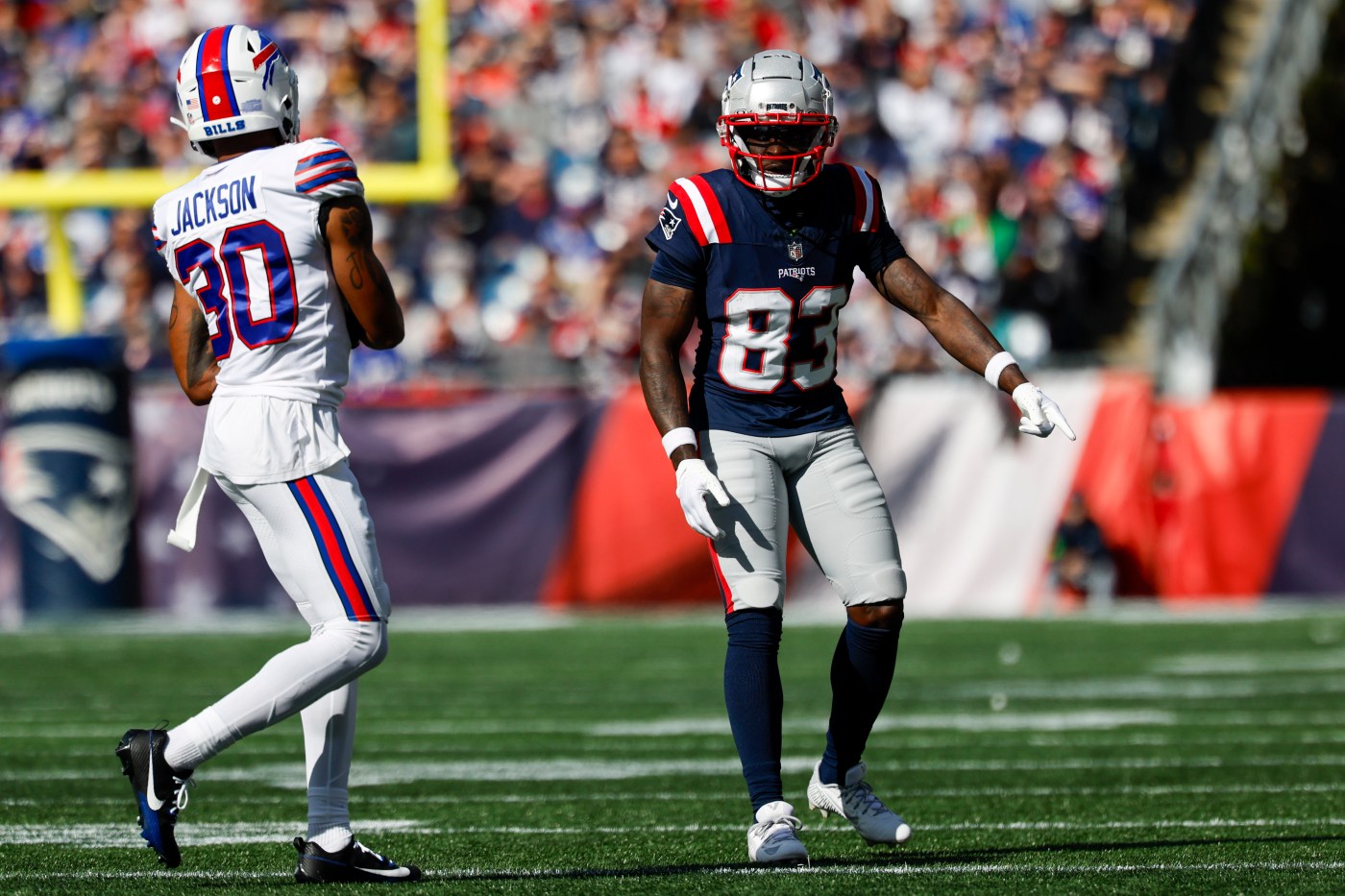
Among the personnel changes head coach Bill Belichick made in Sunday’s win over the Bills was reducing wide receiver DeVante Parker’s workload.

Parker was on the field for just 35 snaps, which accounted for just 58% of offensive plays. That was his lowest snap count and play-time percentage since Week 1, when he was inactive with a knee injury.

Related Articles

New England Patriots |


Bill Belichick gives more context to key Patriots personnel switch in win over Bills

New England Patriots |


Callahan: Patriots scored a throwback win in home upset of Bills

New England Patriots |


Demario Douglas sparks Patriots’ offensive rejuvenation in win over Bills

New England Patriots |


Patriots made key personnel changes in comeback win over Bills

New England Patriots |


What changed for Mac Jones in Patriots’ first game-winning drive in over two years

Wide receiver Jalen Reagor, a 2020 first-round pick by the Eagles who was signed to the Patriots’ practice squad before the season, was the primary benefactor of Parker’s playing time reduction.

Reagor, who was elevated from the practice squad for the third time this season, played a season-high 25 snaps. The 24-year-old caught one 11-yard pass, while Parker hauled in one 8-yard grab.

“Jalen’s done a good job in the opportunities he’s had,” Belichick said Monday morning. “Trying to get all of our skill players in the game and give them an opportunity to make some plays. And we got some production from probably I think we got production from all of them. That’s been kind of a common thing throughout the year. We’ve had tight ends, receivers, running backs, those guys have had production. We just obviously need more of it. But that’s — try to get those guys in the game and let them help us.”

Parker, who signed a contract extension this offseason, dropped a deep pass from quarterback Mac Jones on the Patriots’ final offensive drive of their Week 7 loss to the Raiders. After that loss, Parker said the ball hit in the fingertips.

Wide receiver Kendrick Bourne played 56 snaps (93%) in Sunday’s win and led the team with six catches on seven targets for 63 yards with a touchdown, while rookie Demario Douglas was on the field for 37 snaps (62%) in starting slot receiver JuJu Smith-Schuster’s absence. Douglas caught four passes on six targets for 54 yards with a 20-yard rush. Second-year pro Tyquan Thornton played just three snaps (5%) and caught one 2-yard pass.

Reagor would need to be signed to the 53-man roster to see more playing time since he’s used up his three practice squad elevations.

St. Paul homicide investigation underway after West Side shooting

posted in: News | 0

St. Paul police said Monday they’ve launched a homicide investigation after a shooting death overnight.

It happened on the West Side in the 400 block of South Clinton Avenue.

Police said they plan to release additional information later Monday.

Related Articles

Crime & Public Safety |


1 dead, 2 injured in early morning shooting in St. Cloud, police say

Crime & Public Safety |


New Minnesota law cracks down on organized retail theft

Crime & Public Safety |


Former Twins player arrested in connection with 2021 Lake Tahoe-area shooting that killed a man, wounded his wife

Crime & Public Safety |


West St. Paul man pleads guilty to murder in fatal 2021 shooting of Woodbury man in Minneapolis

Crime & Public Safety |


Heidi Firkus family, others speak out in new ‘Dateline’ program about her murder in St. Paul