If you’re poor, fertility treatment can be out of reach

posted in: News | 0

Michelle Andrews | KFF Health News (TNS)

Mary Delgado’s first pregnancy went according to plan, but when she tried to get pregnant again seven years later, nothing happened. After 10 months, Delgado, now 34, and her partner, Joaquin Rodriguez, went to see an OB-GYN. Tests showed she had endometriosis, which was interfering with conception. Delgado’s only option, the doctor said, was in vitro fertilization.

“When she told me that, she broke me inside,” Delgado said, “because I knew it was so expensive.”

Delgado, who lives in New York City, is enrolled in Medicaid, the federal-state health program for low-income and disabled people. The roughly $20,000 price tag for a round of IVF would be a financial stretch for lots of people, but for someone on Medicaid — for which the maximum annual income for a two-person household in New York is just over $26,000 — the treatment can be unattainable.

Expansions of work-based insurance plans to cover fertility treatments, including free egg freezing and unlimited IVF cycles, are often touted by large companies as a boon for their employees. But people with lower incomes, often minorities, are more likely to be covered by Medicaid or skimpier commercial plans with no such coverage. That raises the question of whether medical assistance to create a family is only for the well-to-do or people with generous benefit packages.

“In American health care, they don’t want the poor people to reproduce,” Delgado said. She was caring full-time for their son, who was born with a rare genetic disorder that required several surgeries before he was 5. Her partner, who works for a company that maintains the city’s yellow cabs, has an individual plan through the state insurance marketplace, but it does not include fertility coverage.

Some medical experts whose patients have faced these issues say they can understand why people in Delgado’s situation think the system is stacked against them.

“It feels a little like that,” said Elizabeth Ginsburg, a professor of obstetrics and gynecology at Harvard Medical School who is president-elect of the American Society for Reproductive Medicine, a research and advocacy group.

Whether or not it’s intended, many say the inequity reflects poorly on the U.S.

“This is really sort of standing out as a sore thumb in a nation that would like to claim that it cares for the less fortunate and it seeks to do anything it can for them,” said Eli Adashi, a professor of medical science at Brown University and former president of the Society for Reproductive Endocrinologists.

Yet efforts to add coverage for fertility care to Medicaid face a lot of pushback, Ginsburg said.

Related Articles

Health |


As millions wait on food stamp approvals, feds tell states to speed it up

Health |


Autism diagnoses are soaring. Here’s how some colleges are responding

Health |


Pregnancy care was always lacking in jails. It could get worse

Health |


About as many abortions are happening in the US monthly as before Roe was overturned, report finds

Health |


‘It was the life raft’: Transgender people find a safe haven in Florida’s capital city

Over the years, Barbara Collura, president and CEO of the advocacy group Resolve: The National Infertility Association, has heard many explanations for why it doesn’t make sense to cover fertility treatment for Medicaid recipients. Legislators have asked, “If they can’t pay for fertility treatment, do they have any idea how much it costs to raise a child?” she said.

“So right there, as a country we’re making judgments about who gets to have children,” Collura said.

The legacy of the eugenics movement of the early 20th century, when states passed laws that permitted poor, nonwhite, and disabled people to be sterilized against their will, lingers as well.

“As a reproductive justice person, I believe it’s a human right to have a child, and it’s a larger ethical issue to provide support,” said Regina Davis Moss, president and CEO of In Our Own Voice: National Black Women’s Reproductive Justice Agenda, an advocacy group.

But such coverage decisions — especially when the health care safety net is involved — sometimes require difficult choices, because resources are limited.

Even if state Medicaid programs wanted to cover fertility treatment, for instance, they would have to weigh the benefit against investing in other types of care, including maternity care, said Kate McEvoy, executive director of the National Association of Medicaid Directors. “There is a recognition about the primacy and urgency of maternity care,” she said.

Medicaid pays for about 40% of births in the United States. And since 2022, 46 states and the District of Columbia have elected to extend Medicaid postpartum coverage to 12 months, up from 60 days.

Fertility problems are relatively common, affecting roughly 10% of women and men of childbearing age, according to the National Institute of Child Health and Human Development.

Traditionally, a couple is considered infertile if they’ve been trying to get pregnant unsuccessfully for 12 months. Last year, the ASRM broadened the definition of infertility to incorporate would-be parents beyond heterosexual couples, including people who can’t get pregnant for medical, sexual, or other reasons, as well as those who need medical interventions such as donor eggs or sperm to get pregnant.

The World Health Organization defined infertility as a disease of the reproductive system characterized by failing to get pregnant after a year of unprotected intercourse. It terms the high cost of fertility treatment a major equity issue and has called for better policies and public financing to improve access.

No matter how the condition is defined, private health plans often decline to cover fertility treatments because they don’t consider them “medically necessary.” Twenty states and Washington, D.C., have laws requiring health plans to provide some fertility coverage, but those laws vary greatly and apply only to companies whose plans are regulated by the state.

In recent years, many companies have begun offering fertility treatment in a bid to recruit and retain top-notch talent. In 2023, 45% of companies with 500 or more workers covered IVF and/or drug therapy, according to the benefits consultant Mercer.

But that doesn’t help people on Medicaid. Only two states’ Medicaid programs provide any fertility treatment: New York covers some oral ovulation-enhancing medications, and Illinois covers costs for fertility preservation, to freeze the eggs or sperm of people who need medical treatment that will likely make them infertile, such as for cancer. Several other states also are considering adding fertility preservation services.

In Delgado’s case, Medicaid covered the tests to diagnose her endometriosis, but nothing more. She was searching the internet for fertility treatment options when she came upon a clinic group called CNY Fertility that seemed significantly less expensive than other clinics, and also offered in-house financing. Based in Syracuse, New York, the company has a handful of clinics in upstate New York cities and four other U.S. locations.

Though Delgado and her partner had to travel more than 300 miles round trip to Albany for the procedures, the savings made it worthwhile. They were able do an entire IVF cycle, including medications, egg retrieval, genetic testing, and transferring the egg to her uterus, for $14,000. To pay for it, they took $7,000 of the cash they’d been saving to buy a home and financed the other half through the fertility clinic.

She got pregnant on the first try, and their daughter, Emiliana, is now almost a year old.

Delgado doesn’t resent people with more resources or better insurance coverage, but she wishes the system were more equitable.

“I have a medical problem,” she said. “It’s not like I did IVF because I wanted to choose the gender.”

One reason CNY is less expensive than other clinics is simply that the privately owned company chooses to charge less, said William Kiltz, its vice president of marketing and business development. Since the company’s beginning in 1997, it has become a large practice with a large volume of IVF cycles, which helps keep prices low.

At this point, more than half its clients come from out of state, and many earn significantly less than a typical patient at another clinic. Twenty percent earn less than $50,000, and “we treat a good number who are on Medicaid,” Kiltz said.

Now that their son, Joaquin, is settled in a good school, Delgado has started working for an agency that provides home health services. After putting in 30 hours a week for 90 days, she’ll be eligible for health insurance.

One of the benefits: fertility coverage.

(KFF Health News, formerly known as Kaiser Health News (KHN), is a national newsroom that produces in-depth journalism about health issues and is one of the core operating programs of KFF — the independent source for health policy research, polling and journalism.)

©2024 KFF Health News. Distributed by Tribune Content Agency, LLC.

Chicago Cubs and Cody Bellinger remain an ideal pairing — but can the two sides find common ground?

posted in: News | 0

The best fit for the Chicago Cubs remains available in free agency.

And yet the waiting game continues for outfielder Cody Bellinger and the Cubs. A reunion after a stellar one-year partnership in 2023 makes a lot of sense between the two sides.

Bellinger, 28, was a dynamic force in the middle of the Cubs lineup, giving them much-needed power from the left side they still haven’t adequately addressed even with the trade acquisition of top-50 prospect Michael Busch. For Bellinger, it would be a return to an environment and hitting infrastructure where he thrived in a bounce-back season that showed what he is still capable of when fully healthy.

President of baseball operations Jed Hoyer, though, has demonstrated over his three-plus years in this position that the Cubs will be principled in how they operate in free agency. Bellinger’s agent Scott Boras has also not been afraid to wait things out, even if it means his top players do not sign until spring training is underway. The Cubs ideally would like to have their roster in place by the time pitchers and catchers report to Mesa, Ariz., on Feb. 14. Given how much work still needs to be done with three weeks to go, that might not happen, especially if the Cubs are willing to wait and see how Bellinger’s free-agency courtship plays out.

“We don’t have any fixed deadline,” general manager Carter Hawkins said earlier this month. “I think in a perfect world you have your team going into spring training. I think a lot of these players that sign in March and into the season, there’s just a tough transition phase to get back up to speed when you’re behind the eight ball that way. It doesn’t mean that it can’t work, but just seems like it’s harder to work. That’s anecdotal of course.

“We wouldn’t rule it out. That’d be foolish for us to rule anything out. But, yeah, we’d much prefer to get our team sooner than later.”

If Bellinger’s Cubs teammates had any influence on whether the slugger returns, he garnered unanimous support for a reunion recently during the Cubs Convention.

Right-hander Kyle Hendricks credited Bellinger’s role in a collectively strong defense that took pressure off the pitching staff and what it would mean to have that type of dynamic player come back to Chicago, though the veteran also understands this is a business. Center fielder Pete Crow-Armstrong hopes Bellinger re-signs, regardless of the impact it would have on his playing time.

Left fielder Ian Happ applauded Bellinger for going through what has become a prolonged free-agent process and being in the tough part of negotiations at this point of the offseason, still not knowing where he will play in 2024 and beyond. Happ said part of why he agreed to a shorter three-year extension was so the front office could pursue bigger, longer-term free-agent deals in a win-now environment. Bellinger would certainly fit those parameters.

“If they want to move on from me in three years, that’s their prerogative and they can do it so I think they’re going to build the team in the best way that they see fit and as players, we trust Jed and Carter to do that and give us a chance to compete at the top of the division and into the playoffs,” Happ said.

Left-hander Justin Steele said it was hard to describe the impact Bellinger had last year but that the Cubs would have a sizable hole to replace if he doesn’t return.

“Everybody saw what he did on the field and it was obviously magnificent what he was able to do, but the teammate and the person behind the player is by far the best attribute he has,” Steele said. “The guy showed up in the locker room every day with a smile on his face, good vibes, everybody wants to show up and talk to him that day. So that for me, that’s something that goes such a long way, especially with young guys coming up.”

Bellinger’s defensive flexibility would be a coveted asset for manager Craig Counsell and the Cubs’ roster construction. Playing at an elite level in center field and first base did not go unappreciated by Dansby Swanson, particularly with how it can help with mixing and matching with the lineup, allowing a manager to “press a few different buttons that not maybe any other team could.”

Since signing with the Cubs last offseason, Swanson has been in regular communication with Hoyer and Hawkins, bouncing ideas off each other, communicating openly and being honest with the shortstop when moves might be happening. Swanson is confident that, Bellinger or no Bellinger, the front office isn’t done improving a roster that fell one game short of the postseason.

“At the end of the day, they have a plan, they know what they want,” Swanson said. “They know what they’re looking for. The market overall has been slow. I mean, other than, the billion dollars out west, there really hasn’t been a ton. … They know that we need to get better and we will get better and I think you’ve started to see that recently with some things starting to fall in place and I think that’s only going to continue to grow from there.”

()

Struggling with your mental health this winter? Try garden therapy.

posted in: News | 0

In February, many gardeners are steeped in new seed catalogs and plans for indoor starters. In a way, it has always felt like my focus on the next gardening cycle helps me handle the darker and colder months of winter.

Gardens are a space for slowing down, especially in winter. The slower pace of being in a garden or outdoor space during colder months allows our nervous systems to reset while allowing the garden to also reset before the next planting cycle.

I yearn for a wintering garden, for what it has to offer me in lessons and reflection as well as for what it needs for nature’s own wellbeing. Gardens hold such great therapeutic benefits; it is a symbiotic relationship of sorts. The combination of physical activity, possible social interaction, and exposure to nature all create a beneficial impact on our mental and physical health.

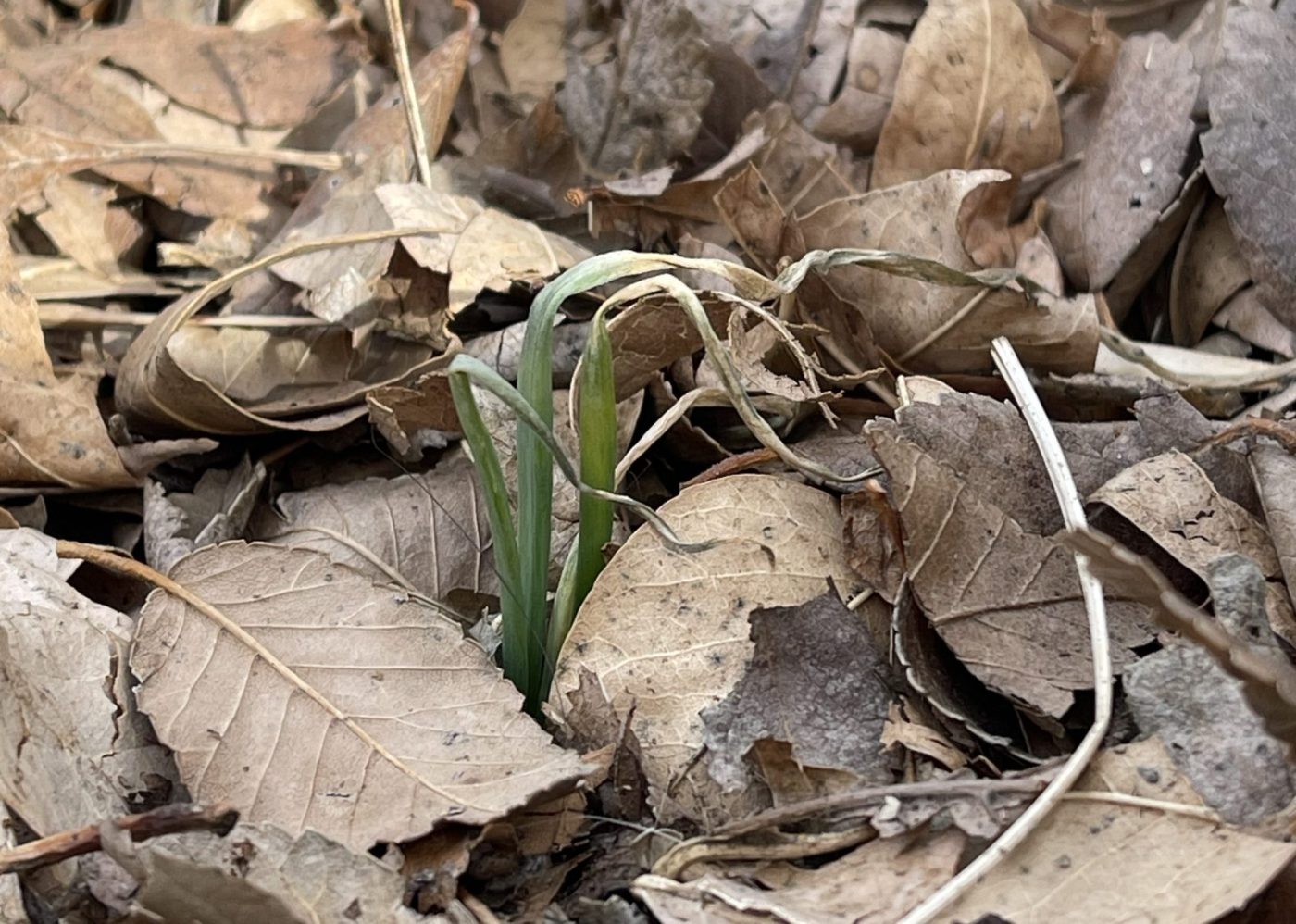
The beauty found in wintering gardens is hard to see when we are enmeshed in the hustle and noise of the world. It is only when slowing down that we can see and feel that though the world is brown, it is in rest, not dead. (Tamara Yakaboski, Special to The Denver Post)

Garden therapy is nothing new. According to “Horticulture as Therapy: Principles and Practice” by Sharon Simson (Routledge, 2008), one of the earliest records of horticulture therapy was in ancient Egypt when court physicians prescribed palace garden walks for mental health. The therapeutic benefits of garden spaces matter even more with increased climate anxiety: One in 10 Americans report symptoms of climate anxiety, according to a 2022 study by the Yale Program on Climate Change Communication. Eco-distress is a normal human response to climate injustices, and is a sign of connection.

Here are three takeaways on what a winter garden shows us about living in a world of crisis.

The winter garden teaches us the benefits of rest

Perennials need a period of dormancy to prepare for growth. Annuals die once frost hits but often not without going to seed to prepare for their next cycle. Trees and shrubs require a certain amount of cold weather and dormant hours. Many native flower seeds also need a cold duration for stratification in order to have healthy germination come spring and summer.

When those dormancy cycles are disrupted for too long by unseasonably warm weather, the ripple effect could be huge. In my own backyard, I noticed during the recent spate of near 60  degree days that a bud on my apple tree is opening. Ouch.

Rest is a requirement for our gardens as well as for our own nervous systems. Connecting that rest to outside time, the American Psychological Association points to massive benefits to our health both in calming the brain and body as well as perking up cognition. While walking through an open outdoor space or garden is enjoyable, humans experience added benefits when they connect more intentionally.

In January, I launched a new gardening and climate workshop series, called Embodied Climate Action, currently offered with the Gardens on Spring Creek in Fort Collins. In our first of seven workshops, we explored what a wintering garden can teach us in a world of urgency and climate crisis.

I sent participants to wander in the gardens during a segment of our afternoon. One participant had come in expressing anger and sadness over climate crisis. By the end of our session together, she commented on how resting among the soil had shifted the anger into its truer form of grief.

The winter garden teaches us to embrace seasonal living

Part of appreciating rest is an invitation to embrace more seasonal living. A Gallup poll shows that the majority of Americans prefer spring, then summer, then fall, and coming in last and least desired, winter. While that may look different for us here along the Front Range, we still are a society who love the flowery, showy growth of spring and summer.

By skipping over winter — or when we are forced to miss winter in part due to climate crisis — we miss the intentional slowdown of living seasonally. If as gardeners, we were to extend the growth season, we might risk draining resources faster, increase the need for artificial nutrients, and even require an altered environment or structures. While there was a time in my own gardening life that I longed for a greenhouse to do this very thing, I now crave the garden downtime that winter offers here in Colorado.

A workshop participant reframed winter as an invitation to cultivate indoor practices that tie together the bounty of summer to the slow of winter, such as turning dried herbs from last year’s garden into herb salts and teas. As a beekeeper, I used some downtime this winter to make candles out of the saved wax of last summer.

In no time, we will all be shifting outdoors for a spring prep and cleanup. Gardening, whether in the active or restful stages, can help us flow more with nature’s cycles, benefiting our own health as well as Earth’s by inviting in more sustainable practices.

The winter garden teaches us to hold critical hope

The beauty found in wintering gardens is hard to see when we are enmeshed in the hustle and noise of the world. It is only when slowing down that we can see and feel that though the world is brown, it is in rest, not dead.

After our workshop discussion on how nature and community benefit eco-distress and climate anxiety, I sent participants out with a prompt to allow their attention to be drawn to anything that delighted them or connected to their experience of climate anxiety. A couple of workshop participants found themselves sitting with the barren, sleeping soil, realizing that it still was active. Adapted perennials will have extended their root systems below the wintering soil’s frost line.

Soil is such a wonderful metaphor for hope. As anyone who has ever put a seed into the soil and nurtured its growth knows, the mere act is one of hope and faith. A wintering garden teaches us to hold critical hope for spring and new growth — new ways of gardening and living in climate emergency.

Wintering gardens offer a space of connection and reflection. A warm, sunny winter day offers us validation in our shared nature and climate experience and connection to each other and the gardens.

Get out and embrace this season of winter and rest.

Check out Allianz Field’s new food items, with tips from the chef

posted in: News | 0

Allianz Field showcased 10 food items during a media tasting event on Tuesday, and the menu was as eclectic as the Minnesota United roster of international players.

While it included classic pizza slices and a twist on a brat, the offerings for MLS games this season hit different parts of the globe and the palate.

“It’s mixing in the new stuff with where we want to show this community,” new executive chef Adam Reitsma told the Pioneer Press. “I and the team thought it was very important to not always be concentrating on those stadium favorites, but we wanted to show the diversity of our footprint in the food presented.”

Reitsma, who is from St. Clair, Minn., helped opened U.S. Bank Stadium before working at Churchill Downs in Louisville, Ky. He joined Allianz Field only a month ago, but he’s comfortable sharing his favorite dish on the new menu and some details on others.

Union Hmong Kitchen — United Bowl

Rice noodles, grilled chicken, fresh cucumber, pickled vegetables, shredded cabbage, herbs and coconut ginger vinaigrette (at Street Fare, section 16)

This is “definitely” Reitsma’s favorite, he said. “Extremely refreshing,” he added. “…  I was skeptical because it’s a cold item and it might not necessarily be a March hit, but in the warmer months, I think it will do well. It really will hit home.”

Roots for the Home Team — Jalapeno Popper Power Salad

Quinoa, red onion, zucchini, carrot, tomato, jalapeno, corn, cilantro and a vegan herb garlic dressing (at Roots Portable, section 29)

“It ticks a lot of the boxes for people who are looking to get something outside of the traditional nacho stadium fare,” Reitsma said. “I find it refreshing not only as a product but as a piece as you walk around to concession stands, you have that nacho, that brat, that burger, which does exist. It’s nice to see a variety.”

The Jalapeno Popper Power Salad from Roots for the Home Team will be a concession item at Allianz Field in St. Paul during the 2024 MLS season. (Courtesy of Minnesota United)

Cubano

Smoked pork, ham, Swiss cheese, pickles and dijon mustard on ciabatta roll (at Street Fare, section 36)

“Pork roasted in house,” Reitsma said. “I’m a big fan of using citrus and aromatics. We roast a pork shoulder for about 4 1/2 hours and get it nice and golden, so it develops those caramelized notes. Then we take it and shred it and add to it. It’s really, really good.”

Quebracho — Beef and Vegetable Empanadas

Beef with green olives, hard boiled egg, cumin and paprika. Ricotta cheese and spinach with garlic, nutmeg and black pepper

“I think they are fantastic,” Reitsma said. “… They have a great crunch to them. The insides stay nice and tender. That is exactly what we need.”

Other selected items

The Herbivorous Butcher’s turkey sub; Cry Baby Craig’s hot honey kicken’ chicken sandwich; Bibigo’s fried rice and chicken; El Sazon’s quesabirra; Grand Casino’s cranberry wild rice bratwurst; and Red Barron pizza.

Related Articles

Minnesota United FC |


Q&A with former Loons forward Christian Ramirez: ‘You always wonder what if …’

Minnesota United FC |


When will new Loons head coach Eric Ramsay arrive in Minnesota?

Minnesota United FC |


Loons call on a fountain of youth to help in season-opening victory

Minnesota United FC |


Loons at Austin FC: Keys to the match, projected starting XI and a prediction

Minnesota United FC |


Season preview: Can Loons withstand leadership and tactic changes to contend in 2024?