Lionel Laurent: Brain drain from Putin’s Russia is far from over

posted in: Politics | 0

It’s the end of an era for Russia’s best-known tech company, Yandex NV, once hailed as the country’s answer to Alphabet Inc.’s Google and valued at $30 billion before the invasion of Ukraine. This month, it agreed to sell its domestic business for about $5.2 billion, a cut-price level for the Russian tycoons picking it up under the Kremlin’s watch.

Yet the deal also hints at a wartime brain drain of scientific and engineering talent that the West could do more to capture.

Yandex has a controversial reputation: Alexei Navalny, whose death has outraged leaders and prompted protests across Europe, had said the company was responsible for spreading Russian lies. (The European Union agreed, Yandex did not.) Co-founder Arkady Volozh, who now publicly opposes the war, is pushing to be taken off Europe’s sanctions list and says he’s helped “thousands of engineers” leave the country: “They will be an asset wherever they land.”

An estimated 11% to 28% of Russian developers have left the country since the outbreak of war, according to research cited by Science, and fear of more departures is apparently what stopped the Kremlin from nationalizing Yandex outright. While most of the company’s assets and 26,000 staff will stay in Russia, they’ve been separated from a new entity employing about 1,300 people operating abroad in hubs like Finland or Serbia and focused on artificial intelligence.

The pressure is even more acute in the world of scientific research. Russia has lost more than 50,000 researchers in the past five years, according to a senior member of the Russian Academy of Sciences cited by Interfax, as a crackdown on civil society and on wartime dissent takes its toll. Independent publication Novaya Gazeta recently identified at least 270 high-ranking academics who had left since the war began, with half having signed an open letter condemning it.

This is not to ignore Ukraine’s own human scars, with millions of its people having sought refuge in the EU and an estimated 18% of its scientists having left the country, according to a study co-authored by economist Gaetan de Rassenfosse.

There’s an opportunity for Europe and the U.S. to do more to accommodate scientific exiles from both Russia and Ukraine as the war enters its third grueling year, especially if it keeps research going while depriving Vladimir Putin of human capital.

That’s the message I got from two researchers, Oleksandr Gamayun and Mikhail Burtsev — Ukrainian and Russian, respectively — who both work at the London Institute for Mathematical Sciences, a modern-day ivory tower housed in the 18th-century Royal Institution in Mayfair. They’re among recipients of 10 three-year funded positions at the institute for outstanding physicists and mathematicians from Ukraine, Russia and Belarus.

Burtsev, who signed a letter along with other Russian scientists condemning the war, is an expert in AI who left his homeland in September 2022. He praises the freedom to continue doing independent research, and adds that, while the brain drain has had little impact on the war so far, the effect will be “big” over time. Gamayun, a physicist who was in Poland when war broke out, is also happy to have found security and freedom to continue his research — and as for Russian scientists, he says they should be judged “case by case.”

Although 10 fellowships are a nice to have, they are a drop in the ocean compared to the demand out there. “Any initiative should be taken very positively … But I believe that it is not enough,” says Yuri Kovalev, of the Max Planck Institute for Radio Astronomy, who comments that, without more support on the ground, Western boycotts of Russian science risk giving Putin a propaganda boost.

Obviously, this kind of outreach needs to tread carefully. Accommodating exiles shouldn’t turn into an escape clause for those aiding and abetting Russia’s military-industrial complex. And the current high-intensity nature of the fighting means that politicians are more focused on obtaining more bullets rather than more physicists.

But there could be other advantages for host countries in the long run. The parallel with 1930s Germany is instructive: If just one Einstein emerged from the current wave of exiles from Putin’s war, wouldn’t that make it worth it? “Just imagine what would have happened if Britain or the U.S. wouldn’t have hosted German scientists during the Nazi regime,” Joachim Hornegger, president of the FAU, told a conference last year. The U.S. push to profit from these scientists after the war also helped deliver an estimated $10 billion in patents and know-how.

If Yandex’s co-founder is right, Russia’s brain drain isn’t over. If Putin is alive to the threat, maybe the West should be too.

Lionel Laurent is a Bloomberg Opinion columnist writing about the future of money and the future of Europe. Previously, he was a reporter for Reuters and Forbes.

Minnesota 2023 deer harvest down statewide from 2022, DNR says

posted in: News | 0

Minnesota hunters shot 158,678 deer during the 2023 hunting season, a lower total harvest than in recent years, the Department of Natural Resources reported this week. The harvest was down 8% from the 2022 season and 14% lower than the five-year average.

The greatest decreases were in the northern part of the state, where deer harvest compared with 2022 was 21% lower in the northeast region and 8% lower in the northwest region. Other regions saw smaller decreases in harvest, with 3% lower in central and southeast Minnesota, and 4% lower in southern Minnesota.

“In recent years, deer populations have been lower in northern Minnesota, particularly following the severe winters of 2021-2022 and 2022-2023,” Todd Froberg, big game program coordinator with the Minnesota DNR, said in a statement Monday. “Several factors can drive these declines, resulting in fewer deer on the landscape during subsequent hunting seasons.”

Deer numbers can suffer during prolonged severe winters, especially in areas with deep snow or insufficient winter habitat. In these conditions, deer must expend more energy to acquire food, making them more vulnerable to predators.

Wolves play a large role as a predator of deer, especially in winter, but there is little evidence to suggest that northern Minnesota’s low deer numbers are directly due to wolf predation, the DNR said. The influence that wolves play in influencing deer populations likely changes over time and can be exacerbated by other conditions such as poor quality wintering habitat.

Northern Wisconsin and the Upper Peninsula of Michigan, also hit hard by severe winter, saw similar declines in deer harvests in 2023.

“This year’s extremely mild conditions do bode well for deer in northern Minnesota, but deer populations in the far north will need several mild winters to start to recover,” Froberg said.

Crossbows were allowed for all deer hunters for the first time in 2023. Archery hunters killed 24,088 deer which was a similar total compared to 2022. In 2023, crossbows accounted for 43% of the total archery harvest.

“During this first year of crossbows being legal for all hunters, we sold 6% more archery licenses, and youth licenses made up most of that increase,” Froberg said. “Lots of kids who weren’t archery hunting in the past were able to use crossbows and go hunting during the archery season.”

Analysis of the 2023 deer harvest is available in a final deer harvest report. This report and past season harvest reports are available on the Minnesota DNR website at mndnr.gov/mammals/deer/management/statistics.html.

Related Articles

Outdoors |


Good news on business tax revenues boosts Minnesota’s budget surplus to $3.7B

Outdoors |


Widow of fallen Burnsville officer Paul Elmstrand recalls their sweet life together

Outdoors |


Twin Cities sees a swing of 48 degrees as warm air mass bumps into frigid stuff from Canada

Outdoors |


MN Department of Transportation to share state Highway 36 study results

Outdoors |


As police officer spouses prepare 4,000 blue and red roses for memorial service, ‘We’re thinking about them’

Canadian company eyes Minn. titanium, copper-nickel projects

posted in: News | 0

DULUTH — Northern Minnesota mineral deposits containing copper, nickel and titanium are getting another look.

In a news release earlier this month, Vancouver, Canada-based Green Bridge Metals Corporation said it had entered into an agreement with mineral exploration company Encampment Minerals Inc. to acquire up to an 80% interest in four projects between Boulder Lake and Babbitt.

The company said it will begin its own exploratory drill program within a year to further existing findings.

“We are pleased to have secured a rare portfolio of assets with clear mineralization in an underexplored world-class region within the Duluth Complex of Minnesota,” David Suda, CEO of Green Bridge Metals, said in the release. “We plan to advance these underexplored properties by leveraging historical exploration data by drilling in the coming 12 months.”

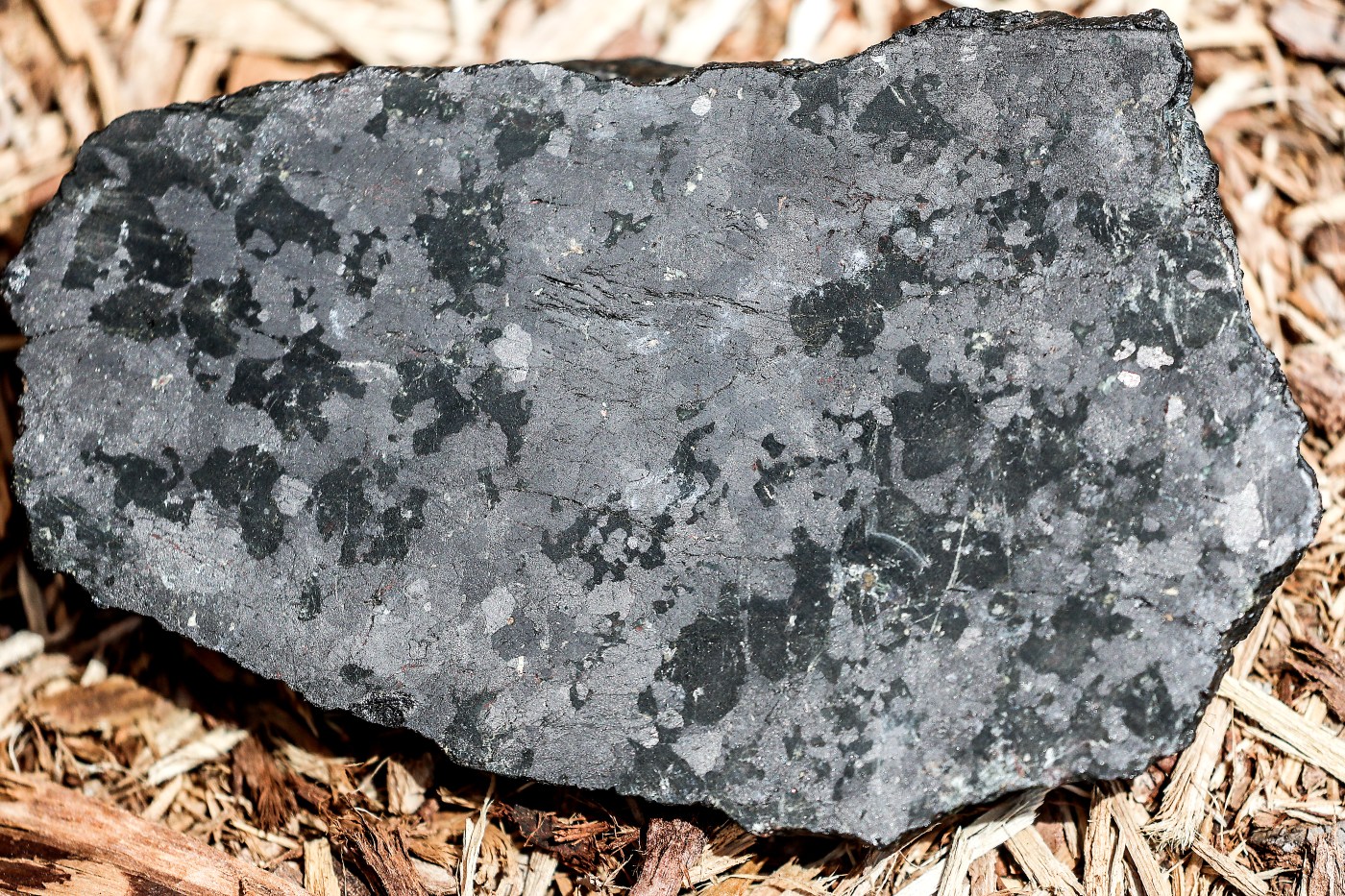
Previous exploratory drillings have shown the Boulder sites, approximately 15 miles north of Duluth on the north side of the Boulder Lake Reservoir, and Titac, a few miles farther north than that, are known to contain iron-titanium-vanadium mineralization as well as signs of copper-nickel mineralization.

(Forum News Service)

The Siphon-Wyman and Skibo sites southwest of Babbitt contain copper-nickel mineralization.

While iron ore mining has long been practiced in Minnesota, mining for non-ferrous minerals like copper, nickel and titanium has not been done before.

According to the Minnesota Department of Natural Resources, exploratory drilling programs in the 1970s identified areas that could contain possible titanium oxide.

The four properties Green Bridge is eyeing are among the 13 bodies now known to contain ilmenite, an iron-titanium compound, that dot the western edge of the Duluth Complex, which formed when the Midcontinent Rift 1.1 billion years ago tried to pull North America apart, sending magma up and leaving behind deposits of copper, nickel and other metals.

Titanium is widely found but not widely mined. It has become increasingly more valuable as it’s used in metals to build submarines and ships, aircraft, spacecraft, automobile parts, prosthetics such as artificial hips, buildings and even sporting equipment. It is light, strong and corrosive-resistant.

But effectively processing ilmenite into a high-value titanium feedstock — separating titanium from all the other rocks — had long been a question.

(Forum News Service)

In 2017, however, the Natural Resources Research Institute of the University of Minnesota Duluth announced it had successfully processed some 10 tons of ilmenite from the Longnose deposit just northeast of Hoyt Lakes using a two-step process — once mechanically and then using a hydro-metallurgical process where acids leach the minerals out of the rock — into 99.8% pure titanium dioxide.

While Green Bridge said it is “focused on acquiring ‘battery metal’ rich mineral assets and the development” of the Minnesota properties, any potential mining is likely years away and would likely face steep opposition over environmental concerns.

Several key permits for NewRange Copper Nickel’s NorthMet Project near Hoyt Lakes and Babbitt have been revoked or on hold, and the federal government placed a 20-year pause on mining on federal land within the same watershed as the Boundary Waters Canoe Area Wilderness, halting Twin Metals’ planned underground copper-nickel mine.

A third project, Talon Metals’ proposed underground nickel mine in Aiktin County, is in the early stages of environmental review.

Related Articles

Business |


Good news on business tax revenues boosts Minnesota’s budget surplus to $3.7B

Business |


Widow of fallen Burnsville officer Paul Elmstrand recalls their sweet life together

Business |


Twin Cities sees a swing of 48 degrees as warm air mass bumps into frigid stuff from Canada

Business |


MN Department of Transportation to share state Highway 36 study results

Business |


As police officer spouses prepare 4,000 blue and red roses for memorial service, ‘We’re thinking about them’

What are the Vikings looking for in their next quarterback?

posted in: News | 0

INDIANAPOLIS — As of right now, the Vikings are preparing for Kirk Cousins to be their starting quarterback next season. That’s been the messaging this week with general manager Kwesi Adofo-Mensah and head coach Kevin O’Connell both expressing their desire to retain Cousins moving forward.

Still, the Vikings have also been doing their due diligence at the NFL Combine in Indianapolis, sitting down with a number of top prospects with an eye toward the future.

This is a highly skilled class of rookie quarterbacks, with Caleb Williams of USC, Drake Maye of UNC, and Jayden Daniels of LSU possibly going No. 1, No. 2, and No. 3, respectively, in the 2024 NFL Draft. Though the Vikings won’t be able to select any of those players without trading up, they could be in position to pounce on the next wave that includes J.J. McCarthy of Michigan, Michael Penix Jr. of Washington or Bo Nix of Oregon.

What are the Vikings looking for in their next quarterback? That’s a complex question layered with nuance.

“There’s so much that goes into it,” O’Connell said. “There’s a lot of great examples of players coming into our league with some of those foundational points and then adding the rest of them to their skill set to become the complete player that they are.”

The most challenging part of evaluating quarterbacks is the fact that there is so much variance across the league. Some teams place a premium on talent above anything else, for example, while other teams take more of a holistic approach to the evaluation.

Asked for his most important qualities in a quarterback, O’Connell talked at length about the ability to process information and the ability to throw with accuracy. That makes sense considering his offense is predicated on diagnosing coverage quickly and delivering the ball on time.

It’s why he likes working with Cousins so much.

“You try to find those traits first and then go back and apply those traits to them doing certain things,” O’Connell said. “You’re just trying to piece together the best possible profile on the player.”

There’s also something to be said about player’s ability to create off schedule. As much as O’Connell values a quarterback who can drop back, stick his foot in the ground and rip the ball downfield, he understands the benefit of having somebody who can make something happen in a pinch.

“When the play doesn’t exactly go as planned, maybe a teammate struggles, ‘How does that person overcome context?’ ” Adofo-Mensah said. “That’s something we’re going to look for.”

The way a player carries himself off the field is another area to consider. The quarterback has to be a leader who can effortlessly command the respect of the locker room. Some of the formal interviews conducted at the NFL Combine in Indianapolis will go a long way in determining what the Vikings decide to do.

“You talk about somebody like Kirk and he sets an example with how he works,” Adofo-Mensah said. “He’s got a phrase: ‘It’s not a hobby.’ He lives every day that way. You need somebody at that position that embodies that for the team.”

It’s important to note that the Vikings are open minded with the way they evaluate the position. They understand that there isn’t a singular way of having success. Not at quarterback.

“I think what makes us unique as a coaching staff and as a football operation is we appreciate players for how they perform and how they get to their value,” Adofo-Mensah said. “We say, ‘You can be a starting quarterback and it’s not going to look the same.’ ”

Ultimately, if the Vikings decide to pull the trigger on a rookie quarterback in the coming months, O’Connell made it clear that he plans to do everything in his power to empower that player every day so he can reach his full potential.

“We’re in it with them from Day 1,” O’Connell said. “That’s how we have to look at it.”

Related Articles

Minnesota Vikings |


Where do the Vikings stand with Kirk Cousins? Some intel from the NFL Combine

Minnesota Vikings |


Vikings ranked No. 2 in league for workplace conditions by anonymous NFLPA report cards

Minnesota Vikings |


Vikings hire NFL journeyman Josh McCown as quarterbacks coach

Minnesota Vikings |


Vikings GM Kwesi Adofo-Mensah has no interest in trading Justin Jefferson

Minnesota Vikings |


Here are five questions Vikings must answer at this week’s NFL Combine