Nikki Haley can’t win the Republican primary with 40%. But she can expose some of Trump’s weaknesses

posted in: Politics | 0

By MEG KINNARD and AMELIA THOMSON-DEVEAUX (Associated Press)

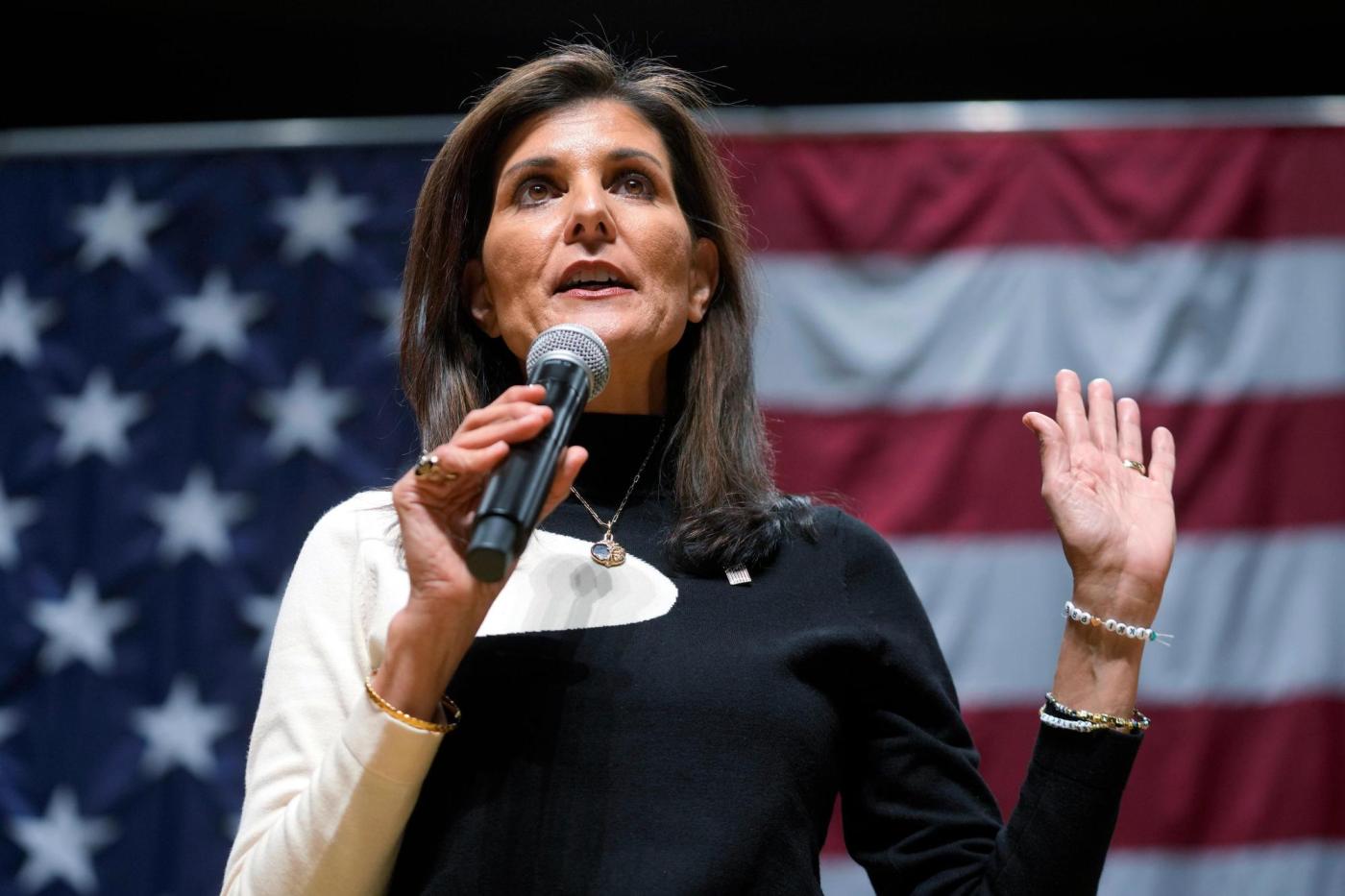
GRAND RAPIDS, Mich. (AP) — Donald Trump’s campaign has vowed not to talk about her anymore. Many pundits have written her off entirely. But Nikki Haley is still campaigning across the country — and plenty of Republican voters are coming to hear what she has to say.

Before packed audiences in states that will vote on Super Tuesday next week, Haley is making the case she laid out after losing the primary in her home state of South Carolina: Roughly 40% of GOP voters support her over Trump, suggesting their party’s dominant figure is especially vulnerable in a November rematch against President Joe Biden.

“He lost 40% of the primary vote in all of the early states,” she told more than 500 people at a campaign event in the politically mixed suburb of Bloomington, Minnesota, on Monday. “You can’t win the general election if you can’t win that 40%.”

Trump is on the verge of winning several hundred more delegates for the GOP nomination on Super Tuesday and could eliminate Haley by clinching the nomination a few weeks later. But by staying in the race longer than any other major candidate, Haley has highlighted Trump’s political problems with key constituencies in their party and suggested that he is a “sinking ship.”

Trump won about 51% of voters in the Iowa caucuses, 54% in New Hampshire’s primaries and 60% in South Carolina. Haley didn’t come close to winning 40% in Michigan’s primary this week and instead lost to Trump by more than 40 points, 68% to 27%.

But just as she has throughout the primary, Haley did better in suburban areas like Oakland County near Detroit and Ottawa County near Grand Rapids. She also did better in Kent County, where Grand Rapids and a large suburban population is located.

Biden flipped Kent County and improved on Democrats’ 2016 performance in Oakland County on the way to winning Michigan in 2020 and beating Trump in the election.

Richard Czuba, a pollster who has long tracked Michigan politics, said Haley’s results were more significant for understanding a critical swing state in the general election than the campaign to vote “uncommitted” against Biden to protest his handling of the Israel-Hamas war, which drew about 100,000 votes and collected two Democratic delegates.

“This is by far, to me, the one narrative we saw (Tuesday) that will have major implications in November,” Czuba said.

Trump declined to mention Haley, his former U.N. ambassador, after beating her in South Carolina, and his campaign has accused her of deluding voters about her chances.

“She can’t name one state she can win, let alone be competitive in,” spokesperson Steven Cheung said in a recent statement.

Haley indeed resisted naming a state she could win when questioned by The Associated Press and other media. But interviews with three dozen voters at her rallies and AP VoteCast data from the Republican primary suggest several vulnerabilities for Trump heading into a Biden rematch.

About half of Republican voters in South Carolina — including about a quarter of his supporters — are concerned that Trump is too extreme to win the general election, according to AP VoteCast, a survey of more than 2,400 voters taking part in the Republican primary in South Carolina, conducted for AP by NORC at the University of Chicago.

Related Articles

National Politics |


What is Super Tuesday? Why it matters and what to watch

National Politics |


Biden and Trump try to work immigration to their political advantage during dueling trips to Texas

National Politics |


Judge orders Trump removed from Illinois primary ballot

National Politics |


Supreme Court sets April arguments over whether Trump can be prosecuted for election interference

National Politics |


Bail clampdowns don’t match what research says about suspects, experts say

Trump allies have accused Haley of appealing to the left to vote in open Republican primaries. Some 19% of Haley voters in South Carolina identified themselves as Democrats or people who lean Democratic, according to AP VoteCast. But 72% were Republicans or lean toward the GOP.

About 3 in 10 South Carolina primary voters believe he acted illegally in at least one of the criminal cases against him, even though about three-quarters believe the investigations are political attempts to undermine him.

“We’ve been tightening the belt as much as we can, but can’t think about having kids until we can afford it,” said Jonathan Paquette, a 27-year-old contractor from Minnetonka, Minnesota, a suburb of the Twin Cities. ”That’s the kind of discussion this campaign should be about, not about lawsuits and criminal indictments. That doesn’t solve any of our problems.”

Lori Jacobson, a 64-year-old retired lab technician from Monticello, a small town northwest of the Twin Cities, said Trump “repulses me.” She voted for Trump in 2016 but not 2020.

“It’s all about revenge with him,” Jacobson said. Haley, she said, “has a calm that stands in such contrast to him, though she is a very strong woman.”

Across the states where Haley’s post-South Carolina campaign has gone, some voters have picked up on that messaging.

“Forty percent is better than no percent,” said Alyssa Prevo, an Uber driver from Williamston, Michigan, as she waited for Haley ahead of a Monday event in Grand Rapids, Michigan.

Prevo, a military veteran, described herself as a longtime Republican, although she said she had voted for Democratic candidates in the past.

“Forty percent is a lot, it’s not a little, even though she lost her home state,” Prevo said. “People focus on the losing, I don’t. She has integrity. And for me, the umbrella, integrity, is everything she has under that.”

Nearly 9 in 10 Haley voters in South Carolina said they would not be satisfied with Trump as the Republican Party’s presidential nominee, about 7 in 10 say he does not have the mental capability to serve effectively as president, and about 6 in 10 say they would not ultimately vote for him.

Given the primary race’s current trajectory, the Trump campaign may not have to address Haley again — and they expect that many disaffected Republicans will return to the former president’s side in a Biden-Trump rematch.

Haley could lose any mathematical chance of becoming the nominee in the next few weeks as more states hold “winner-take-all” primaries that would let Trump sweep their delegates even if Haley closes the gap with him.

For now, Haley and her aides say they aren’t planning beyond Super Tuesday. Indeed, Haley has not said where she’ll campaign after those contests. And her campaign has yet to book any television or digital advertising beyond Super Tuesday, according to media tracking firm AdImpact.

“That’s as far as we’ve thought so far,” Haley said Saturday. “We’ve taken it one state, one month at a time, and focused on that — that’s what’s gotten us to this moment is discipline, hard work, being smarter than everybody else and making sure that we do whatever it takes to scrappy as we need, to get to the finish line.”

Thomson-DeVeaux reported from Washington. Associated Press reporters Joey Cappelletti in Lansing, Michigan, and Thomas Beaumont in Bloomington, Minnesota, contributed to this report.

Meg Kinnard can be reached at http://twitter.com/MegKinnardAP and Amelia Thomson-DeVeaux can be reached at https://twitter.com/ameliatd.
What is Super Tuesday? Why it matters and what to watch

posted in: Politics | 0

By NICHOLAS RICCARDI (Associated Press)

The biggest day of this year’s primary campaign is approaching as 16 states vote in contests known as Super Tuesday.

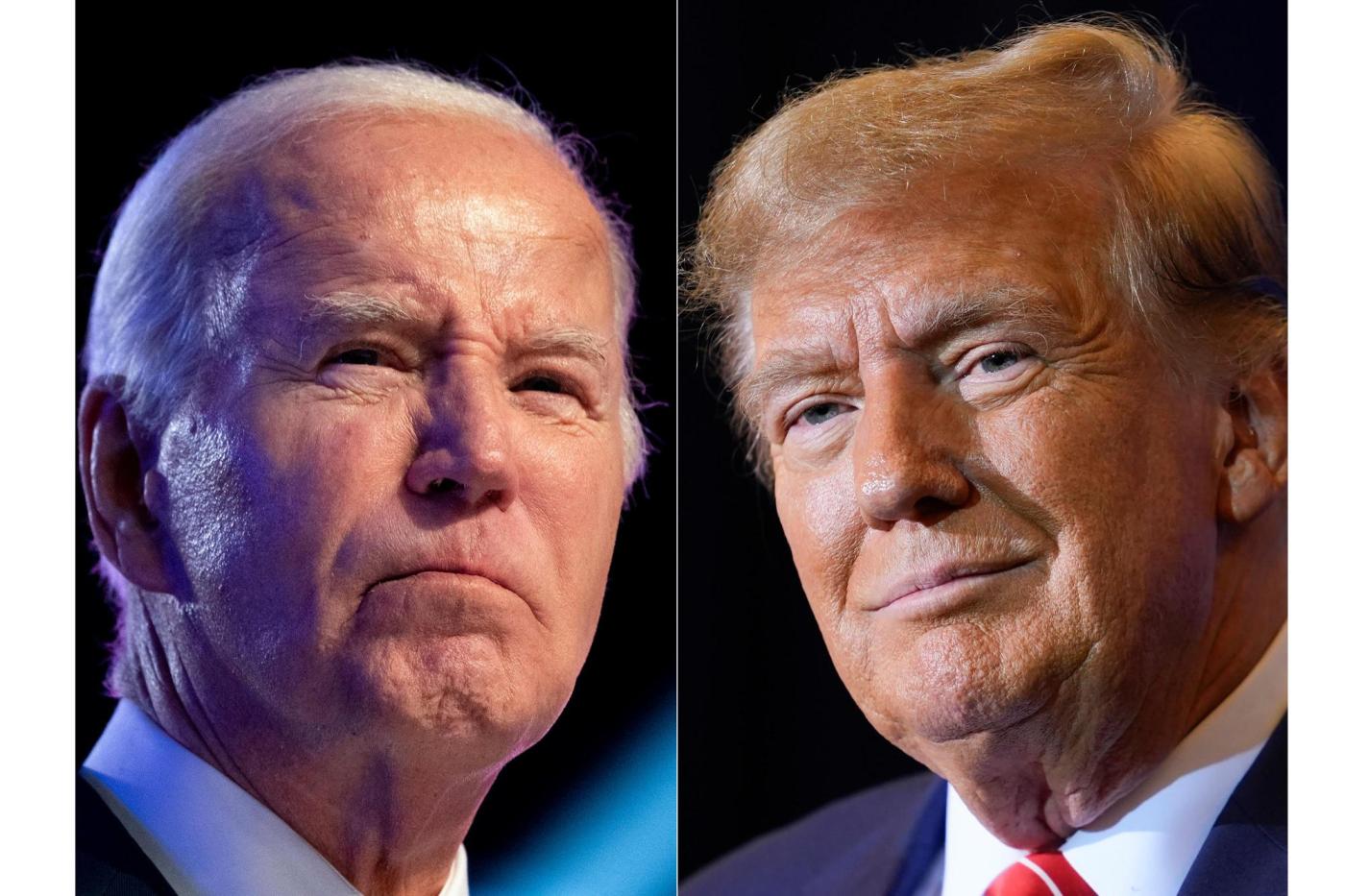
The elections are a crucial moment for President Joe Biden and Donald Trump, who are the overwhelming front-runners for the Democratic and Republican presidential nominations, respectively. As the day with the most delegates up for stake, strong performances by Biden and Trump would move them much closer to becoming their party’s nominee.

The contest will unfold from Alaska and California to Virginia and Vermont. And while most of the attention will be on the presidential contest, there are other important elections on Tuesday.

Some things to watch:

DOES TRUMP KEEP ROLLING?

So far, the Republican presidential primary has been a snoozer.

The former president has dominated the race and his last major rival in the race, his onetime U.N. Ambassador Nikki Haley, is struggling to keep up. She lost the Feb. 27 primary in Michigan by more than 40 percentage points. She even lost her home state of South Carolina, where she was twice elected governor, by more than 20 percentage points.

As the race pivots to Super Tuesday, the vast map seems tailor-made for Trump to roll up an insurmountable lead on Haley. His team has been turning up the pressure on Haley to drop out, and another big win could be a major point in their favor.

Haley’s banked a considerable amount of campaign money and says she wants to stay in the race until the Republican National Convention in July in case delegates there have second thoughts about formally nominating Trump amidst his legal woes. But she’s seen some of her financial support waver recently — the organization Americans For Prosperity, backed by the Koch brothers, announced it’d stop spending on her behalf after South Carolina.

She may not be able to afford another sweeping loss.

DO COLLEGE GRADS KEEP TURNING AGAINST TRUMP?

Amid Trump’s commanding wins this primary season have been a notable warning sign for November: He’s performed poorly with college-educated primary voters.

In the New Hampshire and South Carolina primaries, APVoteCast found that college graduates picked Haley over Trump. Roughly two-thirds of voters in both states who went to graduate school after college voted for the former South Carolina governor.

In South Carolina, Trump won the suburbs but not by the same magnitude as his dominance in small towns and rural areas, essentially splitting the vote with Haley.

One of the biggest questions on Tuesday is whether Trump can start repairing that rupture. Weakness with college graduates and in the suburbs where they cluster is what doomed Trump in his 2020 loss to Biden.

DOES BIDEN END DOUBTS?

As sleepy as the Republican presidential primary has been, the Democratic one has been even quieter. Biden has many political problems dragging him down in public opinion polls, but not, so far, at primary polling stations.

The one speed bump came in Michigan, where an organized attempt to vote “uncommitted” in the primary there to protest Biden’s support of Israel during the war in Gaza garnered 13% of the vote, a slightly higher share than that option got in the last primary under a Democratic president.

There are no similar organized anti-Biden efforts on the Super Tuesday calendar, just the president’s two longshot primary opponents who’ve yet to crack low single digits against him, U.S. Rep. Dean Phillips of Minnesota and self-help author Marianne Williamson, who revived her campaign after receiving a surprise 3% of the Michigan primary vote.

WHAT HAPPENS IN CALIFORNIA’S SENATE RACE?

There’s far more than the presidential primaries on the ballot Tuesday. One of the most consequential contests is the California primary for the U.S. Senate seat left open by the death of Democratic Sen. Dianne Feinstein.

Related Articles

National Politics |


Nikki Haley can’t win the Republican primary with 40%. But she can expose some of Trump’s weaknesses

National Politics |


Biden and Trump try to work immigration to their political advantage during dueling trips to Texas

National Politics |


Judge orders Trump removed from Illinois primary ballot

National Politics |


Supreme Court sets April arguments over whether Trump can be prosecuted for election interference

National Politics |


Bail clampdowns don’t match what research says about suspects, experts say

The seat’s temporary occupant, Laphonza Butler, isn’t running for a full term. Rather than having the winners of party primaries face off in November, California throws every candidate into a single primary and has the top two vote-getters make it to the general election.

Democrats have a lock on statewide races in the overwhelmingly blue state, and for months the speculation was that two prominent U.S. House members from that party, Reps. Katie Porter and Adam Schiff, would battle it out until Election Day. But that’s changed since former Dodgers great Steve Garvey threw his hat in the ring.

Garvey, 75, is both a Republican and a novice at politics. Schiff has been airing ads slamming him — or, more accurately, promoting him — as most likely to carry out Trump’s wishes. The idea is to unite the state’s outnumbered conservatives behind Garvey so he and Schiff finish in the top two, denying Porter a spot in November. Schiff would then be the overwhelming favorite for the seat.

The current primary setup was passed by voters in 2010, partly to stop partisans from engaging in primary shenanigans. Among other things, the Senate primary will be a test of whether, in the end, motivated politicians can game any system.

WHICH WAY ON CRIMINAL JUSTICE?

Voters in San Francisco and Los Angeles will once more grapple with questions of criminal justice and public order.

In Los Angeles County, District Attorney George Gascon faces 11 challengers in a primary amid criticism of his progressive approach that includes not seeking cash bail for misdemeanors and nonviolent felonies and not prosecuting juveniles as adults. His opponents have blamed him for a rise in property crimes in some parts of the county, including a brazen smash-and-grab spree at luxury stores.

Gascon has weathered criticism before, including two failed recall efforts, one of which was in his first 100 days of taking office. The primary will determine who he faces in November and whether there are signs that Los Angeles’ liberal voters are changing their minds.

In San Francisco, Mayor London Breed is pushing one ballot measure to expand police powers to use tactics like drones and surveillance cameras, and another testing single adults on welfare for drugs. The two initiatives come as the city has been wracked by homelessness and drug use, and Breed faces a cranky electorate in her own reelection in November.

ANOTHER GOP TEST IN TEXAS

Texas Attorney General Ken Paxton last year survived an impeachment led by his own party. Now he wants payback, and Trump is helping him. The primary will be a test of how Republican voters are willing to regulate their own leaders.

The impeachment stemmed from Paxton’s legal woes. He faces an April trial on felony security fraud charges, and an additional federal corruption probe over the allegations that he used his office to favor a campaign donor that was the foundation of the impeachment charges.

Paxton is targeting more than 30 Republican state lawmakers in the primary, including House Speaker Dale Phelan. Paxton is also trying to remove three Republican judges on the state’s conservative appeals court who voted to limit the attorney general’s powers.

Paxton has been a staunch supporter of Trump, including the former president’s attempts to overturn his own 2020 election loss, and Trump is helping Paxton in his primary campaign. The Texas purge will be a test of what Republican voters value the most in their elected officials.

CAN NORTH CAROLINA CANDIDATES UNITE THE PARTIES?

Most of the country picked its governors in the 2022 off-year elections, but North Carolina is gearing up for an intense race this fall. The major-party front-runners for the seat being vacated by term-limited Democratic Gov. Roy Cooper both will need to demonstrate an ability to unite their parties in the primary.

Attorney General Josh Stein has Cooper’s endorsement. Stein’s main competitor is a former state Supreme Court associate justice, Mike Morgan, who is Black. Watch whether Stein’s able to hold onto a significant share of the primary’s Black voters, which is essential for any Democrat who wants to be competitive in November.

The Republican front-runner is Lt. Gov. Mark Robinson, who is Black, has been a divisive figure for some for criticizing vocally the teaching of LGBTQ+ issues during sex education and for comments at a church that Christians are “called to be led by men.” His opponents, state Treasurer Dale Folwell and trial attorney Bill Graham, say Robinson is too polarizing to win in November.

Robinson received Trump’s support last year, but it’s worth watching whether he shows the same weaknesses as the former president among college-educated, suburban voters. Biden’s reelection campaign is targeting North Carolina because it thinks those voters can help him beat Trump there.

St. Paul fire fatality is 7th of year, the most in 30 years

posted in: Society | 0

A person has died after a St. Paul apartment fire, bringing the number of fire fatalities in the city to the most in 30 years, the fire department said Thursday.

Fire crews were sent to the 200 block of East University Avenue at 8:21 a.m. Feb. 18 on a report of a fire on the eighth-floor of the building. A 911 caller reported an occupant of an apartment was trapped inside, according to the fire department.

Firefighters forced entry into the apartment and found a small fire had been extinguished by automatic sprinklers. St. Paul fire paramedics transported a person from the apartment to a hospital and the department has since been notified the person died, the department said Thursday.

Investigation found the person who died had been smoking while using oxygen for medical reasons, according to the department. A dog was unharmed in the apartment.

Smoking is the leading cause of fatal fires and unattended cooking is the leading cause of all fires, the fire department said.

St. Paul averages two to three fire fatalities each year. The recent death is the seventh this year, including four children who perished after a fire in their home in January. It was caused by an unattended candle, the fire department has said. One of the other fatal fires this year was also caused by smoking and the other from cooking.

“Every single one of these has been accidental in nature, which means that it could have been prevented,” said Deputy Fire Chief Roy Mokosso. The fire department is stepping up its fire prevention education efforts and drawing attention to Project Safe Haven, a fire department program that offers free smoke alarms, carbon monoxide detectors and stovetop fire stops in St. Paul.

The last time there were this many fire fatalities in St. Paul was 1994, when the five Coppage children were killed.

“The concern is that we’ve tied the 30-year high for fire fatalities and we have 10 months of the year left,” Mokosso said.

Related Articles

Crime & Public Safety |


Widow of fallen Burnsville officer Paul Elmstrand recalls their sweet life together

Crime & Public Safety |


Burnsville memorial program: Injured officer Adam Medlicott among speakers

Crime & Public Safety |


After eulogies for Burnsville’s three fallen first responders, ‘the nicest people,’ long procession

Crime & Public Safety |


‘One big family’: Law enforcement, firefighters from other agencies handling Burnsville’s emergency calls

Crime & Public Safety |


As police officer spouses prepare 4,000 blue and red roses for memorial service, ‘We’re thinking about them’

Judge blocks Texas law that gives police broad powers to arrest migrants who illegally enter US

posted in: News | 0

By ACACIA CORONADO (Associated Press)

AUSTIN, Texas (AP) — A federal judge on Thursday blocked a new Texas law that gives police broad powers to arrest migrants suspected of illegally entering the U.S., dealing a victory to the Biden administration in its feud with Republican Gov. Greg Abbott over immigration enforcement.

The preliminary injunction granted by U.S. District Judge David Ezra pauses a law that was set to take effect March 5 and came as President Joe Biden and his likely Republican challenger in November, Donald Trump, were visiting Texas’ southern border to discuss immigration. Texas officials are expected to appeal.

Opponents have called the Texas measure the most dramatic attempt by a state to police immigration since a 2010 Arizona law that opponents rebuked as a “Show Me Your Papers” bill. The U.S. Supreme Court partially struck down the Arizona law, but some Texas Republican leaders want that ruling to get a second look.

Ezra cited the Constitution’s supremacy clause and U.S. Supreme Court decisions as factors that contributed to his ruling. He said the Texas law would conflict with federal immigration law, and the nation’s foreign relations and treaty obligations.

Ezra wrote in his decision that allowing Texas to “permanently supersede federal directives” due to an invasion would “amount to nullification of federal law and authority — a notion that is antithetical to the Constitution and has been unequivocally rejected by federal courts since the Civil War.”

The lawsuit is among several legal battles between Texas and Biden’s administration over how far the state can go to try to prevent migrants from crossing the border.

The measure would allow state law enforcement officers to arrest people suspected of entering the country illegally. Once in custody, they could agree to a Texas judge’s order to leave the country or face a misdemeanor charge for entering the U.S. illegally. Migrants who don’t leave after being ordered to do so could be arrested again and charged with a more serious felony.

At a Feb. 15 hearing, Ezra expressed skepticism as the state pleaded its case for what is known as Senate Bill 4. He also said he was somewhat sympathetic to the concerns expressed by Abbott and other state officials about the large number of illegal crossings.

Ezra, who was appointed by former President Ronald Reagan, said he feared the United States could become a confederation of states enforcing their own immigration laws. “That is the same thing the Civil War said you can’t do,” Ezra told the attorneys.

Civil rights groups, who also sued the state, have argued the law could lead to civil rights violations and racial profiling.

Republicans who back the law have said it would not target immigrants already living in the U.S. because of the two-year statute of limitations on the illegal entry charge and would be enforced only along the state’s border with Mexico.

Tensions have remained high between Texas and the Biden administration this year over who can patrol the border and how. Other GOP governors have expressed support for Abbott, who has said the federal government is not doing enough to enforce immigration laws.

Among other things, Texas placed a floating barrier in the Rio Grande, put razor wire along the U.S.-Mexico border and stopped Border Patrol agents from accessing a riverfront park in Eagle Pass that they previously used to process migrants.