Montez Sweat has quickly fit with the Chicago Bears defense — ‘I see a hungry group here’ — and helps elevate the standards

posted in: News | 0

The latest addition to the Montez Sweat highlight reel came in the second quarter Sunday, a disciplined pass rush on a play-action pass by Arizona Cardinals quarterback Kyler Murray.

Murray completed his fake to running back Michael Carter, turned back to roll right but found Sweat waiting nearby. Murray stopped and tried floating a pass to tight end Elijah Higgins. But Sweat, with all the ease of Shaquille O’Neal playing pickup hoops with elementary school kids, calmly rose and rejected the throw.

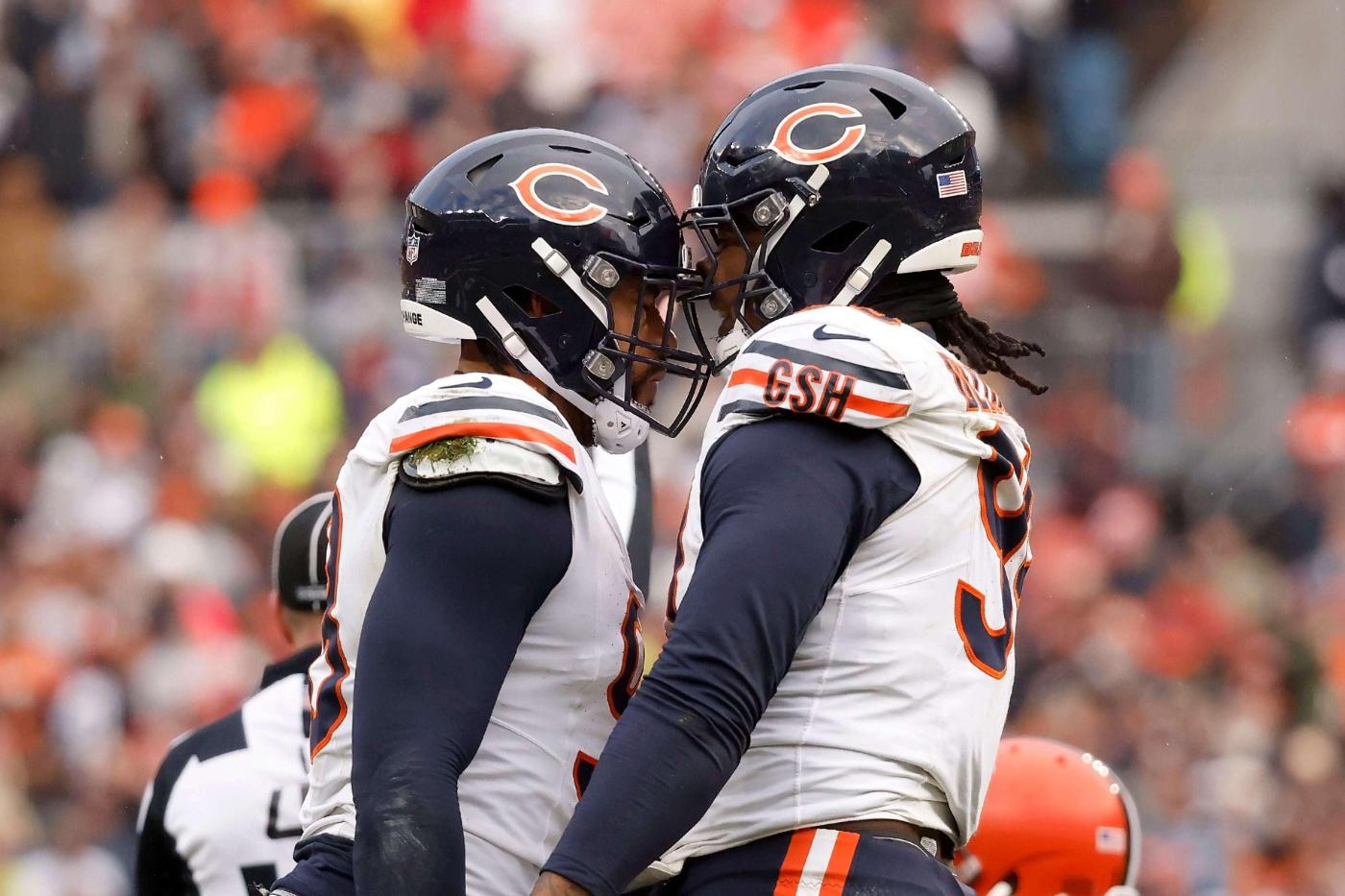
In the moment, it felt almost cartoonish with how calmly and easily Sweat shut that play down. But those contributions have been coming regularly over the past two months as Sweat has helped fuel the ascent of the Chicago Bears defense.

Following the team’s 27-16 win Sunday, the 27-year-old pass rusher described the collective confidence flowing through the defense. “This group has been locked in,” he said. “We’re playing really well right now. We just have to keep it going.”

There is no doubt Sweat’s presence has been a significant catalyst to the defensive resurgence. “The Tez Effect,” as it’s called at Halas Hall, has been real. Before Sweat’s Week 9 arrival, the Bears were already making notable strides. But they have improved across the board since he took his first snap Nov. 5 in New Orleans.

Over the last seven games, the Bears have risen from 23rd in the NFL to 12th in total yards allowed and from 22nd to 11th in takeaways. Additionally, they have made modest strides in sack production and third-down defense. Sweat is also contributing to a run defense that is now the league’s best, allowing just 80.7 yards per game. Plus, he has been invigorated to join a unit that has shown undeniable chemistry and continues playing with an energizing combination of swagger and competitiveness.

“I see a hungry group here,” Sweat said. “These are guys who want to live up to the challenge every week, man. They want to be great. It’s cool. We play for the man beside us and I feel like that really shows on the field.”

Sweat believes an elevated standard is being established, which is fueling the contagious enthusiasm within the defense.

“If I make a play,” he said, “I’m going to look somebody else in the eyes and see if he is ready to match my energy. Just as the other guys do to me. That applies across the board. You want to be held to a high standard, not just by your coaches but your peers.”

Bears defensive line coach Travis Smith has had a front-row seat for Sweat’s acclimation at Halas Hall and has been impressed with how natural it has been for him to both fit in and emerge as a major difference maker.

“It’s been phenomenal,” Smith said. “It’s been seamless. He has fit in like he was here all offseason. He’s been in here working. He’s picked up our system. He has been playing 40-plus plays since the first game he was with us.”

Smith appreciates how natural the click has been for Sweat, particularly given the on-the-fly demands he has had of joining a new team and new teammates in a new city without much time to decompress and get his personal life settled.

“That’s part of who the man is, his character,” Smith said. “… Montez is obviously a phenomenal player. Physical. Disruptive. Factors into almost every play. But he’s a phenomenal person too. Selfless. Humble. All of that. That’s part of what has allowed him to fit in so well so quickly. It’s because our guys see that. And they appreciate it and respect that, too.”

Before the season began, while Sweat was preparing for a contract year with the Washington Commanders, he set a goal of reaching double figures in sacks for the first time in his career. Sweat reached that milestone with a 7-yard takedown of Lions quarterback Jared Goff earlier this month and tacked on 2 1/2 more sacks to his season total against the Cleveland Browns on Dec. 17.

“Now we’re just adding on,” he said.

When Sweat arrived at Halas Hall on Halloween, Smith had heard all the outside questions about how Sweat might produce after he left a stacked defensive line in Washington that also featured end Chase Young and tackles Jonathan Allen and Daron Payne.

Sweat’s six sacks over seven games with the Bears have told Smith a little something.

“Maybe he’s the one who is creating these other opportunities,” Smith said. “Maybe he was a big part of what was happening in Washington that was allowing those other guys to have success. That’s a reflection of who he is.”

Sweat landed his second NFL contract just days after the Bears traded a second-round pick to acquire him. And that four-year, $98 million extension was both a nice reward and something for him to live up to. Smith has helped create a new bull’s-eye, congratulating Sweat on his first 10-sack season but then offering a few new achievement benchmarks.

“The whole goal for us now is a third contract,” he said. “So what’s the next thing for him? Keep stacking. … Screw double digits (in sacks). We start talking about the 20 pieces. When you talk about ‘Never put a ceiling on a man,’ when you start getting 20 pieces, you start talking about All-Pro, Hall of Fame, all that kind of stuff. So why settle for double digits?”

Settling isn’t in Sweat’s DNA. And he’s hopeful he can continue producing in a way that pushes the Bears defense through the finishing tape of this season with meaningful momentum and belief.

“We’re trying to finish on a strong note so that can carry over into next season,” Sweat said.

()

Family, police can now petition to confiscate a dangerous person’s guns. How does the new MN law work?

posted in: Politics | 0

As of Jan. 1, Minnesota is one of 21 states with a so-called red flag law, which allows a court to order people to give up their guns for up to a year if they pose a threat to themselves or others.

It’s one of two new gun control laws on the books now after a busy legislative session for DFL lawmakers in control of state government. The other, which went into effect on Aug. 1, requires universal background checks for firearms sales. Both were part of a 500-page $880 million public safety package Gov. Tim Walz signed into law in May.

The red flag, or “extreme risk protection order” law, is just one gun control policy DFLers hoped to enact in Minnesota. Similar laws have been challenged in other states, but so far have held up in court.

DFL backers and gun control advocates held a news conference at the Minnesota Capitol on Tuesday to mark the new law taking effect and explain how it works. Supporters, including Walz and Richfield Police Chief Jay Henthorne, say the orders will be a powerful tool to prevent tragedies, but they added that calling 911 is still the first thing to do in an emergency.

How it works

Under the new law, family members and law enforcement and can petition a court to remove firearms from an individual deemed an immediate threat to themselves or others. For example, a person with a suicidal immediate family member or a partner who has threatened violence would file a request with the court explaining the situation.

If the court finds evidence of the risk compelling, it can issue an emergency order directing a person to surrender their firearms and banning the person from purchasing firearms. There are two types of order — an emergency order that goes into effect immediately and lasts 14 days as welll as a long-term order requiring a hearing. It can last from six months to one year.

The process is similar to orders for protection and harassment restraining orders, according to the state Department of Public Safety. The person seeking the order is known as the petitioner, and the subject of the order is known as the respondent.

Law enforcement officials who can seek an extreme risk protection order include a chief law enforcement officer and a city or county attorney.

Those eligible to petition

Family or household members eligible to petition include:

• Spouses and former spouses.

• Parents and children.

• Guardians.

• Persons who are presently residing with the respondent.

• A person involved in a significant romantic or sexual relationship with the respondent.

When it comes to “significant” relationships, the court will consider the length of the relationship, type and frequency of interaction between the parties.

If someone believes they have been unjustly deprived of their firearms, they can challenge the order in court, and an evidentiary hearing must be held in 14 days.

Forms for extreme risk protection orders can be found on the Minnesota court system website: https://www.mncourts.gov/GetForms.aspx?c=36.

Enforcement

Local law enforcement will be required to enforce the orders, and state law enforcement will not be involved, said Department of Public Safety Commissioner Bob Jacobson.

At Tuesday’s news conference, Richfield’s chief of police said law enforcement will approach recovering firearms in extreme risk protection orders on a case-by-case basis. Ideally, the subject of an order would hand over their weapons voluntarily. If they don’t, police will have to serve a search warrant for the weapons.

Asked about how the law accounts for abuse of protective orders, Senate bill sponsor Sen. Ron Latz, DFL-St. Louis Park, noted that filing a petition with false information is a gross misdemeanor. He also said the list of individuals able to obtain an order does not include neighbors, for example, as to limit the relationships qualified to seek them.

Latz, Walz, Lt. Gov. Peggy Flanagan, and gun control advocates at Tuesday’s news conference at the Capitol sought to bring attention to the new law, which they said will prevent violence in the future.

“We will never know for sure which lives were saved,” said Latz. “But we will know in the abstract that there are a lot of people walking around … because we passed this law.”

Speaking on behalf of the Minnesota Chiefs of Police Association, which backed the legislation, Henthorne said extreme risk orders will help law enforcement intervene when there are “clear warning signs” of violence.

Challenges?

Minnesota is now one of 21 states that have enacted an extreme risk protection order law. Connecticut was the first to do so in 1999.

Red flag laws have faced legal challenges in other states, but none have been defeated by a lawsuit so far. Lawsuits typically raise Constitutional issues with the statutes, asserting that they deprive people of the right to bear arms without due process.

Gun rights advocates in Minnesota can’t challenge the law until cases emerge. But at least one group is already open to getting involved in a legal case to get it overturned.

“If there’s a good case with a sympathetic client, absolutely,” said Rob Doar, a lobbyist with the Minnesota Gun Owners Caucus, a prominent pro-gun rights group active at the Legislature.

More gun control laws?

Extreme risk protection orders and universal background checks were just two major gun control proposals backed by DFL lawmakers. Now that they’re law, what will they look to pass next?

There are several other proposals Democrats have their eyes on, including a law requiring safe gun storage and a new requirement to report missing or stolen firearms.

Those proposals didn’t make it to the finish line last year. Both Walz and Latz said they hope to see a safe storage requirement make it to the governor’s desk in this year’s legislative session.

Top DFLers als have signaled interest in broader gun control legislation. Walz in his 2023 budget recommendations called for magazine capacity limits and restrictions on semiautomatic rifle sales to anyone under 21.

But with a slim 34-33 majority in the Senate, and two Democrats from rural northern districts typically less friendly to gun control legislation, the possibilities may be limited.

However, Latz said last year it wasn’t certain red flag orders would make it through until later in the session.

“We didn’t know we could get this through the Senate until late in the game,” he said. “I don’t know for sure what we’re going to introduce … personally I think safe storage is a high priority.”

Related Articles

Politics |


Legal pot, abortion rights and paid leave: A whirlwind year at the Minnesota Legislature

Politics |


John Reynolds: The DFL’s $20 billion spending spree put Minnesota on thin ice

Politics |


Minnesota State Office Building renovation will cost nearly half a billion dollars. What’s behind the price?

Politics |


Gov. Tim Walz appoints Brad Lindsay to be commissioner of Veterans Affairs

Politics |


Minnesota has a new state flag design

Unlicensed motorist pleads guilty to hitting, killing Burnsville priest riding bike

posted in: News | 0

A man who was driving with a revoked license when he fatally struck a Burnsville priest in Rosemount in 2021 pleaded guilty to criminal vehicular homicide on Tuesday.

Trejean Derrell Curry, 28, of St. Paul, had been previously convicted nine times for driving without a license prior to hitting the Rev. Dennis Keith Dempsey as the 73-year-old rode his bike on the shoulder of County Road 42 on Oct. 25, 2021, according to court records.

Trejean Derrell Curry (Courtesy of the Dakota County Sheriff’s Office)

Dempsey, who served the Archdiocese of St. Paul and Minneapolis for 41 years, was a newly installed priest at the Church of the Risen Savior in Burnsville. Before that, he spent 15 years at the Church of St. Dominic in Northfield.

Court records show that Curry continued to drive without a license after he was charged in Dempsey’s death and released from jail on a $75,000 bond, with conditions. Curry was cited for driving after revocation this past September after he was caught on a surveillance camera driving away from the Dakota County Courthouse in Hastings following a hearing on the criminal vehicular homicide-gross negligence charge.

For pleading guilty to Dempsey’s death, prosecutors agreed to a stayed prison sentence, up to five years of probation and a 150-day jail sentence, which could be served in 30-day increments annually during probation. Judge Dannia Edwards set sentencing for Feb. 15.

Tire scuff mark on license plate

Curry was driving his girlfriend’s Ford Fusion west on County Road 42 near Auburn Avenue about 3:20 p.m. when he struck Dempsey from behind, the March 2022 criminal complaint says. Dempsey, of Apple Valley, died at the scene.

County Road 42 is a four-lane road with two eastbound and two westbound lanes separated by a grassy median. Curry told police he was driving in the right-most westbound lane at the time of the crash, and that Dempsey swerved in front of him.

However, the Minnesota State Patrol determined that Dempsey was on the shoulder of the road when Curry veered from the travel lane and struck him at between 54 and 63 mph, according to the complaint. The speed limit on that stretch of County Road 42 is 55 mph.

The State Patrol’s crash analysis found that the skid marks from Curry’s car were to the right of the solid white line that separates the travel lane from the shoulder, and that the skid mark made by Dempsey’s bicycle when he was struck was near the center of the shoulder. The car’s front license plate had a bike tire scuff mark and indentation.

A month before the crash, Curry was convicted of speeding for driving 100 mph in a 70-mph zone and of driving after revocation in July 2021. He was convicted of driving after revocation three times in both 2018 and 2019 and once in March 2021.

Four decades of service

According to the Catholic Spirit newspaper, Dempsey grew up in Minneapolis and was ordained in the Twin Cities archdiocese in 1980.

He also served as pastor of St. Francis de Sales and St. James in St. Paul from 1999 to 2004. After that, he went to St. Dominic in Northfield, serving as pastor from 2004 to 2019. In July 2019, he left to work a second time for the archdiocesan mission in Venezuela, where he served from 1993 to 1999 and learned Spanish. Dempsey returned to the Twin Cities in June in advance of his Burnsville assignment.

Other parishes he served included St. Pius X in White Bear Lake (1980-1984), St. Wenceslaus in New Prague (1984-1988), St. Michael in St. Michael (1988-1993) and Annunciation in Hazelwood in rural Rice County (2014-2019).

Related Articles

Crime & Public Safety |


Boy, 10, critically injured by shooter who targeted a St. Paul house New Year’s Eve

Crime & Public Safety |


St. Paul New Year’s shootings leave one dead, one injured and a 10-year-old in critical condition

Crime & Public Safety |


St. Paul’s 2023 homicides: ‘Every one of these murders matters,’ police chief says as numbers slowly decline

Crime & Public Safety |


Rochester teen killed in southern Dakota County crash

Crime & Public Safety |


1 dead, 1 injured in high-speed crash in Maplewood, State Patrol says

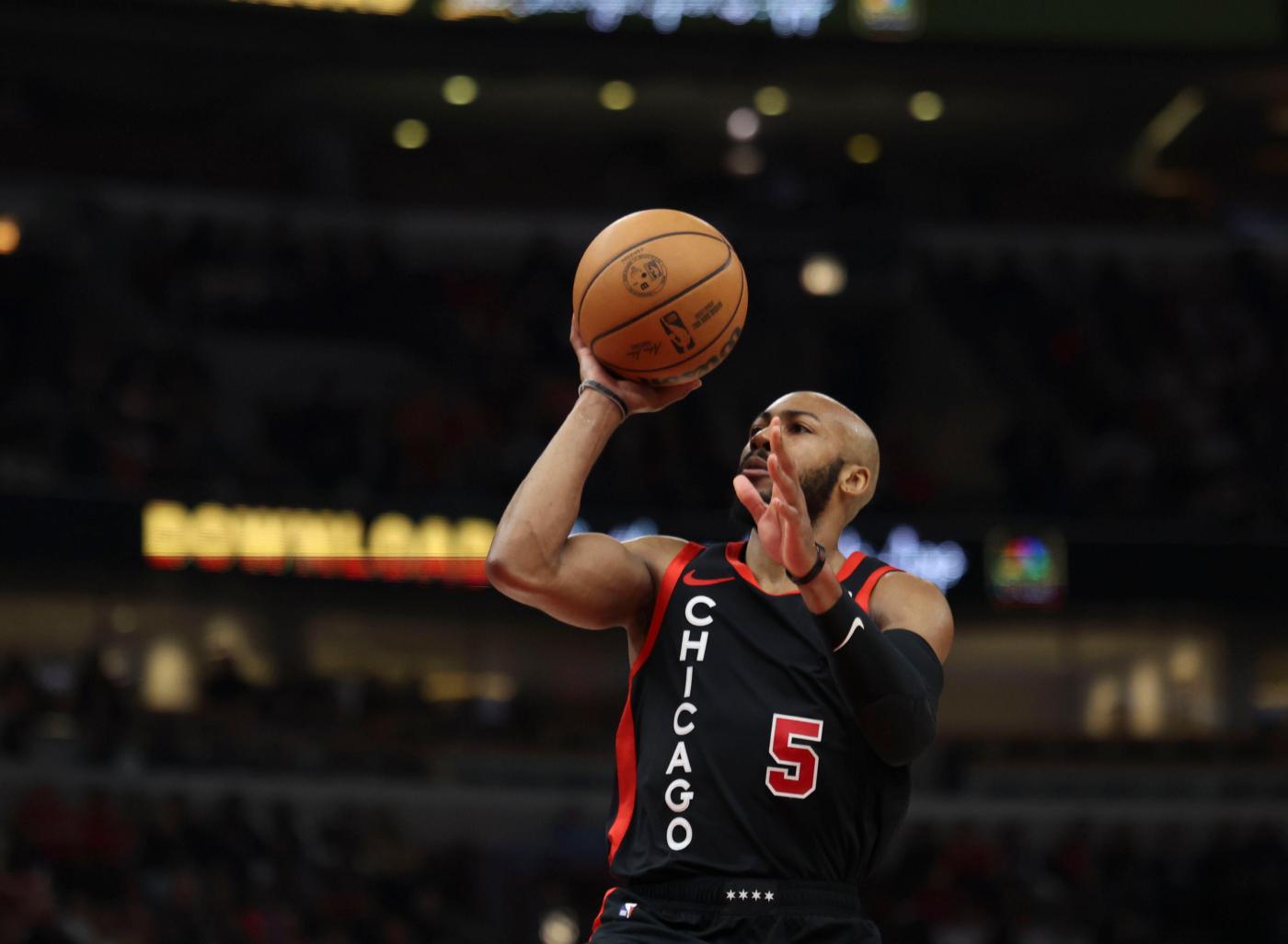
Chicago Bulls guard Jevon Carter pays $965K for West Loop condo and then sells Wisconsin home

posted in: News | 0

Chicago Bulls guard Jevon Carter in July paid $965,000 for a three-bedroom, 2,535-square-foot condominium in a West Loop high-rise, and in late November, he sold his four-bedroom, 3,052-square-foot house in Fox Point, Wis. for $770,000.

A Proviso East alumnus, Carter, 28, signed with the Bulls in July after a little more than a year with the Milwaukee Bucks.

In the West Loop, Carter’s new condo has 2-1/2 bathrooms, floor-to-ceiling windows, a dining room, a living room with a balcony, hardwood floors, a custom built-in entertainment center and a kitchen with an island, stainless steel appliances and a wine refrigerator. Other features include wraparound city views and a primary bedroom suite with a large walk-in closet and a balcony.

Carter’s new condo had been listed in May for $989,995. Its price was reduced to $975,000 in June and then to just below $950,000 in July.

Paul Gorney of eXp Realty, who represented Carter in his purchase, could not be reached for comment.

The unit had a $15,301 property tax bill in the 2022 tax year.

The West Loop condo isn’t the only Midwestern property that Carter has owned. In Fox Point, Wis., Carter paid $810,000 in 2022 for a Colonial-style house. He listed that home in August for $849,900 and cut his asking price to just under $800,000 later in August and then to $775,000 in September before finding a buyer.

Goldsborough is a freelance reporter.

Join our Chicago Dream Homes Facebook group for more luxury listings and real estate news.

()