Four quick weeknight dinners — and a breakfast.

posted in: News | 0

I seriously contemplated transforming today’s list into Five Weekday Breakfasts; such is my love of breakfast, and also in honor of our latest big recipe collection, “24 Breakfast Recipes to Make You a Morning Person.”

You’ll see, however, that I went with the status quo and picked dinner recipes. I did include one of my all-time favorite New York Times Cooking recipes: eggs Kejriwal, featured in our breakfast collection but equally good at any time of day.

1. Eggplant Adobo

Adobo Eggplant. Kay Chun’s ultra-satisfying meatless winter take on the Filipino classic wants to be served with rice. Food Stylist: Samantha Seneviratne. (Julia Gartland/The New York Times)

This super punchy, one-skillet vegetarian meal is inspired by chicken adobo, a beloved Filipino dish. Here, eggplant cooks in rich, tangy adobo sauce — a blend of soy sauce, vinegar, garlic, black pepper and bay leaf — absorbing the savory flavors as it simmers. Coconut milk is added in some versions of adobo, creating a rich, silky texture to balance out the sauce’s tart notes. This recipe includes a shower of fragrant basil, which brings a fresh hit that lifts the dish. (Thinly sliced scallions would also be great.) Serve the eggplant over rice to catch all of its flavorful drippings.

By Kay Chun

Yield: 4 servings

Total time: 40 minutes

INGREDIENTS

5 tablespoons neutral oil, such as canola or safflower

1 1/2 pounds eggplant (preferably small Italian eggplant), cut into 1-inch cubes (about 8 cups)

Kosher salt and pepper

1/4 cup low-sodium soy sauce

1/4 cup unsweetened coconut milk

2 tablespoons distilled white vinegar

1 tablespoon turbinado or light brown sugar

1/2 white onion, thinly sliced

3 garlic cloves, minced

1 fresh or dried bay leaf

1/4 cup chopped basil, plus additional small leaves for garnish

Steamed jasmine rice, for serving

DIRECTIONS

1. In a 12-inch nonstick skillet, heat 2 tablespoons of the oil over medium. Add half of the eggplant, season with salt and pepper and cook, stirring occasionally, until golden, 5 minutes. Transfer to a plate and repeat with 2 tablespoons of the oil and the remaining eggplant.

2. Meanwhile, in a small bowl, combine soy sauce, coconut milk, vinegar, sugar, 1/2 teaspoon pepper and 2 tablespoons of water; mix well.

3. Add the remaining 1 tablespoon oil and the onion to the skillet and cook, stirring occasionally, until lightly golden, 3 minutes. Add garlic and stir until fragrant, 1 minute.

4. Add the browned eggplant, soy sauce mixture and bay leaf and toss to evenly coat. Cover, reduce heat to low and cook, stirring every 5 minutes, until the eggplant is tender but still has structure, about 10 minutes. Uncover and cook over medium heat, stirring occasionally, until the sauce thickens and nicely coats the eggplant, about 2 minutes longer. Season with salt and pepper and stir in the chopped basil.

5. Divide the eggplant mixture over rice among bowls. Garnish with basil leaves and serve warm.

2. Chicken Piccata

Chicken piccata. A lemony butter-caper pan sauce makes chicken piccata an Italian American staple that just keeps on keeping on. Food stylist: Simon Andrews. (David Malosh/The New York Times)

Chicken piccata is an Italian American staple beloved for its piquant flavors cradled in a silky, butter-rich pan sauce. It also doesn’t hurt that it cooks up very quickly. This version is mostly traditional, except that it uses lemon two ways, calling for lemon slices to be caramelized (to soften their tang) and for a hit of fresh juice at the end (to brighten the whole dish). This ensures a sauce that’s neither too rich nor too puckery. Serve with a starch — pasta, polenta, rice or white beans — for sopping up the sauce, and a green vegetable, such as a kale salad, broccoli or green beans.

By Ali Slagle

Yield: 4 servings

Total time: 25 minutes

INGREDIENTS

4 boneless, skinless chicken breasts (about 1 1.2 pounds), halved horizontally (see Tip)

Kosher salt and black pepper

All-purpose flour, for dredging

6 tablespoons unsalted butter

3 tablespoons extra-virgin olive oil, plus more as needed

1 shallot, peeled and sliced lengthwise

1 lemon, halved (half thinly sliced and seeds removed; half juiced, about 2 tablespoons)

3/4 cup chicken stock

4 teaspoons drained capers

Coarsely chopped fresh parsley, for garnish (optional)

DIRECTIONS

1. Season both sides of the chicken with salt and pepper. Dredge the chicken in flour and shake off any excess.

2. In a large skillet, heat 3 tablespoons butter and the olive oil over medium-high heat until the butter has melted. Working in batches to avoid crowding the pan, add the chicken and sauté until golden brown and cooked through, about 3 minutes per side.

3. Remove the chicken, place on a plate and repeat with the remaining pieces, adding more olive oil if needed.

4. Once the chicken is cooked, add the shallot and lemon slices to the pan and sauté, stirring occasionally, until lightly caramelized and fragrant, 2 to 3 minutes. Add the stock and simmer until reduced by half, about 3 minutes.

5. Reduce the heat to low, then stir in the remaining 3 tablespoons butter, capers and lemon juice, to taste. Season with salt and pepper to taste. Serve the chicken with the sauce poured over the top. Garnish with parsley if desired.

Tip: Freezing the chicken breasts for 15 minutes will make slicing them through the middle easier.

3. One-Pan Roasted Fish With Cherry Tomatoes

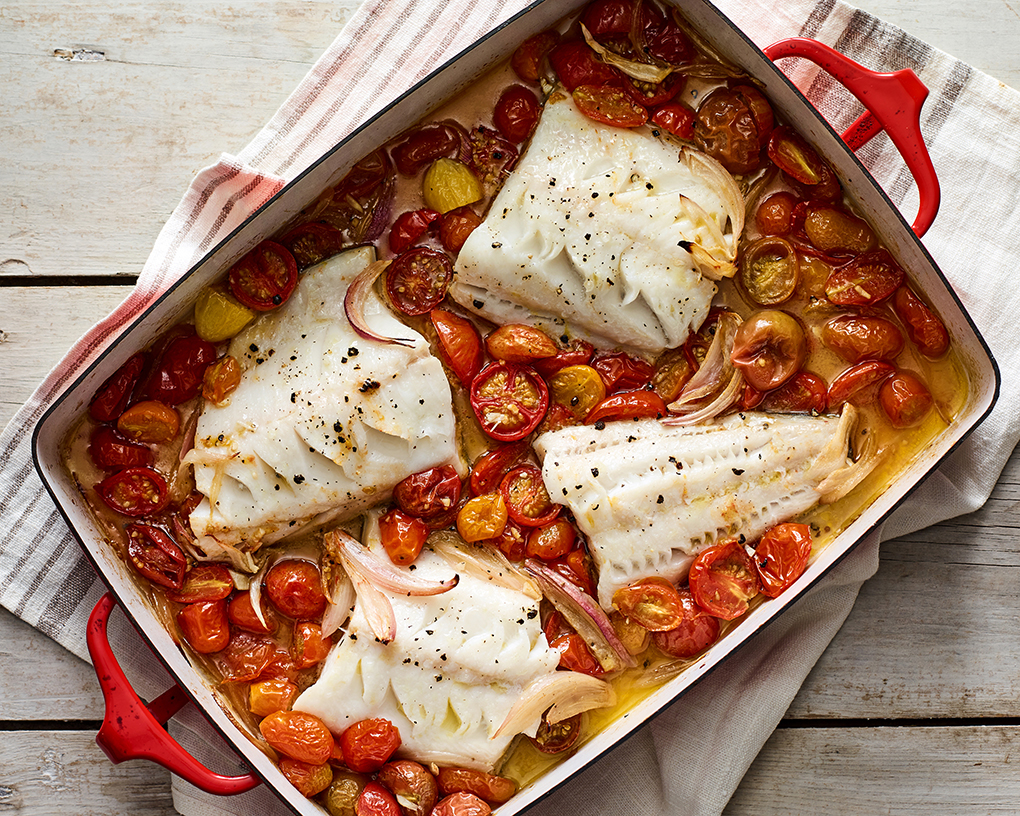
In this quick, elegant dinner, cherry tomatoes are roasted with garlic, shallots, sherry vinegar and a drizzle of honey, turning them into a sweet and savory condiment for simple roasted fish. This versatile, year-round recipe is delicious with juicy end-of-summer tomatoes or even with a pint from the grocery store. Thick white fish such as cod or halibut work best here. Serve with rice, couscous or your favorite grains, and a green salad.

By Lidey Heuck

Yield: 4 servings

Total time: 30 minutes

INGREDIENTS

1 pint cherry tomatoes, halved

1/2 cup thinly sliced shallots (about 1 large)

2 teaspoons minced garlic (about 2 large cloves)

2 tablespoons olive oil, plus more for brushing

1 tablespoon sherry or red wine vinegar

1 teaspoon honey

1 teaspoon kosher salt, plus more to taste

1/2 teaspoon black pepper, plus more to taste

4 (6-ounce) skin-on mild white fish fillets, such as cod or halibut

1 teaspoon freshly grated lemon zest (from about 1/2 lemon)

Chopped fresh basil, for serving

Chopped fresh mint, for serving

DIRECTIONS

1. Heat the oven to 400 degrees. Place the tomatoes, shallots and garlic in a 9-by-13-inch nonreactive baking dish. In a small bowl, whisk together the olive oil, vinegar, honey, salt and pepper. Pour over the tomatoes and toss to combine. Roast until the tomatoes have collapsed and the shallots are translucent, about 15 minutes.

2. While the tomatoes roast, pat the fish dry with paper towels, brush all over with olive oil, and season generously with salt and pepper.

3. Toss the tomatoes, move them to the sides of the dish and place the fish fillets, evenly spaced, in the center. Roast until the fish is cooked through and flakes easily with a fork, 10 to 12 minutes.

4. Sprinkle the entire dish with the lemon zest, basil and mint. Serve the fish with the tomatoes, spooning any remaining juices on top.

4. Easy Burritos

Easy burritos. Ali Slagle’s recipe distills Los Angeles-style burritos down to the basics: seasoned ground beef, beans and cheese. Food Stylist: Simon Andrews (Christopher Testani/The New York Times)

Saucy and savory with just ground beef, beans and cheese, this easy recipe is inspired by Los Angeles-style burritos, which restaurant critic Jonathan Gold once summarized as “the rough equivalent of a hardhat’s lunch pail, a method of constructing a filling, portable meal from a tortilla, last night’s beans and a spoonful of stew if there was one.” This burrito’s filling eschews guacamole, sour cream, rice and raw vegetables, which means it freezes well for up to 3 months (see Tip). The seared ground beef is simply spiced, but feel free to swap in a stewed meat like birria or tinga de pollo or make it vegetarian with just beans and cheese.

By Ali Slagle

Yield: 6 burritos

Total time: 50 minutes

INGREDIENTS

1 pound ground beef

1 medium yellow or white onion, finely chopped

1 1/2 teaspoons ground cumin

1/2 teaspoon smoked paprika, or chipotle or ancho chile powder

1/2 teaspoon dried oregano

1 (15-ounce) can black or pinto beans

1 large tomato, coarsely chopped

2 teaspoons lime juice, or apple cider vinegar

Hot sauce, for drizzling (optional)

6 burrito-size (about 10-inch) flour tortillas

2 cups (8 ounces) shredded Monterey Jack or Mexican blend cheese

DIRECTIONS

1. In a large skillet, press the beef into an even layer to fill the skillet. Sprinkle with the onion. Cook over medium-high, undisturbed, until the meat is deeply browned underneath, 6 to 8 minutes. Sprinkle with the cumin, smoked paprika and oregano, and season with salt and pepper. Break up the beef into small pieces, then cook, stirring occasionally, until the onion is softened and the spices are fragrant, 2 to 4 minutes.

2. Add the beans, including the liquid, and the tomato and simmer, stirring and scraping up browned bits, until the liquid has evaporated and the mixture starts to sizzle, 8 to 10 minutes. Turn off the heat, stir in the lime juice and season with salt and pepper.

3. Arrange the tortillas on a clean work surface. Sprinkle half the cheese across the center of the tortillas, left to right, leaving a 1-inch border. Top each with 2/3 cup of the beef-bean mixture, followed by the remaining cheese. Drizzle on hot sauce, if using. Fold the tortilla’s short sides over the filling, then fold the bottom of the tortilla snugly over the filling. Tightly roll away from you until the burrito is sealed. Repeat with the other tortillas.

4. When ready to eat, in a nonstick skillet over medium, place the burritos seam side down. Cook, turning occasionally, until golden all over, 3 to 5 minutes. Serve with desired toppings.

Tip: To make ahead, prepare through Step 3. Let cool slightly, then wrap in aluminum foil. Refrigerate for up to 24 hours or freeze for up to 3 months. To reheat, remove the foil and wrap the burrito in a damp paper towel. Microwave, seam side down, until warm, 1 to 4 minutes. Remove the towel and continue to Step 4.

5. Eggs Kejriwal

Eggs Kejriwal, a spicy egg-and-cheese on toast with roots in the social-club circuit of Mumbai. Quick and simple, this Tejal Rao recipe is ideal for breakfast or a hearty snack between meals. Food Stylist: Barrett Washburne. Prop Stylist: Megan Hedgpeth. (Ryan Liebe/The New York Times)

This spicy egg-and-cheese on toast has its roots in the social club circuit of Mumbai, India, though chefs in London, New York and Oakland, California, have riffed on it recently, too. The dish is quick and simple, ideal for breakfast or a hearty snack between meals, and can be customized with a variety of cheeses and toppings. To make this updated Eggs Kejriwal, toast good bread and smear it with mustard, then pile on some grated cheese mixed up with chopped green chiles, red onion and cilantro leaves. Once the cheese is bubbling under the broiler, just slide on a fried egg.

By Tejal Rao

Yield: 2 servings

Total time: 10 minutes

INGREDIENTS

1 tablespoon softened butter

2 thick slices Pullman bread

2 teaspoons mustard

4 ounces Cheddar, grated

1 serrano chile, finely sliced

2 tablespoons cilantro leaves, washed and chopped

1 tablespoon minced red onion

2 eggs

Salt and pepper

Ketchup (optional)

DIRECTIONS

1. Butter the bread on both sides, and lightly brown in a frying pan (use the pan you like most for frying eggs). Smear one side of the toasts with mustard, and transfer to a sheet pan, mustard-side up. Turn on the broiler.

2. In a medium bowl, mix together the cheese, chile, cilantro and onion, then split evenly between the toasts. Place under the broiler just until the cheese is melted.

3. While the cheese is melting, fry the eggs in the same pan you used to make the toast, until the white edges are crisp, but the yolks are still soft. Gently loosen the eggs from the pan, and slide one on top of each toast. Season with salt and pepper, and serve with ketchup on the side, if you like.

Related Articles

Restaurants, Food and Drink |


What menus tell us about dining in America

Restaurants, Food and Drink |


Smorgie’s, focusing on affordable comfort food, opens across from Xcel Energy Center

Restaurants, Food and Drink |


Downtown St. Paul real estate mogul Jim Crockarell dies at 79

Restaurants, Food and Drink |


Stillwater’s ‘Best Wings’ contest, benefit begins

Restaurants, Food and Drink |


Need more veggies? Go ahead and double the greens in these recipes
Nikki Haley is leaning into pre-Trump conservatism. Does that ideology still exist?

posted in: Politics | 0

Donald Trump’s Republican rivals have been saying since 2016 that if they could only get him one on one, they’d have a chance.

But that’s not working out for Nikki Haley. And if the former U.N. ambassador’s campaign is proving anything, it’s that the real problem for Trump’s opponents isn’t really about candidate math at all.

It’s a bear market for fiscal conservative, neoconservative ideology in a MAGA-centric GOP.

“She’s running as a conservative. Trump’s running as a populist,” said Alex Conant, a Republican strategist and former adviser to Marco Rubio’s 2016 and Tim Pawlenty’s 2012 presidential campaigns. “Haley’s challenge is that the party is increasingly a populist party.”

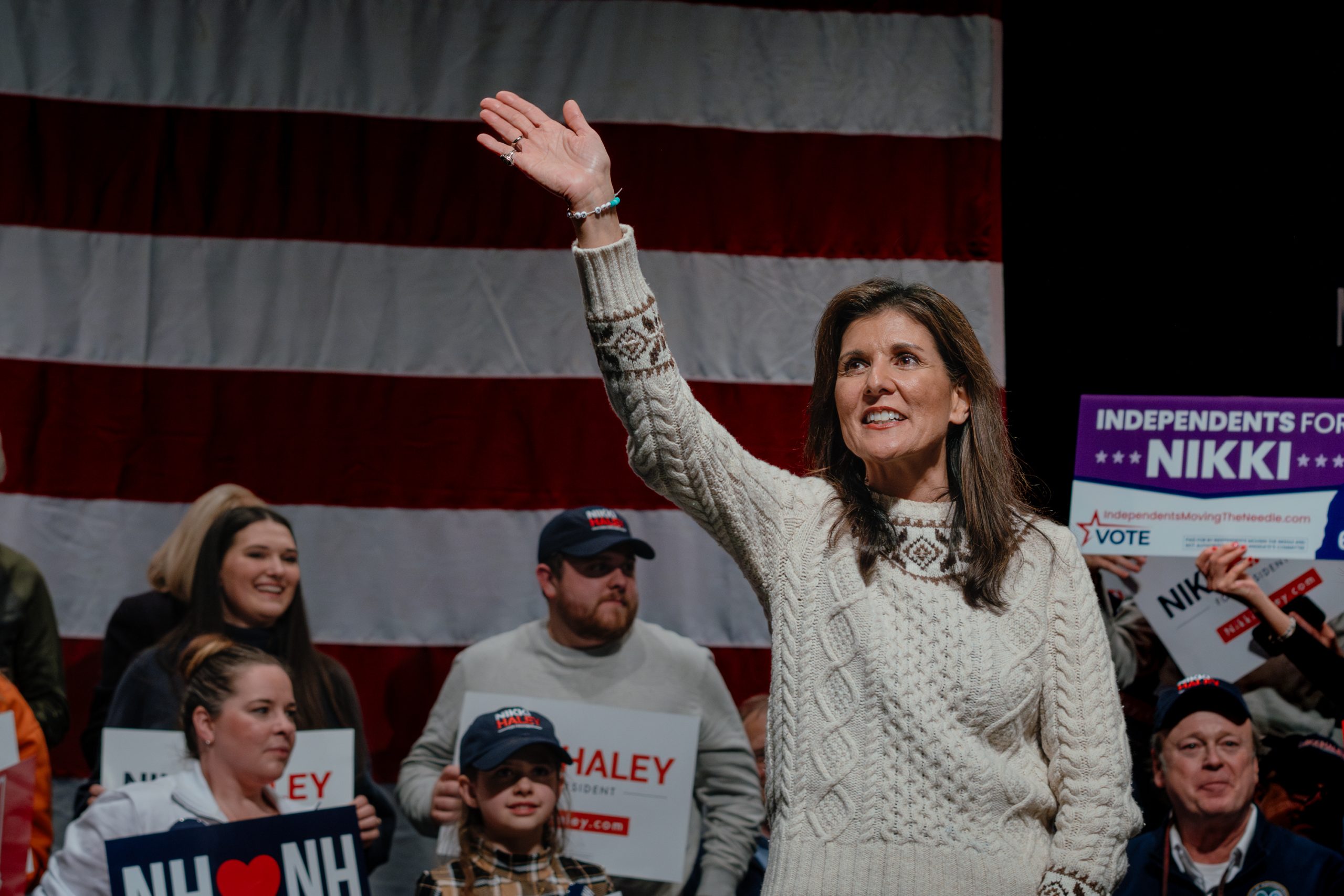
It was a pre-Trump, conservative ideology that marked Haley’s rise as a tea party favorite — and that she is leaning into in her campaign. In recent days, the former U.N. ambassador called for the U.S. to “take out” any Iranian leaders who support the group that conducted a deadly drone strike in Jordan. She championed raising the retirement age, an idea Republicans have floated for years to improve the solvency of Social Security. And she has turned the verdict of Trump’s second E. Jean Carroll defamation trial against him as a kind of pro-family referendum, pivoting to the kind of throwback attack on a rival’s character that is more at home in a 1990s-era presidential primary.

America,” she said, “can do better than Donald Trump and Joe Biden.”

But Haley in her seemingly longshot campaign is relying on the embers of a conservatism all but on the eve of extinction. Ever since his victory in 2016, Trump has coaxed Republican voters to loosen their grip on their traditional focus on tax cuts, deregulation, and free trade.

And it seems to be working. According to an August poll conducted by American Compass, the conservative think tank that’s trying to chart a post-Reagan, populist vision for the party, fewer than 30 percent of voters still emphasize “Old Right” issues like the tax cuts championed by Americans for Prosperity, while more than 40 percent focus instead on “New Right” issues like globalization.

On Wednesday, ahead of Trump’s meeting with the Teamsters in Washington, Haley threw down an Old Right policy gauntlet for Trump on labor, asking whether he agreed with the Teamsters on “Gutting right-to-work laws conservative governors like I fought for?” and “Corrupt union bosses spending workers’ money on liberal causes?” Maybe in a previous year that would have worked. But that same American Compass poll found that in fact, GOP attitudes have shifted on labor, with 41 percent of Republicans saying “unions are a positive force that help workers and reduce corporate power.”

“It’s clearly not something that is going to win a Republican primary and seems mostly oriented at earning continued buzz in the media and with donors to hang around a while longer,” Oren Cass, who heads American Compass and was an adviser to Mitt Romney’s 2008 and 2012 presidential campaigns, said of Haley’s pre-Trumpian policies. “It also speaks to the broader problem that the non-Trump side of the Republican Party has had now more than eight years since Trump came down the golden escalator to respond to the interests and priorities of American voters. If this is what they choose to trot out, then frankly, they can’t complain when they lose.”

The battle lines between the old and new Republican Party didn’t start — and do not stop — with the presidential primary. They riddle the party at virtually every level of government. Over on Capitol Hill this week, as federal lawmakers tangle over a border deal that includes aid for Ukraine, Senate Minority Leader Mitch McConnell has been supportive of such a bargain even as Trump balks.

Sen. Rick Scott of Florida said McConnell, stalwart of the Old Right, was “preserving a Republican Party in Washington that has completely lost touch with our voters and the real world.”

But if the old guard still has a place in Washington, the presidential primary is proof that, when it comes to the electorate, Scott may be right. Haley, for all her efforts, lost convincingly in Iowa and New Hampshire and is polling more than 30 percentage points behind Trump in her home state. And her vanquished rivals couldn’t move Reaganism with a pro-Trump paint job off the lot. The Reagan lane in the GOP primary all but collapsed in the span of 15 days last fall when both fellow South Carolinian Sen. Tim Scott and former Vice President Mike Pence dropped out. Sunny talk of Social Security reform won them no purchase.

Pence, more than anyone, defined this primary as a fork in the road between a hard-hewn conservatism and a sugar-coated populism, one that placed progressives and some Republicans together as “fellow travelers on the same road to ruin.”

It was a message that won him support in the single digits.

Art Pope, the former chair of Americans for Prosperity and a Raleigh, N.C.-based GOP donor, previously backed Pence on account of his free-enterprise and hawkish policies, then sided with Haley after Pence dropped out.

“Her policies are much more traditional conservative, Reagan-coalition policies,” Pope said, saying that Trump is narrowing the GOP’s big-tent approach to politics by threatening donors like him who back Haley. “It might be Donald Trump’s civil war, but it’s not Nikki Haley’s.”

In a statement, Olivia Perez-Cubas, a spokesperson for Haley, referred back to Haley’s time as governor, telling POLITICO, “Nikki Haley passed one of the toughest immigration bills in the country while Donald Trump was donating money to Democrats like Kamala Harris.” She said, “Nikki has always been an anti-establishment conservative champion and she’ll go toe-to-toe with Trump on her record any day. If Trump disagrees, he can show up to a debate.”

But what Haley is fighting for is a GOP that no longer appears to exist. And if the story of the GOP primary so far has been one where Trump’s rivals have either tried to imitate his policies (Ron DeSantis) or his personality (Vivek Ramaswamy) with little success, then a major subplot has been that GOP voters have proved more malleable on what they want when it comes to the former.

“Part of Trump’s appeal is his populist policies, but it’s mostly his personality,” Conant said. “Republican voters really like Trump. They feel a loyalty to him — a connection to him, so much so that they’re willing to overlook policy disagreements with him.”

Chicago Bears working on a deal to hire Shane Waldron as their new offensive coordinator

posted in: News | 0

The Chicago Bears are working on a deal to hire Shane Waldron as their new offensive coordinator, multiple league sources confirmed Monday morning.

Waldron has been the Seattle Seahawks offensive coordinator for the last three seasons and helped quarterback Geno Smith to a comeback season in 2022. Before that, Waldron spent four seasons with the Los Angeles Rams as the passing game coordinator, quarterbacks coach and tight ends coach.

He is well-respected inside league circles as a young, energetic coach on the rise and a strong teacher with a creative mind and — especially important to the Bears — three seasons of play-calling experience.

NFL Network first reported the Bears are planning to hire Waldron.

The Bears reportedly interviewed at least nine candidates for the opening, including San Francisco 49ers passing game coordinator Klint Kubiak, former Baltimore Ravens offensive coordinator Greg Roman, former Carolina Panthers offensive coordinator Thomas Brown and former Arizona Cardinals head coach Kliff Kingsbury.

Waldron would replace Luke Getsy, whom coach Matt Eberflus fired earlier this month after two seasons at the helm of the Bears offense. In the search for Getsy’s replacement, Eberflus emphasized his desire to find a new offensive coordinator who is a “great teacher.”

“That’s important because you know he has to coach the coaches to coach the position, and I think that’s the No. 1 trait of any great coach,” Eberflus said. “You have to be able to have the innovation to really look at the players you have and be able to help enhance and put those guys in position to succeed and to get explosive (plays) and to move the ball down the field.”

Waldron would take over a Bears offense that has major decisions ahead this offseason at quarterback. General manager Ryan Poles must decide whether to use the No. 1 draft pick to select a quarterback — potentially USC’s Caleb Williams — or to stick with Justin Fields, the Bears starter for the last three seasons.

Poles said he expected to ask candidates for their plans to coach different kinds of quarterbacks.

“I love it because what are you going to do for these four different types of quarterbacks,” Poles said. “I want to hear that, and I think it’s really important to hear the versatility and adaptability in their teaching, in the way they implement a plan, scheme, adjust. It actually makes it pretty dynamic in terms of the interview process.”

Waldron called plays in 2021 for a Seahawks offense piloted by Russell Wilson. In 2022, after Wilson was traded to the Denver Broncos, the Seahawks pivoted to Smith and won nine games while earning a wild-card berth.

Smith, in his 10th NFL season, was honored as the league’s Comeback Player of the Year after throwing for 4,282 yards and 30 touchdowns. Both marks would be single-season franchise records for the Bears.

This season the Seahawks ranked 21st in total offense (322.9 yards per game) and 14th in passing (230 ypg). They averaged 21.4 points, ranked 17th. That was down from 2022, when they averaged 351.5 yards (13th) and 23.9 points (ninth).

The Seahawks staff is looking for new jobs after the organization and coach Pete Carroll parted ways after a 14-year union.

In addition to working closely with Wilson and Smith, Waldron worked with quarterback Jared Goff for three seasons with the Rams.

Waldron served as an offensive assistant with the New England Patriots (2008-09) and Washington (2016) and worked in operations with the Patriots early in his career. He also has coached in college, high school and the UFL.

Waldron and the Bears must hire assistants to coach the quarterbacks, wide receivers and running backs after the team dismissed Andrew Janocko, Tyke Tolbert and Omar Young earlier this month. Offensive line coach Chris Morgan and tight ends coach Jim Dray remain on the staff.

The Bears also are seeking a defensive coordinator, and NFL Network reported Monday they will interview Tennessee Titans defensive pass game coordinator Chris Harris. Harris played safety in the NFL for eight seasons, including two stints with the Bears, and started for the 2006 Bears team that went to the Super Bowl.

More Bears news

Bears Q&A: Did GM Ryan Poles miss a chance at a big-name coach? How desirable are the coordinator openings?
Column: Keeping Jaylon Johnson is paramount for the Bears — but will they make him the NFL’s highest-paid cornerback?
5 player decisions besides QB facing the Bears, including Jaylon Johnson’s contract and Darnell Mooney’s future
Bears GM Ryan Poles staying ‘open-minded’ as he evaluates whether to keep Justin Fields or draft a QB at No. 1
Caleb Williams declares for the NFL draft — and the Bears, picking No. 1, ‘can’t be scared of the unknown,’ analyst says
Column: How can GM Ryan Poles fix the cycle that has plagued the Bears forever? Pick the right quarterback.
Bears President Kevin Warren says building a ‘magnificent’ downtown stadium remains a possibility

Biden’s money machine, Trump’s legal bills and other takeaways from the 2024 money race

posted in: Politics | 0

Former President Donald Trump is as strong a fundraiser as ever. But he is bleeding money on legal expenses.

Meanwhile, President Joe Biden has no shortage of political liabilities going into November, but new campaign finance filings show he is building a formidable cash machine.

Both men raised tens of millions of dollars in the last quarter of 2023, according to campaign finance reports filed Wednesday with the Federal Election Commission. But they’re spending that money in very different ways as they head toward a likely rematch.

Biden spent months slowly building his campaign operation before ramping up significantly at the end of the year. Across his various committees and fundraising vehicles, Biden entered the year with more than $117 million in cash, even after spending more over the final three months of 2023 than in the first nine months combined.

Trump’s filings, on the other hand, show that while trying to fend off his Republican rivals for the nomination, he’s had to fund his various legal defenses, including efforts simply to keep his name on the ballot amid pushes to boot him under the Constitution’s 14th Amendment.

The reports shed a little light on former South Carolina Gov. Nikki Haley’s campaign as the GOP’s final Trump alternative, though they only cover activity through the end of 2023 and don’t include any of the immediate run-up to the Iowa caucuses or New Hampshire primary. Haley and her super PAC became favorites of Republican big donors late last year, though it’s not clear whether that will be sufficient to sustain her past the Feb. 24 South Carolina primary.

In Senate races, the new reports showed the parties’ respective establishments are unafraid to get involved in primaries and provided clarity entering the final sprint before primaries next month in races from Ohio to California.

Here are five takeaways from the latest reports with the Federal Election Commission:

Trump can raise a ton of money. His legal expenses are costing him even more.

Trump’s joint fundraising committee, the primary fundraising vehicle for his presidential campaign, brought in a whopping $75 million in the second half of the year. The former president’s strength continues to be with small-dollar donors, who accounted for more than one third of that total.

But Trump’s campaign and his affiliated groups are burning through cash at an even faster rate than he can fundraise. Across five connected groups, Trump spent more than he raised in 2023. And that spending is driven in large part by his legal woes. Two of his political committees spent a combined $50 million on legal expenses in 2023 – his biggest single expense category, with more spent on legal than advertising, payroll or other typical campaign expenditures.

MAGA Inc., a super PAC supporting Trump’s campaign, had to refund tens of millions of dollars to his leadership PAC to help cover those legal expenses, underscoring how legal challenges draw from money that could have been used to boost Trump as a candidate (although the group was still able to spend nearly $44 million on independent expenditures in 2023).

Trump still has plenty of cash in the bank and the ability to raise more of it. But the legal spending highlights a real challenge for the former president entering the election year: he is diverting an increasing share of his resources from the campaign to address his legal woes. And that is likely to keep being costly.

Biden has the money, but his spending so far hasn’t moved the needle.

Between his campaign, other PACs and the Democratic National Committee, Biden entered this year with roughly $117 million in cash on hand, though that’s significantly less than Trump’s campaign and the Republican National Committee had combined going into 2020 ($174.8 million).

Biden accelerated his spending over the final three months of 2023 — with little to show for it. His campaign spent $19.3 million in the fourth quarter of last year, more than the first three quarters of the year combined (just over $14 million).

Of that spending, some $12 million was on advertising. The Biden campaign has engaged in a sustained ad campaign across seven battleground states — Arizona, Georgia, Michigan, Nevada, North Carolina, Pennsylvania and Wisconsin — since last August. But during that time, polls from the battleground states generally show him falling behind Trump.

Biden and his allies have the money to stay on the air. Just this week, Future Forward PAC, the Biden-blessed super PAC, began reserving what it said will be $250 million worth of ads for the fall. Last month, Future Forward officials said the group raised $208 million in 2023 alone between the super PAC and its nonprofit arm, which funnels money into the super PAC without disclosing its donors.

Haley’s campaign had a disciplined budget. But she can’t match Trump’s small-donor enthusiasm.

There are a lot of reasons the former U.N. ambassador is the last Republican standing in the primary against Trump. But an underrated one is that she has the money to do so. Compared to some of her now-departed rivals, like Florida Gov. Ron DeSantis, Haley spent conservatively in the early months. Her campaign raised $17.3 million and spent $14.3 million in the final quarter of last year, and she entered January with another $14.5 million in the bank.

A lot has happened since then, but that kind of cash is one of the reasons Haley can make her case to stay in the race through the Feb. 24 primary in South Carolina and even Super Tuesday.

But how Haley has raised her money also says a lot about her campaign — and why she is struggling to catch Trump. Across her campaign committee and her joint fundraising committee, Haley has raised roughly $10.6 million from donors giving less than $200, according to a POLITICO analysis. That’s just a fraction of the small-dollar support Trump received over the same period.

Small-dollar support is not only an important fundraising tool — small donors can give again and again — but can be indicative of where the party’s most fervent supporters lie. Trump’s continued strength with small donors reflects the grip he has on the Republican Party’s base, an advantage he maintains over Haley headed into the next set of primaries.

Republican Senate primaries drew early spending — from both parties.

Both parties have adopted interventionist stances in Senate primaries — specifically Republican primaries. The 2024 Senate map heavily favors the GOP, but the party has a history of nominating weaker or more extreme candidates who’ve lost otherwise winnable races.

That’s led Democrats to attack Montana Senate candidate Tim Sheehy, a political newcomer who’s the preferred candidate of the National Republican Senatorial Committee in one of 2024’s most competitive races. In its filing on Wednesday, Last Best Place PAC, which is opposing Sheehy, disclosed that all of the $2.1 million it collected in 2023 was from Majority Forward, a nonprofit group closely linked to Senate Majority PAC, a top Democratic super PAC.

The spending serves a dual purpose of trying to define Sheehy negatively early ahead of a possible matchup with Democratic Sen. Jon Tester — and also possibly softening up the first-time candidate for a potential primary matchup with Rep. Matt Rosendale, who’s mulling a run. Last Best Place PAC has been the top spender so far on the Montana airwaves, according to AdImpact data.

Republicans, meanwhile, are also done sitting on the sidelines after a number of cycles with a hands-off policy — including the NRSC’s laissez-faire approach in 2022 under then-Chair Rick Scott (Fla.). In a sign the party apparatus is firmly behind Sheehy, the NRSC began running hybrid ads with his campaign this week.

Another example from Wednesday’s filings: In early December, Senate Leadership Fund, the super PAC with close ties to Senate Minority Leader Mitch McConnell (Ky.), sent $895,000 to Conservative Americans PAC, which is supporting West Virginia Gov. Jim Justice’s Senate bid. The contribution came about a month after Democratic Sen. Joe Manchin’s retirement. Republicans will be heavily favored to flip the seat, whether the party’s nominee is Justice or GOP Rep. Alex Mooney.

Favorites emerged in other Senate primaries.

The new reports brought some definition to other competitive Senate primaries, particularly those that will be decided during the first half of this year.

In Ohio’s March 19 GOP primary to face Democratic Sen. Sherrod Brown, businessperson Bernie Moreno was the top spender during the fourth quarter, doling out $3.8 million — most of it before Moreno landed Trump’s endorsement in December, which could give him a leg up over Secretary of State Frank LaRose and self-funding state Sen. Matt Dolan.

Democratic Rep. Adam Schiff had another strong fundraising quarter ahead of California’s March 5 Senate primary, collecting $6.3 million and growing his cash-on-hand figure to a presidential-level $34.9 million. He’s been spending big since the start of the new year — running TV ads in the pricey Los Angeles and San Francisco markets — and has the cash to do it.

Fellow Democratic Reps. Katie Porter and Barbara Lee are lagging behind, as each vies with Republican Steve Garvey for the second spot in the November general election. Porter, notably, saw her typically strong fundraising decline slightly in the final three months of 2023: She raised $3 million, down from $3.4 million in the previous quarter.

In New Jersey, Tammy Murphy, the wife of Democratic Gov. Phil Murphy, got off to a strong start, bringing in $3.2 million. But many of Murphy’s donors have already “maxed out” — given the maximum $6,600 allowed under federal law — compared to Democratic Rep. Andy Kim, who is relying heavily on smaller donors. Those small donors are more expensive to cultivate — Kim outspent Murphy roughly two-to-one for the quarter — but can potentially give the three-term congressman more money through this year.