Conley’s Corner: The voice of the Timberwolves

posted in: News | 0

Editor’s note: Mike Conley is one of the best sources of information in the NBA.

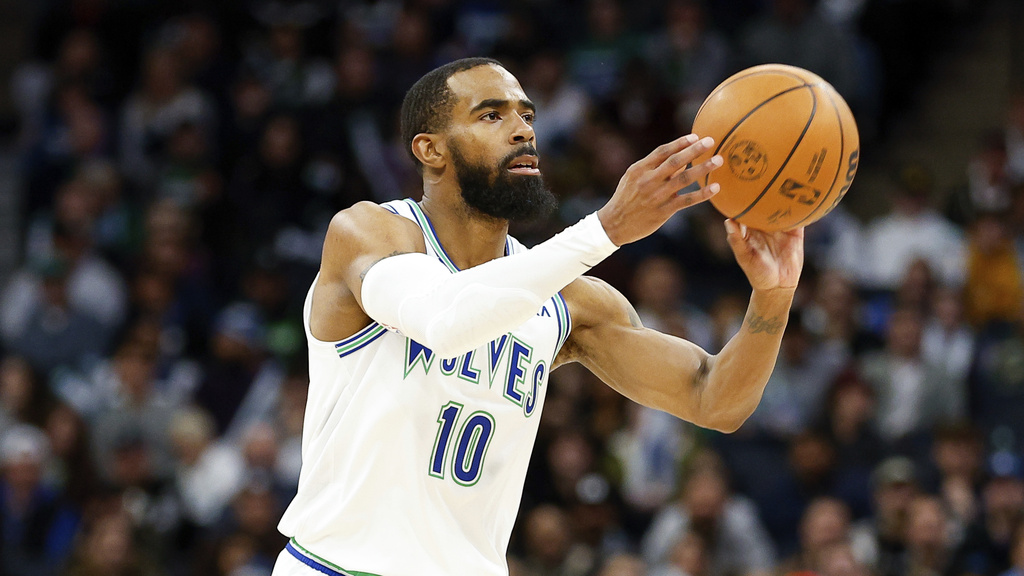
Entering his 17th NBA season, the 36-year-old Timberwolves point guard has seen it all and has the knowledge and willingness to explain what’s taken place and what’s to come with the media and, thus, the fans. That breadth of insight and analysis extends from the on-court Xs and Os to team dynamics and development.

Conley is just as good at explaining why two teammates came to blows in the middle of a timeout as he is on what the team needs to do to decode a switch-heavy defense.

So who better to sit down with twice a month to tackle different topics ranging from the Timberwolves to the NBA at large to, well, Mike Conley, than Conley himself.

This is the seventh installment of Conley’s Corner.

After Minnesota suffered a fourth-quarter collapse Friday night in a loss to Orlando, in a game when Mike Conley was 1 for 9 shooting from the field, the Timberwolves point guard stood by his locker and fielded questions for nine minutes about what went wrong and how the Wolves can fix it.

And he answered every query — including ones that were quite redundant — in his usual thoughtful, insightful manner.

It was a media session that was nothing less than what the local press core, and, frankly, NBA reporters around the country, have come to expect from Conley.

If you have a question, you can ask it to Mike Conley. And he will answer it to the best of his abilities, no matter the day or situation. That’s true of so few professional athletes, who either don’t want to or don’t care enough to stand in front of the cameras and recorders when the chips are down. It’s easy, and sometimes even fun, to stand in front of the cameras and recorders after a win.

Doing so after a tough loss or a strange event — like Game 82 last season when Rudy Gobert swung at Kyle Anderson and Jaden McDaniels swung at a concrete wall — is something entirely different. Yet it was Conley who talked through those situations with class and clarity. Just like he did in Utah, when the topic of a potentially strained relationship between Gobert and Donovan Mitchell was the hot topic for weeks on end.

Somewhere along the way, Conley became the unofficial spokesman for any team on which he plays.

“I don’t know when it happened. But it happened with the culmination of teammates I’ve had in my career. You’ll get teammates who don’t want to talk at all, and it’s something that people are afraid of. And I’ve had those teammates, and (the media are) all like, they’ll go to him first, this guy, then they’ll look at me and I’ll just be sitting there, halfway trying to see who they want,” Conley said. “And they’re like, ‘Let’s talk to Mike. He won’t like swing at us or get angry with us in this time.’ Because my temperament — win, lose or draw — has always been kind of even keel. I guess it’s a little bit less off-putting for people to come approach you, so it helps the media come to me.”

So they do, time and time again. Conley works hard to develop relationships with media members, as well as everyone else he comes across, to ensure all interactions are respectful and productive.

Conley has a deep understanding of the role of media and the importance of the media-player relationship. He said it’s an “all-encompassing” part of the sport at large. The media, particularly in sports, are often viewed as the megaphone that amplifies the team’s messages to the fan base.

So when Conley takes the time to inform the public of the team’s issues or approach, he’s educating the masses.

“I haven’t been up to date as much on the social circle and what people are saying on the outside. But I would hope us being able to give a little more insight on what we’re thinking or what we’re trying to accomplish on a certain play or what our mindset was going into a timeout or down one (point), down two (is beneficial). Just kind of giving those insights can skew people’s opinions another way,” Conley said. “Because there’s times I watch something and I have no idea what a team is thinking — why they did that or this — and then you hear about it, it’s like, ‘Oh, OK, it makes sense that he thought this was going to happen, and something else happened.’ So I think it does help.”

Conley’s superpower is the ability to inform without assigning blame. He can diagnose and highlight the team’s shortcomings without it ever feeling as though he’s throwing a teammate under the proverbial bus.

“The way I lead a little bit is, in everything I do, I’m probably going to talk about myself more than somebody else. Like if there’s something we’re struggling with, I’m going to say that I didn’t do A, B or C, and as a team we can be better at this, instead of pointing out that there might be, specifically, one or two guys that did something in particular for that game, I don’t need to call them out by name,” Conley said. “I can just reference something I did, and then go from the team’s broader perspective and keep it at that. Because that’s basically what it needs to be. I don’t need to attack anybody. I’m just answering the question without having to give somebody a name.”

His savvy and demeanor does lead to Conley being the go-to guy for a postgame quote. But his media responsibilities extend far beyond that. Just this week, Conley did a post-practice scrum interview with local media for a few minutes. Upon the completion of that, a visiting national reporter asked if he had a few extra minutes to chat. Of course he did, he always does. The two spoke for at least 10 minutes.

Conley does fairly extensive 1-on-1 interviews every couple of weeks for this series. He also does a biweekly interview with KFXN-100.3’s Dan Barreiro for his wildly popular afternoon drivetime show.

The voice of the Timberwolves is just as much Mike Conley as it is radio play-by-play man Alan Horton, the television duo of Jim Petersen and Michael Grady or even coach Chris Finch. Which is surprising for a player who said he was “a little closed off” growing up. And Conley still describes himself as a “private” person. He doesn’t share much of his personal life on social media.

“But, as I’ve gotten older, I’m like, ‘Man, who’s it going to hurt for me to give my knowledge or give my insight or this story or that story to people?’ Because, most of the time, I feel like it’s a positive light that I’m trying to give out,” Conley said. “I don’t do stuff just to do it. I don’t video myself getting out of a cold tub. But I will, if somebody asks questions about it, I’ll say, ‘Yeah, I get in a cold tub for three hours a day’ or just start going off on it. I think it’s been a good line to walk.”

The amount of media Conley successfully executes is a coup for a Timberwolves team just now starting to carve out its fair share of the media market, both locally and nationally. But is there such a thing as too much? Conley has a number of personal and professional responsibilities. The media obligations are just piled onto the plate. Yeah, Conley noted, at times it can feel like a lot.

“Because you kind of feel like you have to be on a lot for that,” he said. “But when it starts to become more of your makeup and who you are and part of your character, then at times when you feel overwhelmed, it’s like, ‘Ah, it’s just me. I can easily do this. Go talk to them, sit down, have a conversation, have lunch, whatever it is.’ And you know you’ll be fine and nothing will happen from it. So just telling yourself that this is who you are.”

He is the guy who will speak when it’s not easy to do so. He will stand up and take questions so unwilling teammates do not have to.

“There’s legitimately been times (in my career) where my teammates — the best guys on the team — will be like, ‘Man, I’m not talking to them. You do it.’ They’ll go to the PR people and be like, ‘I’m not doing it. Have Mike do it,’ ” Conley said. “I can’t tell you how many times I’ve spoken at half court pregame to go vote or Black History Month or for anything that pertains to the public and trying to raise awareness. It’ll go down the line to like four other guys first, who will all decline, and they’ll be like … ‘Mike, do you want to do it?’ And I’ll be like, ‘Alright, I’ll do it again, for like the 17th time this year.’

“I’ve kind of been stuck being that guy. Luckily, this year, I’ve got KAT stepping in there a few times, so I’m thankful for that.”

And everyone else is thankful for Mike Conley.

Related Articles

Minnesota Timberwolves |


Timberwolves fall apart late in loss to Orlando

Minnesota Timberwolves |


‘You don’t have to feel bad’: No hard feelings after Towns was selected over Gobert for all-star game

Minnesota Timberwolves |


Timberwolves get two all-stars as Anthony Edwards, Karl-Anthony Towns get reserve nods

Minnesota Timberwolves |


The Timberwolves may sport the NBA’s most detailed defensive game plans

Minnesota Timberwolves |


Wolves’ Anthony Edwards gets $40,000 fine for officiating comments
Past editions of Conley’s Corner:

Gameday routine

Small-market Mike

The ultimate sportsman

Last of a dying breed

South Carolina Democratic primary: Biden looks for big win after pushing for state to go first

posted in: Politics | 0

By Will Weissert and Meg Kinnard, Associated Press

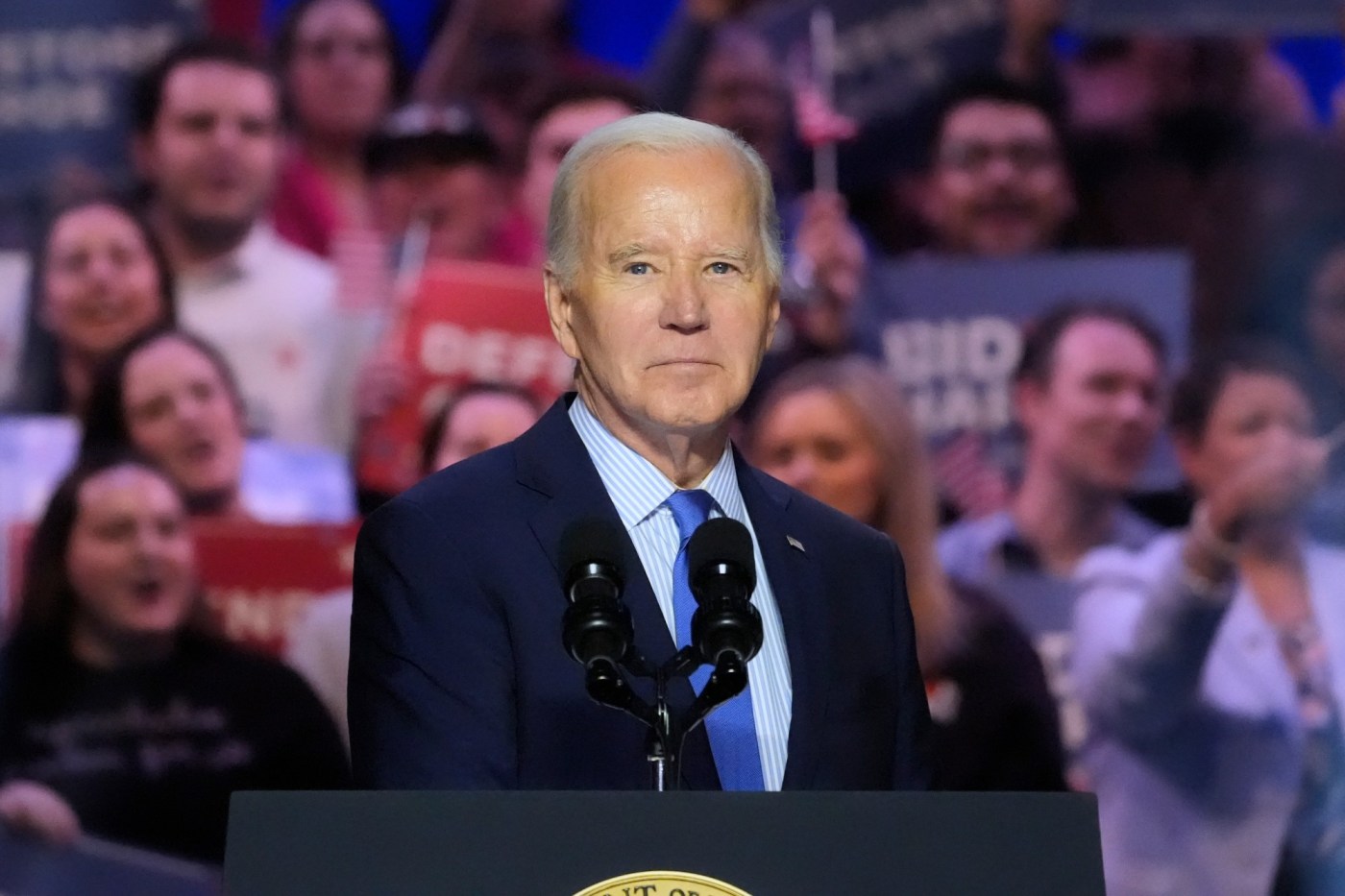
COLUMBIA, S.C. (AP) — President Joe Biden is looking for an easy victory Saturday in South Carolina’s Democratic primary that officially kicks off his party’s nominating process, validating a new lineup he championed to better empower Black voters who helped revive his 2020 campaign.

Biden is overwhelmingly favored against Minnesota Rep. Dean Phillips and self-help author Marianne Williamson. Yet the long and sometimes contentious process that saw the Democratic National Committee officially replace Iowa with South Carolina in its presidential primary’s leadoff spot has made what’s unfolding noteworthy.

The GOP’s South Carolina primary is Feb. 24.

Related Articles

National Politics |


Wisconsin Supreme Court orders election officials to put Phillips on presidential primary ballot

National Politics |


This number explains why a Biden-Trump rematch is so tight

National Politics |


AP-NORC poll finds an uptick in positive ratings of the US economy, but it’s not boosting Biden

National Politics |


Haley insists she’s staying in the GOP race. Here’s how that could cause problems for Trump

National Politics |


Nikki Haley has called out prejudice but rejected talk of systemic racism throughout her career

Arguing that voters of color should play a larger role in determining the Democratic presidential nominee, Biden championed a calendar beginning in South Carolina. The state is reliably Republican, but 26% of its residents are Black.

“South Carolina, you are the first primary in the nation and President Biden and I are counting on you,” Vice President Kamala Harris said Friday during a campaign stop at historically Black South Carolina State in Orangeburg. The president and first lady Jill Biden also recently campaigned in the state.

In the 2020 general election, Black voters made up 11% of the national electorate, and 9 in 10 of them supported Biden, according to AP VoteCast, an expansive survey of that election’s voters.

Democratic National Committee Chairman Jaime Harrison, a South Carolina native, said before he voted that Biden’s push on behalf of the state showed the president’s commitment to Black voters.

Democratic National Committee Chairman Jaime Harrison talks to reporters as polls open for South Carolina’s lead-off Democratic presidential primary on Saturday, Feb. 3, 2024, in Columbia, S.C. Harrison says President Joe Biden’s push for the diverse state to hold the party’s first primary this year shows his commitment to Black voters. (AP Photo/Meg Kinnard)

“We all know that we, because of the color of this, we, our great grandparents, our grandparents, could not always vote here,” said Harrison, who is Black, as he pointed to his own skin. “For this president to say, ‘Jaime, for the entirety of your life, we have started this process in Iowa and New Hampshire, and now, we’re going to start it in South Carolina’ — no other president before ever decided to touch that issue. But Joe Biden did, and I will always be grateful to the president for giving us a chance, for seeing us, and understanding how much we matter.”

Biden pushed for South Carolina to go first followed three days later by Nevada. The new calendar also moves the Democratic primary of Michigan, a large and diverse swing state, to Feb. 27, before the expansive field of states voting on March 5, known as Super Tuesday.

South Carolina was also where Biden reversed his fortunes with a resounding victory during the 2020 Democratic primary after defeats in Iowa, New Hampshire and Nevada.

Many Black Democrats in South Carolina are still loyal to Biden after he was vice president to the nation’s first Black president, Barack Obama. The state’s senior member of the U.S. House, Democrat Jim Clyburn, long one of Congress’ most powerful Black leaders, remains a close Biden friend and ally.

“I wouldn’t be here without the Democratic voters of South Carolina, and that’s a fact,” Biden said at the state’s Democratic Party’s “First-in-the-Nation” celebration dinner last weekend. “You’re the reason I am president.”

The DNC sponsored a six-figure ad campaign across the state and Nevada to boost enthusiasm for the president among Black and Latino voters. Nevada’s population is 30% Latino.

South Carolina Democratic Party Chair Christale Spain talks to reporters as polls open for South Carolina’s lead-off Democratic presidential primary on Saturday, Feb. 3, 2024, in Columbia, S.C. Spain says President Joe Biden’s push for the diverse state to hold the party’s first primary this year shows his commitment to Black voters. (AP Photo/Meg Kinnard)

Black voters interviewed during the recent early voting period listed a range of reasons for supporting Biden, from his administration’s defense of abortion rights to appointing Black jurists and other minorities to the federal courts. Some echoed Biden’s warnings that former President Donald Trump, the heavy front-runner for the Republican nomination, would threaten democracy as he continues to push lies that the 2020 vote was stolen.

“We can’t live with a leader that will make this into a dictatorship. We can’t live in a place that is not a democracy. That will be a fall for America,” said LaJoia Broughton, a 42-year-old small business owner in Columbia. “So my vote is with Biden. It has been with Biden and will continue to be with Biden.”

Some voters said they were concerned about the 81-year-old Biden’s age, as many Americans have said they are in public polling. Trump is 77. Both men have had a series of public flubs that have fueled skepticism about their readiness.

“They’re as old as I am and to have these two guys be the only choices, that’s kind of difficult,” said Charles Trower, a 77-year-old from Blythewood, South Carolina. “But I would much rather have President Biden than even consider the other guy.”

New Hampshire held a primary last week that defied the new calendar and wasn’t sanctioned by the DNC. Still, Biden won the state via write-in and a big South Carolina victory could begin to allay concerns of a majority of voters, as even most Democrats don’t want him seeking a second term.

Democratic National Committee Chairman Jaime Harrison films a video encouraging people to vote in South Carolina’s lead-off Democratic presidential primary on Saturday, Feb. 3, 2024, in Columbia, S.C. Harrison says President Joe Biden’s push for the diverse state to hold the party’s first primary this year shows his commitment to Black voters. (AP Photo/Meg Kinnard)

In the meantime, the Democratic establishment — and even potential presidential hopefuls who could have competed against the president from the left or middle — have lined up behind Biden. The DNC also isn’t planning primary debates, while Phillips has challenged his name not appearing on primary ballots in Florida and North Carolina.

The president’s reelection campaign says it’s already focusing on November’s general election, and Harris used her Friday appearance, saying of Trump “it is on us then to recognize the profound threat he poses to our democracy and to our freedoms.”

“Across our nation, our fundamental freedoms are at stake,” Harris said. “It does not have to be this way.”

Trump has in turn accused Biden of threatening democracy, while downplaying his role in promoting falsehoods about election fraud embraced by the rioters who stormed the Capitol on Jan. 6, 2021.

Biden’s campaign, the DNC and its other fundraising arms announced raising $97-plus million in the final three months of last year and entered 2024 with $117.4 million in cash on hand. Trump amassed about $130 million in 2023’s final quarter and had $42-plus million to start the election year.

Harrison had planned a news conference in front of the polling place before he voted, but when he got up Saturday, he realized that his precinct location had changed overnight due to a last-minute consolidation. He said the national and state parties had set up resources for voters to report any problems, citing hardships for voters with transportation needs.

Weissert reported from Washington. Associated Press writer Ayanna Alexander contributed to this report.

Working Strategies: More interview mistakes, and how to avoid them

posted in: News | 0

Amy Lindgren

And we’re back. In last week’s column, we reviewed the first half of 20 common interview mistakes — each of which is avoidable, thank goodness. Today we’ll finish up with the second half of this Top 20 list, along with a bonus tip for avoiding mistake number 21.

Mistake 11: Not tying your answers to the job at hand. Skip the one-size-fits-all response and instead provide the details most pertinent to this particular job. For example, if the company does business in a major urban setting and they ask how you build trust with clients, they may be handling multiple cultures or languages every day. How could your answer best reflect this reality?

Mistake 12: Not reading the room. Plowing ahead with a long answer while your interviewer slides under the table? Not good. Watch for signs that you’re still being heard, or alter your presentation accordingly. As an advanced strategy — if you sense interviewers are distracted, try ending your answer with a question to bring them back. For example, “… which covers my process for managing multiple databases. Since you asked me about that, can you describe the databases you’re using, and which one is the most important?”

Mistake 13: Speaking badly about others. You already know this is wrong, but what if the interviewer baits you with a question like, “Describe a conflict you’ve had with colleagues”? Your strategy is easy: Just don’t! Try a more general answer instead: “Conflict is a strong word for professional differences. When my approach differs from my colleague’s, I’ll focus on understanding why and whether it’s something we can compromise on.”

Mistake 14: Presenting solutions instead of options. You don’t know what’s already been tried at this organization, so avoid giving concrete answers to hypothetical questions. Instead of “To improve this process, it’s necessary to…” Practice starting answers with, “Depending on what’s already been tried, one thing I might do…”

Mistake 15: Not asking questions of your own. A few well-considered questions will demonstrate engagement and overall awareness of the employer’s situation, while keeping the conversational ball in play. You can save your questions until the end, but there’s a risk that time could run out. Instead, consider adding questions to the back of some of your answers.

Mistake 16: Not playing to win. Or, put in non-sports terms, not going into every interview as if you want the job. If you’re just taking the interview for practice, then make it count by preparing well and performing your best. If you’re not sure you want the job, you should still do your best, to give you the opportunity to consider an offer.

Mistake 17: Not stating your interest in the job. Remember that your interviewers may have seen candidates who were only practicing (see above), which means they can’t be certain who’s truly excited about the opportunity. When you state clearly, “I’d like to work here,” you make it more difficult for them to say no.

Mistake 18: Not mailing a thank-you card when it’s possible. If you have a physical address that you’re confident the interviewer uses, do send a thank-you card by mail. It may seem quaint, but so what? You certainly won’t lose points by sending a handwritten “I really enjoyed meeting you” note. Sending off your cards immediately means they’ll arrive within a week or two, serving as a pleasant reminder of your meeting.

Mistake 19: Not sending a more formal email or letter within a few days. This letter, usually sent in the body of an email, could consist of two or three short paragraphs. You might start with a thank-you, then reiterate your strengths for the position, closing with an expression of your ongoing interest in the job. Follow-up letters are an essential tool for helping busy interviewers remember you; send them regardless of whether you also send a handwritten note.

Mistake 20: Not staying in contact, even when it seems fruitless. A few weeks without communication could mean you didn’t get the job, but it could also mean they got bogged down. Maintaining contact is not pestering — it’s part of doing business.

Bonus  Mistake 21: Putting too many eggs in this basket. Even if an interview goes wonderfully and you’re invited to more meetings, it’s best to press forward with other employers as well. This keeps you sharp for the negotiating stage, while helping you hedge your bets. Worst case? You’ll have multiple offers at the same time. That’s confusing, but it’s certainly no mistake.

Related Articles

Business |


Working Strategies: Top 10 interview mistakes to avoid – Part 1

Business |


Working Strategies: Getting organized for the new year

Business |


Working Strategies: Weighing the daunting back-to-school decision

Business |


Working Strategies: Overcoming the fear of salary negotiation

Business |


Working Strategies: 75 Resolutions for the New Year

Amy Lindgren owns a career consulting firm in St. Paul. She can be reached at alindgren@prototypecareerservice.com.

Lakeland city hall fire debate: Keep offering an arson reward when conviction is unlikely?

posted in: News | 0

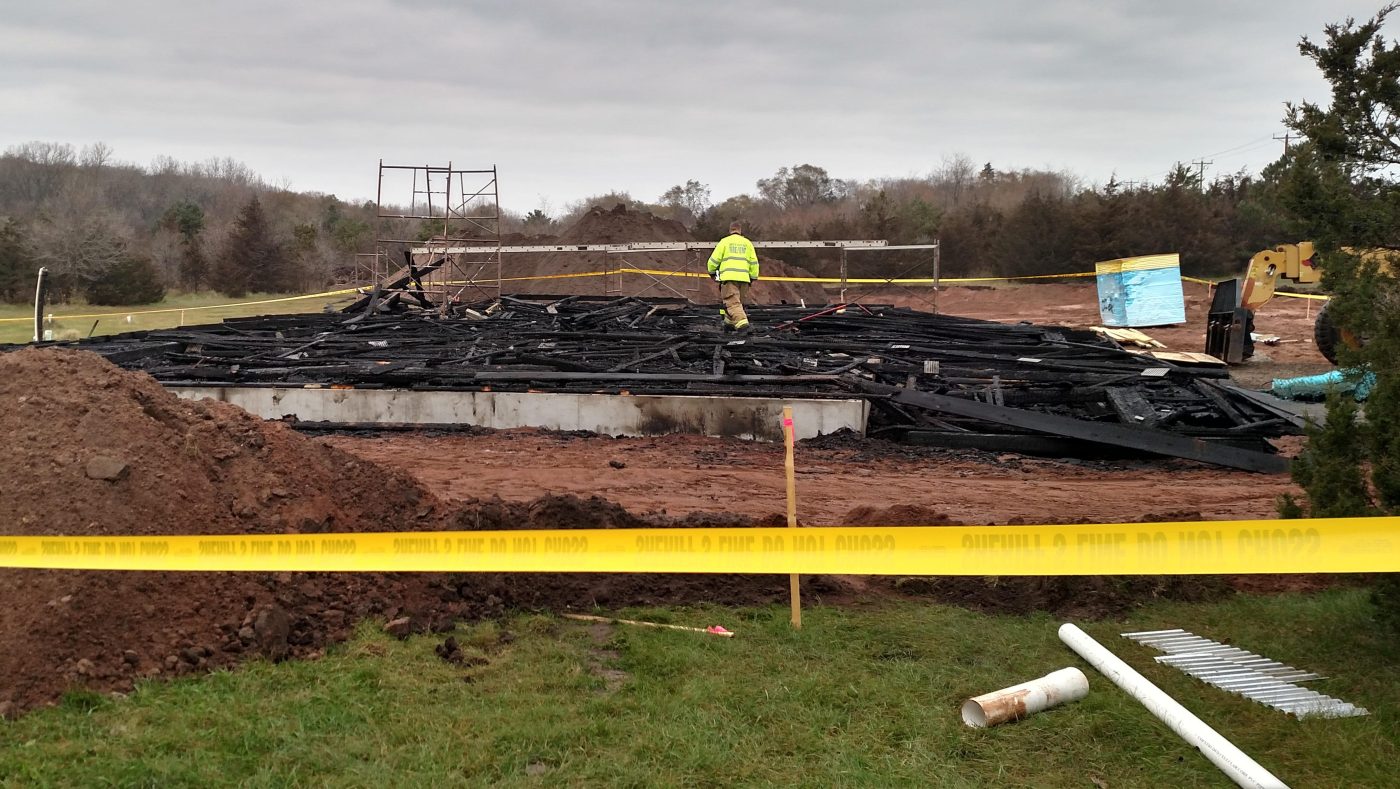
It’s been more than seven years since an apparent arson fire destroyed the city hall building under construction in Lakeland. The state statute of limitations for the crime ran out more than two years ago.

Is it time for the Lakeland City Council to stop offering a reward for information on those responsible for the fire and to remove a sign seeking information?

Lakeland City Council member Doug Sand thinks so. At a Jan. 16 meeting, the council considered a resolution re-establishing a $7,000 reward “for information leading to the arrest and conviction on the arson of the newly constructed city hall.”

Sand voted against it.

“It’s been over seven years since the possible arson occurred,” Sand said. “It’s meaningless. There will never be any conviction on this. It’s just a negative thing. It’s time to move on. Beyond that, I think we should take down that arson sign in front of the water department. It just bothers me. It serves no purpose other than just negative.”

The resolution passed by a 3-2 vote; Mayor Joe Paiement, an attorney, was the other “no” vote.

“The reward is predicated on getting a conviction,” Paiement said. “Well, if we can’t get a conviction, there is no real point in having a reward.”

Federal charges?

The federal statute of limitations for arson is 10 years, so that possibility has not run out. But Paiement said the case’s odds of being investigated and prosecuted federally are “very, very unlikely.”

Sand said federal provisions would not apply in the Lakeland case. “This was a garden-variety arson – if it was an arson,” he said. “That’s a huge stretch. There is no federal case here.”

Council member Mike Thron, however, argued that the reward and sign should remain in place. “People should be aware of it. People should know what happened,” he said. “I don’t think it’s a negative; I think it’s awareness. I also think the sign should stay there so people realize that this went on in our city. We may never find out who did it, but I think  it deserves to be there.”

A sign requesting information about a fire set at the city hall building under construction in Lakeland in 2016 remains outside the city’s water department building on Jan. 24, 2024. (Courtesy of City of Lakeland)

The arson occurred on Nov. 13, 2016, just five days after then-Mayor Amy Williams, who supported building a new Lakeland City Hall, was defeated by then-council member Richard Glasgow, who opposed it.

Construction of the building was at the center of their contentious mayoral race, which Glasgow won, 61 percent to 38 percent. The fire was immediately deemed suspicious; no one has been charged in connection with the crime.

The Washington County Sheriff’s Office followed up on several leads over the years, but nothing led to any substantiated information, said Laura Perkins, a spokeswoman for the department. The last tip received in connection with the crime was in 2017, she said.

Related Articles

Crime & Public Safety |


Founder of Andover animal rescue organization is charged after 8 dogs found dead in Cottage Grove

Crime & Public Safety |


Hey, Washington County. Meet Plowabunga and Taylor Drift.

Crime & Public Safety |


Pine City administrator tapped to take on same role in Landfall

Crime & Public Safety |


Scandia: Adult hockey tournament canceled due to warm weather, Vinterfest goes on

Crime & Public Safety |


Stillwater’s ‘Best Wings’ contest, benefit begins