Gov. Evers signs Republican-authored bill to expand Wisconsin child care tax credit

posted in: News | 0

MADISON, Wis. — Democratic Gov. Tony Evers signed a Republican-authored bill Monday that dramatically expands the state child care tax credit, days after vetoing three other GOP bills that would have delivered $800 million in tax cuts.

The governor signed the bill at a charter school in Waukesha on Thursday morning. He said in a statement that he approved the measure because “the cost of child care is too darn high.”

“Signing this bill today will go a long way toward defraying yearly family expenses on child care, giving Wisconsinites some breathing room in their household budgets and making sure our kids have the early support and care they need,” Evers said in the statement.

The median child care cost last year in Milwaukee County, the state’s most populous county, was $19,096, equivalent to about 26% of the median family income of $62,314, according to the U.S. Department of Labor.

The cost last year in Dane County, the state’s second-most populous county, was $19,586, equivalent to about 17.6% of the $94,813 median family income.

The bill expands the state child care tax credit to 100% of the claimants’ federal child care tax credit.

Currently filers can claim only 50% of the federal credit on state taxes.

The amount of maximum eligible expenses under the state credit would grow from $3,000 to $10,000 for one qualifying dependent and from $6,000 to $20,000 for two or more dependents.

The move is expected to cost the state about $73 million in annual revenue, according to the state Department of Revenue.

The measure was part of a package of tax cuts Republicans introduced in January. The legislation included the child care tax credit expansion; a bill that would have expanded the state’s second income tax bracket to cover higher earners, resulting in at least $750 million in income tax savings annually, according to legislative fiscal analysts; a bill that would have increased the marriage tax credit; and a bill that would have increased income exemptions for retirees.

Fiscal analysts projected that taken together the four bills reduced state tax revenue by $2 billion in 2024-25 and about $1.4 billion every year thereafter.

Evers vetoed all the bills except the child care tax credit expansion on Friday, saying the cuts would drain the state’s reserves.

Evers vetoed a similar GOP tax cut plan in November. Republicans lumped all the proposals into a sweeping omnibus bill during that go-around. This time they broke the plans into separate legislation. .

The governor also used his partial veto powers in July to reduce a $3.5 billion income tax cut plan the GOP included in the state budget to just $175 million, which equated to a $3- per-month reduction for the average taxpayer.

Related Articles

Politics |


St. Croix County turns to voters to bolster public safety services

Politics |


Warmer springs, variable ice-out dates are hurting walleye spawning

Politics |


Wisconsin Supreme Court rejects Democrats’ congressional redistricting challenge

Politics |


Shirtless US Senate candidate submerges himself in Wisconsin lake, issues challenge to opponent

Politics |


Judge rules Hudson apartment proposal violates St. Croix River protections

Why don’t some millennials want kids? They say it’s too expensive

posted in: News | 0

By Erin El Issa | NerdWallet

Millennials are a favorite societal punching bag for things like destroying industries — including diamonds and casual chain restaurants — and being cringe. But another gripe some have with Generation Y is that they believe millennials aren’t having enough kids, or any kids at all.

Of millennials who are opting out, many are doing so because raising children is simply too expensive. A new NerdWallet survey finds that just a quarter of parents of minor children (25%) plan to have more children and only 27% of non-parents under age 60 plan to have any children at all. Of millennials (ages 27-42) who aren’t parents, just 25% say they plan to have kids, while 61% don’t and 14% aren’t sure. When millennials who don’t have kids or plan to have kids were asked why, nearly 2 in 5 (38%) said it’s because the overall cost of raising a child is too high.

How much are millennial parents paying for child care?

One major expense parents may have to contend with, at least in the early years, is child care. According to the NerdWallet survey, millennial parents who pay for full-time child care — care at least four days a week — report paying $665.70 a month, on average, per child. Nearly a quarter (23%) are paying $1,000 or more a month, per child.

The estimated median U.S. household income is $77,221 for 2023, according to NerdWallet’s household debt analysis. Assuming monthly child care costs of $665.70, or $7,988 annually, that represents more than 10% of gross income, per child. That’s if you make the median income, if you don’t pay more than the surveyed average for child care and if you only have one child. Plus, child care is only one expense, albeit one of the pricier kid costs you’ll likely have. It’s no wonder the survey found that a quarter of millennial parents of minors (25%) identify child care costs as their biggest financial stressor.

Options for cutting child care costs

If you’re currently struggling to pay for child care, or child care costs are holding you back from having children, there are ways to get these expenses down. Some are more ideal and some are less so, and all depend on what you want for your and your child’s life.

Related Articles

Business |


Business owners face unique challenges when going through a divorce. Here’s what you should know

Business |


Biden just erased $1.2B in student loans. Yours could be next

Business |


Retirement spending is a U-shaped curve. Here’s how to maximize it

Business |


The best time for high CD rates might be right now

Business |


How solo agers, those older people without children, can prepare for later years

According to the survey, nearly 4 in 5 millennial parents of minors (79%) took steps to lower child care costs, like working opposite shifts from their partner so they didn’t need child care (20%) and working from home while caring for their children (17%). The hard truth is that sacrifices are often made in service of keeping child care within budget, and some of them could require major upheaval. Here are some other ways parents have cut down on child care costs.

Use accounts and programs available to you. The survey found that 15% of millennial parents of minors used a dependent care FSA to pay for child care. The dependent care flexible spending account (DCFSA) allows you to deposit up to $5,000 pretax per household to be used for child care expenses within a given year. Look into the benefits your employer provides to see if you have access to a DCFSA to put some money aside for child care and lower your taxable income.

It’s also a good idea to see if you can apply for need-based financial assistance for child care costs, particularly if your family qualifies as low-income. One-tenth of millennial parents of minors (10%) say they receive/received need-based assistance for child care costs, according to the survey. You can also ask local child care centers if they offer scholarships and, if so, what criteria they use to determine eligibility.

Seek out a lower-cost child care option. According to the survey, 15% of millennial parents of minors used a lower-cost alternative to a day care center, like a co-op or home-based day care. Home-based child care may be more affordable than traditional child care centers or a dedicated nanny. This option could provide your child with a cozy environment to spend their days in with a tight-knit group of kids. A few things to know: In-home child care may include mixed-age groups and could lack a structured curriculum, compared with center-based options. Also, your point of contact for any issues at a co-op or home-based day care will be the provider themself; there likely won’t be a corporate office or formal administrator like you might find at a day care center.

Move closer to family, or to a more affordable community. The survey found that 17% of millennial parents of minors say they moved closer to their or their partner’s family to get help with child care, while 10% moved to a location with cheaper child care. This may be ideal for those parents who already want to move, particularly for those who want to be closer to family and whose family has offered assistance with child care. Whether this works for you will likely depend on your job, social and property ties in your current location, familial relationships and willingness to relocate.

Leave the workforce temporarily. According to the survey, 13% of millennial parents of minors say they left the workforce to take care of their children and 13% say their partner left the workforce. This is a highly personal decision. If you or your partner wants to be a stay-at-home parent and the other partner can earn enough to support the family, it could be a good idea. If this isn’t something you particularly want, but you’re open to the possibility, do the calculations to figure out which path makes most financial sense. Make sure to factor in the costs of missing years of career training, promotions and raises, and the challenges of reentering the workforce after several years away.

Wait it out. If you can cover child care costs but have to temporarily scale back on other financial goals to do so, that’s OK. While the hefty bill can be hard to stomach, most children won’t require long-term child care, at least not on a full-time basis. So if you can swing it, it might be worth it to cut back on other things for now and make plans for how to reallocate those funds toward making financial progress when your child no longer needs that full-time care.


Erin El Issa writes for NerdWallet. Email: erin@nerdwallet.com.

Haley casts doubt on GOP nominee pledge after Trump’s power play

posted in: Politics | 0

Hadriana Lowenkron | Bloomberg News (TNS)

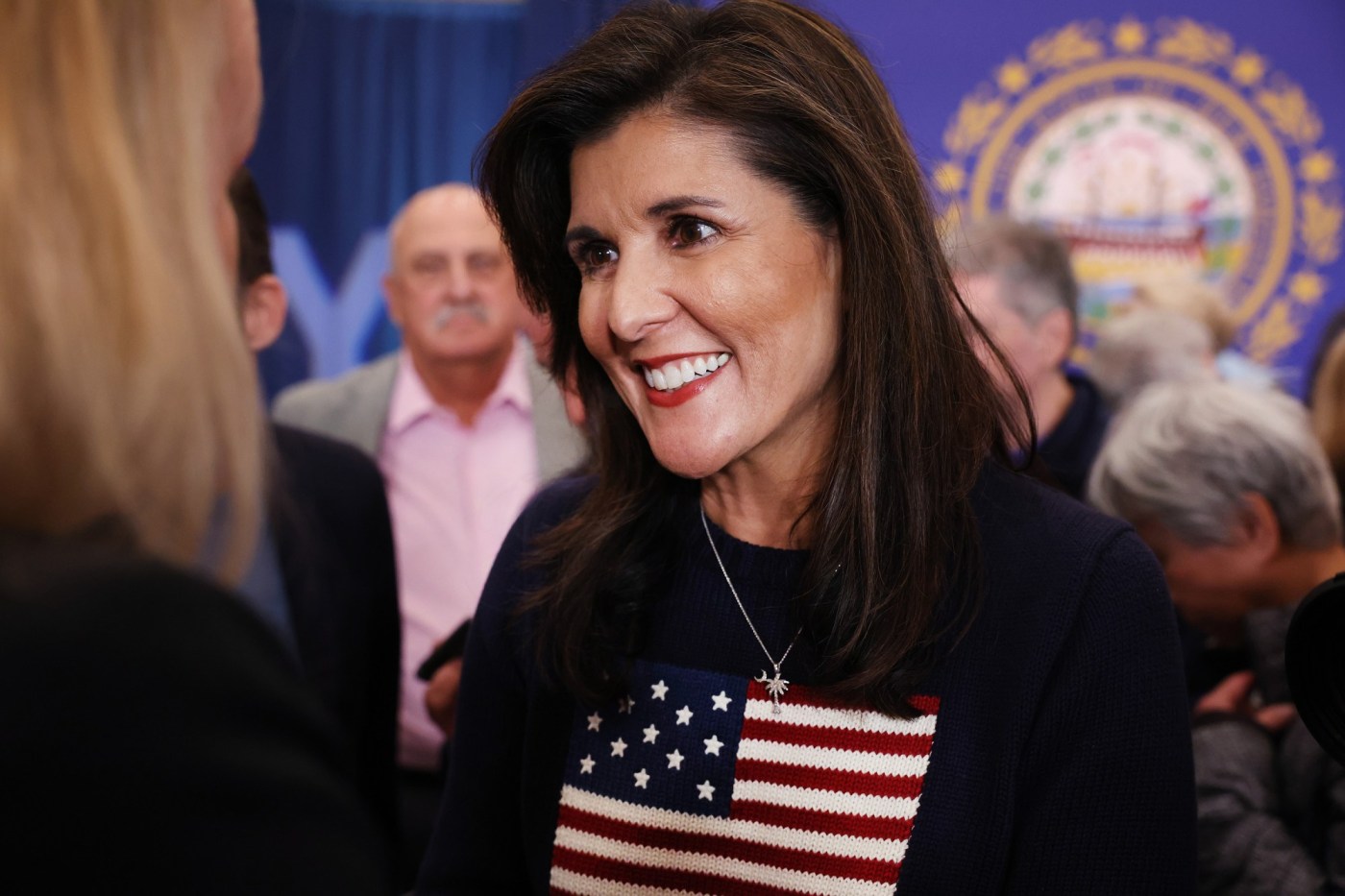
Nikki Haley signaled she may decline to endorse Donald Trump in an election rematch with President Joe Biden, saying she no longer considers herself bound by a pledge to the Republican National Committee to support the party’s 2024 nominee.

“I think I’ll make what decision I want to make,” Haley said in an interview with NBC’s “Meet the Press” for broadcast Sunday. “But that’s not something I’m thinking about.”

Haley said “the RNC is now not the same RNC” — her latest attack on the organization since Trump said he’d nominate his daughter-in-law Lara Trump to co-lead it with Michael Whatley, the North Carolina state party chairman who has supported Trump’s false claims that he won the 2020 presidential election.

Haley is keeping up attacks on the GOP front-runner in the buildup to Super Tuesday on March 5, when more than a dozen states hold presidential nominating contests. Trump swept the first four contests and leads Haley by 64 percentage points in the nomination race, according to the RealClearPolitics average of national polls.

Haley has said she’ll stay in the race at least until Super Tuesday. She has been urging voters to reject Trump’s “chaos” and lamenting her party’s drift away from small government and free markets at recent campaign rallies.

On Sunday, Haley left open the possibility of staying in until the Republican convention in July, saying donations as well as votes will determine whether she “stays competitive.”

“If the people want to see me go forward, they’ll show it,” she said. “They’ll show it in their votes. They’ll show it in their donations.”

Related Articles

National Politics |


6 in 10 US adults doubt mental capability of Biden and Trump, poll finds

National Politics |


Small but notable chunk of early GOP voters say they wouldn’t vote for Trump in November

National Politics |


Supreme Court restores Trump to ballot, rejecting state attempts to ban him over Capitol attack

National Politics |


Nikki Haley wins the District of Columbia’s Republican primary and gets her first 2024 victory

National Politics |


Super Tuesday’s dominance highlights how presidential selection process can exclude many US voters

Some donors, including billionaire Ken Griffin and the Charles Koch-backed Americans for Prosperity Action, have dropped their support for Haley. She picked up endorsements from Lisa Murkowski and Susan Collins on Friday, her first by sitting U.S. senators.

Haley has spoken out against the use of any RNC money to pay for Trump’s legal defenses, saying it would make the RNC “his legal slush fund.” The RNC raised $87 million in 2023 and ended the year with $8 million cash on hand — far less than the Democratic National Committee’s $120 million in fundraising and $20 million on hand.

©2024 Bloomberg L.P. Visit bloomberg.com. Distributed by Tribune Content Agency, LLC.

6 in 10 US adults doubt mental capability of Biden and Trump, poll finds

posted in: Politics | 0

By JOSH BOAK and AMELIA THOMSON-DEVEAUX (Associated Press)

WASHINGTON (AP) — A poll finds that a significant share of U.S. adults doubt the mental capabilities of 81-year-old President Joe Biden and 77-year-old Donald Trump, the former president and current Republican front-runner in what could be a rematch of the 2020 election.

More than 6 in 10 (63%) say they’re not very or not at all confident in Biden’s mental capability to serve effectively as president, turning his coming State of the Union address into something of a real-time audition for a second term. A similar but slightly smaller share (57%) say that Trump lacks the memory and acuity for the job.

The findings from a new survey by The Associated Press-NORC Center for Public Affairs Research point to a tough presidential election in which issues such as age and mental competence could be more prevalent than in any other political contest in modern times.

People’s views of Biden’s memory and acuity have soured since January 2022, when about half of those polled expressed similar concerns. (That survey didn’t ask a similar question about Trump.)

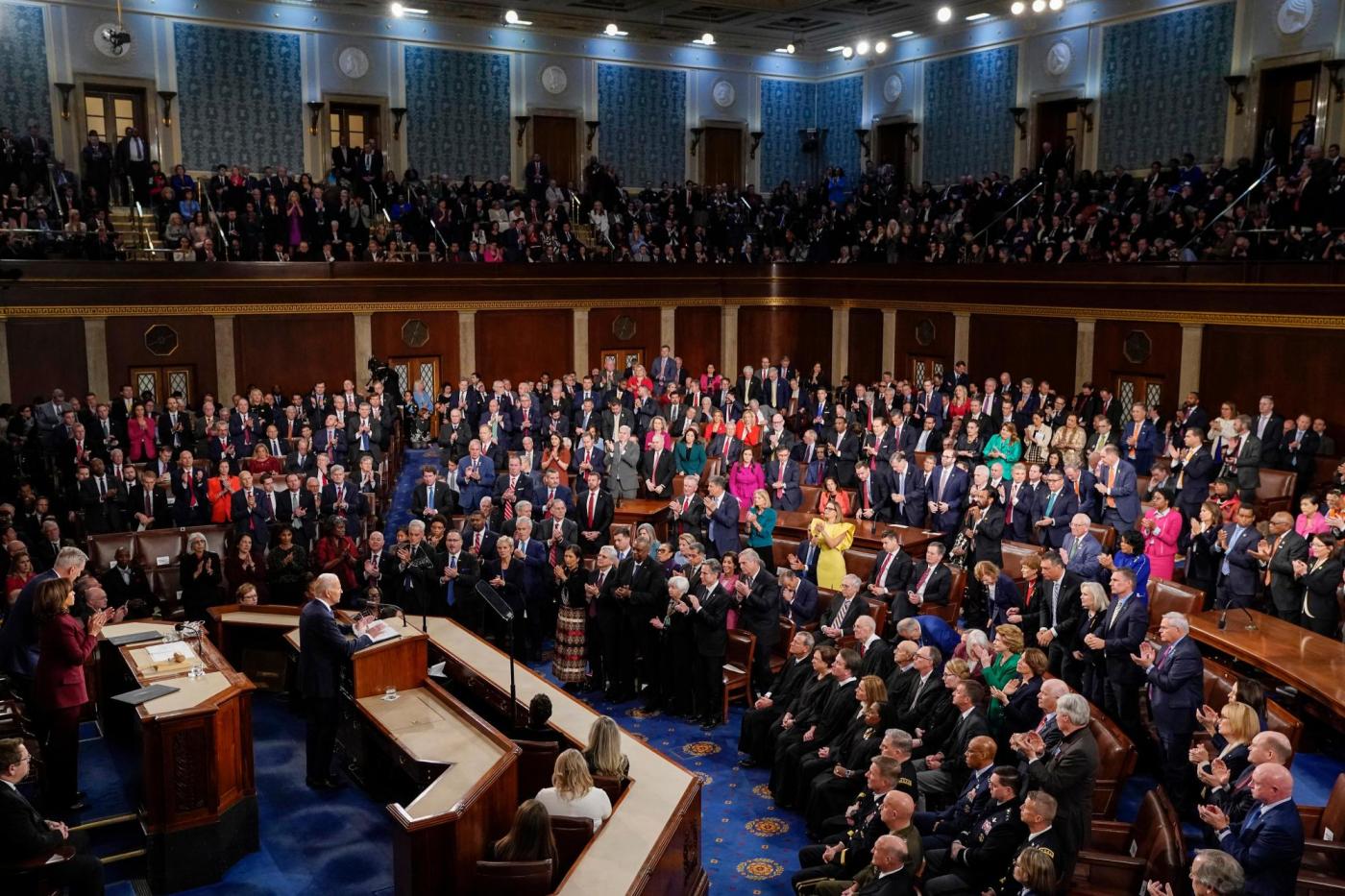
In a major risk for Biden, independents are much more likely to say that they lack confidence in his mental abilities (80%) compared with Trump’s (56%). And Democrats are generally more concerned about Biden’s mental capabilities than Republicans are with Trump’s, raising the stakes of Biden’s upcoming speech to a joint session of Congress on Thursday.

Going into the big event, just 38% of U.S. adults approve of how Biden is handling his job as president, while 61% disapprove. Democrats (74%) are much likelier than independents (20%) and Republicans (6%) to favor his performance. But there’s broad discontent on the way Biden is handling a variety of issues, including the economy, immigration and foreign policy.

About 4 in 10 Americans approve of the way Biden is handling each of these issues: health care, climate change, abortion policy and the conflict between Russia and Ukraine. But people are less satisfied by Biden’s handling of immigration (29%), the conflict between the Israelis and the Palestinians (31%) and the economy (34%) — all of which are likely to come up in the speech before a joint session of Congress.

Nearly 6 in 10 (57%) Americans think the national economy is somewhat or much worse off than before Biden took office in 2021. Only 3 in 10 adults say it’s better under his leadership. Still, people are more optimistic about the state of their own bank accounts: 54% say their personal finances are good.

Many respondents to the survey were deeply pessimistic about their likely choices in November because of age and the risk of cognitive decline.

Paul Miller, himself 84, said Biden is just too old — and so is Trump.

“He doesn’t seem to have the mental whatever to be a president,” Miller said of Biden. He added that Trump is “too old, too, and half crazy.”

The retiree from Carlisle, Pennsylvania, said he voted for Trump in 2020 but he wouldn’t do so again.

“I don’t think I’m going to vote for either one of them,” he said. “I hope somebody else is available.”

Related Articles

National Politics |


Haley casts doubt on GOP nominee pledge after Trump’s power play

National Politics |


Small but notable chunk of early GOP voters say they wouldn’t vote for Trump in November

National Politics |


Supreme Court restores Trump to ballot, rejecting state attempts to ban him over Capitol attack

National Politics |


Nikki Haley wins the District of Columbia’s Republican primary and gets her first 2024 victory

National Politics |


Super Tuesday’s dominance highlights how presidential selection process can exclude many US voters

The president faces added pressure about his age after unflattering descriptions of him contained in a special counsel’s report that did not recommend criminal prosecution of Biden for his mishandling of classified records, unlike Trump who was indicted for keeping classified material in his Florida home. The report said that Biden’s memory was “hazy,” “fuzzy,” “faulty,” “poor” and had “significant limitations.”

Biden has tried to deflect concerns by joking about his age and taking jabs at Trump’s own gaffes. Yet the president’s age is a liability that has overshadowed his policy achievements on infrastructure, manufacturing and addressing climate change.

About one-third of Democrats said they’re not very or not at all confident in Biden’s mental capability in the new survey, up from 14% in January 2022. Only 40% of Democrats said they’re extremely or very confident in Biden’s mental abilities, with approximately 3 in 10 saying they’re “somewhat” confident.

Republicans are generally more comfortable with Trump’s mental capabilities than Democrats are with Biden’s. In the survey, 59% of Republicans are extremely or very confident that Trump has the mental abilities to be president. An additional 20% are somewhat confident, and 20% are not very or not at all confident.

But if there is one thing Democrats and Republicans can agree upon, it’s that the other party’s likely nominee is not mentally up to the task. About 9 in 10 Republicans say Biden lacks the mental capability to serve as president, while a similar share of Democrats say that about Trump.

Part of Biden’s problem is that his policies have yet to break through the daily clutter of life.

Sharon Gallagher, 66, worries about inflation. She voted for Biden in 2020, but believes he has not done enough for the economy. She also feels Trump is a bit too quick to anger. The Sarasota, Florida, resident said she doesn’t have the bandwidth to really judge their policies.

“I don’t pay enough attention to politics to even know,” Gallagher said. “I have grandchildren living with me and I have children’s shows on all day.”

Justin Tjernlund, 40, from Grand Rapids, Michigan, said Biden “seems like he’s mostly still there,” but even if he was in decline he has “a whole army of people to help him do the job.” Trjenlund said he voted for Trump in 2020 and plans to do so again because the Republican is “interesting” and “refreshing.”

Still, because of both candidates’ ages, Greg Olivo, 62, said he plans to focus on Vice President Kamala Harris and whomever Trump, if he’s the nominee, picks for a running mate.

“Keep a close eye on the vice president,” said the machinist from Valley City, Ohio, who voted for Biden in 2020 and would do so again. “Because that person will probably be the president in four years, one way or another.”

The poll of 1,102 adults was conducted Feb. 22-26, 2024, using a sample drawn from NORC’s probability-based AmeriSpeak Panel, which is designed to be representative of the U.S. population. The margin of sampling error for all respondents is plus or minus 4.1 percentage points.

Associated Press polling reporter Linley Sanders contributed.