Names to know for the Chicago Bears in this week’s Senior Bowl, including a top edge rusher and a bevy of centers and wide receivers

posted in: News | 0

The quarterback conversation will dominate chatter for the Chicago Bears leading up to the NFL draft in three months, and that ought to be a major focus this week at the Senior Bowl in Mobile, Ala.

Even though top prospects such as USC’s Caleb Williams, North Carolina’s Drake Maye, LSU’s Jayden Daniels and Michigan’s J.J. McCarthy are not in the game, it will be a chance to get a close look at Washington’s Michael Penix Jr. and Oregon’s Bo Nix.

Add Tulane’s Michael Pratt, South Carolina’s Spencer Rattler and Notre Dame’s Sam Hartman — who aren’t candidates to be the No. 1 pick — and it would be an intriguing bunch of passers in any draft cycle.

The Bears will be able to see Penix and Nix up close four weeks before the scouting combine, and general manager Ryan Poles likely has a detailed plan to vet all options.

Penix threw for 9,504 yards over the last two seasons at Washington, and teams will have plenty of questions about knee and shoulder injuries that interrupted his first four years at Indiana. Nix also thrived after transferring, passing for 8,101 yards and 74 touchdowns with only 10 interceptions at Oregon the last two years after three up-and-down seasons at Auburn.

The Bears drafted four players who participated in the Senior Bowl last year, all in the first four rounds: right tackle Darnell Wright (first round, 10th pick), cornerback Tyrique Stevenson (second round), defensive tackle Zacch Pickens (third) and running back Roschon Johnson (fourth). They also signed undrafted quarterback Tyson Bagent, who improved his stock with a week in Mobile.

The Senior Bowl was loaded with talent last year, when 36 of the first 100 draft picks participated in the game. Overall, 100 players who were in Mobile were drafted, accounting for 39% of all selections.

While it’s unlikely the first pick in this year’s draft will be in Mobile, you can’t rule out the possibility the ninth pick — which the Bears also own — will be on display.

UCLA edge rusher Laiatu Latu is one of the highest-regarded prospects committed to the Senior Bowl. Latu had 23 1/2 sacks over the last two seasons for the Bruins, and NFL teams will have a chance to see him perform in practice and the game.

They will have a lot of medical questions for Latu that will require due diligence at the combine, as he briefly retired from football with a neck injury after beginning his college career at Washington. Latu proved to be durable at UCLA, though, and for teams comfortable with his health, he could emerge as the top edge rusher in the draft.

That’s certainly a position the Bears need to figure out as they seek a presence opposite Montez Sweat. It’s not a great draft for pass rushers overall, but Alabama’s Chris Braswell, coming off a 10 1/2-sack season, is regarded as a potential Day 2 pick and is playing in the Senior Bowl.

Center figures to be a primary need for the Bears, and there’s an interesting crop of hopefuls. Before we dive into the names, it’s worth wondering what philosophy the Bears will take. If they plan on drafting a quarterback, would they hesitate to have a rookie snapping the ball? Given the option, a lot of teams would prefer a veteran center to aid a rookie quarterback with pre-snap reads and calls.

But if Poles and the coaching staff believe there’s a savvy prospect who can be an asset to a young quarterback — assuming the Bears draft one — perhaps they like the idea of more youth on the line.

In that case, West Virginia’s Zach Frazier, Oregon’s Jackson Powers-Johnson and Duke’s Graham Barton — a left tackle in college who is expected to play center this week — are interesting possibilities. Add Georgia’s Sedrick Van Pran and Wisconsin’s Tanor Bortolini, and there’s no shortage of options.

Top wide receivers rarely head to Mobile, and you won’t see any of the elite prospects such as Ohio State’s Marvin Harrison Jr., LSU’s Malik Nabers or Washington’s Rome Odunze. But it’s not only a top-heavy wide receiver class; there’s also tremendous depth. And that’s where players such as South Carolina’s Xavier Legette, North Carolina’s Tez Walker, Arizona’s Jacob Cowing, Louisville’s Jamari Thrash and Western Kentucky’s Malachi Corley come into play.

The Bears, for the first time in a while, have the No. 1 receiver spot figured out with DJ Moore. With Darnell Mooney coming out of contract, they don’t have a No. 2 and could use some competition for Tyler Scott, who just completed his rookie season. Considering the wealth of options, the draft would seem to make more sense than a splurge in free agency, where proven options will be available.

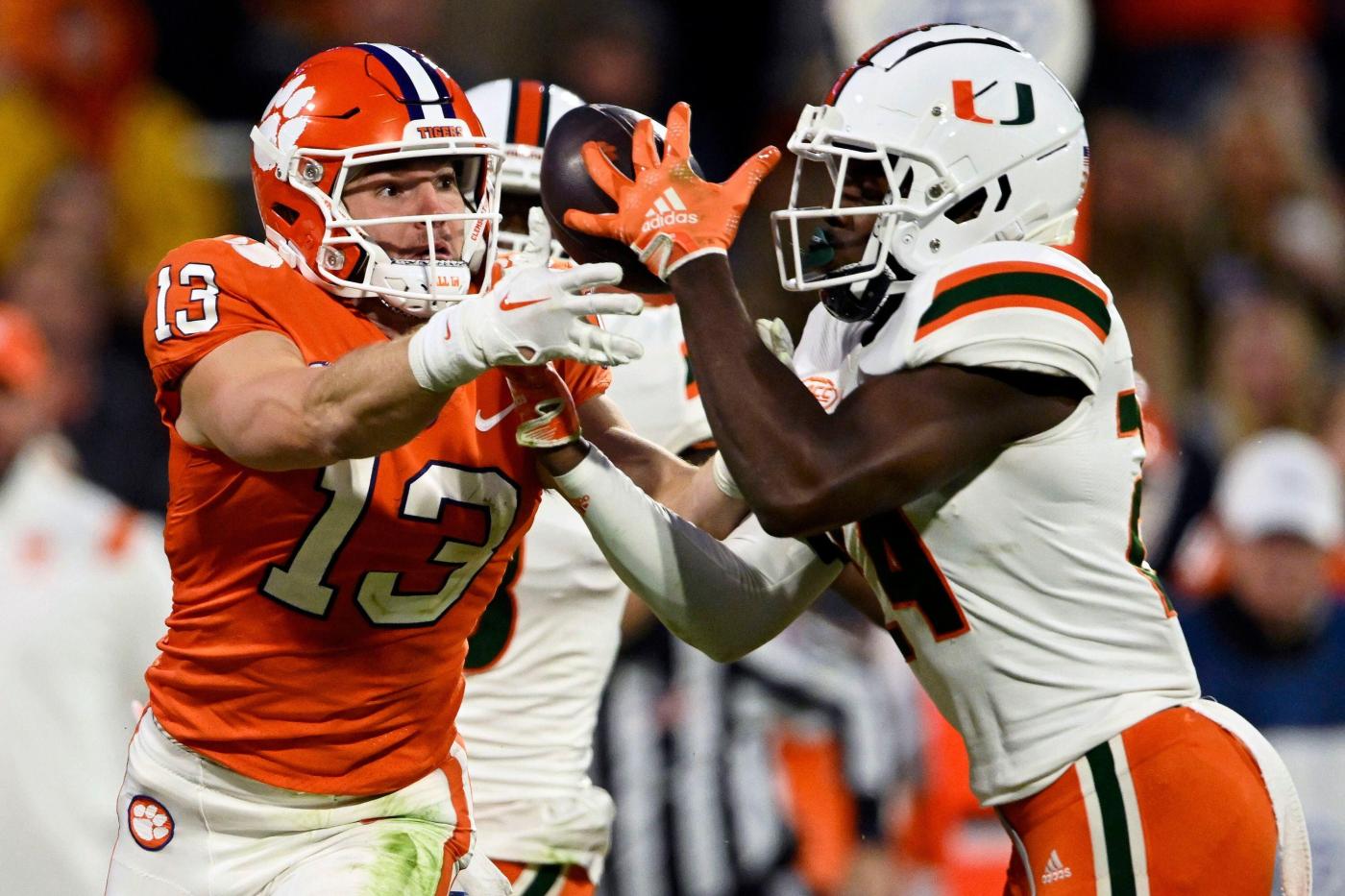
Free safety looms as a question on defense, and Miami’s Kamren Kinchens will be in the spotlight as a potential late first-round pick. He made 11 interceptions the last two seasons for the Hurricanes, and while there are questions about his consistency, few draft options possess the kind of range he has.

Teams are always seeking talent for the defensive line, and Texas’ Byron Murphy is an undersized player (6-foot-1, 297 pounds) who could be a nice fit for the Bears as a disruptive interior player. He had 15 sacks in three seasons for the Longhorns with 8 1/2 this past season.

It might be more of a want than a need — and the Bears were pleased with the development of 2023 second-round pick Gervon Dexter — but there’s no such thing as too many quality defensive linemen.

()

Supreme Court restores Trump to ballot, rejecting state attempts to ban him over Capitol attack

posted in: Politics | 0

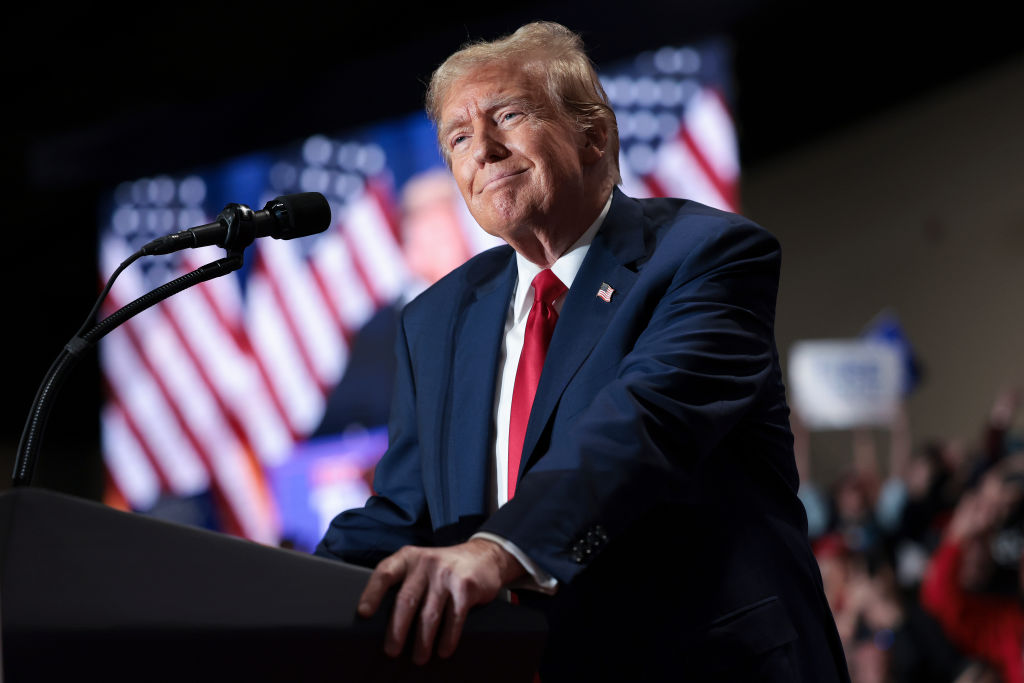
WASHINGTON (AP) — The Supreme Court on Monday restored Donald Trump to 2024 presidential primary ballots, rejecting state attempts to hold the Republican former president accountable for the Capitol riot.

The justices ruled a day before the Super Tuesday primaries that states, without action from Congress first, cannot invoke a post-Civil War constitutional provision to keep presidential candidates from appearing on ballots.

The outcome ends efforts in ColoradoIllinoisMaine and elsewhere to kick Trump, the front-runner for his party’s nomination, off the ballot because of his attempts to undo his loss in the 2020 election to Democrat Joe Biden, culminating in the Jan. 6, 2021, attack on the Capitol.

Trump’s case was the first at the Supreme Court dealing with a provision of the 14th Amendment that was adopted after the Civil War to prevent former officeholders who “engaged in insurrection” from holding office again.

Related Articles

National Politics |


Nikki Haley wins the District of Columbia’s Republican primary and gets her first 2024 victory

National Politics |


Super Tuesday’s dominance highlights how presidential selection process can exclude many US voters

National Politics |


Trump escalates his immigration rhetoric with baseless claim about Biden trying to overthrow the US

National Politics |


Trump wins caucuses in Missouri and Idaho and sweeps Michigan GOP convention

National Politics |


Idaho Republican presidential caucus is Saturday. Here’s how it works, what to know

Colorado’s Supreme Court, in a first-of-its-kind ruling, had decided that the provision, Section 3, could be applied to Trump, who that court found incited the Capitol attack. No court before had applied Section 3 to a presidential candidate.

Some election observers have warned that a ruling requiring congressional action to implement Section 3 could leave the door open to a renewed fight over trying to use the provision to disqualify Trump in the event he wins the election. In one scenario, a Democratic-controlled Congress could try to reject certifying Trump’s election on Jan. 6, 2025, under the clause.

The issue then could return to the court, possibly in the midst of a full-blown constitutional crisis.

Both sides had requested fast work by the court, which heard arguments less than a month ago, on Feb. 8. The justices seemed poised then to rule in Trump’s favor.

Trump had been kicked off the ballots in Colorado, Maine and Illinois, but all three rulings were on hold awaiting the Supreme Court’s decision.

The case is the court’s most direct involvement in a presidential election since Bush v. Gore, a decision delivered a quarter-century ago that effectively handed the 2000 election to Republican George W. Bush. And it’s just one of several cases involving Trump directly or that could affect his chances of becoming president again, including a case scheduled for arguments in late April about whether he can be criminally prosecuted on election interference charges, including his role in the Jan. 6 Capitol attack. The timing of the high court’s intervention has raised questions about whether Trump will be tried before the November election.

FILE – Rioters loyal to President Donald Trump rally at the U.S. Capitol in Washington on Jan. 6, 2021. The Supreme Court agreed on Feb. 28, 2024, to decide whether former President Donald Trump can be prosecuted on charges he interfered with the 2020 election and has set a course for a quick resolution. (AP Photo/Julio Cortez, File)

The arguments in February were the first time the high court had heard a case involving Section 3. The two-sentence provision, intended to keep some Confederates from holding office again, says that those who violate oaths to support the Constitution are barred from various positions including congressional offices or serving as presidential electors. But it does not specifically mention the presidency.

Conservative and liberal justices questioned the case against Trump. Their main concern was whether Congress must act before states can invoke the 14th Amendment. There also were questions about whether the president is covered by the provision.

The lawyers for Republican and independent voters who sued to remove Trump’s name from the Colorado ballot had argued that there is ample evidence that the events of Jan. 6 constituted an insurrection and that it was incited by Trump, who had exhorted a crowd of his supporters at a rally outside the White House to “fight like hell.” They said it would be absurd to apply Section 3 to everything but the presidency or that Trump is somehow exempt. And the provision needs no enabling legislation, they argued.

FILE – This exhibit from video released by the House Select Committee, shows President Donald Trump recording a video statement on the afternoon of Jan. 6, from the Rose Garden, displayed at a hearing by the House select committee investigating the Jan. 6 attack on the U.S. Capitol, July 21, 2022, on Capitol Hill in Washington. (House Select Committee via AP)

Trump’s lawyers mounted several arguments for why the amendment can’t be used to keep him off the ballot. They contended the Jan. 6 riot wasn’t an insurrection and, even if it was, Trump did not go to the Capitol or join the rioters. The wording of the amendment also excludes the presidency and candidates running for president, they said. Even if all those arguments failed, they said, Congress must pass legislation to reinvigorate Section 3.

The case was decided by a court that includes three justices appointed by Trump when he was president. They have considered many Trump-related cases in recent years, declining to embrace his bogus claims of fraud in the 2020 election and refusing to shield tax records from Congress and prosecutors in New York.

The 5-4 decision in Bush v. Gore case more than 23 years ago was the last time the court was so deeply involved in presidential politics. Justice Clarence Thomas is the only member of the court who was on the bench then. Thomas has ignored calls by some Democratic lawmakers to step aside from the Trump case because his wife, Ginni, supported Trump’s effort to overturn the 2020 election results and attended the rally that preceded the storming of the Capitol by Trump supporters.

Uninsured Country: Affordable Health Care Eludes Many Family Farmers and Ranchers

posted in: News | 0

Super glue and animal antibiotics are in the medicine cabinets of many farmers and ranchers in Texas — tools of the trade they sometimes use on themselves to avoid a trip to the doctor. It’s not that they have anything against physicians. It’s because they either lack health insurance or their coverage is so limited that a doctor visit could saddle them with a hefty bill.

I know this because I’ve seen the glue (used to seal wounds) and animal meds in first-aid kits of some of my family members who are uninsured farmers and ranchers in South Texas. And they’re not alone. Nationwide,10.7% of farm household members had no health insurance, higher than the 9.1% for the U.S. population, according to a U.S. Department of Agriculture report using 2015 data, the most recent available.

Finding adequate, affordable health insurance can be a huge challenge for people who run small, family farms or ranches, said Alana Knudson, director of the NORC Walsh Center for Rural Health Analysis. That’s because many farmers and ranchers are self-employed, with no access to affordable group plans, and have low incomes. Even other private plans with limited coverage are often inadequate and pricey. 

“It’s very cost-prohibitive for farmers and ranchers to be able to get and maintain health insurance,” Knudson said.

The problem is widespread but not often tracked closely by many states, including Texas. There are about 3.4 million farmers and ranchers in the country, according to the USDA’s 2022 Census of Agriculture. Because many are self-employed, they’re at a high risk of being uninsured or underinsured, endangering their health, Knudson said.

To gain health insurance, some farmers and ranchers take a second job off the land with an employer that offers group coverage. Or, their spouses work full time to get health insurance for the family, such as at a local school district or municipality.  

Others in middle age, like my Uncle Todd, who lives near New Braunfels, Texas, decide they’ll wait until they’re 65 and can go on Medicare, even though it means risking physical injury from their work every day. Todd has about three years to go and lives alone in a cabin on my family’s property in Comal County, about 36 miles north of San Antonio.

Texas leads the nation in the number of farms and ranches, with 248,416, and has the highest rate of uninsured residents, at about 18%. The state has refused to expand Medicaid to cover more low-income adults, so it’s likely many farmers and ranchers have little or no health insurance. The rural areas they live in suffer from shortages of doctors and hospitals. From 2005 to 2023, a total of 24 hospitals closed or reduced services across Texas, according to the University of North Carolina’s Cecil G. Sheps Center for Health Services Research.

Even if Texas expanded Medicaid, barriers to health care would remain, said Dr. Rick W. Snyder, a Dallas-based cardiologist and president of the Texas Medical Association. Many doctors in the state won’t accept Medicaid patients because the reimbursements are so much lower and slower than private health insurance.

“Coverage is not the same thing as access, and access to waiting lists is not the same thing as access to health care,” Snyder said. “So just because you have a card that says you are covered by Medicaid does not mean you’re going to find a hospital or a physician who actually accepts that.”

Dr. Doug Curran, a physician in Athens, Texas, said the low reimbursement rates are stark compared with private plans.  

“Medicaid will pay you about 28 bucks for seeing a kid with an earache,” he said. “You know, you can’t even pay the electric bill, hardly, for that.” 

Kenneth McAlister’s family farmland in Electra. McAlister, a fourth-generation farmer, is dealing with myriad challenges finding and paying for health insurance. (Kenneth McAlister)

In 2021, the Texas legislature began allowing the Texas Farm Bureau, an agricultural nonprofit, to sell its members health plans that do not have to comply with the Affordable Care Act’s consumer protections, such as rules that prohibit insurers from discriminating against people with pre-existing conditions.   

Texas Farm Bureau plans aren’t considered health insurance and operate without oversight by state insurance regulators. Monthly premiums are often lower, but the lack of ACA rules could mean higher costs for farmers and ranchers when they seek care. 

Most people who sign up for these and other alternative plans tend to be self-employed, concluded a 2023 Government Accountability Office report

Some farmers and ranchers I spoke with don’t bother with a doctor anymore, not even for medication. Instead, they use antibiotics made for livestock they buy from a veterinarian or feed store. This workaround became more difficult in June 2023, when the Food and Drug Administration tightened access to antibiotics in an effort to combat bacterial resistance; some of these drugs had long been available over the counter. A veterinarian’s prescription is now required.

Kenneth McAlister, a fourth-generation farmer in Electra, Texas, takes another tack. “I go to Mexico about twice a year and I’ll buy a lot of Mexican antibiotics.”

Before the ACA, McAlister said he and his family had private insurance through his wife’s job as a teacher’s aide. But after their children grew up and left home, it didn’t make financial sense for her to keep working.

Now, McAlister has coverage through a national insurer, but said the plan wouldn’t cover the full cost of the knee replacement he needs. So he’s waiting for five years until he can go on Medicare. 

“I can’t afford to have my knee done. If I hit the lottery and win millions of dollars, I might consider going to get it done before then,” he said. 

McAlister pays cash on the rare occasions he goes to the doctor —  like on the Sunday he went to the emergency room to get a fish hook removed from his finger. 

“I have no idea what the best thing to do is,” he said. “I’m hoping that I can find something along the way that maybe is better than what I got.”

Risks of a Rural Life

Farming and ranching have given my family financial independence – and caused some members to suffer injuries to body and spirit. 

The Centers for Disease Control and Prevention ranks farming and ranching as some of the nation’s most dangerous occupations. Since I was a kid, my mom has told me stories about family friends who were injured or killed when their tractors overturned — a leading cause of injury or death for farmers. 

Family members share that risk.

My 89-year-old Aunt Corinne told me recently that when she was a child, she was her dad’s – my great-grandfather’s – “right-hand man” on their 1,500-acre ranch in the Texas Hill Country. She helped him work the land, riding a horse named Booger Red. 

The work and risks didn’t end when she got home. At age 6 or 7, she got her arm stuck in the washing machine. Back then, people put their clothes through an electric-powered wringer. She suffered nerve damage and still can’t feel part of that arm.

“Mama finally got it stopped when it got up out of here,” she said, pointing to the scars on her upper arm. She wasn’t rushed to the hospital. “You didn’t do that. You just took your meat and pushed it down.” 

The increasing cost of health care has limited the ability of some U.S. farmers and ranchers to increase their operations because they’re unable to work the land full-time. They have to work outside jobs to get health insurance; when they come home, they must feed the animals, repair the fences, help a cow give birth and plow the fields. 

“It’s a big responsibility, you know, it’s not an eight-to-five job. It’s round the clock,” said Robin, a family friend and farmer from the Hill Country. She asked that only her first name be used.  “Farmers and ranchers just don’t have any idle time, really. There’s always something to do.”

Robin went to school with one of my aunts and attended the same Lutheran church as many of my relatives.  Her small farm, like ours, has been in her family for more than a hundred years. 

She and her husband both work outside the farm to help cover expenses and pay for health insurance. Her husband sometimes jokes that they should move into a condo. But they were both raised on a farm and that’s how they raised their children, who enjoyed wide-open spaces and learned how food is made.

“It’s bred in you,” Robin said. “It’s just something that gives me pleasure that I can keep dad’s livelihood going. The cost is big — a lot of times you don’t break even, but, you know, it is what it is.” 

Sometimes families barter for health care using what they produce.

“You can trade out some stuff — doesn’t have to be exactly equal value — and you can just figure out what’s fair and give them some help,” said Dr. Robert L. Hogue, who lives in Brownwood. 

Even when farmers and ranchers have health insurance, few are completely satisfied with the coverage — and it doesn’t fix the problems inherent in rural living.

The quality of rural care can be low.  Derisive nicknames, like the Quack Shack and Death Valley, abound. There is limited or no coverage for mental health and substance use disorders, and sometimes there are no mental health care providers nearby. It can be a long drive to a doctor’s office or hospital. In my family’s case, and others’, the roads aren’t paved and are prone to flooding by creeks, which delays or blocks ambulances. 

Aunt Carrie told me about the times she went into town with Hilda Mary Acker, her grandmother — my great-grandmother — and because it had rained so much, they couldn’t cross the creek. So they had to stay in the car until the water went down, sometimes all night.

The ambulance may not arrive.The majority of rural Texans live in so-called ambulance deserts, where they have to wait more than 25 minutes for an emergency medical team to arrive, according to a 2023 national study by the Maine Rural Health Research Center. 

In many parts of Texas, the ambulance service is staffed, at least in part, by unpaid volunteers, Knudson said. So response times depend on the availability of those volunteers, and funding is limited.

“It is supported by bake sales, spaghetti suppers, pancake breakfasts, you name it,” she said. 

Despite filling a critical need, EMS workers in Texas — and well over half the country — are not recognized by the state as an essential service. If they were, as is the case in 13 states and the District of Columbia, the state and local governments would have to fund and provide emergency medical services that meet a minimum standard of care.

A Quiet Distress

I’m a seventh-generation Texan and one of the few members of my family who isn’t a self-employed farmer or rancher. Instead, I’m a self-employed journalist who now lives in New York City. But that doesn’t mean my family’s land in the Hill Country isn’t part of who I am.

I often think about my ancestors who lived – and died – there. I have a framed photo collage of two generations of my farming and ranching family in my bedroom. I often think about how, even though I’m not in Texas, I still want my loved ones and the 261,666 other self-employed farmers and ranchers in the state to have a healthier life than their ancestors, with access to quality, affordable health care. 

This framed photo collage shows two generations of farming and ranching families in the Texas Hill Country southwest of Austin. Hilda Mary Acker, the writer’s great-grandmother—shown at left with her husband Samuel Dietert — died by suicide on the ranch. Her daughter, LaMerial Dietert (center), was raised on this ranch. The writer’s maternal great-grandparents, Nola and Bruno Gass (right), lived on a nearby ranch for most of their lives. (Courtesy of family)

One of the women in that photo is Hilda. She was, and remains, the tallest woman in my family, at 5’7”. Even though I’m 5’3”, I’ve been compared to her for most of my life. I, too, have scrawny arms, enjoy writing and smoke cigarettes. But Hilda, who was known as Omie, was a farmer who may have had lung cancer (relatives said she coughed up blood) and died by suicide only a few feet away from my childhood swingset. She was 60.

The story goes that instead of seeing a doctor, Hilda went to a psychic in New Braunfels who told her she was sick. In 1975, not wanting to burden the family, Hilda placed a shotgun between a y-shaped branch of a tree and pulled the trigger. Her son found her body. 

The rate of suicide for farmers nationwide is 3.5 times higher than the general population, according to a 2021 report by the National Rural Health Association. After Hilda died, suicide rates eased nationally but began a relentless rise after 2000, particularly among male farmers and ranchers. By 2017 they were taking their lives at 43.2 per 100,000 population versus an average 27.4 for other workers.  

Farmers and ranchers are reluctant to talk about their problems, and even when they do, care is often out of reach because they can’t afford health insurance. 

To help close the gaps in access to care, the Texas Department of Agriculture implemented AgriStress, a toll-free helpline in February 2021.

My great-grandmother never let on that she was depressed. She wrote her feelings down in diaries. Maybe she had a pre-existing condition, or experienced stress over the future of the ranch. Or, maybe it was something else entirely. 

“For the people who have been doing this for generations, and they are carrying out their great-grandfather’s legacy, now all the responsibility of that legacy falls on their shoulders. That’s hard,” said Amanda Wickman, program director of the Southwest Center for Agricultural Health, Injury Prevention and Education based at The University of Texas Health Science Center at Tyler.

I’m trying to imagine any of my family members, insured or not, who’d even consider going to talk to a shrink. They’d probably be too embarrassed, thinking somebody would see their truck parked out front. 

Maybe if they called that helpline from their tractor and could vent to a stranger they’d feel better. 

I started this article thinking of my great-grandmother, wondering if she’d still be alive today if she’d had health insurance. What I’ve found is that the demands on farmers and ranchers remain complex.

Rural life has been mythologized, and, as with any myth, there’s truth at its heart. The nation’s food system depends on farmers and ranchers. But the health care system doesn’t benefit them enough. The difficult work of farming and ranching often brings isolation, tensions with urban America, culture and political wars, blame for rising food prices, and gaps in the health care safety net that shorten lives. 

A lack of health insurance for the self-employed drove me out of Texas. Perhaps it drove my great-grandmother to an early grave. And it may be the reason my family eventually sells the land. But there’s still a chance that won’t happen. Maybe, in the future, health insurance will be widely accessible and there will be one less problem farmers and ranchers have to worry about.  

This story was produced with support from the Center for Rural Strategies and Grist.
Former Trump CFO Allen Weisselberg pleads guilty to perjury in ex-president’s civil fraud case

posted in: Society | 0

By JAKE OFFENHARTZ (Associated Press)

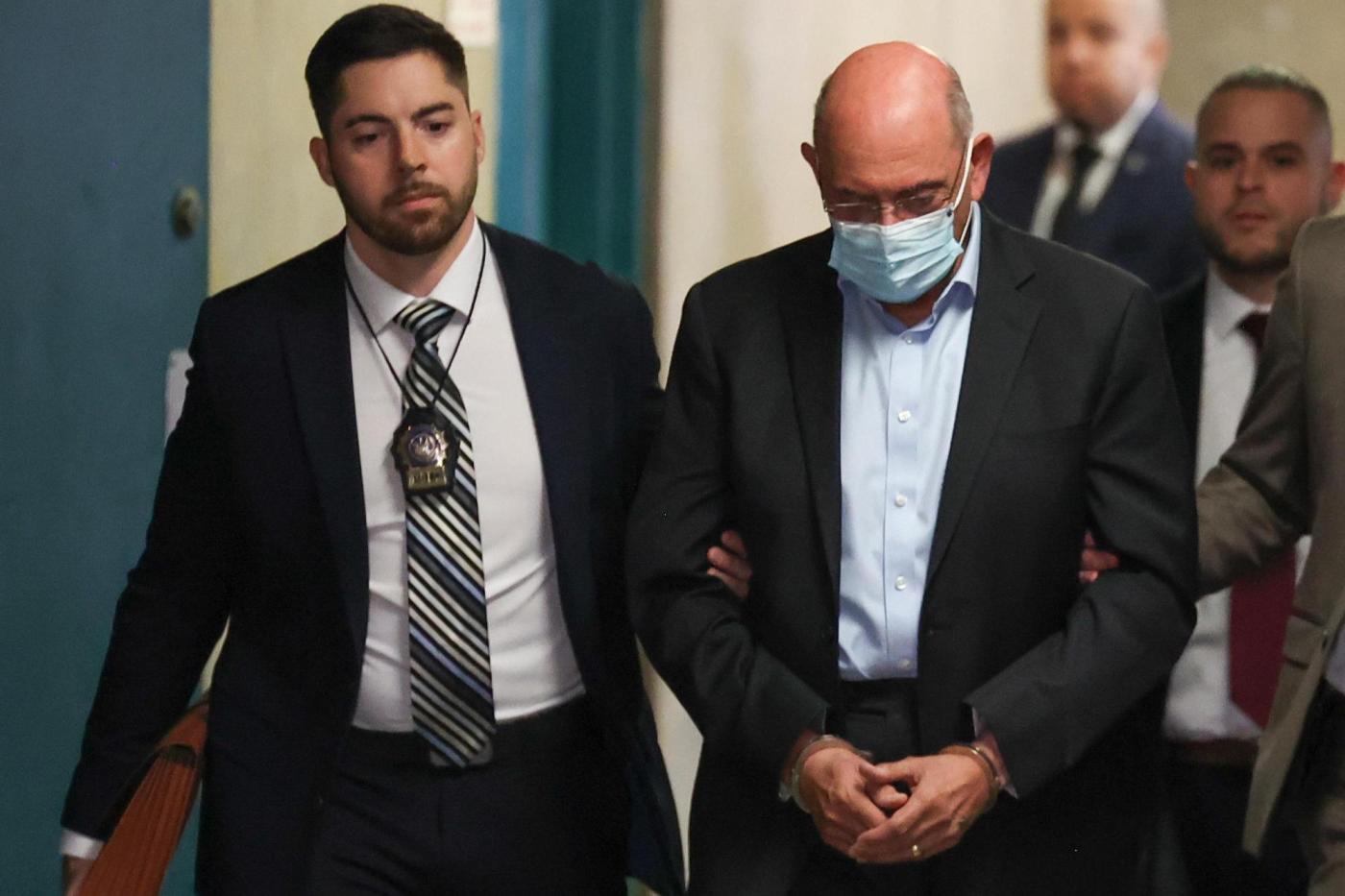
NEW YORK (AP) — Allen Weisselberg, the former chief financial officer of the Trump Organization, pleaded guilty Monday in New York to perjury in connection with testimony he gave in the ex-president’s civil fraud case.

Weisselberg, 76, surrendered to the Manhattan prosecutor’s office earlier Monday and entered state court in handcuffs, wearing a mask, before pleading guilty to perjury. Prosecutors accused Weisselberg of lying under oath when he answered questions in a case about allegations that Trump lied about his wealth on financial statements given to banks and insurance companies.

Weisselberg will be sentenced to five months in jail, the judge said.

“Allen Weisselberg looks forward to putting this situation behind him,” his lawyer Seth Rosenberg said in a statement.

After The New York Times reported last month that Weisselberg was in negotiations to plead guilty to perjury, Judge Arthur Engoron, who presided over the fraud trial, ordered attorneys to provide details related to the Times’ report.

Trump is appealing Engoron’s judgment ordering him to pay more than $454 million in fines and interest for submitting fraudulent information about his asset values on years of financial records.

Weisselberg’s new criminal case comes just weeks before Trump is scheduled to stand trial on separate allegations that he falsified business records. That case involves allegations that Trump falsified company records to cover up hush money payments made during the 2016 campaign to bury allegations that he had extramarital sexual encounters. Trump has pleaded not guilty and denies wrongdoing.

Former Trump lawyer and fixer Michael Cohen has said Weisselberg had a role in orchestrating the payments, but he has not been charged in that case, and neither prosecutors nor Trump’s lawyers have indicated they will call him as a witness. That trial is scheduled to begin March 25.

Weisselberg’s case is separate from the criminal case that Manhattan District Attorney Alvin Bragg brought against Trump last year.

Weisselberg previously served 100 days in jail last year after pleading guilty to dodging taxes on $1.7 million in off-the-books compensation from the Trump Organization. He is still on probation. Prior to that he had no criminal record.

He left New York City’s notorious Rikers Island in April, days after Trump was indicted in his New York hush money criminal case.

Under that plea deal, Weisselberg was required to testify as a prosecution witness when the Trump Organization was put on trial for helping executives evade taxes. He did so carefully, laying out the facts of his own involvement in evading taxes but taking care not to implicate Trump, telling jurors that his boss was unaware of the scheme.

___

Associated Press writers Michael R. Sisak and Jennifer Peltz contributed to this report.

___

This story has been corrected to show that the counts to which Weisselberg pleaded guilty did not occur during the trial.