What’s next for top Chicago White Sox prospects Colson Montgomery, Noah Schultz and Edgar Quero?

posted in: News | 0

Paul Janish described his first few months as Chicago White Sox director of player development as a hectic and exciting time.

The former big-league infielder took on the role in November after working on Rice University’s baseball staff since August 2017, including the last two seasons as the associate head coach.

He’s digging in to his responsibilities with the Sox.

“I’m glad to finally be on site (in Arizona) with a bunch of people in the same room because up to this point it’s been a lot of virtual stuff,” Janish said during a video conference last week. “With spring training right around the corner, just hitting the ground and getting in the trenches a little bit with both staff and players and becoming more familiar with everybody.”

Janish provided updates on the top three prospects in the organization, according to MLB.com — shortstop Colson Montgomery, pitcher Noah Schultz and catcher Edgar Quero — as spring training gets closer.

No. 1 prospect: Colson Montgomery

The team’s first-round pick in 2021 spent time at three levels — the Arizona Complex League White Sox, Class A Winston-Salem and Double-A Birmingham — after a midback strain delayed his start to the 2023 season.

The 21-year-old slashed .287/.456/.484 with 14 doubles, eight home runs and 37 RBIs in 64 games. He also had three homers and 20 RBIs in 20 games during the Arizona Fall League and was the MVP of the Fall Stars Game.

“Colson’s got a bright future, there’s no question about it,” Janish said. “With regards to where he’s starting (the season), some of that’s to be determined. At the end of the day, the goal is for him to be a really good major-league player, and I think that’s going to happen.”

When it comes to Montgomery’s timeline to the majors, Janish said it’s hard to predict.

“He’s going to choose his own path with regards to production, and there’s going to have to be some decisions made on just evaluating when he’s ready to go up to stay,” Janish said. “Because with that kind of player, you really want him to get to the major leagues at a time in which he’s ready to contribute and produce and stay there for good.

“So some of that stuff is to be determined. What I do know is he’s a really good kid, and he’s excited about coming to major-league camp.”

No. 2 prospect: Noah Schultz

The Sox selected the left-hander with the No. 26 pick in the 2022 draft. Schultz, 20, went 1-2 with a 1.33 ERA during 10 starts for Class A Kannapolis last year after dealing with a forearm strain. He went on the injured list in late August with shoulder impingement.

“First of all, he’s huge,” Janish said with a laugh about the 6-foot-9 Schultz. “I had the opportunity to meet him here recently in Arizona, and from a health standpoint, I think he’s in a good place going into the season.

“There’s a strength element that’s going to continue to develop over the course of time that will help him be more consistent. But we’re really excited. He’s got all the talent in the world, and it’s just going to come down to being really intentional with his development program and making sure as he progresses that we’re not giving him too much before he’s ready for it.”

Schultz, who went to Oswego East High School, had 38 strikeouts in 27 innings in 2023 for the Cannon Ballers.

“(Noah is) a really good kid, really talented kid and he really wants to be good,” Janish said.

No. 3 prospect: Edgar Quero

The Sox acquired the switch-hitting catcher along with pitcher Ky Bush — ranked the team’s No. 9 prospect — in the July 26 trade that sent pitchers Lucas Giolito and Reynaldo López to the Los Angeles Angels.

Quero, 20, slashed .277/.366/.393 with four doubles, three home runs and 22 RBIs in 31 games with Birmingham after the trade.

Janish said Quero goes about his work “pretty intentionally.”

“The work ethic is something he’s got in him,” Janish said, “and he’s currently developing a little bit of a routine on a day-to-day basis to maintain throughout the course of a season, which we can all sympathize with.

“That position requires a lot both mentally and physically. At the end of the day, he really needs to play. He’s in a really good spot for his age, and his ability is going to give him the opportunity to play in the major leagues.

“We just want him to be at a point where he’s ready to be consistent at that level, which, at that position in particular, we all know is going to be asking a lot.”

()

RNC votes to install Donald Trump’s handpicked chair as former president tightens control of party

posted in: Politics | 0

By STEVE PEOPLES and MICHELLE L. PRICE (Associated Press)

HOUSTON (AP) — The Republican National Committee voted Friday to install Donald Trump’s handpicked leadership team, completing his takeover of the national party as the former president closes in on a third straight presidential nomination.

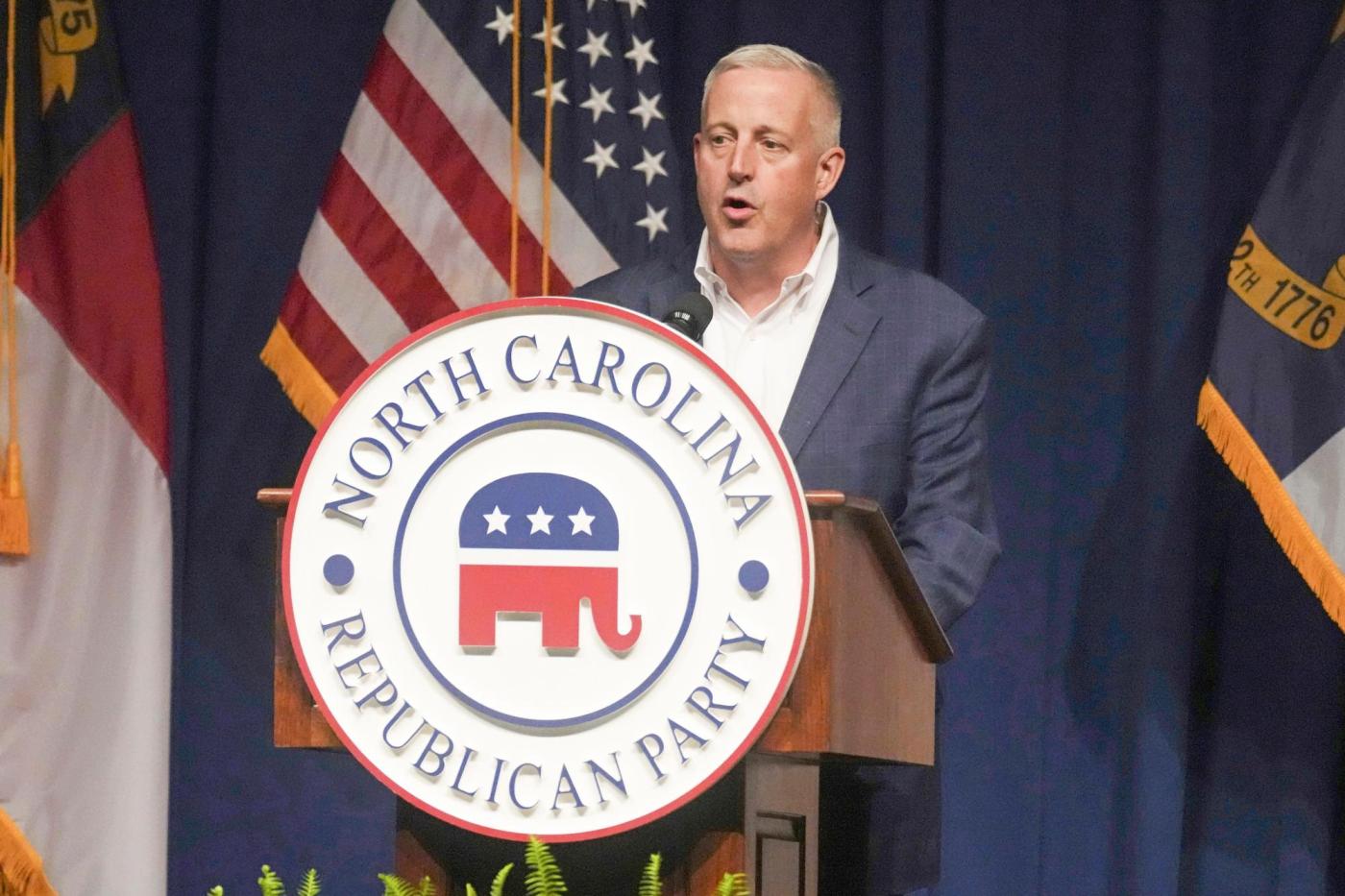
Michael Whatley, a North Carolina Republican who has echoed Trump’s false theories of voter fraud, was elected the party’s new national chairman in a vote Friday morning in Houston. Lara Trump, the former president’s daughter-in-law, was voted in as co-chair.

Trump’s team is promising not to use the RNC to pay his mounting personal legal bills. But Trump and his lieutenants will have firm control of the party’s political and fundraising machinery with limited, if any, internal pushback.

“The RNC is going to be the vanguard of a movement that will work tirelessly every single day to elect our nominee, Donald J. Trump, as the 47th President of the United States,” Whatley told RNC members in a speech after being elected.

Whatley will carry the top title, replacing longtime chair Ronna McDaniel after she fell out of favor with key figures in the former president’s “Make America Great Again” movement. But he will be surrounded by people closer to Trump.

Lara Trump is expected to focus largely on fundraising and media appearances.

She emphasized that shortly after she was voted in, taking time in her inaugural speech as co-chair to hold up a check for a $100,000 that she said had been contributed that day to the party. When asked by a reporter later, she declined to say who wrote the check.

The functional head of the RNC will be Chris LaCivita, who will assume the committee’s chief of staff role while maintaining his job as one of the Trump campaign’s top two advisers.

McDaniel was handpicked by Trump to lead the committee seven years ago but was forced out after Trump’s MAGA movement increasingly blamed her for losses over the last few years. She alluded to that in her goodbye speech Friday, telling the members that she worries most about “internal cohesion” heading into the election.

“We have to stop the attacking other Republicans,” she said. “If we spend our time attacking each other, we guarantee the Democrats are going to win.”

She also told the party that it needs to engage independent and swing voters, warning: “We don’t win if we only talk to each other.”

While McDaniel got a standing ovation after her goodbye, the new leadership eagerly embraced the change, and Lara Trump, accompanied by her husband, Eric Trump, was greeted like a celebrity, with members lining up to take photos with her.

With Trump’s blessing, LaCivita is promising to enact sweeping changes and staffing moves at every level of the RNC to ensure it runs seamlessly as an extension of the Trump campaign.

In an interview Thursday, LaCivita sought to tamp down concerns from some RNC members that the already cash-strapped committee would help pay Trump’s legal bills. Trump faces four criminal indictments and a total of 91 counts as well as a $355 million civil fraud judgment, which he is appealing. His affiliated Save America political action committee has spent $76 million over the last two years on lawyers.

People speculating about the RNC paying for legal bills, LaCivita said, do so “purely on the basis of trying to hurt donors.” Trump’s legal bills are instead being covered largely by Save America, a separate political entity.

“The fact of the matter is not a penny of the RNC’s money or, for that matter, the campaign’s money has gone or will go to pay legal fees,” he said.

The RNC was paying some of Trump’s legal bills for New York cases that started while he was president, T he Washington Post reported, but McDaniel said in November 2022 that the RNC would stop paying once Trump became a candidate again and joined the 2024 presidential race.

When Trump announced his plans to replace the party’s leadership, it raised fresh questions about whether the committee would pay his bills. Those questions intensified after Lara Trump said last month that she wasn’t familiar with the party’s rules about paying her father-in-law’s legal fees, but she thought the idea would get broad support among Republican voters.

Facing such mixed messages, some RNC members remain skeptical.

Related Articles

National Politics |


Trump attorneys post bond to support $83.3 million award to writer in defamation case

National Politics |


Trump’s Truth Social sputtered during State of Union address

National Politics |


Takeaways from Biden’s State of the Union: Combative attacks on a foe with no name

National Politics |


Katie Britt calls Biden a ‘diminished leader’ in GOP response to the State of the Union

National Politics |


Read Biden’s full State of the Union address

Republican committeeman Henry Barbour, of Mississippi, proposed a non-binding resolution explicitly stating that RNC funds could not be used for Trump’s legal bills. Yet the resolution died when Barbour failed to earn the support of RNC members from at least 10 states.

“People I’ve talked to on the committee privately all agree that donor money needs to be devoted to winning elections, not legal fees,” said Republican committeeman John Hammond, of Indiana. “I’m sure the committee would be glad to have some more assurance about that and clarification.”

The new leadership team is also expectedly to more fully embrace Trump’s focus on voter fraud and his debunked claims about the election he lost to President Joe Biden. Multiple court cases and Trump’s own Justice Department failed to reveal any evidence of significant voting irregularities.

Whatley, an attorney, has largely avoided using Trump’s characterization of Biden’s victory and said in one 2021 interview that Biden “absolutely” was legitimately elected and won the majority of the electoral college votes. But he said in another interview in the weeks after the 2020 election that there was “massive fraud.” He has also made focusing on “election integrity” a top priority for his state party in the years since.

In a letter announcing her candidacy for co-chair, Lara Trump wrote to members of the committee telling them she intends to focus on battleground states, getting out the vote in close races, to comb through the RNC’s finances, including all of its contracts and agreements and cut spending “that doesn’t directly go to winning elections.”

A key priority, she wrote, is working to ensure that the election is secure, something her father-in-law has made a chief focus.

In her speech Friday, Lara Trump declared: “I’m ready to get to work.”

“The goal on Nov. 5 is to win, as my father-in-law says, ‘bigly,’” she said.

In some ways, Trump’s GOP takeover represents a typical transition for major political parties when they shift from the primary to the general election phase of presidential elections. Candidates are typically given the keys to their national parties once they secure the presidential nomination. Biden, for example, effectively controls the Democratic National Committee.

Yet some privately worry that Trump is creating unnecessary drama and distraction for the party.

McDaniel is being replaced on Friday after Trump pressured her to resign. She was Trump’s hand-picked choice back in 2017. And he supported her reelection every two years as recently as last year.

But McDaniel increasingly drew the ire of MAGA leaders who blamed her for Republican losses in recent years. Other Republicans have blamed Trump, who remains broadly unpopular with Americans and vulnerable in particular with suburban and college-educated voters. Fifty-eight percent of U.S. adults said they would be dissatisfied if Trump were nominated for president, according to an AP-NORC Center for Public Affairs poll published in December.

Township elections are usually ho-hum affairs. Not this month in Washington County.

posted in: News | 0

Township elections generally aren’t that exciting. Incumbents are rarely challenged, and there aren’t usually write-in candidates mounting serious campaigns.

That’s not the case this year in May and West Lakeland townships.

In May Township, Mark Diessner, former vice president of the Square Lake Association and a vocal critic of Minnesota Catholic Youth Partnership’s plans to open a summer camp in Wilder Forest, filed to run against Town Board Supervisor Steve Magner, who has served on the board since 2021.

In West Lakeland Township, Chairman Dave Schultz decided late last year not to run for re-election after 15 years on the board, but did not make an official announcement; he later told the Pioneer Press that recent negative campaigns were the reason for his departure. One candidate, Vince Anderson, filed to run and his name appears on the ballot while Rachel Dana has mounted a write-in campaign.

The election is Tuesday. The four other Washington County townships — Baytown, Denmark, Grey Cloud Island and Stillwater — switched to holding elections on the first Tuesday in November, to coincide with the general election.

All of the townships will hold their annual meetings on Tuesday night.

May Township

Mark Diessner, 59, was one of many residents who started attending township board meetings after the Minnesota Catholic Youth Partnership announced plans to purchase Wilder Forest for a summer camp. Diessner and the Square Lake Association fought against the plan.

Mark Diessner (Courtesy of the candidate)

“During that experience, I saw that there were people on the board who didn’t appear to be listening to the residents,” Diessner said. “There was a tremendous amount of turnout to each one of those meetings and very passionate conversations, and I just felt like some of the board members weren’t listening, and they weren’t representing the constituents. I got the feeling that (Magner) was quoting chapter-and-verse from a code book and not really listening to the people he represents. That was an eye-opening experience for me. I think I could do a better job.”

Diessner grew up in Afton and has lived in May Township since 2015. He and his wife, Ashley, have three children. He is the co-owner of Total Mechanical Services Inc., a St. Paul Park-based commercial and industrial mechanical contracting company that specializes in large-scale water treatment, HVAC services and ice arenas. The Diessners also own the Aesthetiq Institute and Med Spa in Oakdale.

One of the main issues facing the township is what will happen with three large parcels — each more than 100 acres — that are currently for sale in the eastern part of the township. “People live in May because they want the rural small-town lifestyle,” he said. “I live in May for that reason. I would like for it to continue to have the rural character that it has. The town board plays a key role in ensuring that the future use of these parcels is consistent with the character of our area.”

At the same time, he said, the town board needs to protect the interest of the landowners to realize the value of their property.

“It’s important that the landowners can be made whole if they want to sell their property and make a profit,” he said. “Like everything, there is a balancing act to that. You need to find that sweet spot where everybody is happy.”

For more information, go to markformay.org.

Steve Magner, 58, served on the township’s planning commission for 17 years before being elected to the town board.

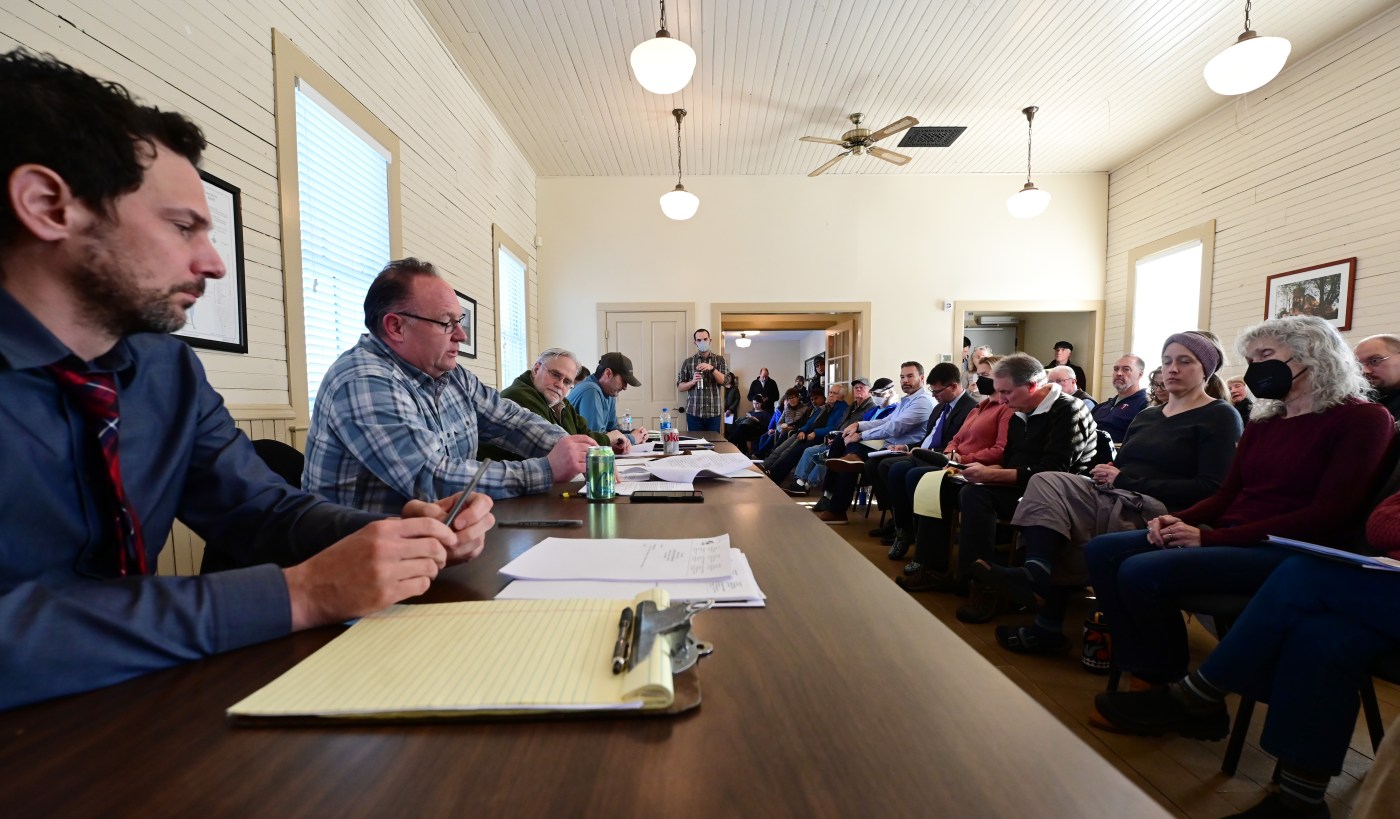
Supervisor Steve Magner, second from left, speaks during a meeting of the May Township board of supervisors at the May Town Hall on Tuesday, Nov. 22, 2022. (John Autey / Pioneer Press)

Magner said he is running for re-election because he still has things he wants to accomplish. “There are still some zoning changes that I would like to get done,” he said. “I want to keep taxes low. We’re trying to put a lid on how much we spend on the levy. Costs keep going up; costs for maintaining the roads keep going up.”

Magner said he pushed to keep this year’s levy increase capped at 5 percent. An original proposal was for more, but Magner said he couldn’t support that “because I know a lot of folks who live on fixed incomes.”

“I’m not going to be the guy – like in other bedroom communities or tourist communities – that forces them out because they can’t afford the house that they lived in their whole life, because the taxes were out of control,” he said. “I’m not doing that.”

Related Articles

Politics |


RNC votes to install Donald Trump’s handpicked chair as former president tightens control of party

Politics |


Trump attorneys post bond to support $83.3 million award to writer in defamation case

Politics |


Trump’s Truth Social sputtered during State of Union address

Politics |


Takeaways from Biden’s State of the Union: Combative attacks on a foe with no name

Politics |


Katie Britt calls Biden a ‘diminished leader’ in GOP response to the State of the Union

Magner grew up in St. Paul and is the code-enforcement manager for St. Paul. “I do believe that having 30-plus years of big government gives me insight,” he said. “I have a pretty wide band of understanding of how municipalities work, and the problems that face them.”

Magner and his wife, Lora, have four children. He said he likes being the go-to person when an issue arises in the township. He plows the Town Hall and septic field. “When we get the call at midnight about the tree that blows down, it’s usually me who is going to go out there first and triage it,” he said.

Magner said he knows that some residents were not happy with how he voted on issues regarding Wilder Forest and Warner Nature Center. “I have my detractors and people who don’t like my decisions, but I am a big believer that you are a steward of the public dollars,” he said. “These dollars have to be spent for the better good of the community, so we have to define that. That means I’m sometimes making decisions that some people do not like.”

West Lakeland Township

Vince Anderson, 77, is running on a platform that includes “a clearly defined comprehensive road plan for bonding,” he said.

Vince Anderson (Courtesy of the candidate)

“They are trying to pay cash for everything, and that’s not how you do it,” he said. “You can’t let it go forever, and then say, ‘Oh, we’re just going to save for it.’ You’ll never get them done. We need prudent management of road projects and town spending without extravagance. We do not need to waste money on a town hall addition.”

If elected, Anderson said he plans to push the town board to adopt even-year, November elections – like most of other townships in Washington County, he said. The switch would mean an increase in voter turnout and cost savings, he said.

Anderson, a former Stillwater Township board member and former vice president of the Carnelian-Marine Watershed District, has a long history with the township. Three years ago, he requested an opinion from the commissioner of the Minnesota Department of Administration about town board votes and meeting locations. The board was found to have violated the state’s open-meeting law, according to an advisory opinion issued in January 2021.

Anderson, who has three children and five grandchildren, moved to West Lakeland Township in 1999. He worked in systems management for most of his career at First Bank System (now U.S. Bank), Toro, National Car Rental and others. He retired in 2002 in financial management from Structural Wood in St. Paul.

For more information, go to vja2024.com.

Rachel Dana, 40, has lived in West Lakeland Township since 2017. She has served on the planning commission since 2021 and said she was tapped to mount a write-in campaign after residents realized Schultz had decided not to run for re-election.

Rachel Dana (Courtesy of the candidate)

“I never would have run against Dave,” she said. “Unfortunately, when I was informed (he wasn’t running), the filing window for candidacy was closed. When only Vince was running, I thought it was a public service to put my name in. … I reserved my website domain last July, so it was definitely in my future; I just didn’t think the timing would come so soon.”

Dana, who also serves on the township’s building committee, is a director of construction for Ryan Cos. in Minneapolis, where she leads the company’s national retail construction team. She said her real estate career helps with all of the issues facing the township: “roads, development, annexation, all these things an urban township is faced with.”

Related Articles

Politics |


Lake Elmo City Council signs off on plans for new elementary school

Politics |


Charges: Texas bandits swipe nearly 19K worth of graphing calculators from eight east-metro Target stores

Politics |


Woodbury: Former state legislators plan to launch online news site

Politics |


Stillwater says it shut down a city well more than a year ago after detecting PFAS contamination

Politics |


Washington County, probation officers reach tentative contract agreement over Juneteenth holiday

The township’s biggest budget item is its roads, she said, and township residents on Tuesday night will discuss whether to bond for them. “Right now we’re faced with a bonding decision,” she said. “We all agree on the fundamentals: Our roads need to be fixed.”

Dana said she would support bonding for road repairs as long as it doesn’t “burden our residents with excessive costs.”

If elected, Dana said she would work on improving communication between residents and the township. “If the average resident is informed, the town board can make better decisions,” she said.

Dana is married to Tyler Christensen; she has three stepdaughters and twin daughters.

For more information, go to racheldanaforwestlakeland.com.

U.S. adds 275,000 jobs last month; unemployment rises to 3.9%

posted in: News | 0

America’s employers delivered another healthy month of hiring in February, adding a surprising 275,000 jobs and again showcasing the U.S. economy’s resilience in the face of high interest rates.

Last month’s job growth marked an increase from a revised gain of 229,000 jobs in January. At the same time, the unemployment rate ticked up two-tenths of a point in February to 3.9%. Though that was the highest rate in two years, it is still low by historic standards. And it marked the 25th straight month in which joblessness has remained below 4% — the longest such streak since the 1960s.

Yet despite sharply lower inflation, a healthy job market and a record-high stock market, many Americans say they are unhappy with the state of the economy — a sentiment that is sure to weigh on President Joe Biden’s bid for re-election. Many voters blame Biden for the surge in consumer prices that began in 2021.

Though inflationary pressures have significantly eased, average prices remain about 17% above where they stood three years ago.

Friday’s report drastically revised down the government’s estimate of hiring in December and January from what had been blockbuster increases to still-solid gains. The report also gave the inflation fighters at the Federal Reserve what could be a dose of encouraging news: Average hourly wages rose just 0.1% from January, the smallest monthly gain in more than two years, and 4.3% from a year earlier, less than expected. Average pay growth has been exceeding inflation for more than year, but when it rises too fast it can feed inflation.

The latest figures reflected the job market’s sustained ability to withstand the 11 rate hikes the Fed imposed in its drive against inflation, which made borrowing much costlier for households and businesses. Employers have continued to hire briskly to meet steady demand from consumers across the economy.

The February figures will likely make Fed officials more comfortable about cutting rates sometime in the coming months. With December and January job gains revised sharply down, wage growth easing and the unemployment rate up, the Fed’s policymakers aren’t likely to worry about an overheating economy. Most economists and Wall Street traders expect the first rate cut to come in June. The Fed stopped raising rates in July and has signaled that it envisions three rate cuts this year.

The unemployment rate rose last month in part because more people began looking for a job and didn’t immediately find one. The Fed will be reassured by the influx of job seekers, which typically makes it easier for businesses to fill jobs without having to significantly raise pay.

Gus Faucher, chief economist at PNC Financial Services, said he was impressed by the breadth of hiring last month: Among industries, health care companies added 67,000 jobs, government at all levels 52,000, restaurants and bars 42,000, construction companies 23,000 and retailers 19,000.

By contrast, factories cut 4,000 jobs. And financial companies, including banks, insurers and real estate firms, added just 1,000.

When the Fed began aggressively raising rates in March 2022 to fight the worst bout of inflation in four decades, a painful recession was widely predicted, with waves of layoffs and high unemployment. The Fed boosted its benchmark rate to the highest level in more than two decades.

Inflation has eased, more or less steadily, in response: Consumer prices in January were up just 3.1% from a year earlier — way down from a year-over-year peak of 9.1% in 2022 and edging closer to the Fed’s 2% target. Unemployment is still low. And no recession is in sight.

The combination of easing inflation and sturdy hiring is raising hopes that the Fed can achieve a so-called “soft landing” by taming inflation without causing a recession — a scenario consistent with Friday’s numbers.

Faucher said he expects average monthly job growth to decelerate to around 150,000 and for the unemployment rate to rise to slightly above 4% by year’s end. A cooling labor market, he suggested, will allow the Fed to start cutting rates this spring.

Many Americans are exhibiting confidence in the economy through their actions: Consumers, whose average wages have outpaced inflation over the past year and who socked away money during the pandemic, have continued to spend and drive economic growth. The economy’s gross domestic product — the total output of goods and services — grew by a solid 2.5% last year, up from 1.9% in 2022. And employers keep hiring.

In the meantime, the job market’s modest slowdown is happening so far in perhaps the least painful way: Companies are posting slightly fewer job openings rather than laying people off. The number of Americans filing for weekly unemployment benefits — a rough proxy for the number of layoffs — has remained low, suggesting that most workers enjoy solid job security.

Wage growth still remains slightly high from the Fed’s perspective. Some economists argue, though, that pay increases don’t need to drop so much: A surge in productivity that started last year — as companies invested in machines and used their workers more efficiently — means that employers can pay more and still reap profits without raising prices.

Related Articles

Business |


Paul Krugman: The rich spend differently from you and me

Business |


Biden administration would cap credit card late fees at $8, part of campaign against junk fees

Business |


Real World Economics: Why drug monopolies are bad medicine

Business |


Your Money: Where’s my stuff? Spring cleaning your estate plan

Business |


Minnesota revenue forecast shows $3.7B surplus, but shortfall still projected for 2026-2027