Nicholas Kristof: The school issues we’re battling over aren’t the ones that matter

posted in: News | 0

A Florida school district, facing pressure about “nudity” in schools, removed from shelves a picture book that showed an illustration of a goblin’s bare bottom. Some students were saved from debauchery when school officials colored in a pair of pants on the goblin.

That’s a particularly nutty example, from the newsletter “Popular Information” (the school district didn’t want to discuss the issue), of a right-wing puritan drive in education that appalls liberals: Conservatives are banning materials that mention gay people, racism or sexuality, skewing the teaching of history and students’ understanding of society.

“The freedom to read is under assault in the United States — particularly in public schools,” PEN America warned in a report last year.

Listen to conservatives, and they argue that the crisis in American schools is the opposite: It’s about leftist teachers propagandizing on critical race theory and giving kids new pronouns while denying them safe bathrooms.

Donald Trump has promised to defund “any school that’s pushing critical race theory, transgender insanity and any other inappropriate racial, sexual or political content on our children.” He added: “This is what must be done to save our country from destruction.”

My sympathies in the censorship battles are with the liberal watchdogs, but to me both left and right are missing the point.

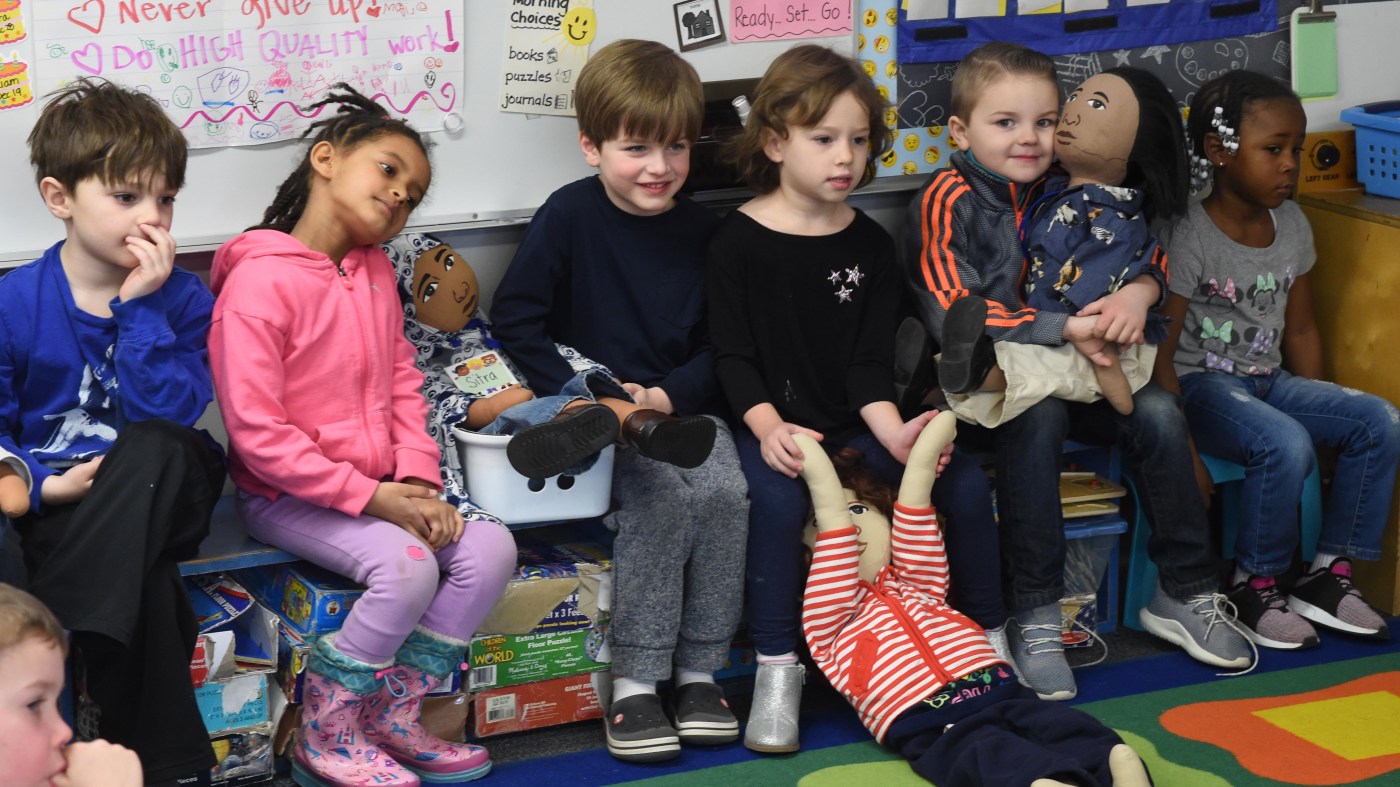
The peril for America’s children is not bare goblin buttocks, nor is it goblins being clothed. The central problem is simply that too many kids aren’t getting the education they need.

We get distracted by these culture wars, but what we should focus on is that only 32% of America’s fourth graders are proficient at reading, according to a national test referred to as “the nation’s report card.”

Likewise, American children’s math skills are dismal by global standards. In the PISA international math test for 15-year-olds, U.S. students rank far behind the leaders (Singapore, Macao, Taiwan, Hong Kong, Japan and South Korea) and also well behind peer countries including Canada, the Netherlands, Britain and Poland.

If education is one of the best metrics to forecast where countries will be in 25 or 50 years, as I believe, then we are hurting our children.

“Any nation that out-educates us will outcompete us,” the first lady, Jill Biden, has noted.

My fellow liberals like to fulminate at conservatives for neglecting children and provoking culture wars for show, but the left also gets in the way of education. Especially on the West Coast, Democrats significantly harmed children with prolonged school closures during the pandemic.

Excessive school closures caused a huge educational setback. American children still have not nearly caught up in either reading or math, and children in poor districts suffered the most.

San Francisco is a window into progressivism that doesn’t actually result in educational progress. In 2021, instead of focusing on reopening schools, the city’s school board undertook an effort to rename 44 schools that carried the names of George Washington, Abraham Lincoln and others who were considered tainted. The school board eventually backed off after widespread mockery.

In 2014, the San Francisco school board also barred the teaching of algebra in eighth grade. Officials worried that white and Asian students were disproportionately getting on the higher math track, so the school district decided to hold everyone back.

This policy made things worse. Affluent parents hired tutors for their kids, so the Black-white and Hispanic-white education gaps actually widened. After the policy was instituted, Black 11th graders performed on math tests roughly the same as typical fifth graders, according to the Harvard journal Education Next. That’s shameful — not for those kids, but for the San Francisco school district. (Just this week, voters in San Francisco overwhelmingly passed a nonbinding measure encouraging the school district to return algebra to the eighth grade.)

But Republicans shouldn’t gloat. The GOP pretends to protect children from threats (like “woke” teachers), yet it is the party of child poverty. Republicans blocked the extension of refundable child tax credits, thus sending millions of children into poverty in 2022. If you want to understand why America has scandalously high child poverty rates, today’s Republican Party is one reason.

The states that seem to do the best job teaching kids, based on test results, aren’t just liberal or just conservative ones. They include blue states like Massachusetts and New Jersey and red states like Florida and Utah.

The bipartisan education reform movement to try to help left-behind students galvanized presidents from Ronald Reagan to Barack Obama and inspired tech executives and documentary makers, but it has faded. The paradox is that even as the resolve has fizzled, the evidence has grown for how to help.

Dallas, for example, took a far smarter approach than San Francisco to boost kids in math: Instead of canceling eighth grade algebra, it made it opt-out instead of opt-in. The upshot was that the share of children taking algebra in eighth grade tripled, with particularly large gains for Black and Latino students.

I’ve written about the remarkable progress that Mississippi schools have made in reading and math alike. If Mississippi, which still hasn’t come close to fixing poverty or racism, manages to get kids reading, there’s no excuse for the rest of the country.

Some of the solutions to weak education are complicated, but some are simple. Tutoring makes a big difference for lagging kids. Many children need eyeglasses but don’t get them, or they have hearing difficulties that aren’t diagnosed.

Here’s a scandal that I wish got half as much attention as culture war battles: The graduation rate for Bureau of Indian Education high schools is only 53%. Fixing that would be a big step toward breaking cycles of poverty in Native communities.

We are setting up too many of our kids for failure — and instead of focusing on that crisis, we adults are screaming at one another over whether to ban books that, at this rate, far too many kids won’t even be able to read.

Nicholas Kristof writes a column for the New York Times, 620 Eighth Ave., New York, NY 10018. He at Facebook.com/Kristof, Twitter.com/NickKristof.

Paul Krugman: The rich spend differently from you and me

posted in: News | 0

In a recent column I had a bit of fun with Donald Trump making an assertion that shows he hasn’t flown commercial in a very long time — saying that America’s terrible airports make us look like “a third world nation.”

As it happens, a few days ago I flew into Newark Liberty International Airport’s new Terminal A, which drove home a point that’s obvious to anyone who has been flying commercial over the years: America’s airports have in fact become a lot spiffier. I’d certainly rather fly into Newark, New Jersey, than into the many European airports where you still have to take a bus from the plane to the terminal.

But this got me thinking. Why do U.S. airports have so many more amenities than they used to? (The flying experience can still be miserable because of security lines, but that’s another issue.) The obvious answer is that they’re catering to their clientele, but surely that was always true.

Well, one main reason probably is that while flying isn’t the elite-only experience it was in the “jet set” era, people who fly frequently and spend a lot of time in airports are a lot more affluent than average. And over the past 40 years, high-income Americans — we’re talking the top 10% or 20%, not the super-elite who don’t fly commercial at all — have seen much bigger income gains than the middle class.

So my guess is that airports are catering to this wealthier clientele. That is, the same clientele who are driving the proliferation of gourmet supermarkets and the gentrification of some urban neighborhoods and so on are causing airports to have better food and shops than they used to. I’m not making a value judgment here — hey, I’m in that class myself, so I benefit from the trend.

My point instead is that airports, like many other institutions, cater to a particular income class. And it follows that the affluent buy different things than those less fortunate — which means in turn that they care about different prices. There have been innumerable posts on social media complaining about the prices of airport meals or room service in fancy hotels.

But these aren’t prices that matter to most Americans. And because people spend their money differently, the convenient abstraction that we think of as “the level of consumer prices” gives way to the truth that different groups face at least somewhat different rates of inflation: different slopes for different folks.

My New York Times colleague Peter Coy wrote about this the other day, but I thought I’d pursue the matter a bit further and ask whether the multiplicity of inflation rates should affect our view of how Americans have been doing in recent years.

For the truth is that while it’s fun to mock well-off people complaining about the prices of fancy meals, there’s good reason to believe that recent inflation has actually been worse for people lower down on the income scale. Why? Mainly because of rising grocery prices.

I recently debunked widespread claims that official numbers on prices of food at home greatly understate grocery inflation. There’s every reason to believe that the Bureau of Labor Statistics gets the numbers more or less right. But what those accurate BLS numbers say is that food prices have risen more than overall prices, reflecting a variety of factors, from climate change to the war in Ukraine.

And one of the best-established regularities in economics is Engel’s Law, which says that lower-income families spend a higher percentage of their income on food than higher-income families. So does this mean that U.S. economic developments over the past few years have hurt the middle and working classes more than the affluent? Not necessarily, because there’s something else going on.

As David Autor, Arindrajit Dube and Annie McGrew noted in a paper last year, there has been an “unexpected compression” of wage disparities during the Biden recovery, with wages growing much faster at the bottom than the top. Dube’s analysis found a striking process of equalization — the highest quintile’s real wages going down while everyone else gains, and the lowest quintile gaining the most. But real wages are calculated using the same consumer price index for everyone. As I’ve said, however, recent inflation has probably been higher for lower-income Americans who spend more on groceries. Does taking that into account undermine the conclusion?

Well, the Bureau of Labor Statistics has an experimental measure of inflation that varies across the income distribution. This measure isn’t updated every month; it goes up to only June 2023. But inflation has come way down, so it’s still a pretty good indicator of inflation disparities. Let’s take a look at the percent inflation faced by each of the five income quintiles from December 2019 to June 2023, according to the BLS measure:

— Bottom 20%: 19.5

— Next 20%: 19.3

— Middle 20%: 19.1

— Fourth 20%: 18.9

— Top 20%: 18.0

So yes, inflation has been higher for lower-income Americans. But the spread from bottom to top, 1.5 percentage points, is much smaller than the spread suggested in Dube’s wage data. In other words, taking differences in relevant inflation into account slightly softens the case for an “unexpected compression,” but doesn’t change the basic result.

So does it matter that the rich spend differently from you and me — or actually, that those of us in the top quintile spend differently from Americans in the middle? Yes, in some important ways. But it doesn’t change the story of a remarkably equalizing economic recovery.

Paul Krugman writes a column for the New York Times.


Trudy Rubin: Gaza needs humanitarian aid now — with or without a cease-fire

posted in: News | 0

The humanitarian catastrophe in Gaza is far too serious to remain unresolved as Israel and Hamas play chicken with negotiations over a temporary cease-fire.

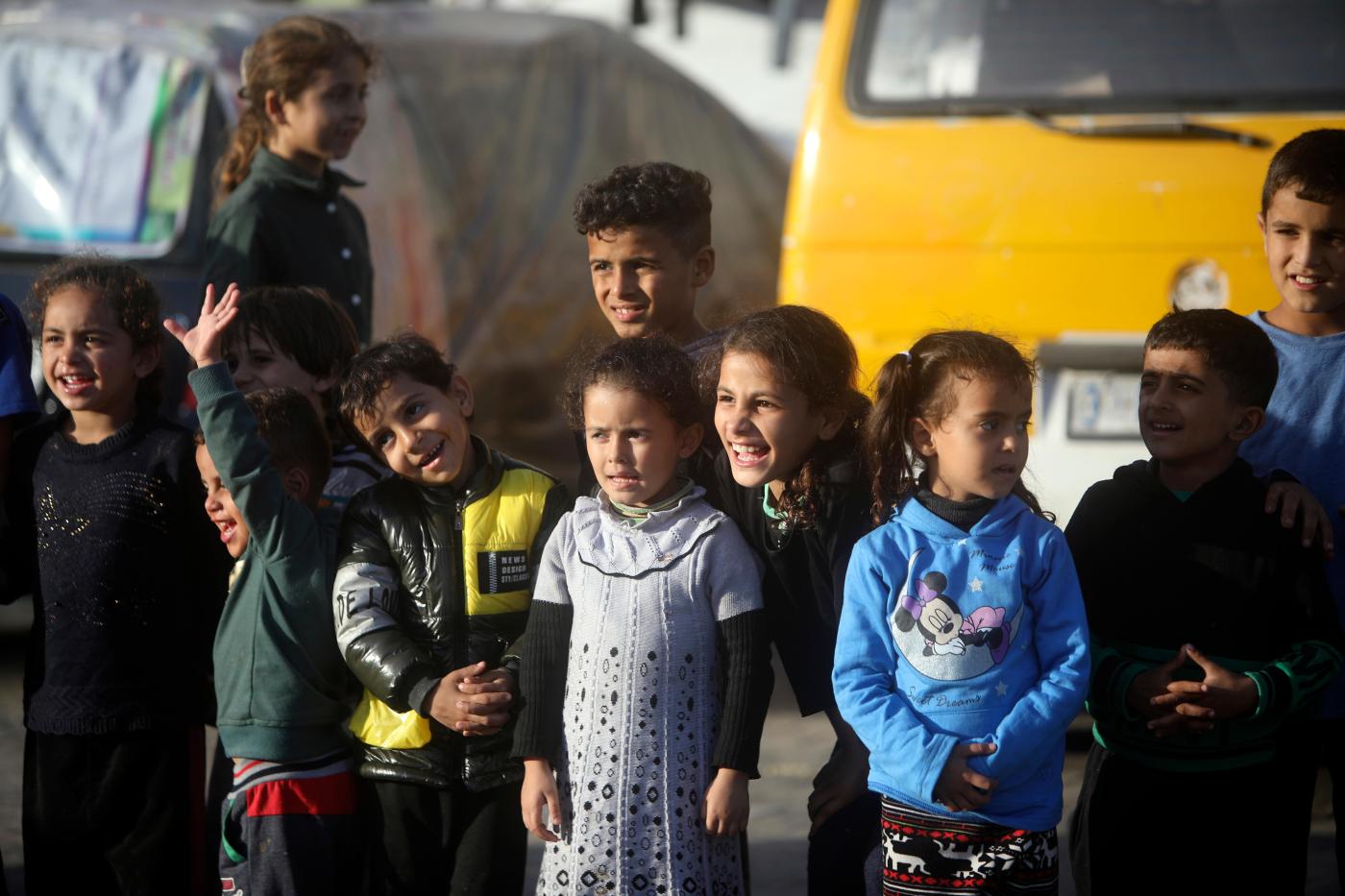
While Palestinian families eat leaves, grind animal feed to make bread, and babies die from malnutrition, Israel and Hamas are dawdling over finalizing a U.S.-backed plan for a humanitarian cease-fire that would permit a partial hostage release — and a surge of humanitarian aid into Gaza.

Vice President Kamala Harris, in a forceful speech to a receptive audience in Selma, Alabama, on Sunday, called for an “immediate cease-fire for at least the next six weeks” as part of a negotiated deal.

A pause in hostilities is important, but the White House should intensify its push for a massive humanitarian aid influx — with or without a cease-fire.

Starvation, epidemics loom

Using humanitarian aid as a strategic weapon in Gaza — as both Hamas and Israel have been doing — cannot be tolerated any longer, with starvation and epidemics threatening to explode.

Although the Israeli government denies it, facts on the ground make obvious that revenge is partly the motive for restricting aid into Gaza.

Israelis were traumatized by the brutal murders, rapes, and mutilation when thousands of Hamas fighters and followers invaded on Oct. 7. A United Nations report released Monday confirmed that sexual violence and rape had been committed in multiple locations during the attack, and against some hostages who were kidnapped and taken to Gaza.

But as the Israeli press has repeatedly reported, and endless videos from Gaza have confirmed, Israeli rules of military engagement regarding civilians have been so greatly relaxed as to ensure massive civilian casualties. Gazan health authorities claim that two-thirds of the reported 30,000 Palestinian deaths (including militants) are women and children. Endless photos of parents holding small bodies wrapped in white sheets barely hint at the pain.

While Israel has ordered Palestinian civilians to evacuate to the south, there has been no safety anywhere. Evacuation routes, tent camps, and supposedly safe areas are bombed, with extended families crammed into single apartments being killed because there might be one suspected Hamas fighter in the building.

Equally destructive, the flow of humanitarian aid trucks into Gaza has been drastically limited by a litany of Israeli excuses, as long lines of aid vehicles wait in Egypt or Israel to be permitted entry.

“On my way into Gaza, I passed hundreds of trucks, all unable to reach those in dire need,” said Jan Egeland, secretary-general of the Norwegian Refugee Council. “Civilians in Gaza are falling sick from hunger and thirst because of Israel’s entry restrictions. Lifesaving supplies are being intentionally blocked.”

Blame to share

Indeed, although Israel blames Hamas fighters inside Gaza for stopping trucks, right-wing Israeli demonstrators have been permitted to block vehicles from entering at the Kerem Shalom crossing from Israel into Gaza, one of only two Israel has opened. The number of trucks, already only a fraction of what is needed, has decreased in recent weeks.

Moreover, Israel is making it impossible for aid to be delivered once it does enter Gaza.

Aid agencies are begging U.N. member states, including the U.S., to restore funding for UNRWA — the United Nations Relief and Works Agency for Palestine Refugees in the Near East — which is the largest provider of aid and services inside Gaza. Israel claims some UNRWA employees participated in the Oct. 7 attack. Yet, there is no substitute organization with the personnel or infrastructure to deliver food, water, and shelter to the 1.4 million Gazans made homeless by Israeli bombs.

Israel has also targeted UNRWA workers and Gazan police (who worked for the former Hamas government) while providing security for aid trucks. The ensuing chaos led to the deaths of 110 Gazans last week from being trampled or shot by Israeli troops as they swarmed a food convoy in Gaza City.

Moreover, Israel has no clear plan for moving, let alone feeding, the 1.4 million hungry civilian refugees now clustered in the southern city of Rafah, which it is now bombing and says it intends to invade.

Trapped in a tiny geography

Keep in mind that, unlike refugees in larger wars, the Gazans are trapped in a tiny geography, unable to flee, except possibly into the Egyptian desert — something Cairo strongly opposes because Egyptian officials know Israel would never permit those Palestinians to return home.

So, what is to be done to prevent famine?

In an astonishing sign of President Joe Biden’s frustration with Israeli Prime Minister Benjamin Netanyahu, the United States has started airdropping MREs (military meals ready to eat) onto Gaza’s southwestern beaches. But such drops are risky and only address a tiny pittance of the need.

According to Vice President Harris, the U.S. “will work on a new route by sea to deliver aid.” But Gaza has minimal port facilities, so little seaborne aid is likely to arrive.

There are other steps Israel could take immediately to increase the flow of aid. The most urgent, as Harris proposed: “They must open new border crossings” — including two inside Israel, Erez and Karni — “They must not impose any unnecessary restrictions on the delivery of aid. They must ensure humanitarian personnel, sites, and convoys are not targeted.”

Equally important: If there is no broader Israel-Hamas deal in the coming days, the United States should press for a new U.N. Security Council resolution focusing mainly on getting food, fuel, water, medicine, and shelter into Gaza, even before any cease-fire.

Let the convoys in

Such U.S. pressure would be doing Israel a favor, since scenes of massive starvation already play into Hamas’ hands — and will forever blot Israel’s global reputation.

In the immediate future, if there is no succor for Gaza civilians before the Muslim holy month of Ramadan (which will begin around March 10), Israeli-Palestinian tensions in Jerusalem could explode, provoking more international support for Hamas.

So, let’s hope for a six-week cease-fire. But the most urgent need is to force Israel (and Hamas) to let in massive aid convoys before Ramadan starts.

Trudy Rubin is a columnist and editorial-board member for the The Philadelphia Inquirer, P.O. Box 8263, Philadelphia, Pa. 19101. Her email address is trubin@phillynews.com.

Around the Southland: Bears mascot delights students in Tinley Park, RomCon returns in Oak Lawn, more

posted in: News | 0

Bears mascot delights students in Tinley Park

A special friend stopped by last week at the Lt. Joseph P. Kennedy School for Exceptional Children in Tinley Park to help everyone shake off the winter blues.

Staley Da Bear, the official team mascot for the Chicago Bears, danced his way through a crowd of cheering students and staff, exchanging high fives with a multitude of raised hands.

“You ready to have a dance party?” his handler asked above the roar. “Let’s go!”

School administrators invited Staley to stop by the school to help motivate students as they settle into the second half of the school year.

About 70 students attend the therapeutic day school, including students from Thornton Township District 205, Thornton Fractional District 215, Plainfield Community Consolidated School District 202, Crete Monee District 201-U, Consolidated High School District 230 and Flossmoor District 161.

Oak Lawn library, Tinley book store reunite for RomCon

Fans of romantic literature will be swooning Feb. 17 as the Oak Lawn Public Library presents RomCon, an afternoon event dedicated to the genre. Independent bookstore Love’s Sweet Arrow, in Tinley Park, is teaming up with librarians to produce the free mini-convention featuring eight romance authors along with book signing, author panels, raffles, trivia and book sales.

Love’s Sweet Arrow owner Rosanne Backlin recruited a diverse group of authors to visit the library, including Danielle Jackson, Kelly Farmer, Tinia Montford, Tamara Jerée, Rien Gray, Hanna Earnest and Sara Fujimura. Author Olivia Dade will be doing a virtual visit to the event.

Dade, who lives in Sweden, is the author of Avon bestsellers “Ship Wrecked” (2022) and “Spoiler Alert” (2020) and she has a new novel coming out, “At First Spite” in 2024. Bettcher says,

“It’s a really big deal for us to have her participate in RomCon,” said fiction librarian Emily Bettcher.

Oak Lawn’s RomCon is from 1 to 4:15 p.m. Feb. 17 from 1-4:15 p.m. Register in advance for updates and a special treat on the day, at 708-422-4990 or cal.olpl.org/event/10993047.

Hidden Oaks Nature Center to close for most of 2024

The Forest Preserves of Will County’s Hidden Oaks Nature Center, 419 Trout Farm Road, Bolingbrook is about to be transformed, but the process will require the facility to be closed for most of the year starting Feb. 19.

FPD officials said Hidden Oaks Preserve also will close on occasion for outdoor renovations during the year, as necessary, but the renovations will not affect Hidden Lakes Trout Farm, which is in the northern part of the preserve.

The interior and exterior work at Hidden Oaks Nature Center is designed to convert the former Bolingbrook Park District site, which was purchased by the Forest Preserve in February 2022, into a nature center tailored to Forest Preserve-type exhibits and activities.

Officials said the renovation will provide new design features throughout the first floor and a new permanent live animal tank for the nature center’s resident turtles, and an elaborate indoor bird-watching lookout deck will be installed.

Oak Forest High School earns diversity award

Oak Forest High School has earned the College Board AP Computer Science Female Diversity Award for achieving high female representation in AP Computer Science A. Schools honored with the AP Computer Science Female Diversity Award have expanded girls’ access in AP computer science courses, according to a news release from the School District 228.

Oak Forest High School was one of 225 institutions in the country recognized in the category.

“We are so proud of the unique perspective our female students bring to the fields of Math and Science,” said Oak Forest principal Jane Dempsey. “This is a recognition of our belief that anyone can succeed in any field. Our graduates are a testament to the impact created by opening doors to women.”

Oak Forest Raiders chosen to lead Fleadh

The Oak Forest Raiders instructional tackle football and cheerleading program for boys and girls ages 5 to 14, which has been operating in the area for more than 50 years, was chosen as grand marshals for the 15th anniversary edition of the Oak Forest Fleadh.

Players, families and coaches will lead the parade, which steps off at 11 a.m. March 2 at 151st and Central Avenue and heads to the Oak Forest Park District. The parade will be preceded at 8:30 a.m. by the CNB Oak Forest Fleadh 5K race, which starts and finishes at 155th Street and Betty Anne Lane. More than 500 people are expected to participate. Activities also are planned before and after the race at Fire Station 1, 5620 Jame Drive. Street closures are planned for the race and for the parade. More information is at www.oak‐forest.org.

Visitor’s Bureau video highlights Southland attractions

The Chicago Southland Convention & Visitors Bureau has launched its interactive destination video for visitors’ vacation and residents’ staycation ideas.

The video displays footage of Chicago Southland amenities with their corresponding logo and website link synced on the side of the screen. Users can also scroll through the vertical list of all amenities in descending order of appearance.

“This interactive video helps our tourists and residents peruse and visit many of Chicago Southland attractions in one source,” said Jim Garrett, president/CEO of the bureau. “The video includes nature centers, art galleries, restaurants, breweries, museums, sports facilities, golf courses, and performing arts centers to name a few.”