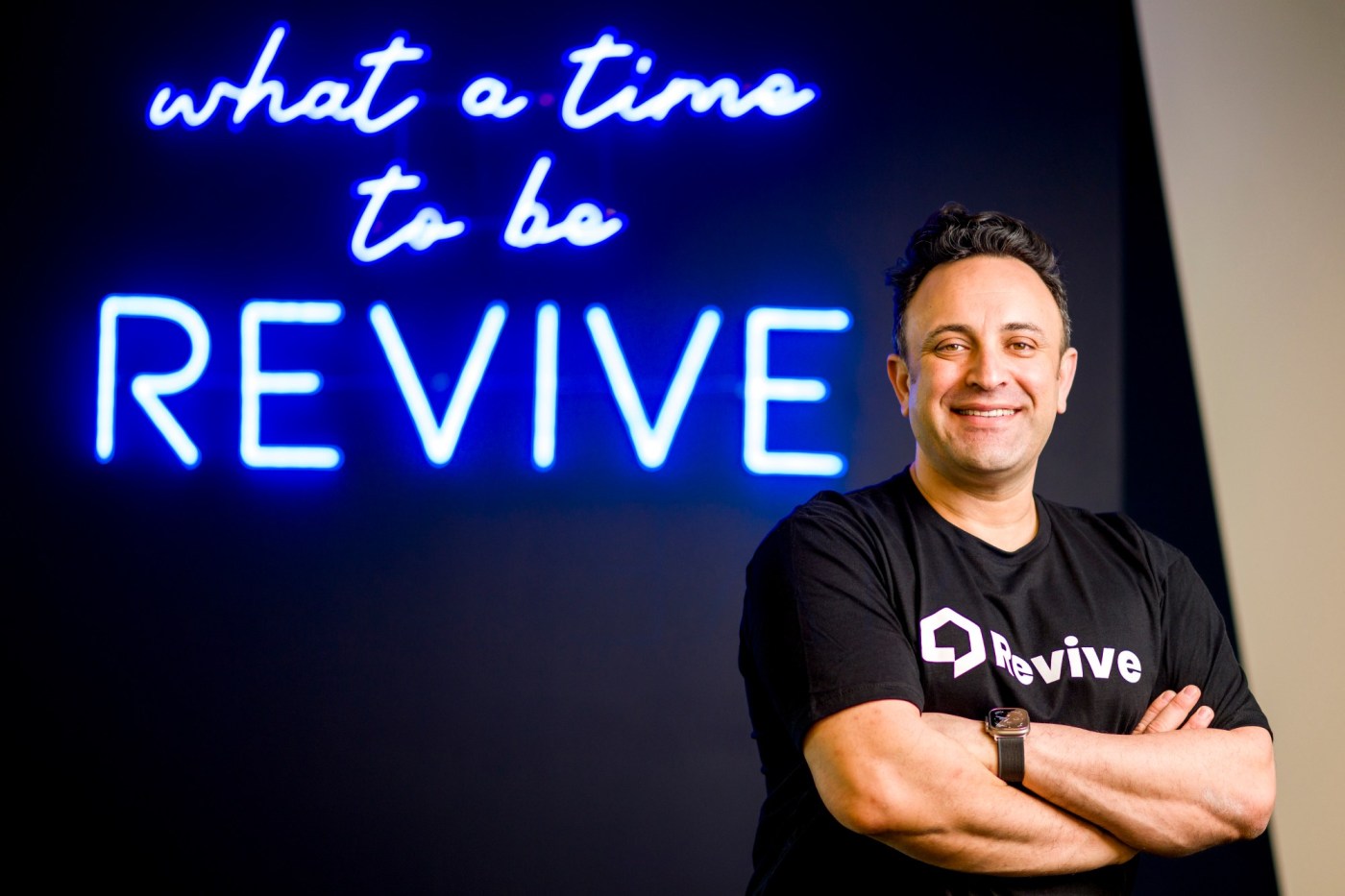
Fix your fixer-upper pre-sale, this company says, and quit leaving money on the table

posted in: News | 0

Fixed-up homes tend to sell faster and for more money than fixer-uppers.

But some owners would rather sell their home as-is than face the hassle of getting it into turnkey condition.

“People don’t do it, mostly because they’ve had bad experiences with renovations. There’s lots of anxiety,” said Michael Alladawi, chief executive and founder of Revive Real Estate, an Irvine company that helps homeowners refurbish their properties. “It’s not uncommon to hear horror stories, or to hear (it took) double the time and double the cost.”

But those sellers, Alladawi said, “are leaving money on the table.”

Revive, founded four years ago, claims its business takes the hassle out “presale renovations.”

Revive helps homeowners evaluate the cost and potential value of revamping kitchens and bathrooms and renovating floors. If refurbishing boosts the home’s value enough to make it worthwhile, Revive hooks clients up with contractors and oversees the construction. They even pay for the work, getting reimbursed from sale proceeds.

If the homeowner needs cash fast, Revive will buy the home at 80% of its value, using the remaining equity to cover renovation costs. After the home sells, Revive gives the owner a second check, handing over all the profits minus renovation costs, closing costs and a 6% fee.

Since its founding in 2020, Revive has expanded to Texas, Florida, Washington and Tennessee. It has renovated about 2,000 homes, most of them in the Bay Area and Southern California.

We sat down with Alladawi recently to learn more about his company and the benefits of giving homes a facelift. The interview was edited for space.

Q: What inspired you to create this company?

A: The mission is to automate home flipping for the consumer. And by flipping, I mean strategically update your home to bring it to market in a way that maximizes its sales value.

Consumers usually leave about 15-20% of the money on the table by not maximizing the value of their homes when they sell them.

And in California, that’s a lot of money. If we’re talking about a million-dollar, entry-level home, that’s $200,000. Or for a $2 million home, that’s $400,000 that people are leaving on the table, simply because we have an aging inventory.

Everything is built in the ‘70s, ‘80s or the ‘90s. Even the 2000s is dated.

They have homes that are dated that would greatly benefit from some strategic upgrades.

Q: Why don’t more sellers renovate their homes?

A: The renovation space has had literally no innovation ever. The contractors still put contracts together on a paper napkin. Their wives are coordinating material procurement.

The types of contractors that people hire, they’re good guys, but they need support. And they don’t have it.

Essentially, we can be the consumer-facing entity that takes care of all the front- and back-office tasks of a contractor, letting the contractor focus on one thing, which is man-powering that job.

Q: How exactly does your service work?

A: (We help with) the evaluating, planning and execution.

First of all, (we assess) what the after-renovated value of a home could be and what the as-is value of the home is today.

Is there a delta between after-renovation value and as-is value?

Sometimes there isn’t. Maybe you already have a really nice house. And sometimes that delta is very big.

The second step is planning. Once you understand there is an opportunity to increase the value, you have to decide what is your scope and what is your budget.

Are you going to paint the kitchen or replace the kitchen? Are you going to remodel all the bathrooms or one bathroom? Are you going to refurbish the floors or change the floors?

And then the third part of the equation is the execution.

Revive helps homeowners figure out those things out, and then Revive matches you with a contractor that is supported, that can execute predictably on your project. And Revive pays that contractor upfront, so you don’t have to until your home sells.

Q: How do you make money?

A: We’re doing (support) work for the contractor, and for that we charge the contractor a fee. And Revive purchases that contract. For giving them money up front, they give us a discount of 3-5%.

And Revive only takes on projects in a market where homes move in 60-90 days or less, and we only take on renovations that can be completed in a maximum of 60-90 days.

We keep it simple. Cosmetic renovations (where permitting) can be done over the counter (at city hall). And these are the biggest value-add items. Kitchens. Bathrooms.

Q: Does Revive build ADUs (accessory dwelling units)?

A: Not today because we haven’t figured out how to do it in 90 days or less.

Q: What does a typical job cost?

A: Our average budget for renovation is $80,000 to $160,000. And the average scope is a new kitchen, a couple bathrooms, floors, baseboards and paint.

Q: How much can remodeling add to the sale price of a home?

A: Typically, 15 to 20%. Of the homes we’ve remodeled, that’s how much value we’re adding.

And a good rule of thumb for consumers is if you can put $1 in and get $2 out, it’s a good deal.

Q: What are the most common pitfalls when remodeling your home?

A: Finding and vetting a contractor is a very difficult thing for the general consumer.

They all use different contracts. They all write their bids differently. Sometimes it’s really hard to understand what you’re getting when you’re looking at a bid. What’s included, what’s not included.

Sometimes what looks to be the lowest bidder ends up costing the most because it excludes so many things that you may not even know are necessary.

The only guy that gets hired is the cheapest guy. So, contractors have figured out how to manipulate their bids to appear cheaper by excluding things that they know will need to be added in later.

That’s why it’s common to hear people say their budget doubled. Well, yeah, because they went with the cheapest bidder that excluded things that they knew needed to be included.

Michael Alladawi Profile

Job Title: CEO and founder

Organization: Revive Real Estate

City of Residence: Irvine

Education: Bachelor’s degree in biology

Previous jobs: Manager for One Legacy, president of Umbrella Capital Group, broker at The Plaza Group Realty.

No Labels quits third-party bid against Biden, Trump

posted in: News | 0

By Gregory Korte, Hadriana Lowenkron and Jennifer Jacobs, Bloomberg News

WASHINGTON — No Labels, the centrist political group that sought to shake up the 2024 presidential campaign with a third-party candidate to rival Joe Biden and Donald Trump, said Thursday it wouldn’t field a candidate after all.

“Americans remain more open to an independent presidential run and hungrier for unifying national leadership than ever before,” No Labels founder Nancy Jacobson said in a statement. “But No Labels has always said we would only offer our ballot line to a ticket if we could identify candidates with a credible path to winning the White House. No such candidates emerged, so the responsible course of action is for us to stand down.”

The decision not to field a presidential ticket is a boon for Democrats who had complained that a centrist candidate would play spoiler to Biden’s chances of winning.

Related Articles

National Politics |


Former Trump officials are among the most vocal opponents of returning him to the White House

National Politics |


Americans think a president’s power should be checked, poll finds — unless their side wins

National Politics |


NY is state demanding more information on Trump’s $175 million appeal bond in civil fraud case

National Politics |


Freedom Caucuses push for conservative state laws, but getting attention is their big success

National Politics |


Judge rejects Trump request to dismiss classified documents prosecution

The abandoned presidential bid comes after weeks of speculation over who would be on the ticket, including former New Jersey Gov. Chris Christie, former U.N. Ambassador Nikki Haley and former Maryland Gov. Larry Hogan, who stepped down from the No Labels board and has since launched a U.S. Senate candidacy.

It also follows the death of the organization’s co-founder, former Sen. Joe Lieberman, last week.

No Labels had seriously considered a handful of candidates in recent weeks, including billionaire Bill Haslam, the former Tennessee governor, and Geoff Duncan, the former lieutenant governor of Georgia, said one person familiar with the conversations.

The group, which was largely focused on fostering bipartisan policy in Congress during its 14-year history, had spent months laying the groundwork for a third-party presidential bid. No Labels called its plan an “insurance policy” in case of a Biden-Trump rematch that would pit two historically unpopular candidates against each other.

Voters could still have other third-party alternatives to choose from, including Robert F. Kennedy Jr., Jill Stein and Cornel West. But a No Labels-backed candidate would have inherited advantages that most such efforts lack — including access to the ballot in 19 states.

A political action committee called New Leaders ’24 launched in the hopes of raising $300 million to support a candidate backed by No Labels, while another super PAC allied with the group, No Labels 2024, was raising money to fund a potential nominating convention. Federal Election Commission filings show No Labels 2024 had $1.9 million cash on hand at the end of 2023.

A Bloomberg News/Morning Consult poll released late last year found that appeal for an independent candidate in seven swing states was strongest among key Democratic constituencies such as young people and urban residents, demographics that are critical to Biden reassembling his electoral coalition.

Sixteen percent of Biden’s 2020 voters say they are drawn to third-party alternatives, compared to 11% of Trump’s supporters, according to the poll.

©2024 Bloomberg L.P. Visit bloomberg.com. Distributed by Tribune Content Agency, LLC.

Quick Fix: Moroccan Burgers with Cucumber Slices and Tomatoes

posted in: Adventure | 0

By Linda Gassenheimer, Tribune News Service

Bring the flavors of Morocco to your burger recipe. It’s a tasty twist on your classic burger. I added warm and savory spices — cinnamon, cumin and turmeric and lots of fresh mint — to ground meat for a unique blend of flavors.

Related Articles


A creamy, dreamy soup to make in the Instant Pot


Quick Fix: Hearty bean and veggie medley


Three festive main dishes for any spring party


Five weeknight dishes: The rice bowl you need for dinner and more


Scrumptious cannolis – in cookie form

A secret to getting a caramelized surface and keeping the burgers together is to add them to a hot skillet without turning or moving them for 5 minutes, then flipping them over.

HELPFUL HINTS:

Make sure your spices are less than 6 months old. Add a date you buy the spice to the jar so that you know when it’s beyond its peak of flavor.

Any type of reduced fat salad dressing can be used.

COUNTDOWN:

Mix ingredients into beef and start cooking them.

Make yogurt sauce.

Make cucumber slices and tomatoes.

Toast hamburger rolls and finish the burgers.

SHOPPING LIST:

To buy: 3/4 pound 95 percent lean ground beef, 1 bottle ground cumin, 1 bottle ground cinnamon, 1 bottle ground turmeric, 1 container plain nonfat yogurt, 1 bunch fresh mint, 1 cucumber, 1 tomato, 1 bottle reduced fat salad dressing and 1 package whole wheat hamburger rolls.

Staples: olive oil, salt and black peppercorns.

Moroccan Burgers

Recipe by Linda Gassenheimer

3/4 pound 95 percent lean ground beef

4 tablespoons chopped fresh mint, divided use

1 1/2-teaspoons ground cumin, divided use

1 teaspoon ground cinnamon

1 teaspoon ground turmeric

2 teaspoons olive oil

1/4 cup plain nonfat yogurt

1 cucumber, cut into slices, about 2 cups

1 tomato cut into cubes, about 2 cups

Salt and freshly ground black pepper

2 tablespoons reduced fat salad dressing

2 whole wheat hamburger rolls

Mix beef, 2 tablespoons chopped mint, 1 teaspoon ground cumin, cinnamon, turmeric together. Form into 2 patties about 4 inches in diameter.
Heat oil in a medium-size nonstick skillet over medium-high heat. Add the beef burgers and cook for 5 minutes without moving them. Turn over and cook another 5 minutes or until a meat thermometer reaches 155 degrees.
While burgers cook, mix yogurt, remaining mint and cumin together and add salt and pepper to taste and set aside.
Wash cucumber, do not peel, cut into 1/4-inch slices. Cut tomato into 1/2-inch cubes. Divide cucumber slices and tomatoes between two dinner plates and drizzle salad dressing on top. Add salt and pepper to taste.
Toast hamburger rolls in a toaster oven or under the broiler. Place burgers on bottom half of the roll and spoon yogurt sauce on top, close with the roll top.
Serve with the cucumbers and tomatoes.

Yield 2 servings.

Per serving: 502 calories (31 percent from fat), 17.3 g fat (5.1 g saturated, 6.6 g monounsaturated), 109 mg cholesterol, 44.6 g protein, 40.1 g carbohydrates, 8.8 g fiber, 283 mg sodium.

Linda Gassenheimer is the author of over 30 cookbooks, including her newest, “The 12-Week Diabetes Cookbook.” Listen to Linda on www.WDNA.org and all major podcast sites. Email her at Linda@DinnerInMinutes.com.

©2024 Tribune Content Agency, LLC

After six months of war, Israel’s isolation grows with no end in sight

posted in: News | 0

By JOSEF FEDERMAN (Associated Press)

JERUSALEM (AP) — When Israel declared war against Hamas last October, it stood unified at home and enjoyed broad backing from around the world following an unprecedented attack by the Islamic group.

Six months later, Israel finds itself in a far different place: bogged down in Gaza, divided domestically, isolated internationally and increasingly at odds with its closest ally. The risk of a broader regional war remains real.

Despite Israel’s fierce military onslaught, Hamas is still standing, if significantly weakened. The offensive has pushed Gaza into a humanitarian crisis, displacing more than 80% of the population and leaving over 1 million people on the brink of starvation. Yet Israel hasn’t presented a postwar vision acceptable to its partners, and cease-fire talks remain at a standstill.

Here are six takeaways from the first six months of war.

BATTLEFIELD STALEMATE

Israel declared war in response to Hamas’ Oct. 7 cross-border attack, in which the group killed 1,200 people, most of them civilians, and kidnapped about 250 others. Hamas has been designated as a terrorist organization by the United States, Canada and the European Union.

Prime Minister Benjamin Netanyahu set two objectives: destroying Hamas and bringing home the hostages. Despite his repeated pledges to achieve “total victory,” his goals remain elusive.

After steadily conquering most of Gaza in a bruising offensive, Israeli ground troops are in a holding pattern marked by small tactical operations and uncertainty over whether the army will march into the southern Gaza city of Rafah, Hamas’ last significant stronghold.

Netanyahu has repeatedly vowed to invade Rafah, but he faces broad international opposition, including from the United States, because of the hundreds of thousands of displaced Palestinians sheltering there. Netanyahu claims to have a plan to evacuate the civilians, but it isn’t clear whether it is ready or would satisfy the Americans.

Even if Israel does invade Rafah, there is no guarantee of long-term success. Although Hamas appears to have suffered heavy losses, its forces have managed to regroup in areas abandoned by Israel.

At the same time, Israel hasn’t been able to halt the daily attacks it faces on its northern front from the Lebanese militant group Hezbollah. In contrast to Hamas, Hezbollah’s much larger arsenal remains intact, leaving the fate of tens of thousands of uprooted civilians on both sides of the border up in the air. The tensions have threatened to drag in Hezbollah’s sponsor, Iran, especially after an airstrike widely attributed to Israel killed two Iranian generals in neighboring Syria this week.

GROWING ISOLATION

Israel enjoyed broad international support following the Oct. 7 massacre, which was the deadliest attack against Jews since the Holocaust. However, that goodwill has been replaced by impatience and outrage as conditions in Gaza worsen.

Related Articles


Israel dismisses 2 officers after deadly aid convoy strike


Biden tells Israel’s Netanyahu future US support for war depends on new steps to protect civilians


Israel says large gaps remain with Hamas over Gaza cease-fire


Bret Stephens: The appalling tactics of the ‘Free Palestine’ movement


US braces for retaliation after attack on Iran consulate — even as it says it wasn’t involved

More than 33,000 Palestinians have been killed in the war, around two-thirds of them women and children, according to Palestinian health officials whose death toll doesn’t distinguish between civilians and fighters. International aid officials say roughly one-third of Gaza’s population is dealing with catastrophic hunger.

Initial expressions of solidarity from Israel’s allies have given way to calls for a halt to the fighting. Meanwhile, the U.N. world court, looking into genocide allegations against Israel, has ordered Israel to do more to protect Gaza’s civilians.

This isolation appeared to peak on March 25, when the U.N. Security Council, over Israeli objections, passed a resolution demanding an immediate cease-fire. The U.S. infuriated Israel by allowing the resolution to pass.

Things have only worsened for Israel since then, especially following its killing of seven aid workers in what it says was an errant airstrike. Six of the victims were volunteers from countries allied with Israel, antagonizing them and outraging U.S. President Joe Biden. The alleged Israeli airstrike on an Iran’s embassy in Syria and Netanyahu’s efforts to shutter the Arab satellite channel Al Jazeera have further alienated allies.

ISRAEL IS DIVIDED

After a period of broad unity early in the war, Israel has returned to its divided self — with its polarizing leader at the center of the storm.

Weekly protests against the government have grown and attract thousands. They are rooted in longstanding grievances against Netanyahu — from his political alliances with far-right and ultra-Orthodox parties to his open-ended corruption trial. However, they have drawn new strength from his failure to bring home the hostages. Roughly half of the hostages were released during a weeklong cease-fire in November. But Israel says 134 remain in captivity.

Israel has already declared more than 30 hostages dead — and there are widespread fears that the true number is higher and will continue to rise the longer they are held.

The plight of the hostages and the anguished cries of their families have resonated deeply with the Israeli public. Some hostage families were among the tens of thousands of people who took to the streets this week calling on the government to resign. It was the largest anti-government demonstration since the war began.

NETANYAHU ISN’T GOING ANYWHERE

Netanyahu’s popularity has plummeted since the outbreak of the war, with many holding him responsible for the intelligence and security failures that allowed the Oct. 7 attack to occur. Yet he has rebuffed calls to resign or launch investigations into what went wrong.

Netanyahu faces no immediate threat to his rule. For now, his coalition partners, also facing likely losses at the polls, remain firmly behind him.

Ironically, the biggest immediate threat to Netanyahu is only peripherally related to the war. Israel’s Supreme Court has ordered a halt to a long-standing controversial system of exempting ultra-Orthodox men from compulsory military service.

With over 600 soldiers killed since Oct. 7, Netanyahu will have a tough time continuing this system. But if he tries to force religious men into military service, he could lose the support of his ultra-Orthodox partners and be forced into early elections.

“Netanyahu is incapable of either feeling shame or taking responsibility,” wrote Anshel Pfeffer, a Haaretz columnist and author of a Netanyahu biography. “He has no intention of ever resigning on his own accord.”

HAMAS ISN’T GOING ANYWHERE

The Israeli offensive has caused mass destruction across Gaza and inflicted heavy losses on Hamas. Israel claims to have killed some 13,000 Hamas fighters and dismantled the group’s military capabilities across most of Gaza.

Yet even if these claims are true, Hamas is still intact in Rafah, and its fighters have regrouped in areas where Israel previously declared victory. Although there have been small shows of public discontent with Hamas in Gaza, there have been no public signs of broad opposition to the group.

Khalil Sayegh, a Palestinian analyst, said Hamas keeps reappearing and Israel hasn’t allowed any alternative to emerge.

“When you’re fighting a guerrilla war, I think the ultimate success or failure is whether you’re able to survive,” he said. “So if Hamas survives as a governing body, then this will be a success.”

Michael Milshtein, a former high-ranking Israeli military intelligence officer who is now an expert in Palestinian studies at Tel Aviv University, says Israel faces two unappealing choices: Accept a hostage and cease-fire deal that acknowledges Hamas has survived, or step up the military campaign and conquer Gaza in hopes that Hamas will eventually be destroyed.

He said expectations that the Israeli military’s current approach can destroy Hamas or force it to surrender is “wishful thinking.”

NO POSTWAR POLICY

There is no consensus for the future of Gaza.

Netanyahu has presented a vague vision that calls for open-ended Israeli control of the territory, with local Palestinian partners in Gaza administering day-to-day affairs. Israel hopes for reconstruction to be funded by the international community, including wealthy Arab Gulf states.

These plans, though, clash with visions promoted by the U.S., other international partners and the Palestinians.

The U.S. has called for a return of the internationally recognized Palestinian Authority, which Hamas ousted from Gaza in 2007, and for renewed efforts to establish an independent Palestinian state in the West Bank and Gaza. The PA, based in the Israeli-occupied West Bank, recently appointed a new prime minister to address American calls for reform.

Netanyahu opposes Palestinian statehood or any role for the PA. Meanwhile, there is little appetite among donor nations to contribute to reconstruction without a political consensus. The United Arab Emirates, for instance, says it will not fund reconstruction without a viable two-state approach.

Ofer Shelah, a former lawmaker who is now a senior researcher at Israel’s Institute for National Security Studies, said the battlefield successes are “almost meaningless” without a diplomatic vision.

“The real threat to Hamas will not be Israeli tanks or warplanes. It’s an alternative to running life in postwar Gaza,” he said.

Associated Press reporters Melanie Lidman and Julia Frankel contributed.