Wild’s Marco Rossi vows he’s just getting started

posted in: Adventure, All news, News | 0

Three years ago, Marco Rossi was waiting to be cleared to skate. Diagnosed with myocarditis after what appeared to be a mild bout of COVID-19, he did exactly what doctors told him to do.

Nothing.

“I couldn’t even go for a walk,” he told the Pioneer Press in 2021.

Rossi appears to finally be on his way, and although he’s still only 22 years old, the Wild center has fought more than his share of adversity to get here. After making the NHL roster out of camp for the second time, Rossi has not only stuck, he’s having one of the best rookie seasons in franchise history.

“There’s no quit in myself,” Rossi said this week.

It’s for this reason that the Twin Cities chapter of the Professional Hockey Writers Association has nominated Rossi for the 2023-24 Masterton Trophy, the honor named for former North Stars center Bill Masterton presented annually to the player who best exemplifies the qualities of perseverance, sportsmanship and dedication to hockey.

The Wild’s first-round pick in the 2020 entry draft, ninth overall, Rossi was diagnosed with myocarditis during his first training camp physical and wondered if his NHL career was over before it had a chance to begin. Because of the inflammation in his heart, any strenuous activity could cause a cardiac arrest.

It was a lot to take in for a 19-year-old who had experienced little but success.

“When your doctor tells you, ‘We don’t know if you’re going to play hockey anymore,’ then of course you start to think, ‘Can I really play hockey again?’ ” Rossi said. “On the other side, it gives you motivation, too, because you want to prove everyone wrong and you want to make it.”

After convalescing in his native Austria, Rossi was cleared to skate in May 2021, and made the NHL roster out of camp. It lasted only 16 games, and he was sent back to the American Hockey League for more seasoning. So, after the season, Rossi remained in Minnesota for the first time, working with teammates and putting on 15 pounds of muscle.

Rossi made the team out of camp, and he’s been in St. Paul ever since.

His 20 goals this season are the second-most in Wild history for a rookie, two more than Marian Gaborik and, so far, seven fewer than teammate Kirill Kaprizov, for whom Rossi dropped the gloves on Dec. 21 in his first, and so far only, NHL fight. He also earned a goal and assist, and a lot of respect from teammates.

Rossi’s 20 goals this season have him second in NHL rookie scoring, one behind Chicago phenom Connor Bedard, and his 37 points this season rank fourth all time for a Wild rookie.

“That first two years was maybe a grind in the AHL, but I think that makes me as a person, as a player, who I am right now,” he said.

Rossi plans to return to Austria this summer, and he’ll be a part of the national team’s hunt for a spot in the 2026 Olympics in Northern Italy — another goal on his list.

Asked this week about his ceiling as a player, Rossi said, “I think it’s just the beginning because I know how good I am.”

“Deep down, I’m the best who knows myself the best, and I know. I know much more,” he added. “Of course 20 goals is nice, but next year I want to get more — 30 goals, even more. That’s my goal, (to) always keep climbing, getting better.”

Briefly

The Wild have signed goaltender Samuel Hlavaj, 22, to a two-year, entry-level contract starting next season. The 6-foot-4, 193-pound native of Martin, Slovakia, posted a 3.10 goals-against average and .902 save percentage in 28 games with HC Škoda Plzeň of the Czech Extraliga this season.

Related Articles

Minnesota Wild |


Avalanche clinch season series with Wild and severely dent playoff chances

Minnesota Wild |


Solid second half has Wild’s Marc-Andre Fleury thinking hard about 2023-24

Minnesota Wild |


After scoring first goal on Tuesday, Wild wing Mason Shaw vows to keep fighting

Minnesota Wild |


With veterans out, fourth line sends Wild past Ottawa, 3-2

Minnesota Wild |


Wild’s Ryan Hartman on throwing stick on ice: ‘I was over-the-top frustrated’
Israel dismisses 2 officers after deadly aid convoy strike

posted in: News | 0

Galit Altstein | Bloomberg News (TNS)

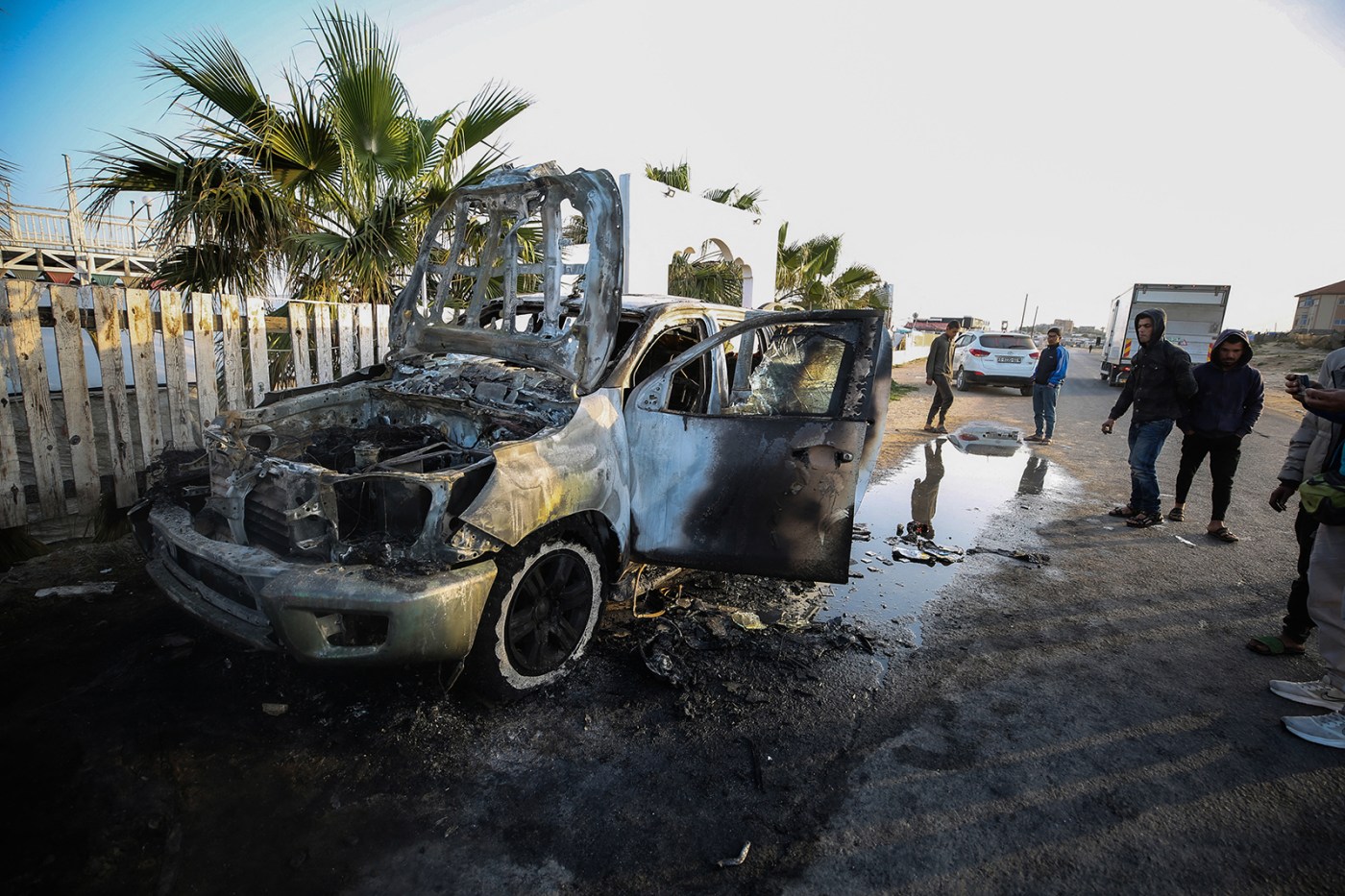
The Israeli army dismissed two officers over a missile strike on a World Central Kitchen vehicle convoy this week that killed seven aid workers.

Monday’s assault was “a grave mistake stemming from a serious failure,” the Israel Defense Forces said in a statement on Friday, concluding an investigation into the incident. It was “due to a mistaken identification, errors in decision-making, and an attack contrary to standard operating procedures.”

The discharged officers were a colonel and a major. The IDF’s chief of staff, Herzi Halevi, also formally reprimanded the head of the Southern Command, which includes Gaza, for his overall responsibility.

World Central Kitchen, a disaster-relief group founded by celebrity chef José Andrés, said in response that although the IDF has acknowledged responsibility, it still wants “the creation of an independent commission to investigate the killings of our WCK colleagues.”

“The IDF cannot credibly investigate its own failure in Gaza,” WCK said in a statement.

Three British nationals were killed in the attack along with a Palestinian, a Pole, an Australian and a dual U.S.-Canadian citizen.

U.S. Secretary of State Antony Blinken said the administration is reviewing Israel’s report on the incident as part of a broader evaluation of efforts to improve humanitarian conditions in Gaza and prevent more civilian deaths.

“It’s very important that Israel is taking full responsibility for this incident,” Blinken told reporters Friday before departing Brussels. “It’s also important that it appears to be taking steps to hold those responsible accountable. Even more important, is making sure that steps are taken going forward to ensure that something like this can never happen again.”

The fatal incident was front-page news across the world and angered Israel’s allies. U.S. President Joe Biden said he was “outraged” and told Israeli Prime Minister Benjamin Netanyahu Thursday that U.S. support for Israel’s campaign in Gaza depends on new steps to protect civilians.

Following the call between the two leaders, Israel said that it would help boost the flow of aid to “prevent a humanitarian crisis.”

Israel will allow the delivery of aid into Gaza through the previously closed Erez checkpoint in the north of the enclave, and increase the amount of goods entering via Kerem Shalom in the south. Still, Israel has said distribution of aid once it gets into Gaza is a significant problem.

Mistaken identity

The IDF said its forces recognized two gunmen and that Monday’s attack was approved after one of the commanders mistakenly assumed they were in the convoy. The forces did not identify the vehicles as being associated with WCK.

Related Articles

World News |


Biden tells Israel’s Netanyahu future US support for war depends on new steps to protect civilians

World News |


Israel says large gaps remain with Hamas over Gaza cease-fire

World News |


Bret Stephens: The appalling tactics of the ‘Free Palestine’ movement

World News |


US braces for retaliation after attack on Iran consulate — even as it says it wasn’t involved

World News |


Family and friends recall dedication of World Central Kitchen aid workers killed in Gaza

Israel’s war in Gaza, triggered by the Oct. 7 attacks by Hamas terrorists that killed 1,200 people and saw 250 abducted, will enter it’s seventh month next week. The Hamas-run health ministry in Gaza says the number of Palestinians killed now exceeds 32,000.

Recent negotiations for a cease-fire in return for the release of hostages have stalled.

Hamas is designated a terrorist organization by the U.S. and European Union.

(With assistance from Courtney McBride.)

©2024 Bloomberg L.P. Visit bloomberg.com. Distributed by Tribune Content Agency, LLC.

Related Articles

World News |


Biden tells Israel’s Netanyahu future US support for war depends on new steps to protect civilians

World News |


Israel says large gaps remain with Hamas over Gaza cease-fire

World News |


Bret Stephens: The appalling tactics of the ‘Free Palestine’ movement

World News |


US braces for retaliation after attack on Iran consulate — even as it says it wasn’t involved

World News |


Family and friends recall dedication of World Central Kitchen aid workers killed in Gaza

An earthquake centered near New York City rattles much of the Northeast

posted in: Adventure | 0

By JENNIFER PELTZ (Associated Press)

NEW YORK (AP) — An earthquake shook the densely populated New York City metropolitan area Friday morning, the U.S. Geological Survey said, with residents across the Northeast reporting rumbling in a region where people are unaccustomed to feeling the ground move.

The agency reported a quake at 10:23 a.m. with a preliminary magnitude of 4.8, centered near Lebanon, New Jersey, or about 45 miles west of New York City and 50 miles north of Philadelphia. U.S.G.S. figures indicated that the quake might have been felt by more than 42 million people.

New York City’s emergency notification system said in a social media post more than 30 minutes after the quake that it had no reports of damage or injuries in the city. The Fire Department of New York said on social media about an hour after the quake that it was “responding to calls and evaluating structural stability” but that there are “no major incidents at this time.”

Amtrak said it was inspecting its tracks and had speed restrictions in place throughout the busy Northeast Corridor. New Jersey Transit posted on X that its train system was subject to delays caused by bridge inspections. The Philadelphia area’s PATCO rail line suspended service out of what it said was “an abundance of caution.”

People in Baltimore, Philadelphia, Connecticut and other areas of the Northeast reported shaking. Tremors lasting for several seconds were felt over 200 miles away near the Massachusetts-New Hampshire border. In midtown Manhattan, traffic grew louder as motorists blared their horns on shuddering streets. Some Brooklyn residents heard a boom and their building shaking.

In New York City’s Astoria neighborhood, Cassondra Kurtz was giving her 14-year-old Chihuahua, Chiki, a cocoa-butter rubdown for her dry skin. Kurtz was recording the moment on video, as an everyday memory of the dog’s older years, when her apartment started shaking hard enough that a large mirror banged audibly against a wall.

Kurtz assumed at first it was a big truck going by. The video captured her looking around, perplexed. Chiki, however, “was completely unbothered.”

Attorney Finn Dusenbery was in a law office in midtown Manhattan. “The building shook and I thought that the ceiling above me was going to collapse,” Dusenbery said. “I did think that maybe the building was going to fall down for a second, and I wanted to get out of the building when I felt that.”

Solomon Byron was sitting on a park bench in Manhattan’s East Village. “I felt this vibration, and I was just like, where is that vibration coming from,” Byron said. “There’s no trains nowhere close by here or anything like that.” Byron said he didn’t realize there had been an earthquake until he got the alert on his cellphone.

At U.N. headquarters in New York, the shaking interrupted the chief executive of Save The Children, Janti Soeripto, as she briefed an emergency Security Council session on the threat of famine in Gaza and the Israeli drone strikes that killed aid workers there. In short order, diplomats’ phones blared with earthquake alerts.

The White House said in a statement that President Joe Biden had been briefed on the earthquake and was “in touch with federal, state, and local officials as we learn more.”

New York Gov. Kathy Hochul posted on X that the quake was felt throughout the state. “My team is assessing impacts and any damage that may have occurred, and we will update the public throughout the day,” Hochul said.

Philadelphia police asked people not to call 911 about seismic activity unless they were reporting an emergency. Pennsylvania Gov. Josh Shapiro said state officials were monitoring the situation. A spokesperson for Connecticut Gov. Ned Lamont was unaware of any reports of damage in that state.

The shaking stirred memories of the Aug. 23, 2011, earthquake that jolted tens of millions of people from Georgia to Canada. Registering magnitude 5.8, it was the strongest quake to hit the East Coast since World War II. The epicenter was in Virginia.

That earthquake left cracks in the Washington Monument, spurred the evacuation of the White House and Capitol and rattled New Yorkers three weeks before the 10th anniversary of the Sept. 11 terror attacks.

Earthquakes are less common on this side of the U.S. because the East Coast does not lie on a boundary of tectonic plates. But East Coast quakes can still pack a punch — its rocks are better at spreading earthquake energy across far distances.

“If we had the same magnitude quake in California, it probably wouldn’t be felt nearly as far away,” said U.S.G.S. geophysicist Paul Caruso.

___

Associated Press journalists around the country contributed to this report, including Jake Offenhartz, Bobby Caina Calvan and Karen Matthews in New York City, Edith M. Lederer at the United Nations, Seth Borenstein in Washington, Mark Scolforo in Harrisburg, Pennsylvania, and Susan Haigh in Hartford, Connecticut.

Anand Kumar: Premature Alzheimer’s diagnosis using pseudoscience is dangerous

posted in: News | 0

When I turned 60, my primary-care physician said something profound: “There is no reason for someone to wake up in this day and age and find that they have advanced colon cancer.” It was a nudge in the right direction.

Early detection and early intervention have been medicine’s mantra for the past several decades. Medical societies recommend colonoscopy and mammograms, for example, to individuals who are at minimal risk. This is based on the presumption that the biological processes that lead to the disease begin years, if not decades, before the disease becomes manifest. Detecting the disease in its “preclinical” state will result in early treatment that will prolong and improve the quality of life.

In the case of Alzheimer’s disease, some of the biological processes responsible for the condition are also presumed to begin two to three decades before the early symptoms of the disease first appear.

Despite the multiple risk factors involved, two proteins found in the brains of Alzheimer’s disease patients — beta amyloid and tau — have dominated the interest of researchers, federal funding and pharmaceutical research support. Academic researchers, pharmaceutical companies, advocacy groups and branches of federal government have formed a team that argues for a central role for these proteins beyond what the objective scientific evidence currently supports.

A recent conference in Amsterdam, dominated by researchers with strong ties to the pharmaceutical industry, recommended updated criteria for the diagnosis of Alzheimer’s disease. Should these recommendations be actualized, individuals with no cognitive or behavioral symptoms will be diagnosed as having Stage 1 of Alzheimer’s disease if they test positive for amyloid. Cognitive abnormalities that can be documented will be required for a diagnosis only in the more advanced stages of the disease. If these criteria are more broadly adopted, many cognitively and behaviorally normal individuals in their 40s and 50s will be diagnosed as having the disease based on an amyloid test alone. This sets the stage for placing them on expensive medications with modest therapeutic effects but serious side effects for a disease that many do not have and may never get.

Amyloid and tau are considered biomarkers for the disease — laboratory-based measures that are useful in diagnosing the disease, monitoring its progression and studying the impact of treatment. Levels of amyloid and tau can be detected using specialized brain scans; studies of cerebrospinal fluid, which cover the brain and spinal cord; and, more recently, blood tests.

But here is the critical caveat: Not all patients who have elevated levels of amyloid and tau will develop Alzheimer’s disease, and not all patients with a clinical picture consistent with the disease have elevated levels of amyloid and tau.

In other words, these tests are not definitive by themselves and need strong clinical corroboration, and it is the totality of the picture — clinical presentation plus relevant testing — that is needed to confirm the diagnosis.

There is evidence to suggest that a high proportion of patients in their 50s, 60s and 70s will test positive but will never develop the disease. The amyloid tests are not comparable to colonoscopies and mammograms in which a pathological report is used to corroborate imaging abnormalities before any intervention is made.

Further, in the case of Alzheimer’s, amyloid and tau serve as therapeutic targets for drug development. Over the past few decades, such efforts have disproportionately focused on compounds that reduce the levels of both proteins in the brain. The evidence that amyloid-lowering drugs have a meaningful impact in Alzheimer’s disease is modest, at best.

There are good and bad medical practices. This one is horrifying. The combination of an amyloid test, possibly just a blood test, and research demonstrating that the disease starts much earlier than the clinical presentation has shifted the discussion in favor of premature diagnosis, poorly applied public health principles and the potential use of expensive drugs with serious side effects in young normal adults. Labeling healthy individuals who have an abnormal blood test as having Alzheimer’s disease is scientifically unsound and ethically suspect, especially considering that many of them will never develop the disease. Neuroprotective agents should unambiguously protect neurons and be given only to individuals whose neurons need protection.

What society needs are biomarker-based tests that are validated and standardized using objective population health concepts and guidelines in order to determine how specific and sensitive they really are in individuals without cognitive signs and symptoms. This step is critical to preclude over-interpretation of laboratory test results in broader populations.

We also need drugs that are demonstrably effective on meaningful, real-world outcomes while remaining affordable and free of life-threatening side effects. Simply put, the risk and cost-benefit analyses need to be reasonable and acceptable.

Academic researchers, advocacy groups and relevant branches of the federal government have a moral and ethical responsibility in this regard. After all, they are the entities funding and advancing this agenda. The scientific bar should be very high before we diagnose healthy individuals with Alzheimer’s disease. The implications of this diagnosis must not be trivialized.

Inappropriately diagnosing and treating typical Americans with expensive drugs that promise to “prevent” Alzheimer’s disease does not constitute scientific progress. It is a slippery slope that will get more slippery over time.

The saying primum non nocere, or “first do no harm” — attributed to the ancient Greek doctor Hippocrates — is one of the promises that graduating medical students make as they begin their journey. Let us never forget that promise. Let us work to gain the public trust.

Dr. Anand Kumar is a professor and head of the department of psychiatry at the University of Illinois at Chicago and past president of the American Association for Geriatric Psychiatry. He wrote this column for the Chicago Tribune.

Related Articles

Opinion |


Daniel DePetris: A belligerent China is bringing out East Asia’s resolve

Opinion |


Farah Stockman: Is this the Silicon Valley of Latin America?

Opinion |


Bret Stephens: The appalling tactics of the ‘Free Palestine’ movement

Opinion |


Tyler Cowen: Indiana can’t make universities more conservative with a law

Opinion |


Zeynep Tufekci: You don’t need to freak out about Boeing planes (but Boeing does)