Other voices: Bring back buttons and dials, for auto-safety’s sake

posted in: News | 0

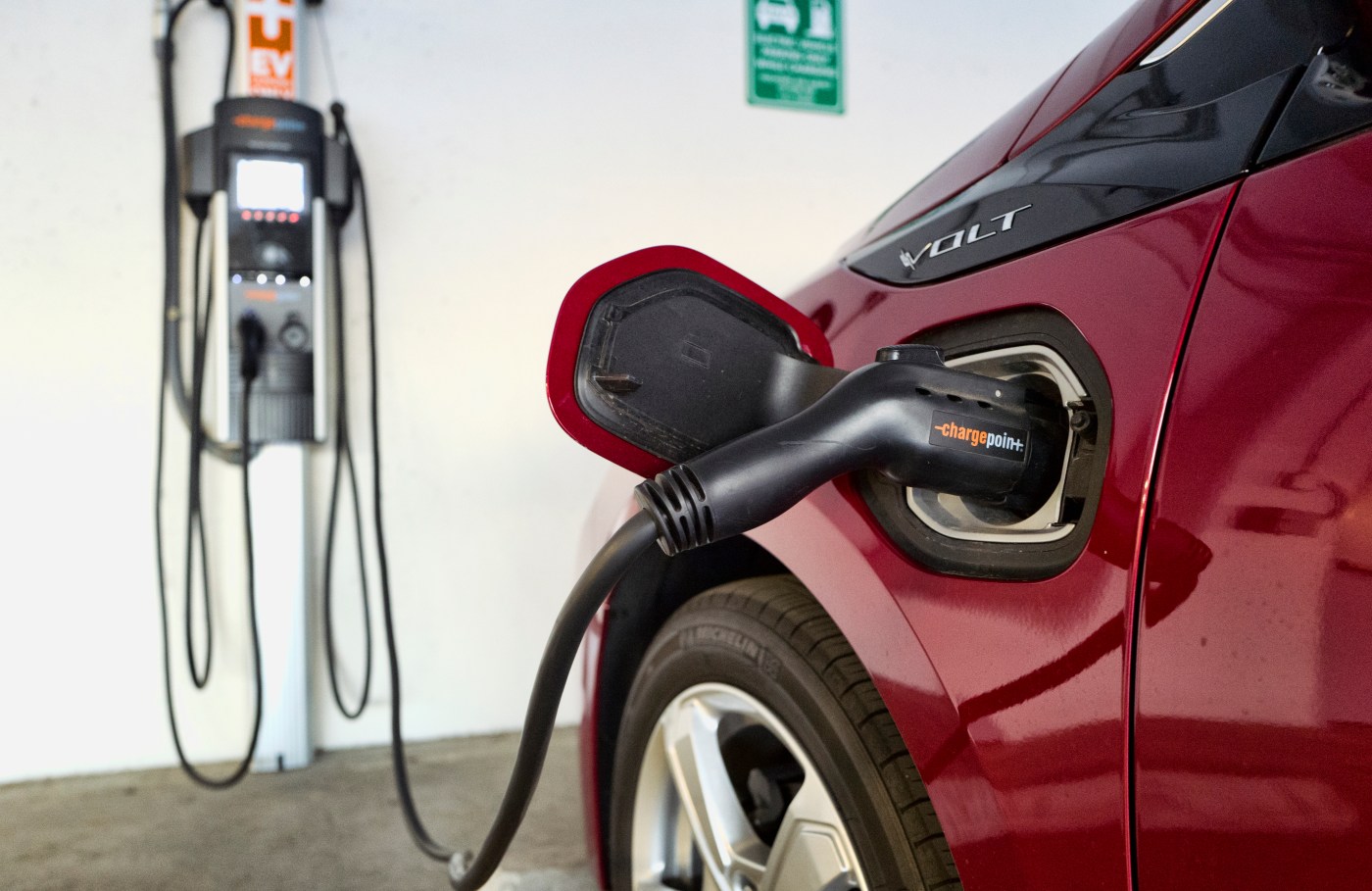
As cars go electric and get more technologically advanced, their interiors are increasingly being built around prominent dashboard touch screens.

Nearly every automaker has been moving controls for windshield wipers, headlights, air conditioning, gear selection and other basic functions to these centralized touch screens. It’s an industrywide shift that is most pronounced with electric vehicles but not limited to them. Consumers have rightly complained that screens are more of a pain to use than the intuitive physical buttons, dials and switches cars have been equipped with for decades.

But the trend is not just an issue of consumer preference or convenience. It’s a matter of safety, because the time drivers spend tapping through sleek but hard-to-navigate touch screen menus is time they are taking their eyes off the road.

So it’s welcome news that an influential auto safety certification body in Europe is working on new standards that would push against car companies’ overreliance on distracting touch screens.

Under new standards the European New Car Assessment Program plans to introduce in 2026, automakers will have to use separate physical buttons, dials or levers for critical functions such as turn signals, hazard lights, horns, windshield wipers and emergency calls in order to earn the independent organization’s top five-star safety rating.

It’s about time. Because the touch screen domination of new car interiors has already gone too far.

Customer complaints have forced some carmakers, including Volkswagen, to bring back some of the manual buttons. Third-party companies are seeing a ripe market for aftermarket buttons and dials to mount below Teslas’ touch screens. And electric-vehicle startup Olympian Motors is offering new models with retro, minimalistic interiors with numbered dials to cater to customers sick of screens.

The backlash is understandable. The screenification has gone too far when you can’t even change windshield wiper speeds, turn on headlights or put the car into park or drive without navigating a touch screen. In the name of driver distraction and safety, there are some functions so critical to safe operation that they should remain physical and easy to access without screens.

The standards the Euro NCAP safety ratings body is developing, while voluntary, “will encourage manufacturers to use separate physical controls for basic functions in an intuitive manner, limiting eyes off road time and therefore, promoting safer driving,” an official with the organization told the United Kingdom’s Sunday Times recently.

We’d like to see U.S. authorities follow suit and adopt their own standards to ensure that safety-critical functions in all new cars have physical controls in intuitive locations.

Safety authorities should be concerned that the prominence of touch screens to control functions inside of vehicles is dangerous. According to the National Highway Traffic Safety Administration, driver distraction resulted in at least 3,000 known deaths in 2019, the most recent year for which figures are available. NHTSA is making significant updates to its five-star safety ratings program that could include measures to address driver distraction from controls and displays inside vehicles.

These ratings are designed to push the auto industry beyond the minimum federal requirements by informing consumers about how safe new vehicles are. In years past, concerns about distracted driving focused mostly on texting, but that has been overshadowed by the rapid shift to massive in-vehicle infotainment panels that compete with the road for drivers’ attention.

Drivers have enough to worry about on the roads. They shouldn’t have to spend any time thinking about how to control their cars’ most basic functions.

— The Los Angeles Times

Related Articles

Opinion Columnists |


Lisa Jarvis: Parents alone can’t protect kids from social media

Opinion Columnists |


Trudy Rubin: 4 ways the US should help Ukraine right now

Opinion Columnists |


Other voices: The Supreme Court’s sticky web

Opinion Columnists |


Clarence Page: Joe Biden’s campaign could use some star power. Paging Taylor Swift?

Opinion Columnists |


David French: Overturning ‘Chevron’ can help rebalance the constitutional order

Nine Years, Nine Lives: Paxton’s Latest Legal Escape

posted in: Politics | 0

Call him Kevlar Ken. Once again, Texas’ attorney general has proven to possess an impenetrable shield of impunity. 

Last week, special prosecutors struck a deal to essentially let Ken Paxton off the hook for three felony securities fraud charges just before the nearly decade-old case was set to go to trial in Houston. The charges will get dropped in exchange for Paxton paying his alleged victims a little under $300,000, among other terms. 

Thus came the shockingly abrupt end to a legal saga that has hung over Paxton for almost the entirety of his tenure as attorney general. The longer the case dragged on, the more it came to define Paxton—as a persecuted hero in the eyes of his supporters and a corrupt crook to his detractors. 

Paxton was charged in 2015 with securities fraud for allegedly encouraging friends to buy stock in a McKinney technology firm without disclosing that he would be compensated by the company and for allegedly steering clients to a friend’s investment firm without registering as an investment advisor.

From the moment he was indicted by a grand jury in his home Collin County, Paxton claimed to be the innocent victim of a political persecution engineered by the Republican establishment that had opposed his bid for AG. His longtime defense lawyer, Dan Cogdell, who also played a starring role on Paxton’s successful impeachment defense team, has said the charges were always trumped-up “bullshit” only pursued because media-hungry special prosecutors wanted to take out the sitting AG. (The SEC also brought civil fraud charges against Paxton, but the suit was dismissed in 2017 by a federal  judge.)

On top of his recent state Senate acquittal on House impeachment charges, which outlined alleged bribery and abuse of office, Paxton’s triumphant escape from his securities fraud trial further cements his status as Texas’ amazing political Houdini.

“There will never be a conviction in this case nor am I guilty,” Paxton declared in a triumphant statement last week. 

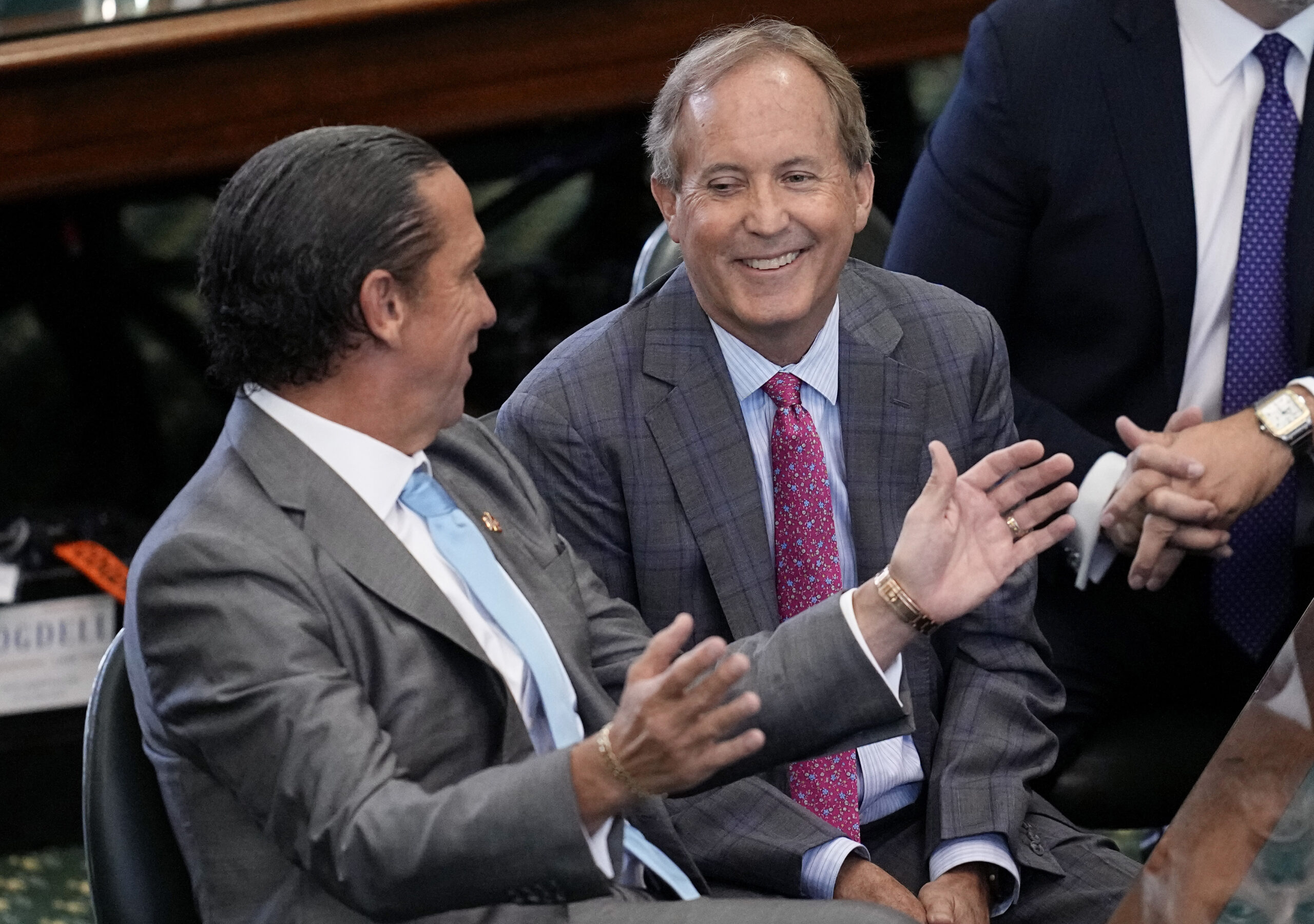
Paxton talks with his defense attorney Tony Buzbee during last year’s impeachment trial. AP Photo/Eric Gay

For Paxton and allies now comes the time to clean house and exact vengeance—beginning with Republican House Speaker Dade Phelan, who was forced last month into a May runoff. With the AG now unshackled, Paxton and co. believe they can finally drain the Austin swamp, lay waste to the RINOs, and disband the so-called uniparty that has allowed Democrats to secretly control the Texas House (so secretly that Dems themselves would be shocked to learn they’ve held so much power). 

Longtime Paxton defense lawyer Mitch Little has become one of the leading tribunes of Ken’s revenge campaign. After playing a major role in the impeachment defense, Little leveraged his newfound prominence into a run for a Texas House seat, ousting one of the GOP state reps who’d voted to impeach Paxton.  

“This was the 21st Century’s magnum opus of lawfare. And, it ends today,” Little wrote on X when the securities fraud deal was approved. “Now, I want you to imagine what you would do once set free from this nightmare. That’s what’s coming. We are in the preamble of reform in the great State of Texas, and there will be a proper accounting.”

“This is the most unusual resolution of a major felony that I’ve ever seen,” Houston lawyer David Berg told Texas Monthly. “It must be good to be Ken Paxton.” 

The repeated delays, many of which were caused by Paxton’s repeated challenges over the case’s venue and the high pay rates the government was paying for its star special prosecutors, were like a slow bleed. “Deferring justice for nine years is pretty much a fatal shot through the heart of an indictment,” Berg said.

Much like Paxton’s impeachment acquittal, the aftermath of the securities fraud deal has been animated by public sniping and beefs between Paxton’s lawyers and the special prosecutors—all of whom are big-time lawyers with egos. 

The lead special prosecutor, Brian Wice, a well-known Houston defense lawyer, has taken heavy fire for ceding the case after having vigorously embraced the role of crusading prosecutor. But Wice insists this was not a prosecutorial surrender. 

“Ultimately, this was a resolution that required [Paxton], whether inferentially or indirectly, to accept responsibility,” he told reporters. “I’m not going to concern myself an iota as to who wins. … So the question isn’t … who won, but was justice served? And I think the answer was unmistakably, ‘Yes.’” 

“This is not really what people think of when they hear securities fraud.”

That was a clear about-face from Wice compared to just weeks earlier, when he scuttled a potential deal offered by his co-special prosecutor, which he said would’ve been “worse than a slap on the wrist. That was, ‘Gee, let’s get you a cocktail, a hot meal and a breath mint.’ And that wasn’t going to happen on my watch,” Wice said. 

His fellow prosecutor, Kent Schaffer, a Houston criminal lawyer with hefty trial experience, had negotiated that prior deal and resigned when it was killed. 

“Without sounding too mercenary, there came a time that it dawned on me that I’m not the one who should be financing the prosecution of Ken Paxton,” Schaffer told the Houston Chronicle. “I’ll do pro bono cases for widows, orphans, poor people being taken advantage of by the system. But I’m not going to go after some politician and spend tons of money to punish him. That’s not my job.”

Pending legal challenges have prevented either prosecutor from receiving a dime for their services so far. 

Wice, an accomplished appellate lawyer with little experience in criminal trials, then had to scramble to find a replacement for Schaffer, who’d handled the pretrial casework and would’ve led the prosecution at trial. 

After reviewing the facts of the case and reinterviewing witnesses for the first time in years, Wice seemingly lost faith in the strength of the case. Many of the witnesses were reportedly hostile to the prosecutors and remained protective of Paxton. Wice was willing to settle once Paxton’s team confirmed the AG would be willing to pay restitution to his alleged victims. 

For all the emphasis placed on the serious nature of Paxton’s securities fraud felony charges and the maximum penalty they carried—99 years in prison—it was never likely that Paxton would’ve been locked up for any amount of time if he’d been convicted. White-collar crimes of this scale generally result in probation or a pretrial deal like the one Paxton got. 

“This is not really what people think of when they hear securities fraud,” one law professor told the Texas Tribune. “This is not Bernie Madoff or Sam Bankman-Fried.” 

Wice himself recently told WFAA: “I never envisioned any scenario, any universe in which, by which, through which, that a judge or jury would put Ken Paxton in prison” based on the securities charges.

For all the allegations of corruption, rule-breaking, and ethics violations, nothing has stuck to Paxton. Other criminal probes opened into Paxton’s allegedly corrupt land deals in Collin County when he was a state representative, along with bribery allegations for a six-figure gift Paxton took for his legal defense fund from the target of a Medicaid fraud investigation involving the AG’s office, came up empty.  

Paxton speaks at a 2021 Trump rally. AP Photo/Jacquelyn Martin

Of course, Paxton’s legal troubles are far from over—but there’s reason to believe these could end in similar fashion.

Paxton still faces a civil whistleblower lawsuit from his former top deputies, which he has tried to unilaterally end by agreeing not to contest the facts or judgment (much to the chagrin of at least one senator who’d just acquitted him on charges based on those same facts) in an apparent attempt to avoid deposition and trial. Then, there’s an FBI investigation into Paxton’s relationship with Austin real estate mogul Nate Paul (who himself faces federal charges of bank fraud), which was prompted by the same whistleblowers back in 2020. This federal investigation has been open for well over three years, and there are scant details about its status.  

In addition to paying nearly $300,000 in restitution to the investors he allegedly defrauded, Paxton must now complete 100 hours of community service and take 15 hours of legal ethics courses. 

Paxton could knock 45 minutes off his mandatory remedial legal ethics education with a course called “Hard Knocks in Little Rock,” in which former Arkansas Attorney General Steve Clark shares his scared-straight story of public corruption: Clark was forced to resign in 1990 after his felony theft conviction for abusing a state expense account to reimburse himself for fake dinners.

“Steven Clark was at the top of his career as a state Attorney General when an ethics scandal changed everything,” the course description reads. “Learn how his fall from grace led to powerful insights about the importance of ethics in an attorney’s daily life.” 

Though, Paxton is perhaps more likely to teach a course of his own about how to avoid such a fall. His lesson: Never resign, never surrender, and never forget. 
Vingegaard has collapsed lung after crash in Basque Country race. Tour de France defense is in doubt

posted in: News | 0

By JOSEPH WILSON (Associated Press)

BARCELONA, Spain (AP) — Two-time defending Tour de France champion Jonas Vingegaard remained hospitalized in Spain a day after he broke his collarbone and several ribs in a bad crash with other top riders during the Tour of Basque Country.

The Danish rider’s Visma-Lease A Bike team said Friday that further tests revealed the Vingegaard also suffered a collapsed lung and a pulmonary contusion. The team said that cycling’s leading star was “stable and had a good night” but remains in a hospital in the northern Spanish city of Vitoria.

The accident comes less than three months before the start of the Tour on June 29 when Vingegaard is scheduled to to again face off against top rival Tadej Pogačar. That highly anticipated rematch is now in doubt.

Vingegaard was hardly moving as he was put in an ambulance wearing an oxygen mask and neck brace after the crash occurred on Thursday with less than 30 kilometers (18.6 miles) left in the race’s fourth stage.

The pileup also took out cycling stars Primoz Roglič and Remco Evenepoel.

Evenepoel broke a collarbone and his right shoulder blade and was set to undergo surgery when he returns to Belgium on Friday, his Soudal Quick-Step team said.

The two-time world champion said in a post on social media that “obviously my plans for the short future will change but I hope and think that my long-term goals will not change.”

The 24-year-old Evenepoel is scheduled to make his Tour debut this summer before he participates in both the time trial and road race events at the Summer Olympics.

The accident happened as riders were making what looked to be a conventional right-hand turn going downhill when one rider’s front tire appeared to slip out and send other cyclists off the road. There were some large rocks and trees in the area, though it wasn’t clear if any of the riders hit them. There was also a concrete drainage ditch on the edge of the curve.

Race director Julián Eraso said that the accident was a surprise since the race organizers considered the curve to be “easy” to handle.

“You never know where an accident can occur,” Eraso told Spanish radio Cadena SER. “This year the roads were good, wide, easy roads. That curve to the right was easy … (and) there was an indication a few meters before to let riders prepare for it.”

Roglic, a three-time Spanish Vuelta winner, emerged with just scratches, according to his BORA-hansgrohe team, but he did have to abandon the race he was leading.

Vingegaard was trying to defend the title he won last year at the six-day Tour of Basque Country. The race ends Saturday.

___

AP sports: https://apnews.com/sports

Skywatch: It’s solar eclipse time

posted in: News | 0

Millions and millions of skywatchers, including yours truly have waited a long time for this! This Monday, April 8, much of North America and the United States will see at least a partial eclipse as the moon crosses in front of the sun. There’ll be a total eclipse along a nearly 125-wide path that’ll reach central Mexico in the late morning, cross into Texas in the early afternoon, and then head northeast into the Ohio River Valley, upstate New York, Quebec, Canada, and New England, finally exiting the continent through the Canadian Maritimes in the late afternoon.

What sets this eclipse apart is its unique combination of a wide totality path and an extended totality time. The path of totality, where the moon completely covers the sun, spans nearly 125 miles and will be visible for an impressive duration. In the U.S., the totality time ranges from over four minutes in Texas to over three minutes in Maine. This is due to the moon in its orbit being near its closest monthly approach to the Earth at the same time this eclipse is happening.   This makes the moon’s disk appear larger in the sky than average, allowing it to cover the sun longer than usual.

(Mike Lynch)

In the Twin Cities we’ll see a deep partial eclipse that begins at 12:49 in the afternoon. At 2:02 at the mid-eclipse, almost 80% of the sun is covered. It will get noticeably darker. The eclipse ends at 3:14. Even with a nearly 80% partial eclipse, it’s still a far cry from the grand show of totality. The great news is that the closest the path of totality comes to Minnesota and Wisconsin is less than a day’s drive away in extreme southern Illinois and southeastern Missouri. If you’re hesitating about making the trip, remember that the next eclipse across such a large part of North America won’t happen again until 2045!

I hope to see it in Texas on April 8, but I’m being very flexible with my travel plans. It’s not too late to make your own travel plans, although forget about finding lodging in the band of totality. Just about every place has been booked for a long time. I advise driving somewhere along the edge of the totality band and staying there Sunday night. Then, very early on Monday, decide where there’s the best chance of clear skies and head that way into the totality band, as close to the middle of it as possible. Believe me, you’ll have lots of company. It also doesn’t matter if you’re in the city or countryside. Totality is excellent anywhere. Finding the right words to express the entire experience is pretty much impossible. It’s an absolutely stunning experience. As with any solar eclipse, do not stare at the sun without special approved eclipse glasses. You could damage your eye permanently. The only exception to this is during the few  moments of totality

Total eclipses of the sun occur when the moon briefly covers the face of the sun in its monthly orbit around Earth. They occur about twice a year on average somewhere around the world when the moon is precisely in a line between the sun and a narrow swath on Earth. Since both the disks of the sun and moon disks are about the same size in the sky, this is a spectacular and rare show. On average, any one spot of the Earth experiences one every three or four centuries. The last time we saw a total solar eclipse in the Twin Cities was in 1954. I was born two years too late for that one.

Photographing a total or partial eclipse can be a lot of fun, but you must protect your eyes and camera. There’s a lot of great information on the internet on how to do this. Personally, though, I’m not all that interested in photographing the eclipse. There’s going to be a plethora of photos being taken by folks much more skilled than me and most of you. I can tell you from experience that I believe it’s most rewarding to witness it just with your protected, God-given eyes. Keep those eclipse glasses on! Also never, never, never view the partial eclipse with binoculars and telescopes, even if you’re wearing eclipse glasses. Blindness can set in almost immediately!

Make sure, though, don’t spend the entire time staring at the sun through your eclipse glasses, especially if you’re in the band of totality. Turn away from the sun and observe the landscape around you. Watch the diminishing daylight and changing sky color, avoiding the sun, of course. If you’re lucky to be in the totality band you may actually see the moon’s shadow migrating across the landscape. There’s no way to photograph that. You just have to see it!  You’ll also feel the temperature dropping. With your solar eclipse glasses on, make sure you witness the very last bit of the sun’s disk being covered, producing what’s called the diamond ring effect as the sun’s light sneaks through mountain passes at the edge of the moon’s disk.

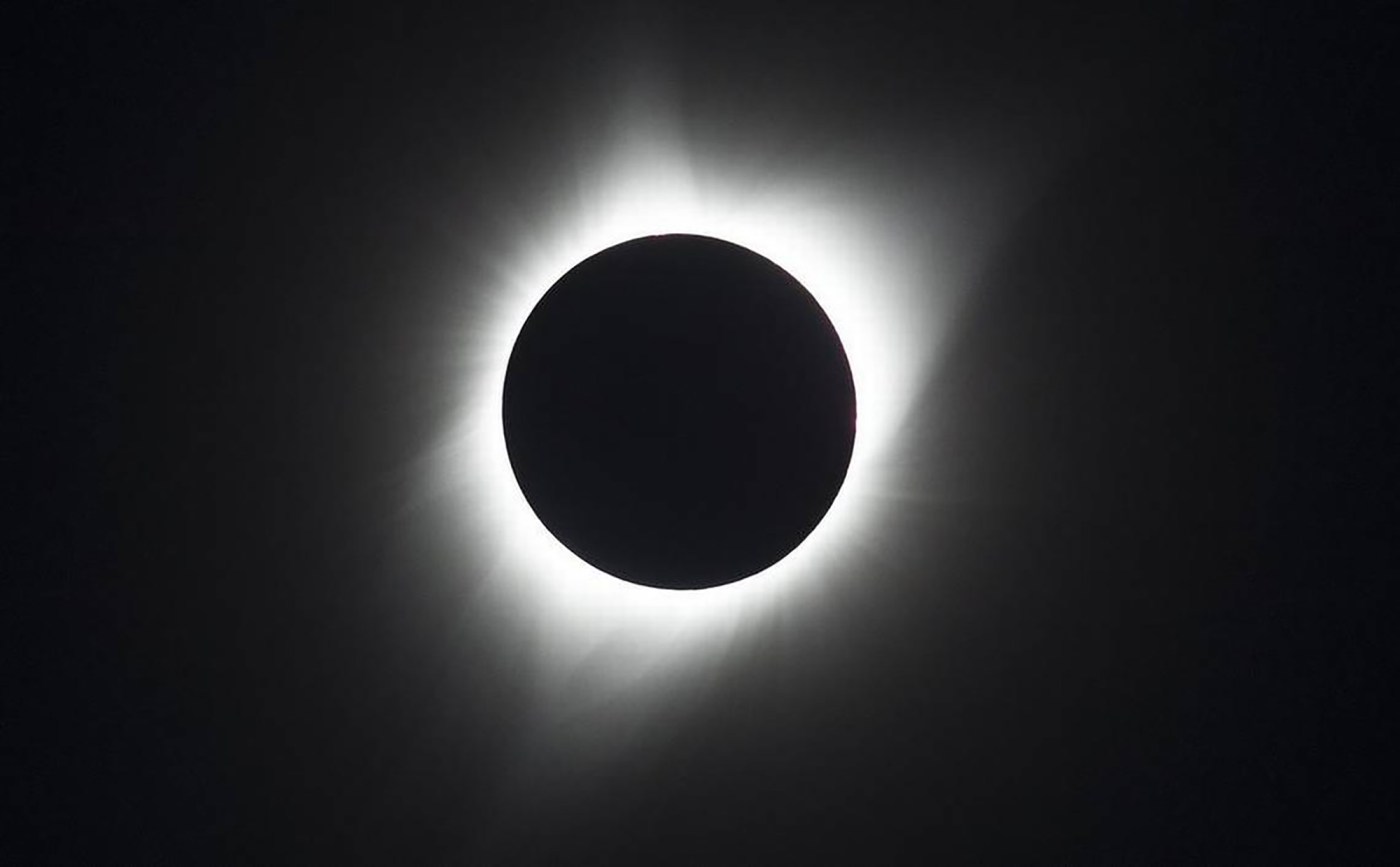
Only during totality is it safe to take off eclipse glasses and view with binoculars and telescopes. It’ll blow your mind! You may easily see flares and prominences churning and emanating from the sun’s violent surface. The sun’s corona and outer atmosphere will also be clearly visible. The most important thing to remember is to set a stopwatch with an alarm and STOP your telescope or binocular viewing at least 30 seconds before totality ends and put your eclipse glasses on again. You never want to view even a tiny sliver of the sun’s surface with a telescope or binoculars except during totality. You could easily damage your eyes or worse! Safety first!  Also, take a few seconds here and there to check out the sky during totality. Bright stars and planets pop out, and the skies take on a weird twilight color all along the horizon.

(Mike Lynch)

If you can’t get hold of eclipse glasses, all is not lost. You can also use the projection method to keep up with the partial eclipse. Get a piece of white cardboard and punch a pencil-diameter hole in the center of it. Hole that piece with the hole in it over another piece of stiff white cardboard with your back to the sun and hold the pencil hole piece back toward the sun. Use the shadow of the cardboard to aim it over the blank cardboard. You should be able to see an image of the partially eclipsed sun on the black sheet with absolutely no danger. It really works!

Instead of a piece of cardboard with a hole in it, you can also use a cooking spoon with holes in it and see multiple images of solar eclipses. In fact, leaves on trees can have the same effect, as the space between them can produce many images of the partial eclipse on the ground or the side of a house or other buildings. It’s wild!

Wherever you end up watching the eclipse, pray for clear enough skies. Again, the next extensive total eclipse in the U.S. won’t be until 2045!

Mike Lynch is an amateur astronomer and retired broadcast meteorologist for WCCO Radio in Minneapolis/St. Paul. He is the author of “Stars: a Month by Month Tour of the Constellations,” published by Adventure Publications and available at bookstores and adventurepublications.net. Mike is available for private star parties. You can contact him at mikewlynch@comcast.net.

Related Articles

Outdoors |


Skywatch: A solar eclipse April

Outdoors |


Skywatch: The wily rabbit of winter

Outdoors |


Skywatch: Celestial signs of spring

Outdoors |


Skywatch: The winter hounds

Outdoors |


Skywatch: Winter constellations are marching out