The real battle for data privacy begins when you die

posted in: News | 0

Shawn Wen | (TNS) Bloomberg News

In 2012 a 15-year-old girl died in Berlin after being hit by a subway train. Her bereaved parents asked Facebook to turn over her private messages in hopes of understanding whether her death was a suicide or an accident.

Facebook refused. Her death had already been reported to the social media site, which then converted her profile to a “memorialized account.” According to the company’s policy at the time, no one could access memorialized accounts, even with a password. After years of lawsuits and appeals, Germany’s highest court in 2018 ordered Facebook to turn over the profile.

The “Afterlife of Data” (April 11, University of Chicago Press), a slim book by Carl Öhman, an assistant professor of political science at Uppsala University in Sweden, takes on the central question of whether Facebook parent Meta Platforms Inc., as well as companies such as Alphabet Inc. and Apple Inc., should have the power to decide what happens to our data after our deaths.

Modern-day societies have many rituals and customs for handling the dead’s physical remains but no established practices to deal with digital ones. Öhman argues that “the data we leave behind upon death can be regarded as nothing less than an informational corpse.”

Can we allow such a responsibility to fall, by default, to the Big Tech companies? Öhman tells us this is one of the most pressing questions of our era, because anyone with internet access generates massive quantities of data, much of which will continue to exist after the originator’s death.

The book builds off a study that Öhman and his co-author, David Watson, published in 2019 estimating that Facebook would have the profiles of almost 5 billion dead users by the end of the century. (That number assumes the site will keep growing at current rates, a very big if.)

Öhman says large tech companies’ possession of deceased user data is a collective problem, because they would own “a truly global archive of human behavior,” constituting the historical artifacts of generations of users. In these companies’ servers, they would have the data patterns of entire populations of people and the documentation of contemporary events and movements such as Black Lives Matter, #MeToo, and Arab Spring.

There’s also no financial incentive for these companies to act as a responsible estate manager. They may look for ways to monetize profiles of the deceased, sell their data, or simply get rid of it for reasons as arbitrary as saving server space.

Facebook’s “memorialized” accounts, which turn the profile into a tribute page where friends can visit and post, are designed to be static. In 2015 the company added a feature that allows a user to arrange for a “legacy contact” to manage the page after the account holder’s death. But the contact can’t log in or read messages; they are able to curate tribute posts or request that accounts be removed. Öhman finds this solution inadequate, posing a rather obvious question: What happens when the legacy contact dies?

Öhman’s book is the work of an academic, and at times, his attempts to reach the general reader feel clumsy. He asks us to imagine Napoleon Bonaparte’s Facebook messages and feels the need to explain that Karl Marx’s “influence on socialist thought cannot be matched by any other thinker.”

A bigger issues is that his urgency feels shortsighted to the casual news reader, at times, given that tech companies are reckoning with more immediate, equally pressing social concerns: They routinely make decisions regarding free speech, the workings of democracy and the mental health of a generation of young people.

The stakes can be life or death. The Centers for Disease Control and Prevention last year found that the suicide rate among American teen girls is up 60% from what it was a decade ago, a jump that correlates with the growing ubiquity of smartphones. In 2018, Facebook admitted to culpability for the Rohingya genocide in Myanmar, writing in its report that the company allowed its platform to be used to “foment division and incite offline violence.”

Despite all of this, no legislation has meaningfully curbed teen social media use or the tech platforms’ influence over political speech. Yes, they may one day decide to sell or destroy the data of the dead, but they already abuse the data of the living.

As with much academic writing, Öhman poses a lot of questions and offers little in the way of solutions. He posits that no business should have the responsibility of deciding what to do with our digital remains, nor should any public institution.

Instead, he says this problem should be dealt with collectively, with “as many people and perspectives as possible be part of the question.” He exhorts us, “Now is the time to start building such systems.” But what those systems look like is still mysterious to him.

In one evocative section, however, Öhman comes close to an answer. He details the death practices of an early Paleolithic people called the Natufians, who lived among the skulls of their loved ones that they decorated with plaster and seashells. Before them, hunter gatherers left the bodies of their loved ones to decay in the wild. But once people occupied permanent dwellings, they had to invent funerary practices. “Like the Paleolithic tribes before us, we must learn to live with a new kind of presence of the dead,” he says.

“We are the new Natufians,” Öhman writes. I take this to mean that we are entering an era where we will be surrounded by the digital remains of our friends and family whether we like it or not.

It suggests that we are in the nascent stages of reckoning with an uncomfortable truth: The people we love will die, but their data will continue to live indefinitely, digital ghosts in the cloud. At the moment, there’s nothing stopping the Metas and Googles of the world from exploiting them—or perhaps worse, erasing them permanently.

___

©2024 Bloomberg L.P. Visit bloomberg.com. Distributed by Tribune Content Agency, LLC.

How to get student loan forgiveness in 2024

posted in: Society | 0

By Eliza Haverstock | NerdWallet

Student loan forgiveness has a mixed track record. Last summer, the Supreme Court struck down a broad plan that would’ve erased up to $20,000 per borrower. Still, student loan forgiveness is more accessible now than ever before. A handful of existing federal student loan forgiveness programs have erased $143.6 billion in student debt for 3.96 million borrowers as of March 21, according to the Education Department, with more to come this year.

The White House is currently trying to push through a narrower forgiveness ‘Plan B’ version of its failed broad forgiveness plan. The proven paths to forgiveness, however, include programs that range from income-driven repayment (IDR) plans — which cap monthly bills at a percentage of your income and forgive your remaining balance after 10 to 25 years — to niche programs for borrowers with certain loan types, jobs or school circumstances.

Here’s how to get student loan forgiveness in 2024 — and what you need to know before pursuing this path.

Check your eligibility

You must have federal student loans to qualify for a forgiveness program. Private student loans aren’t eligible.

To verify you have federal loans, go to StudentAid.gov, and try to log in or recover your account.

Next, check which types of federal student loans you have. If you have certain types of loans, like commercially held FFELP or Perkins loans, you may have to consolidate them before going after forgiveness.

Income-driven repayment

The newest IDR plan — Saving on a Valuable Education, or SAVE — is the most accessible path to forgiveness. All borrowers with federal direct loans are eligible to enroll.

The SAVE plan forgives remaining student debt in as little as 10 years if you have an original balance of $12,000 or less, and in up to 20 or 25 years for other borrowers. While working toward forgiveness, your monthly bills could be $0 per month if you earn less than $32,800 as an individual or $67,500 as a family of four; otherwise, they’ll be capped at 5%-10% of your income.

Public Service Loan Forgiveness

If you work for a qualifying government or nonprofit employer, you could be eligible for Public Service Loan Forgiveness (PSLF). This program erases your remaining balance after a decade of repayment.

“Generally, the PSLF program is the best one if you have access to it,” says Scott Stark, a financial coach and certified financial planner at Financial Finesse, a workplace financial wellness company.

Other forgiveness programs

Outside of IDR and PSLF, your student loan forgiveness options may include:

Teacher Loan Forgiveness, if you work in a qualifying low-income school.
Borrower defense to repayment, if you think your school defrauded you.
Closed school discharge, if your school closed during or shortly after your time there.
Perkins loan cancellation, if you have Perkins loans and work in public service.
State-based student loan payment assistance, if you work in health care or are willing to relocate to a new area.

Do the math

Use the Education Department’s loan simulator to see how much debt you could get erased under various forgiveness programs and repayment plans, how much your monthly payments could be and how long you’ll be in repayment.

If an IDR plan will result in you paying more interest for a longer period or paying off your debt before getting forgiveness, then it may not be a good choice for you. (Public Service Loan Forgiveness also requires enrollment in an IDR plan.)

“It really is a case-by-case kind of thing, but generally speaking, for people whose income is relatively high compared to their student debt loads, the income-driven repayment plans can be pretty unattractive,” says Tisa Silver Canady, founder of the Maryland Center for Collegiate Financial Wellness. “It might behoove them to just stay on a balance-driven plan and pay extra when they feel it makes sense.” Making extra payments toward the principal while on a balance-driven plan — like the standard 10-year plan, which splits your loan into 120 payments — allows you to shrink your debt faster and reduce total interest costs.

On the other hand, if the math for IDR works out such that borrowers can have smaller payments and keep more of their money to reach other financial goals, pursuing forgiveness is a good option, Stark says.

Prepare for a future tax bomb

IDR student loan forgiveness is exempt from federal taxes through 2025. After that, any amount forgiven could result in a student loan tax bomb. A small number of states tax IDR forgiveness, too.

It’s important to plan for a tax bomb if your forgiveness timeline will extend past 2025. Put a small amount of money aside each month to cover your future tax bill, Stark says.

Use the loan simulator to determine how much forgiveness you could ultimately receive: Your taxable income will increase by that amount in the year you get forgiveness. In some cases, the forgiveness could push you into a higher tax bracket, which could further increase your tax burden. If the amount you have to set aside each month to cover the tax bill is larger than the amount you’d save on the IDR plan, it might not be worth it.

Loan balances forgiven through PSLF, Teacher Loan Forgiveness, borrower defense to repayment, closed school discharge and Perkins loan cancellation are exempt from federal taxation.

Change your repayment plan

If you decide IDR forgiveness is the right choice, you must switch to an IDR plan like SAVE.

To sign up for an IDR plan, submit an online application at StudentAid.gov/IDR or call your student loan servicer.

You must also sign up for an IDR plan if you’re striving for PSLF. Choose the plan that gives you the smallest monthly bill to maximize the amount you could get forgiven after 10 years. It’s a good idea to submit your PSLF employer verification form each year to stay on track for forgiveness, Canady says. You can do this through the Education Department’s online PSLF Help Tool.


Eliza Haverstock writes for NerdWallet. Email: ehaverstock@nerdwallet.com. Twitter: @elizahaverstock.

Col. Christina Bogojevic named new chief of MN State Patrol

posted in: News | 0

Interim Col. Christina Bogojevic. (Courtesy of the Minnesota Department of Public Safety)

Interim Col. Christina Bogojevic will be the Minnesota State Patrol’s next colonel, the Department of Public Safety announced on Thursday.

Bogojevic, who has been with the State Patrol for more than 20 years, served as second in command since December 2022.

“Interim Col. Bogojevic brings a wealth of knowledge, leadership and dedication, not only to the organization, but to law enforcement as a whole,” Department of Public Safety Commissioner Bob Jacobson said, in a statement. “She embodies the State Patrol’s core values and cares deeply for the people with whom she works with and serves. I am confident she will continue to make a positive impact within the State Patrol and communities across our state.”

Bogojevic joined the State Patrol in 2003. Before she was named lieutenant colonel, Bogojevic served as captain of the Rochester district, mobile response commander, lieutenant in the Commercial Vehicle section, investigator, recruiter and as a crash reconstruction specialist.

“Working for the State Patrol is so much more than a job to me. It’s a passion. I care deeply about our people and our mission. I’m honored to have the opportunity to serve as chief,” Bogojevic said in a statement. “I look forward to working with Minnesota State Patrol staff and allied agencies who work so hard to keep residents safe on Minnesota roadways.”

Bogojevic said she looks forward to working on efforts to lower Minnesota’s traffic fatality rate. The rate is up this year compared to last year. She said she is also passionate about developing innovative ways to recruit and retain troopers.

Bogojevic was named interim colonel after Col. Matt Langer’s announcement that he was leaving the State Patrol for a position with the International Association of Chiefs of Police.

She officially takes over as colonel on May 2.

Related Articles

News |


Nicolae Miu found guilty in Apple River homicide, other stabbings

News |


Mother and children who died in Anoka County park incident identified

News |


Coming soon to St. Paul area: Squad pickups to spot distracted drivers

News |


2 Hennepin County deputies injured in gunfire exchange in Minnetonka

News |


MN Department of Public Safety names director of Murdered and Missing Black Women and Girls Office

North St. Paul’s new police chief is 10-year veteran of department

posted in: Politics | 0

North St. Paul’s new police chief is a 10-year veteran of the department, the city announced Thursday.

Raymond Rozales III, appointed by the city manager, takes over from Phil Baebenroth, whose last day at the department was Friday. Baebenroth returned to his roots at the Ramsey County sheriff’s office, where he became an undersheriff.

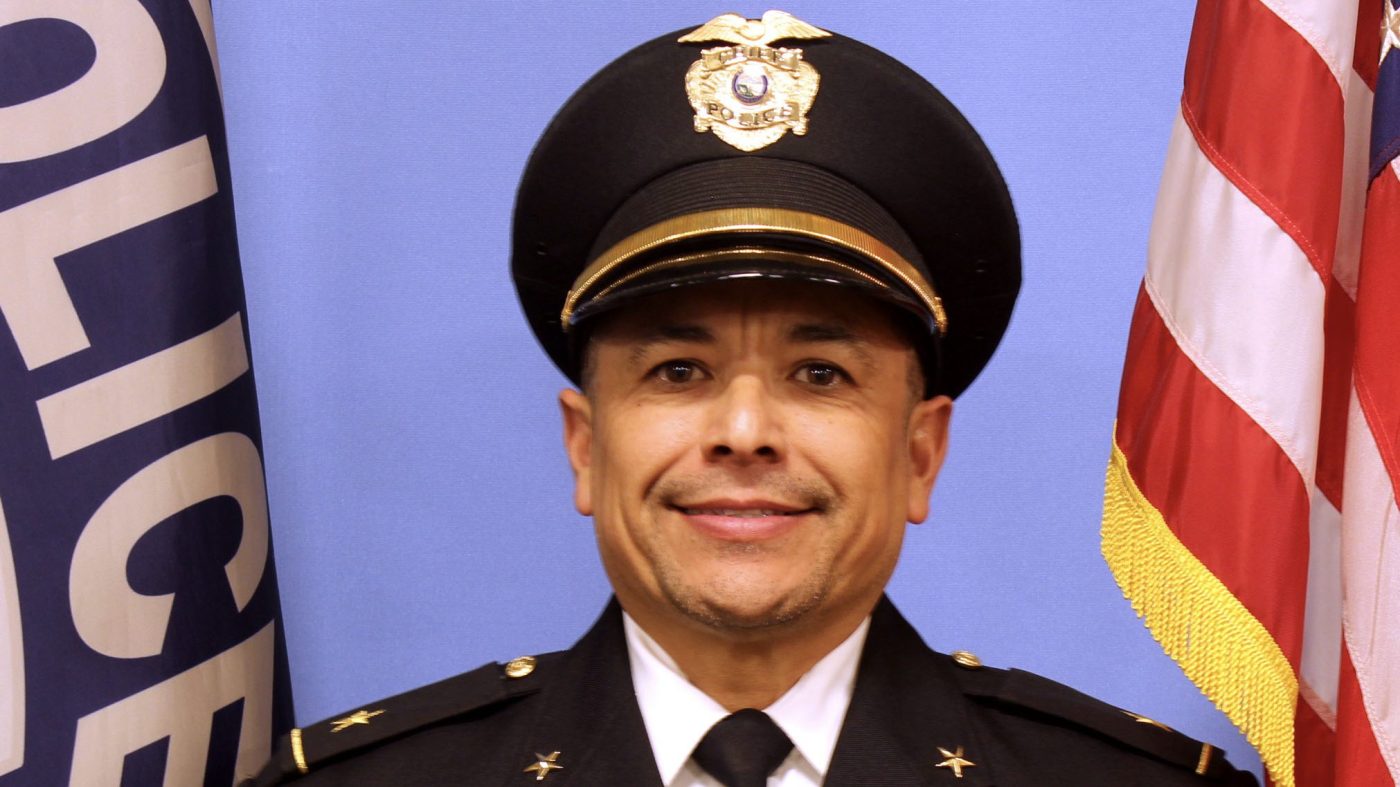
Raymond Rozales III (Courtesy of the City of North St. Paul)

Rozales will lead North St. Paul’s department of 21 officers.

He began his career with North St. Paul Police in 2014. Rozales served as patrol officer, detective, sergeant, investigation sergeant, acting police chief and public information officer. He’s also coordinated the field training officer program, been an internal affairs investigator and served as a mentor to law enforcement students.

He received the department’s merit service award last year and this year, and a heart of service award last year.

Rozales earned his master’s degree in criminal justice leadership and bachelor’s degree in criminal justice from Concordia University, St. Paul. He’s completed the Minnesota Chiefs of Police Leadership Academy, and is a member of the International Association of Chiefs of Police, National Latino Police Officer Association and Minnesota Chiefs of Police Association.

Related Articles

Crime & Public Safety |


Nicolae Miu found guilty in Apple River homicide, other stabbings

Crime & Public Safety |


Mother and children who died in Anoka County park incident identified

Crime & Public Safety |


Coming soon to St. Paul area: Squad pickups to spot distracted drivers

Crime & Public Safety |


2 Hennepin County deputies injured in gunfire exchange in Minnetonka

Crime & Public Safety |


MN Department of Public Safety names director of Murdered and Missing Black Women and Girls Office