What to watch: Unsettling ‘Civil War’ is the ultimate what-if movie

posted in: News | 0

War is at the center of three of the best new films/shows to catch this week — be it in the chilling premise of Americans fighting Americans (“Civil War”), in the form of the aftermath of a nuclear attack (“Fallout”) or yet another look at the Vietnam War (“The Sympathizer”).

Here’s our roundup.

“Civil War”: The joyless eyes and weathered face of photojournalist Lee (Kirsten Dunst) tell her story, one of an entrenched sense of hopeless resignation as she and her colleagues cover a war that pits California and Texas and other states against the government and its supporters. Alex Garland’s intense dystopian “what if” movie — which is far less polarizing than you’d think — serves as a warning of the perils of national disharmony, constant conflict and the human desire to dominate and win at any cost, even when we’ve lost sight of what it is we’re fighting for. Lee has seen these developments play out too many times in other nations, yet she’s never flinched from capturing the savagery — the scorched, bullet-ridden corpses of men, women and children — on camera. Now to her ultimate dismay, the war zone has come to her home turf, and Lee confronts an existential dread over how her efforts to catalog the carnage overseas has failed to prevent America from following the same path. Garland’s button-pushing feature seems all too plausible given the climate of hair-trigger anger and bitterness in which America exists today. Thankfully, the assured London-based screenwriter/director of “Ex Machina” and “Annihilation” resists recklessly fanning the flames.

Related Articles


A look at six Minnesota films and events at the Minneapolis St. Paul International Film Festival


‘Scoop’ review: Prince Andrew in the hot seat


Review: Colin Farrell in Apple TV+ ‘Sugar,’ an LA story with a love-it-or-hate-it twist


‘Ripley’ review: A remake of ‘The Talented Mr. Ripley’ has a terrific performance at its center, but lacks heat


Movie review: ‘Housekeeping for Beginners’ a riveting domestic tale of blended queer family

“Civil War” mostly follows four journalists. There is Lee; her adrenaline-junkie journalist partner Joel (Wagner Moura, who we need to see more of); a budding, over-eager photographer Jessie (Cailee Spaeny of “Priscilla,” showing quite the range) and old-school veteran newsman Sammy (Stephen McKinley Henderson, ideally cast). Lee and Joel are on the way to interview the beleaguered president (Nick Offerman, in what amounts to a cameo). Along the way, they happen upon one horrific sight after another — a gas station where the car wash has been turned into a torture chamber; a lethal soldier (a bloodcurdling Jesse Plemons) with a narrow vision of his own righteous justice; and even a Christmas holiday display that’s equally horrific and comedic. Garland’s dystopian supposition shows us that in a nation when citizens take up arms against each other, it is everyone who fails. Details: 3½ stars out of 4; opens April 12 in theaters.

“Fallout”: Two of the largest sinkholes that showrunners/filmmakers fall into when adapting a popular video game can be: 1.) offending fans by changing too much, and/or 2.) creating a narrative that fails to speak to people unfamiliar with the game. “Fallout,” Prime Video’s eight-part series, leaps past those death traps due to executive producers Jonathan Nolan and Lisa Joy (HBO’s “Westworld”) and showrunners Geneva Robertson-Dworet and Graham Wagner. Their respect for the game and its scenario — a dystopian Earth more than 200 years after a nuclear attack — and their decision to fill out the characters’ back stories make for a riveting series. Doses of humor helps too.

Told in eight bingeable episodes using a limited amount of CGI, “Fallout” tracks the gory, R-rated-like dilemmas of three characters. Lucy (Ella Purnell) is a plucky, privileged Vault-dweller (the cushy underground environment created for the wealthy to avoid the nuke fallout). She’s looking to save a kidnapped dad who’s now occupying space on the earth’s surface, a scrappy, desert-like wasteland. While on that pilgrimage, she runs into two others: Maximus (Aaron Moten), a squire in the militaristic Brotherhood of Steel who gets an unexpected shot at advancing in rank; The Ghoul (Walton Goggins), a bounty hunter risen from the dead who’s a former cowboy screen star (his flashback scenes are the best ). Each is intent on grabbing a certain artifact, the identity of which I will not spoil. The quest leads to revelations about the underground network, run-ins with dubious characters from above and below and — most welcome of all — tussles with mutant roaches and an underwater beast. “Fallout” never lags for one second and dangles from one cliffhanger to the next. The cast makes it all engaging — Goggins, in particular, rips into the show’s juiciest part and does wonders with it. This’ll be a major hit, and it deserves to be. Details: 3 stars; all eight episodes drop at 6 p.m. April 10 on Prime Video.

“The Sympathizer”: “Oldboy” filmmaker Park Chan-wook and co-showrunner Don McKellar’s series adaptation of Viet Thanh Nguyen’s Pulitzer Prize-winning novel is a cinematic tour de force – with Park paving the way with the first three, and best, of seven episodes. Anyone who’s familiar with the book’s tricky material realizes  that’s an impressive feat to pull off. “The Sympathizer” skips from drama to satire to comedy as it wraps itself around complex issues about identity, the immigrant experience, America’s struggle to grasp Asian culture and history and the feeling of always being the outsider. It does so with vision, depth and detail. Actor Hoa Xuande beautifully handles the difficult task of bringing to life the nameless Captain, the show’s duplicitous protagonist who’s an undercover double agent during the Vietnam War era. His mother was Vietnamese, his dad, French.

The series opens with The Captain imprisoned in Vietnam where he’s ordered to write down his recollections — which provide chances to flash back to his “Three Musketeers”-like friendship with two other boys, his work and relationship with an anti-Communist known as The General (Toan Le) and his family members, a nail-biting flight out of Vietnam during the fall of Saigon, the people he meets and even targets in Los Angeles, and the insane consultancy role he lands in on an overblown, excessive Vietnam War movie.

Through these experiences, the General also encounters larger-than-life characters — key ones played to the hilt by Oscar winner Robert Downey Jr., an actor who specializes in chewing up the scenery. Wisely, the directing and producing team (Downey Jr. is a producer) hands him the drapes, the carpet, and the entire household to rip apart. It’s a smart move with Downey Jr. providing much of the humor and sometimes the menace in a variety of roles. Also memorable — and deserving of another Emmy nomination — is Sandra Oh, the exasperated assistant to Downey Jr.’s professor and the older lover to The Captain. “The Sympathizer” walks a tightrope but is fearless about tackling uncomfortable subject matter. It’s smart and mesmerizing. Details: 4 stars; first episode debuts 9 p.m. April 14 on HBO and will be available to stream on Max.

“Housekeeping for Beginners”: What constitutes a family in a home that’s filled with queer friends all living in a hostile culture’s shadows? And what does someone who’s ill-equipped to shoulder parental duties do when those responsibilities are thrust upon them? Those questions thread throughout Goran Stolevski’s third feature, a painfully honest, ultimately beautiful exploration of how each member of a resilient, very human makeshift North Macedonia family navigates growing pains once Dita (Anamaria Marinca), a social worker who’s grieving her lover’s death, becomes mom to two daughters — a precocious little girl and a rebellious teen. To pass themselves off as anything but gay, Dita draws in unwilling but sexually active housemate Toni (Vladimir Tintor) to “pass” as the husband even though he’s far more interested in his younger and more joyous lover (Samson Selim). Stolevski creates a wonderful group of flawed but understandable characters and then illustrates just how brave they are as they pull together to negotiate and overcome treacherous encounters. In the end, isn’t that what family should be about? Details: 3½ stars; in theaters April 12.

Contact Randy Myers at soitsrandy@gmail.com.
Twins washed out by rain for second time in five days

posted in: News | 0

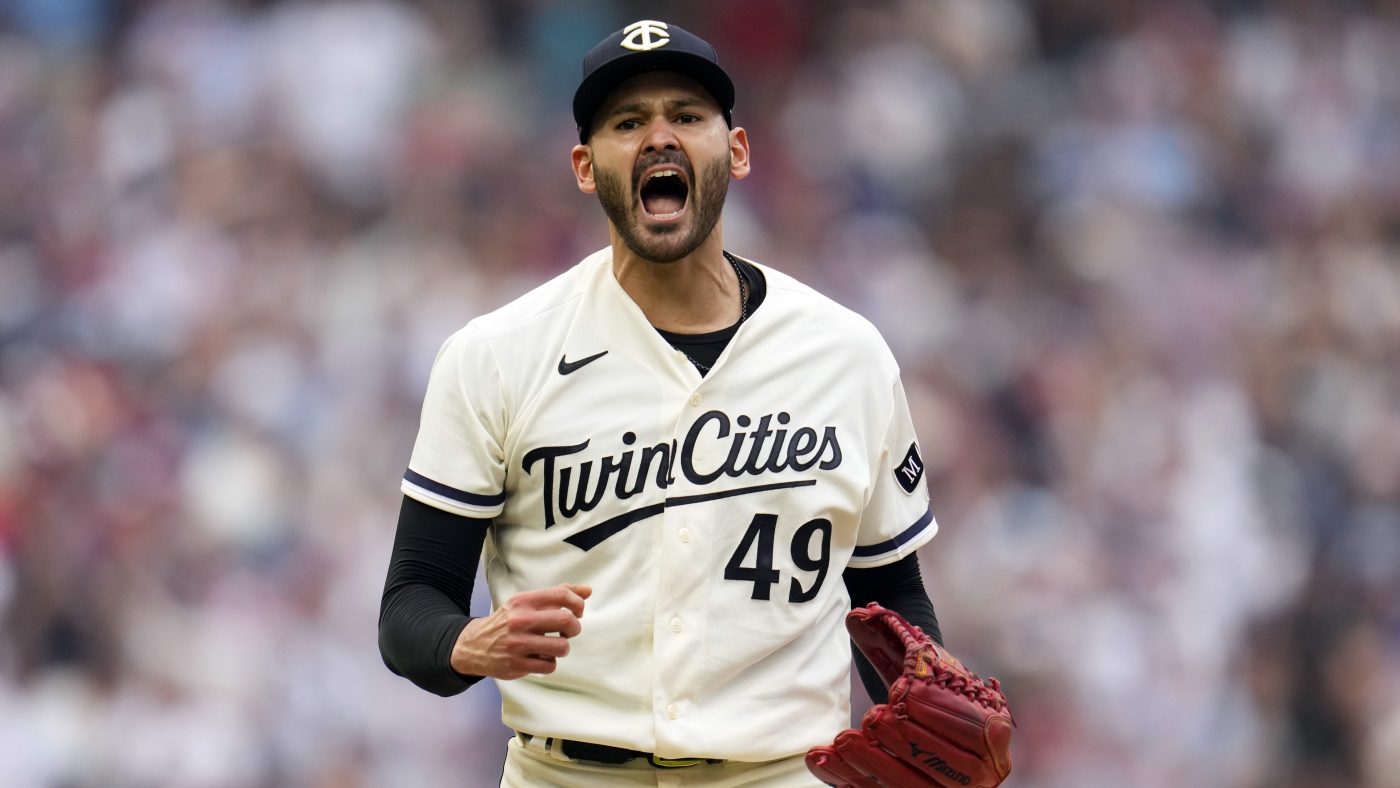
DETROIT — Once Pablo López realized he wasn’t going to pitch on Wednesday at home against the Los Angeles Dodgers, as originally planned, because of a rainout last weekend, he started focusing his attention on the Twins’ first scheduled game in Detroit.

His prep included opening up the weather app, where he was greeted by an icon of a cloud with raindrops.

“I’m like, ‘Oh, man, maybe another one,’ ” López thought to himself. “You know how sometimes those change? Well, it didn’t change.”

For the second time in five days, the Twins had a game postponed due to rain, pushing López back yet another day. The Twins and Tigers are scheduled to play on Friday night in Detroit, and while more rain is in the forecast, they believe there could be a window to get a game in.

On Saturday, they will now play a straight afternoon doubleheader that will begin at 12:10 p.m. CT.

“It’s the American League Central,” Twins manager Rocco Baldelli said. “It’s a Central special, is what we kind of have going on right now.”

Because of a rainy forecast, the Twins’ Sunday home game against Cleveland was moved to August when the Guardians return to Minnesota. Remarkably, the Twins didn’t have a single rainout last season and did not play a doubleheader.

Now, they have two on the schedule, and they’re trying to balance all the off days with getting into the routine of the season. The Twins have played 10 games since the season began on March 28. They’ve had three scheduled days off plus another two because of the weather.

“We always prefer to play. That’s how our schedule works best. We play a lot of games,” Baldelli said. “Doubling games up only makes things more difficult for everybody involved, but it’s part of the game, and we deal.”

The Twins have opted to stick to pushing all their starting pitchers back a day, with López starting on Friday, Joe Ryan scheduled for the first game of Saturday’s doubleheader and Bailey Ober listed as the starter for Sunday. They have yet to announce a starter for the second game on Saturday, but will be able to call up an additional player to add to the roster for the day.

For López, all the days off meant that he had a week in between his first and second start of the season. His second and third starts will be eight days apart. With that long a layoff, López said he likes to touch the mound a couple times in between starts with the time giving him a chance to work on some things that he might not otherwise have been able to.

“You can allow yourself to bump up the volume a little bit and have some more intent, whether you’re working on pitch shapes or whether you’re working on simulating 0-2 counts, put-away counts,” López said. “… Doing seven days (off), you get to do that two to three times a year. Eight days is a little more rare but (I) don’t stress about it too much.”

While the rain has made a schedule already front-loaded with off days even heavier on time off, there’s not much the Twins can do except prepare to play the next day — even if there’s more poor weather in the forecast.

“We want our hitters to hit and our pitchers to pitch but (it’s) not to be,” Baldelli said. “It’s not so.”

Related Articles

Minnesota Twins |


Edouard Julien’s homers power Twins past Dodgers in series finale

Minnesota Twins |


Austin Martin puts himself in position for more Twins playing time

Minnesota Twins |


‘He was better than all of us today’: Twins can’t solve ace Tyler Glasnow in 6-3 loss to Dodgers

Minnesota Twins |


Twins acquire relief pitcher Michael Tonkin in trade with Mets

Minnesota Twins |


Shohei Ohtani puts on a show to lead Dodgers past Twins

End of internet subsidies for low-income households threatens telehealth access

posted in: News | 0

Sarah Jane Tribble, KFF Health News | KFF Health News (TNS)

For Cindy Westman, $30 buys a week’s worth of gas to drive to medical appointments and run errands.

It’s also how much she spent on her monthly internet bill before the federal Affordable Connectivity Program stepped in and covered her payments.

“When you have low income and you are living on disability and your daughter’s disabled, every dollar counts,” said Westman, who lives in rural Illinois.

More than 23 million low-income households — urban, suburban, rural, and tribal — are enrolled in the federal discount program Congress created in 2021 to bridge the nation’s digital connectivity gap. The program has provided $30 monthly subsidies for internet bills or $75 discounts in tribal and high-cost areas.

But the program is expected to run out of money in April or May, according to the Federal Communications Commission. In January, FCC Chairwoman Jessica Rosenworcel asked Congress to allocate $6 billion to keep the program running until the end of 2024. She said the subsidy gives Americans the “internet service they need to fully participate in modern life.”

Affordable Connectivity Program beneficiary Cindy Westman, of Eureka, Illinois, says having internet is “essential.” (Courtesy Cindy Westman/KFF Health News/TNS)

The importance of high-speed internet was seared into the American psyche by scenes of children sitting in parking lots and outside fast-food restaurants to attend school online during the covid-19 pandemic. During that same period, health care providers and patients like Westman say, being connected also became a vital part of today’s health care delivery system.

Westman said her internet connection has become so important to her access to health care she would sell “anything that I own” to stay connected.

Westman, 43, lives in the small town of Eureka, Illinois, and has been diagnosed with genetic and immune system disorders. Her 12-year-old daughter has cerebral palsy and autism.

She steered the $30 saved on her internet toward taking care of her daughter, paying for things such as driving 30 minutes west to Peoria, Illinois, for two physical therapy appointments each week. And with an internet connection, Westman can access online medical records, and whenever possible she uses telehealth appointments to avoid the hour-plus drive to specialty care.

“It’s essential for me to keep the internet going no matter what,” Westman said.

Expanding telehealth is a common reason health care providers around the U.S. — in states such as Massachusetts and Arkansas — joined efforts to sign their patients up for the federal discount program.

“This is an issue that has real impacts on health outcomes,” said Alister Martin, an emergency medicine physician at Massachusetts General Hospital. Martin realized at the height of the pandemic that patients with means were using telehealth to access covid care. But those seeking in-person care during his ER shifts tended to be lower-income, and often people of color.

“They have no other choice,” Martin said. “But they probably don’t need to be in the ER action.” Martin became a White House fellow and later created a nonprofit that he said has helped 1,154 patients at health centers in Boston and Houston enroll in the discount program.

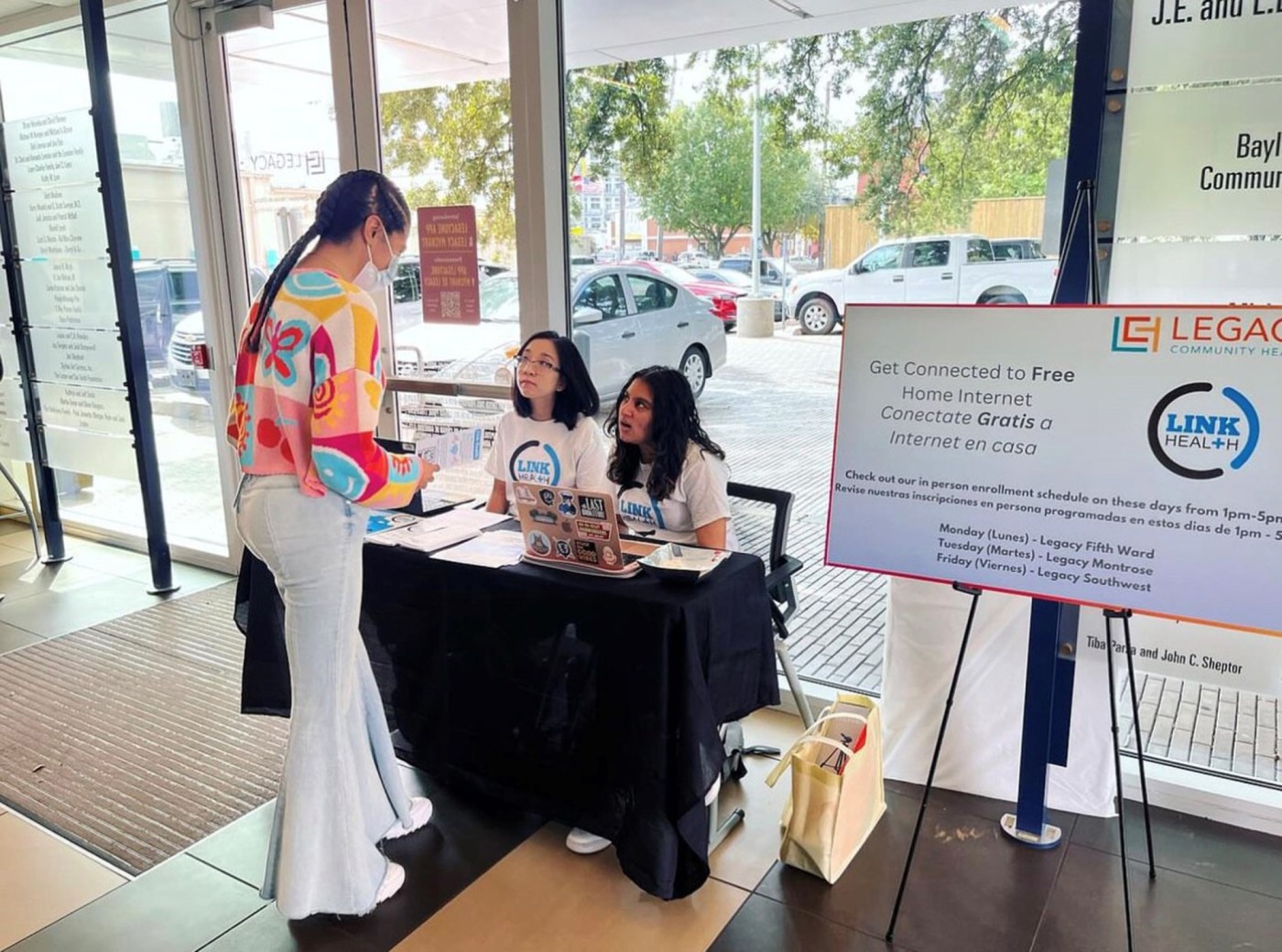
At the University of Arkansas for Medical Sciences, a federal grant was used to conduct dozens of outreach events and help patients enroll, said Joseph Sanford, an anesthesiologist and the director of the system’s Institute for Digital Health & Innovation.

“We believe that telehealth is the great democratization to access to care,” Sanford said. New enrollment in the discount program halted nationwide last month.

Leading up to the enrollment halt, Sen. Peter Welch (D-Vt.) led a bipartisan effort to introduce the Affordable Connectivity Program Extension Act in January. The group requested $7 billion — more than the FCC’s ask — to keep the program funded. “Affordability is everything,” Welch said.

In December, federal regulators surveyed program recipients and found that 22% reported no internet service before, and 72% said they used their ACP-subsidized internet to “schedule or attend healthcare appointments.”

Estimates of how many low-income U.S. households qualify for the program vary, but experts agree that only about half of the roughly 50 million eligible households have signed on.

“A big barrier for this program generally was people don’t know about it,” said Brian Whitacre, a professor and the Neustadt chair in the Department of Agricultural Economics at Oklahoma State University.

Whitacre and others said rural households should be signing up at even higher rates than urban ones because a higher percentage of them are eligible.

Related Articles

Health |


ACA plans are being switched without enrollees’ OK

Health |


Shouts of ‘Shame! Shame!’ erupt in Arizona House as fight over abortion ban engulfs lawmakers

Health |


Feds join ranks of employers with generous fertility benefits

Health |


For-profit companies open psychiatric hospitals in areas clamoring for care

Health |


Why is the EPA regulating PFAS and what are these ‘forever chemicals’?

Yet, people found signing up for the program laborious. Enrollment was a two-step process. Applicants were required to get approved by the federal government then work with an internet service provider that would apply the discount. The government application was online — hard to get to if you didn’t yet have internet service — though applicants could try to find a way to download a version, print it, and submit the application by mail.

When Frances Goli, the broadband project manager for the Shoshone-Bannock Tribes in Idaho, began enrolling tribal and community members at the Fort Hall Reservation last year, she found that many residents did not know about the program — even though it had been approved more than a year earlier.

Goli and Amber Hastings, an AmeriCorps member with the University of Idaho Extension Digital Economy Program, spent hours helping residents through the arduous process of finding the proper tribal documentation required to receive the larger $75 discount for those living on tribal lands.

“That was one of the biggest hurdles,” Goli said. “They’re getting denied and saying, come back with a better document. And that is just frustrating for our community members.”

Of the more than 200 households Goli and Hastings aided, about 40% had not had internet before.

In the tribal lands of Oklahoma, said Sachin Gupta, director of government business and economic development at internet service provider Centranet, years ago the funding may not have mattered.

“But then covid hit,” Gupta said. “The stories I have heard.”

Elders, he said, reportedly “died of entirely preventable causes” such as high blood pressure and diabetes because they feared covid in the clinics.

“It’s really important to establish connectivity,” Gupta said. The end of the discounts will “take a toll.”

(KFF Health News is a national newsroom that produces in-depth journalism about health issues and is one of the core operating programs of KFF — the independent source for health policy research, polling and journalism.)

©2024 KFF Health News. Distributed by Tribune Content Agency, LLC.

Minneapolis City Council delays wage hike for rideshare drivers to July 1

posted in: News | 0

The Minneapolis City Council voted Thursday to delay implementation of a wage hike for rideshare drivers from May 1 to July 1, allowing more time for competing transportation network companies to launch their services in light of the threatened departure of Uber and Lyft.

“This is about refining this policy,” said Minneapolis Council President Elliott Payne, addressing the council. “This is not about starting from scratch. … We’ve done a lot of deep work here.”

The decision offers a temporary reprieve for St. Paul and the surrounding region, where business leaders, advocates for the disabled and others have waited anxiously to see how the vote would play out.

Minneapolis council members said only four rideshare companies have submitted applications to get licensed by the city of Minneapolis. Only one company — Wheels, LLC, operating as “MyWeels” — had submitted a complete application to the city of St. Paul as of mid-week, according to a spokesman for the St. Paul Department of Safety and Inspections.

The added time also opens the door to additional changes to the Minneapolis wage ordinance, which is designed to guarantee that rideshare drivers recoup at least the equivalent of the city minimum wage, with benefits, by earning $1.40 per mile, $0.51 per minute while they operate within the city limits.

The new implementation date was approved 13-0 and included in an ordinance amendment proposed by Minneapolis Council Member Katie Cashman, co-sponsored by Payne and Council Member Aurin Chowdhury.

Two additional amendments that would have reduced or rescinded the wage hikes altogether failed on a 10-3 vote, respectively.

Prices temporarily surge

A spirited discussion took up the majority of the two-hour meeting, at times drawing heckles from the audience.

“Uber and Lyft are not just exploiting drivers, but also riders too,” said Minneapolis Council Member Jamal Osman, noting most drivers logged out around 7 a.m. Wednesday to pray during the Muslim holiday. “Uber and Lyft were hiking the price. For a seven-minute trip they were charging customers…$76 or $80. Less than a mile — and I have screen shots — was $70.”

In a letter this week to the Minneapolis City Council and the Minneapolis City Attorney’s office, the Insurance Federation of Minnesota urged the city to ensure that any new transportation network companies seeking licensure either offer the correct insurance or require that their drivers get their own business auto insurance, the appropriate level of coverage for “livery services” that transport goods or people.

Liveries are not included in personal auto coverage.

Uber, Lyft to delay departure

Uber indicated this week it would delay its departure from serving the Twin Cities until the Minneapolis wage hike takes effect.

“If the effective date is moved, we will continue to operate,” said Josh Gold, senior director of policy and communications for Uber, in an interview Tuesday. “We’re having conversations with state lawmakers. We’re open to having conversations with council members.”

CJ Macklin, a senior policy manager with Lyft, forwarded a statement from the company on Thursday indicating they would also continue to operate in Minneapolis until July 1.

Lyft has said it will continue to serve St. Paul and the surrounding region, but it will not honor rides beginning or ending in Minneapolis once wages go up. “The fundamental facts remain the same,” reads the letter. “This ordinance will make rides too expensive for most riders, meaning drivers will ultimately earn less.”

Related Articles

News |


Lime rolls e-bikes, e-scooters back to St. Paul on Thursday

News |


St. Paul EV charging rules loosened prior to April 17 vote

News |


Woodbury residents invited to open house for Radio Drive improvement project

News |


Metro Transit to use 2-car trains for Blue, Green lines on weekends

News |


3 months after launch, sales of Minnesota blackout plates near 50,000