Shakopee Mdewakanton challenge board’s decision to allow new form of betting at horse tracks

posted in: News | 0

A Minnesota Indian tribe asked the state Court of Appeals on Tuesday to overturn a Minnesota Racing Commission decision allowing a new form of betting at two horse tracks.

The Shakopee Mdewakanton Sioux Community filed a petition with the court seeking to block a recent regulatory change. Earlier this month, the Minnesota Racing Commission approved a gambling game known as historical horse racing, which uses terminals to allow bets on races from the past.

Lawyers for the Shakopee community argue the commission lacked authority to approve the games. The companies that operate Canterbury Park in Shakopee and Running Aces in Columbus jointly applied for the ability to have 500 terminals for the new games, which the commission ratified.

The gambling would be allowed beginning on May 21 — the day after the Legislature is due to adjourn for the year.

Lawyers for the tribal community contend the form of gambling is too similar to slot machines, which tribes have exclusive rights to host in their casinos.

“The community seeks an order from the Court of Appeals reversing the commission’s decision because it exceeded the commission’s statutory authority, was based on an erroneous legal theory, procedurally defective, unsupported by substantial evidence, arbitrary and capricious, and a violation of the community’s due process rights,” the lawyers wrote in their petition.

Absent a reversal, the attorneys say formal rulemaking should be required or a contested case hearing be initiated that could allow for more input.

Racetrack operators say the betting is based on skill, not luck.

“Somebody who understands handicapping is going to do better than someone who doesn’t understand handicapping,” said Evan Nelson, an attorney for Running Aces. “That’s the reason it is not a game of chance.”

State lawmakers are considering a bill that would outlaw historical horse racing and other types of card games the Legislature hasn’t explicitly approved. Racetrack operators say that move would deprive them of a critical revenue source.

At the House committee hearing, several racetrack executives and employees testified their livelihoods and that of the state’s horse breeding industry are at stake. Randy Sampson, chief executive at Canterbury Park, said Minnesota’s horse tracks are at a crossroads.

“Each of these Minnesota gaming industries provide different types of economic community development with positive impacts throughout the state,” he said. “As technology and consumer preferences evolve, each of these groups is subject to the same competitive pressures and the need to adapt.”

Jack Meeks, chairman of the group Citizens Against Gambling Expansion, spoke in favor of the bill.

“The machines under consideration look like slot machines, act like slot machines, and at any reasonable evaluation are slot machines,” he told lawmakers.

The bill advanced through a House committee on a 9-8 vote on Tuesday.

DFL Rep. Brad Tabke joined all committee Republicans in opposition. He represents a district that includes the Shakopee Mdewakanton Sioux Community and the Canterbury Park track, and said he is working toward a solution that suits all interests.

“Everyone has both similar and competing interests with everything that is going forward here today,” he said.

“There is a solution there to be had,” he told his colleagues, referring to a parallel sports betting bill as a place for compromise. The tracks are seeking a share of those revenues.

Related Articles

News |


Coming soon to St. Paul area: Squad pickups to spot distracted drivers

News |


Why is the EPA regulating PFAS and what are these ‘forever chemicals’?

News |


Food shelf visits in Minnesota increased by 2 million in 2023; a new bill hopes to help

News |


A look at six Minnesota films and events at the Minneapolis St. Paul International Film Festival

News |


New DNA analysis underscores peril facing Minnesota’s state bee

Thomas Friedman: Israel: Cease-fire, get hostages, leave Gaza, rethink everything

posted in: News | 0

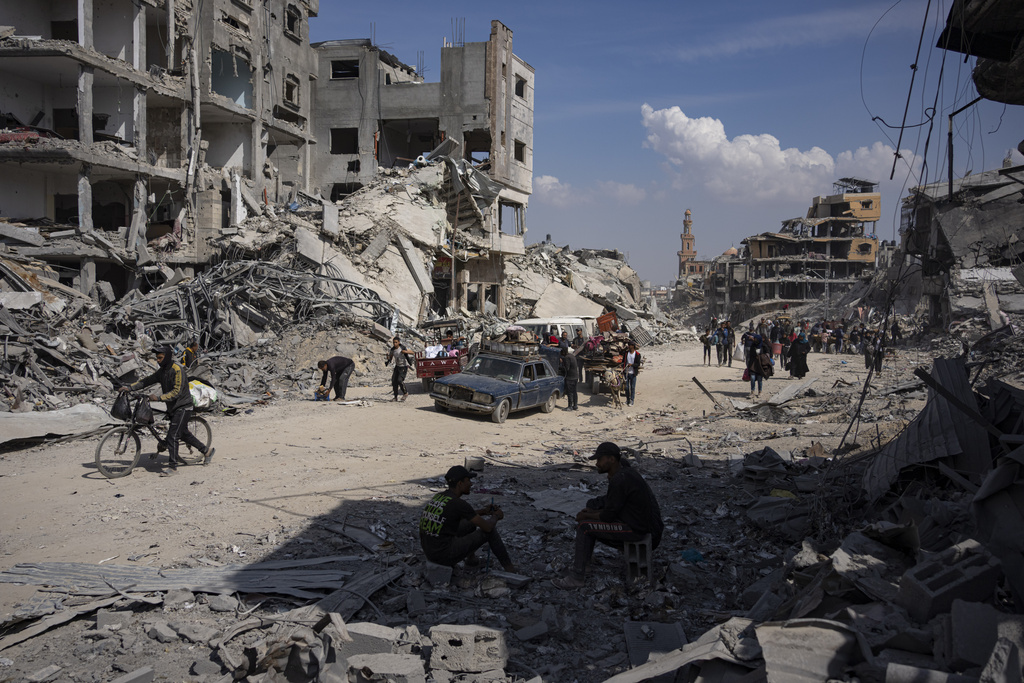
Israel today is at a strategic point in its war in the Gaza Strip, and there is every indication that Prime Minister Benjamin Netanyahu is going to choose the wrong path — and take the Biden administration along for a very dangerous and troubling ride. It is so dangerous and troubling that Israel’s best option, when all is said and done, might be to leave a rump Hamas leadership in power in Gaza. Yes, you read that right.

To understand why, let’s look back a bit. I argued in October that Israel was making a terrible mistake by rushing headlong into invading Gaza, the way America did in Afghanistan after 9/11. I thought Israel should have focused first on getting back its hostages, delegitimizing Hamas for its murderous and rapacious Oct. 7 rampage, and going after Hamas’ leadership in a targeted way — more Munich, less Dresden. That is, a military response akin to how Israel tracked down the killers of its athletes at the 1972 Munich Olympics, and not how the U.S. turned Dresden into a pile of rubble in World War II.

But I understood that many Israelis felt they had a moral and strategic right and necessity to go into Gaza and remove Hamas “once and for all.” In which case, I argued, Israel would need three things — time, legitimacy, and military and other resources from the U.S. The reason: The ambitious goal of wiping out Hamas could not be completed quickly (if at all); the military operation would end up killing innocent civilians, given how Hamas had tunneled under them; and it would leave a security and government vacuum in Gaza that would have to be filled by the non-Hamas Palestinian Authority in the West Bank, which would have to be upgraded and transformed to take on that task.

In short, Israel would need to fight this war with the least collateral damage for Palestinian civilians and accompany it with a political horizon for a new relationship between Israelis and Palestinians, built around two nation-states for two Indigenous peoples. Doing so would give Israel a chance to say to the world that this was not a war of vengeance or occupation, but a war to eliminate the Palestinian entity that was out to destroy any two-state solution — Hamas — and create the political space for a deal with the Palestinian Authority, which is still committed to a two-state deal. That approach would have won the support, funding and, I think, even peacekeeping troops of moderate Arab states like the United Arab Emirates.

Unfortunately, Netanyahu and his military did not pursue that course. They opted for the worst strategic combination: Militarily they opted for the Dresden approach, which, though it may have ended up killing some 13,000 Hamas fighters, also killed thousands of Palestinian civilians, leaving hundreds of thousands of others injured, displaced or homeless — and delegitimizing, for many around the world, what Israel thought was a just war.

And diplomatically, instead of accompanying this war strategy with an initiative that would buy Israel at least some time, legitimacy and resources to dismantle Hamas, Netanyahu refused to offer any political horizon or exit strategy and expressly ruled out any collaboration with the Palestinian Authority under orders from the Jewish supremacists in his governing coalition.

That is an utterly insane strategy.

It has locked Israel into a politically unwinnable war, and it has ended up isolating the United States, imperiling our regional and global interests, compromising Israel’s support in the U.S. and fracturing the base of President Joe Biden’s Democratic Party.

And the timing is truly awful. The Biden foreign policy team, led by Secretary of State Antony Blinken and National Security Adviser Jake Sullivan, have just finished working out the draft of a new strategic deal with Saudi Arabia — including a civil nuclear program, advanced arms and much deeper security ties. The deal, a senior Biden administration official told me, could be wrapped up in a matter of weeks — but for one element. It hinges on Saudi Arabia normalizing relations with Israel in return for Israel ending the war in Gaza, getting out of the Strip and agreeing to a defined “pathway” for a two-state outcome — with clear metrics in terms of what both Israel and the Palestinian Authority would have to do and in what time frames.

We are talking about a game-changing deal — precisely the deal that an Iran-backed Hamas launched this war on Oct. 7 to undermine, because it would have isolated Iran and Hamas. But the war in Gaza has to end first and Israel needs a government ready to embark on a two-state pathway.

Which takes us to this fork in the road. My preference is that Israel immediately change course. That is, join with the Biden administration in embracing that pathway to a two-state deal that would open the way for Saudi normalization and also give cover for the Palestinian Authority and moderate Arab states to try to establish non-Hamas governance in Gaza in Israel’s place. And — as the Biden team urged Netanyahu privately — forget entirely about invading Rafah and instead use a targeted approach to take out the rest of the Hamas leadership.

Even if Israel is intent on ignoring the U.S. advice, I pray it doesn’t try to invade Rafah and reject Palestinian Authority involvement in Gaza’s future. Because that would be an invitation for a permanent Israeli occupation of Gaza and a permanent Hamas insurgency. It would bleed Israel economically, militarily and diplomatically in very dangerous ways.

So dangerous that I believe Israel would actually be better off agreeing to Hamas’ demand for a total Israeli withdrawal from Gaza and a cease-fire and an all-for-all deal — all Israeli hostages in return for all Palestinian prisoners held by Israel. In other words, if Israel is not going to partner with the Palestinian Authority and moderate Arab states to create different governance in Gaza, and create conditions for normalizing relations with Saudi Arabia, Israel needs to get its hostages back, end the humanitarian crisis in Gaza, get out of Gaza, have a new election and do a deep rethink.

Please, Israel, do not get sucked into Rafah and permanently occupy Gaza. It will be a disaster.

“Friedman, you mean you would let a militarily decimated Hamas and its murderous leader Yehia Sinwar govern Gaza again?”

Yes, for the near term. As I said, this is not my preferred choice. It’s because Netanyahu has left Israel WITH NO OTHER CHOICE. He refuses to have Israeli troops govern Gaza and won’t bring in the Palestinian Authority. That leaves only two options: Gaza becoming a Somali-like gangland on the Mediterranean; or Gaza being held together with some flimsy Hamas governance.

If I were Israel, I’d take a weakened Hamas over Somalia, for two reasons.

I have no illusions that the morning after a cease-fire commences and Sinwar comes out, some will wildly cheer him for the hurt he inflicted on Israel. But the morning after the morning after, Sinwar will face brutal questioning from the people of Gaza: Where’s my house, where’s my job, who gave you the right to expose my children to death and devastation?

It is the best punishment I can imagine for Sinwar. Let him own all of Gaza’s travails that he so recklessly exacerbated — not Israel. Only Palestinians can delegitimize Hamas, and though it won’t be easy, and Hamas will kill anyone to hold power, this time we won’t be talking about just a handful of dissidents.

For the time, if it happens, when Israel gets out of Gaza and has its hostages back, the Biden team is already talking to Egypt about working closely with the U.S. and Israel to ensure Hamas can never again smuggle in the sorts of arms it did in the past under the Egypt-Gaza border. Israel could say that every ounce of food and medicine that the people of Gaza need will be delivered, as well as the bags of cement for rebuilding from countries that might want to help. But if one ounce is found going to dig new attack tunnels, rebuild rocket factories or restart rocket attacks on Israel, the borders will close. Again, let Sinwar deal with that dilemma: Go back to Hamas’ old ways and starve his people — or keep the cease-fire.

The second reason is that it won’t be just Palestinians in Gaza going after Sinwar and Hamas. Plenty of Palestinians understand that Sinwar cynically launched this war because he was losing influence to both more moderate factions in Hamas and to his archrival, the Fatah political movement, which runs the Palestinian Authority in Ramallah. He also feared this possible deal between Israel, Saudi Arabia and the Palestinians.

As Hussein Ibish, an expert at the Arab Gulf States Institute in Washington, who has provided some of the most clearsighted analyses of this war from the start, argued in a recent essay in The Daily Beast, Hamas wanted to provoke a massive Israeli response to Oct. 7 in part to corner Fatah. “A surge of nationalist sentiment and shared outrage at the mass killing and suffering of the 2.2 million Palestinian civilians in Gaza muffled nationalist leaders like President Mahmoud Abbas (also the chair of the PLO) in publicly acknowledging Hamas’ breathtaking cynicism,” he wrote.

But now, Ibish notes, the gloves are coming off: When Hamas complained about the Palestinian Authority’s decision to appoint a new prime minister, without Hamas’ input, Fatah shot back with a statement noting that Hamas consulted no one before launching “an adventure on Oct. 7 that has led to a nakba that is more severe than the 1948 Nakba.” “Nakba” means catastrophe.

Ibish concluded, “If these accusations are repeated — as they certainly should be on a daily, if not hourly, basis — they could create the permission structure for ordinary Palestinians everywhere, and especially in Gaza, to begin honestly asking themselves why Hamas acted on Oct. 7 without regard to the impact on the people of Gaza or making any preparations whatsoever for them.”

This dynamic is the only way to marginalize Hamas and Islamic Jihad — by Palestinians themselves discrediting these groups for what they are: mad and murderous proxies of Iran, whose leadership is ready to sacrifice endless Palestinian lives to pursue its aspiration for regional hegemony. If Palestinians cannot or will not do that, they will never get a state.

Just a brief word about Iran. As I feared, Israel has played into its hands beautifully from Tehran’s point of view. By invading Gaza with no morning-after plan, while also occupying the West Bank, Israel is now overstretched militarily, economically and morally — while deflecting attention from the fact that Iran is accelerating its nuclear program and expanding its influence as the biggest occupying power in the Middle East today.

Iran indirectly controls large swaths of five Arab states or territory (Lebanon, Syria, Iraq, Yemen and part of Gaza) using local proxies ready to sell out their own people for Iran’s benefit. Iran has helped to keep each Arab entity war-torn or failing. Put me down as opposed to both the Israeli occupation of the West Bank and the Iranian occupations of Lebanon, Syria, Iraq and Yemen. To decry Israeli settler “colonialism” in the West Bank and ignore Iranian Revolutionary Guard “colonialism” in five Arab power centers is utterly dishonest. The Revolutionary Guard leader whom Israel killed in Syria last week was not there on a tourist visa.

Biden has a plan: Get to a six-week cease-fire and hostage release. After which, as part of the Saudi-normalization package, the president will come out with a bold peace initiative, what Israeli peace process expert Gidi Grinstein has called “more for more” — more security and normalization with Arab states than Israel was ever offered and more Arab and U.S. help for Palestinians to achieve statehood than they’ve ever experienced. Hopefully, such an initiative can induce everyone to make the cease-fire permanent, and further marginalize Hamas and Iran.

I have read all the articles about how a two-state solution is now impossible. I think they are 95% correct. But I am going to focus on the 5% chance that they are wrong, and the chance that courageous leadership can make them wrong. Because the alternative is a 100% certain forever war, with bigger and more precise weapons that will destroy both societies.

Thomas Friedman writes a column for the New York Times.

Related Articles

Opinion |


Steven Hill: Financial literacy is good for Americans, and for the country

Opinion |


Other voices: The U.S. still owes a debt to its Afghan allies

Opinion |


Lawrence K. Zelvin: Fraudsters have artificial intelligence too

Opinion |


Stefanos Geroulanos: Why would anyone want a paleo diet? We’re desperate for half-truths about human origins

Opinion |


David French: Israel is making the same mistake America made in Iraq

Nacho mania: Seven of our favorite plates of chips, cheese and more in the east metro

posted in: News | 0

For a casual lunch or dinner, especially when sharing with friends, nachos are king.

It’s a full meal on a plate — carbs (chips), vegetables (I mean, at least salsa or tomatoes), dairy and protein. Plus, if you’re having a meeting (or just a meeting of the minds), it’s great to have something you can nosh on casually when someone else is talking.

Great nachos must have plenty of cheese, be it shredded or in queso form, but also a protein, be it meat, beans or both. House-made chips are definitely a bonus, but not strictly necessary if the toppings are good enough.

Here are the best versions I’ve found around town. If I missed your favorite, let me know at eat@pioneerpress.com.

Nico’s Tacos

Nachos at Nico’s Tacos on St. Paul’s Como Avenue. (Jess Fleming / Pioneer Press)

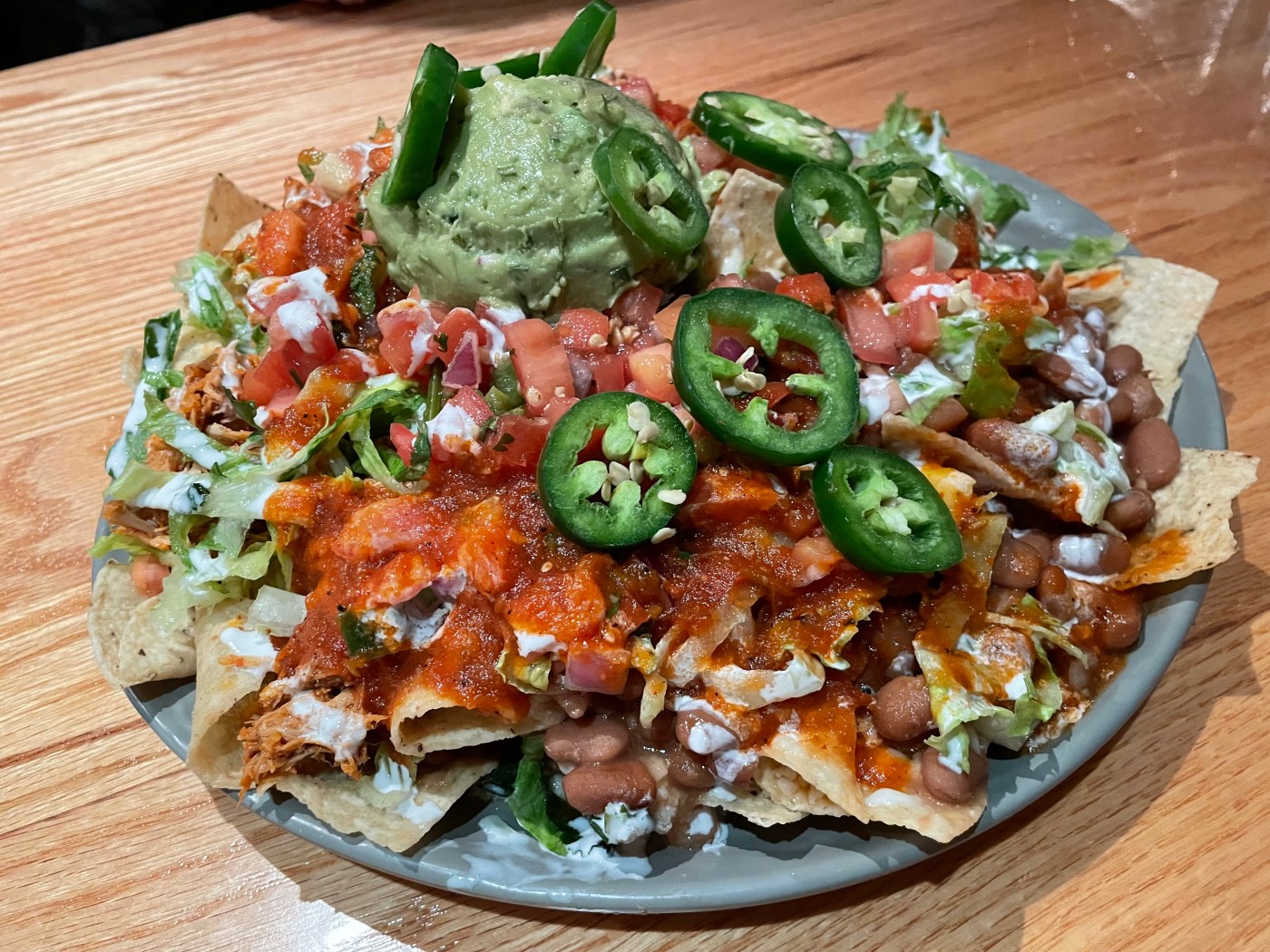
These are, hands-down, the best nachos I have ever eaten. House-made chips, whole pinto beans, phenomenal queso, stellar salsa, guacamole and crema are layered so well that you get a little bit of everything with every bite without even trying. Honestly, these are what all nachos should aspire to be.

They are obviously crafted with care by someone who knows, and loves, good nachos. We had the chicken, but you can choose your own adventure — all the proteins at Nico’s are fabulous. Get a margarita while you’re at it. Nico’s serves some of our favorites.

Nico’s Tacos: Three Twin Cities locations, including 2260 Como Ave., St. Paul; 651-450-8848; nicostacobar.com. $13 at lunch or dinner.

Pajarito

Nachos at Pajarito on St. Paul’s West Seventh Street. (Jess Fleming / Pioneer Press)

Although these beauties are available only at happy hour, they are worth an early visit to this West Seventh Street eatery.

The house-made chips here are some of my favorites in town, and the salsas are pretty much unmatched, so this little boat of happiness was sure to be a winner in my book. The chips are topped simply with your choice of protein (we chose the tender, tasty chicken tinga), a stellar, creamy house-made queso, pickled jalapenos and a little pico for freshness. A lovely roasted tomato salsa is served on the side for extra heat and flavor.

Pajarito: 605 W. Seventh St., St. Paul; 651-340-9545; pajaritorestaurant.com. $8, happy hour only (Monday-Tuesday, 4-6 p.m.; Wednesday-Friday, 3-6 p.m.)

Juche

Nachos at Juche on St. Paul’s Payne Avenue. (Jess Fleming / Pioneer Press)

Nachos at a Korean place? Yes. Are they delicious? Also, yes!

This addictive plate starts with the restaurant’s killer Korean-spiced chips, which are layered generously with nacho cheese, lettuce, sour cream, pickled jalapenos and a little Korean hot sauce. We added the smoky, umami bulgogi bacon, and there were zero regrets around the table (and also zero leftovers).

Juche, in the former Cook St. Paul space on Payne Avenue, keeps getting better — and busier — with good reason. Chef Chris Her knows how to make craveable food.

Juche: 1124 Payne Ave., St. Paul; 612-490-3380; juchestpaul.com. $12; add bacon bulgogi for an additional $4. Dinner only.

Urban Growler

Nachos at Urban Growler Brewing in St. Paul. (Jess Fleming / Pioneer Press)

I’ve long been a fan of these nachos, which start with house-made chips and a smooth beer cheese made from the brewery’s flagship Cowbell Cream Ale. Pickled jalapenos, pico, sour cream and a roasted tomato salsa finish things off nicely. We added the flavorful chicken tinga, but bacon, pork and black beans are also options.

Urban Growler: 2325 Endicott St., St. Paul; 651-340-5793; urbangrowlerbrewing.com. $12, add chicken, pork, bacon or black beans for an additional $3. Dinner only on weeknights, lunch and dinner Friday-Sunday.

Homshuk

Nachos at Homshuk in Apple Valley. (Jess Fleming / Pioneer Press)

I’ve got to say I’m a little sad this new Apple Valley Mexican restaurant with its adjacent market and deli isn’t closer to my home. Still, it’s worth a little road trip for authentic, soulful dishes and craft cocktails served in a modern space.

Everything we tried here was phenomenal, including these nachos, loaded with refried beans, house-made queso, pico, guacamole, salty cotija cheese and fresh red serrano chiles.

Homshuk: 6999 W. 152nd St., Apple Valley; 651-300-1380; homshukmexicankitchen.com. $14, includes choice of meat. Lunch portion, $10.

Iron Ranger

Iron Range Nachos at the Iron Ranger on Grand Avenue in St. Paul on Wednesday, August 2, 2018. (John Autey / Pioneer Press)

This Grand Avenue restaurant and bar is one of my favorite spots to meet friends for drinks — especially during the summer months, when we can sit on the cute, sprawling patio.

And what goes better with drinks than nachos? True to brand, the nachos here are topped with the restaurant’s very tasty, very Iron Range porketta as well as spicy, pickle-y giardiniera, black beans, corn, cheddar and basically everything but the kitchen sink. The portion is ginormous — four of us split a half order last time I was there — and $3 off during happy hour, which ends at 5 p.m. every day except Saturday.

Iron Ranger: 1085 Grand Ave., St. Paul; 651-203-7096; homshukmexicankitchen.com. $17.25 lunch or dinner. Half order, $12.59.

Habanero Tacos

Nachos at Habanero Tacos on St. Paul’s Snelling Avenue. (Jess Fleming / Pioneer Press)

We’re loving this new addition to Snelling Avenue, with its expansive menu of Mexican favorites. The nachos start with house-made chips (excellent) and canned nacho cheese (not so excellent). We’re willing to forgive the neon orange sauce, though, as the other toppings are plentiful and good, including meaty carne asada, refried beans and guacamole.

Habanero Tacos: 80 N. Snelling Ave., St. Paul; 651-666-3961; habanerotacosstp.com. $16 lunch or dinner.

Related Articles

Restaurants, Food and Drink |


Crepes with asparagus, ricotta and lemon give the taste of spring

Restaurants, Food and Drink |


A quick skillet turkey dinner you’ll make over and over again

Restaurants, Food and Drink |


A sneak peek of Diane’s Place, now open in Northeast Minneapolis

Restaurants, Food and Drink |


Quick Fix: Moroccan Burgers with Cucumber Slices and Tomatoes

Restaurants, Food and Drink |


A creamy, dreamy soup to make in the Instant Pot

Trump is about to go on trial in New York. Here’s what to expect

posted in: Politics | 0

By Sarah D. Wire, Los Angeles Times

WASHINGTON — Donald Trump, the presumptive Republican presidential nominee, is expected to be pulled from the campaign trail for at least two months starting next week as he stands trial in New York, the first criminal prosecution of a former president in American history.

Trump is accused of falsifying business records in an attempt to hide money paid to an adult film actor to prevent her from going public with claims that she and Trump had sex.

It is the only one of the four felony cases Trump currently faces that has a trial date and could be the only one that is completed before election day. Jury selection begins April 15.

What are the charges?

The trial is over whether Trump falsified business records to cover up a $130,000 payment his lawyer Michael Cohen made in the final days of the 2016 campaign to adult film actor Stormy Daniels for her silence about a 2006 sexual encounter she says she had with Trump. He has pleaded not guilty. Trump also denies Daniels’ claim of a sexual encounter.

Former U.S. President Donald Trump sits at the defense table with his defense team in a Manhattan court during his arraignment on April 4, 2023, in New York City. Trump was arraigned during his first court appearance following an indictment by a grand jury that heard evidence about money paid to adult film star Stormy Daniels before the 2016 presidential election. With the indictment, Trump became the first former U.S. president in history to be charged with a criminal offense. (Photo by Seth Wenig-Pool/Getty Images)

According to the New York indictment, Trump sent Cohen $420,000 in a dozen installments during his first months as president in 2017 and falsely recorded the payments in Trump Organization internal documents as legal expenses, citing a retainer agreement. That amount includes $130,000 as reimbursement for paying Daniels and additional funds for Cohen.

Prosecutors say there were no legal expenses or retainer agreement at the time.

The key thing Manhattan Dist. Atty. Alvin Bragg must prove to jurors is that Trump instructed Cohen to make the payment to Daniels in an effort to influence the 2016 election by keeping damaging stories about him from being published.

Trump has said he sought to silence Daniels to keep his wife, Melania Trump, from learning about the allegations.

Does Trump have to be at the trial in person?

Yes. Manhattan Judge Juan Manuel Merchan has said he expects Trump in the courtroom every day the court is in session. The trial will take place Mondays, Tuesdays, Thursdays and Fridays for about six to eight weeks.

Trump is under a gag order prohibiting him from making or directing others to make public statements regarding counsel and court staff in the case.

Related Articles


New York appeals court rejects Donald Trump’s third request to delay Monday’s hush money trial


Trump says leave abortion to the states. That’s where it gets complicated


Appeals court rejects Donald Trump’s latest attempt to delay April 15 hush money criminal trial


Trump says he’ll jail his opponents. Members of the House Jan. 6 committee are preparing


Letters: Just a suggestion for a lunch special in Duluth

Merchan last week expanded his gag order to stop the former president from attacking family members of the judge, attorneys and staff involved in the case after Trump shared a barrage of social media posts about the judge’s daughter, claiming that her past work for Democratic clients makes her father biased.

Trump said Saturday on social media that going to jail for violating his gag order would be his “great honor.”

“If this Partisan Hack wants to put me in the ‘clink’ for speaking the open and obvious TRUTH, I will gladly become a Modern Day Nelson Mandela,” Trump said Saturday in a Truth Social post.


Merchan has not threatened to jail the former president for disregarding the gag order. Rather, Trump could lose access to the names of jurors, Merchan said, “if he engages in any conduct that threatens the safety and integrity of the jury or the jury selection process.” That would prevent Trump’s legal team from researching the jurors’ public stances or political preferences ahead of the trial. Merchan has already ordered juror names to be kept from the public.

What punishment does Trump face?

All 34 charges are Class E felonies, the lowest category of felonies in New York. Each count carries a maximum prison sentence of four years.

Merchan has indicated that he takes white-collar crime seriously and could put Trump in prison, potentially to serve his terms concurrently if the former president is convicted of more than one count. Merchan could also instead sentence Trump to probation.

What will it mean politically?

Trump will be limited to campaigning only on weekends, evenings and Wednesdays for the length of the trial.

The verdict could come in late June or early July, just before Trump accepts his party’s nomination at the Republican National Convention in Milwaukee in mid-July.

During the Republican primary campaign, Trump used his four indictments to his advantage, portraying himself as a victim of politicized justice and effectively squeezing out his rivals. Whether that narrative holds when Americans see photos of him in a courtroom day after day is unknown.

Three polls conducted last year by the Associated Press and NORC asked respondents how they viewed the legality of Trump’s actions in the four indictments against him. Only one third of respondents said they thought the hush money payment was illegally covered up.

Who will testify?

Cohen, Trump’s former lawyer and longtime fixer, is expected to be prosecutors’ main witness. Cohen pleaded guilty in 2018 to federal campaign finance violations related to facilitating payoffs to Daniels and Karen McDougal, a former Playboy model, as well as to other crimes. He served more than a year in prison.

Daniels could also be called to testify along with McDougal, who in 2018 told CNN that she had a 10-month extramarital affair with Trump that began in 2006. Trump also denies this affair occurred.

Stormy Daniels attends the 2024 Adult Video News Awards at Resorts World Las Vegas on January 27, 2024 in Las Vegas, Nevada. (Photo by Ethan Miller/Getty Images)

McDougal was paid $150,000 by American Media Inc., the publisher of the National Enquirer, in August 2016 for the rights to her story about the alleged affair. The payment to McDougal and a $30,000 payment by the company to a former Trump Tower doorman who claimed that Trump had fathered a child out of wedlock with an employee, are not part of the case but are expected to be introduced by Bragg to show the breadth of the alleged scheme to influence the 2016 election.

American Media Inc. signed a nonprosecution agreement with the Justice Department in which it admitted paying McDougal to avoid her going public about her alleged affair and influencing the 2016 election. David Pecker, the Enquirer’s publisher, could be called to testify.

Former White House communications director Hope Hicks, who was Trump’s campaign press secretary in 2016, could also testify for the prosecution, potentially related to conversations about what Daniels’ claims could do to the campaign.

These are felony charges?

In New York, falsifying business records can be a misdemeanor or can be elevated to a felony if prosecutors prove that the records were falsified in an attempt to conceal another crime.

Bragg has accused Trump of concealing three crimes: a federal campaign finance violation, a state election-law crime and tax fraud. Bragg does not have to charge Trump with those crimes, or even prove those crimes occurred. He just has to prove there was intent to commit or conceal a second crime.

What about the other charges against Trump?

Trump has been indicted in three other criminal cases.

The federal case charging him with subverting the 2020 presidential election is on hold pending a Supreme Court decision on whether Trump can claim presidential immunity for acts taken while in office and avoid prosecution. The court is scheduled to hear oral arguments on April 25. It is expected to wait until the end of June to hand down a written ruling, though it could rule at any time after the oral argument.

The Florida-based federal case accusing Trump of refusing to return classified documents he took when leaving the White House also does not have a trial date. Trump asked for an August trial or a delay until after the election, while prosecutors asked for it to begin in July, soon after the Supreme Court is expected to rule on presidential immunity.

The state-level case in Georgia, in which Trump is accused of scheming to overturn the 2020 election, has been delayed for weeks by an effort by Trump and his co-defendants to remove Fulton County Dist. Atty. Fani Willis from the case because of a romantic relationship with special prosecutor Nathan Wade. Superior Court Judge Scott McAfee recently ruled that either Willis or Wade had to step away from the case, and Wade resigned. Trump’s attorneys have appealed the decision, and a trial date still hasn’t been set.

©2024 Los Angeles Times. Visit at latimes.com. Distributed by Tribune Content Agency, LLC.