‘World’s safest asset’ proves anything but amid wild Treasuries

posted in: News | 0

By Liz Capo McCormick and Michael Mackenzie, Bloomberg News

A surprisingly strong U.S. economy and mixed signals from the Federal Reserve have fueled some of the wildest swings in Treasuries in recent memory. Add geopolitical angst and a surge in debt supply and you have a recipe for sustained volatility for months to come, market watchers say.

Dubbed the “world’s safest asset,” Treasuries have not lived up to that title lately as dramatic moves in yields become an almost daily occurrence. Just last week, the rate on the 10-year swung in a range of almost 40 basis points, buffeted by crosscurrents including resilient retail sales and jobless figures, a bevy of comments from Fed officials and rising demand for haven assets amid concerns of an escalating conflict in the Middle East.

“It’s going to be a rough ride, so buckle up,” Mike Schumacher, head of macro strategy at Wells Fargo Securities, said on Bloomberg TV. Interest-rate volatility should “remain quite high, at least through the mid-point of next year, perhaps further as the Middle East sorts itself out” and until the market gets more clarity on the Fed.

The ICE BofA MOVE Index, which tracks anticipated swings in Treasury yields priced into one-month options, has risen for five-straight weeks. In fact, by one measure, swings in long-term rates are exceeding those for equities by the most in at least 18 years, according to data compiled by Bloomberg.

That’s partly because the Fed is struggling to signal a longer-term vision for where interest-rate policy is headed, according to Mohamed El-Erian, the chief economic adviser at Allianz SE and a Bloomberg Opinion columnist.

“We are going to remain in this situation of great uncertainty because there is no vision as to where this economy is going,” El-Erian said on Bloomberg TV Friday. “They need to pivot from excessive data dependence to data dependence that has a greater forward-looking component.”

Amid last week’s ructions, nothing caused more chaos than Fed Chair Jerome Powell’s comments Thursday on the trajectory of monetary policy. He suggested at an event at the Economic Club of New York that the U.S. central bank is inclined to hold interest rates steady at its next meeting, while leaving open the possibility of another hike later if policymakers see further signs of resilient economic growth.

The rates curve aggressively steepened in response, with short-dated yields sliding while longer-maturity ones climbed to fresh multiyear highs.

Geopolitics, supply

Price swings were also fueled by mounting concerns that the war between Israel and Hamas could spread throughout the region, potentially even drawing in the U.S..

Reports of drone attacks in Iraq and Syria, cruise missiles fired toward Israel by Houthi rebels in Yemen and Israel’s strikes against Hamas and Hezbollah prompted a reactionary bid for safety among investors, causing 10-year yields to retrench from their highs just below 5% and end the week around 4.91%

Concerns about the U.S.’s fiscal future are also increasingly affecting investor sentiment.

Growing U.S. debt issuance has help lift the so-called term premium by more than a percentage point over the past three months, fueling a dramatic ascent in long-end rates. Traders are already bracing for the Treasury to announce further increases to auction sizes at its next quarterly refunding on Nov. 1.

“Volatility is begetting more volatility,” said William Marshall, head of U.S. rates strategy at BNP Paribas SA. “There is just a general lack of strong conviction at this stage as to where things ought to be anchored.”

Looking ahead, a pause in Fed speak this week on account of the central bank’s customary blackout period ahead of the Nov. 1 policy meeting may be a welcome reprieve for traders.

Still, the coming days will provide some key readings on price pressures in the economy, including Friday’s personal-consumption expenditures data, the Fed’s preferred inflation measure. The University of Michigan inflation expectations survey will hit the same day.

What to watch

Economic data:

Oct. 23: Chicago Fed national activity index

Oct. 24: Philadelphia fed non-manufacturing activity; S&P Global U.S. manufacturing, services; Richmond Fed manufacturing index/business conditions

Oct. 25: MBA mortgage applications; New home sales

Oct 26: Wholesale inventories; advance goods trade balance; GDP; Personal consumption; retail inventories; GDP price; durable goods; Core PCE price; initial jobless claims; pending home sales; Kansas city Fed manufacturing

Oct 27: Personal income/spending; PCE deflator; U. of Michigan sentiment; Kansas City Fed services activity

No Federal Reserve speakers slated during self-imposed quiet period ahead of Nov. 1 rate decision
Auction calendar:

Oct. 23: 13-, 26-week bills

Oct. 24: 42-day cash management bills; 2-year notes

Oct. 25: 17-week bills; 2-year floating rate notes; 5-year notes

Oct. 26: 4-, 8-week bills; 7-year notes

With assistance from Ye Xie and Elizabeth Stanton.
Bernie Sanders opposes Biden’s pick to lead the NIH, putting her confirmation in jeopardy

posted in: Politics | 0

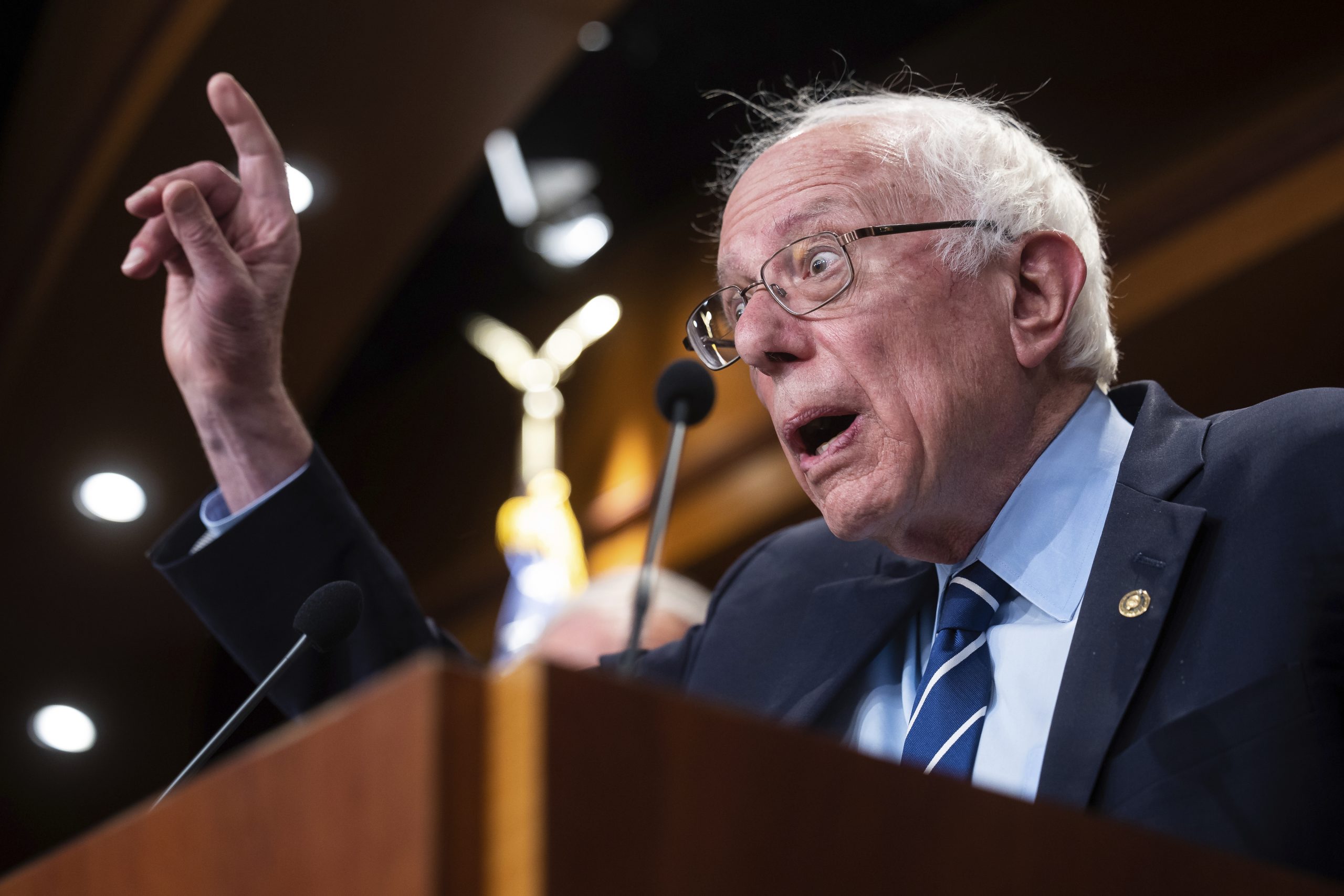
President Joe Biden’s nominee to lead the National Institutes of Health will need at least one Republican vote to advance after Sen. Bernie Sanders — angry that Biden isn’t doing more to lower drug prices — said Tuesday he’d oppose her.

“Dr. Monica Bertagnolli is an intelligent and caring person, but has not convinced me that she is prepared to take on the greed and power of the drug companies and health care industry and fight for the transformative changes the NIH needs at this critical moment,” the Vermont independent said in a statement.

“I intend to vote NO at her confirmation hearing on Wednesday,” Sanders said.

However, Sanders said he would not try to sway the votes of other members of the Senate Health, Education, Labor and Pensions Committee he chairs. “This should be a vote of conscience,” he said.

Seven of the 10 Democrats on the committee — Sens. Patty Murray (D-Wash.), Tammy Baldwin (D-Wis.), Tim Kaine (D-Va.), Tina Smith (D-Minn.), Bob Casey (D-Pa.), Maggie Hassan (D-N.H.) and Ed Markey (D-Mass.) either issued statements or told POLITICO that they planned to vote in favor of Bertagnolli.

The others either did not respond or did not say how they would vote.

Because Democrats have a one-seat majority on the panel, Bertagnolli will need at least one Republican vote to proceed to a floor vote and none have said they support her publicly.

Sen. Tommy Tuberville (R-Ala.) said he planned to vote against the nomination. Sen. Markwayne Mullin (R-Okla.) told POLITICO “I’d probably lean toward no right now.” Other Republican members have not indicated how they will vote.

Kaine said he expected that Bertagnolli would get Republican votes because the GOP’s third-ranking senator, Wyoming’s John Barrasso, had introduced her during her nomination hearing.

The White House did not immediately respond to POLITICO’s request for comment.

The National Cancer Institute director’s nomination to lead NIH has been in limbo since spring, when Sanders vowed to oppose Biden’s health nominees until the White House took more actions on reducing drug prices. In September, Sanders relented, agreeing to schedule Bertagnolli’s hearing after the federal government struck a deal with biotech company Regeneron that included a reasonable pricing clause for a Covid therapy it’s developing with federal assistance.

During her confirmation hearing last week, Bertagnolli told Sanders she would work to broadly ensure the benefits of NIH research are affordable and available, but would not commit to a specific plan to address drug pricing.

On Monday, two days before the committee vote, Sanders called for an investigation into the NIH. In a letter to the Health and Human Services inspector general, he urged an investigation into an exclusive patent license for an NIH-developed cervical cancer treatment that the agency proposed granting to a company with ties to a former NIH employee.

The most recent NIH director, Dr. Francis Collins, smoothly sailed through his confirmation process and was unanimously confirmed without a hearing in 2009. The agency has been without a director since December 2021, when Collins stepped down from the role.

Who Is Tom Emmer of Minnesota, the latest Republican nominee for Speaker?

posted in: Politics | 0

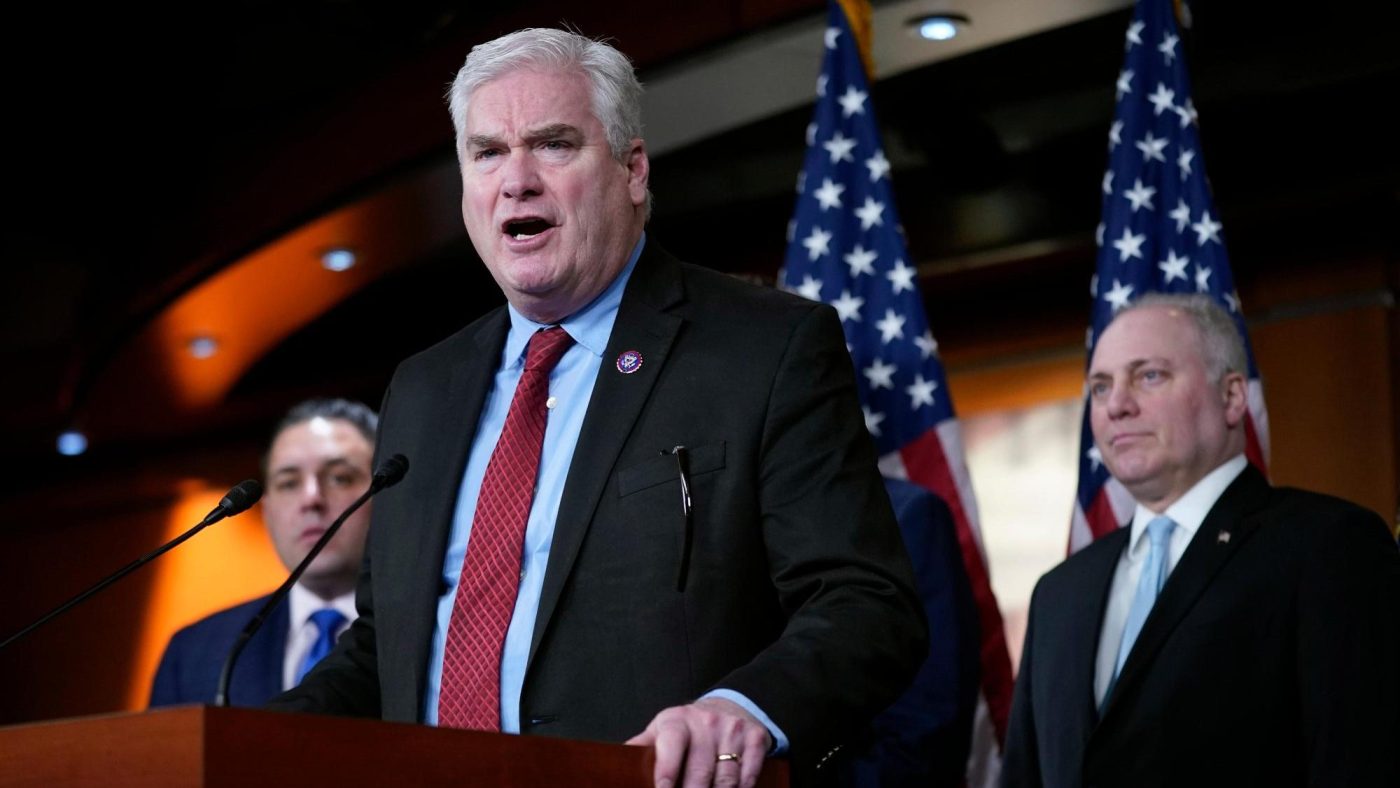
WASHINGTON — House Republicans on Tuesday elected Rep. Tom Emmer of Minnesota, the No. 3 in the party, as their speaker nominee after five rounds of ballots that pointed to a precarious path forward.

The internal party election came after Republicans cast aside Rep. Jim Jordan of Ohio, the second party nominee for speaker, who was unable to win the majority of votes needed to be elected to the top job.

Emmer, 62, of Delano, Minn., has served since January as the party’s whip, responsible for counting and securing the votes to pass the speaker’s agenda. He was the highest-ranking Republican in the race and has been endorsed by ousted Speaker Kevin McCarthy.

A mainstream conservative who voted to certify President Joe Biden’s 2020 victory and supported a stopgap spending bill last month to avert a shutdown, Emmer has pitched himself as a unity candidate. Several hard-right conservatives, including a handful who voted to oust McCarthy, have signaled their support for the Minnesota Republican.

But he could still face trouble securing a majority of votes on the House floor, where just a small clutch of defectors could doom his election. Republicans emerging from the closed-door meeting Tuesday said that an internal roll call vote showed that as many as 25 lawmakers said they would not support Emmer.

Rep. Rick W. Allen of Georgia told CNN that he could not support Emmer because of his vote in 2022 in support of a bill codifying federal protections for same-sex couples.

And some hard-right Donald Trump supporters outside Congress have sought to block Emmer from winning the speaker’s gavel, claiming he has been insufficiently supportive of the former president.

A former college hockey player and coach, Emmer served two terms as chair of the National Republican Congressional Committee.

This article originally appeared in the New York Times.

Related Articles

National News |


Jenna Ellis becomes latest Trump lawyer to plead guilty over efforts to overturn Georgia’s election

National News |


David French: The worst scandal in American higher education isn’t in the Ivy League

National News |


GOP picks Minnesota’s Tom Emmer as its nominee for House speaker — but there’s no guarantee he can win the gavel

National News |


Biden launches 31 technology hubs nationally, including St. Paul

National News |


Letters: Copper-wire thieves strike again. And again. This isn’t working, St. Paul

Massachusetts attorney general joins in multi-state, federal lawsuit against Instagram parent Meta

posted in: News | 0

Massachusetts’ attorney general has announced that she is suing Facebook and Instagram parent company Meta for “unfair and deceptive practices that harm young people.”

“Meta preys on our young people and has chosen to profit by knowingly targeting and exploiting their vulnerabilities. In doing so, Meta has significantly contributed to the ongoing mental health crisis among our children and teenagers,” Attorney General Andrea Campbell said in a statement Tuesday afternoon.

Stuart Cahill/Boston Herald

AG Andrea Campbell (Stuart Cahill/Boston Herald, File)

“Because Meta has shown that it will not act responsibly unless it is required to do so by courts of law, my colleagues and I are taking action today — and will continue to push for meaningful changes to Meta’s platforms that protect our young people,” she added.

Campbell said the lawsuit will be filed in Suffolk Superior Court today, joining “a bipartisan coalition of attorneys general” also filing similar lawsuits against Meta.

The AG’s office says Meta “knew of the significant harm” its practices, which they allege includes designing the applications to “addict young users,” caused their target audience “and chose to hide its knowledge and mislead the public to make a profit.

While Meta is a California, based company, the AG’s office said that the practices have affected “hundreds of thousands of teenagers in Massachusetts who actively use Instagram.” The coalition of attorneys general will also be filing a federal lawsuit in Meta’s home in  the Northern District of California.

Meta in response issued a statement that it shares “the attorneys general’s commitment to providing teens with safe, positive experiences online, and have already introduced over 30 tools to support teens and their families.”

“We’re disappointed that instead of working productively with companies across the industry to create clear, age-appropriate standards for the many apps teens use, the attorneys general have chosen this path,” the company’s statement continues.

This is a developing story.