St. Paul City Council approves more than $40 million in spending on parks and streets from new sales tax

posted in: News | 0

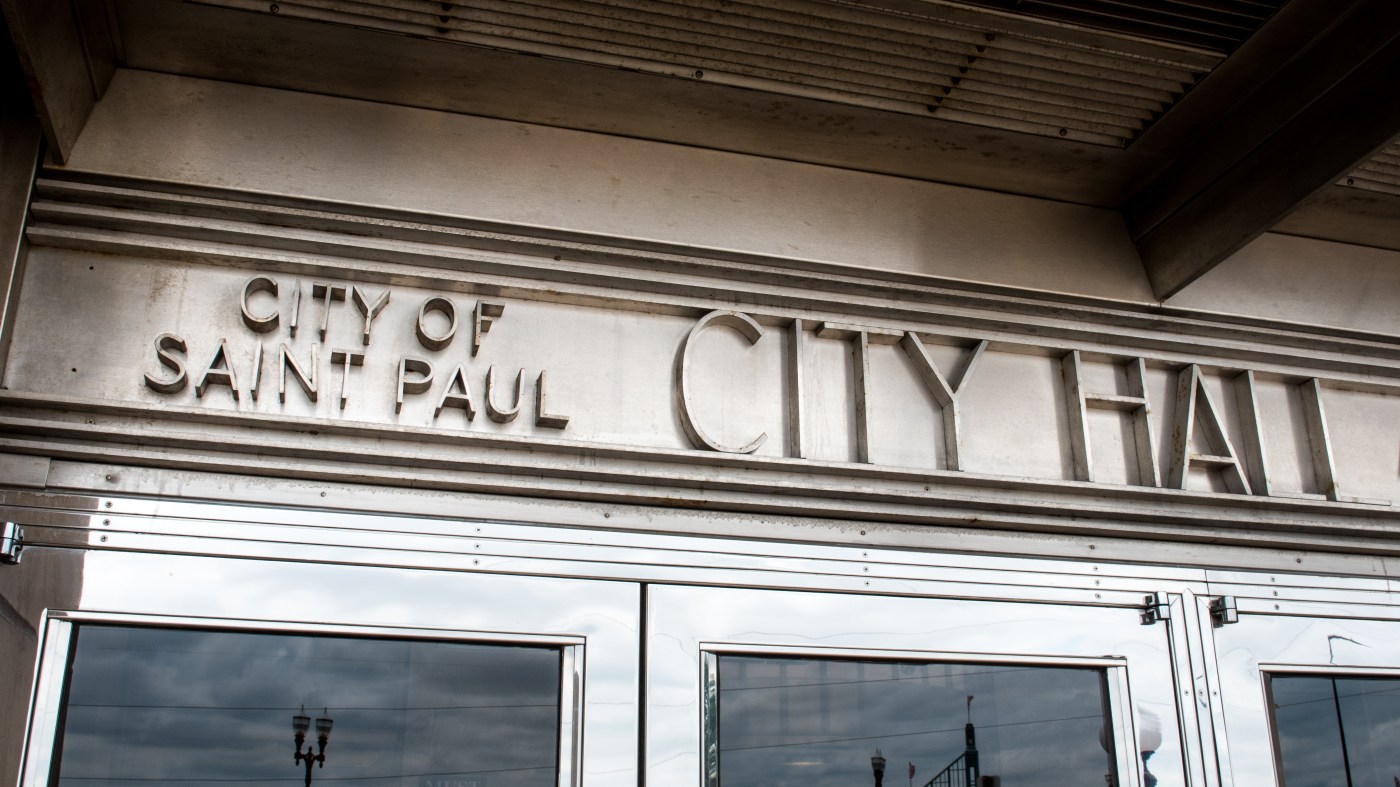
Flanked by protesters quietly hoisting signs calling for a Gaza ceasefire resolution, the St. Paul City Council on Wednesday approved more than $40 million in spending on parks and streets this year, to be funded by the new voter-approved 1% sales tax that takes effect April 1.

The vote proceeded without disruption, a week after a previous public hearing on a state grant was cut short by loud and persistent protest chants that ended only after council members left the room. Council President Mitra Jalali said a “multi-year effort” had moved the sales tax forward and city facilities suffering from long-deferred maintenance will now reap the benefits.

“We do not have the tax base of other communities, but we do have disproportionate strains,” said Jalali, noting the wear and tear on public streets from out-of-town visitors to the state Capitol complex and other city landmarks.

The first year of sales tax revenue will fund $10.2 million toward reconstructing Grand Avenue from Snelling to Fairview avenues this year, as well as another $500,000 toward intersection improvements at Grand and Snelling.

Projects next year will include portions of both Jackson Street and University Avenue near Interstate 35E next year, portions of Earl Street and Pelham Boulevard in 2026 and Shepard Road in 2027.

“There weren’t any couch cushions underneath which we could find (the funding) for those critical streets to be done,” said Council Member Rebecca Noecker, addressing St. Paul Public Works Dir. Sean Kershaw.

St. Paul Parks and Recreation Director Andy Rodriguez said his department will make headway on long-deferred maintenance, such as replacing roofs and doors at rec centers across the city, as well asphalt replacement on parking lots, trails and sidewalks.

Larger projects will include new geothermal units at the Como Zoo, and the conversion of some tennis courts to pickleball courts.

Council Member Nelsie Yang said her political ward on the East Side is home to some of the most outdated libraries, rec centers and playing fields in the city, and she looked forward to the investment. “I’m very excited to vote in support of this resolution,” she said.

Council Member Anika Bowie said as much as she enjoyed the obstacle course-laden video game Mario Kart, driving bumpy St. Paul streets was much less fun. She thanked the department directors for incorporating neighborhood demographics such as race and income, among other equity measures, as they prioritized some 75 to 80 projects.

“This is an investment in our future athletes, and in our future leaders here in St. Paul,” Bowie said.

Related Articles

Local News |


St. Paul City Council walks out as Nelsie Yang attempts to introduce Gaza ceasefire resolution

Local News |


St. Paul City Council to back sales tax spending for Grand Avenue, parks projects

Local News |


Letters: Meet these 3 housing goals, St. Paul Council

Local News |


Protesters demand a Gaza ceasefire resolution. The St. Paul City Council isn’t poised to give them one.

Local News |


St. Paul City Council poised to approve spending first year of new city sales tax on Grand Avenue, 75-80 parks projects

Lake Elmo attorney suspended for misleading statement in custody case

posted in: News | 0

A Lake Elmo attorney has been disciplined for knowingly making a misleading statement to a court during a hearing.

The Minnesota Supreme Court suspended Paul E. Overson from the practice of law for 30 days, according to an order made public Wednesday.

The state office that investigates alleged misconduct by attorneys, the Office of Lawyers Professional Responsibility, filed a petition with the court on Dec. 4.

It says Overson “committed professional misconduct warranting public discipline — namely, knowingly making a misleading statement to a court during a hearing and subsequently failing to correct his misleading statement,” according to the Supreme Court order.

The underlying case was a custody dispute filed in Washington County District Court in June 2022. Overson represented the respondent in the case, which has since been closed, according to court documents.

According to the petition, Overson failed to tell the court during a September 2022 hearing that the parties had already agreed to dismiss a matter involving an order for protection. Overson failed during and after the hearing “to correct his misleading statement and failed during the hearing to inform the court that the parties had agreed to dismiss the OFP matter,” the petition states.

The Minnesota Supreme Court order, written by Associate Justice Margaret Chutich, said Overson’s reinstatement after 30 days is contingent upon him filing with the Clerk of the Appellate Courts an affidavit establishing that he is “current in continuing legal education requirements,” among other conditions. He also must pay $900 in court costs and file, within one year of the date of the Feb. 24 order, with the Clerk of the Appellate Courts “proof of successful completion of the written examination required for admission to the practice of law by the Minnesota State Board of Law Examiners on the subject of professional responsibility,” the order states.

Overson did not immediately return a phone call seeking comment. According to his disciplinary history, included as part of the petition, Overson previously was issued an admonition for withdrawing from representation one business day before a client’s deposition.

Related Articles

Local News |


Lake Elmo Airport working on decreasing noise complaints with preventative measures

Local News |


Woodbury grad party shooting: Gunman who fired shot that killed boy, 14, pleads guilty to unintentional murder

Local News |


Now open in Stillwater: Mike and Kat’s Other Place, a cozy espresso bar

Local News |


There’s only one place to score ‘Fargo’-themed Bisquick boxes. In Scandia, of course.

Local News |


Stillwater school board approves later start time for high-schoolers in 2025-26

White powder sent to judge in Donald Trump’s civil fraud case, adding to wave of security scares

posted in: Society | 0

By MICHAEL R. SISAK (Associated Press)

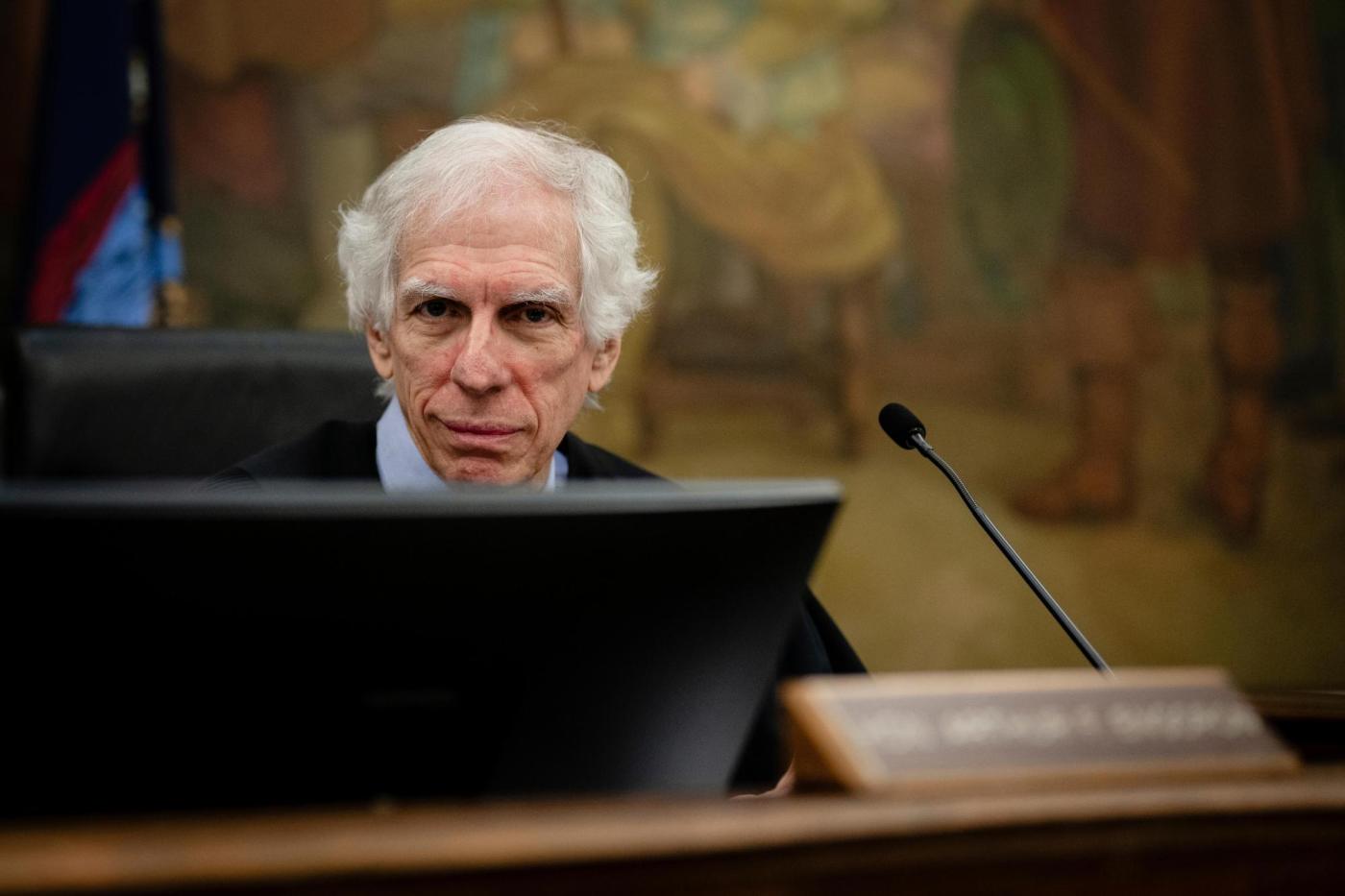
NEW YORK (AP) — White powder was found Wednesday in an envelope addressed to the New York judge who ordered Donald Trump to pay a $454 million civil fraud judgment. It’s the latest security scare involving people in key roles in the former president’s legal cases.

A court officer screening mail at Judge Arthur Engoron’s Manhattan courthouse opened the envelope around 9:30 a.m. Some of the powder fell out of the envelope and landed on the officer’s pants, police said. Preliminary tests were negative for hazardous substances, court spokesperson Al Baker said.

The courthouse operations office where the mail was opened was briefly closed, but the courthouse remained open. The officer and other workers who may have been exposed to the powder were temporarily isolated, Baker said. No injuries were reported.

Engoron had no exposure to the letter or the powdery substance, Baker said.

Wednesday’s scare came less than two weeks after Engoron issued his verdict penalizing Trump, his company and executives, including his two sons Eric and Donald Trump Jr., for scheming to dupe banks, insurers and others by inflating his wealth on financial statements used to secure loans and make deals.

Along with staggering financial penalties, the judge’s ruling forced a shakeup at the top of Trump’s company, putting the Trump Organization under court supervision and imposing strict restrictions on how it does business.

In January, hours before closing arguments in the case, authorities had responded to a bomb threat at Engoron’s Long Island home. Engoron’s chambers have reported hundreds of harassing and threatening calls, emails, letters and packages.

Separately, on Christmas Day, Justice Department Special Counsel Jack Smith was the subject of a fake emergency call that reported a shooting at his home.

Smith, who is leading Trump’s federal prosecutions in Washington, D.C., and Florida, has been the subject of numerous threats and intimidating messages since he was appointed and Trump began posting messages about him, prosecutors have said.

U.S. District Judge Tanya Chutkan, who is overseeing Trump’s Washington D.C. case, was targeted with a similar fake emergency call a few days later. Trump is charged in Washington with scheming to overturn his 2020 election loss and in Florida with hoarding classified documents after he left the White House.

On Monday, police in hazmat suits responded to Donald Trump Jr.’s Florida home after the former president’s eldest son opened a letter that contained an unidentified white powder and a death threat. White powder was also found in a letter to Trump Jr. in 2018 and in mail sent to Eric Trump and Trump Tower in 2016.

Hoax attacks using white powder play on fears that date to 2001, when letters containing deadly anthrax were mailed to news organizations and the offices of two U.S. senators. Those letters killed five people.

__

David French: What is Christian nationalism, exactly?

posted in: News | 0

If you’re alarmed by the rise of Christian nationalism, the single worst thing you can do is define it too broadly. If you define it too broadly, then you’re telling millions of ordinary churchgoing citizens that the importation of their religious values into the public square somehow places them in the same camp or on the same side as actual Christian supremacists, the illiberal authoritarians who want to remake America in their own fundamentalist image.

Enter the new feature-length documentary “God and Country,” which examines the role of Christian nationalism in American politics. Even before I knew that Rob Reiner (the director of “A Few Good Men”) was involved in the project, I agreed to be interviewed by the filmmakers for two key reasons:

First, I wanted to make sure that I could offer a sensible definition of Christian nationalism, one that didn’t cast aspersions on Christians simply for bringing their values into the public square.

And second, I wanted to outline exactly why actual Christian nationalism presents a real danger to our Constitution.

What it’s not

To understand what Christian nationalism is, it’s important to understand what it is not.

It is not Christian nationalism if a person’s political values are shaped by the individual’s Christian faith. In fact, many of America’s most important social movements have been infused with Christian theology and Christian activism. Many of our nation’s abolitionists thundered their condemnations of slavery from Northern pulpits. The Civil Rights Movement wasn’t exclusively Christian by any means, but it was pervasively Christian — Martin Luther King Jr. was, of course, a Baptist minister.

Anyone may disagree with Christian arguments around civil rights, immigration, abortion, religious liberty or any other point of political conflict. Christians disagree with one another on these topics all the time, but it is no more illegitimate or dangerous for a believer to bring her worldview into a public debate than it is for a secular person to bring his own secular moral reasoning into politics. In fact, I have learned from faiths other than my own, and our public square would be impoverished without access to the thoughts and ideas of Americans of faith.

Primacy is the problem

The problem with Christian nationalism isn’t with Christian participation in politics but rather the belief that there should be Christian primacy in politics and law. It can manifest itself through ideology, identity and emotion. And if it were to take hold, it would both upend our Constitution and fracture our society.

Sociologists Samuel Perry and Andrew Whitehead define Christian nationalism as a “cultural framework that blurs distinctions between Christian identity and American identity, viewing the two as closely related and seeking to enhance and preserve their union.” Author and pastor Matthew McCullough defines Christian nationalism as “an understanding of American identity and significance held by Christians wherein the nation is a central actor in the world-historical purposes of the Christian God.” Both definitions are excellent, but what does ideological Christian nationalism look like in practice?

In 2022, a coalition of right-wing writers and leaders published a document called “National Conservatism: A Statement of Principles.” Its section on God and public religion states: “Where a Christian majority exists, public life should be rooted in Christianity and its moral vision, which should be honored by the state and other institutions both public and private.” That’s an extraordinary — and ominous — ideological statement, one that would immediately relegate non-Christians to second-class status. It’s utterly contrary to the First Amendment and would impose a form of compelled deference to Christianity on both religious minorities and the nonreligious.

Not just ideology, but also identity

But Christian nationalism isn’t just rooted in ideology; it’s also deeply rooted in identity, the belief that Christians should rule. This is the heart of the Seven Mountain Mandate, a dominionist movement emerging from American Pentecostalism that is, put bluntly, Christian identity politics on steroids. Paula White, Donald Trump’s closest spiritual adviser, is an adherent, and so is the chief justice of the Alabama Supreme Court, Tom Parker, who wrote a concurring opinion in the court’s recent IVF decision. The movement holds that Christians are called to rule seven key societal institutions: the family, the church, education, the media, the arts, business and the government.

One doesn’t have to go all the way into Seven Mountain theology, though, to find examples of Christian identity politics. The use of Christianity as an unofficial but necessary qualification for office is a routine part of politics in the most churchgoing parts of America. Moreover, one of the common red-America arguments for Trump is that he might not be devout himself, but he’ll place lots of Christians in government.

But what is Christian identity politics but another form of Christian supremacy? How does Christian identity alone make any person a better candidate for office? After all, many of the worst actors in American politics are professed believers. Scandal and corruption are so pervasive in the church that when a person says, “I’m a Christian,” it tells me almost nothing about their wisdom or virtue.

Feelings over reason

Finally, we can’t forget the intense emotion of Christian nationalism. Most believers don’t follow ideological and theological arguments particularly closely. In the words of historian Thomas Kidd, “Actual Christian nationalism is more a visceral reaction than a rationally chosen stance.” It is tied, in other words, to a visceral sense that the fate of the church is closely tied to the outcome of any given political race.

That fervor can make believers gullible and potentially even dangerous. Its good-versus-evil dynamic can make Christians believe that their political opponents are capable of anything, including stealing an election. It artificially raises the stakes of elections to the point where a loss becomes an unthinkable catastrophe, with the fates of both church AND state hanging in the balance. As we saw on Jan. 6, 2021, this belief invites violent action.

Committed Christian nationalists represent only 10% of the population, according to a 2023 PRRI/Brookings Christian Nationalism Survey. But even members of a minority that small can gain outsize power when they fold themselves into the larger Christian electorate, casting themselves as “just like you.” That’s why we cannot conflate Christian activism with Christian nationalism. One can welcome Christian participation in the public square while resisting domination, from any faith or creed.

David French joined The New York Times as an Opinion columnist last year. Before that, he was a senior editor at The Dispatch, which he helped start, and a contributing writer at The Atlantic. He spent most of his career as a practicing lawyer, working in commercial and constitutional litigation. In his late 30s, he joined the United States Army Reserve as a judge advocate general. David deployed to Iraq in 2007 and served in Diyala Province, where he was awarded a Bronze Star. He is a former president of the Foundation for Individual Rights and Expression. His most recent book is “Divided We Fall: America’s Secession Threat and How to Restore Our Nation.” He lives in Franklin, Tenn.