Editorial: The 78 is a fabulous site for White Sox baseball and much else

posted in: News | 0

When Chicago was selecting sites for a new casino in 2022, we endorsed the bid that would have landed the giant entertainment center on the plot of land known as The 78, the name being a concise riff on Chicago having 77 official neighborhoods.

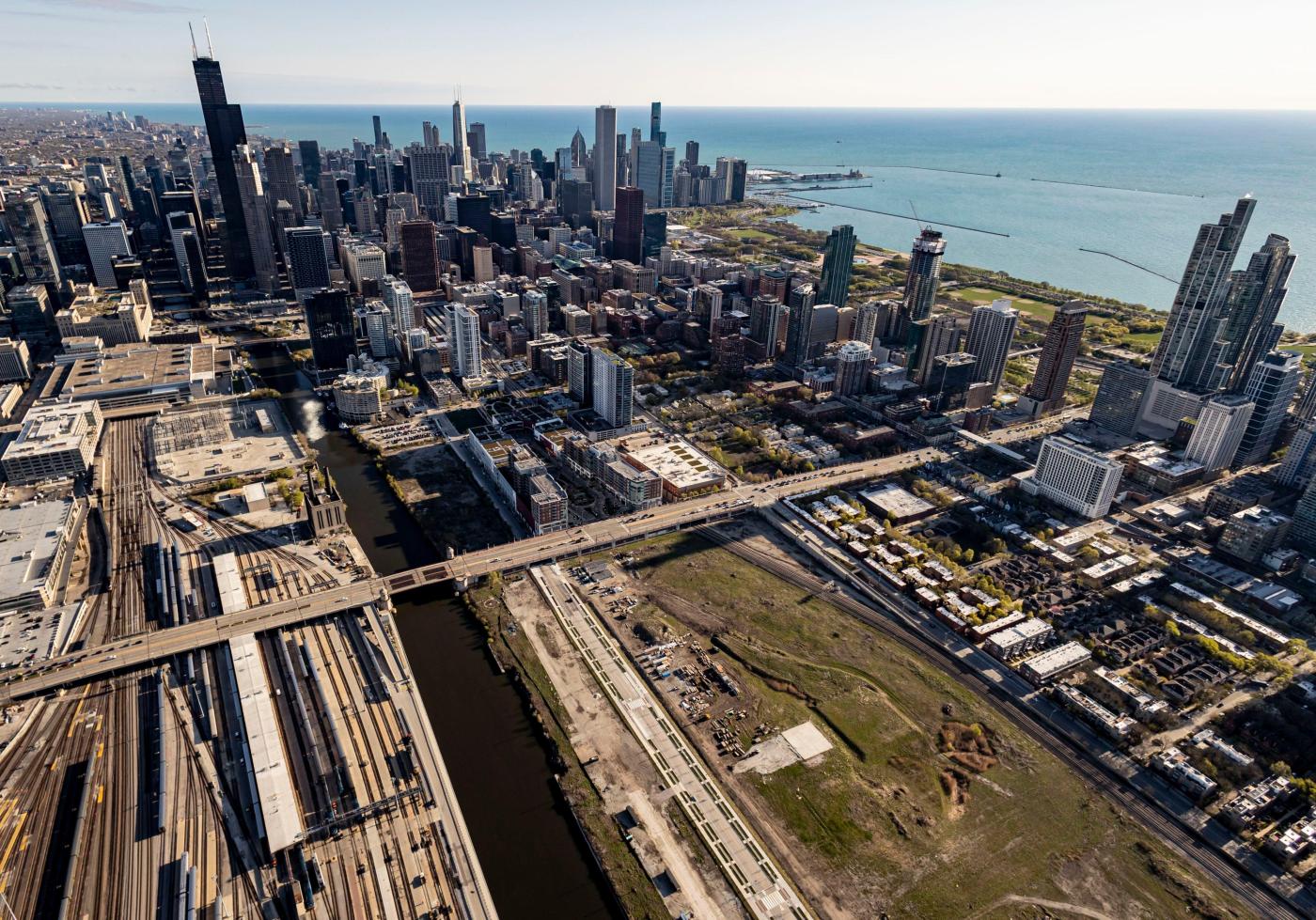
Why? For starters, The 78, which is bordered by Roosevelt Road to the north, Clark Street to the east, 16th Street to the south, and the South Branch of the Chicago River to the west, is an enviable, shovel-ready site for development.

Its selection for the casino would not have, ahem, displaced anybody and at considerable expense. It offered river frontage, leading us to envision lovely waterfront bars and restaurants that would not attract the free-and-clear objections and lawsuits that applies to lakefront projects and that could, in essence, extend the trajectory of Chicago’s successful River Walk to the North. There is room to breathe within this 62 acres of former railroad land, now owned by developer Related Midwest, and The 78 is supremely well served by existing modes of public transportation. That would be especially the case once the long-planned new CTA station is built at 15th Street.

All of those arguments would apply just as well to a development that included a new stadium for the Chicago White Sox.

But that wasn’t the most important reason why we were, and are, so enthusiastic about The 78.

Right now, it’s a barren barrier, a dead zone undermining the potentially symbiotic relationship between Chicago’s Loop and the South Side.

If The 78 were developed, and done right, it could relink the South Loop with Chinatown and Bronzeville and could radiate economic development out from the business district to the south, filling the kind of hole that the West Loop entertainment district has plugged to the west and that the Gold Coast residential neighborhood long has provided to the North. Get rid of that no man’s land and just maybe the huge success of Millennium Park, another railroad-related project, from two decades ago could be emulated in a section of the city with a greater need.

The 78 is a huge, fallow asset and, given how well suited it is to entertainment, a casino or (better yet) a new sports stadium is what it needs. For a sense of what this could look like, all you have to do is look at Tiger Stadium in Detroit, with its lively eateries and relationship to a reignited downtown, or to the huge pedestrian area around Allegiant Stadium in Las Vegas or, of course, at Wrigleyville.

Guaranteed Rate Field is, frankly, unloved and unlovely. It’s too harsh, isolated, steep, hemmed in and fan-unfriendly. The neighborhood often has been resistant when it comes to developing the surrounding parking lots into fan amenities. Despite its relative youth, it’s a relic of a time when the stadium still was just the stadium. Now, as we well know, sports teams don’t so much hope to spark development as to control (and ideally own) what goes on down the street, where fans stay, eat and play.

Unlike the NFL, which plays few games a year, Major League Baseball plays all summer long with scores of home games each season. Office workers could walk to the new stadium from the Loop, potentially a carrot when it comes to getting workers back downtown.

We understand, as tourism officials well know, that the Cubs and the Sox are very different propositions when it comes to economic development. The Cubs attract huge numbers of out-of-town fans who stay in hotels and cite Cubs games as the anchoring reason for their weekend visit. The Sox fan base is primarily local, spinning off far less secondary spending. But that does not have to remain the case. The site where the games are played is a big factor.

We’ve long been on record believing the days of handing over taxpayer funds to hugely profitable sports franchise owners should be over. We’ve said many times that the Chicago Bears, still playing the long game of chicken or persuasion or whatever, should pay for their own stadium, being a private business planning to operate in a private facility.

We feel that same way about the White Sox, although that view doesn’t preclude city and state governments from working with the team (or with the Bears, for that matter, if they’re serious about staying in Chicago) to make any move as hospitable and supportive as possible. It’s not unreasonable to chip in on infrastructure and the public areas, especially if the site also is going to include housing, parks and the like. Even Ald. Nicole Lee, 11th, whose ward long has been home to the White Sox, has said she is impressed with the plan.

No doubt tax increment financing will be needed, which some would call a form of public financing. Philosophically, in terms of insisting on private investment, the devil is in the details there — TIF money can go to public improvements that arguably a private developer might otherwise shell out for. We note the current mayor’s queasiness on TIFs, given the city’s cash-strapped situation. He ought to make an exception here if the public and private interests are properly aligned. And we don’t see a big problem with basically transferring the existing 2% hotel tax to this project, since that already is dedicated to a similar use.

The fate of Guaranteed Rate Field has to be part of this discussion, of course, and it’s unlikely that site would satisfy the Bears, for most of the same reasons that the White Sox don’t want to stay, even if there were a new stadium. But an empty concrete shell by the side of the Dan Ryan Expressway would not be acceptable. Part of the package should include redevelopment plans: housing, sports facilities for the community, a stadium for the Chicago Fire if they are interested, playing fields and other benefits appropriate for a facility built with public money and owned by the Illinois Sports Facilities Authority.

All of those debates are to come. But of all the sports shenanigans we’ve written about these last few years, the idea of the White Sox at The 78 is far better than most. We cannot overemphasize the strategic importance of that connective tissue from an economic development point of view.

The 78 could make the Sox, South Loop, Bronzeville and Chinatown big winners, and that’s without having to stuff a slot machine or throw a pair of dice.

Join the discussion on Twitter @chitribopinions and on Facebook.

Submit a letter, of no more than 400 words, to the editor here or email letters@chicagotribune.com.

()
2024 Vulcan Krewe’s identities revealed as St. Paul Winter Carnival winds down

posted in: News | 0

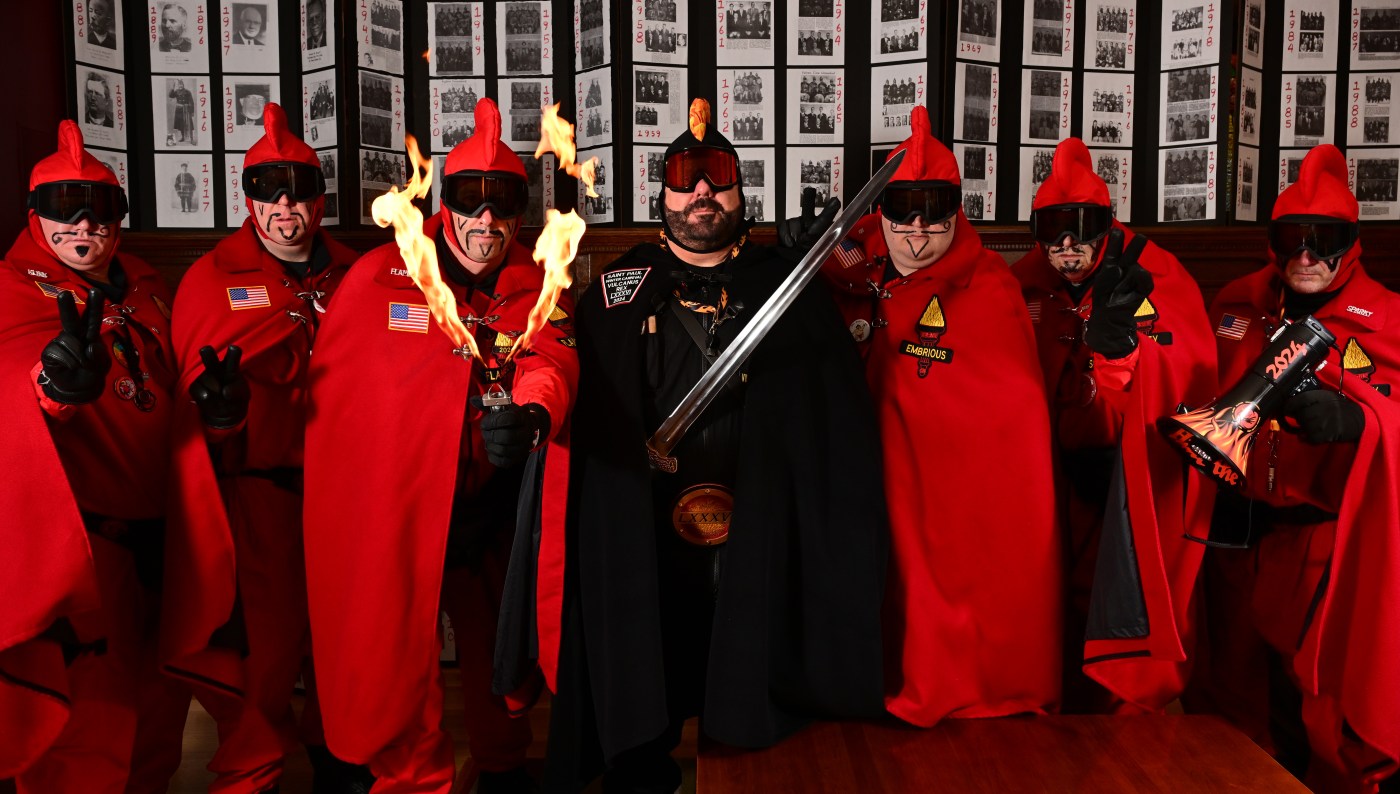
As the 2024 St. Paul Winter Carnival comes to a close, the identities of this year’s Vulcan Krewe have been revealed.

This year’s Krewe is:

Fire King Vulcanus Rex LXXXVI, Jim Libke of St. Anthony

Duke of Klinker, Shane Geng of Cottage Grove

Count of Ashes, Tim Routa of Maplewood

General Flameous, Dave Andrews of Stillwater

Count Embrious, Dusty Carlson of Oakdale

Prince of Soot, J.D. Nystrom of St. Paul

Baron Hot Sparkus, Johnny Linden of White Bear Lake

Related Articles

Things to Do |


Photos: Vulcan Victory Torchlight Parade caps off 2024 St. Paul Winter Carnival

Things to Do |


Photos: St. Paul Bouncing Team holds tryouts as hopefuls ‘conquer fears’

Things to Do |


Winter Carnival event will celebrate Bernese Mountain Dogs — and remember a royal one

Things to Do |


St. Paul Winter Carnival to celebrate second annual Rondo Night

Things to Do |


Photo Gallery: Winners of Winter Carnival ice and snow sculpting competitions

Column: The Chicago Bears need another edge rusher. Could UCLA’s Laiatu Latu be a draft target, injury history and all?

posted in: News | 0

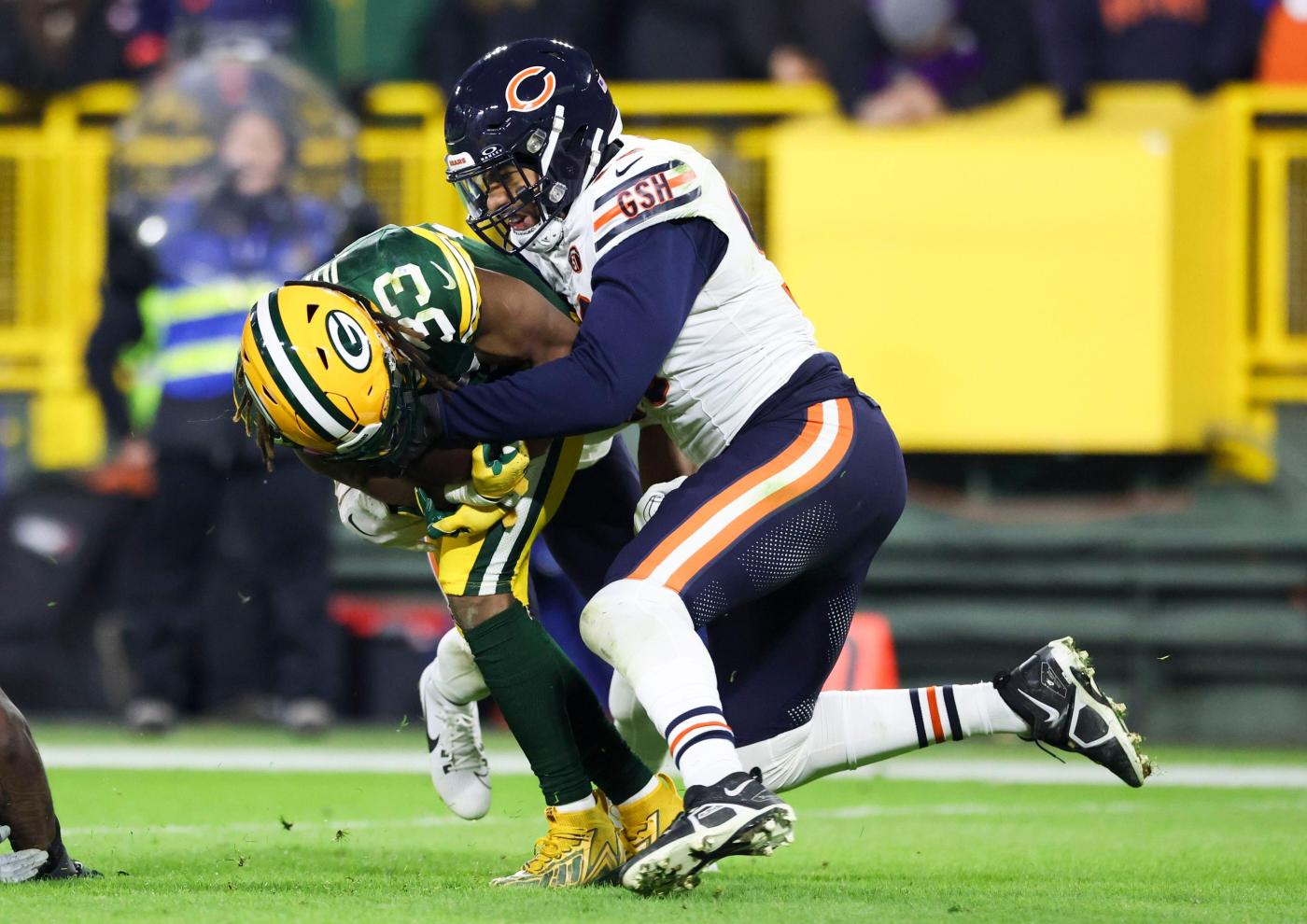
MOBILE, Ala. — In the last 25 years, the Chicago Bears have drafted two edge rushers who went on to have a double-digit-sack season for the team.

Mark Anderson, a fifth-round pick in 2006, had a career-high 12 during his rookie season. Rosevelt Colvin, a fourth-round pick in 1999, had 10 1/2 sacks in 2001 and 2002 before departing leaving as a free agent.

The only other edge rusher to reach at least 10 sacks in a season did it elsewhere — Leonard Floyd, selected ninth in 2016, had 10 1/2 sacks this season for the Buffalo Bills and the same number in 2020 for the Los Angeles Rams.

The Bears have fueled their pass rush largely with free agents or trade acquisitions, and general manager Ryan Poles filled a gaping need midseason when he traded for Montez Sweat and then secured the defensive end with a four-year, $98 million extension.

For coach Matt Eberflus’ defense to reach another level — and that’s the goal — the Bears need a pass-rushing threat opposite Sweat. A handful of veterans will be worth consideration in free agency, including Danielle Hunter of the Minnesota Vikings, but in a perfect world the team would be able to pair a rookie with Sweat, who will turn 28 in September.

It’s way too early to project how things will shake out, but if the Bears draft a quarterback with the No. 1 pick in the draft, they could consider a wide receiver, offensive tackle or edge rusher at No. 9. If Poles trades down at No. 9, he still could fish in the same waters for those positions.

UCLA’s Laiatu Latu is the most accomplished pure edge rusher in the draft and projects as a first-round pick after totaling 23 1/2 sacks over the last two seasons. The Pac-12 defensive player of the year also won the Lombardi Award as the best defensive lineman in the nation, and he has looked the part this week at Senior Bowl practices with some silky smooth spin moves on the edge and high-level hand usage.

Latu measured 6-foot-5, 261 pounds, so he has good size, but his arms probably aren’t an ideal length at 32 1/2 inches. For comparison, Sweat was 6-6, 260 at the combine in 2019, and his arms measured 35 3/4 inches. Eberflus puts a big emphasis on length when he’s scouting defensive players.

But the production is there, and the biggest question for Latu beginning next month at the scouting combine will surround medical reports. Latu briefly retired from football after suffering a neck injury at the beginning his college career at Washington. Latu suffered a stinger in practice as the Huskies prepared for the 2020 season.

“Just took a weird hit and got a stinger going down my body that lasted 20 seconds, like a lot of other people feel,” he said.

Latu didn’t feel right afterward, and following an MRI, Washington doctors decided he would need to sit out the season. He eventually required surgery for a slipped disk in March 2021. The Huskies medical team essentially decided it wasn’t safe for him to continue playing and basically medically retired him.

Rehab was supposed to be a grueling nine-month process. But 2 1/2 months removed from surgery, Latu felt no complications. He was still at Washington and had retained his scholarship but wasn’t allowed to play football.

“You can call me stubborn, but I went into playing men’s rugby and really just testing my body, tackling grown men and stuff like that,” he said. “I earned a contract from the Seattle Seawolves to go and play with them for an extended part of time. They’d pay me and give me housing, stuff like that, turned that down. I wanted to chase my passion for football.”

Latu sought another opinion on his neck injury and met with Dr. Robert Watkins in Southern California. Latu was cleared to play football, entered the transfer portal and turned into a heck of a find for the Bruins.

Every team here has asked him about his journey and the medical process, and he can point out he had no injury issues the last two years at UCLA.

“Head, neck and heart, those are the three issues that get really tricky for the medical teams,” a high-ranking personnel man said after practice Tuesday at South Alabama’s Whitney Hancock Stadium. “It could be a deal where half the teams pass him and half fail him.”

Sweat had a heart issue when he came out of Mississippi State. He was reported to be diagnosed with hypertrophic cardiomyopathy, which results in thickening of the heart walls. Some later said that diagnosis was incorrect, but the official I spoke to said his team removed Sweat from its draft board. Sweat is a clear example of a player with a medical-related issue who can go on to have a productive and durable career despite the questions of highly trained doctors.

On the field, Latu isn’t great defending the run and has had a few instances in practices in which he has struggled to set the edge.

“He’s not overly strong,” a college scouting director said. “He’s willing and it’s not a lack of effort in the run game. You might want him to add some weight if he’s a three-down player. But there’s so many sub packages, if you’re just drafting him to hunt the quarterback, you’re fine.”

In a draft class that isn’t stocked with elite edge rushers, Latu could have skipped the Senior Bowl and kept his focus strictly on preparing for on-field testing at the combine in Indianapolis.

“I was told I could never play football again,” Latu said. “To me, I can’t get enough of it, especially learning from the best of the best while being out here. Really just gaining knowledge and growing.”

()

Biden wins South Carolina primary

posted in: Politics | 0

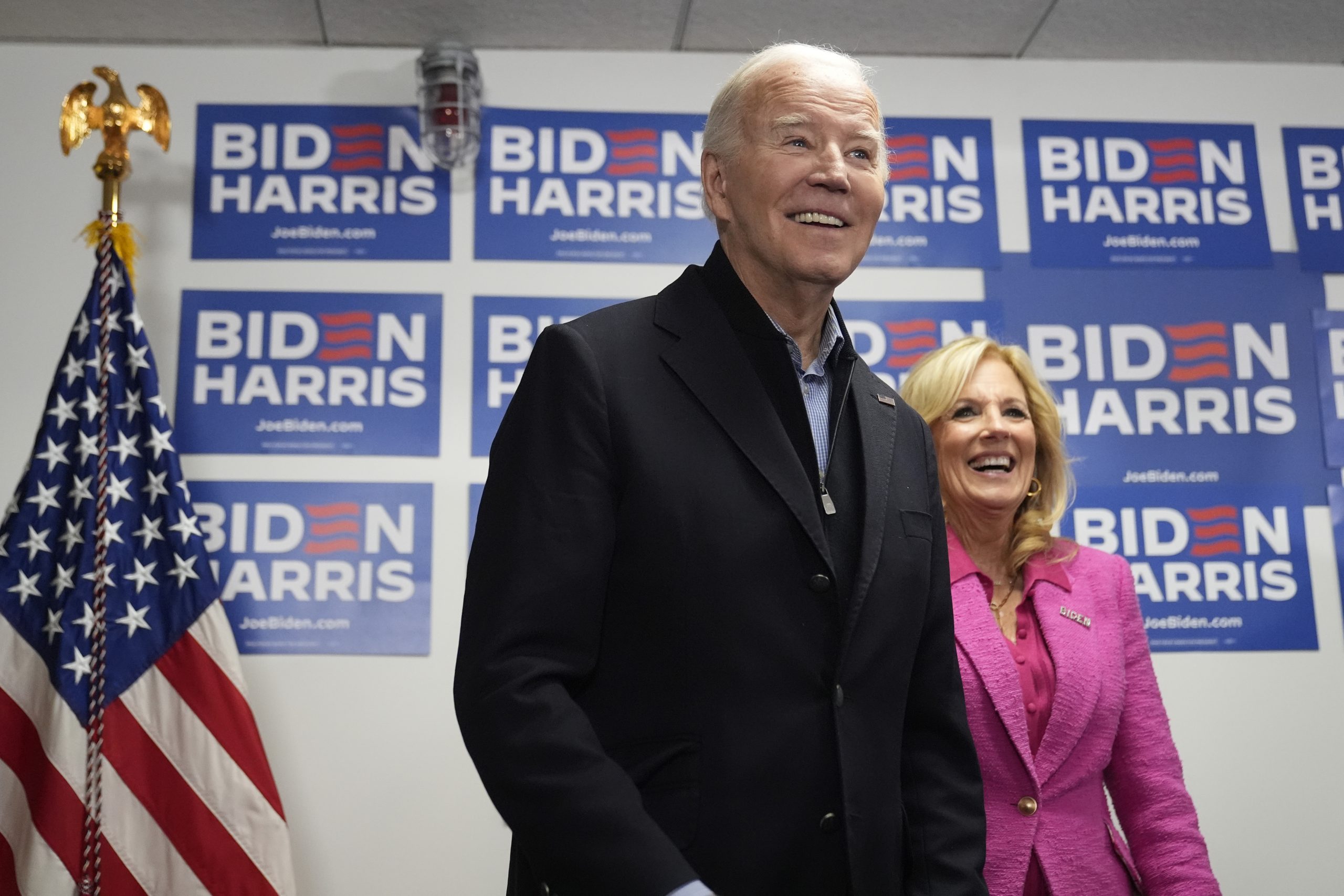
COLUMBIA, South Carolina — President Joe Biden cruised to victory in the first sanctioned presidential primary Saturday night.

Biden easily beat out nominal challenges from Rep. Dean Phillips (D-Minn.) and self-help author Marianne Williamson in a state that he placed atop the primary calendar and where he scored a crucial victory during his 2020 campaign.

Biden’s victory in South Carolina brings the campaign one step closer to the general election, which is expected to be one of the longest and most expensive in American political history. The Republican presidential primary in South Carolina will be held Feb. 24. Former President Donald Trump is the heavy favorite in that race.

Biden was hoping that South Carolina’s vote would help assuage concerns about Democratic enthusiasm and, more specifically, his standing with Black voters.

Shortly after the race was called, he phoned Rep. Jim Clyburn (D-S.C.) who was speaking to supporters at the South Carolina Democratic Party’s victory night event. Biden, who Clyburn put on speakerphone along with the microphone he was holding, expressed his thanks and asked about turnout.

The specifics of what he said were difficult for the audience to hear. The Biden campaign subsequently released a statement. “In 2020, it was the voters of South Carolina who proved the pundits wrong, breathed new life into our campaign, and set us on the path to winning the Presidency,” it read. “Now in 2024, the people of South Carolina have spoken again and I have no doubt that you have set us on the path to winning the Presidency again — and making Donald Trump a loser — again.”

Even though Biden’s victory was expected, the president’s campaign still sunk significant resources into the state, dispatching Vice President Kamala Harris four times to South Carolina in the last five weeks. The campaign also spent more than $400,000 on advertisements, hoping to amp up turnout.

In the end though, the campaigns seemed to acknowledge that the outcome was preordained. Biden was in Southern California, not South Carolina, on primary night. Phillips, who spent all of $585 on digital ads in the state, was traveling from New York to Washington, D.C., on primary night, according to a campaign spokesperson.

Democrats, backed by Biden, reshuffled the presidential nominating calendar last year, elevating South Carolina to its first-in-the-nation status for the first time and centering Black voters earlier in the primary process. Nonetheless, New Hampshire held its own unsanctioned Democratic primary last month, when a write-in campaign for Biden won over Philllips and Williamson by a wide margin.

On stage Saturday night, Clyburn called for the Democratic National Committee to “not to hold the state law in New Hampshire against our Democrats,” and seat New Hampshire’s delegates, despite their unsanctioned contest.