Letters: Fraud in Minnesota? Among the causes, a collective breakdown in conscience

posted in: All news | 0

What enables fraud

News of widespread fraud among a minority of Minnesota’s Somali community has fractured public trust and damaged the well-being of the entire community. It has left many asking, “Why has oversight failed so miserably?” and, “Why was this fraud not stopped long ago?” The Somali fraudsters were not that sophisticated. There were obvious red flags, and it appears that assistance with this fraud may have come from individuals who have not yet been identified.

Research in psychology shows that people are more likely to commit fraud when they rationalize their actions, when they believe “everyone is doing it,” and when responsibility is diffused. Legal enforcement alone cannot stop fraud; addressing the social and psychological conditions that enable it is also necessary.

Rationalization may be one of the strongest psychological forces that increases fraud. A number of Somalis involved in fraud do not think of themselves as criminals. “It’s a white-collar crime,” one stated, implying that it was not so bad. Some may even believe they are helping their community — or at least claim that “No one got hurt.” Rationalization is a classic defense mechanism, but it involves an avoidance of reality.

Another element at play has been the bandwagon effect, or the belief that “everybody is doing this.” Those engaged in fraud freely spent the money they had wrongfully acquired, showing off their luxury cars, expensive homes, or other high-end purchases and making their schemes look legitimate. Evidence of financial gain with apparently no negative consequences may have lured more Somalis into fraud. But widespread participation in something does not automatically mean it is good or right.

The bystander effect occurs when the presence of many people tends to hinder anyone from stepping in when they see a concerning behavior. Research has shown that a bystander is less likely to extend help in the (real or imagined) presence of others. The bystander effect can help explain why fraud within the Somali community was sometimes underreported, even when many people were aware it is happening. A diffusion of responsibility occurs. In tight networks, many people may know about fraud, but each assumes someone else will report it. Because “everyone knows,” no one acts. Responsibility has been spread so thin that it has no effect. The bystander effect can be especially strong because of how closely connected Somalis are. Families, clans, mosques and businesses overlap. Reporting wrongdoing could mean reporting to your cousin, your neighbor, or someone who prayed next to you on Friday. The social cost may seem enormous. Therefore, many people stay silent.

Finally, we must not overlook the role that one’s conscience needs to play. Perhaps cases of fraud like this serve as evidence of a collective breakdown of conscience, and until this spiritual problem is addressed, there may be no real resolution to the other issues.

Badeh Dualeh, St. Paul.
The writer is an assistant professor of psychology at North Central University


A swap

The U.S. might now best return Minnesota to its Scandinavian roots.

Swap Minnesota for Greenland. We can become an autonomous territory of the Kingdom of Denmark  … also, no need to add another star to our iconic American flag.

Gene Delaune, Arden HIlls


Investigate

This newspaper reports that Ramsey County Attorney John Choi has committed to investigating any shooting or crime committed by federal officers, and that certainly is appropriate.  The only way a society will have the rule of law is when it is applied to all in the jurisdiction.

The overwhelming and dominant crime today is the massive fraud that seems to expand with every news cycle. The amounts involved are staggering, and  a shameful embarrassment for the State of Minnesota. It is unfathomable that a theft of this scope could occur only through neglect or incompetence.

Numerous media entities have reported there are dozens, if not hundreds, of state employees that allege the issue of fraud was repeatedly raised, and ignored or suppressed, and any who voiced that concern intimidated.  All of the state offices where this allegedly occurred are in Ramsey County.

If these allegations are true, shouldn’t there be a grand jury convened to consider charges of conspiracy in furtherance of the fraud, or aiding and abetting after the fact?

The public image of state government and the DFL is at an all time low, by any measure, rock bottom.  Both need a 12-step program.

The first would be complete transparency, and complete accountability.

The county attorney can initiate the process by doing his job.

Andy Lynn, Mendota Heights


The ice we need

Remember The Great Ice Cube art controversy of 2021 at Summit Avenue and Griggs Street in the shape of a heart?

That’s the only ice we need now more than ever in this town.

Alisa Lein, St. Paul


Some of us just don’t cooperate

As an American with four Swedish immigrant grandparents, I qualify as the “right kind of person” in Minnesota. Even though the Saint Paul Globe published disparaging comments on the Swedish squatters in Swede Hollow back in the mid-19th Century, we are now model citizens.

But some of us just don’t cooperate. Maybe it is my obsession with eating well. I shop and eat in exactly the neighborhoods where the ICE police gather to root out recent immigrants. ‘Nordeast,” named to mimic the speech of early European immigrants, is the most vibrant area of Minneapolis. I can enjoy a “Dago” sandwich and beer and conversation at Dusty’s bar. For something high-toned, I can stop at Diane’s Place, the Hmong bakery, or the Korean Pizza place, each rated by the New York Times as one of the best 15 bakeries or pizza places  in the USA.

But my favorite place is the Holy Land on Central Avenue, where I buy Lebanese labneh and Palestinian olives and cheese. The Lebanese had horrible times in their home country and those who came here have contributed a lot. That they have been here for some time protects them from the treatment more recent immigrants have experienced.

Lake Street has the Swedish Deli, Ingebretsen’s. There I saw a commotion. Citizens surrounded an ICE SUV, blowing whistles and shouting at the officers to leave. The ICE patrol eventually left down a side street as one of the officers raised his middle finger to all onlookers.

I recall when I did a tour of Martin Luther King sites in Chicago, I learned that King could bear vicious shouts by keeping calm and silent. I suppose if the ICE police believed in their mission as King did in his, they might adopt this tactic rather than shout obscenities and “give the finger.”

Daniel Norstedt, Eau Claire

Related Articles


Real World Economics: How the Fed ends, with a whimper


Skywatch: There’s a giant on the rise


Your Money: Helping children build healthy money habits


Working Strategies: Leverage your college career services


Joe Soucheray: We’re in the national news every day but don’t want to be
Average US long-term mortgage rate edges higher, but still near lowest point in more than 3 years

posted in: All news | 0

By ALEX VEIGA, AP Business Writer

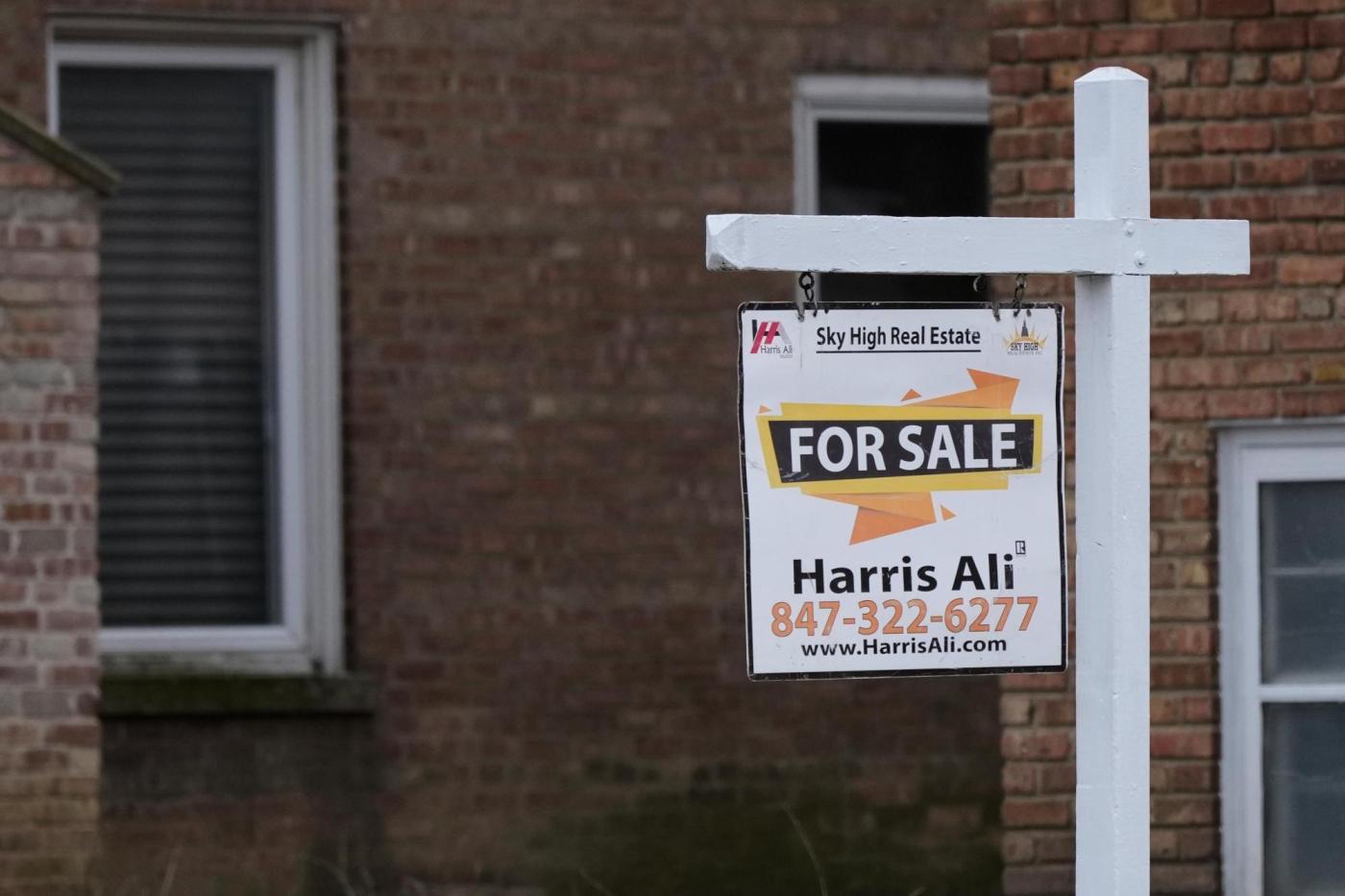
The average long-term U.S. mortgage rate ticked higher this week, but remains near its lowest level in more than three years.

The benchmark 30-year fixed rate mortgage rate rose to 6.09% from 6.06% last week, mortgage buyer Freddie Mac said Thursday. One year ago, the rate averaged 6.96%.

Borrowing costs on 15-year fixed-rate mortgages, popular with homeowners refinancing their home loans, also rose this week. That average rate inched up to 5.44%, up from 5.38% last week. A year ago, it was at 6.16%, Freddie Mac said.

Mortgage rates are influenced by several factors, from the Federal Reserve’s interest rate policy decisions to bond market investors’ expectations for the economy and inflation. They generally follow the trajectory of the 10-year Treasury yield, which lenders use as a guide to pricing home loans.

The modest increase in rates this week follows a jump in the 10-year Treasury yield as the bond market reacted to geopolitical tensions over tariff threats by the Trump administration as it pressed for control of Greenland and turbulence in Japan’s bond market.

The 10-year yield was at 4.27% at midday Thursday, up from 4.17% a week ago.

Related Articles


Prices ticked up in November as Americans keep spending a key inflation measure shows


4 in 5 small businesses had cyberattacks last year and almost half of those were AI powered


US applications for jobless benefits inch up last week to a still-low 200,000


Consumer spending pushes US economy up 4.4% in third quarter, fastest in two years


US stocks climb some more after Trump calls off his tariffs for Greenland

Inflation fears are high. A new poll shows one group is particularly worried

posted in: All news | 0

By TERRY TANG and LINLEY SANDERS, Associated Press

WASHINGTON (AP) — Anxiety about costs and affordability is particularly high among Asian Americans, Pacific Islanders and Native Hawaiians, even at a moment when economic stress is widespread, according to a new poll.

Related Articles


Prices ticked up in November as Americans keep spending a key inflation measure shows


4 in 5 small businesses had cyberattacks last year and almost half of those were AI powered


US applications for jobless benefits inch up last week to a still-low 200,000


Consumer spending pushes US economy up 4.4% in third quarter, fastest in two years


US stocks climb some more after Trump calls off his tariffs for Greenland

About half of Asian American and Pacific Islander adults said they wanted the government to prioritize addressing the high cost of living and inflation, according to the survey from AAPI Data and The Associated Press-NORC Center for Public Affairs Research, which was conducted in early December. In comparison, a December AP-NORC poll found that about one-third of U.S. adults overall rated inflation and financial worries as the most pressing problems.

The findings indicate that this small but fast-growing group is not persuaded by President Donald Trump’s attempts to tamp down worries about inflation and defend his tariffs. Even when considering partisanship, AAPI Democrats and Independents — and even AAPI Republicans — are at least slightly more likely than those groups overall to mention inflation and costs. Concern about costs has risen among AAPI adults since last year, when about 4 in 10 AAPI adults said they wanted the government to focus on this issue.

Like Americans overall, AAPI adults have also become more focused on health care issues over the past year.

The poll is part of an ongoing project exploring the views of Asian Americans, Native Hawaiians and Pacific Islanders, whose views are usually not highlighted in other surveys because of small sample sizes and lack of linguistic representation.

Jayakumar Natarajan, a 56-year-old manager for a major tech company living in the San Francisco Bay Area, is rethinking his goal of retiring at 60 because of climbing costs in basic goods and health care. He can afford to live the way he wants for now, but is considering delaying retirement or moving outside the U.S., where prices are lower.

The cost of health care is very much on his mind. “I think it will really make a big difference in the way I think about retirement planning,” he said.

AAPI adults are worried about rising costs

Inflation and affordability loom large for AAPI adults, even compared to other economic concerns, the survey found. About 2 in 10 AAPI adults mentioned housing costs or jobs and unemployment as priorities for the government to work on in the coming year, which was generally in line with Americans overall.

Balancing financial obligations has become especially challenging for people living in high-cost areas, where a steady salary may not cover a growing family. Kevin Tu, 32, and his wife recently reached two milestones — buying a new home outside of Seattle in Lynnwood, Washington, and expecting their first child. The couple works full time and Tu also has a math tutoring business, but he is still nervous about what will happen after the baby arrives.

“I’m trying to figure out how to balance possible part-time day care with our mortgage, with cost of living,” said Tu, who is Taiwanese American.

Black, Hispanic and AAPI adults were more apt than white adults to bring up unemployment, jobs and housing costs as priorities, the surveys found.

Part of what may explain AAPI adults’ increasing worry about everyday costs is the largest AAPI adult populations reside in states and major metropolitan cities with higher costs of living and higher rent, such as California and New York.

While tariffs have impacted American consumers across the board, they have a particularly strong effect on Asian Americans and Pacific Islanders who prefer certain imported goods such as food and clothing. Karthick Ramakrishnan, AAPI Data executive director and researcher at the University of California, Berkeley, recalls how last year, some AAPI shoppers were going to ethnic grocery stores and “stockpiling” ahead of tariffs kicking in.

“When it comes to costs for Asian Americans and Pacific Islanders, it’s just not cost of general market groceries but ethnic market groceries,” Ramakrishnan said. “It’s something visible to them and potentially causing anxiety and worry.”

Health care is also a priority for AAPI adults

Some 44% of AAPI adult also want the government to prioritize health care in the coming year. That’s not meaningfully different from among U.S. adults overall, emphasizing Americans’ renewed focus on the issue after a year of health care cuts.

Srilasya Volam, a 25-year-old business consultant in Atlanta said that some of her family members have embarked on “ medical tourism ” trips as a result of high U.S. health care costs, a practice of traveling to other countries for more cost-effective medical procedures.

“It’s cheaper for us to get a flight ticket and go to India and have a medical procedure and come back than it is to have that done here,” she said. “When I was younger, we would just go to India and we’d be like, now that we’re here, let’s do everything: the dental checkups, every checkup. It’s a lot more cost effective.”

The poll found that about 6 in 10 AAPI adults are “extremely” or “very” concerned about their health care costs increasing in 2026, which is roughly in line with U.S. adults overall.

Falling confidence in the government’s ability to make progress

The survey found that AAPI adults are less confident in the government’s ability to make progress on the important issues facing the country than they were just after the 2024 election.

About 7 in 10 AAPI adults say they are “not at all” or just “slightly confident” that the government will make progress on key issues, up from 60% at the end of 2024.

Dissatisfaction with the Trump administration may be a factor. And while the economy is top of mind, other factors could be feeding the fear that the government won’t change things for the better this year.

Ernie Roaza, a 66-year-old retired geologist in Tallahassee, Florida, is a first generation immigrant to the U.S. from South Korea, where he grew up under a dictatorship. He worries that Trump is doing “everything that dictators do,” adding, “I’ve seen it before. It’s almost laughable, but it’s scary at the same time.”

He remains optimistic that the country will get through it.

“This administration will make things worse,” Roaza said. “But in every administration we’ve had, there are hills and valleys. We’re in the valleys right now.”

The poll of 1,029 U.S. adults who are Asian American, Native Hawaiian and Pacific Islanders was conducted from Dec. 2-8, 2025, using a sample drawn from NORC’s probability-based Amplify AAPI Panel, designed to be representative of the Asian American, Native Hawaiian and Pacific Islander population. The margin of sampling error for all respondents is plus or minus 4.7 percentage points.

Tang reported from Phoenix.

Vance heads to Minneapolis and says ‘far left’ should stop resisting immigration enforcement

posted in: All news | 0

By MICHELLE L. PRICE and JULIE CARR SMYTH

TOLEDO, Ohio (AP) — Vice President JD Vance, speaking in his home state of Ohio before visiting Minnesota on Thursday, blamed the “far left” for turmoil surrounding the White House’s deportation campaign.

“If you want to turn down the chaos in Minneapolis, stop fighting immigration enforcement and accept that we have to have a border in this country,” Vance said in Toledo. “It’s not that hard.”

Vance plans to meet with Immigration and Customs Enforcement agents in Minneapolis, which has been a focal point for protests since an agent fatally shot Renee Good, a mother of three, during a confrontation this month. The Republican vice president has played a leading role in defending that agent and said Good’s death was “a tragedy of her own making.”

He also praised the arrest of protesters who disrupted a church service in Minnesota on Sunday and said he expects more prosecutions to come. The protesters entered the church chanting “ICE out” and “Justice for Renee Good.”

“They’re scaring little kids who are there to worship God on a Sunday morning,” Vance said. “Those people are going to be sent to prison so long as we have the power to do so.”

He added: “Just as you have the right to protest, they have a right to worship God as they choose. And when you interrupt that, that is a violation of the law.”

Vance’s appearance was primarily focused on bolstering the Trump administration’s positive economic message on the heels of Trump’s appearance at the World Economic Forum in Davos. The vice president also took the opportunity to boost some of Republicans’ important statewide candidates in this fall’s midterm elections, including gubernatorial contender Vivek Ramaswamy and U.S. Sen. Jon Husted.

Convincing voters that the nation is in rosy financial shape has been a persistent challenge for Trump during the first year of his second term. Polling has shown that the public is unconvinced that the economy is in good condition and majorities disapprove of how Trump’s handling of foreign policy.

Vance urged voters to be patient on the economy, saying Trump had inherited a bad situation from Democratic President Joe Biden.

“You don’t turn the Titanic around overnight,” Vance said. “It takes time to fix what is broken.”

___

Carr Smyth reported from Columbus.

Related Articles


Texas leads the nation in supplying new residents to other states


Federal officers detain a 5-year-old boy who school official says was used as ‘bait’


Activist Nekima Levy Armstrong arrested following St. Paul church protest


Army orders military police to get ready for a possible Minneapolis deployment, AP source says


Autopsy finds Cuban immigrant in ICE custody died of homicide due to asphyxia