How Norway’s ski jumping scandal led to new rules in place for the Winter Olympics

posted in: All news | 0

By BRIAN MELLEY

The difference between winning an Olympic medal in ski jumping or being disqualified could come down to a bit of fabric.

Related Articles


Laila Edwards prepares to make Olympic debut as USA Hockey’s first Black female


Leonardo da Vinci’s legacy lights up the Milan Cortina Olympics with two cauldrons


Ilia Malinin: The 20-year-old American figure skater redefining the sport


IOC president says no contact yet with Trump’s White House, will meet Vance at Winter Olympics


Rivals US and Canada could put North American dominance on display at the Olympics in Milan

A larger suit can extend a ski jumper’s flight by several meters but it could violate rules that have become more stringent after the Norwegian team was caught cheating at last year’s world championships by manipulating the crotch area in the uniforms of its top two male jumpers.

Regulators added new measures this season before the Milan Cortina Winter Games to ensure all competitors play by the same rules after the scandal rocked the sport in March.

“There have been disqualifications in the past, many. It’s part of the sport,” said Bruno Sassi, spokesman for the international ski federation, FIS, the sport’s regulatory body. “But there had never been that kind of a brazen attempt to not only bend the rules, but like downright do something … to cheat the system in a way that it is very different from simply having a suit that is a tad too long or a tad too loose.”

Ski jumping is as much a science as an art. Teams of experts test skis and clothing in wind tunnels to maximize the aerodynamics at play long before jumpers try to achieve the perfect takeoff, flying form and landing.

A study published in October in the journal Frontiers in Sports and Active Living showed that adding 1 cm (0.4 inches) of fabric to the circumference of the suit could increase a jump by 2.8 meters (9.2 feet) — enough to separate a winner from an also-ran.

“In most cases, enlargement of the suit is beneficial,” said co-author Sören Müller, who heads ski jumping research at the Institute for Applied Training Science in Leipzig, Germany. “However, the area stretched by the V-position of the legs in the crotch area is the most noticeable and also offers the greatest advantage.”

The scandal

Ski jumpers have often pushed the limits on the size of their suits but video shot by a whistleblower was stunning because it captured Norwegian team officials in the act of cheating.

Head coach Magnus Brevik, assistant coach Thomas Lobben and staff member Adrian Livelten were recently banned from the sport for 18 months for tampering with the suits before the men’s large hill event. Extra material had been sewn into the crotch to stiffen and add surface area that would help during takeoff.

The alterations could not be spotted and were only found when the seams were examined after the contest.

“We regret it like dogs, and I’m terribly sorry that this happened,” Brevik said at the time.

FILE – Marius Lindvik, of Norway, poses in the ski jumping men’s large hill individual competition at the Nordic World Ski Championships in Trondheim, Norway, March 8, 2025. (AP Photo/Matthias Schrader, file)

The violation cost defending Olympic large hill ski jump gold medalist Marius Lindvik a world championship silver medal and brought shame to the team from Norway, the nation that invented ski jumping and has historically dominated the sport.

Lindvik and teammate Johann André Forfang, a two-time Olympic medalist, accepted three-month suspensions that allowed them to compete in this season’s events. Neither was charged with knowing about the stitch witchery but FIS said they “should have checked and asked questions about the night-time adjustments.”

The discovery caused outrage in the tight-knit ski jumping community.

“This is doping,” former German Olympic champ Jens Weissflog told German newspaper Bild, “just with a different needle.”

The scandal led Norway to sack its men’s team leadership.

FILE – Johann Andre Forfang, left, and Marius Lindvik, both of Norway, celebrate after the final round at the second stage of the 68th four hills ski jumping tournament in Garmisch-Partenkirchen, Germany, Jan. 1, 2020. (AP Photo/Matthias Schrader, File)

New Rules

In the wake of the cheating, FIS has modified its rules and brought in a coordinator to oversee screening of gear and hired former Austrian ski jumper Mathias Hafele to work as equipment expert.

“He used to make a make a living off of trying to make the most out of the rule book,” Sassi said. “Now he’s on our side putting together the new rule book.”

Before ski jumping events, two FIS controllers and a doctor will use improved 3-D measurements to evaluate athletes in their uniforms. The shape of the suits will make it harder to tamper with arm and leg cuffs and more difficult to lower the crotch to provide more surface area.

After suits pass the control checkpoint, tamper-proof microchips are affixed throughout the suit to prevent manipulation. Scanners will be able to tell before and after the jump if the chips are all in place.

A system like in soccer will also be applied so that anyone disqualified for an equipment violation will get a yellow card. A subsequent violation will lead to a red card and disqualification from the next event and a team will also lose a slot for a skier in the competition.

Eyes on Norway

After the scandal, Rune Velta, a former Norwegian team ski jumper, took over as head coach in June and was given the difficult task of restoring Norway’s reputation.

“It’s the hardest thing I’ve ever done,” Velta said. “We are building everything around the athletes from scratch. We started five months ago with zero and now we have a team around them to make them perform.”

Velta, who as Swiss coach last year had publicly criticized the cheating, feels that Norway is under more scrutiny this season.

During the summer ski jumping season when competitors slide down ceramic or porcelain tracks and land on bristly plastic mats, the team tried to adjust to the new ski suit dimensions.

“Acceptance for a kind of minor error and mistakes are really low,” Velta said. “We needed this summer to understand the standards and to learn kind of the line of the control and execution of the rules.”

AP Olympics coverage: https://apnews.com/hub/milan-cortina-2026-winter-olympics
Trump administration tells agencies to compile data on money sent to Democratic states

posted in: All news | 0

By GEOFF MULVIHILL

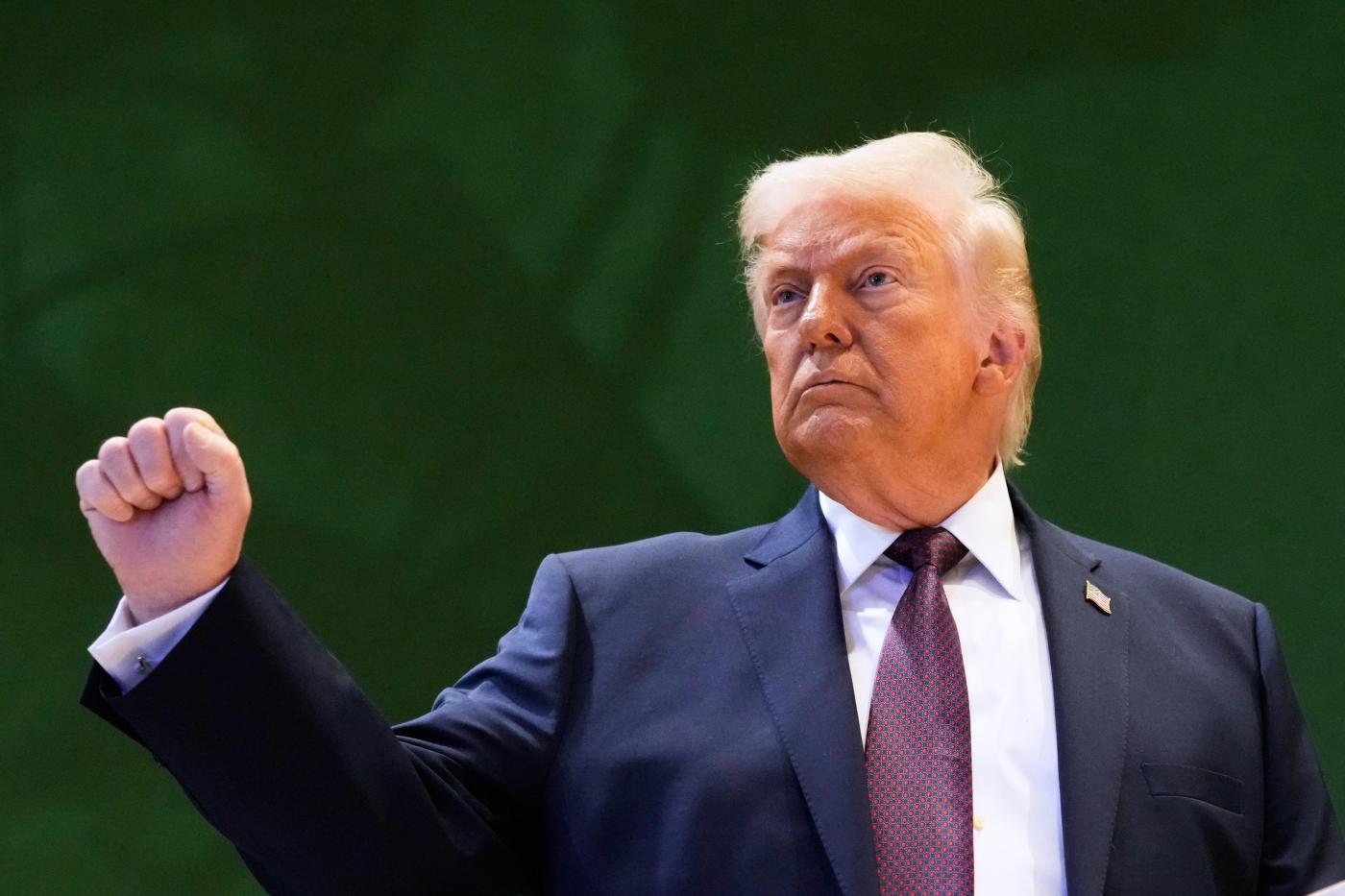
President Donald Trump’s budget office this week ordered most government agencies to compile data on the federal money that is sent to 14 mostly Democratic-controlled states and the District of Columbia in what it describes as a tool to “reduce the improper and fraudulent use of those funds.”

The order comes a week after Trump said he intended to cut off federal funding that goes to states that are home to so-called sanctuary cities that resist his immigration policies. He said that would start Feb. 1 but hasn’t unveiled further details.

A memo to federal departments and agencies did not explain why those states were targeted. All but one — Virginia — were either included last year on the administration’s list of sanctuary places or were home to at least one jurisdiction that was.

There is no strict definition for sanctuary policies or sanctuary cities, but the terms generally describe limited cooperation with U.S. Immigration and Customs Enforcement.

The memo, while unusual, stops far short of suspending money.

“This is a data-gathering exercise only,” it said. “It does not involve withholding funds.”

Latest way Trump has targeted Democratic-controlled states

The memo, obtained by The Associated Press, directs federal agencies to submit information by Jan. 28 to the president’s budget office.

Related Articles


Trump sues JPMorgan for $5 billion, alleges the bank closed his accounts for political reasons


Trump appointees ask about White House ballroom’s design and scale — and want to see models


Trump administration to expand ban on foreign aid for abortion providers to add groups promoting DEI


Trump administration scraps multimillion-dollar solar projects in Puerto Rico as grid crumbles


Trump’s European threats could cause lasting damage to US standing in the world

It asks for a swath of information about money flowing to California, Colorado, Connecticut, Delaware, Illinois, Massachusetts, Minnesota, New Jersey, New York, Oregon, Rhode Island, Vermont, Virginia, Washington and the District of Columbia. All but Minnesota are controlled by Democratic legislatures and all but Vermont have Democratic governors.

The list of targets includes all fully Democratic-controlled states except Hawaii, Maryland and New Mexico. And it includes all the states with nearly all the sanctuary jurisdictions. But it does not include some other states that are home to cities or counties on the list: Louisiana, Maryland, Michigan, New Mexico and Pennsylvania.

Trump’s administration has been focused deeply in recent weeks on the idea that federal money is being used fraudulently in blue states.

Earlier this month, the administration tried to put on hold funds for child care subsidies and other aid for low-income families in California, Colorado, Illinois, Minnesota and New York, citing the possibility of fraud. A judge paused that effort.

Request is for information on most government funding streams

The memo applies to all federal departments and agencies except the Department of Defense, which the administration now refers to as the Department of War, and the Department of Veterans Affairs.

It asks for details about grants, loans and other federal funds provided to the states and local governments in those states, along with institutions of higher education and nonprofits in the states.

The agencies are being told not to report on the use of at least some money that goes directly to individuals, such as federal student aid.

Associated Press reporter Ali Swenson contributed to this article.

Former Iowa superintendent expected to plead guilty to falsely claiming he was a US citizen

posted in: All news | 0

By HANNAH FINGERHUT

DES MOINES, Iowa (AP) — The former superintendent of Iowa’s largest school district is expected to plead guilty in federal court Thursday to two charges, including falsely claiming to be a U.S. citizen, which could result in a lengthy prison sentence and increase the risk of deportation.

Related Articles


Maine’s governor demands data on immigration arrests as fear spreads amid enforcement surge


Huge winter storm to bring crippling snow, sleet and ice from Texas to Boston


Trial of Chicago man accused of putting bounty on top Border Patrol leader sent to jury


Inflation fears are high. A new poll shows one group is particularly worried


Vance lands in Minneapolis blaming the ‘far left’ for turmoil over White House deportation efforts

Ian Roberts, a native of Guyana in South America and a former Olympic runner, ascended as an exuberant and inspiring leader over a two-decade career in urban education. For two years, he was superintendent of the Des Moines public school district, which serves 30,000 students.

Just weeks into a new school year, Roberts was detained by federal immigration officers. The Sept. 26 arrest stunned community members and drew national attention to his history of criminal charges and falsified credentials.

Roberts in October initially pleaded not guilty to one count of making a false statement for employment and one count of unlawfully possessing a firearm while being in the country illegally. Together, the charges carry a maximum sentence of 20 years in prison. Roberts is expected to plead guilty to both charges, according to a plea agreement he signed Wednesday.

The plea agreement also indicates that Roberts is aware he could face deportation after he serves his sentence.

In a targeted U.S. Immigration and Customs Enforcement operation, Roberts was pulled over in his school-issued Jeep Cherokee and allegedly fled from federal agents. They later found the car abandoned near a wooded area and located Roberts with the help of state troopers. Authorities said a loaded handgun was wrapped in a towel under the seat and there was $3,000 in cash in the car.

A federal grand jury in October returned a two-count indictment. According to the plea agreement, Roberts admits he knowingly and intentionally made a “false attestation” on the Employment Eligibility Verification form, known as an I-9, that he submitted in Des Moines, claiming he was a U.S. citizen even though he was not. That carries a punishment of up to five years in prison and a fine.

Roberts completed the I-9 form when he was hired in 2023 and submitted a Social Security card and driver’s license as verifying documents, according to the district. He also stated he was a U.S. citizen in his application to the state board of educational examiners, which issued Roberts a professional administrator license in 2023.

Roberts was subject to a notice to appear before an immigration judge in October 2020, just months before his work authorization was set to expire, and a final removal order in 2024, authorities said. District officials said they were not aware of the immigration issues.

Alfredo Parrish, one of Roberts’ attorneys, has said his client was under the impression from a prior attorney that his immigration case was “resolved successfully.”

Parrish declined to comment Wednesday.

Phil Roeder, a spokesperson for Des Moines Public Schools, declined to comment on Roberts’ legal proceedings. The district’s focus “remains on serving the educational needs of students,” he said in a statement.

Roberts also faces a federal weapons charge, punishable by up to 15 years in prison and a fine. The indictment describes two pistols, a rifle and a shotgun found in Roberts’ possession. In addition to the one in his vehicle when he was arrested, three firearms were found during a search of Roberts’ home, authorities said.

Roberts will agree to forfeit the weapons, according to the agreement.

As part of Roberts’ plea agreement, prosecutors in the U.S. Attorney’s Office for the Southern District of Iowa agreed to not pursue additional charges against Roberts or others related to these counts. Prosecutors also agreed to recommend some leniency but Roberts’ sentence is ultimately up to the judge.

A trial had been scheduled to begin in early March.

Maine’s governor demands data on immigration arrests as fear spreads amid enforcement surge

posted in: All news | 0

By PATRICK WHITTLE, RODRIQUE NGOWI and LEAH WILLINGHAM

PORTLAND, Maine (AP) — Gov. Janet Mills on Thursday challenged federal immigration officials to provide arrest warrants, real-time arrest numbers and basic information about who is being detained in a sweeping enforcement operation in Maine, saying the state has been left largely in the dark as fear spreads through immigrant communities.

“If they have warrants, show the warrants. In America, we don’t believe in secret arrests or secret police,” Mills said at a news conference, adding state officials do not know where detainees are being held.

The Democratic governor also said that President Donald Trump’s office has not returned her phone calls regarding the operation begun this week. Federal officials have said about 50 arrests were made the first day and that roughly 1,400 people are targets of the operation in the mostly rural state of 1.4 million residents, 4 percent of whom are foreign-born and fewer here illegally.

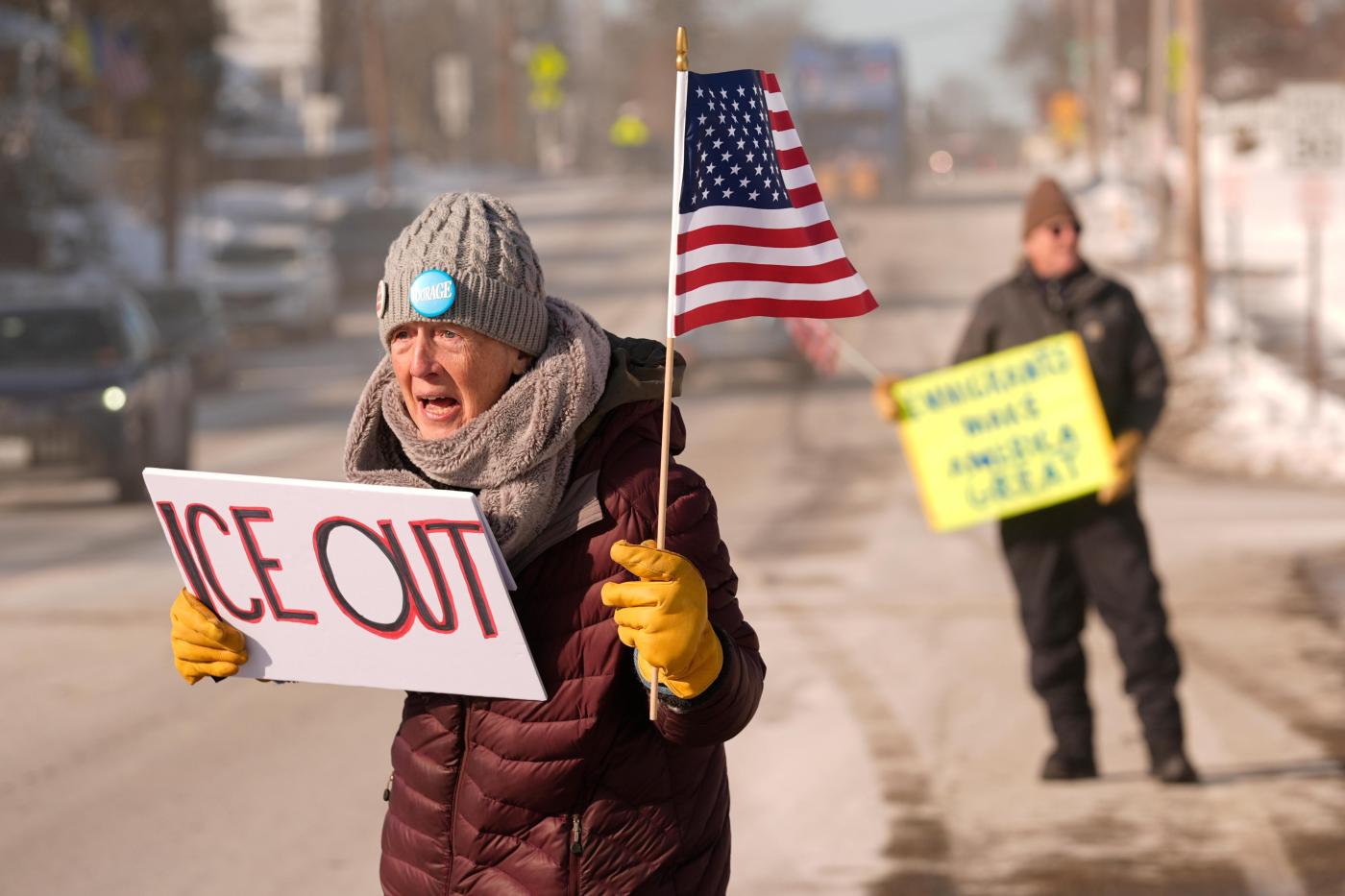
It comes as confrontations continue between demonstrators in Minnesota with U.S. Immigrations and Customs Enforcement agents. ICE is under scrutiny in that state following an agent’s fatal shooting of Renee Good.

The enforcement activity has sparked anxiety in Maine’s largest cities, including Portland and Lewiston, which are home to sizable immigrant and refugee populations, particularly from African nations. Community leaders say some families are staying indoors, avoiding work and keeping children home from school out of fear of arrest.

Mills said the lack of information has made it difficult for state officials to assess the scope or justification for the operation.

“I’d be curious to know more about their so-called target,” she said. “Why Maine? Why now? What were the orders that came from above? Who’s giving the orders? We’ve reached out, we’ve asked questions. We have no answers.”

Assistant House Republican Leader Katrina Smith and other Maine Republicans called on Mills and fellow Democrats to tone down their rhetoric around the enforcement operation. Smith said Republicans want to meet with the governor to discuss support for law enforcement, the protection of peaceful protest and “how we ensure that no one is harmed because rhetoric was allowed to spiral out of control.”

Mills said she would be “shocked” if federal agents could substantiate claims that such a large number of people in Maine have criminal charges against them.

“Mostly we’re hearing reports of people who have not been engaged in criminal activity,” she said. “If someone has evidence of criminal activity, we want to hear about it. But that’s not what we’re hearing about.”

Related Articles


Inflation fears are high. A new poll shows one group is particularly worried


Vance lands in Minneapolis blaming the ‘far left’ for turmoil over White House deportation efforts


Texas leads the nation in supplying new residents to other states


Prices ticked up in November as Americans keep spending a key inflation measure shows


Homicide rate declines sharply in dozens of US cities, a new report shows

Mills said school districts have gone “on alert,” particularly in Portland and Lewiston, and that some stud`ents have not been attending classes. She also said businesses that rely heavily on immigrant labor have reported disruptions.

“People are being torn from their families and from young children, people who are part of the workforce here in Maine — the workforce we desperately need and desperately value,” Mills said.

The enforcement surge has drawn sharp criticism from Democrats in Maine, who say the operation is unnecessarily disruptive in a state with a relatively small undocumented population.

Portland Public Schools said earlier this week that two schools briefly went into a “lockout” to prevent anyone from entering during the school day amid concerns about nearby enforcement activity, though officials said no threat was ultimately found and the lockouts were lifted within minutes.

Mills emphasized that people are legally allowed to record law enforcement activity in public, as long as they do not interfere with officers.

The Department of Homeland Security and ICE did not immediately respond Thursday to requests for updated arrest numbers, warrant information or details about where detainees are being held. DHS previously said the operation targets what it described as “the worst of the worst criminal illegal aliens,” citing arrests involving convictions for aggravated assault, false imprisonment and child endangerment.

Maine’s top federal prosecutor has urged any demonstrations to remain peaceful and warned that people who interfere with federal agents could face prosecution. Mills said the state respects the law but questions the need for what she described as a heavy-handed approach.

Willingham reported from Boston.