Chicago White Sox manager Pedro Grifol gives an offseason update — including what he recently told starter Dylan Cease

posted in: News | 0

Chicago White Sox players participated in an obstacle course with kids at the Boys & Girls Clubs of Chicago during a surprise visit Thursday in Bridgeport.

The Sox experienced several hurdles last season on the way to 101 losses. They’ll attempt to find the path to improvement with pitchers and catchers scheduled to report to spring training Feb. 14.

Manager Pedro Grifol isn’t thinking about the first game of the season or beyond.

“I’m thinking about the first week of spring training and we’ve got to win that first week,” Grifol said at Thursday’s event. “We’ve got to go into spring training and prepare ourselves to win baseball games. We’ll take it five to seven days at a time and we’ll continue to evaluate the week and correct the things we need to correct and go from there.

“There’s a lot of work to be done before that first game. There’s a lot of conversations between our staff and the players and we’ll be ready to play come day one.”

There have been pitching and hitting summits since the final out of the woeful 2023 season.

“Once that last game was over, the calendar changed for us,” Grifol said. “There’s been really good communication. (General manager) Chris (Getz) installed the pillars he wants the organization to abide by. I’ll have my style of play I want to see on the field and the players will be a part of the process.

“There is a lot of things that are different (this spring compared to last). The energy in spring training I thought last year was OK, but it’s hard to evaluate it because we had so many guys who weren’t there (with the World Baseball Classic taking place). But that’s something we’re going to focus on, the details are something we’re going to focus on.”

Grifol knows it has to be more than just talk.

“When I put myself in the eyes of the fans, we’ve got to prove it on the field,” he said. “I can stand here today and say, ‘We’re going to do this or do that.’ That’s not what this is about. This is about us preparing ourselves to play and prove to our fans — they had a difficult year last year — that we’re going to come out and play a different style of baseball.”

Grifol said he’s most excited about getting to spring training “because the energy we have, that our players are showing, the energy that our front office and coaching staff is showing. We have five new coaches on our staff. And plus what we did last year. We’re motivated, we’re excited to come back and prove to this league that we’re capable of doing some good things. I just feel it, there is a good vibe.”

Grifol likes the moves the team has made this offseason and anticipates a lot of competition at camp.

“Last year we went into spring training probably six or seven starters deep, this year you’re probably looking at 15-16 starters,” he said. “Some of these guys are young, some ended the year in Double A, some in Triple A. Just to look at our depth compared to where we were at this time last year is really encouraging for us.”

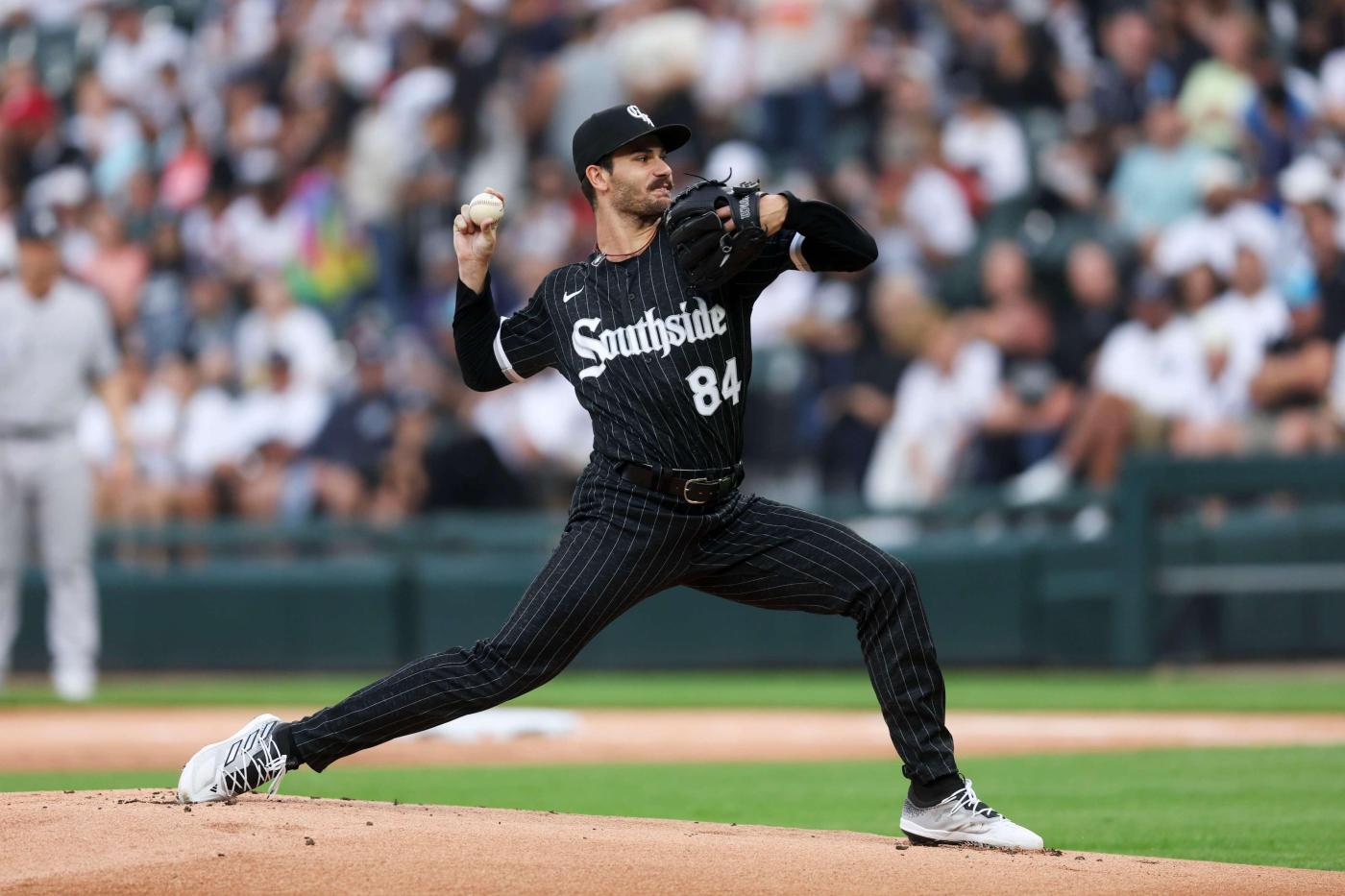
One of those experienced starters could be Dylan Cease, who has been mentioned in trade speculation throughout the offseason. Grifol said Cease has been “unfazed” by the chatter.

“I talked to him yesterday, it was a great conversation and we talked about him (pitching) opening day,” Grifol said. “And he’s preparing himself for that and he feels great. He’s throwing pens, he doesn’t have any soreness, he’s excited about this club. He’s excited about the guys we’ve acquired, excited about our catching. Brian Bannister is part of the organization (as senior adviser to pitching), he’s excited to get to work with him and (pitching coach) Ethan (Katz).

“He’s unfazed by all these trade talks and all this stuff. If it happens, he understands the business. But like I told him and he told me, right now he’s our opening-day starter and get ready to do that.”

()
Dartmouth men’s basketball team votes to unionize, though steps remain before forming labor union

posted in: News | 0

By JIMMY GOLEN (AP Sports Writer)

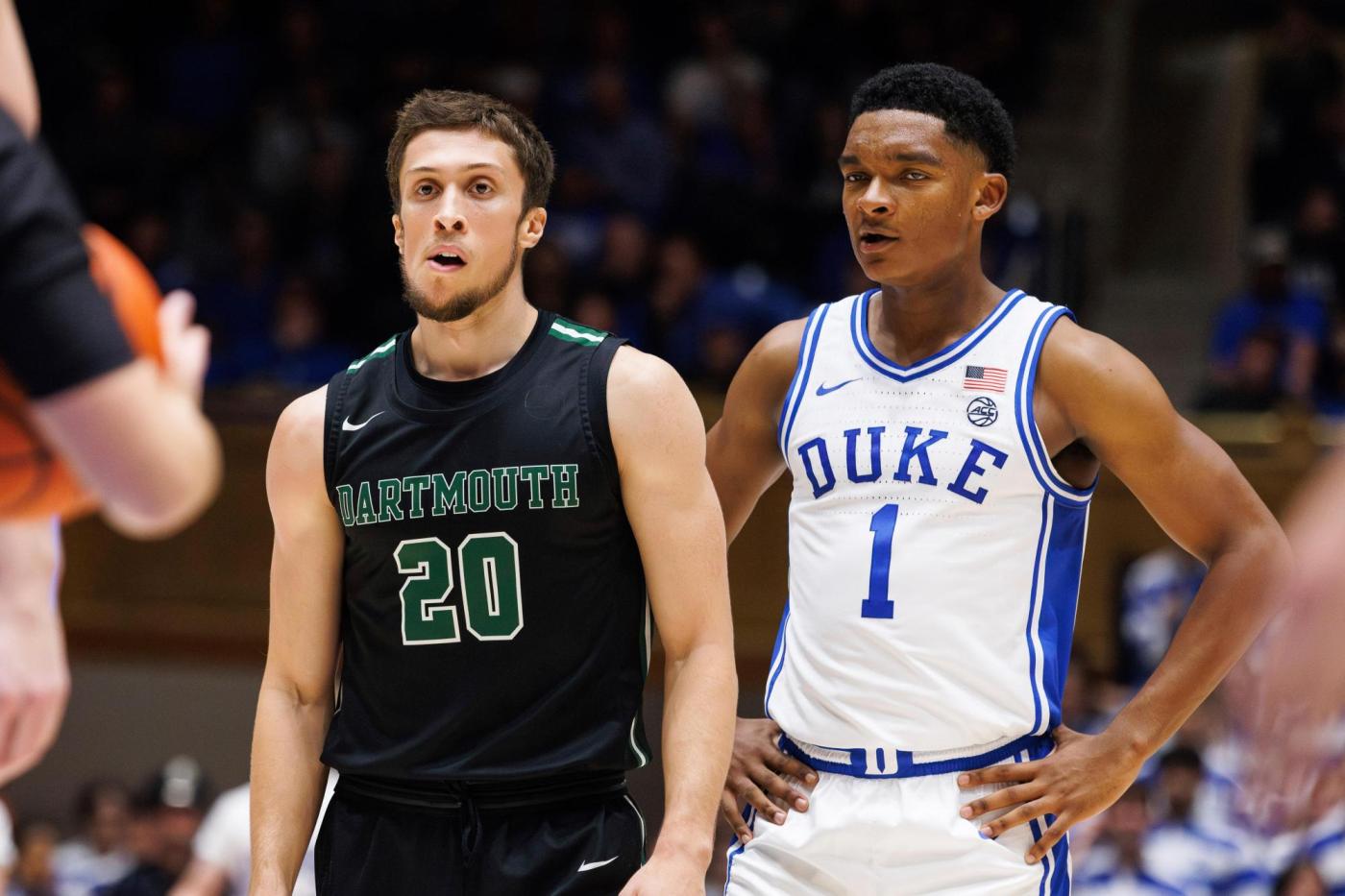
HANOVER, N.H. (AP) — The Dartmouth men’s basketball team voted to unionize Tuesday in an unprecedented step toward forming the first labor union for college athletes and another attack on the NCAA’s deteriorating amateur business model.

In an election supervised by the National Labor Relations Board in the school’s Human Resources offices, the players voted 13-2 to join Service Employees International Union Local 560, which already represents some Dartmouth workers. Every player on the roster participated.

“Today is a big day for our team,” players Cade Haskins and Romeo Myrthil said in a statement. “We stuck together all season and won this election. It is self-evident that we, as students, can also be both campus workers and union members. Dartmouth seems to be stuck in the past. It’s time for the age of amateurism to end.”

The school has five business days to file an objection to the NLRB and could also take the matter to federal court. That could delay negotiations over a collective bargaining agreement until long after the current members of the basketball team have graduated.

Dartmouth pushed back on the decision — again — in a statement, saying it was supportive of the five unions it negotiates with on campus, including SEIU Local 560.

“In this isolated circumstance, however, the students on the men’s basketball team are not in any way employed by Dartmouth,” the school said. “For Ivy League students who are varsity athletes, academics are of primary importance, and athletic pursuit is part of the educational experience. Classifying these students as employees simply because they play basketball is as unprecedented as it is inaccurate. We, therefore, do not believe unionization is appropriate.”

Although the NCAA has long maintained that its players are “student-athletes” who were in school primarily to study, college sports has grown into a multibillion-dollar industry that richly rewards coaches and schools while the players remained unpaid amateurs.

Recent court decisions have chipped away at that framework, with players now allowed to profit off their name, image and likeness and earn a still-limited stipend for living expenses beyond the cost of attendance. Last month’s decision by an NLRB that the Big Green players are employees of the school, with the right to form a union, threatens to upend the amateur model.

“We will continue to talk to other athletes at Dartmouth and throughout the Ivy League about forming unions and working together to advocate for athletes’ rights and well-being,” Haskins and Myrthil said.

A college athletes union would be unprecedented in American sports. A previous attempt to unionize the Northwestern football team failed because the teams Wildcats play in the Big Ten, which includes public schools that aren’t under the jurisdiction of the NLRB.

That’s why one of the NCAA’s biggest threats isn’t coming in one of the big-money football programs like Alabama or Michigan, which are largely indistinguishable from professional sports teams. Instead, it is the academically oriented Ivy League, where players don’t receive athletic scholarships, teams play in sparsely filled gymnasiums and the games are streamed online instead of broadcast on network TV.

Myrthil and Haskins have said they would like to form an Ivy League Players Association that would include athletes from other sports on campus and other schools in the conference. They said they understood that change could come too late to benefit them and their current teammates.

The team includes four seniors, five juniors, three sophomores and three freshman.

“We have teammates here that we all love and support,” Myrthil said after playing at Harvard last month in the Big Green’s first game after the NLRB official’s ruling. “And whoever comes into the Dartmouth family is part of our family. So, we’ll support them as much as we can.”

Mary Kay Henry, the international president of the SEIU, said the players “will go down as one of the greatest basketball teams in all of history.”

“The Ivy League is where the whole scandalous model of nearly free labor in college sports was born and that is where it is going to die,” she said.

___

Jimmy Golen covers sports and the law for The Associated Press.

___

AP college basketball: https://apnews.com/hub/ap-top-25-college-basketball-poll and https://apnews.com/hub/college-basketball

Liberty University will pay $14 million, the largest fine ever levied under the federal Clery Act

posted in: News | 0

By BEN FINLEY (Associated Press)

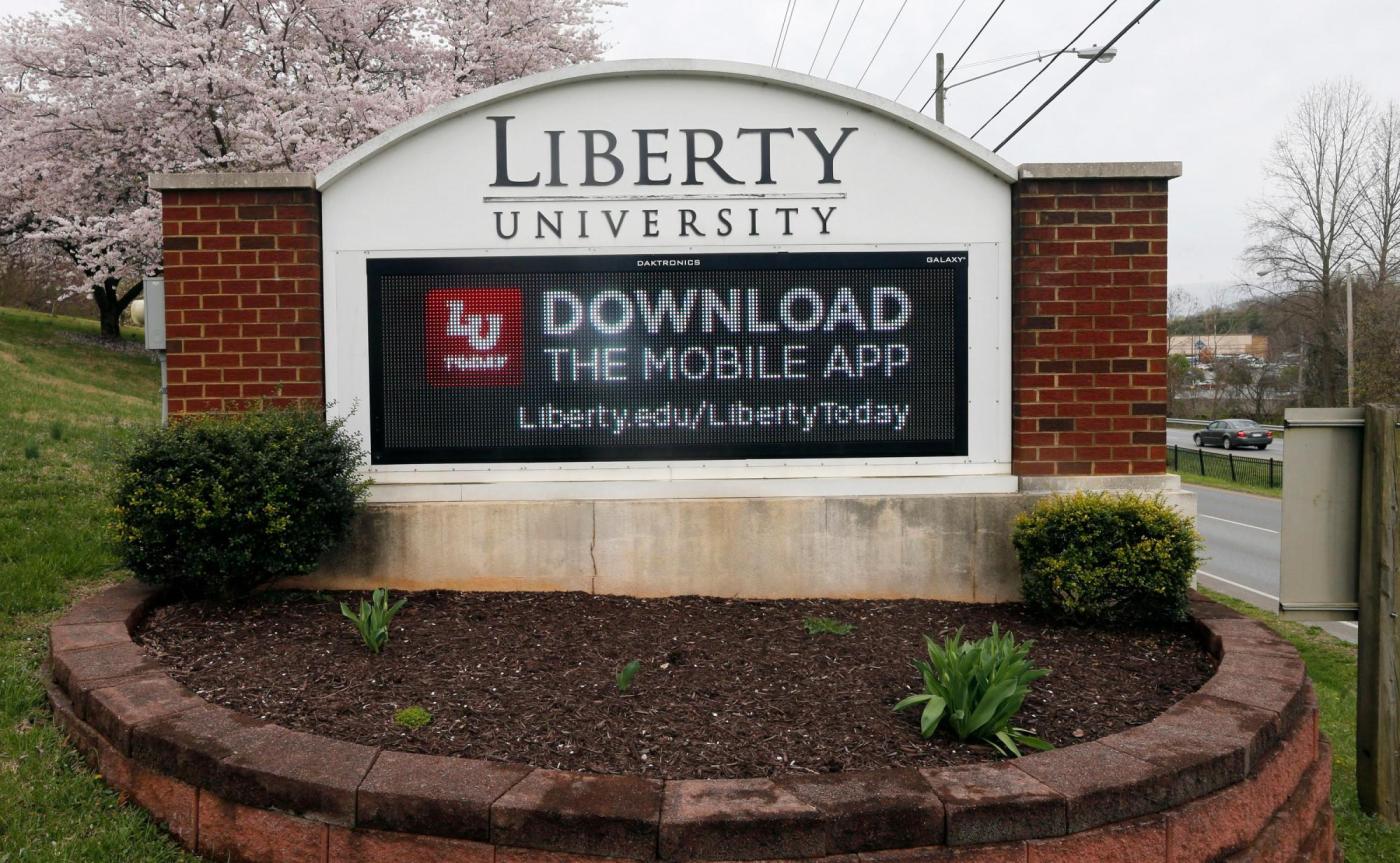
Liberty University has agreed to pay an unprecedented $14 million fine after the Christian school failed to disclose information about crimes that occurred on its Lynchburg campus, including those involving sexual assaults, the U.S. Department of Education announced Tuesday.

The fine is by far the largest ever levied under the Clery Act, a law that requires colleges and universities that receive federal funding to collect data on campus crime and notify students of threats. Schools must disseminate an annual security report that includes crime reports and information on efforts to improve campus safety.

Liberty has marketed itself for years as having one of the nation’s safest campuses. The Washington Post and USA Today reported in October that preliminary findings by federal investigators described a university that discouraged people from reporting crimes and could not provide basic documentation about crime on campus.

Before Tuesday, the largest Clery Act fine in history was $4.5 million against Michigan State in 2019, according to a February report from the Congressional Research Service. Federal investigators said Michigan State failed to adequately respond to sexual assault complaints against Larry Nassar, a campus sports doctor who molested elite gymnasts and other female athletes.

In 2016, Pennsylvania State University was hit with a then-record fine of $2.4 million in the wake of child sexual-abuse complaints against former assistant football coach Jerry Sandusky. Before that, the previous record Clery Act fine was $357,500 against Eastern Michigan University in 2007, which was reduced to $350,000 in a settlement.

Liberty confirmed in October that it had received a preliminary report from the government’s investigation. And the school said it was corresponding with officials about “significant errors, misstatements, and unsupported conclusions in the Department’s preliminary findings.”

Liberty said the preliminary assessed fine from the U.S. government was $37.5 million, according to the Congressional Research Service.

The $14 million fine against Liberty University appears to be a small fraction of its total operating revenues, which were $1.2 billion without donor restrictions in fiscal year 2022, according to an annual report. The school’s net assets were $3.5 billion.

But Clery Act violations are “bigger than just the fines,” said Abigail Boyer, associate executive director at the Pennsylvania-based Clery Center, which provides training and assistance to campuses.

“Hand in hand with the fines is institutions navigating how they’re now being perceived publicly as a campus that may or may not be focusing on the safety and well being of students,” Boyer told The Associated Press.

Liberty has become one of the world’s largest Christian schools since its 1971 co-founding by religious broadcaster Jerry Falwell Sr. In 2022, the school said it hit a record of 115,000 students pursuing degrees online, while more than 15,000 were enrolled at its campus in Lynchburg.

The university was already facing scrutiny in the form of lawsuits over its handling of sex assault cases, while the Clery Act investigation became public knowledge in 2022 in the wake of recent litigation.

Lawsuits by former students and employees have accused the school of botching sexual assault reports or failing to investigate allegations of rape. The litigation was filed under under Title IX, the federal law that protects against sex discrimination in education and often overlaps with Clery.

Liberty settled a civil lawsuit filed by 12 women in 2022 after they accused the school of fostering an unsafe environment and mishandling cases of sexual assault and harassment.

The women alleged that Liberty’s strict honor code made it “difficult or impossible” for students to report sexual violence. The lawsuit said the university had a “tacit policy” of weighting investigations in favor of accused male students, and it said the university retaliated against women who did make such reports.

The terms of that lawsuit’s settlement were not disclosed. But at the time, Liberty outlined a number of changes it undertook to improve campus security and review how it responds to incidents of sexual harassment or violence.

The school had said it spent more than $8.5 million on campus security upgrades, while ensuring more licensed mental health providers where available to provide counseling.

The university said it was also revising its amnesty policy to “better communicate” that it will not discipline parties who engage in behaviors, in connection with a case of sexual harassment or assault “that would have otherwise violated its student honor code.”

Tuesday’s announcement comes three years after Liberty’s acrimonious split with former president Jerry Falwell Jr., whose exit followed his posting of a provocative photo of himself online as well as revelations of his wife’s extramarital affair. Falwell and the university have since filed lawsuits against each other over his departure.

What’s next for top Chicago White Sox prospects Colson Montgomery, Noah Schultz and Edgar Quero?

posted in: News | 0

Paul Janish described his first few months as Chicago White Sox director of player development as a hectic and exciting time.

The former big-league infielder took on the role in November after working on Rice University’s baseball staff since August 2017, including the last two seasons as the associate head coach.

He’s digging in to his responsibilities with the Sox.

“I’m glad to finally be on site (in Arizona) with a bunch of people in the same room because up to this point it’s been a lot of virtual stuff,” Janish said during a video conference last week. “With spring training right around the corner, just hitting the ground and getting in the trenches a little bit with both staff and players and becoming more familiar with everybody.”

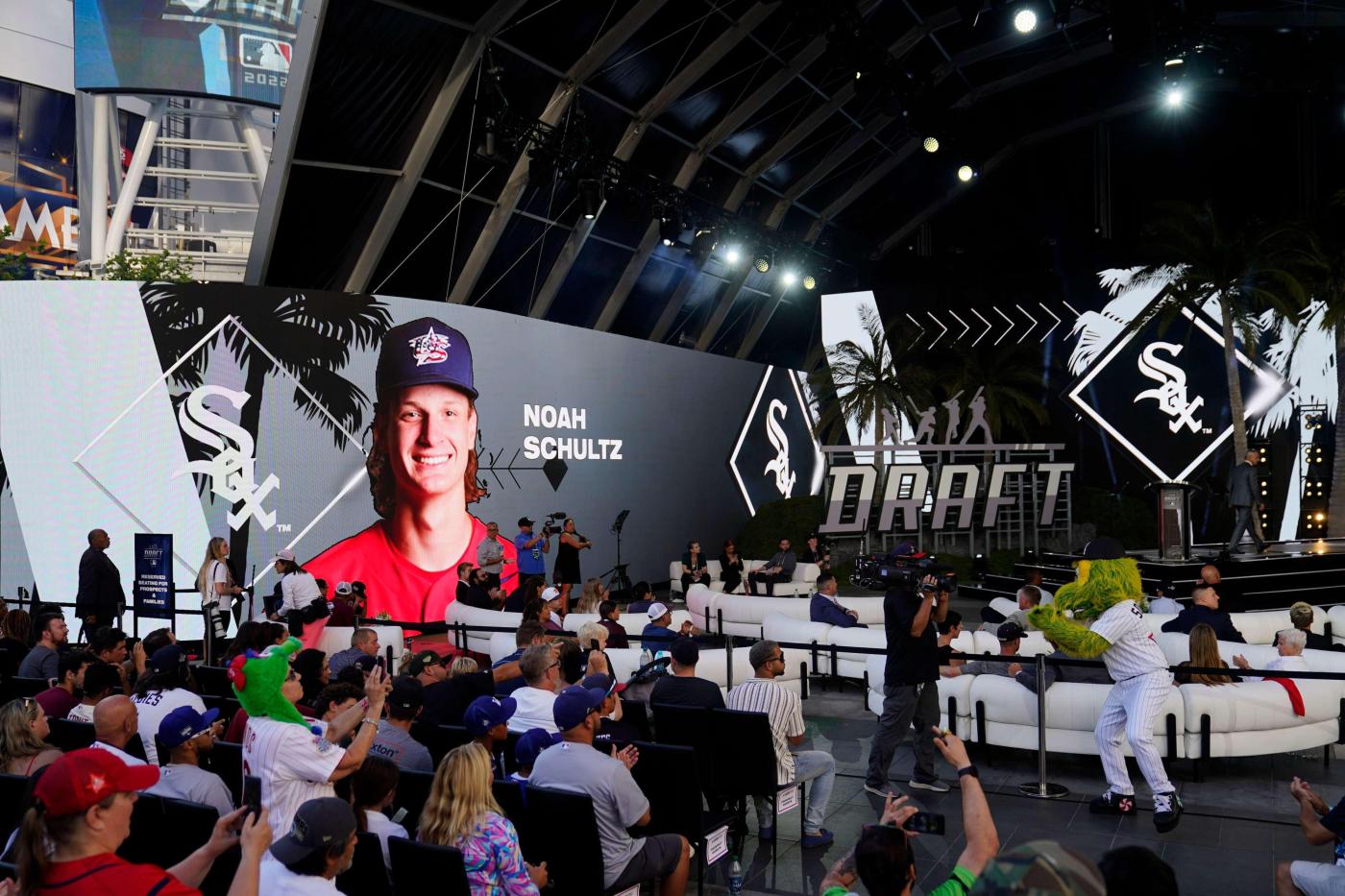
Janish provided updates on the top three prospects in the organization, according to MLB.com — shortstop Colson Montgomery, pitcher Noah Schultz and catcher Edgar Quero — as spring training gets closer.

No. 1 prospect: Colson Montgomery

The team’s first-round pick in 2021 spent time at three levels — the Arizona Complex League White Sox, Class A Winston-Salem and Double-A Birmingham — after a midback strain delayed his start to the 2023 season.

The 21-year-old slashed .287/.456/.484 with 14 doubles, eight home runs and 37 RBIs in 64 games. He also had three homers and 20 RBIs in 20 games during the Arizona Fall League and was the MVP of the Fall Stars Game.

“Colson’s got a bright future, there’s no question about it,” Janish said. “With regards to where he’s starting (the season), some of that’s to be determined. At the end of the day, the goal is for him to be a really good major-league player, and I think that’s going to happen.”

When it comes to Montgomery’s timeline to the majors, Janish said it’s hard to predict.

“He’s going to choose his own path with regards to production, and there’s going to have to be some decisions made on just evaluating when he’s ready to go up to stay,” Janish said. “Because with that kind of player, you really want him to get to the major leagues at a time in which he’s ready to contribute and produce and stay there for good.

“So some of that stuff is to be determined. What I do know is he’s a really good kid, and he’s excited about coming to major-league camp.”

No. 2 prospect: Noah Schultz

The Sox selected the left-hander with the No. 26 pick in the 2022 draft. Schultz, 20, went 1-2 with a 1.33 ERA during 10 starts for Class A Kannapolis last year after dealing with a forearm strain. He went on the injured list in late August with shoulder impingement.

“First of all, he’s huge,” Janish said with a laugh about the 6-foot-9 Schultz. “I had the opportunity to meet him here recently in Arizona, and from a health standpoint, I think he’s in a good place going into the season.

“There’s a strength element that’s going to continue to develop over the course of time that will help him be more consistent. But we’re really excited. He’s got all the talent in the world, and it’s just going to come down to being really intentional with his development program and making sure as he progresses that we’re not giving him too much before he’s ready for it.”

Schultz, who went to Oswego East High School, had 38 strikeouts in 27 innings in 2023 for the Cannon Ballers.

“(Noah is) a really good kid, really talented kid and he really wants to be good,” Janish said.

No. 3 prospect: Edgar Quero

The Sox acquired the switch-hitting catcher along with pitcher Ky Bush — ranked the team’s No. 9 prospect — in the July 26 trade that sent pitchers Lucas Giolito and Reynaldo López to the Los Angeles Angels.

Quero, 20, slashed .277/.366/.393 with four doubles, three home runs and 22 RBIs in 31 games with Birmingham after the trade.

Janish said Quero goes about his work “pretty intentionally.”

“The work ethic is something he’s got in him,” Janish said, “and he’s currently developing a little bit of a routine on a day-to-day basis to maintain throughout the course of a season, which we can all sympathize with.

“That position requires a lot both mentally and physically. At the end of the day, he really needs to play. He’s in a really good spot for his age, and his ability is going to give him the opportunity to play in the major leagues.

“We just want him to be at a point where he’s ready to be consistent at that level, which, at that position in particular, we all know is going to be asking a lot.”

()