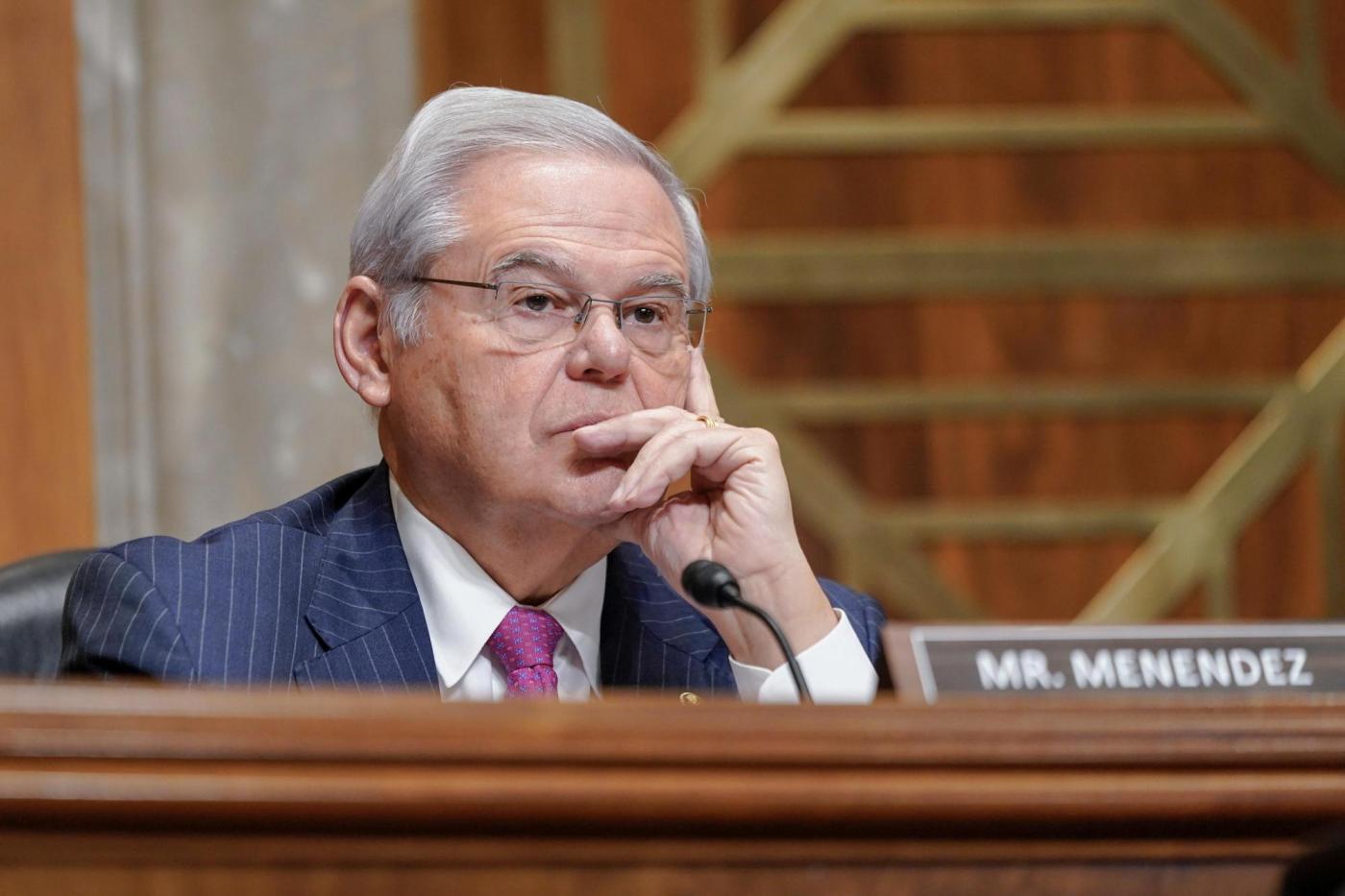
New obstruction of justice crimes levied against Sen. Bob Menendez in rewritten indictment

posted in: Politics | 0

By LARRY NEUMEISTER (Associated Press)

NEW YORK (AP) — New obstruction of justice crimes were added Tuesday to charges against Sen. Bob Menendez and his wife that allege they accepted gold bars, cash and a luxury car in return for favors the senator carried out to assist three businessmen.

The charges were in a rewritten indictment returned against the Democrat in Manhattan federal court.

Conspiracy to obstruct justice and obstruction of justice charges were added against Menendez and his wife, Nadine. The senator responded to the updated indictment by calling the additions “a flagrant abuse of power.”

He said the government “has long known that I learned of and helped repay loans — not bribes — that had been provided to my wife.”

He added: “I am innocent and will prove it no matter how many charges they continue to pile on.”

An indictment already alleges that the couple conspired with three businessmen to accept the bribes in return for the senator’s help with their projects. Both have pleaded not guilty, along with two of the businessmen. A May trial has been scheduled.

One businessman pleaded guilty to charges last week and agreed to testify at trial against the others.

After his fall arrest, Menendez, 70, was forced to relinquish his chairmanship of the Senate Foreign Relations Committee but said he would not resign from Congress.

According to an indictment, Menendez and his wife accepted gold bars and cash from a real estate developer in return for the senator using his clout to get that businessman a multimillion-dollar deal with a Qatari investment fund.

Menendez also was charged with helping another New Jersey business associate get a lucrative deal with the government of Egypt.

Among new allegations, prosecutors say Menendez caused his then-attorney to meet with prosecutors last June and September to say that the senator had been unaware until 2022 of a $23,000 mortgage payment one businessman made on the Menendez’s New Jersey home or the money another defendant paid toward a Mercedes-Benz convertible.

Prosecutors allege that Menendez also caused his lawyer to say in the September meeting that Menendez in 2022 had learned that the payments were loans.

The prosecutors wrote that Menendez knew and “had learned of both the mortgage company payment and the car payments prior to 2022, and they were not loans, but bribe payments.”

Prosecutors also said in the rewritten indictment that Nadine Menendez caused her lawyer to tell prosecutors last August that the mortgage payment and funds provided for the convertible were loans when she knew they were bribe payments.

The new charges allege that the couple was trying to obstruct justice in the weeks before they were charged last September with a variety of crimes.

Prosecutors also say that Nadine Menendez asked one of the businessmen after he received a subpoena for documents what he would tell investigators if they asked him about payments he made for the convertible. After the man responded that he would say the payments had been a loan, Nadine Menendez “said that sounded good,” according to prosecutors.

The charges were added to the indictment just a day after Judge Sidney H. Stein rejected Menendez’s claims that search warrants that led to the discovery of gold bars and cash at his New Jersey home were unconstitutional.

Defense lawyers had alleged that documents submitted to magistrate judges to obtain search warrants for email records, phones and materials at Menendez’s residence from January 2022 to last September were “riddled with material misrepresentation and omissions.”

FBI raids on the residence in June 2022 resulted in the discovery of over $100,000 in gold bars and more than $480,000 in cash, much of it hidden in closets, clothing and a safe, prosecutors said.

Menendez said the cash found in the house was personal savings he had put away for emergencies.

The son of Cuban immigrants, Menendez has held public office continuously since 1986, when he was elected mayor of Union City, New Jersey. In 2006, then-Gov. Jon Corzine appointed Menendez to the Senate seat he vacated when he became governor.

The 5 most exciting innovations coming to an airport near you

posted in: All news | 0

Lily Girma | (TNS) Bloomberg News

Imagine it’s the year 2030 and you’re heading to the airport to catch a flight. At the curb, you hop onto a Segway-like scooter that will serve as your personal airport vehicle. It scans data from your phone to determine your gate number and glides in and out of massive elevator banks — no escalators — to move between check-in and security floors. Along the way, a machine scans your face to verify your identity and directs you to an individual security tunnel where you self-screen your luggage.

None of this is science fiction. Within six years, architecture firm Gensler says it will install such a prototype at a major North American airport, including all of the above features.

“Airports are starting to shift toward autonomy,” says Ty Osbaugh, who is heading up the project as Gensler’s global cities sector leader. Airport innovation is happening faster than we think, he says, foreseeing a focus on self-service in keeping with an already dominant lifestyle that prefers digitization to real-life interactions.

This is not a novel idea. Use of biometric technologies has grown steadily at airports for years, and self-serve security checkpoints have already begun use in experimental pilot programs (typically for pre-screened travelers) in such major cities as New York, Dubai and Tokyo.

There’s business justification for all this that goes well beyond convenience and modernization. As airport terminals lengthen to accommodate larger airplanes—which need wider spaces between gates to be able to maneuver in and out of parking spaces—airlines have noticed that passengers are struggling to get to their gates on time, resulting in missed flights and connections.

Technological enhancements can help passengers reach gates on time — and make quick connections — making airline operations smoother and more efficient. Osbaugh says these changes will eventually become standard practice in the industry.

Updating an existing airport terminal is time-consuming, expensive work that often costs hundreds of millions of dollars — and sometimes billions, as with New York-area airports Newark International (EWR) and LaGuardia (LGA), which both debuted facilities last year after massive, 10-figure renovations.

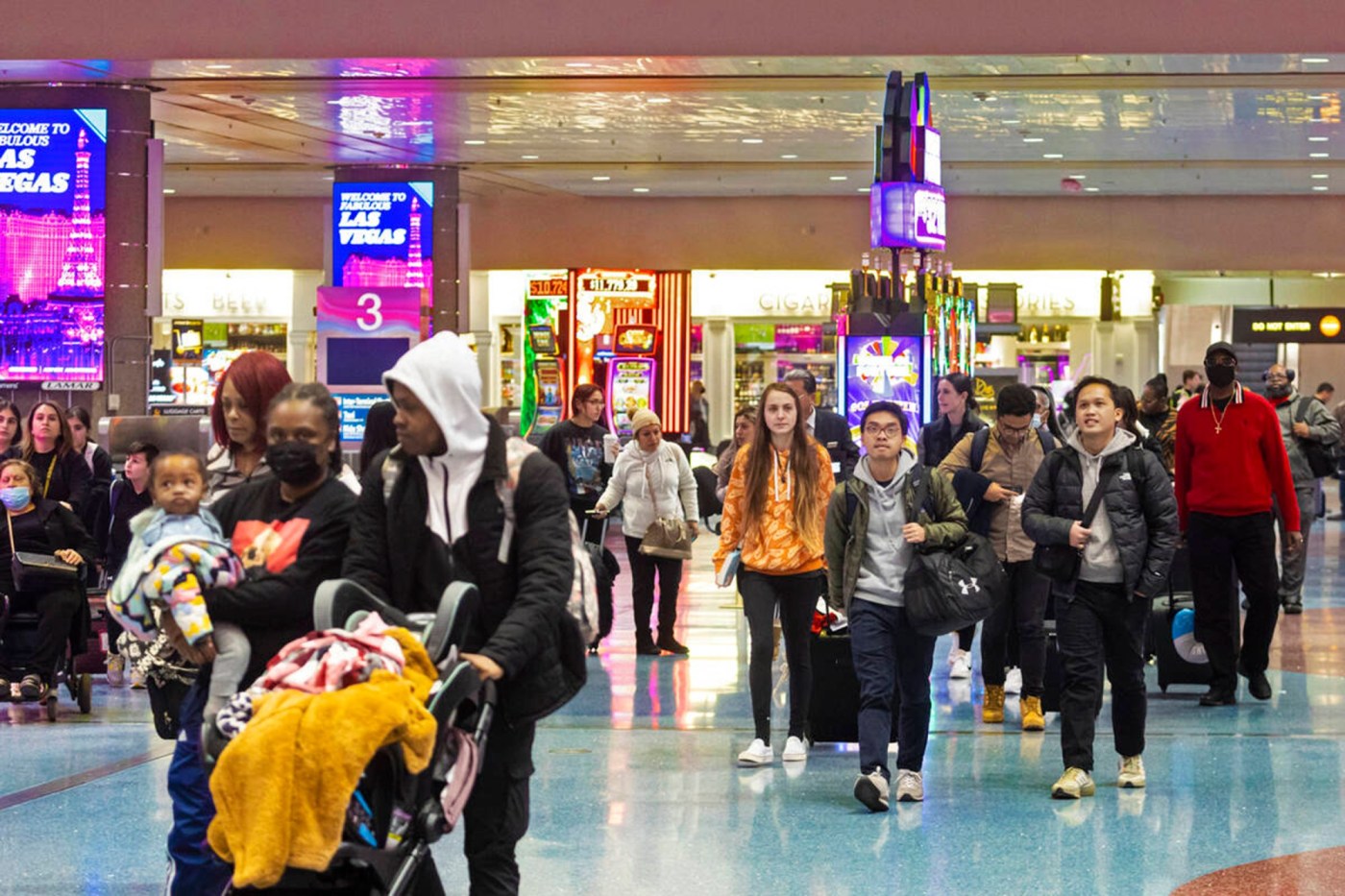
Change is happening at an unprecedented pace, thanks to the Biden administration’s willingness to fund them. This month it allocated nearly $1 billion in grants to 100 U.S. airports — something it has done annually since 2022. Still, a single feature such as the self-screening security tunnels rolling out this year at Harry Reid International Airport in Las Vegas (LAS) can take more than five years to research, develop and test.

Osbaugh thinks security screening might eventually happen before you even arrive at the airport — in a specially designed smart car that picks you up at home.

That could take some time. For now, here are five innovations you’ll be seeing before year’s end.

Self-service security screening

Where it’s coming: Las Vegas’ Harry Reid International Airport (LAS)

How it works: Imagine going through the security screening process without interacting with a TSA agent. (You’ll be watched on video.) Travelers departing from LAS with TSA PreCheck clearance will soon be able to do this. Although the program was scheduled to roll out in January, the Department of Homeland Security and TSA confirmed exclusively to Bloomberg that a pilot program will roll out in early March.

Here’s how we understand it to work: Travelers will access the self-service lanes through TSA PreCheck lines; digital ID verification will open gates for access to them. Your movements will then be monitored remotely as you are tracked by cameras doubling as metal detectors. As at a supermarket, you place your items — your carry-on and phone, for instance — on the conveyor belt. If anything is detected in your pockets, a video screen — which works almost like a mirror — will show you where. Once all is well, you’ll see a green prompt, and automated exit doors will open and let you exit to find your gate. If further inspection is needed, a red prompt will pop up and you’ll undergo additional screening by a TSA officer. Instructions are projected in real time; a help button can summon a TSA officer if live assistance is needed.

As with most new technologies, this will initially be optional — a novel experience for early adopters — rather than replace familiar systems at once. And even though it might feel like something from the distant future, the engineers behind it are already hard at work on an even more advanced version.

Facial recognition

Where it’s live: Hartsfield-Jackson Atlanta International Airport (ATL), Detroit Metropolitan Wayne County Airport (DTW), John F. Kennedy International Airport (JFK) and LaGuardia in New York (LGA), Los Angeles International Airport (LAX), Dubai International Airport (DXB), Beijing Capital International Airport (PEK) and Frankfurt Airport (FRA)

Where it’s coming next: Singapore Changi Airport (SIN)

How it works: Tagging and dropping off checked bags is getting reduced to a simple face scan, as with verifying your identity before security. That means no more showing your ID and boarding pass to agents at counters and in front of security queues; instead you’ll smile at a small camera as if you’re taking an ID photo at a corporate office building, and airline software will scan the image to confirm your identity against its database.

American Airlines has such a system in place for PreCheck travelers at Ronald Reagan Washington National Airport (DCA), as does United Airlines at Chicago O’Hare International Airport (ORD). Dubai and Frankfurt are among the international airports with versions of this technology. Delta Air Lines’ Digital ID facial recognition program recently expanded to JFK, LGA and LAX after a successful three-year pilot in Atlanta and Detroit. To use Delta’s system, you need to have TSA PreCheck and a SkyMiles number and your passport number must be stored in the Fly Delta app. (Eligible travelers will receive a special push notification when at an airport equipped with the technology.)

Expect more soon: Singapore will let departing travelers use biometrics in lieu of physical passports to clear border control in the first half of this year.

Autonomous wheelchairs

Where it’s live: Kansai International Airport (KIX), Narita International Airport (NRT), Savannah/Hilton Head International Airport (SAV), Haneda Airport (HND) and Winnipeg Richardson International Airport (YWG)

Where it’s coming next: Zurich Airport (ZRH) How it works: With accessible travel hitting all-time highs — and increased demand for wheelchair-push services at airports — airlines are scrambling to build staff. Enter Swiss-based startup DAAV, which has designed a lightweight, robotic, electric wheelchair specifically for airport use. Scan your mobile boarding pass to tell it where you’re going, or let a second adult lead the way by choosing “follow me” on a built-in touchpad. Its slim proportions let it fit into such tight spaces as security lines; omnidirectional steering makes it easy to navigate crowds. A pilot is expected to commence in Zurich by the end of this year.

Japanese mobility company Whill has been working with Panasonic to develop autonomous wheelchairs since at least 2017. You can already find these models at select airports in the US and Japan, including Savannah and Haneda.

Prebooked security time slots

Where it’s live: Roughly two dozen North American and European airports, such as Amsterdam Schipol (AMS), London Heathrow (LHR), LAX and Singapore.

Where it’s coming next: Barcelona-El Prat Airport (BCN) and Malagá-Costa del Sol Airport (AGP)

How it works: You know the drill: Make a restaurant reservation and (theoretically) you won’t have to wait at the bar. The same now goes for airport security lines, with a number of airports introducing online reservations to help you avoid checkpoint queues. The particulars differ; some airports let you book three days before your flight, others open reservations one week ahead of time. Most offer arrival windows that last from 20 to 30 minutes, allowing you a bit of wiggle room.

The biggest provider for this service is Clear, the international alternative to PreCheck; it offers free prebooking to the general public (not just Clear members) via its Reserve program at 20 locations in North America and Europe; Barcelona and Malagá will soon offer this. Some airports are rolling out their own efforts, including Toronto’s Pearson International Airport (YYZ), Denver International Airport (DEN) and Heathrow, which in October started a six-month pilot for travelers flying out of Terminal 3.

Schiphol is one of the first such airports to measure the demand for this service: It logged 500,000 reservations for security screening in the first five months they were offered, from March to August 2023.

Robotic mini-manicures

Where it’s live: JFK, Las Vegas (LAS), Miami International Airport (MIA), Denver and Will Rogers World Airport in Oklahoma City (OKC)

Where it’s coming next: To be announced

How it works: If you’ve walked by XpresSpa locations at airports around the world and wondered who arrives at an airport early enough to get their nails done, consider that these shops are now among the world’s few purveyors of robotic “minicures” that take just 10 minutes. The treatments are done with the help of a futuristic AI-powered machine that looks like a 3D printer. Follow prompts on a built-in screen to choose among several dozen colors; it will tell you where to place your fingers so it can perfectly coat your nails one by one.

___

©2024 Bloomberg L.P. Visit bloomberg.com. Distributed by Tribune Content Agency, LLC.
Will core of Gophers men’s basketball roster return next season? Ben Johnson hopes so.

posted in: News | 0

The Gophers men’s basketball team is much improved this season, and that trajectory can remain upward if the U roster stays mostly intact for next year.

Continuity in college sports now comes with big contingencies, primarily the NCAA transfer portal and name, image and likeness (NIL) compensation.

Head coach Ben Johnson is hopeful his current roster won’t have a major makeover for a fourth straight offseason.

But first, the Gophers (18-11, 9-9 Big Ten) will play its penultimate conference game against Indiana (16-13, 8-10) at 8 p.m. Wednesday at Williams Arena.

The regular-season finale against Northwestern comes Saturday night, followed by the Big Ten Tournament at Target Center next week and an increasingly likely NIT Tournament berth after that. Then Johnson will conduct season-ending meetings with players.

“Guys have different decisions they have to make,” Johnson said Tuesday. “I’m hoping. I think this is a really good group. I think it’s a fun group. I think it’s a group, again, still with an offseason can get better and be more consistent and has a chance to really be improved next year.”

The Gophers’ Senior Day last year included the surprise addition of Jamison Battle, who ended up transferring to Ohio State.

This year’s Senior Day, however, didn’t have any shocks.

Spark-plug forward Parker Fox participated in the Senior Day festivities surrounding the 75-70 win over Penn State at Williams Arena. The sixth-year forward does have one more year of eligibility left, but it doesn’t appear he will use it.

Other than that, the Gophers rotation could remain intact for 2024-25 season. Johnson said there have been positive signs about their level of buy-in to finish the season strong.

“All that stuff will probably come to a head at the end of the year, but I give a lot of our guys credit,” the coach said. “They have been so focused on just the task at hand. We haven’t had any distractions. That is hard to have in today’s day and age, but we’ve had great practices because everybody is in it.

“We haven’t had a guy that’s been moody or been a pain or been pouting,” Johnson continued. “Everybody has truly been engaged, and I think they are really focused on making sure we finish the season the right way.”

Two of the Gophers’ best players — Dawson Garcia and Elijah Hawkins — were noncommittal about their futures on Tuesday.

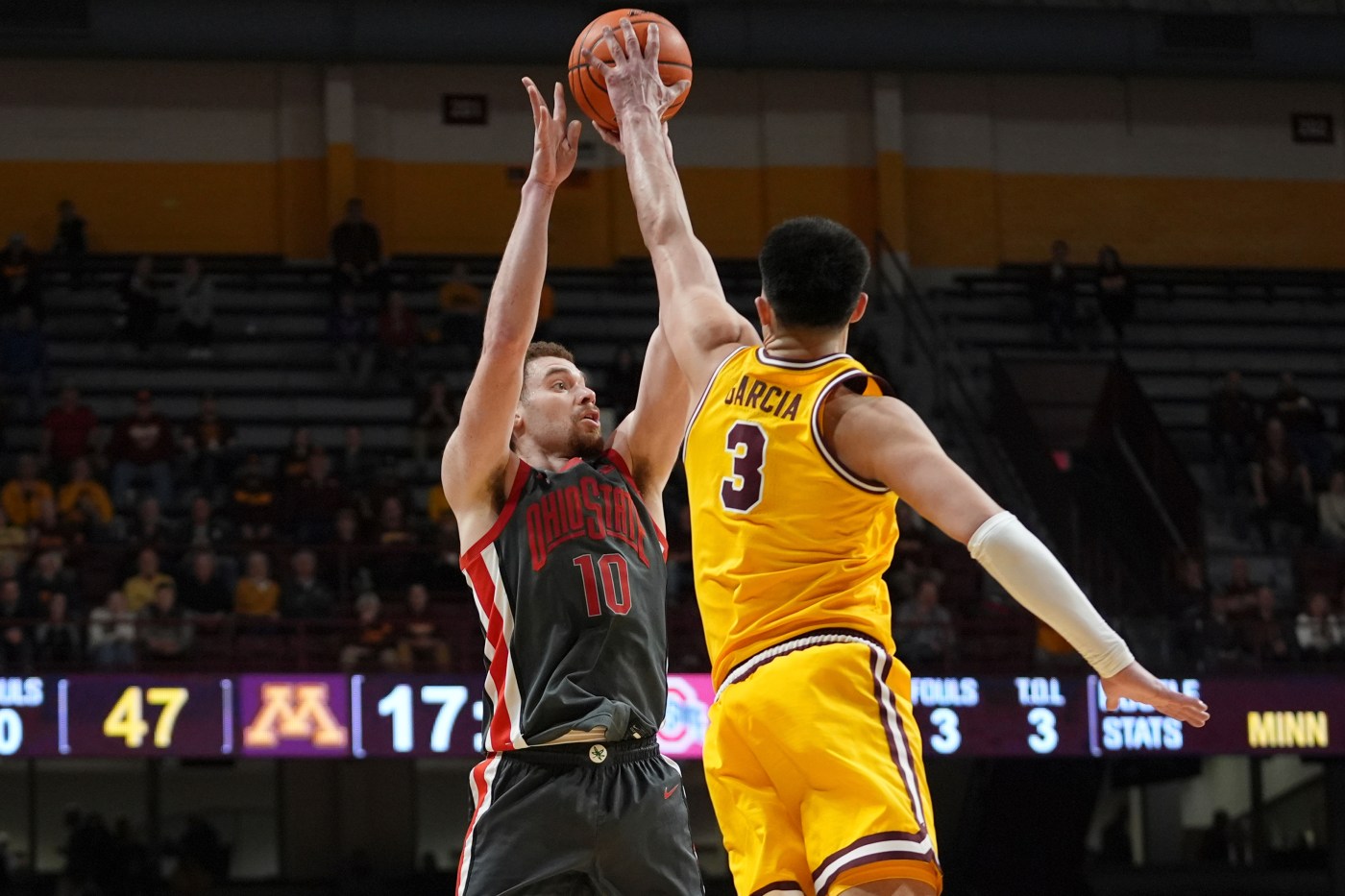
“Naw, truthfully I haven’t” made a decision, Garcia said. “I’ve just been focused on the season. I do have an extra year left of eligibility, so it’s definitely a possibility that I could use that. It’s really going to be a decision. I will make it quick in the spring because whatever I want to do, I want to be fully committed.”

“Same,” Hawkins added. “Just trying to focus on the rest of the season. That will take place when it’s time.”

No more games at The Barn

If the Gophers advance to the NIT tournament, they will go on the road. The U said that’s because the boys basketball state tournament has been moved to Williams Arena with the Big Ten tournament taking over Target Center the next two weeks.

The NIT first-round games are March 19-20 and second-round matchups are March 23-24.

Briefly

Braeden Carrington (concussion) has been progressing through the protocol, Johnson said Tuesday. The guard missed the Penn State game with his injury. … Gophers guards had a poor showing night in the 74-62 loss at Indiana on Jan. 12. Hawkins, Mike Mitchell and Cam Christie combined to shoot 4 of 28 from the field.

Related Articles

College Sports |


Men’s basketball: Gophers overcome awful start, rally to beat Penn State

College Sports |


Men’s basketball: Gophers AD Mark Coyle sees ‘Top 25 team’ next year

College Sports |


Gophers can’t keep up with Illini in a 105-97 loss

College Sports |


Men’s basketball: Gophers need jolt of energy and urgency at Illinois

College Sports |


Men’s basketball: Gophers score season-low in 73-55 loss to Nebraska on Sunday

John Shipley: Wild have few trade options, but maybe Bill Guerin will surprise us

posted in: News | 0

In 2006-07, the Minnesota Wild finished the regular season on a 12-1-1 run to secure the Western Conference’s seventh and penultimate playoff spot. That’s a heck of a run, 25 of 28 total possible points.

It also helped that the Wild started the season winners of 10 of their first 12 games, earning them 20 points by Nov. 2. You can do the math on what happened in between.

The point is, it matters how a team starts a season. As Wild coach John Hynes said back on Feb. 23, “It helps when you can put points in the bank early,” a roundabout way of pointing out that the Wild didn’t — 5-10-4 when he was hired to replace Dean Evason on Nov. 28.

Some holes are too deep to climb out of, especially for a team that started the season with little margin for error or injury, a roster dominated by long-term contracts and $14.7 million worth of dead salary cap space, part of the penalty for buying out the contracts of Zach Parise and Ryan Suter.

The Wild begin a two-game, back-to-back road trip on Thursday in Arizona at least eight points out of the eighth and final playoff position in the West. It’s not officially over, but with the NHL trade deadline here on Friday afternoon, Bill Guerin has little choice but to work ahead on a 2024-24 team that will hold many of the same challenges as this one (such as that $14.7 million in dead space).

To get any major lifting done this week, the general manager will have to get creative. The Wild have a few veterans due for unrestricted free agency at season’s end — the typical asset that gets swapped for draft picks or prospects this time of year — but injuries and no-trade clauses have limited that already shallow well.

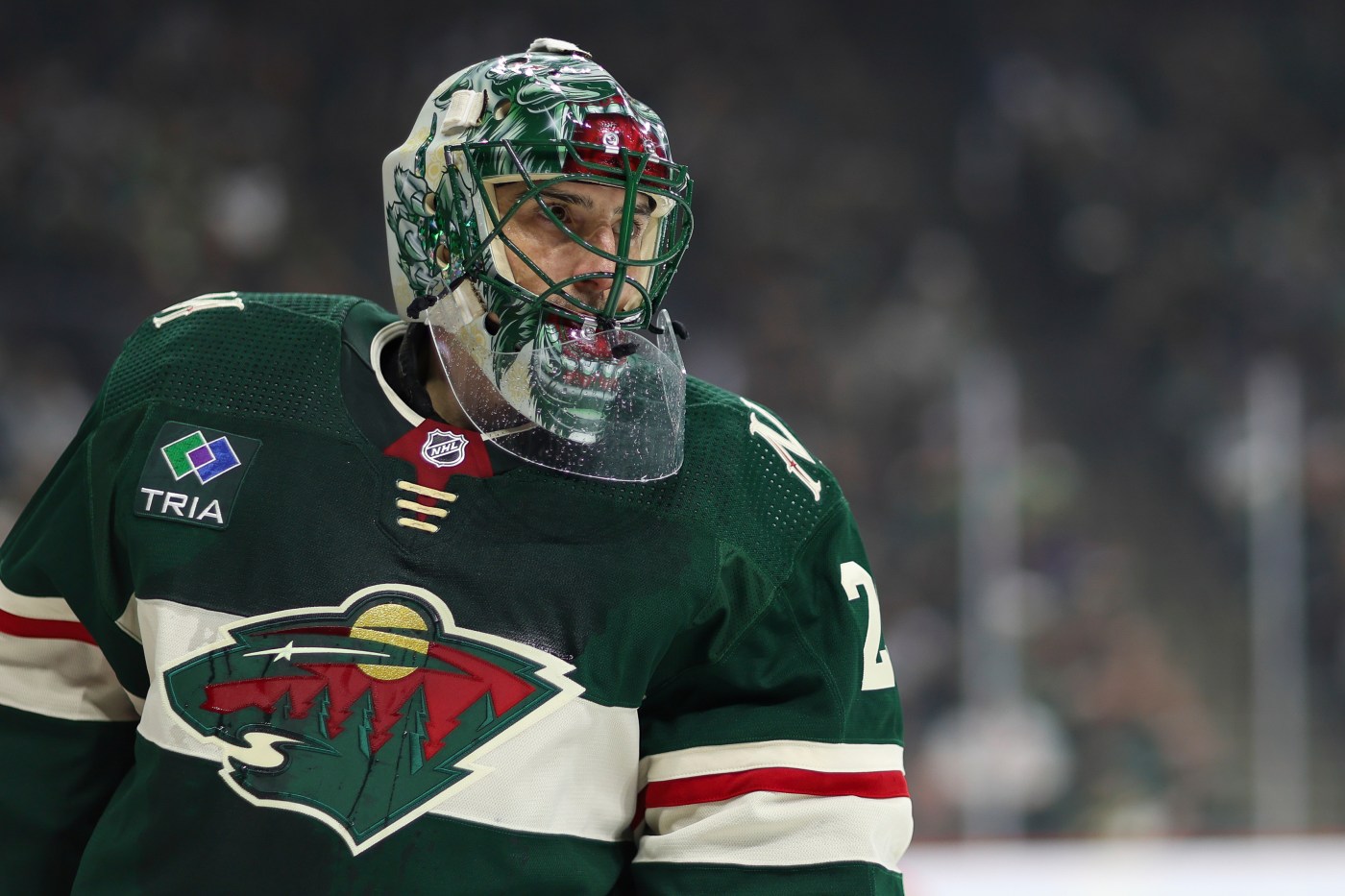
Pat Maroon, a veteran wing who will be a UFA at season’s end, has won three Stanley Cups but is rehabbing from back surgery. Marc-Andre Fleury, another pending UFA with three Stanley Cup wins, is unlikely to waive his no-trade to spend the final months of what might be his last NHL season with a new team.

Veteran defenseman Zach Bogosian is the Wild’s best pending UFA asset, but the Wild are interested in extending his contract. A Stanley Cup winger acquired from Tampa Bay for a seventh-round draft pick on Nov. 8, he has helped prop up a shaky blue line that got only 16 games from Jared Spurgeon this season. Only 33, he lives here in the offseason, and Guerin has shown a willingness to wrap up reliable veterans for the right terms.

That leaves go-go winger Brandon Duhaime and Maroon as the pending UFAs likely to go. Duhaime has been a reliable checker all season. He plays hard and can skate, but he isn’t a reliable points-getter — four goals and eight points in 62 games. He could help a better team. So could Maroon if he’s healthy.

Maroon, 35, has been productive for stretches while playing up and down the lineup and is a big body who doesn’t mind a scrap. And while he remains on injured reserve, the Wild traded from Gustav Nyquist last season when he was on IR with a shoulder injury in Columbus. Nyquist played in only three regular-season games for Minnesota but had a goal and four assists, and he has been a good player this season for Nashville this season, 16-35–51 in 61 games.

The Wild would probably send highly skilled Marcus Johansson elsewhere in a heartbeat, but he has a no-trade clause on a two-year deal that expires after next season. And even if he were open to waiving it, he’s hurt, injured early in last Saturday’s 3-1 loss at St. Louis.

Connor Dewar has been a reliable fourth-line center all season, and has a career-high nine goals in 56 games. He’ll be a restricted free agent next season looking for a raise on his $800,000 salary. The Wild might be able to swap him for a decent draft pick, but he has been loads better than any minor league forward the Wild have recalled this season.

Guerin has proven himself a savvy trader. He got Brock Faber and a first-round pick for Kevin Fiala in July 2023. This season, he bailed on Calen Addison (one goal, minus-18 for Los Angeles) for a prospect and a draft pick, and got two useful players by sending seventh-round picks to Tampa Bay for Bogosian and Maroon.

The problem, of course, is the myriad no-movement and no-trade clauses that make players such as Johansson, Mats Zuccarello, Ryan Hartman and Freddy Gaudreau, players that could help postseason teams and fetch good returns, all but unmovable. All can help Minnesota next season, but all but Zuccarello need to be better.

Could Guerin, deep into talks with other suitors, somehow swing a surprising deal that includes one of those players? Yeah. Unlikely, but yeah. Could he trade Filip Gustavsson and re-sign Marc-Andre Fleury, still effective at 39, for another year to tutor Jesper Wallstedt? It’s a risk, but maybe.

It’s not shaping up as an exciting trade deadline for the Wild, but Guerin has shown he’ll take a risk — such as buying out Parise and Suter — if he thinks it will make the team immediately better.

Briefly

The Wild waived forwards Vinni Lettieri and Jake Lucchini on Tuesday, perhaps a signal the team expects prospect Marat Khusnutdinov to arrive this week. The center signed a two-year, two-way contract on Feb. 28.

Related Articles

Minnesota Wild |


Marc-Andre Fleury starts strong, finishes stronger as Wild beat Penguins, 3-2

Minnesota Wild |


Wild goalie Marc-Andre Fleury moves into second place on NHL career wins list

Minnesota Wild |


Wild’s Marc-Andre Fleury has first chance to pass Patrick Roy

Minnesota Wild |


Big saves, late heroics push Wild past Columbus, and Marc-Andre Fleury into the record book

Minnesota Wild |


In 3-2 loss to Jets, Marc-Andre Fleury plays a bittersweet thousandth NHL game