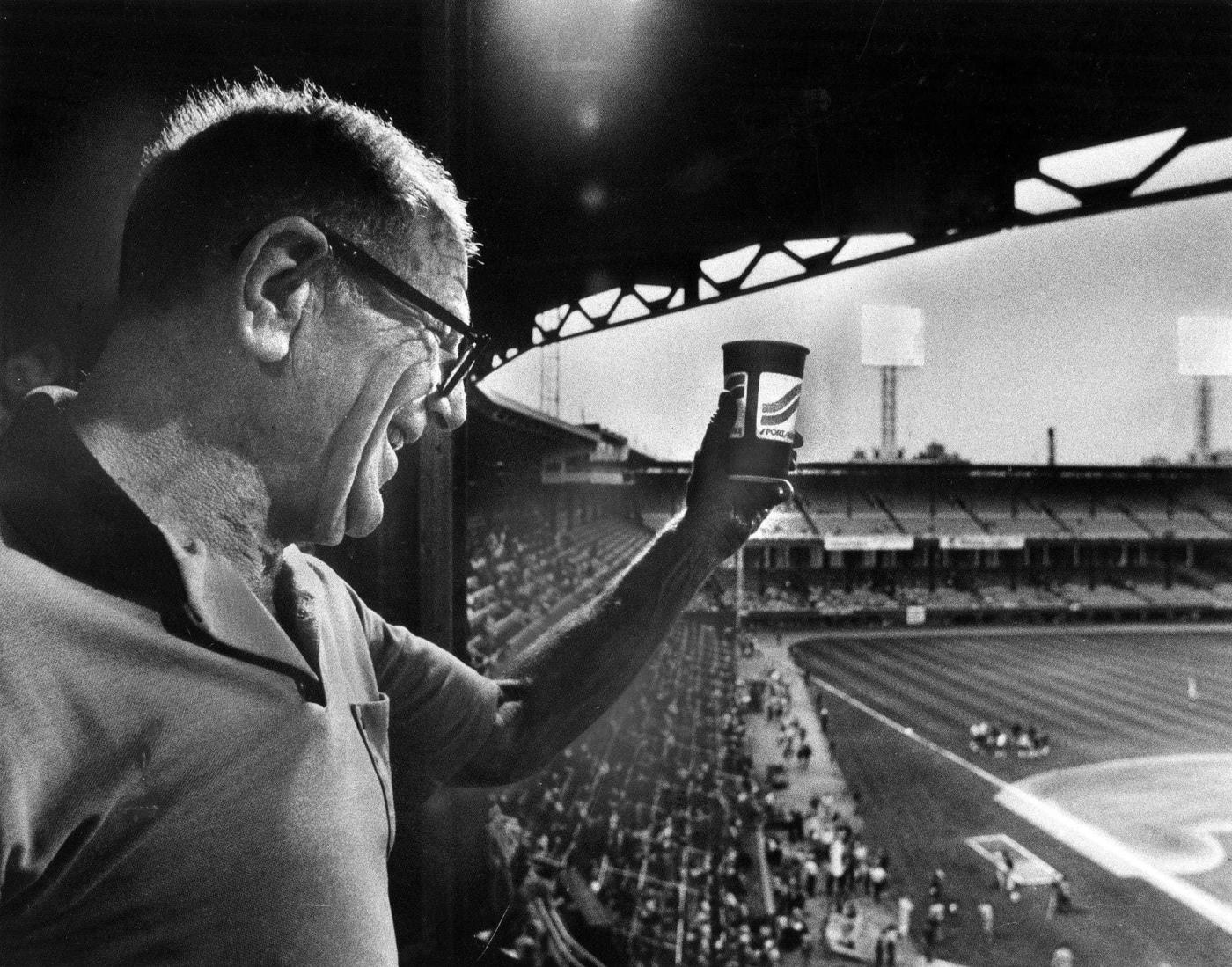
Are the Chicago White Sox eyeing a stadium move to the South Loop?

posted in: News | 0

When the Chicago White Sox unveiled a sparkling new stadium on 35th Street in 1991, owner Jerry Reinsdorf declared he was “awestruck” at its beauty and predicted it wouldn’t “take a back seat” to any stadium in Major League Baseball for years to come.

But since that April day after the Sox had shuttered the original Comiskey Park across the street, the South Siders’ current home stadium has been a consistent source of criticism, tension and angst, with fans clamoring for a change even as major improvements have been made.

This week, a new twist developed in that long-running saga when it was revealed that Reinsdorf and the White Sox were in discussions about building a baseball-only Sox stadium about 3 miles to the northeast at Roosevelt Road and Clark Street as part of a massive development at a property in the South Loop called “The 78.″

Ald. Pat Dowell, whose 3rd Ward includes The 78, confirmed Related Midwest, the developer that owns the parcel, wants to discuss a White Sox relocation to that site.

“I will meet soon with the developers of The 78 to discuss the possibility of a stadium being built for the Chicago White Sox,” Dowell said in a statement Thursday afternoon.

Ald. Nicole Lee, who represents the area that includes Guaranteed Rate Field, where the team plays now, said she will also meet with Related Midwest and the Sox on the proposal.

“The White Sox have proudly called Chicago and Bridgeport home for over a century,” Lee said. “As a lifelong fan and now alderperson of the 11th Ward, I am wholeheartedly committed to keeping the Sox on the South Side.”

While serious questions remain about how real the talks are, whether such a plan will get off the ground and how it would be paid for, the news the Sox might leave their longtime home in the Bridgeport-Armour Square neighborhood spurred dreams that a modern ballpark ringed by skyscrapers and closer to downtown could breathe new life into the team and its fan base.

“The ballpark is right now not really in a neighborhood, it’s in the middle of nowhere, and a not very attractive nowhere,” said Allen Sanderson, a senior lecturer at the University of Chicago who studies the economics of sports. “And getting to the ballpark, there is nothing wonderful about that experience.”

Related Midwest declined to comment through Tricia Van Horn, vice president of marketing and communications. The Illinois Sports Facilities Authority — which owns Guaranteed Rate Field — has not been involved in the talks, the organization’s CEO, Frank Bilecki, told the Tribune.

“I’m not part of the discussion, at least as of yet,” Bilecki said. “I truly know nothing. I’m a landlord and they’re a tenant, and they’re looking at options as tenants do everywhere.”

The Chicago Sun-Times reported Thursday that “serious” negotiations have taken place between the Sox and Related Midwest about the potential move to The 78.

The Sox and Mayor Brandon Johnson released a joint statement Thursday that did not address the possibility of a new stadium being built on the site.

“Mayor Brandon Johnson and Chicago White Sox Chairman Jerry Reinsdorf met to discuss the historic partnership between the team and Chicago and the team’s ideas for remaining competitive in Chicago in perpetuity,” the statement reads. “The partnership between the city and the team goes back more than a century and the Johnson administration is committed to continuing this dialogue moving forward.”

Sanderson, a Sox fan who often attends games, and who is also a longtime critic of using public funds to finance stadiums, said a new ballpark may not do much to boost attendance.

“The bigger problem might be it’s a really bad baseball team, coupled with the fact that senior ownership hasn’t exactly endeared itself to the public,” he said.

But a new White Sox stadium could act as an anchor for the South Loop, much like Google will be a north anchor when it occupies the James R. Thompson Center, said Robert Sevim, a Chicago-based president of Savills, a commercial real estate firm.

“This would be transformative if it occurs,” he said. “You will be able to create an entire community around the ballpark. Wrigley Field has an entire community around it, and that’s what makes it special, and in some ways, a White Sox park might even do better because you have a clean slate.”

Sevim was a consultant on The 78 project several years ago, but was not involved in any potential deal with the White Sox.

A major league ballpark would likely help kick off other on-site development, perhaps including residences, offices, restaurants and retail, he added, all accessible to downtown residents and workers, he said.

Less clear is what losing the team would mean for the Bridgeport area that has been its home for over a century.

Bill Jackson, executive director at the University of Illinois’ Discovery Partners Institute, said a new home for the White Sox won’t interfere with his group’s plans to construct a $250 million headquarters at the 78.

DPI still plans to break ground this year on the eight-story, glass-and-steel dome, and complete it by December 2026.

Jackson added that he was shown drawings of the proposed stadium this week and believes having an on-site ballpark will help attract more scientists and startup firms to DPI’s future lab, research and office spaces.

He also expects the new infrastructure needed for the ballpark, including additional parking and transportation upgrades, will be useful to DPI as it expands.

A Sox stadium on The 78 site would be a huge positive development for the team and the city — but that doesn’t mean it will happen, said SportsCorp Ltd. President and consultant Marc Ganis, who is not involved with the proposal.

There are many roadblocks, Ganis said, the first being money. Sox owner Jerry Reinsdorf is not known as a big spender, and Johnson has other priorities eating up resources, such as schools, pensions, public safety, and now, the migrant crisis.

“This site could be a great one for the Sox for generations to come,” Ganis said. “But a lot of things that make sense around here don’t happen.”

The question about how any new ballpark would be funded is significant. Guaranteed Rate Field — where the Sox lease runs through 2029 — was paid for using money raised through an increase in Chicago hotel room taxes in a last-minute deal in Springfield in 1988. The city and state also each kick in $5 million per year.

The ISFA still owes about $50 million toward the construction of the stadium, which opened near 35th Street and Shields Avenue in 1991.

Gov. J.B. Pritzker has indicated he’s generally not supportive of state money going toward private, professional sports teams. He expressed this sentiment in the last year over rumblings about whether the Sox would move and in the Chicago Bears’ quest to find a new stadium in the city or suburbs.

As for the reports of the latest talks involving a possible new stadium for the Sox, Pritzker suggested he’d be open to listening to any proposals.

“Nobody’s made an ask yet, so having said that, I think you know my views about privately owned teams and whether the public should be paying for private facilities that will be used by private businesses,” the governor said during an unrelated event at an elementary school outside of Springfield. “Having said that, I mean, there are things that government does to support business all across the state, investing in infrastructure, making sure that we’re supporting the success of business in Illinois.

“So, as with all of the other (things), whether it’s sports teams or other private businesses, we’ll be looking at whatever they may be suggesting or asking.”

Where the Sox will be playing in the future has been a topic of conversation for several months.

In August, Crain’s Chicago Business reported the team was considering a move when its lease at Guaranteed Rate Field expires.

At that time, the Sox said in a statement: “We have not had any conversations about our lease situation, but with six years remaining, it is naturally nearing a time where discussions should begin to take place. The conversations would be with the city, ISFA and the state and most likely would be about vision, opportunities and the future.”

The Sox confirmed a meeting between Reinsdorf and Nashville Mayor Freddie O’Connell took place during the MLB winter meetings in December. But they did not disclose the topics discussed.

Nashville has long been mentioned in speculation as a city to consider if MLB decides to expand.

A Sox move could add a wrinkle to the Bears’ efforts to build a new enclosed stadium. The Bears spent $197 million to buy the former Arlington Park racetrack almost a year ago but have made little progress since then to get tax subsidies or resolve a dispute over property taxes with local school districts.

The Bears have also had discussions with Johnson about staying in the city and with officials about potential sites in Naperville, Waukegan and elsewhere.

Arlington Heights Mayor Tom Hayes said he couldn’t speculate about how the Sox talks might affect the Bears’ options, saying he was still trying to arrange face-to-face meetings between the team and the schools.

“I don’t anticipate that this would negatively impact the momentum we’ve been trying to gain,” he said. “We’re very hopeful things are moving in the right direction, and we’re continuing to work on it.”

A Sox relocation to The 78 might be modeled on the Atlanta Braves’ Truist Park, which opened in 2017 as an anchor to The Battery, a surrounding area of restaurants, housing and entertainment.

Such a mixed-use development is what the Bears have proposed for Arlington Heights. But at 62 acres, the Chicago site is much smaller than the 326 acres at the former Arlington horse track.

Chicago Tribune’s Jeremy Gorner, reporting from Rochester, Ill., and Jake Sheridan contributed.

Chicago White Sox announce 4 international signings, including highly touted third baseman Eduardo Herrera

posted in: News | 0

Eduardo Herrera quickly made an impression on Marco Paddy, the special assistant to the general manager, international operations, for the Chicago White Sox.

“When I saw him for the first time his strength, the way he played the game, his ability to compete, how polished he was as a hitter, I couldn’t help but to be attracted by this kid’s ability,” Paddy said during a video conference call.

The Sox have agreed to terms with the third baseman, one of four international signings announced Wednesday.

Herrera, 17, is the No. 11 international prospect according to MLB Pipeline. His deal includes a $1,800,000 signing bonus. The native of San Felipe, Venezuela, played for the Venezuelan U18 National Team at the age of 15.

“From a makeup standpoint, he’s a very good competitor, he knows to work on his body, spends a lot of time working on his body, strength and physical conditioning and things of that nature,” Paddy said. “As a competitor, we had opportunities to see him play for the Venezuelan national team. He played in a tournament in Mexico against good competition and he did extremely well as a 15-year-old playing with 18-year-old kids.

“Once we got all the information together and the evaluations, the looks, the at-bats, the time on the ground with him and knowing him as a person, we decided to move forward and we’re happy to have this young man become part of the Chicago White Sox organization.”

The 6-foot-2, 190-pound Herrera bats and throws right-handed.

“We did not hesitate to go after him aggressively when it came to having the opportunity to sign him,” Paddy said. “In comparison to other guys we’ve signed in the past, most of the times when you get a guy that’s a power guy, you always question his full ability as a hitter. But in the case of this young man, he’s shown the ability to recognize (and) adjust. So we had no doubt about his ability as a hitter.”

The Sox also signed infielders Jurdrick Profar ($600,000) and Jesús Premoli ($550,000) and right-handed pitcher Jeziel Boekhoudt ($55,000).

The 6-foot-0, 190-pound Profar, 16, is the brother of longtime major leaguer Jurickson Profar — who spent 2023 with the Colorado Rockies and San Diego Padres. A native of Willemstad, Curaçao, Jurdrick Profar throws and bats right-handed.

“You look at Profar and he doesn’t profile like his brother,” Paddy said. “He’s going to be a bigger, stronger kid and actually reminds me of Jonathan Schoop. That type of kid. He can play all over the infield. Profar has excellent hands and feet to play shortstop.

“He’s going to get bigger, stronger and shortstop might not be a fit. He plays second base extremely well. He has the ability to play third base, too.”

A left-handed hitting former catcher, Premoli now plays third and first base. The 6-foot-4, 215-pound 17-year-old is a native of Barquisimeto, Venezuela. Boekhoudt, 17, is 6-foot-4, 215 pounds and also a native of Willemstad, Curaçao.

Expect more international signings to be announced in the coming weeks.

“Jan. 15 is the first day they can sign but this is a process that may take a couple months,” Paddy said. “Once we sign those kids we know the job is complete but yes, the intent is to sign more guys that we have already pretty much agreed on.”

()

State boys hockey: Mahtomedi breaks free from Orono with 4-goal third

posted in: News | 0

Mahtomedi celebrate with fans after defeating Orono 5-2 during a Class A quarterfinal game of the State Boys Hockey Tournament at Xcel Energy Center in St. Paul on Wednesday, March 6, 2024. Mahtomedi won 5-2. (Craig Lassig / Special to the Pioneer Press)

Mahtomedi defenseman Cole Swanson, left, checks Orono defenseman John Engebretson into the boards during the second period of a Class A quarterfinal game of the State Boys Hockey Tournament at Xcel Energy Center in St. Paul on Wednesday, March 6, 2024. (Craig Lassig / Special to the Pioneer Press)

Mahtomedi forward Jake Hodd-Chlebeck, center bottom, is swarmed by his team after scoring the tying goal during the third period of a Class A quarterfinal game of the State Boys Hockey Tournament at Xcel Energy Center in St. Paul on Wednesday, March 6, 2024. Mahtomedi won 5-2. (Craig Lassig / Special to the Pioneer Press)

Mahtomedi forward Gene Wegleitner (22) scores the go-ahead goal past Orono goalie Peyton Anderson during the third period of a Class A quarterfinal game of the State Boys Hockey Tournament at Xcel Energy Center in St. Paul on Wednesday, March 6, 2024. Mahtomedi won 5-2. (Craig Lassig / Special to the Pioneer Press)

Mahtomedi forward Winston Wright, left, and Orono forward Jackson Knight battle for control of the puck during the first period of a Class A quarterfinal game of the State Boys Hockey Tournament at Xcel Energy Center in St. Paul on Wednesday, March 6, 2024. (Craig Lassig / Special to the Pioneer Press)

Mahtomedi forward Jimmy Egan, top, and Orono forward Cayden Effertz try to get control of an airborne puck during the first period of a Class A quarterfinal game of the State Boys Hockey Tournament at Xcel Energy Center in St. Paul on Wednesday, March 6, 2024. (Craig Lassig / Special to the Pioneer Press)

Mahtomedi forward Laken Decker tries to get puck past Orono goalie Peyton Anderson during the second period of a Class A quarterfinal game of the State Boys Hockey Tournament at Xcel Energy Center in St. Paul on Wednesday, March 6, 2024. (Craig Lassig / Special to the Pioneer Press)

Mahtomedi forward Jake Hodd-Chlebeck, top right, hits the puck past Orono goalie Peyton Anderson for a goal during the third period of a Class A quarterfinal game of the State Boys Hockey Tournament at Xcel Energy Center in St. Paul on Wednesday, March 6, 2024. Mahtomedi won 5-2. (Craig Lassig / Special to the Pioneer Press)

Mahtomedi forward Gene Wegleitner celebrates after scoring the go-ahead goal during the third period of a Class A quarterfinal game of the State Boys Hockey Tournament at Xcel Energy Center in St. Paul on Wednesday, March 6, 2024. Mahtomedi won 5-2. (Craig Lassig / Special to the Pioneer Press)

Mahtomedi forward Gene Wegleitner (22) celebrates with defenseman Wyatt Tarnowski (2), forward Jimmy Egan (21) and Mahtomedi fans after scoring the go-ahead goal during the third period of a Class A quarterfinal game of the State Boys Hockey Tournament at Xcel Energy Center in St. Paul on Wednesday, March 6, 2024. Mahtomedi won 5-2. (Craig Lassig / Special to the Pioneer Press)

Orono goalie Peyton Anderson (30) deflects a shot as Mahtomedi forward Jake Hodd-Chlebeck (8) tries to get to the rebound during the first period of a Class A quarterfinal game of the State Boys Hockey Tournament at Xcel Energy Center in St. Paul on Wednesday, March 6, 2024. (Craig Lassig / Special to the Pioneer Press)

Mahtomedi goalie Charlie Brandt, right, blocks an Orono shot during the first period of a Class A quarterfinal game of the State Boys Hockey Tournament at Xcel Energy Center in St. Paul on Wednesday, March 6, 2024. (Craig Lassig / Special to the Pioneer Press)

During the second period of a Class A quarterfinal game of the State Boys Hockey Tournament at Xcel Energy Center in St. Paul on Wednesday, March 6, 2024. (Craig Lassig / Special to the Pioneer Press)

Mahtomedi forward Brayden Fuerst (16) tries to hit the puck past ROrono defenseman ylan Schultz and Orono goalie Peyton Anderson (30) during the second period of a Class A quarterfinal game of the State Boys Hockey Tournament at Xcel Energy Center in St. Paul on Wednesday, March 6, 2024. (Craig Lassig / Special to the Pioneer Press)

Orono goalie Peyton Anderson watches a puck hit by Mahtomedi forward Max Strecker go past him for a goal during the second period of a Class A quarterfinal game of the State Boys Hockey Tournament at Xcel Energy Center in St. Paul on Wednesday, March 6, 2024. (Craig Lassig / Special to the Pioneer Press)

Mahtomedi forward Max Strecker’s shot is stopped by Orono goalie Peyton Anderson during the third period of a Class A quarterfinal game of the State Boys Hockey Tournament at Xcel Energy Center in St. Paul on Wednesday, March 6, 2024. Mahtomedi won 5-2. (Craig Lassig / Special to the Pioneer Press)

Mahtomedi fans fire up before their Class A quarterfinal game of the State Boys Hockey Tournament at Xcel Energy Center in St. Paul on Wednesday, March 6, 2024. (Craig Lassig / Special to the Pioneer Press)

of

Expand

Jake Hodd-Chlebeck isn’t particular about who makes the plays. The Mahtomedi senior standout just wants them to get made.

That certainly happened Wednesday night as the fourth-seeded Zephyrs kept their hopes of repeating as Class A state champions alive by scoring four goals in the final 6:07 of regulation to beat No. 5 seed Orono 5-2 in the last of the day’s four state quarterfinal matchups at Xcel Energy Center.

“I don’t really care who makes the plays,” said Hodd-Chlebeck, Mahtomedi’s leading scorer. “I just want to win.”

The Spartans took a 2-1 lead with 8:15 left in regulation when Brooks Fegers, a senior forward, scored just his second goal of the season, redirecting a shot into the net. The goal stood up under review.

Hodd-Chlebeck tied the score with a goal with 6:07 remaining. And just 18 seconds later, classmate Gene Wegleitner scored to put the Zephyrs in front by one.

Junior Sam Harris and Hodd-Chlebeck added empty-netters down the stretch after Orono had pulled its goalie.

“We said it was coming,” Harris said of the rally. “We just had to wait. If we were patient, we knew what we had. So we knew it was coming.”

“You have to tip your hat to Mahtomedi,” Orono coach Sean Fish added. “They didn’t give up when we scored that second goal. They doubled down.”

Mahtomedi (18-11) advances to meet top-seed Hermantown in the semifinals at 1 p.m. Friday at Xcel Energy Center. The Hawks topped unseeded Alexandria 6-0 in another quarterfinal Wednesday.

Orono (20-9) will face Alexandria in the consolation semifinals at 1 p.m. Thursday at Aldrich Arena in Maplewood.

“We take the perspective of win and advance,” said Zephyrs coach Jeff Poeschl, whose team beat Warroad 6-5 in double overtime in last season’s Class A state championship game. “Tonight was certainly not our best game. But we had the resiliency to stay with it. In the end, we were able to punch a couple of goals in.

“It doesn’t always have to be pretty, but you win and advance. Now we’re alive to face Hermantown on Friday.”

Lake Elmo City Council signs off on plans for new elementary school

posted in: Society | 0

It appears Lake Elmo will keep an elementary school within city limits.

The Lake Elmo City Council on Wednesday night approved several key measures needed for Stillwater Area Public Schools’ proposed new elementary school in Lake Elmo to proceed. The district plans to build a new 148,000-square-foot elementary school on a 47-acre parcel on the northwest corner of Lake Elmo Avenue and 10th Street North — kitty-corner from the Cimarron Park mobile-home community.

The council voted 4-1 to approve a zoning change — from agriculture to public facilities — and a change to the regional sewage treatment system boundaries to include the proposed property, among other measures. Council Member Katrina Beckstrom voted against the proposed changes.

“The school district has had an elementary school in Lake Elmo for 100 years, and we’d like to keep one for another 100 years,” Superintendent Mike Funk told the council before the vote.

The population center of the district has been moving “further and further south,” he said. “The center used to be (Minnesota Highway) 36. Now it’s just north of (Interstate) 94.”

The current elementary school, built in 1920 and located in the city’s Old Village area, is already near capacity and enrollment is expected to grow by more than 200 students in the next 10 years; Lake Elmo is one of the fastest growing cities in Minnesota.

District officials last summer entered into a $4.5 million purchase agreement for the land at Lake Elmo Avenue and 10th Street North contingent on the passage of the district’s $175 million bond referendum in November; the land is owned by Tom Kindler. The referendum passed in November with 57% support districtwide and 70% support in Lake Elmo precincts.

Lake Elmo resident Hannah Reyes, who teaches first-grade Spanish immersion at Lake Elmo Elementary, said the proposed site is ideal for a new school because it is at the “heart of where the biggest growth of population is happening in our district” and provides access from several directions because of the main roadways that connect there.

“A school is more than academics,” Reyes told the council. “It’s a community. … The students, families and community of Lake Elmo deserve to have their elementary school located in Lake Elmo. To vote ‘yes’ means to provide a school for our community for another 100 years.”

Lake Elmo resident Ryan Knudson also encouraged the council members to vote “yes” on the measures.

“What we are voting on is whether to keep the school in Lake Elmo or not. That’s it,” he said. “If we don’t approve this, the school district will probably go somewhere else.”

His wife, Cassondra Knudson, told council members to consider the “legacy of Lake Elmo” while voting. “We should keep the school in Lake Elmo where it has been for 100 years,” she said.

Lake Elmo Elementary Principal Stephen Gorde said the new school would be a “a world-class facility that will serve generations of children to come in Lake Elmo.”

People who spoke against the site expressed concerns about the loss of trees, an increase in traffic on 10th Street and the site’s proximity to the Oakdale Gun Club. City officials said those concerns will be addressed during the conditional-use permit process for the property.

Former Lake Elmo City Council Member Susan Dunn said the council should deny the amendment to the city’s comprehensive plan — a document she said took years to develop and is meant to guide development in the city until 2040.

“The question is not if we need a school or how fancy it should be?” she said. “The question is, ‘Is our comp plan a moving target?’ There have been over 10 amendments to the comp plan already. Is it a moving target or are you going to hold fast?”

Dunn said the school district should consider sites within the existing metropolitan sewer service area.

“The school should be in our city center,” she said. “I was not aware our city center was moving south. There are 4,000 acres in the MUSA. We couldn’t find 15 to 20 acres around the Old Village? It’s about education and environment and where the heart of our city really is. The school is the center of the city.”

The city’s Planning Commission voted 3-2 last month to recommend that the City Council deny the zoning change — from agriculture to public facilities — and not approve the change to the regional sewage treatment system boundaries to include the proposed property.

Beckstrom, the council member who voted against the measures, questioned how the school district’s plan was consistent with the city’s comprehensive plan.

“This parcel is not within the MUSA,” she said. “It’s an island upon itself. How is this consistent with (the city’s land-use) goals?”

But Mayor Charles Cadenhead said plans are “living, breathing” documents that sometimes change. “They don’t have to change, but they can change — if there is a will. It’s a guide. We have to put a lot of thought into this process. This was not something that was knee-jerk. We’ve had lots of discussion with the school district. I think that this is for the public good. It’s not that the city center is moving south; it’s that the population is moving south. Building a school (at the new site) means more kids in Lake Elmo can attend school in Lake Elmo.”

Funk said after the meeting that he was pleased with the outcome of the vote.

“We look forward to continuing to partner with the community of Lake Elmo as we work together to meet the needs of our students,” he said.

Related Articles

Education |


Charges: Texas bandits swipe nearly 19K worth of graphing calculators from eight east-metro Target stores

Education |


Woodbury: Former state legislators plan to launch online news site

Education |


Stillwater says it shut down a city well more than a year ago after detecting PFAS contamination

Education |


Washington County, probation officers reach tentative contract agreement over Juneteenth holiday

Education |


Anytime Fitness parent company Self Esteem Brands announces global merger with Orangetheory