Names to know for the Chicago Bears in this week’s Senior Bowl, including a top edge rusher and a bevy of centers and wide receivers

posted in: News | 0

The quarterback conversation will dominate chatter for the Chicago Bears leading up to the NFL draft in three months, and that ought to be a major focus this week at the Senior Bowl in Mobile, Ala.

Even though top prospects such as USC’s Caleb Williams, North Carolina’s Drake Maye, LSU’s Jayden Daniels and Michigan’s J.J. McCarthy are not in the game, it will be a chance to get a close look at Washington’s Michael Penix Jr. and Oregon’s Bo Nix.

Add Tulane’s Michael Pratt, South Carolina’s Spencer Rattler and Notre Dame’s Sam Hartman — who aren’t candidates to be the No. 1 pick — and it would be an intriguing bunch of passers in any draft cycle.

The Bears will be able to see Penix and Nix up close four weeks before the scouting combine, and general manager Ryan Poles likely has a detailed plan to vet all options.

Penix threw for 9,504 yards over the last two seasons at Washington, and teams will have plenty of questions about knee and shoulder injuries that interrupted his first four years at Indiana. Nix also thrived after transferring, passing for 8,101 yards and 74 touchdowns with only 10 interceptions at Oregon the last two years after three up-and-down seasons at Auburn.

The Bears drafted four players who participated in the Senior Bowl last year, all in the first four rounds: right tackle Darnell Wright (first round, 10th pick), cornerback Tyrique Stevenson (second round), defensive tackle Zacch Pickens (third) and running back Roschon Johnson (fourth). They also signed undrafted quarterback Tyson Bagent, who improved his stock with a week in Mobile.

The Senior Bowl was loaded with talent last year, when 36 of the first 100 draft picks participated in the game. Overall, 100 players who were in Mobile were drafted, accounting for 39% of all selections.

While it’s unlikely the first pick in this year’s draft will be in Mobile, you can’t rule out the possibility the ninth pick — which the Bears also own — will be on display.

UCLA edge rusher Laiatu Latu is one of the highest-regarded prospects committed to the Senior Bowl. Latu had 23 1/2 sacks over the last two seasons for the Bruins, and NFL teams will have a chance to see him perform in practice and the game.

They will have a lot of medical questions for Latu that will require due diligence at the combine, as he briefly retired from football with a neck injury after beginning his college career at Washington. Latu proved to be durable at UCLA, though, and for teams comfortable with his health, he could emerge as the top edge rusher in the draft.

That’s certainly a position the Bears need to figure out as they seek a presence opposite Montez Sweat. It’s not a great draft for pass rushers overall, but Alabama’s Chris Braswell, coming off a 10 1/2-sack season, is regarded as a potential Day 2 pick and is playing in the Senior Bowl.

Center figures to be a primary need for the Bears, and there’s an interesting crop of hopefuls. Before we dive into the names, it’s worth wondering what philosophy the Bears will take. If they plan on drafting a quarterback, would they hesitate to have a rookie snapping the ball? Given the option, a lot of teams would prefer a veteran center to aid a rookie quarterback with pre-snap reads and calls.

But if Poles and the coaching staff believe there’s a savvy prospect who can be an asset to a young quarterback — assuming the Bears draft one — perhaps they like the idea of more youth on the line.

In that case, West Virginia’s Zach Frazier, Oregon’s Jackson Powers-Johnson and Duke’s Graham Barton — a left tackle in college who is expected to play center this week — are interesting possibilities. Add Georgia’s Sedrick Van Pran and Wisconsin’s Tanor Bortolini, and there’s no shortage of options.

Top wide receivers rarely head to Mobile, and you won’t see any of the elite prospects such as Ohio State’s Marvin Harrison Jr., LSU’s Malik Nabers or Washington’s Rome Odunze. But it’s not only a top-heavy wide receiver class; there’s also tremendous depth. And that’s where players such as South Carolina’s Xavier Legette, North Carolina’s Tez Walker, Arizona’s Jacob Cowing, Louisville’s Jamari Thrash and Western Kentucky’s Malachi Corley come into play.

The Bears, for the first time in a while, have the No. 1 receiver spot figured out with DJ Moore. With Darnell Mooney coming out of contract, they don’t have a No. 2 and could use some competition for Tyler Scott, who just completed his rookie season. Considering the wealth of options, the draft would seem to make more sense than a splurge in free agency, where proven options will be available.

Free safety looms as a question on defense, and Miami’s Kamren Kinchens will be in the spotlight as a potential late first-round pick. He made 11 interceptions the last two seasons for the Hurricanes, and while there are questions about his consistency, few draft options possess the kind of range he has.

Teams are always seeking talent for the defensive line, and Texas’ Byron Murphy is an undersized player (6-foot-1, 297 pounds) who could be a nice fit for the Bears as a disruptive interior player. He had 15 sacks in three seasons for the Longhorns with 8 1/2 this past season.

It might be more of a want than a need — and the Bears were pleased with the development of 2023 second-round pick Gervon Dexter — but there’s no such thing as too many quality defensive linemen.

()

Xcel Energy says its facilities appeared to have role in igniting largest wildfire in Texas history

posted in: News | 0

CANADIAN, Texas (AP) — The utility provider Xcel Energy said Thursday that its facilities appeared have played a role in igniting a massive wildfire in the Texas Panhandle that grew to the largest blaze in state history.

Texas officials have said they are still investigating the cause of the fire that has burned nearly 1,700 square miles and destroyed hundreds of structures. The Minnesota-based company said in a statement that it disputes claims that “it acted negligently” in maintaining and operating infrastructure.

“Based on currently available information, Xcel Energy acknowledges that its facilities appear to have been involved in an ignition of the Smokehouse Creek fire,” the company said in a statement.

Electric utilities have taken responsibility for wildfires around the U.S., including fallen power lines that started a blaze in Maui last year. Transmission lines also sparked a massive California wildfire in 2019.

The Texas fire was among a cluster of fires that ignited in the rural Panhandle last week and prompted evacuation orders in a handful of small communities.

Officials save said that as many as 500 structures may have been destroyed in the fires that include the Smokehouse Creek fire, which is the largest one in Texas history. That wildfire, which also spilled into neighboring Oklahoma, was about 44% contained as of Wednesday.

A lawsuit filed Friday in Hemphill County had alleged that a downed power line near the town of Stinnett on Feb. 26 sparked the blaze. The lawsuit, filed on behalf of Stinnett homeowner Melanie McQuiddy against Xcel Energy Services Inc. and two other utilities, alleged the blaze started “when a wooden pole defendants failed to properly inspect, maintain and replace, splintered and snapped off at its base.”

Related Articles

National News |


It’s not just what Biden will say in State of the Union address, but how

National News |


Target launches new paid membership program in a bid to drive sales at a time of cautious spending

National News |


Biden administration would cap credit card late fees at $8, part of campaign against junk fees

National News |


Career US diplomat abruptly admits to spying for communist Cuba for decades

National News |


5 hockey players charged in Canada with sexual assault will have a jury trial

Podcasting’s New Poirot: Broadcasting the Case of the Late Ivan Cantu

posted in: News | 0

Update: On February 28, Ivan Cantu was executed by lethal injection in Huntsville. Ahead of his execution, the Cousins by Blood podcast investigation helped draw in support for Cantu from high profile figures like Kim Kardashian and Martin Sheen. The original foreperson of the jury came forward to say he felt “fooled” by the trial.

In November 2019, Matt Duff sat in a rental car in front of an affordable housing complex in Minnesota. He had flown there to find a woman named Amy Boettcher. He had already driven around the state, scouting out all of her previously known addresses. He looked up jail records to see if she was incarcerated and called various phone numbers countless times, all to no avail. 

Boettcher didn’t want to be found.

At the time, Duff was a newly minted private investigator hard at work on a Texas death penalty case. He’d convinced former Dallas Police Officer Susan Eichenberg to come along to help find Boettcher. He needed the interview to shed light on a case: a nearly 20-year-old double homicide in Dallas for which Boettcher had been the prosecution’s star witness.

It was a cold winter night in Minnesota, and Duff and Eichenberg watched a slim, blonde woman enter the unit he thought Boettcher once occupied. Through lit windows, they saw the woman putting up Christmas decorations. No one else was home. Duff and Eichenberg approached the door, hoping they had finally tracked down their target. The woman who answered the door delivered a blow: Boettcher no longer lived there. She had been evicted. But the new tenant knew how to find her.

Duff’s shoe-leather investigation, which began in 2019, was intended to find out whether Ivan Cantu, executed in February after being convicted of fatally shooting his cousin James Mosqueda and his cousin’s fiancée Amy Kitchen in November 2000, had been unjustly sentenced to death by the State of Texas. The case rested largely on Boettcher’s testimony.

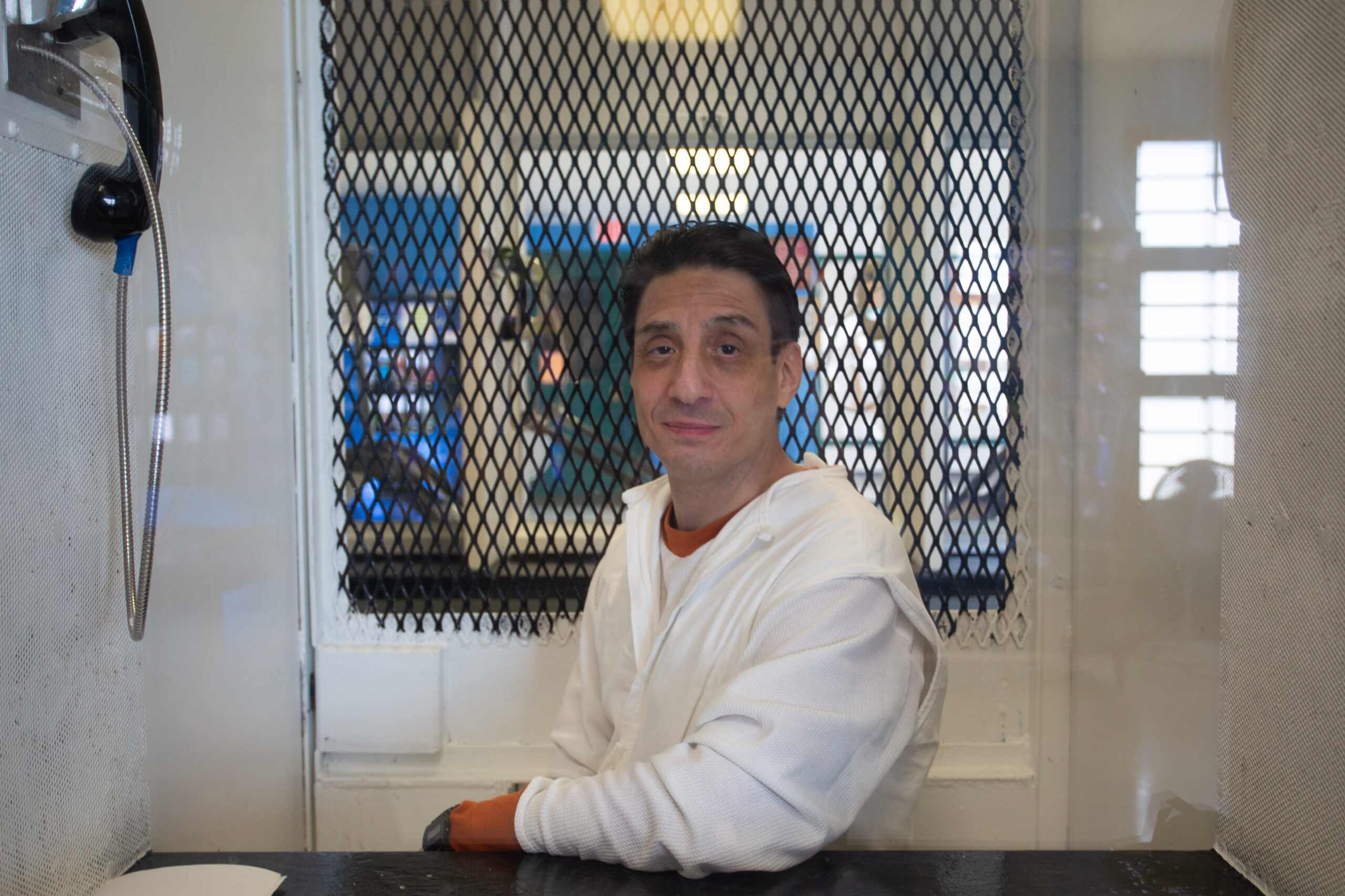
Ivan Cantu has sat on death row at Texas’ Polunsky Unit since 2001. Michelle Pitcher/Texas Observer

Many P.I.s who work on death row cases insist on secrecy. But Duff’s investigation was far from covert—he broadcast the entire process on his popular podcast, Cousins by Blood. 

In more than 50 episodes, he shared in-depth conversations with witnesses and new analyses of the forensic evidence. He found evidence that he says shows Cantu didn’t do any of what the state accused him of and that “there is a strong possibility [he] was set up.”

Duff, 44, now lives in North Carolina with his wife and their son, who was born while Duff was working on the podcast. He regularly traveled to Texas while investigating Cantu’s case; his first trip to the state for the case was to interview Cantu in person for the first time. While Duff’s wife works, he stays home, working on investigations and podcasts during his child’s naptime. He records his narration in his closet, trying his best to temper his Virginia accent while he goes over case updates.

For the bulk of Duff’s career, he worked as a TV producer. He started out filming in the back of police cars for a reality show called Speeders in the late 2000s and eventually worked as the development producer for California-based Critical Content. In that role, he helped develop a show on the Atlanta child murders case, a spate of killings in Georgia from 1979-81, which eventually aired on HBO.

Duff came across Cantu’s case almost a decade ago while developing a TV series about capital cases with lingering questions. He had a producer’s eye for a compelling story. Right away, he clocked the cinematic elements of the tragedy: The victims and the alleged perpetrator were young and good-looking. They were enmeshed in the Dallas party scene, and court documents showed that Mosqueda, the male victim, was a well-known drug dealer. But most of all, there were aspects of the state’s case that didn’t add up. Although the TV series didn’t get made, he never stopped thinking about the case.

After years of working in true-crime television, Duff began to feel held back and increasingly troubled by news stories about exonerations.

“Looking back on it, it’s hard for most people in general, and certainly most TV network executives, to wrap their head around the fact that there may be reasonable doubt,” Duff told the Texas Observer.

He realized that as a journalist, he could do little to affect change in the case if it turned out that Cantu was innocent. He decided to get his private investigator’s license, which gave him new training and tools. It also set his podcast apart from the sea of other true-crime shows. 

“It became more and more obvious as the years went along that I wasn’t going to be able to tell the type of stories that I wanted to tell … to potentially change the case, to potentially make a legal change,” Duff said. He later added, “As a journalist and storyteller, you can’t move the story along. But I’m like, well, what do I have to lose?”

That career change was a massive leap of faith, professionally and financially. Duff wasn’t hired by the family or Cantu’s lawyer—although both have spoken on his podcast and welcomed his findings. Duff funded the investigation and the podcast himself, and Spotify ran an ad on his show that helped cover costs. 

And he always knew that while Cantu’s innocence seemed possible, so did his potential guilt. “My goal is just to find the truth, wherever it leads. And it might lead right back to Ivan,” he said.

“Most people understand that mistakes can be made … but people are wrongfully convicted all the time.”

Duff was able to investigate the case in ways Cantu’s trial and original appeals lawyers failed to. While Cantu’s original lawyers called no expert witnesses to the stand, Duff found forensic pathologists, ballistics, and fingerprint experts who provided affidavits with their opinions on the evidence. Duff provided new evidence—including these expert opinions—that Cantu’s appeals lawyer, Gena Bunn, cited in many appeals in her ultimately unsuccessful attempts to halt Cantu’s execution. 

Bunn told the Observer the existence of a podcast and the involvement of an independent private investigator lent resources to the case she otherwise wouldn’t have had. She said the relationship is “a new kind of thing to navigate from a lawyer’s perspective, but there is no denying the information that he has uncovered and been willing to share with the defense team.” 

Shortly after speaking with the new tenant of Boettcher’s former apartment, Duff tracked down the star witness. In episode 15 of the podcast, he aired their conversation. 

During their conversation, Duff shares what he knows, and what doesn’t add up for him, and asks tough questions of the skittish woman. Although she doesn’t give up much new information, they talk for hours. It’s this—Duff’s persistence in finding people related to the case and getting them to speak with him, a stranger, about a traumatic time in their lives—that makes the podcast so compelling. His dispatches only became more disturbing as Duff found new witnesses and unearthed evidence that made it appear that the prosecution’s star witness may have lied. 

Cantu did not receive a hearing on any of that evidence ahead of his February execution date.

But Duff’s brand of investigative podcasting struck a nerve with Texas listeners and provided a major public platform for one man’s innocence claim. He believes people are ready to hear more stories like this. “Most people understand that mistakes can be made either purposefully or not purposefully, but people are wrongfully convicted all the time,” he said.

Gasto en pasajes para salir de la ciudad supera el presupuesto de oficinas para inmigrantes

posted in: Politics | 0

Hasta finales de enero, la ciudad había comprado 20.500 billetes de avión o autobús para reubicar a los inmigrantes fuera de la ciudad, por un total de $7.6 millones de dólares, según informaron las autoridades el martes. Esto es tres veces el presupuesto anual de las dos oficinas principales que gestionan los servicios para las comunidades de inmigrantes de la ciudad.

John McCarten/NYC Council Media Unit

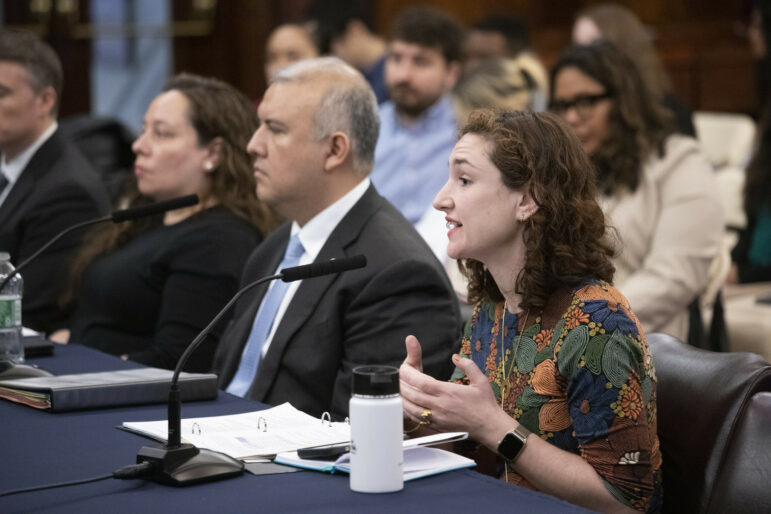
El Comisionado de la Oficina de Asuntos de los Inmigrantes, Manuel Castro, y la Directora de Operaciones de la Oficina de Solicitantes de Asilo, Molly Schaeffer, testificando ante el Concejo de la ciudad el martes.

Este artículo se publicó originalmente en inglés el 6 de marzo. Traducido por Daniel Parra. Read the English version here.

Esta semana comenzó la primera ronda de audiencias preliminares sobre el presupuesto municipal para el año fiscal 2025, y una de las primeras oficinas citadas fueron las oficinas de Asuntos del Inmigrante (MOIA por sus siglas en inglés) y de Operaciones para Solicitantes de Asilo (OASO por sus siglas en inglés), esta última creada hace un año para gestionar y coordinar la respuesta de la ciudad a la llegada de nuevos inmigrantes al sistema de albergues.

En febrero, el alcalde Eric Adams decidió recortar únicamente el presupuesto de los servicios de atención a los inmigrantes tras unos ingresos fiscales superiores a los previstos, eliminando algunos de los recortes generales anunciados previamente en otras agencias municipales.

Si bien el alcalde Eric Adams decidió en febrero recortar sólo el presupuesto de los servicios de atención a los inmigrantes tras unos ingresos fiscales superiores a los previstos (elimiando algunos de los recortes generales previamente anunciados), los concejales han pedido más anulaciones.

Los recortes en el gasto municipal para inmigrantes se mantienen en un 10 por ciento, unos $600 millones de dólares que se suman a los anteriores recortes del 20 por ciento, unos $1.700 millones de dólares.

Casi dos años después de que los solicitantes de asilo empezaran a llegar a los refugios de la ciudad, Adams ha dicho que ahora se está pasando a un ” estado de estabilización”, aunque mantiene que la ciudad sigue en modo de crisis. “Lo estamos tratando de forma diferente porque la emergencia sigue existiendo. Pero lo estamos gestionando de forma diferente”, declaró Adams a ABC News.

Desde mediados de enero, el número de solicitantes de asilo a cargo de la ciudad ha descendido de un máximo de 69.000 a 64.000, después de que la administración aplicara durante meses plazos de estadía de 30 y 60 días, que han sido duramente criticados por los defensores de inmigrantes y algunos concejales.

Casi la mitad de las familias que recibieron avisos de expulsión de 60 días han abandonado el sistema de refugios. Un portavoz de la alcaldía dijo a City Limits la semana pasada que unas 9.100 familias con niños han salido. Otros 69.200 adultos inmigrantes han recibido avisos de salida, de los cuales aproximadamente una cuarta parte ha vuelto para solicitar refugio.

Desde enero, la ciudad ha abierto 216 centros de acogida de emergencia y ha gastado aproximadamente $3.770 millones de dólares en la acogida de inmigrantes recién llegados, según el Asylum Seeker Funding Tracker de la alcaldía.

Tanto las familias como los adultos pueden volver a solicitar refugio una vez finalizada su estancia inicial —aunque el proceso puede ser un calvario, sobre todo para los que no tienen hijos, ya que suele durar días o incluso semanas.

Todos también tienen la opción de mudarse fuera de los cinco condados o incluso regresar a sus países de origen con un billete de avión emitido por la ciudad.

Durante la audiencia, la nueva presidenta del Comité de Inmigración, la concejal Alexa Avilés, preguntó a la directora de la OASO, Molly Schaeffer, por el número de pasajes emitidos y su costo.

Schaeffer dijo que a finales de enero, la ciudad había comprado 20.500 billetes de avión o autobús, por un total de $7.6 millones de dólares, y la ciudad ha visto un aumento en las solicitudes de viajes aéreos fuera del país, agregó.

“Las compañías aéreas deben de estar muy contentas”, señaló Avilés, quien dijo repetidamente durante la audiencia que el presupuesto dedicado a MOIA y OASO es insuficiente, teniendo en cuenta que casi el 40 por ciento de la población de la ciudad ha nacido en el extranjero.

John McCarten/NYC Council Media Unit

La concejal Alexa Avilés, nueva presidenta del Comité de Inmigración, dijo repetidamente durante la audiencia que el presupuesto dedicado a MOIA y OASO es nsignificante.

Hasta ahora, el coste de los billetes de salida de la ciudad triplica el presupuesto anual de las dos principales agencias de la ciudad que se ocupan de los asuntos de los inmigrantes. El presupuesto de OASO es de $1.7 millones de dólares, aclaró Schaeffer, mientras que el de MOIA ronda los $700.000 dólares, según explicó el comisionado Manuel Castro.

“Es grotesco”, se quejó Avilés de la financiación actual de las dos agencias. 

“¿Ha habido alguna comunicación entre OMB y MOIA sobre la creación de una agencia entera para asuntos de inmigrantes?”, preguntó durante la audiencia Avilés. 

“No”, respondió Castro. “No desde que entré en la administración”.

Entonces Avilés hizo casi que la misma pregunta a Schaeffer, quien dijo: “Estamos constantemente pensando en cómo hacer mejor las operaciones a largo plazo de los solicitantes de asilo y averiguar lo que tiene más sentido para el próximo par de años”.

Avilés dijo que la falta de una oficina centralizada “es un poco una pesadilla”, y añadió que la población inmigrante de la ciudad “merece una agencia completa que pueda consolidar los servicios y pueda hacer que esto sea menos una carrera a través de las agencias donde no tienes jurisdicción”.

El Program to Eliminate the Gap (PEG por sus siglas en inglés) del alcalde en noviembre incluyó recortes al Rapid Response Legal Collective (Colectivo Legal de Respuesta Rápida), dirigido en parte por MOIA, que proporciona ayuda legal en una amplia gama de casos de inmigración, incluidas personas detenidas por ICE, a punto de ser detenidas y deportadas, o aquellas que buscan reabrir sus casos.

Los recortes al programa, que se creó en 2019 con $1 millón de dólares de la ciudad y el estado, llega cuando la demanda de estos servicios se dispara.

En otra audiencia presupuestaria del Consejo a principios de esta semana, Lisa Rivera, del New York Legal Assistance Group (NYLAG por sus siglas en inglés) —una de las tres organizaciones sin fines de lucro que dotan de personal al colectivo— dijo que el programa ha sido “inundado con solicitudes para representar a solicitantes de asilo pro se que han sido ordenados para deportación por los jueces en audiencias que están plagadas de garantías procesales y otras cuestiones legales”.

Si no se financia una representación significativa para los recién llegados inmigrantes, testificó, “se socavarán los esfuerzos de la ciudad para crear vías de autorización de trabajo y disminuir la dependencia del sistema de refugios”.

El Comité de Inmigración del Concejo instó a la administración a presupuestar $150 millones de dólares para ampliar los servicios legales a inmigrantes, así como los programas de alfabetización para adultos, que también tienen una gran demanda en los tres sistemas de bibliotecas públicas de la ciudad.

“Se trata de la sostenibilidad de los servicios para los inmigrantes neoyorquinos”, dijo Avilés.

Sólo la OASO ha presentado más de 15.339 autorizaciones de trabajo en nombre de inmigrantes neoyorquinos, más de 10.745 formularios de Estatus de Protección Temporal y 11.630 solicitudes de asilo, dijo Schaeffer.  

La audiencia del martes fue la segunda en la que el gasto de la ciudad en inmigrantes ha sido el centro de atención, tras la audiencia del Comité de Finanzas del lunes. 

En las próximas semanas, el Concejo tedrá otras audiencias de supervisión de otros organismos que gestionan programas para las comunidades de inmigrantes, como el Departamento de Juventud y Desarrollo Comunitario, la Administración de Recursos Humanos, el Departamento de Educación y el Departamento de Salud y Hospitales de la ciudad de Nueva York.

La administración Adams y el Concejo tienen hasta el 30 de junio para elaborar un presupuesto definitivo para el año fiscal 2025, que comienza el 1 de julio.

Para ponerse en contacto con el reportero de esta noticia, escriba a Daniel@citylimits.org. Para ponerse en contacto con el editor, escriba a Jeanmarie@citylimits.org