Best cameo? Best hat? Ahead of Sunday’s Academy Awards, AP hands out its own Oscars

posted in: News | 0

By LINDSEY BAHR and JAKE COYLE (AP Film Writers)

The Academy Awards honor many things in movies but not some of the most important. Ahead of Sunday’s Oscars, AP Film Writers Lindsey Bahr and Jake Coyle make selections for their own awards — some more offbeat than others.

Sometimes the best truly supporting performances are the ones that will never, ever get the “awards push,” like the brilliant Cory Michael Smith as Georgie Atherton in “May December.” With his subtly manic energy, sad smile and that awful bleached hair, his is that kind of undeniable presence who steals both scenes he’s in and also completely upends everything we’ve come to understand so far. But this is how awards season works and something that only our awards strategist friends can justify. — L.B.

There are, no doubt, more elegantly styled heads of hair among this year’s Oscar nominees. But no ‘do could match the gravity-assisted beauty of the ponytail that hangs suspended in the air when Gwen (Hailee Steinfeld) and Miles (Shameik Moore) sit together, clung to the underside of cornice, gazing out at an upturned New York in “Spider-Man: Across the Spider-Verse.” For a topsy-turvy, canon-breaking film series, Gwen’s upside-down ponytail points the way. — J.C.

As great as the whole ensemble is in Cord Jefferson’s incisive drama, the movie is never better than when Wright and Ortiz are matched together. When Wright’s frustrated novelist Monk Ellison meets with his agent Arthur (Ortiz), “American Fiction” sparkles with the comic interplay of two character-actor greats. Give these guys a sitcom and I’d watch six seasons. — J.C.

Wes Anderson’s “Asteroid City” got a raw deal this year with zero nominations (maybe he’ll win his first Oscar for his Henry Sugar short ). One performance in a sea of great ones that really made an impact was a true cameo that’s saved for the very end: Margot Robbie as the actor whose scene as Jason Schwartzman’s dead wife was cut for time. She gets only a few minutes, to remind her would’ve-been co-star of their would’ve-been lines, dressed in Elizabethan garb a balcony away. It is an emotional gut punch of the best kind, brief and perfect. — L.B.

Willem Dafoe’s face is already a work of art, but “Poor Things” turns it into a Munch-esque masterpiece. His scarred Dr. Godwin Baxter, whose deformities come from experiments performed on him, is like a fusion of mad scientist and wounded victim. He’s Frankenstein and Frankenstein’s monster, in one. — J.C.

It remains wild that the film academy still doesn’t recognize stunts, but we can here. “Mission: Impossible – Dead Reckoning” isn’t the underdog in this category but that doesn’t make what they did any less impressive. The obvious “best” is the cliff jump, which most of us know by now that Tom Cruise did himself. But I’m also partial to the Rome car chase in which Cruise and Hayley Atwell try to escape capture in a creaky, vintage Fiat 500 while handcuffed together. — L.B.

“September” has probably been heard in a hundred movies and at a billion weddings, but the best animated feature nominee “Robot Dreams” uses the disco classic to perfection. In a movie that is strikingly grown-up about a relationship between a dog and robot, all of the joy and nostalgia of “September” has never been more moving. It sends you out of the theater humming “The bell was ringin’, oh, oh / Our souls were singin’.” — J.C.

This is perhaps a silly superlative to give to a movie that was easily one of the strongest adaptations of the year, taking what was essentially a young woman’s diary entries and making something evocative and profound without the use of first-person narration. The thoughtful style of Sofia Coppola’s film helps make this point, transporting audiences into this intoxicating and dreamlike wonderland of the most beautiful clothes and glamorous settings with the biggest star of the time, and guiding us along with Pricilla to the realization that it is also a nightmare. — L.B.

I don’t love everything about Christopher Nolan’s epic but I think the Trinity Test scene is a sequence that will be taught to film students for generations. It’s not just the explosion itself, which was accomplished with old-school moviemaking techniques like forced perspective (doing something small but making it seem big). It’s the rumbling tremors of the moments that follow, when Oppenheimer, after hearing that the bomb has been dropped on Hiroshima, is greeted by a flag-waving gymnasium audience. Oppenheimer’s face is horrified, reckoning with what he’s wrought. The crowd turns grotesque and ashen. A girl (played by Nolan’s daughter) shrieks. Here is the real thunder of “Oppenheimer.” — J.C.

Last year had so much great dancing, from the sweaty club scenes in “Passages,” to the wedding line dance in “The Iron Claw,” Jeff’s silly moves in “Bottoms,” Bella Baxter’s broken doll euphoria in “Poor Things,” “M3GAN’s” boogie and, of course, the end of “Saltburn.” But the trophy goes to Greta Gerwig’s euphoric “I’m Just Ken” dream ballet, a sequence she fought to keep in that is also the best in the film. — L.B.

Sure, you could pick more violent encounters. But is there possibly anything more ferociously rock ’em-sock ’em than an author overhearing her husband say he doesn’t like her latest book? In Nicole Holofcener’s “You Hurt My Feelings,” it’s the opening salvo in a painfully, hysterically acute examination of honesty in relationships. Not, I repeat not, a date movie. — J.C.

I think the original song category needs an overhaul. For years, movies have helped introduce me to songs that exist that I might have missed, that become immediate favorites because of the emotional association with a movie. Selecting the right existing song is such an art and one last year stood out over all the rest: Damien Jurado’s “Silver Joy” in “The Holdovers.” — L.B.

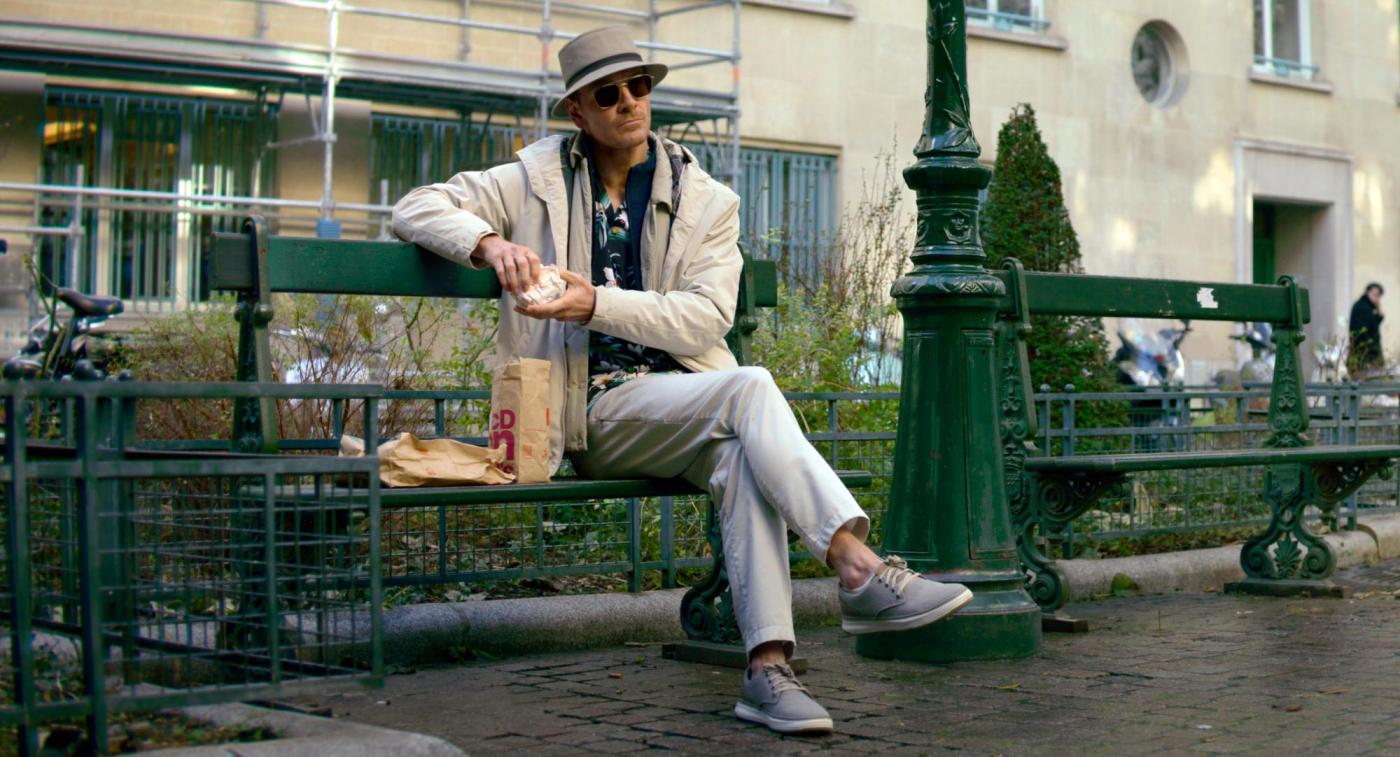
Meticulous movie hitmen have long worn stylish hats. Think of the fedora of the protagonist of “Le Samouraï.” The assassin of David Fincher’s “The Killer,” though, wears a bucket hat. It’s just as much a silhouette, but he looks more like a dopey tourist than a stone-cold killer. That’s much the point for a movie about murder in increasingly anonymous times. — J.C.

In Ava DuVernay’s too-overlooked “Origin,” much of the film’s sense of humanity comes from the rich presences of the actors who float in and out of the movie. Not just the stellar lead, Aunjanue Ellis-Taylor, but a number of performers — including Jon Bernthal, Emily Yancy and Nick Offerman — add to the nuance of “Origin.” That’s especially true of Audra McDonald, who turns up for just one scene that may be the most potent of the film. McDonald plays a woman named Miss Hale, and her story of how she got that name is a delicate powerhouse. — J.C.

There are not many truly romantic films made for big audiences these days. Sure there’s the odd rom-com here and there, but sweeping, luscious, capital R romances are few and far between and rarely celebrated at awards season (yes, I’m still thinking about Joe Wright’s “Cyrano” ). This season, that title went to “The Taste of Things,” which doesn’t have an ounce of cynicism, just pure love. — L.B.

With exactly zero apologies to “80 for Brady” (Jets fan here), no former footballer made more of a big-screen impression than Marshawn Lynch, the former elite running back known as “Beast Mode.” In Emma Seligman’s raunchy lesbian teen comedy “Bottoms,” Lynch turns up as a high school teacher and is quite funny acting opposite Rachel Sennott and Ayo Edebiri. The role also has poignance. Lynch has said he did it to help make up for how he handled his sister, Marreesha Sapp-Lynch, coming out in high school. — J.C.

Snoop, the all-seeing dog in the best picture nominee “Anatomy of a Fall,” has really hogged the pooch spotlight. Messi, the dog who plays Snoop, has been all over the place, including the film academy luncheon. But it’s time his reign of terror came to end. In Aki Kaurismäki’s “Fallen Leaves,” my favorite film of 2023, a pair of loners find nourishing points of connection in a cruel and grim world: the movies, karaoke and a dog named Chaplin. The dog, named Alma in real life, is Kaurismäki’s own mutt, and deserves a few bones thrown her way, too. — J.C.

___

Follow AP Film Writers Lindsey Bahr and Jake Coyle at: https://twitter.com/ldbahr and http://twitter.com/jakecoyleAP

___

For more coverage of the 2024 Oscars, visit https://apnews.com/hub/academy-awards
Anytime Fitness parent company Self Esteem Brands announces global merger with Orangetheory

posted in: News | 0

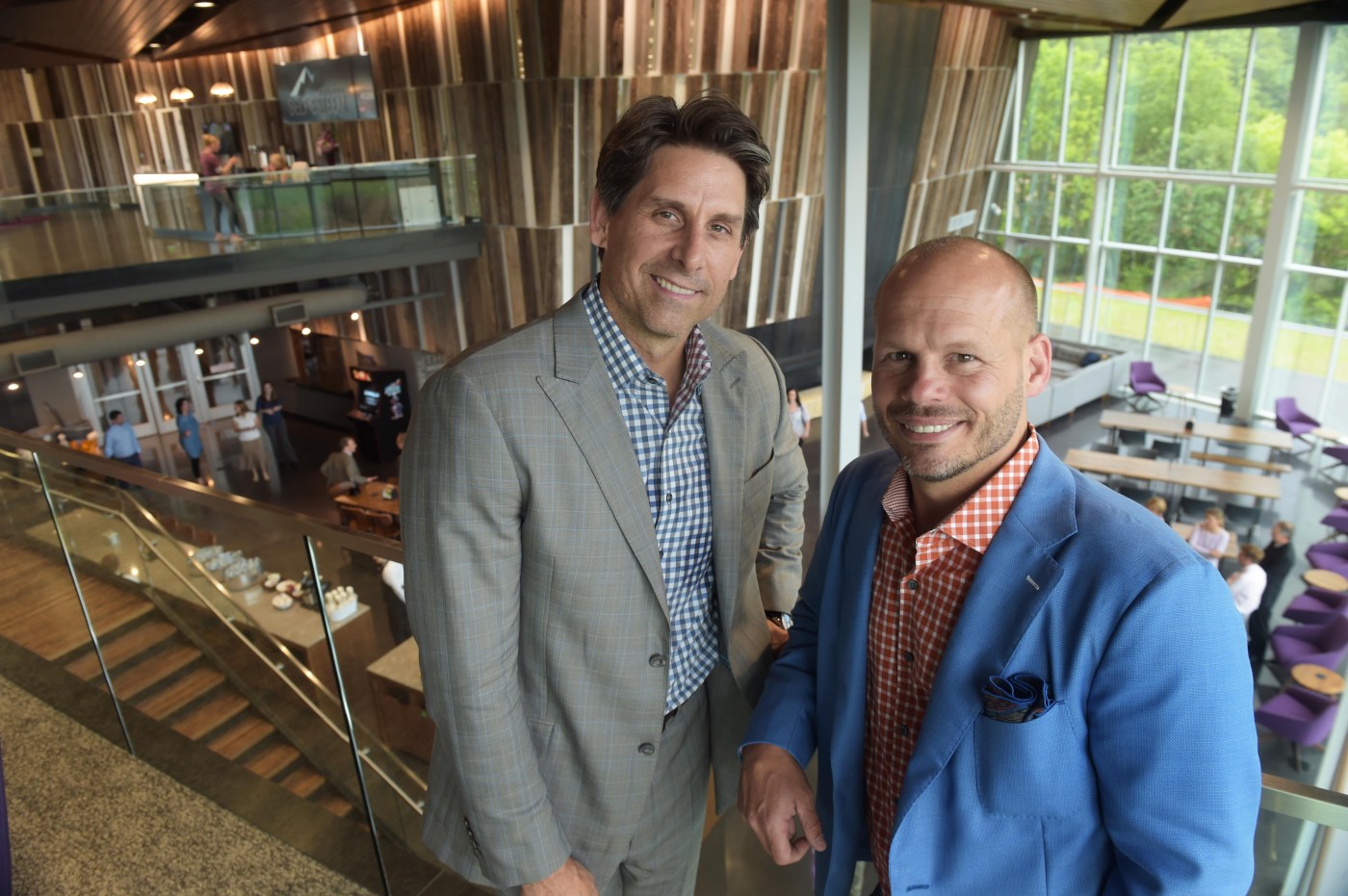
Self Esteem Brands, the Woodbury-based parent company of Anytime Fitness, announced its plans to merge with boutique fitness studio Orangetheory Fitness last week.

Orangetheory and Self Esteem plan to merge as equals in an all-stock transaction, forming a new company to include Self Esteem brands like Anytime Fitness, Waxing the City, Basecamp Fitness, Stronger U Nutrition and The Bar Method, according to a news release.

The new company will boast $3.5 billion in sales and 7,000 franchise locations across 50 countries and all seven continents, per the release.

“We are excited about what our combined companies will be able to accomplish together to capture an increasing market share, unlock future growth and pioneer a healthier tomorrow for consumers around the world,” said Dave Long, co-founder and CEO of Orangetheory, in the release.

Based in Boca Raton, Fla., Orangetheory is a heart rate-based group workout program with more than 1,500 locations.

Self Esteem Brands reported a 12.3 percent revenue increase for 2023 as compared to 2022. Waxing the City reported its franchise sales were more than 300 percent higher than 2022.

Self Esteem’s largest brand, 24-hour fitness club Anytime Fitness, reported a 6.7 percent year-over-year increase in coaching and personal training services for 2023. Anytime Fitness has more than five million members across 5,200 locations.

“From our simple beginnings in 2002 with the first Anytime Fitness club, we’ve enjoyed rapid growth worldwide thanks to both the power of small-business franchising and our mix of brands that meet ever-increasing demand for more holistic and personalized health and wellness services,” said Chuck Runyon, co-founder of Anytime Fitness and CEO of Self Esteem Brands, in the release.

The two companies, which share an investor in Atlanta-based Roark Capital, have begun the search for a CEO for the new company, said a spokesperson for Self Esteem Brands.

Runyon and Dave Mortensen, the co-founders of Anytime Fitness and current CEO and president of Self Esteem Brands, will move to the new company’s board of directors once the new CEO is hired. Long, Orangetheory Fitness’ CEO, also will shift to the new board of directors, said the spokesperson.

Timing of the merger is subject to regulatory approvals and customary closing conditions.

Related Articles

Business |


The 5 most exciting innovations coming to an airport near you

Business |


Facebook, Instagram, Messenger and Threads logins restored after widespread outage

Business |


6 ways to spring clean your bank accounts

Business |


Target launches new paid membership program in a bid to drive sales at a time of cautious spending

Business |


Biden administration would cap credit card late fees at $8, part of campaign against junk fees

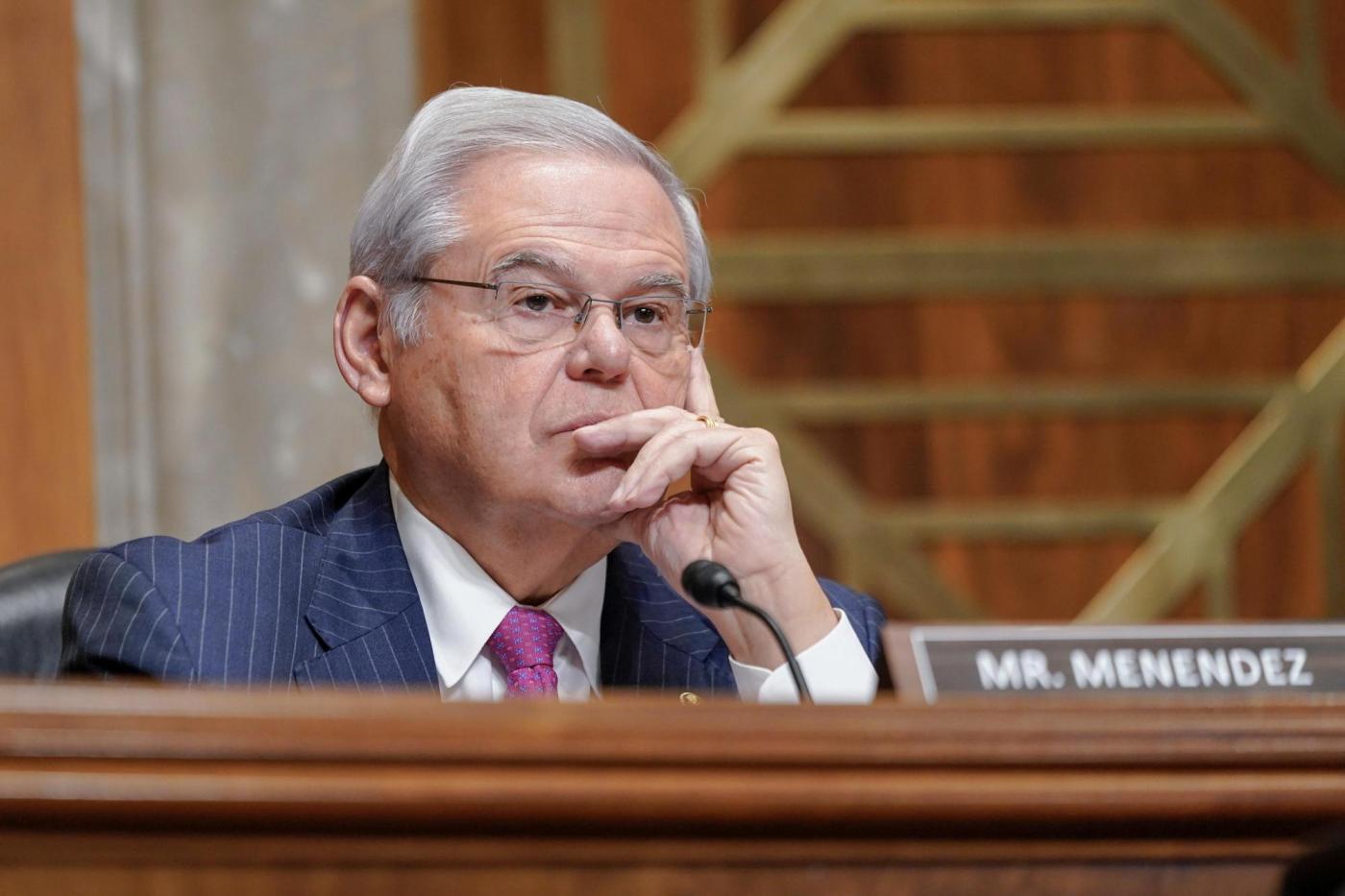
New obstruction of justice crimes levied against Sen. Bob Menendez in rewritten indictment

posted in: Politics | 0

By LARRY NEUMEISTER (Associated Press)

NEW YORK (AP) — New obstruction of justice crimes were added Tuesday to charges against Sen. Bob Menendez and his wife that allege they accepted gold bars, cash and a luxury car in return for favors the senator carried out to assist three businessmen.

The charges were in a rewritten indictment returned against the Democrat in Manhattan federal court.

Conspiracy to obstruct justice and obstruction of justice charges were added against Menendez and his wife, Nadine. The senator responded to the updated indictment by calling the additions “a flagrant abuse of power.”

He said the government “has long known that I learned of and helped repay loans — not bribes — that had been provided to my wife.”

He added: “I am innocent and will prove it no matter how many charges they continue to pile on.”

An indictment already alleges that the couple conspired with three businessmen to accept the bribes in return for the senator’s help with their projects. Both have pleaded not guilty, along with two of the businessmen. A May trial has been scheduled.

One businessman pleaded guilty to charges last week and agreed to testify at trial against the others.

After his fall arrest, Menendez, 70, was forced to relinquish his chairmanship of the Senate Foreign Relations Committee but said he would not resign from Congress.

According to an indictment, Menendez and his wife accepted gold bars and cash from a real estate developer in return for the senator using his clout to get that businessman a multimillion-dollar deal with a Qatari investment fund.

Menendez also was charged with helping another New Jersey business associate get a lucrative deal with the government of Egypt.

Among new allegations, prosecutors say Menendez caused his then-attorney to meet with prosecutors last June and September to say that the senator had been unaware until 2022 of a $23,000 mortgage payment one businessman made on the Menendez’s New Jersey home or the money another defendant paid toward a Mercedes-Benz convertible.

Prosecutors allege that Menendez also caused his lawyer to say in the September meeting that Menendez in 2022 had learned that the payments were loans.

The prosecutors wrote that Menendez knew and “had learned of both the mortgage company payment and the car payments prior to 2022, and they were not loans, but bribe payments.”

Prosecutors also said in the rewritten indictment that Nadine Menendez caused her lawyer to tell prosecutors last August that the mortgage payment and funds provided for the convertible were loans when she knew they were bribe payments.

The new charges allege that the couple was trying to obstruct justice in the weeks before they were charged last September with a variety of crimes.

Prosecutors also say that Nadine Menendez asked one of the businessmen after he received a subpoena for documents what he would tell investigators if they asked him about payments he made for the convertible. After the man responded that he would say the payments had been a loan, Nadine Menendez “said that sounded good,” according to prosecutors.

The charges were added to the indictment just a day after Judge Sidney H. Stein rejected Menendez’s claims that search warrants that led to the discovery of gold bars and cash at his New Jersey home were unconstitutional.

Defense lawyers had alleged that documents submitted to magistrate judges to obtain search warrants for email records, phones and materials at Menendez’s residence from January 2022 to last September were “riddled with material misrepresentation and omissions.”

FBI raids on the residence in June 2022 resulted in the discovery of over $100,000 in gold bars and more than $480,000 in cash, much of it hidden in closets, clothing and a safe, prosecutors said.

Menendez said the cash found in the house was personal savings he had put away for emergencies.

The son of Cuban immigrants, Menendez has held public office continuously since 1986, when he was elected mayor of Union City, New Jersey. In 2006, then-Gov. Jon Corzine appointed Menendez to the Senate seat he vacated when he became governor.

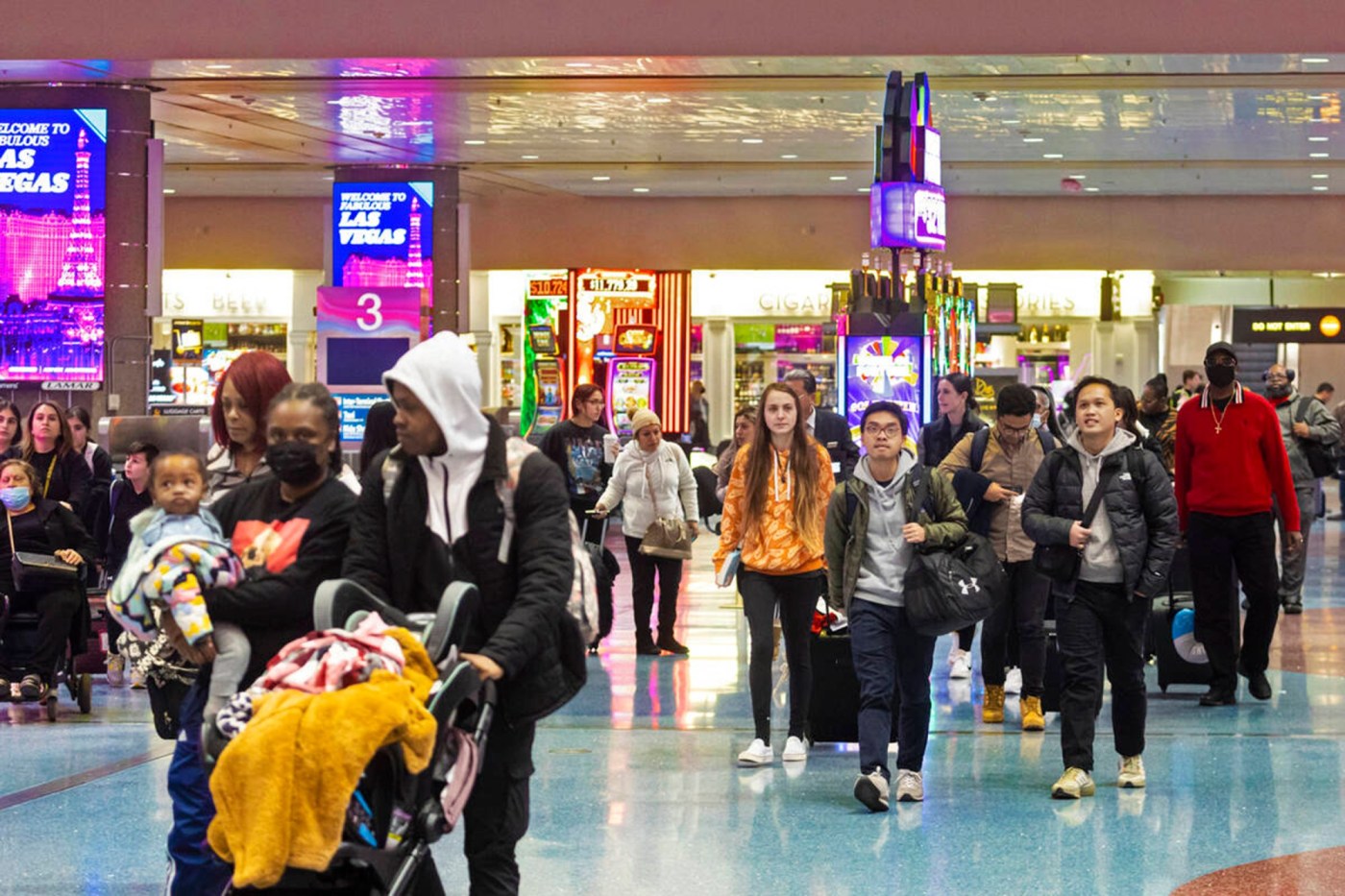
The 5 most exciting innovations coming to an airport near you

posted in: All news | 0

Lily Girma | (TNS) Bloomberg News

Imagine it’s the year 2030 and you’re heading to the airport to catch a flight. At the curb, you hop onto a Segway-like scooter that will serve as your personal airport vehicle. It scans data from your phone to determine your gate number and glides in and out of massive elevator banks — no escalators — to move between check-in and security floors. Along the way, a machine scans your face to verify your identity and directs you to an individual security tunnel where you self-screen your luggage.

None of this is science fiction. Within six years, architecture firm Gensler says it will install such a prototype at a major North American airport, including all of the above features.

“Airports are starting to shift toward autonomy,” says Ty Osbaugh, who is heading up the project as Gensler’s global cities sector leader. Airport innovation is happening faster than we think, he says, foreseeing a focus on self-service in keeping with an already dominant lifestyle that prefers digitization to real-life interactions.

This is not a novel idea. Use of biometric technologies has grown steadily at airports for years, and self-serve security checkpoints have already begun use in experimental pilot programs (typically for pre-screened travelers) in such major cities as New York, Dubai and Tokyo.

There’s business justification for all this that goes well beyond convenience and modernization. As airport terminals lengthen to accommodate larger airplanes—which need wider spaces between gates to be able to maneuver in and out of parking spaces—airlines have noticed that passengers are struggling to get to their gates on time, resulting in missed flights and connections.

Technological enhancements can help passengers reach gates on time — and make quick connections — making airline operations smoother and more efficient. Osbaugh says these changes will eventually become standard practice in the industry.

Updating an existing airport terminal is time-consuming, expensive work that often costs hundreds of millions of dollars — and sometimes billions, as with New York-area airports Newark International (EWR) and LaGuardia (LGA), which both debuted facilities last year after massive, 10-figure renovations.

Change is happening at an unprecedented pace, thanks to the Biden administration’s willingness to fund them. This month it allocated nearly $1 billion in grants to 100 U.S. airports — something it has done annually since 2022. Still, a single feature such as the self-screening security tunnels rolling out this year at Harry Reid International Airport in Las Vegas (LAS) can take more than five years to research, develop and test.

Osbaugh thinks security screening might eventually happen before you even arrive at the airport — in a specially designed smart car that picks you up at home.

That could take some time. For now, here are five innovations you’ll be seeing before year’s end.

Self-service security screening

Where it’s coming: Las Vegas’ Harry Reid International Airport (LAS)

How it works: Imagine going through the security screening process without interacting with a TSA agent. (You’ll be watched on video.) Travelers departing from LAS with TSA PreCheck clearance will soon be able to do this. Although the program was scheduled to roll out in January, the Department of Homeland Security and TSA confirmed exclusively to Bloomberg that a pilot program will roll out in early March.

Here’s how we understand it to work: Travelers will access the self-service lanes through TSA PreCheck lines; digital ID verification will open gates for access to them. Your movements will then be monitored remotely as you are tracked by cameras doubling as metal detectors. As at a supermarket, you place your items — your carry-on and phone, for instance — on the conveyor belt. If anything is detected in your pockets, a video screen — which works almost like a mirror — will show you where. Once all is well, you’ll see a green prompt, and automated exit doors will open and let you exit to find your gate. If further inspection is needed, a red prompt will pop up and you’ll undergo additional screening by a TSA officer. Instructions are projected in real time; a help button can summon a TSA officer if live assistance is needed.

As with most new technologies, this will initially be optional — a novel experience for early adopters — rather than replace familiar systems at once. And even though it might feel like something from the distant future, the engineers behind it are already hard at work on an even more advanced version.

Facial recognition

Where it’s live: Hartsfield-Jackson Atlanta International Airport (ATL), Detroit Metropolitan Wayne County Airport (DTW), John F. Kennedy International Airport (JFK) and LaGuardia in New York (LGA), Los Angeles International Airport (LAX), Dubai International Airport (DXB), Beijing Capital International Airport (PEK) and Frankfurt Airport (FRA)

Where it’s coming next: Singapore Changi Airport (SIN)

How it works: Tagging and dropping off checked bags is getting reduced to a simple face scan, as with verifying your identity before security. That means no more showing your ID and boarding pass to agents at counters and in front of security queues; instead you’ll smile at a small camera as if you’re taking an ID photo at a corporate office building, and airline software will scan the image to confirm your identity against its database.

American Airlines has such a system in place for PreCheck travelers at Ronald Reagan Washington National Airport (DCA), as does United Airlines at Chicago O’Hare International Airport (ORD). Dubai and Frankfurt are among the international airports with versions of this technology. Delta Air Lines’ Digital ID facial recognition program recently expanded to JFK, LGA and LAX after a successful three-year pilot in Atlanta and Detroit. To use Delta’s system, you need to have TSA PreCheck and a SkyMiles number and your passport number must be stored in the Fly Delta app. (Eligible travelers will receive a special push notification when at an airport equipped with the technology.)

Expect more soon: Singapore will let departing travelers use biometrics in lieu of physical passports to clear border control in the first half of this year.

Autonomous wheelchairs

Where it’s live: Kansai International Airport (KIX), Narita International Airport (NRT), Savannah/Hilton Head International Airport (SAV), Haneda Airport (HND) and Winnipeg Richardson International Airport (YWG)

Where it’s coming next: Zurich Airport (ZRH) How it works: With accessible travel hitting all-time highs — and increased demand for wheelchair-push services at airports — airlines are scrambling to build staff. Enter Swiss-based startup DAAV, which has designed a lightweight, robotic, electric wheelchair specifically for airport use. Scan your mobile boarding pass to tell it where you’re going, or let a second adult lead the way by choosing “follow me” on a built-in touchpad. Its slim proportions let it fit into such tight spaces as security lines; omnidirectional steering makes it easy to navigate crowds. A pilot is expected to commence in Zurich by the end of this year.

Japanese mobility company Whill has been working with Panasonic to develop autonomous wheelchairs since at least 2017. You can already find these models at select airports in the US and Japan, including Savannah and Haneda.

Prebooked security time slots

Where it’s live: Roughly two dozen North American and European airports, such as Amsterdam Schipol (AMS), London Heathrow (LHR), LAX and Singapore.

Where it’s coming next: Barcelona-El Prat Airport (BCN) and Malagá-Costa del Sol Airport (AGP)

How it works: You know the drill: Make a restaurant reservation and (theoretically) you won’t have to wait at the bar. The same now goes for airport security lines, with a number of airports introducing online reservations to help you avoid checkpoint queues. The particulars differ; some airports let you book three days before your flight, others open reservations one week ahead of time. Most offer arrival windows that last from 20 to 30 minutes, allowing you a bit of wiggle room.

The biggest provider for this service is Clear, the international alternative to PreCheck; it offers free prebooking to the general public (not just Clear members) via its Reserve program at 20 locations in North America and Europe; Barcelona and Malagá will soon offer this. Some airports are rolling out their own efforts, including Toronto’s Pearson International Airport (YYZ), Denver International Airport (DEN) and Heathrow, which in October started a six-month pilot for travelers flying out of Terminal 3.

Schiphol is one of the first such airports to measure the demand for this service: It logged 500,000 reservations for security screening in the first five months they were offered, from March to August 2023.

Robotic mini-manicures

Where it’s live: JFK, Las Vegas (LAS), Miami International Airport (MIA), Denver and Will Rogers World Airport in Oklahoma City (OKC)

Where it’s coming next: To be announced

How it works: If you’ve walked by XpresSpa locations at airports around the world and wondered who arrives at an airport early enough to get their nails done, consider that these shops are now among the world’s few purveyors of robotic “minicures” that take just 10 minutes. The treatments are done with the help of a futuristic AI-powered machine that looks like a 3D printer. Follow prompts on a built-in screen to choose among several dozen colors; it will tell you where to place your fingers so it can perfectly coat your nails one by one.

___

©2024 Bloomberg L.P. Visit bloomberg.com. Distributed by Tribune Content Agency, LLC.