Column: As Shane Waldron gets started as Chicago Bears offensive coordinator, finding his ideal fit is the top priority

posted in: News | 0

Maybe it’s best to start here, late in the fourth quarter of Week 15 with the Seattle Seahawks trailing 17-13 and pinned inside their 10-yard line. The two-minute warning had just passed, right after the Philadelphia Eagles downed a punt at the Seahawks 8.

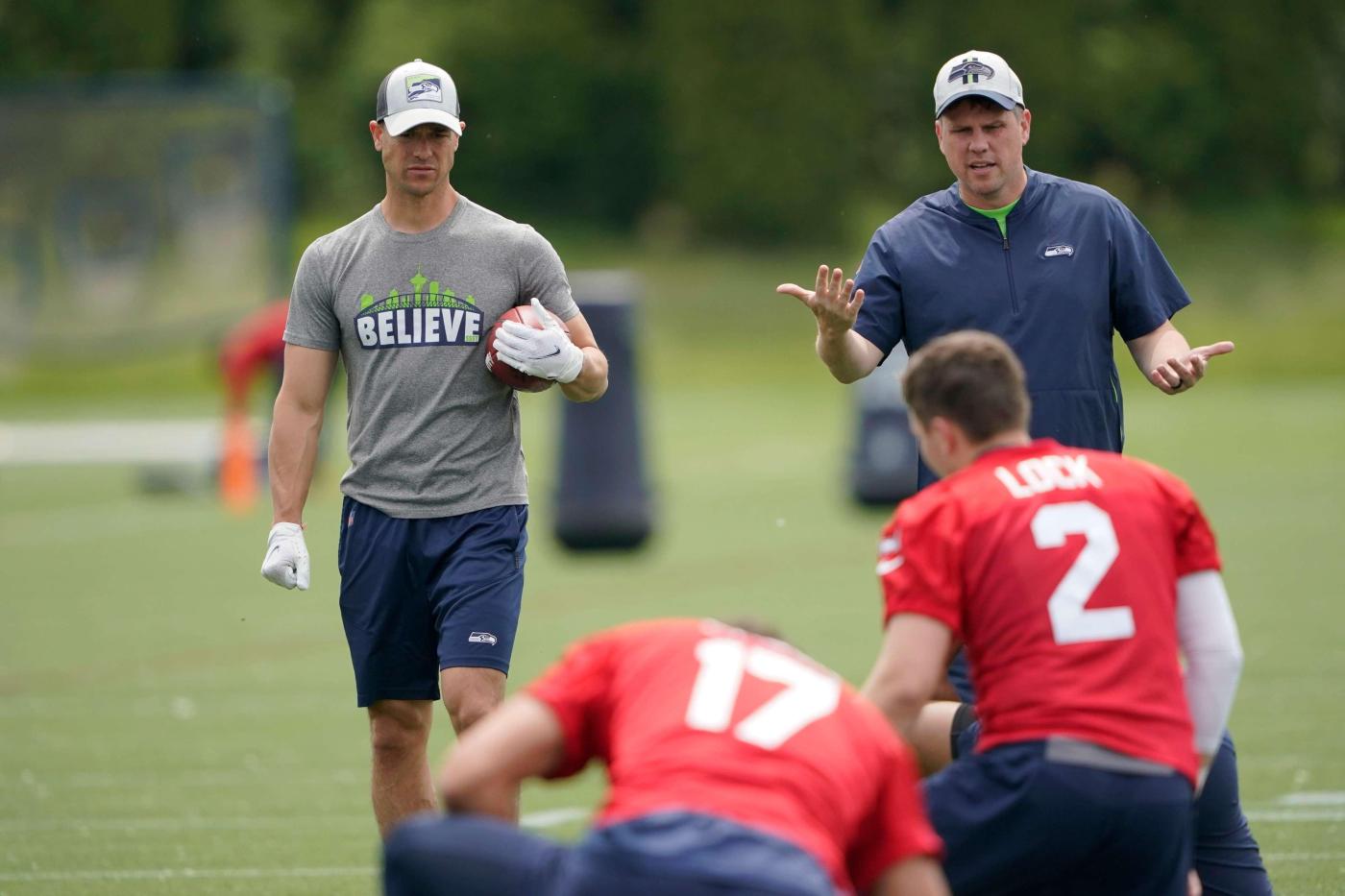
After kicking a field goal two possessions earlier, the Seahawks had life but faced a pressure-packed challenge against a quality opponent in the late stages of a “gotta have it” game. On the sideline at Lumen Field, offensive coordinator Shane Waldron grabbed quarterback Drew Lock — an emergency starter that night due to Geno Smith’s groin injury — and went to work.

It was showtime in Seattle for a 6-7, playoff-contending team in need of a big moment on the “Monday Night Football” stage.

The ensuing drive began with an incompletion — a Lock bullet over the middle that ricocheted off tight end Noah Fant’s hands and almost was intercepted. Over the next nine snaps, there were a few other near-disasters too. But the series also included five Lock completions, including a third-and-10 shot play up the right sideline to DK Metcalf for 34 yards.

Then, in the moment of truth, facing another third-and-long from the Eagles 29, Lock identified rookie Jaxon Smith-Njigba in single coverage, had the ideal play call from Waldron and dropped a game-winning bomb into the end zone with 28 seconds remaining.

Seahawks 20, Eagles 17.

That was a relatively small moment folded into a disappointing season for the Seahawks. But for all involved, it was a game-on-the-line triumph and represented the kind of resilient, poised and fearless football Waldron wants his unit to play.

Six days later, with Smith back at quarterback, Waldron put his fingerprints on another game-winning touchdown drive that ended in the final minute, this time a grinding, 14-play, 75-yard march that finished with Smith’s 5-yard pass to Colby Parkinson in a 20-17 road win over the Tennessee Titans.

That marked the second time in NFL history — and the first since 1999 — a team had two quarterbacks throw game-winning touchdown passes in the final minute of regulation in consecutive weeks. And it provided added evidence of Waldron’s ability to adapt and set up his players for success in the critical stages of games.

The Chicago Bears hope to lean into those skills and many more with Waldron as their new offensive coordinator. That union became official Tuesday. Waldron, 44, will begin the next leg of his football journey at a potentially landmark time in Bears history.

He will be the offensive visionary tasked with fueling the team’s championship pursuit while bringing out the best in whichever quarterback(s) the Bears choose to lead them into 2024 and beyond.

Waldron also will walk into an offensive coordinator’s office at Halas Hall where — with the exception of Adam Gase — the inhabitants almost always leave through a trap door rather than on an up escalator.

The pursuit of consistency

Within league circles, Waldron is regarded as an up-and-coming offensive architect, an intelligent and creative coach with strong teaching skills. His work with Smith in Seattle in 2022 is particularly notable as the once-forgotten quarterback enjoyed a career year (4,282 passing yards, 30 TDs) on the way to earning Pro Bowl honors and the league’s Comeback Player of the Year award.

Waldron has worked under some of the sport’s coaching greats — Bill Belichick with the New England Patriots (2008-09), Sean McVay with the Los Angeles Rams (2017-20) and Pete Carroll for the last three seasons in Seattle.

He was the Rams passing game coordinator for three seasons and Jared Goff’s quarterbacks coach in 2019. He spent one season with Russell Wilson in Seattle before preparing Smith to be a productive starter for a playoff team in 2022.

When it comes time for the Bears to formally introduce Waldron, he likely will detail three key tenets within his offensive philosophy. Ball security is a must. Fundamentals require a daily investment to stay sharp. Buy-in from the entire group will be the blowtorch that ignites everything.

Waldron likely will talk often about being committed to the pursuit of consistency. He strives for balance in his offense, wanting to establish a strong running game while embracing an attacking mentality when explosive-play opportunities present themselves.

And as was the case in those two late comeback victories last month, Waldron surely wants the identity of his offense to include composure, determination and high-level mental toughness.

As a play caller, he will have to connect on a heightened level with his quarterback, striving to consistently bring out the best in whomever that turns out to be.

The presumption is, at the very least, he will be afforded input as his new bosses at Halas Hall work to solve that riddle in the coming weeks and months. That work will include both pre-draft homework and in-house discussions on the developmental progress of Justin Fields.

Fit process

Like with any coaching hire, it’s easy to gravitate first to feelings of hope, to the optimistic visions of the significant improvements that can catalyze a meaningful breakthrough. Waldron’s experience calling plays was a definite plus for the Bears. For general manager Ryan Poles and coach Matt Eberflus, that removes a chunk of the guesswork that comes with trying to forecast how he might handle those duties in Chicago and what kind of productivity they can expect.

Still, Eberflus and Poles are less than two years removed from hiring their last offensive coordinator — the January 2022 union with Luke Getsy that triggered significant excitement at Halas Hall.

Like Waldron, Getsy was hailed as a rising, young offensive coach with high intelligence, proven teaching skills and impressive creativity. He had been with the Green Bay Packers for six of the previous seven seasons, including three working under Matt LaFleur in a Kyle Shanahan/McVay-style offense. Getsy was endorsed by those who knew him best — players and coaches — as a strong communicator, steadying leader and sincere, relatable team builder.

He had been Aaron Rodgers’ quarterbacks coach for MVP seasons in 2020 and 2021 and, while serving as Mike McCarthy’s receivers coach in 2016 and 2017, had been credited by Davante Adams as influential in his breakthrough.

“He’s been on my radar for a while,” Eberflus said after hiring Getsy, later emphasizing his attraction to the timing-based, quick-decision passing attack Getsy was likely to bring.

For the next two seasons, Getsy was regarded as an imaginative football mind with strong collaborative skills and a comprehensive understanding of all the moving parts within an offense. But the Bears, under his guidance, also had significant inconsistency issues, and the desired breakthrough for Fields never reached the level the team hoped.

All the positive traits the Bears identified in Getsy didn’t mean enough when his offense too frequently found itself sputtering.

Fields worked his hardest to master a system that was not ideal for him. Getsy’s troubleshooting efforts sometimes steered Fields away from concepts and plays he was most comfortable with.

It became a frustrating square dance. The quarterback was frequently adjusting to the play caller. The play caller was adjusting to the quarterback. The offense, in turn, was adjusting, readjusting, then adjusting yet again for large chunks of two seasons, impeding the opportunity to build momentum or expand, particularly in the passing game.

It was a fit issue. A significant one. And it’s a lesson Eberflus and Poles must learn as they try to set up Waldron for success.

Waldron’s experience and adaptive qualities should help. But with the Bears potentially at a pivot point at quarterback, striving to marry the offensive vision with the personnel must remain a priority as well.

For whatever it’s worth, Waldron’s Seahawks ranked behind the Bears this season in total offense, first downs, touchdowns, third-down conversion percentage and red-zone efficiency. They also had a bottom-five rushing attack.

Waldron must find ways to make his next offense much more potent. Whatever it takes. He must have solutions and ideas for maximizing his quarterback’s gifts while also playing to the strengths of the supporting cast.

And when the pressure rises? When the Bears reach those critical stages of close games? Waldron will be expected to consistently be at his best, bringing out the best in every player in his offense.

The Bears, naturally, are hopeful for what’s ahead. Ultimately, the results Waldron produces and his ability to help the team’s quarterback(s) shine will define his time in Chicago.

()
Chicago White Sox sign John Brebbia to a 1-year deal to bolster their bullpen depth

posted in: News | 0

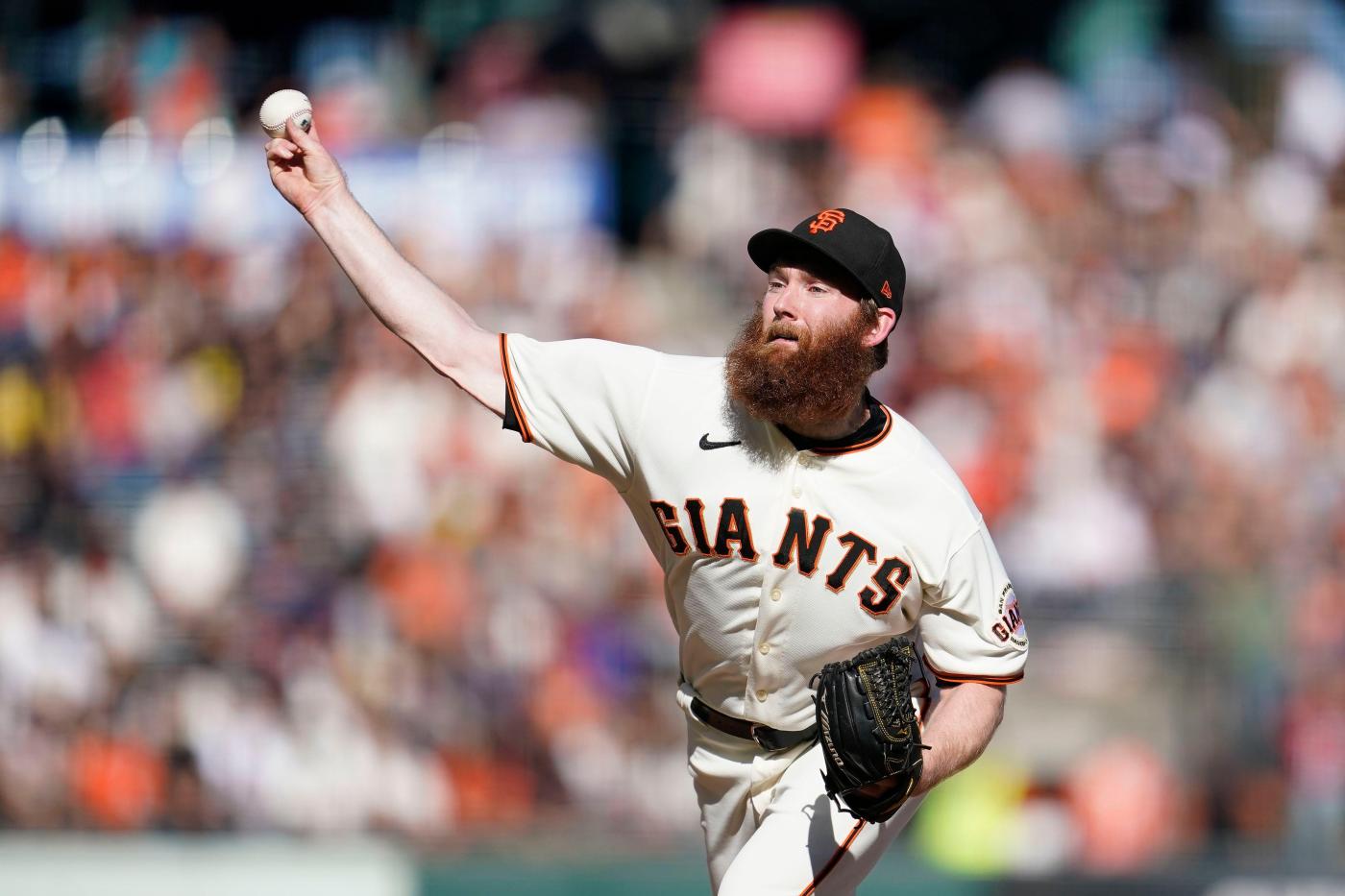
The Chicago White Sox added to their bullpen depth Saturday, signing right-hander John Brebbia to a one-year deal, a source confirmed to the Tribune.

The move is pending a physical.

MLB Network’s Jon Morosi initially reported the signing and Ken Rosenthal of The Athletic reported the deal is for $5.5 million.

Brebbia, 33, is 15-15 with a 3.42 ERA and two saves in 295 career appearances (21 starts as an opener) during six seasons with the St. Louis Cardinals (2017-19) and San Francisco Giants (2021-23). He has 321 strikeouts and 90 walks in 299 2/3 career innings.

He went 3-5 with a 3.99 ERA in 40 outings (10 as an opener) for the Giants in 2023. Brebbia had 47 strikeouts and 14 walks in 38 1/3 innings, missing a portion of the season with a right lat strain.

Brebbia underwent Tommy John surgery in June 2020 and made 18 appearances for the Giants in 2021. He led the National League with 76 outings the next season (11 as an opener), going 6-2 with a 3.18 ERA, 54 strikeouts and 18 walks in 68 innings.

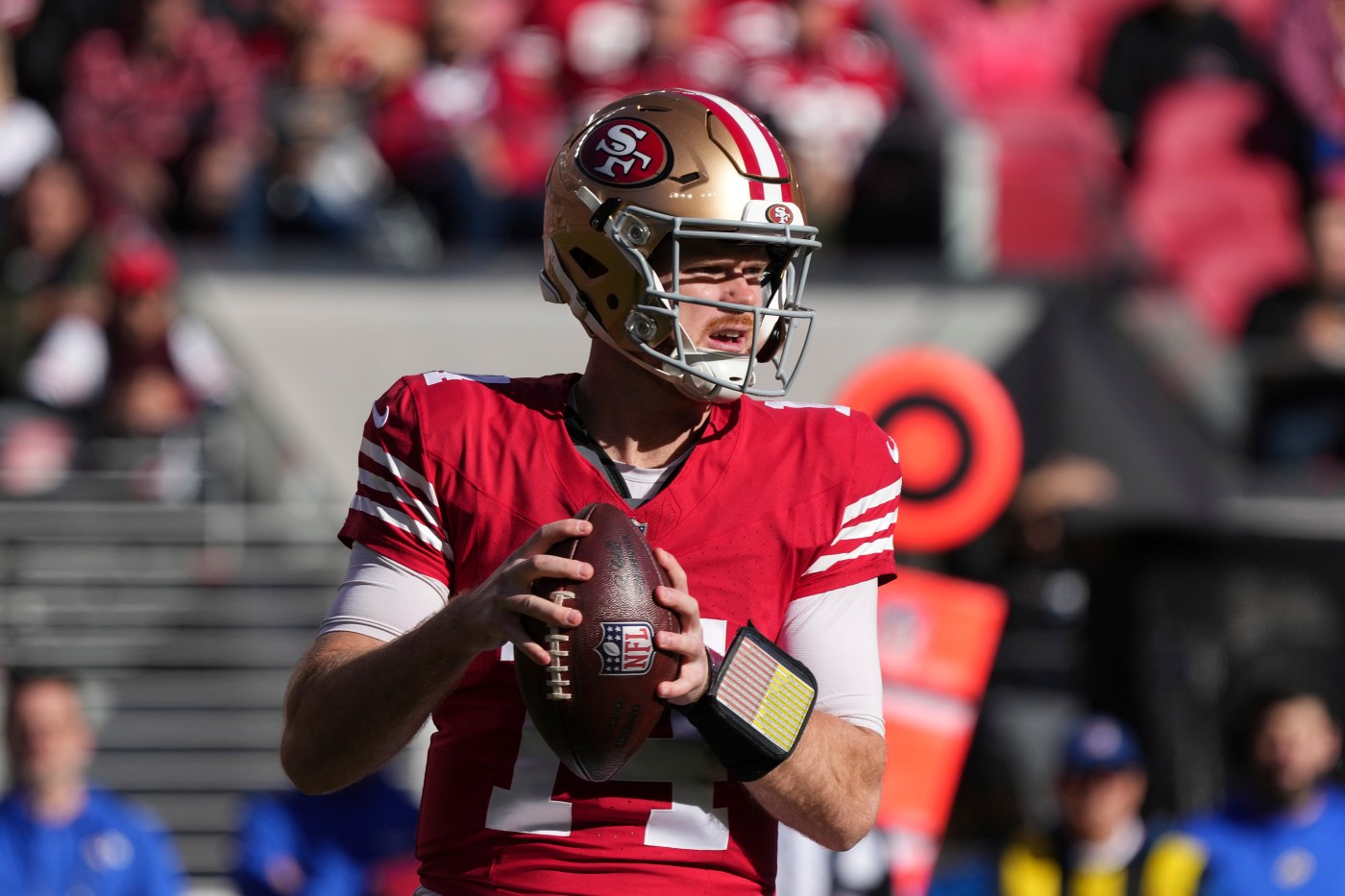
Report: Vikings to sign Sam Darnold as replacement for Kirk Cousins

posted in: News | 0

After losing franchise quarterback Kirk Cousins a few hours into the legal tampering period, the Vikings appear to have found their replacement in the short term.

According to NFL Network insider Ian Rapoport, the Vikings have agree to a 1-year, $10 million deal with journeyman quarterback Sam Darnold. He will presumably serve as the future from the present to the future with the Vikings likely still in the market for a rookie quarterback in the 2024 NFL Draft.

There is a connection between Darnold, 26, and new  quarterbacks coach Josh McCown. They were teammates with the New York Jets and that preexisting relationship could help Darnold acclimate to his new role in the Twin Cities sooner rather than later.

It’s been a slow start to Darnold’s career after being selected with the No. 3 pick in the 2018 NFL Draft. He’s struggled to find his lace in the league, playing 38 games for the Jets, then being traded to the Carolina Panthers during the middle of the pandemic. He went on to play 18 games for the Panthers before signing with the San Francisco 49ers and spending last season as a backup.

He’s completed 1,082 of 1,811 passes for 12,064 yards and 63 touchdowns in his career. In a total of 56 starts, Darnold has an 21-35 record. Though his stats might not jump off the page, Darnold has much more experience than veteran quarterback Nick Mullens, who could be a candidate to be released, and rookie quarterback Jaren Hall.

Related Articles

Minnesota Vikings |


Vikings prepare for life after Danielle Hunter, add a pair of edge rushers

Minnesota Vikings |


Source: Vikings prepared to sign former Gophers linebacker Blake Cashman

Minnesota Vikings |


Source: Vikings agree to deal with edge rusher Andrew Van Ginkel

Minnesota Vikings |


Vikings lose Kirk Cousins as he agrees to 4-year, $180-million deal with Falcons

Minnesota Vikings |


Source: Vikings agree to terms with edge rusher Jonathan Greenard

Matthew Yglesias: Now Biden needs to show his moderate side

posted in: Politics | 0

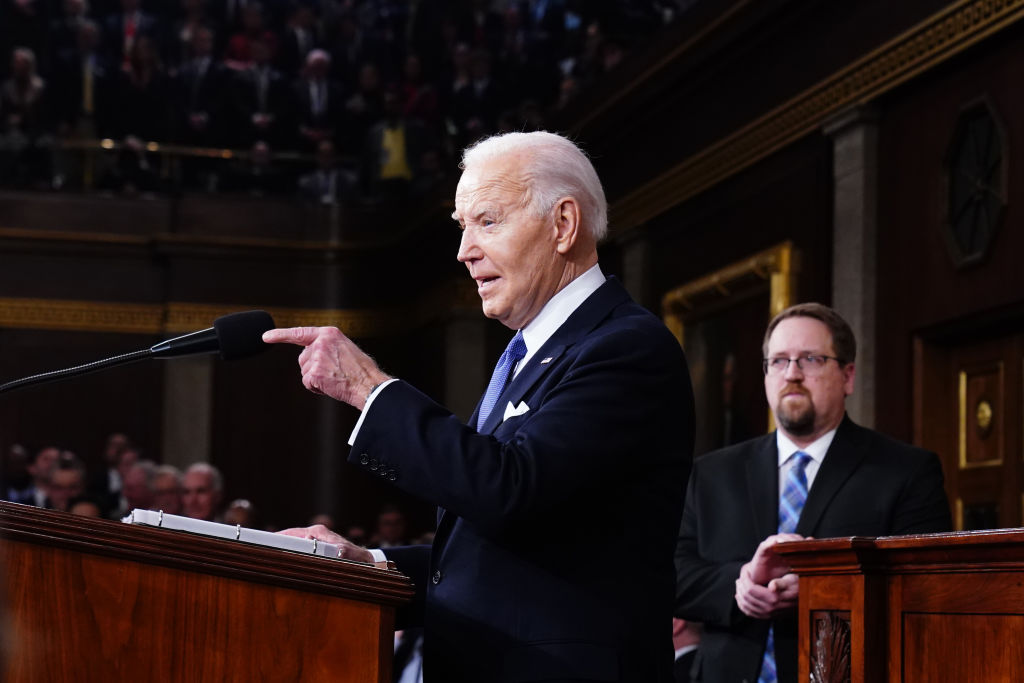
As a piece of political theater, President Joe Biden’s State of the Union address was an energetic success. He effectively answered questions about his age, delivering a forceful speech that included several back-and-forths with interrupting Republicans. At times, it felt closer to the atmosphere of question time in the UK Parliament, which may be disconcerting to some SOTU traditionalists but which served to put the president’s wits to the test in a way that no prepared text could have.

As a matter of substance, however, the question is whether Biden can turn back political time and win an age-old economic policy argument. To do that, he is going to have to risk offending members of his own party and engage in what Republicans have traditionally criticized as class warfare. He can start on the swing-state tour that he began the other day in Georgia and continues this week in New Hampshire, Michigan and Wisconsin.

The story of Biden’s polling thus far is that he’s held on remarkably well with the constituency of college graduates who voted for him in 2020. He’s lost ground with a group that Democrats had come to think of as their base: younger, working-class African-American and especially Hispanic voters who still back Biden over Trump, but by much smaller margins than they did four years ago.

These voters, Democratic pollsters tell me, differ from party loyalists in a few crucial ways. One is that they are simply less engaged with politics and the political system. Another is that they care less about climate change and democracy — and more about the budget deficit and the cost of living.

Biden’s speech had some ideas to offer this group, and they were distinctively populist.

He proposed, first and foremost, a series of regulatory crackdowns as his solution to cost-of-living concerns. From a war on abusive “junk fees” to calls for rules against “shrinkflation,” the focus was not really on the macroeconomic roots of inflation so much as on generally consumer-friendly policymaking. Similarly, the president touted his victory in reducing the price of a handful of prescription drugs in the Inflation Reduction Act, and called for a huge expansion of Medicare’s bargaining authority. Last but by no means least, he promised antitrust enforcement against landlords and collusive algorithms that serve to raise rents.

On the deficit, the president pressed a strong case on taxes — noting, correctly, that the Republican Party’s tax-cutting ambitions will blow a hole in the deficit and either raise interest rates or endanger Social Security and Medicare.

That focus on the deficit is timely and appropriate, as new research indicates that the Federal Reserve’s war on inflation, while probably necessary, has itself been a source of consumer discontent because it has helped raise borrowing costs. Biden has been calling for higher taxes on the wealthy throughout his presidency, but last week his emphasis was on using the revenue not to expand programs but to reduce the deficit. In wonkier terms, the idea is that higher tax revenue from the rich will result in less borrowing by the public sector, leading to cheaper debt for the middle class.

What the president didn’t offer on budget issues was any kind of gesture toward bipartisanship. In essence, Biden took the progressive agenda, selected the elements that are plausibly disinflationary, and talked about them.

Of course, even if Biden had offered a balanced package featuring both tax increases and entitlement reforms — as Bill Clinton and Barack Obama did before him — Republicans would have rejected it out of hand. All the same, that didn’t stop those Democratic presidents from making such offers, which helped to establish them as the reasonable middle. Biden, by contrast, vowed to unconditionally protect Social Security and Medicare benefits — a popular applause line and a sharper contrast, but also a less moderate image.

Biden did not offer any ideas to address the cost of living that you wouldn’t expect to see a progressive endorse. There was no bipartisan fiscal commission. No call for belt-tightening on the part of the federal government. No plan to relax regulation in any area. The president didn’t even tout the record levels of oil and gas production unfolding on his watch, even though doing so would have required absolutely no policy concessions.

A speech is a speech, of course, and not a policy. I happen to know, for example, that the White House is aware of the need for regulatory changes to increase the supply of housing and bring down costs. But these are not things that can be achieved through unilateral presidential action. The ultimate test of the president’s housing policy, fiscal negotiations and regulatory priorities will be what he does, not what he says.

My argument is not necessarily that it was a mistake for the president to use his speech to restore the flagging spirits of Democrats and poke at the inflated grievances of Republicans. Partisanship has its place, and that now apparently includes the State of the Union address. My point is only to ask whether the best way to win over persuadable voters is with a pure left-populist economic message rather than an appeal to the moderate middle.

Related Articles

Opinion |


Column: Best Oscar night in a long time. Here’s why, in 5 easy pieces

Opinion |


Clarence Page: Joe Biden’s campaign could use some star power. Paging Taylor Swift?

Opinion |


Pamela Paul: Civil discourse on campus is put to the test

Opinion |


David Brooks: Models for a generous American patriotism — and national self-confidence

Opinion |


Nicholas Kristof: The school issues we’re battling over aren’t the ones that matter