Fact check: Biden is right. The US generally pays double that of other countries for prescription drugs

posted in: Politics | 0

Samantha Putterman, PolitiFact | (TNS) KFF Health News

If you went “anywhere in the world,” you could get a prescription filled for 40% to 60% less than it costs in the U.S.

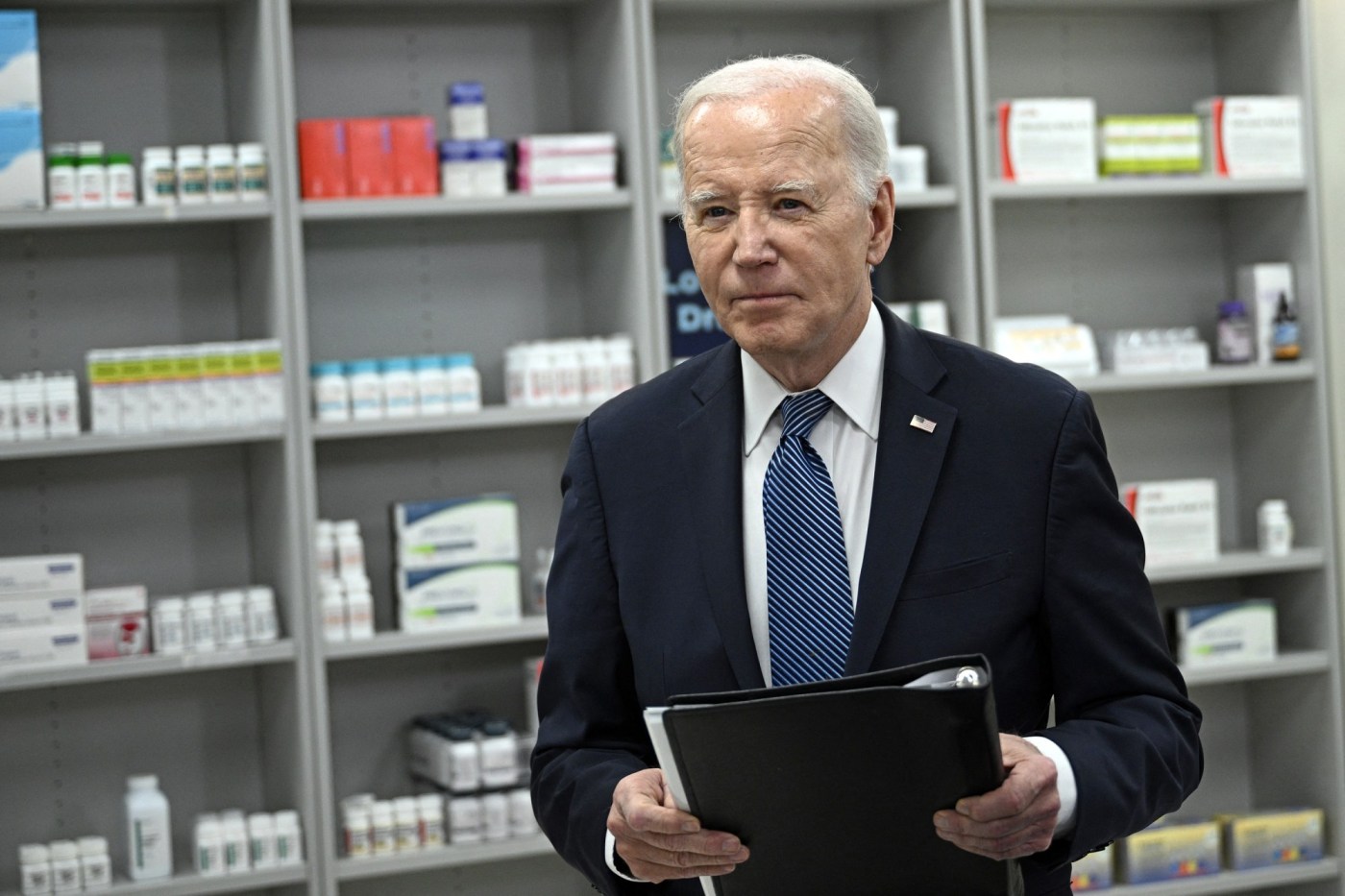
Joe Biden on Feb. 22, 2024, at a campaign reception

____

It’s well documented that Americans pay high prices for health care. But do they pay double or more for prescriptions compared with the rest of the world? President Joe Biden said they did.

“If I put you on Air Force One with me, and you have a prescription — no matter what it’s for, minor or major — and I flew you to Toronto or flew to London or flew you to Brazil or flew you anywhere in the world, I can get you that prescription filled for somewhere between 40 to 60% less than it costs here,” Biden said Feb. 22 at a campaign reception in California.

He followed up by touting provisions in the 2022 Inflation Reduction Act to lower drug prices, including capping insulin at $35 a month for Medicare enrollees and limiting older Americans’ out-of-pocket prescription spending to $2,000 a year starting in 2025. The law also authorized Medicare to negotiate prices directly with drug companies for 10 prescription drugs, a list that will expand over time.

Research has consistently found that, overall, U.S. prescription drug prices are significantly higher, sometimes two to four times as high, compared with prices in other high-income industrialized countries. Unbranded generic drugs are an exception and are typically cheaper in the U.S. compared with other countries. (Branded generics, a different category, are close to breaking even with other countries.)

However, such factors as country-specific pricing, confidential rebates, and other discounts can obscure actual prices, making comparisons harder.

“The available evidence suggests that the U.S., on average, has higher prices for prescription drugs, and that’s particularly true for brand-name drugs,” said Cynthia Cox, director of the Peterson-KFF Health System Tracker, which tracks trends and issues affecting U.S. health care system performance. “Americans also have relatively high out-of-pocket spending on prescription drugs, compared to people in similarly large and wealthy nations.”

Andrew Mulcahy, a senior health economist at Rand Corp., a nonpartisan research organization, agreed that Biden’s overall sentiment is on target but ignores some complexities.

He said price comparisons his team has conducted reflect the amounts wholesalers pay manufacturers for their drugs, which can differ sharply from prices consumers and their drug plans pay.

“In many of those other countries, [patients] pay nothing,” Mulcahy said. “So I think that’s part of the complication here when we talk about prices; there are so many different drugs, prices, and systems at work.”

What International Drug Pricing Comparisons Show

2024 Rand study that Mulcahy led found that, across all drugs, U.S. prices were 2.78 times as high as prices in 33 other countries, based on 2022 data. The report evaluated most countries in the Organization for Economic Co-operation and Development, or OECD, a group of 38 advanced, industrialized nations.

The gap was largest for brand-name drugs, the study found, with U.S. prices averaging 4.22 times as high as those in the studied nations. After adjusting for manufacturer-funded rebates, U.S. prices for brand-name drugs remained more than triple those in other countries.

The U.S. pays less for one prescription category: unbranded, generic drugs, which are about 33% less than in other studied countries. These types of drugs account for about 90% of filled prescriptions in the U.S., yet make up only one-fifth of overall prescription spending.

“The analysis used manufacturer gross prices for drugs because net prices — the amounts ultimately retained by manufacturers after negotiated rebates and other discounts are applied — are not systematically available,” a news release about the report said.

People with health insurance pay prices that include both markups and discounts negotiated with insurers. Uninsured people may pay a pharmacy’s “usual and customary” price — which tends to be higher than net prices paid by others — or a lower amount using a manufacturer discount program. But many of these adjustments are confidential, making it hard to quantify how they affect net prices.

In 2021, the Government Accountability Office released an analysis of prices of 20 brand-name drugs in the U.S., Canada, Australia, and France. The study found that retail prices were more than two to four times as high as in the U.S.

Like Rand, the agency adjusted for rebates and other price concessions for its U.S. estimate, but the other countries’ estimates reflected gross prices without potential discounts.

“As a result, the actual differences between U.S. prices and those of the other countries were likely larger than GAO estimates,” the report said.

Another analysis by the Peterson-KFF Health System Tracker that Cox co-authored compared the prices of seven brand-name drugs in the U.S., Germany, the Netherlands, and the United Kingdom, and found that some U.S. prices were two to four times as high. For unbranded, generic drugs, the price gaps were smaller.

“Despite the fact that the U.S. pays less for generic drugs and Americans appear to use more generic drugs than people in other countries, this did not offset the higher prices paid for brand-name drugs,” Cox said.

The Peterson-KFF report, using 2019 OECD data, found that the U.S. spent about $1,126 per person on prescription medicines, higher than any peer nation, with comparable countries spending $552. This includes spending by insurers and out-of-pocket consumer costs.

“Private and public insurance programs cover a similar share of prescription medicine spending in the U.S. compared to peer nations,” the report noted. “However, the steep costs in the U.S. still contribute to high U.S. health care spending and are passed on to Americans in the form of higher premiums and taxpayer-funded public programs.”

Why Is the US Such an Outlier on Drug Pricing?

The U.S. has much more limited price negotiation with drug manufacturers; other countries often rely on a single regulatory body to determine whether prices are acceptable and negotiate accordingly. Many nations conduct public cost-benefit analyses on new drugs, comparing them with others on the market. If those studies find the cost is too high, or the health benefit too low, they’ll reject the drug application. Some countries also set pricing controls

In the U.S., negotiations involve smaller government programs and thousands of separate private health plans, lowering the bargaining power.

“It’s complicated. Everything in health care costs more here, not just [prescriptions],” said Joseph Antos, a senior fellow at the American Enterprise Institute, a conservative-leaning think tank, in an email interview. Although the government’s new Medicare drug negotiation is the United States’ first attempt to set drug prices, Antos noted that U.S. drug price negotiation still doesn’t operate as price-setting for prescriptions in Europe does because it’s limited to a few drugs and doesn’t apply to Medicaid or private insurance.

Drug patents and exclusivity is another factor keeping U.S. drug prices higher, experts said, as U.S. pharmaceutical companies have amassed patents to prevent generic competitors from bringing cheaper versions to market.

Drug companies have also argued that high prices reflect research and development costs. Without higher consumer prices to offset research costs, the companies say, new medicines wouldn’t be discovered or brought to market. But recent studies haven’t supported that.

One 2023 study found that from 1999 to 2018, the world’s largest 15 biopharmaceutical companies spent more on selling and general and administrative activities, which include marketing, than on research and development. The study also said most new medicines developed during this period offered little to no clinical benefit over existing treatments.

Our Ruling

Biden said, if you went “anywhere in the world,” you could get a prescription filled for 40% to 60% less than it costs in the U.S.

He exaggerated by saying “anywhere in the world,” but for comparable high-income, industrialized countries, he’s mostly on target.

Research has consistently shown that Americans pay significantly higher prices overall for prescription medication, averaging between two times to four times as high, depending on the study. The U.S. pays less for unbranded, generic drugs, but those lower prices don’t offset the higher prices paid for brand-name drugs, researchers said.

Factors including country-specific pricing, confidential rebates. and other discounts also obscure true consumer prices, making comparisons difficult.

Biden’s statement is accurate but needs clarification and additional information. We rate it Mostly True.

____

PolitiFact copy chief Matthew Crowley contributed to this report.

____

(KFF Health News, formerly known as Kaiser Health News (KHN), is a national newsroom that produces in-depth journalism about health issues and is one of the core operating programs of KFF — the independent source for health policy research, polling and journalism.)

©2024 KFF Health News. Distributed by Tribune Content Agency, LLC.
Notorious killer Scott Peterson’s new legal team claims evidence withheld from his murder trial

posted in: News | 0

REDWOOD CITY — Lawyers for a small legal-defense team that has launched a Hail Mary bid to uncover new evidence in the gruesome case of notorious double murderer Scott Peterson — whose wife Laci and unborn child were found dead on the shores of San Francisco Bay — are seeking materials from police investigations they say were improperly withheld during Peterson’s trial.

“Mr. Peterson’s been waiting for 20 years for police reports and audio recordings and video recordings that should have been provided,” Paula Mitchell, lawyer and executive director for the Los Angeles Innocence Project said at a court hearing in Redwood City on Tuesday. “We are eager to get our investigation underway.”

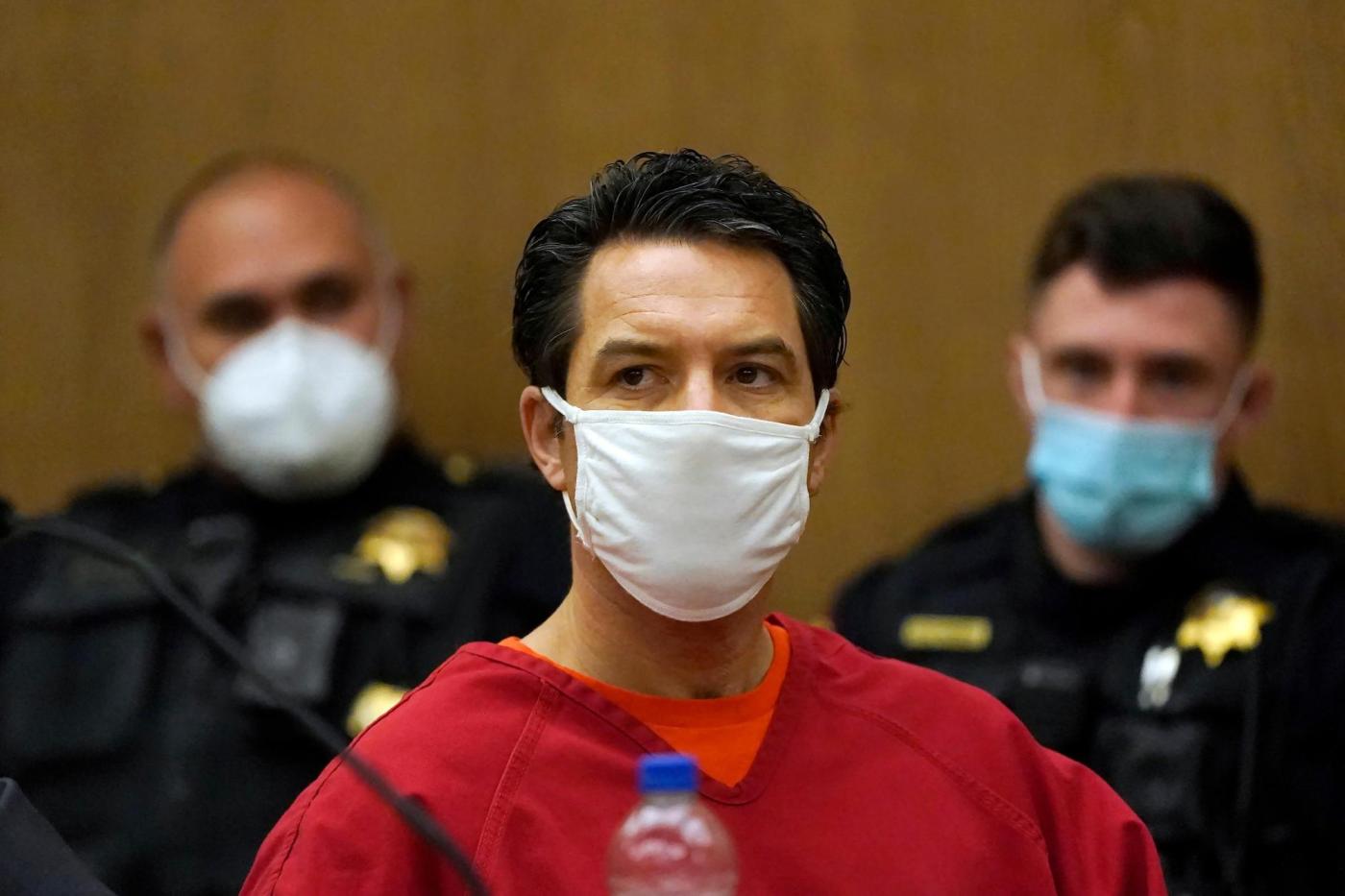
Peterson, wearing a blue work shirt and with his dark hair pulled back into a short ponytail, appeared on a courtroom screen via a video link from a room at Mule Creek State Prison east of Sacramento. After a glitch saw him muted so he could be seen speaking but could not be heard, Peterson, now 51, answered briefly and politely when occasionally questioned by Judge Elizabeth Hill. Asked by the judge if he consented to appearing via Zoom, Peterson responded, “Absolutely. Thank you, your honor.”

Peterson was originally handed a death sentence over the Christmas Eve 2002 killings of his 27-year-old wife and the son she had carried for nearly eight months and planned to name Conner. The case, involving a handsome defendant, his dimpled substitute-teacher wife, and a mistress who started taping Peterson’s phone calls and talking to police after she found out Laci was missing, attracted worldwide attention.

Nearly two dozen journalists attended Tuesday’s hearing in San Mateo County Superior Court, where a thicket of TV cameras was set up outside the courtroom.

Mitchell’s group last month filed motions seeking the purported missing evidence, and asking for a court order for DNA testing on items they claim are related to the case. The Los Angeles Innocence Project, a nonprofit whose most recent charity filing with the IRS in 2022 showed a $350,000 annual budget and six employees, has said it is investigating Peterson’s “claim of actual innocence.”

Mitchell declined to speak to news media before or after the half-hour hearing. “We’ll let our case play out in court,” she said when asked why her group took Peterson’s case.

In 2020, the California Supreme Court overturned Peterson’s death sentence, and two years later Peterson was finally moved from San Quentin State Prison north of San Francisco to Mule Creek State Prison. His life sentence carries no possibility of parole.

Soon after he was transferred to Mule Creek, Peterson lost a years-long quest for a new trial, after unsuccessfully arguing that a juror’s experience of domestic violence had biased her against him.

No forensic evidence tied Peterson to the murders of Laci and the child. On Dec. 24, 2002, Peterson had reported his wife missing from Modesto where the couple lived.

In mid-April 2003, the bodies of Laci and her son washed up separately along the edge of the Bay, within a mile of where Peterson told police he motored from the Berkeley Marina to go fishing on Christmas Eve day.

Prosecutors argued that Peterson, having an affair with a Fresno massage therapist, killed Laci, took her body out in his newly bought fishing boat and dumped her in the Bay, weighted with cement.

Peterson’s lawyers had argued that strangers abducted Laci Peterson while she walked the couple’s dog.

Peterson’s appearance Tuesday in a case-status conference arose from the group’s court filings seeking information about the investigation, and DNA testing of potential evidence, Reuters reported last month.

The group’s lawyers are looking into a burglary at a house across the street, around the time of Laci’s disappearance, and suggest in court filings that she may have witnessed the crime and been taken by the burglars, according to Reuters. The L.A. Innocence Project is asking the court to order DNA testing on materials connected to the burglary, and on tarps and a large plastic bag found on the shore near the bodies of Laci and her son, Reuters reported.

The national Innocence Project has distanced itself from the Los Angeles group, saying in a press release issued after the court filings that the Southern California nonprofit was “wholly independent of the Innocence Project.”

Hill set three separate hearings on the case in San Mateo County Superior Court, with Peterson saying he would attend each by Zoom. Mitchell asked that the hearing on her team’s request for DNA testing be held before the hearing on investigative materials, “so if there is going to be testing ordered we can get that started.”

That DNA hearing was set for May 29. A hearing for the request from Mitchell’s team to seal court records was scheduled for April 16, with the group’s request for investigative materials was set to be heard July 15.

Can you afford health care in retirement?

posted in: News | 0

By Kate Ashford | NerdWallet

The investing information provided on this page is for educational purposes only. NerdWallet, Inc. does not offer advisory or brokerage services, nor does it recommend or advise investors to buy or sell particular stocks, securities or other investments.

At age 65, some couples may need as much as $413,000 to cover health care costs in retirement, according to a January report from the Employee Benefit Research Institute. That’s an extreme case, representing two people with high prescription drug costs — but it’s not outside the realm of possibility.

“It’s one of the most difficult expenses to predict in retirement,” says Nancy Nawn, a certified financial planner in Cherry Hill, New Jersey.

Your costs will depend on your insurance choices, your health, your prescription drugs and your city. (Costs are higher in some places than others.) As you approach retirement, try these tactics to get a handle on future health care expenses.

Save to a health savings account

If you have a high-deductible health plan and access to a health savings account (HSA), max it out. The money you save is triple tax-advantaged: You pay no taxes on the money you save, the interest you earn or any withdrawals used for qualified health expenses.

“I think most people use them as they go, which is fine too,” says Ed Snyder, a CFP in Carmel, Indiana. “But I think there are even more benefits to using the investment account in those [and] letting that money be invested for many years, just like a retirement account.”

In 2024, you can save up to $4,150 for an individual health savings account and up to $8,300 for family coverage. If you’re 55 or older, you can contribute an extra $1,000. (Note: You can’t save to an HSA once you’re signed up for Medicare.)

Pick the right Medicare plan

Related Articles

Business |


Equal education, unequal pay: Why is there still a gender pay gap in 2024?

Business |


With medical debt burdening millions, a financial regulator steps in to help

Business |


Q4 data: Home buyers chilled by high prices and rates

Business |


Why was my mortgage application denied? Common reasons underwriters don’t approve loans

Business |


6 ways to save money in Paris during the Olympics

Once you’re 65, advisors typically recommend selecting Original Medicare with Medicare Supplement Insurance, or Medigap. Since Medigap plans cover many out-of-pocket expenses of Medicare, this keeps your monthly health care costs predictable.

Many older adults are attracted to the $0 premiums of most Medicare Advantage plans, but using these private health plans means you may be limited to in-network doctors and hospitals. “I have seen many situations where people wind up needing to go see a provider who doesn’t take the coverage, and they pay the full bill themselves,” says Melinda Caughill, co-founder and CEO of 65 Incorporated, which offers guidance on Medicare.

Out-of-pocket maximums for Medicare Advantage plans also can be as high as $8,850 per year in 2024, and that doesn’t include your Medicare Part B (medical insurance) premiums. That said, if you can’t afford a Medigap plan, Medicare Advantage may be the better option. Without Medigap, Original Medicare has no out-of-pocket maximum.

Get help with tax planning

If your income exceeds a certain threshold, you will pay more each month for Medicare Part B and Medicare Part D prescription drug coverage (if you have it). This is where it helps to be strategic about your retirement income, making sure you have both pretax and post-tax accounts to pull from as needed. (Pulling from pretax accounts raises your income.)

“If you have saved a lot of money in tax-deferred vehicles, and you haven’t planned to do either Roth conversions or spend down that money, you could wind up having a much larger monthly Medicare premium than you think,” Nawn says.

Pay down your mortgage

If you’re 62 or older and have at least 50% equity in your home, you may have access to a reverse mortgage later if you really need it. This is a loan or line of credit on your assessed home value — and you don’t have to make payments. The loan is repaid when you move out or die.

Reverse mortgages once had a scary reputation, but today’s products are safer, Nawn says. “There was abuse many, many years ago,” she says. “It’s been cleaned up, and it’s a really great tool to have in your back pocket.”

Keep in mind that reverse mortgages require at least one borrower to live in the home, and they cost more than a traditional home mortgage over time. Work with an advisor who’s familiar with the product before you take the plunge.

Consider a HELOC

If you’re younger than 62 and you’re still working, a home equity line of credit (HELOC) can provide you with a stream of income to tap later if you need it. (It’s easier to qualify for a HELOC while you’re still getting a paycheck.)

The catch: Unlike a reverse mortgage, a HELOC requires you to make payments. “At some point in the future, you’re going to have to pay it back,” Nawn says.

Keep things in perspective

In the end, don’t lose too much sleep over the big figures. Consider how intimidating it would be if experts also told you how much you should save to cover 30 years of food or utility bills in retirement. With the right planning, health care costs can be manageable.

“A reasonable cost is about $6,000 a year for an individual, and if you price that out on a monthly basis, it’s $500 a month,” says Dick Power, a CFP in Walpole, Massachusetts. “That $500 a month typically includes your insurance coverage and your copays.”

This article was written by NerdWallet and was originally published by The Associated Press. 


Kate Ashford, CSA® writes for NerdWallet. Email: kashford@nerdwallet.com. Twitter: @kateashford.

TikTok bill heads to House floor as Trump backs away from ban

posted in: News | 0

Gopal Ratnam | (TNS) CQ-Roll Call

The House is set to vote on a bill that could effectively ban TikTok from Americans’ smartphones, potentially posing a dilemma for House Republicans as former President Donald Trump, who first tried to ban the app in 2020, backpedals from his position.

The measure goes to the House floor after a 50-0 vote in the House Energy and Commerce Committee on March 7, just 48 hours after the bill was introduced. The extremely compressed timeline followed a classified briefing with U.S. intelligence and law enforcement officials that lawmakers said led them to fast-track the measure.

The legislation would require TikTok’s Chinese owner ByteDance to divest its U.S. subsidiary within six months of the law taking effect. It also would give the president the authority to deny other social media apps owned and operated by foreign adversaries access to U.S. users unless they sever ties to their foreign owners.

The restrictions would apply to any app with more than 1 million annual users. TikTok has about 170 million American users.

The House could vote on the measure as early as Tuesday under suspension of the rules that would require a two-thirds majority, according to Majority Leader Steve Scalise, R-La.

Backers of the TikTok measure say the goal is not a ban but a forced divestiture by ByteDance because of concerns that top Chinese government officials have access to U.S. users’ data and could use such access to poison public opinion.

Even with House passage, the bill would still need to get through the Senate, and, if enacted, would likely have to overcome legal challenges raising free speech issues. Another big hurdle is Trump, who on Monday seemed to pour cold water on the idea, telling CNBC that if the app disappeared from Americans’ smartphones, it would make young people “go crazy.”

Sen. Maria Cantwell, D-Wash., chair of the Senate Commerce Committee, which would have a key role in the measure passing in the Senate, said she’s examining provisions to ensure that they meet the free-speech threshold.

“I’m very concerned about foreign adversaries’ exploitation of Americans’ sensitive data and their attempts to build backdoors in our information communication technology and services supply chains,” Cantwell said in an email, referring to broader concerns about China’s efforts. “These are national security threats and it is good [that] members in both chambers are taking them seriously. I will be talking to my Senate and House colleagues to try to find a path forward that is constitutional and protects civil liberties.”

Some free-speech advocates say the measure as it’s worded violates First Amendment protections.

“The First Amendment does not permit the government to suppress the media on the grounds that it contains disinformation,” Nadine Farid Johnson, policy director at the Knight First Amendment Institute at Columbia University, said in an interview.

At the height of the Cold War in 1965, the Supreme Court held in the Lamont v. Postmaster General case that the “First Amendment protects Americans’ right to receive information from abroad … even if that information at that time was communist propaganda,” Farid Johnson said.

Congress and the Biden administration can better address the issue of Americans’ data flowing to other countries by passing a comprehensive federal data privacy legislation, she said.

An effort by state lawmakers in Montana to ban TikTok from the phones of the state’s residents was blocked in November by U.S. District Judge Donald Molloy, who ruled that Montana’s TikTok ban “oversteps state power” and “likely violates the First Amendment.” The ban, which was to go into effect in January, has been halted temporarily pending a trial.

A similar fate awaits the TikTok bill if Congress passes it, Farid Johnson said.

While the legality of the bill remains in doubt, the politics around it may be shifting.

The Trump switch

Trump recently met with billionaire hedge fund investor Jeff Yass, whose fund Susquehanna International Group LLP has more than a $30 billion stake in TikTok parent ByteDance, The Wall Street Journal reported.

Asked by CNBC if he changed his views on TikTok after meeting with Yass, Trump said TikTok never came up during their meeting. Speaking at a recent event hosted by the Club for Growth in Florida, Trump described Yass, a benefactor of the Club, as “fantastic,” The New York Times reported.

In the CNBC interview, Trump said that banning TikTok would strengthen Facebook. “I consider Facebook to be an enemy of the people,” he said.

Trump Media & Technology Group, meanwhile, owns his own social media company, Truth Social, launched as a rival to social media companies including Facebook and Twitter after Trump was banned from the sites. Trump personally could potentially profit if the company goes public as planned this year.

Trump issued an executive order during his presidency saying that China’s access to Americans’ data gathered via TikTok could be used by Beijing to spread disinformation and at the time pushed ByteDance to divest. That pressure resulted in TikTok agreeing to store the data of American users within the U.S. in a deal involving Oracle Corp. and Walmart Inc., which together would own 20 percent of the U.S. entity. That proposal was never approved by U.S. agencies.

Trump’s efforts at blocking Apple and Google from carrying the TikTok app on their stores were also halted by courts.

With a large number of young users, TikTok offers the potential of reaching first-time voters.

But most politicians and campaigns don’t fully understand how to use the app, said Larry Huynh, partner at Trilogy Interactive, a digital advocacy and advertising agency, and president of the American Association of Political Consultants.

Huynh said elected officials often don’t understand TikTok partly because the app does not allow direct political advertising, unlike other social media platforms. Despite the ad ban, there’s both conservative and progressive content on TikTok. Young users of the app use it to search for news delivered in a different format, and even as a search engine, Huynh said.

Given the “general concern about young voters’ appetite and enthusiasm for this election” in November, “part of the equation is how do we engage them and TikTok is an important aspect of that,” Huynh said.

President Joe Biden’s reelection campaign has a TikTok account and is using it to reach out to voters. Biden on Friday at Joint Base Andrews said he would sign the bill if it reaches him.

Given the legal challenges and change in tune by Trump, “nothing is going to happen before the election,” Huynh said about the TikTok measure.

___

©2024 CQ-Roll Call, Inc. Visit at rollcall.com. Distributed by Tribune Content Agency, LLC.