Trump’s New York hush money case is set for trial April 15

posted in: Politics | 0

By MICHAEL R. SISAK, JAKE OFFENHARTZ and ERIC TUCKER (Associated Press)

NEW YORK (AP) — A New York judge has scheduled an April 15 trial date in former President Donald Trump’s hush money case.

Judge Juan M. Merchan made the ruling Monday. The judge earlier had scolded the former president’s lawyers as he weighed when to reschedule the trial after a last-minute document dump caused a postponement of the original date.

Merchan had bristled at what he suggested were baseless defense claims of “prosecutorial misconduct,” appearing unpersuaded by Trump team arguments that prosecutors had until recently concealed tens of thousands of pages of records from a previous federal investigation.

Prosecutors said only a handful of those newly records was relevant to the case, while defense lawyers contended that thousands of pages are potentially important and require a painstaking review. Merchan, who earlier this month postponed the trial until at least mid-April, told defense lawyers that they should have acted much sooner if they believed they didn’t have all the records they felt they were entitled to.

“That you don’t have a case right now is really disconcerting because the allegation that the defense makes in all of your papers is incredibly serious. Unbelievably serious,” Merchan said. “You’re accusing the Manhattan district attorney’s office and the people involved in this case of prosecutorial misconduct and of trying to make me complicit in it. And you don’t have a single cite to support that position.”

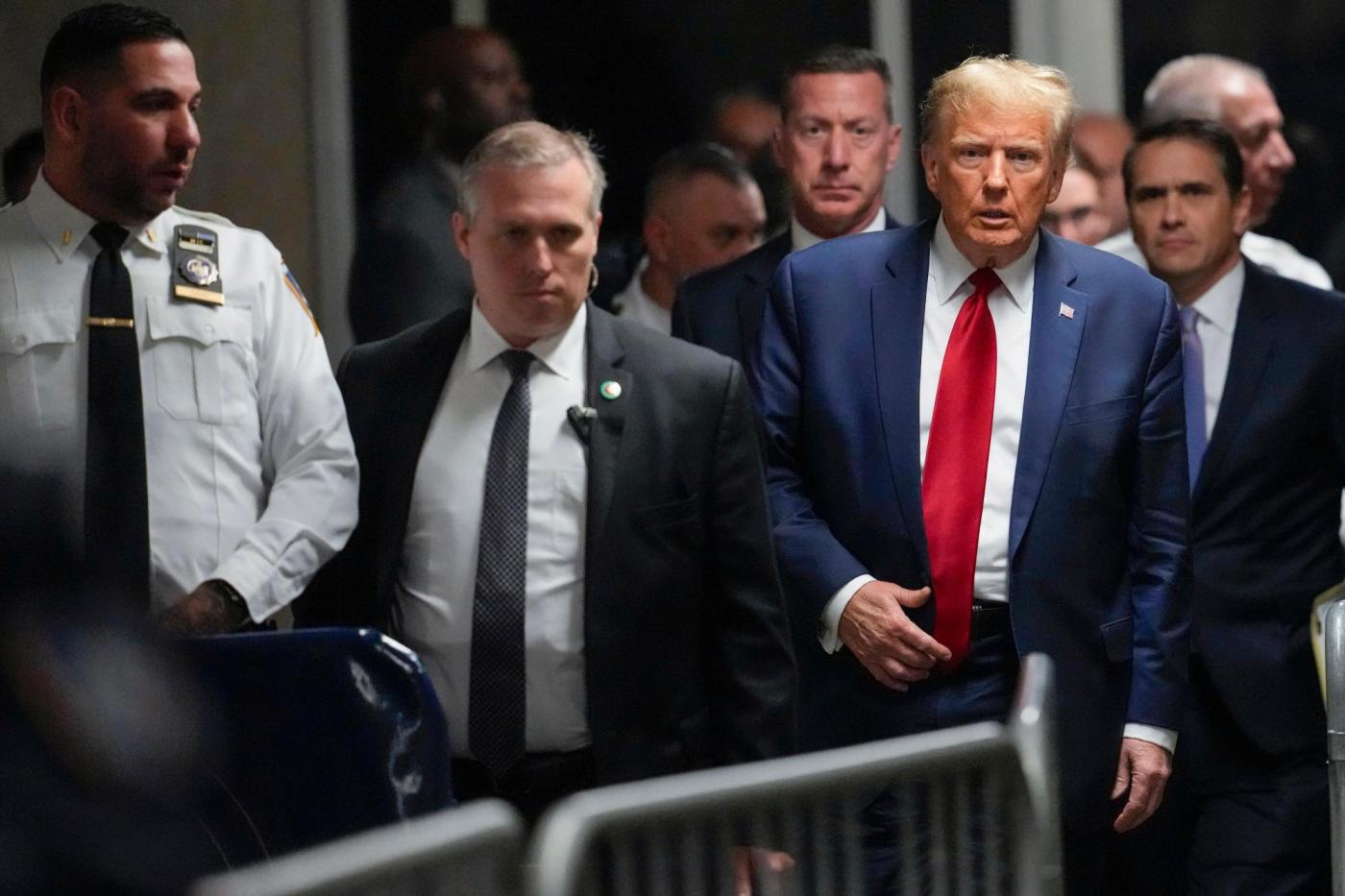
The presumptive Republican presidential nominee arrived in court for a hearing scheduled in place of the long-planned start of jury selection in the first of his four criminal cases to go to trial. It took place on a uniquely consequential day for Trump and his legal and political affairs as, besides a likely determination of a trial date, a New York appeals court on Monday granted him a dose of good news by agreeing to hold off collection of his $454 million civil fraud judgment — if he puts up $175 million within 10 days.

The hush money case, filed last year by prosecutors in Manhattan, has taken on added importance given that it’s the only one of the prosecutions against Trump that appears likely for trial in the coming months.

The district attorney’s office said there was little new material in the documents trove and no reason for further delay, with prosecutor Matthew Colangelo saying in court Monday that the number of relevant, usable, new documents “is quite small” — around 300 records or fewer.

“We very much disagree,” countered defense lawyer Todd Blanche, who said the number totaled in the thousands and continues to grow. Trump’s lawyers argued that the delayed disclosures warranted dismissing the case or at least pushing it off three months.

“We’re not doing our jobs if we don’t independently review the materials,” Blanche said. “Every document is important.”

But Merchan seemed unmoved, asking Blanche why the defense team, which subpoenaed for the records in January, didn’t bring up concerns about potentially missing documents weeks earlier.

“Why did you wait until two months before trial? Why didn’t you do it in June or July,” Merchan said.

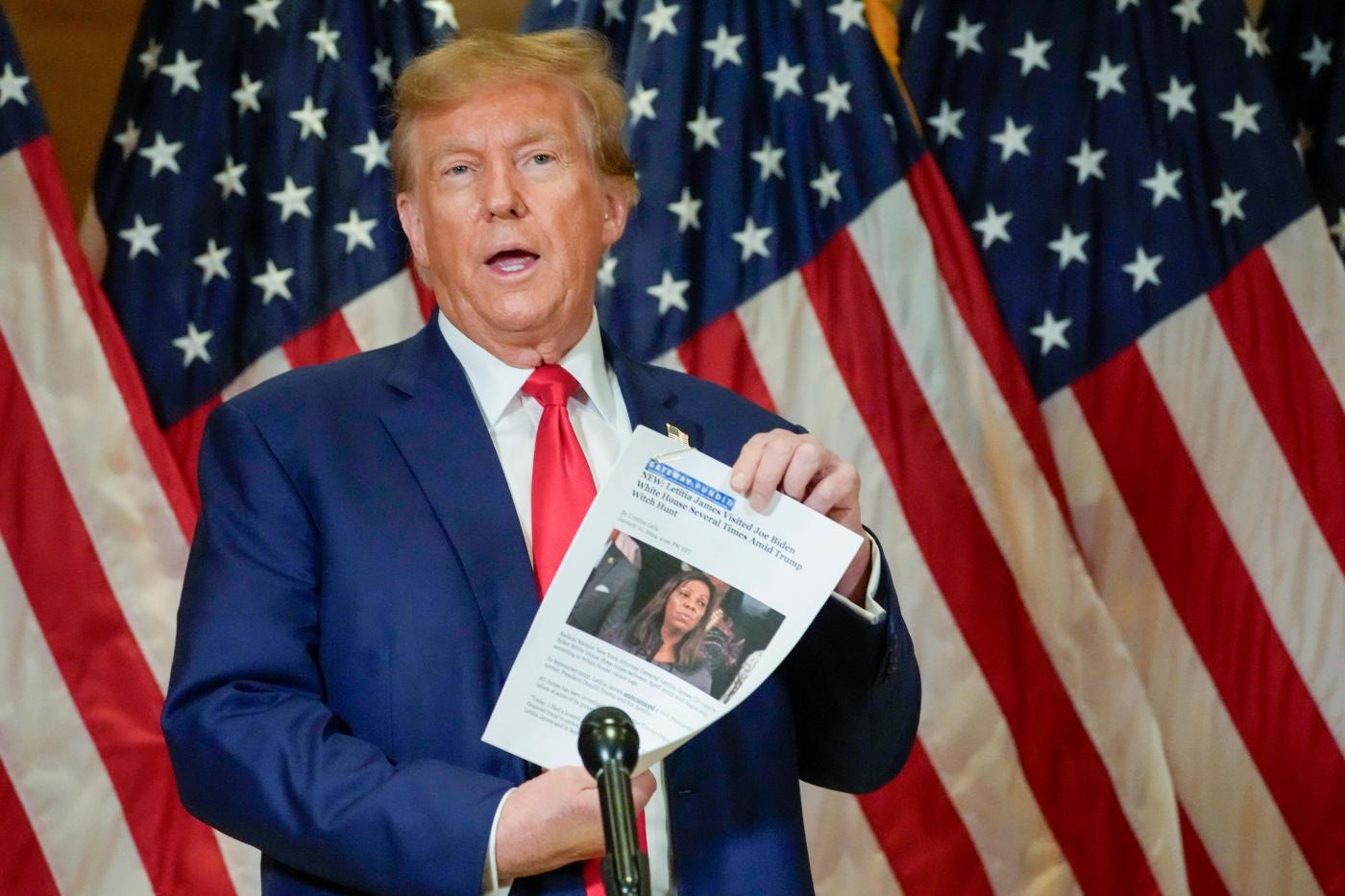
Trump has pleaded not guilty to charges that he falsified business records. Manhattan prosecutors say Trump did it as part of an effort to protect his 2016 campaign by burying what he says were false stories of extramarital sex. Trump on Monday repeated to reporters his claims that the case is a “witch hunt” and “hoax.” The prosecutor overseeing the case, Manhattan District Attorney Alvin Bragg, is a Democrat.

The case centers on allegations that Trump falsely logged $130,000 in payments as legal fees in his company’s books “to disguise his and others’ criminal conduct,” as Bragg’s deputies put it in a court document.

The money went to Trump’s then-personal attorney Michael Cohen, but prosecutors say it wasn’t for actual legal work. Rather, they say, Cohen was just recouping money he’d paid porn actor Stormy Daniels on Trump’s behalf, so she wouldn’t publicize her claim of a sexual encounter with him years earlier.

Trump’s lawyers say the payments to Cohen were legitimate legal expenses, not cover-up checks.

Cohen pleaded guilty in 2018 to federal charges, including campaign finance violations related to the Daniels payoff. He said Trump directed him to arrange it, and federal prosecutors indicated they believed him, but they never charged Trump with any crime related to the matter.

Cohen is now a key witness in Manhattan prosecutors’ case against Trump.

Related Articles

National Politics |


Court agrees to block collection of Trump’s $454 million civil fraud judgment if he puts up $175M

National Politics |


Biden and Trump win Louisiana’s presidential primary having already clinched nominations

National Politics |


States rethink ambitious projects as tax revenues shrink and pandemic aid ends

National Politics |


Working-class people rarely have a seat ‘at the legislative table’ in state capitols

National Politics |


Immigration is fueling US economic growth while politicians rage

Trump’s lawyers have said Bragg’s office, in June, gave them a smidgen of materials from the federal investigation into Cohen. Then they got over 100,000 pages more after subpoenaing federal prosecutors themselves in January. The defense argued that prosecutors should have pursued all the records but instead stuck their heads in the sand, hoping to keep information from Trump.

The material hasn’t been made public. But Trump’s lawyers said in a court filing that some of it is “exculpatory and favorable to the defense,” adding that there’s information that would have aided their own investigation and consequential legal filings earlier in the case.

Bragg’s deputies have insisted they “engaged in good-faith and diligent efforts to obtain relevant information” from the federal probe. They argued in court filings that Trump’s lawyers should have spoken up earlier if they believed those efforts were lacking.

Prosecutors maintain that, in any event, the vast majority of what ultimately came is irrelevant, duplicative or backs up existing evidence about Cohen’s well-known federal conviction. They acknowledged in a court filing that there was some relevant new material, including 172 pages of notes recording Cohen’s meetings with the office of former special counsel Robert Mueller, who investigated Russia’s 2016 election interference.

Prosecutors argued that their adversaries have enough time to work with the relevant material before a mid-April trial date and are just raising a “red herring.”

Trump’s lawyers also have sought to delay the trial until after the Supreme Court rules on his claims of presidential immunity in his election interference case in Washington. The high court is set to hear arguments April 25.

Tucker reported from Washington. Associated Press writer Philip Marcelo contributed to this report.
Court agrees to block collection of Trump’s $454 million civil fraud judgment if he puts up $175M

posted in: Politics | 0

By JENNIFER PELTZ and MICHAEL R. SISAK (Associated Press)

NEW YORK (AP) — A New York appeals court on Monday agreed to hold off collection of former President Donald Trump’s $454 million civil fraud judgment — if he puts up $175 million within 10 days.

If he does, it will stop the clock on collection and prevent the state from seizing the presumptive Republican presidential nominee’s assets while he appeals.

The development came just before New York Attorney General Letitia James was expected to initiate efforts to collect the judgment.

Messages seeking comment were sent to James’ office and to Trump’s lawyers.

Trump’s lawyers had pleaded for a state appeals court to halt collection, claiming it was “a practical impossibility” to get an underwriter to sign off on a bond for such a large sum.

The ruling was issued by the state’s intermediate appeals court, the Appellate Division of the state’s trial court, where Trump is fighting to overturn a judge’s Feb. 16 finding that he lied about his wealth as he grew the real estate empire that launched him to stardom and the presidency.

After James won the judgment, she didn’t seek to enforce it during a legal time-out for Trump to ask the appeals court for a reprieve from paying up.

That period ended Monday, though James could have decided to allow Trump more time.

James, a Democrat, told ABC News last month that if Trump doesn’t have the money to pay, she would seek to seize his assets and was “prepared to make sure that the judgment is paid.”

She didn’t detail the process or specify what holdings she meant, and her office has declined more recently to discuss its plans. Meanwhile, it has filed notice of the judgment, a technical step toward potentially moving to collect.

As Trump arrived Monday at a different New York court for a separate hearing in his criminal hush money case, he didn’t respond to a journalist’s question about whether he’d obtained a bond. Earlier Monday, he railed in social media posts against the civil judgment and the possibility that James would seek to enforce it.

Casting the case as a plot by Democrats, the ex-president asserted that they were trying to take his cash to starve his 2024 campaign.

“I had intended to use much of that hard earned money on running for President. They don’t want me to do that — ELECTION INTERFERENCE!” he wrote on his Truth Social platform. Referring to his properties as “my ‘babies,’” he bristled at the idea of being forced to sell them or seeing them seized.

Seizing assets is a common legal option when someone doesn’t have the cash to pay a civil court penalty. In Trump’s case, potential targets could include such properties as his Trump Tower penthouse, aircraft, Wall Street office building or golf courses.

Related Articles

National Politics |


Biden and Trump win Louisiana’s presidential primary having already clinched nominations

National Politics |


States rethink ambitious projects as tax revenues shrink and pandemic aid ends

National Politics |


Working-class people rarely have a seat ‘at the legislative table’ in state capitols

National Politics |


Immigration is fueling US economic growth while politicians rage

National Politics |


NY AG Letitia James lays groundwork to seize Trump assets ahead of looming fraud penalty deadline

The attorney general also could go after his bank and investment accounts. Trump maintained on social media on Friday that he has almost $500 million in cash but intends to use much of it on his presidential run. He has accused James and New York state Judge Arthur Engoron, who’s also a Democrat, of seeking “to take the cash away so I can’t use it on the campaign.”

One possibility would be for James’ office to go through a legal process to have local law enforcement seize properties, then seek to sell them off. But that’s a complicated prospect in Trump’s case, noted Stewart Sterk, a real estate law professor at Cardozo School of Law.

“Finding buyers for assets of this magnitude is something that doesn’t happen overnight,” he said, noting that at any ordinary auction, “the chances that people are going to be able to bid up to the true value of the property is pretty slim.”

Trump’s debt stems from a monthslong civil trial last fall over the state’s allegations that he, his company and top executives vastly puffed up his wealth on financial statements, conning bankers and insurers who did business with him. The statements valued his penthouse for years as though it were nearly three times its actual size, for example.

Trump and his co-defendants denied any wrongdoing, saying the statements actually lowballed his fortune, came with disclaimers and weren’t taken at face value by the institutions that lent to or insured him. The penthouse discrepancy, he said, was simply a mistake made by subordinates.

Engoron sided with the attorney general and ordered Trump to pay $355 million, plus interest that grows daily. Some co-defendants, including his sons and company executive vice presidents, Donald Trump Jr. and Eric Trump, were ordered to pay far smaller amounts.

Under New York law, filing an appeal generally doesn’t hold off enforcement of a judgment. But there’s an automatic pause if the person or entity posts a bond that covers what’s owed.

The ex-president’s lawyers have said it’s impossible for him to do that. They said underwriters wanted 120% of the judgment and wouldn’t accept real estate as collateral. That would mean tying up over $557 million in cash, stocks and other liquid assets, and Trump’s company needs some left over to run the business, his attorneys have said.

Trump’s attorneys have asked an appeals court to freeze collection without his posting a bond. The attorney general’s office has objected.

Will Cam Christie and Dawson Garcia remain Gophers? An in-depth look at the men’s basketball roster going forward.

posted in: News | 0

Tom Izzo has a tendency in postgame news conferences to toss bouquets to opponents his Michigan State team has just beat. The Spartans head coach did it again after dispatching Minnesota and head coach Ben Johnson in the Big Ten Tournament on March 14.

“They played well,” Izzo said after 77-67 win in Minneapolis. “Ben’s done an unbelievable job with the program. They could be the No. 1 team in the league next year. So hats off to them.”

Izzo, who recruited Johnson out of DeLaSalle High School and again when Johnson transfered from Northwestern to Minnesota, isn’t disingenuous in his praise. He’s not going to hand out a dozen red roses at every team in the Big Ten. He also says he is paying it forward.

“As far as Ben Johnson, everybody in the room knows that I’m close with Ben and should be close with Ben because there were people that took care of me when I came in,” Izzo said at Target Center. “You’re going to see one (March 15 in former Purdue coach) Gene Keady, and the Bobby Knights and the Clem Haskins, those guys. I try to do some of that with Ben because I believe in him, and I believe what he’s done.

“All he has to do is hold this team together,” Izzo continued on the Gophers. “And they’ll come in as, if not the favorite, one of the favorites. It’s a very, very good basketball team. I’ve been really impressed.”

Izzo’s praise comes with contingencies such as “if” and “could be” because of the high level of uncertainty that permeates every college basketball roster with name, image and likeness (NIL) deals available to entice players to enter the NCAA transfer portal. There’s also the option pursue a shot in the NBA draft.

Minnesota’s roster might be especially susceptible. The Gophers NIL fund via the Dinkytown Athletes collective has improved, but it’s not as deep pocketed as some competing programs.

The power of NIL to potentially sway players to leave will be determined in the upcoming weeks.

As the Gophers advanced in the National Invitational Tournament last week, Johnson admitted there was some “guessing” about what his roster will be next season. After the 76-64 loss to Indiana State on Sunday, Johnson said he would meet with players in end-of-season sit-downs.

“The biggest thing is getting back and meeting with the guys and starting with the development plan looks like,” Johnson said on the KFAN postgame show. “Hopefully we are able to retain and have a lot of the core group of guys back.”

The Gophers had eight players leave after Johnson’s first season in 2021-22, with the majority being graduations or eligibility running out.

The U had five players exit after Johnson’s second season a year ago, with the majority being transfers, including Jamison Battle, Talon Cooper and Jaden Henley.

How much turnover will the Gophers have this offseason?

Related Articles

College Sports |


Gophers happy to get out of town as they head to Sioux Falls for NCAA tournament

College Sports |


Gophers season ends in NIT second-round loss to Indiana State

College Sports |


Gophers defense simplifying scheme to play faster

College Sports |


Gophers football adds first commitment for next year’s recruiting class

College Sports |


Men’s basketball: Gophers juggling NIT and transfer portal while ‘guessing’ on next year’s roster

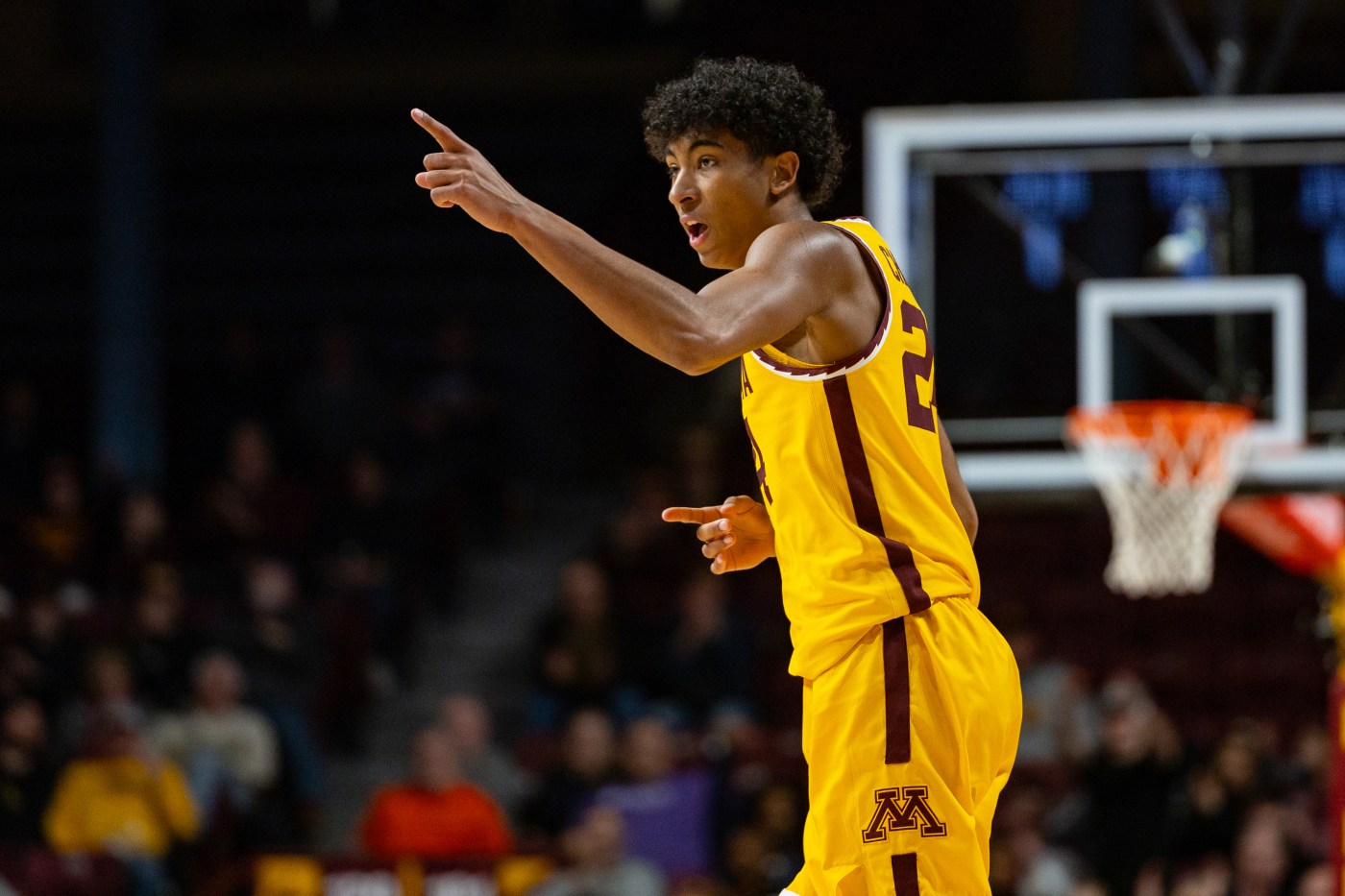
Most of the attention focuses on the U’s two best players, forward Dawson Garica and guard Cam Christie. Neither player has let on publicly what their plans might be — another college or an NBA leap. Garcia did say during the regular season that he planned to make a decision soon after the season ended.

There are a handful of noticable question marks on other players such as Josh Ola-Joseph who saw his starts and playing time fall off drastically when the season moved to February.

Parker Fox, a smart and spirited player off the bench, has a seventh season available for next year, but has appeared hesitant to reporters on using it or move onto the next phase of life. Playing another season after two serious knee injuries also will be a consideration.

Isaiah Ihnen battled through two season-ending injuries like Fox but didn’t play much this winter. Braeden Carrington was a key reserve to end the season, but took a midseason pause to address his mental health.

Elijah Hawkins, the starting point guard and one of the top assist men in the nation, told the Star Tribune he will return for next season. Pharrel Payne and Mike Mitchell Jr., might be safe bets to return for next fall.

The Gophers have two scholarships opening up (center Jack Wilson and forward Will Ramberg) and both are being filled by incoming freshman (guard Isaac Asuma and forward Grayson Grove).

Freshman Kadyn Betts and Kris Keinys rarely played in 2023-24. How they and the U view their development will go a long way toward them returning for next season.

Izzo isn’t alone in a sunny forecasts of what next year might become at Minnesota. Gophers AD Mark Coyle, who is not known for headline-indicting comments, said the U can be a preseason Top 25 team next fall.

The Gophers, who had a 11-win improvement over last season, have been active in reaching out to possible incoming transfers — a sign that there could be a fair amount of roster turnover this spring.

“Then it becomes what are we going to do this spring and summer to really take that next step individually and as a team,” Johnson said Sunday. “That is the fun part. That is the exciting part. I told them now you know the formula and you know what success looks and feels like when you’ve won and also when you’ve lost.

“Now we can use that to really transform our bodies, transform our games, transform our minds so that we are a much stronger group,” Johnson continued. “We’ve got that experience under our belt and now we can really attack the offseason with purpose because you understand it.”

Related Articles

College Sports |


Gophers season ends in NIT second-round loss to Indiana State

College Sports |


Charley Walters: Futures of Kwesi Adofo-Mensah and Kevin O’Connell hinge on picking right quarterback

College Sports |


Boys state basketball roundup: Cherry, Fertile-Beltrami to meet in Class A title game

College Sports |


Men’s basketball: Gophers juggling NIT and transfer portal while ‘guessing’ on next year’s roster

College Sports |


Gophers get Indiana State and ‘Larry Nerd’ in NIT second round match-up

UN demands cease-fire in Gaza during Muslim holy month of Ramadan, its 1st demand to halt fighting

posted in: Politics | 0

By EDITH M. LEDERER (Associated Press)

UNITED NATIONS (AP) — The United Nations Security Council on Monday demanded a cease-fire in Gaza during the Muslim holy month of Ramadan, its first call to halt fighting.

Israeli Prime Minister Benjamin Netanyahu immediately canceled a planned visit to Washington by a high-level delegation to protest the decision.

The resolution passed 14-0 after the U.S. decided not to use its veto power and instead abstained on the resolution, which also demanded the release of all hostages taken captive during Hamas’ Oct. 7 surprise attack in southern Israel. But the measure does not link that demand to the cease-fire during Ramadan, which ends April 9.

Netanyahu accused the U.S. of “retreating” from what he said had been a “principled position” by allowing the vote to pass without conditioning the cease-fire on the release of hostages held by Hamas. Hamas has been designated as a terrorist organization by the United States, Canada and the European Union.

The Israeli delegation was to present White House officials with plans for an expected ground invasion of the strategic Gaza town of Rafah, where over 1 million Palestinian civilians have sought shelter from the war.

White House national security spokesman John Kirby said the U.S. had been “consistent” in its support for a cease-fire as part of a hostage deal.

“The reason we abstained is because this resolution text did not condemn Hamas,” Kirby said.

The vote comes after Russia and China vetoed a U.S.-sponsored resolution Friday that would have supported “an immediate and sustained cease-fire” in the Israeli-Hamas conflict.

The United States warned that the resolution approved on Monday could hurt negotiations to halt hostilities by the U.S., Egypt and Qatar, raising the possibility of another veto, this time by the Americans.

The resolution, put forward by the 10 elected council members, was backed by Russia and China and the 22-nation Arab Group at the United Nations.

A statement issued Friday night by the Arab Group appealed to all 15 council members “to act with unity and urgency” and vote for the resolution “to halt the bloodshed, preserve human lives and avert further human suffering and destruction.”

“It is long past time for a cease-fire,” the Arab Group said.

Because Ramadan ends next month, the cease-fire demand would last for just two weeks, though the draft says the pause in fighting should lead “to a permanent sustainable cease-fire.”

Since the start of the war, the Security Council has adopted two resolutions on the worsening humanitarian situation in Gaza, but none has called for a cease-fire.

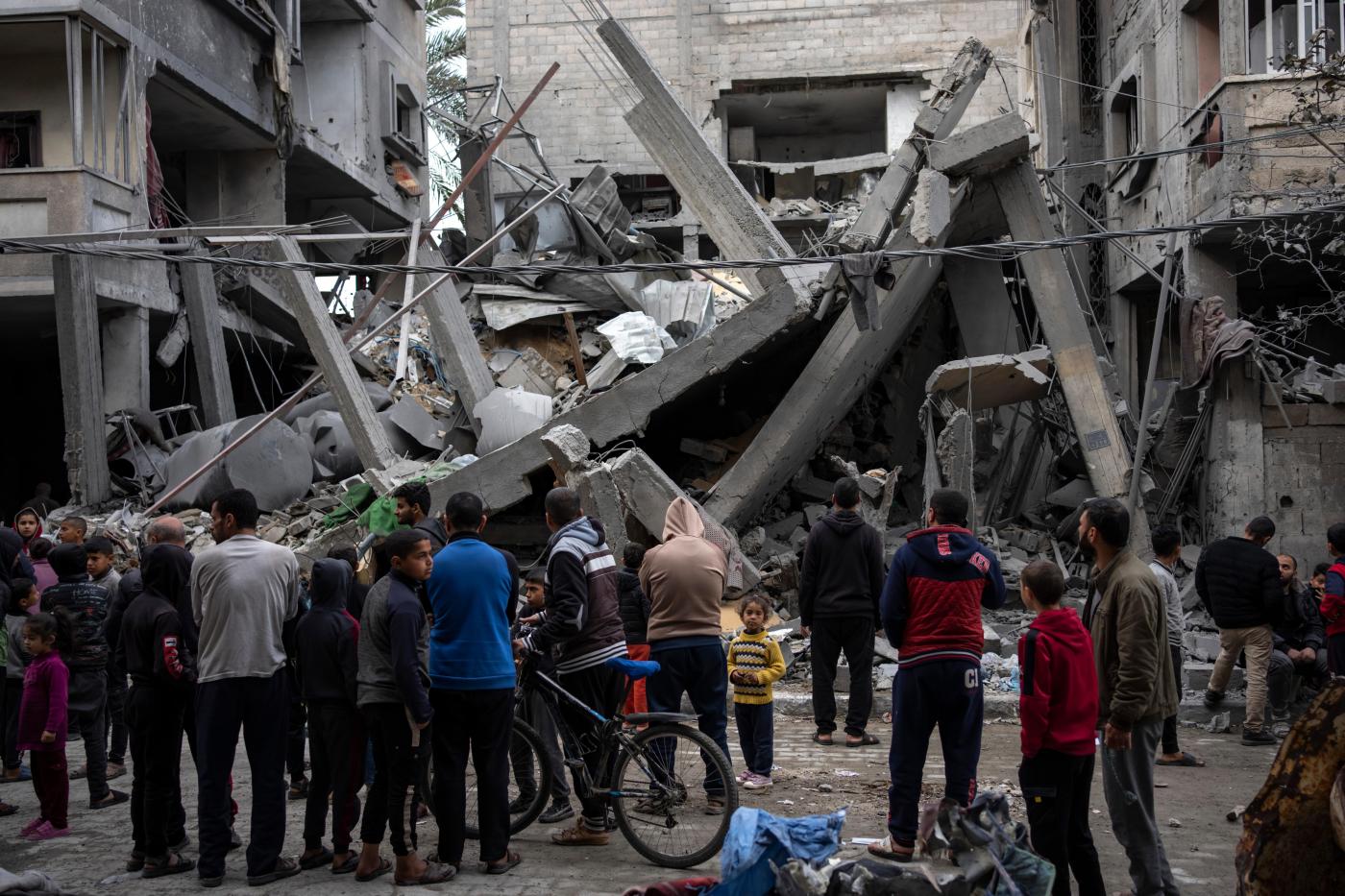
More than 32,000 Palestinians in Gaza have been killed during the fighting, according to the Gaza Health Ministry. The agency does not differentiate between civilians and combatants in its count, but says women and children make up two-thirds of the dead.

Gaza also faces a dire humanitarian emergency, with a report from an international authority on hunger warning March 18 that “famine is imminent” in northern Gaza and that escalation of the war could push half of the territory’s 2.3 million people to the brink of starvation.

U.S. Ambassador Linda Thomas-Greenfield told the council Friday that the resolution’s text “fails to support sensitive diplomacy in the region. Worse, it could actually give Hamas an excuse to walk away from the deal on the table.”

“We should not move forward with any resolution that jeopardizes the ongoing negotiations,” she said, warning that if the diplomacy isn’t supported, “we may once again find this council deadlocked.”

“I truly hope that that does not come about,” Thomas-Greenfield said.

The United States has vetoed three resolutions demanding a cease-fire in Gaza, the most recent an Arab-backed measure on Feb. 20. That resolution was supported by 13 council members with one abstention, reflecting the overwhelming support for a cease-fire.

Russia and China vetoed a U.S.-sponsored resolution in late October calling for pauses in the fighting to deliver aid, the protection of civilians and a halt to arming Hamas. They said it did not reflect global calls for a cease-fire.

They again vetoed the U.S. resolution Friday, calling it ambiguous and saying it was not the direct demand to end the fighting that much of the world seeks.

The vote became another showdown involving world powers that are locked in tense disputes elsewhere, with the United States taking criticism for not being tough enough against its ally Israel, even as tensions between the two countries rise.

A key issue was the unusual language in the U.S. draft. It said the Security Council “determines the imperative of an immediate and sustained cease-fire.” The phrasing was not a straightforward “demand” or “call” to halt hostilities.

Before the vote, Russia’s U.N. Ambassador Vassily Nebenzia said Moscow supports an immediate cease-fire, but he criticized the diluted language, which he called philosophical wording that does not belong in a U.N. resolution.

He accused U.S. Secretary of State Antony Blinken and U.S. Ambassador Linda Thomas-Greenfield of “deliberately misleading the international community” about calling for a cease-fire.

“This was some kind of an empty rhetorical exercise,” Nebenzia said. “The American product is exceedingly politicized, the sole purpose of which is to help to play to the voters, to throw them a bone in the form of some kind of a mention of a cease-fire in Gaza … and to ensure the impunity of Israel, whose crimes in the draft are not even assessed.”

China’s U.N. ambassador, Zhang Jun, said the U.S. proposal set preconditions and fell far short of expectations of council members and the broader international community.

“If the U.S. was serious about a cease-fire, it wouldn’t have vetoed time and again multiple council resolutions,” he said. “It wouldn’t have taken such a detour and played a game of words while being ambiguous and evasive on critical issues.”

Friday’s vote in the 15-member council was 11 members in favor and three against, including Algeria, the Arab representative on the council. There was one abstention, from Guyana.

After the vote, Thomas-Greenfield accused Russia and China of vetoing the resolution for “deeply cynical reasons,” saying they could not bring themselves to condemn Hamas’ terrorist attacks in southern Israel on Oct. 7, which the resolution would have done for the first time.

A second “petty” reason, she said, is that “Russia and China simply did not want to vote for a resolution that was penned by the United States, because it would rather see us fail than to see this council succeed.” She accused Russia of again putting “politics over progress” and having “the audacity and hypocrisy to throw stones” after launching an unwarranted invasion of Ukraine in February 2022.

The resolution did reflect a shift by the United States, which has found itself at odds with much of the world as even allies of Israel push for an unconditional end to fighting.

In previous resolutions, the U.S. has closely intertwined calls for a cease-fire with demands for the release of Israeli hostages in Gaza. This resolution, using wording that’s open to interpretation, continued to link the two issues, but not as firmly.