Passover Recipe: Floater Herbed Matzo Balls

posted in: News | 0

It wasn’t until recently that San Francisco cookbook author Micah Siva decided to replace the usual, salty matzo ball mix with fresh herbs and spices, she writes in her new cookbook, “Nosh: Plant-Forward Recipes Celebrating Modern Jewish Cuisine” (The Collective Book Studio, $35).

These vegetarian matzo balls are seasoned with olive oil instead of chicken schmaltz and pair nicely with Siva’s turmeric vegetable broth. Perfect for Passover or any time of year.

“I am a firm proponent of floaters,” Siva says. “So here are things you can do to avoid sinkers: Add baking powder to your matzo balls. Use soda water. Don’t overwork the mixture when rolling into balls. Separate the eggs and whip the whites until foamy.”

Floater Herbed Matzo Balls

Makes 18 to 24

INGREDIENTS

1 cup matzo meal

1 teaspoon baking powder

1 teaspoon salt

1/2 teaspoon garlic powder

1/2 onion powder

4 large eggs, whisked

1/4 cup extra-virgin olive oil

1/4 cup soda water or seltzer

1 tablespoon chopped fresh chives

1 tablespoon finely chopped fresh dill

2 tablespoons finely chopped fresh parsley

1/2 teaspoon lemon zest

10 to 12 cups water or vegetable broth, for cooking

DIRECTIONS

In a medium bowl, whisk together the matzo meal, baking powder, salt, garlic powder and onion powder. Add the whisked eggs, olive oil, soda water, chives, dill, parsley and lemon zest and mix until just combined. Cover with plastic wrap and refrigerate for 20 minutes.

When ready to cook, roll 1 heaping tablespoon of the mixture into a ball, approximately the size of a golf ball, and place on a plate. Repeat with the rest of the mixture. Cover with plastic wrap and refrigerate for 15 minutes while you prepare the cooking water.

Bring a large pot of water or vegetable broth to a boil over high heat. Once boiling, decrease the heat to medium-low and add the matzo balls. Cover with a lid and simmer until they are fluffy and fully cooked, 30 to 40 minutes. Do not lift the lid to peek before the 30-minute mark.

Serve in your favorite soup, like turmeric vegetable matzo ball soup.

Related Articles


Gretchen’s table: Chicken shawarma in a bowl is a tasty, healthy meal


Spring fever menu: Herby chicken and noodles, asparagus salad and citrus ambrosia


Passover recipe: Turmeric Vegetable Matzo Ball Soup


Passover Recipe: Cast-Iron Potato and Caramelized Onion Kugel


Quick Fix: Stacked Goat Cheese Quesadillas with Avocado Lettuce Salad

Note: Matzo balls can be frozen! Let them come to room temperature. Line a sheet pan with parchment paper, place the matzo balls on the pan and freeze for 2 to 3 hours or until firm. Transfer the matzo balls to a freezer bag and freeze. Matzo balls can be reheated directly in your soup.

Variation: Add your favorite herbs to the matzo ball recipe. I use a mixture of parsley, dill and chives, but get creative and use tarragon, cilantro or even basil.

— Courtesy Micah Siva, “Nosh: Plant-Forward Recipes Celebrating Modern Jewish Cuisine” (The Collective Book Studio, $35).

The abortion debate is giving Kamala Harris a moment. But voters still aren’t sold

posted in: Politics | 0

Noah Bierman | (TNS) Los Angeles Times

PHOENIX — When a group of crossover voters was asked during a focus group about Vice President Kamala Harris, their assessments were brutal: If she is helping Biden, you don’t see it. She rubs me the wrong way. She was picked because she is a demographic. The big things she had, she failed.

The comments, fair or not, represent a problem for President Joe Biden and for Harris, echoed in interviews with voters here in Arizona, a key swing state where Harris spoke on Friday. More than three years into the oldest president in history’s first term, his understudy has failed to win over a majority of voters or convince them that she is ready to step in if Biden falters, according to polls.

“Swing voters don’t like her,” said Gunner Ramer, political director for a group called Republican Voters Against Trump, which allowed the Los Angeles Times to view videos from three focus groups, including the crossover group that featured people who voted for former President Donald Trump in 2016 and Biden in 2020.

It wasn’t just former Trump voters who were negative about Harris. In a focus group of Black voters who were disappointed with Biden, none raised their hand in support of Harris, with one participant calling her “the bad news bear.” A focus group of California Democrats, while they liked Harris, had to be prompted to discuss her and said she needed more influence and exposure.

Many of Harris’ allies and supporters say the judgments are influenced by racism and sexism, pointing out that other vice presidents stayed in the background with less scrutiny and saw their popularity tied to the top of the ticket. Some people in focus groups criticized her clothes or compared her to Hillary Clinton in comments that seemed to validate those concerns.

But her low popularity could pose a political problem that her predecessors have not faced, given the focus on Trump’s and Biden’s ages, 77 and 81 respectively. More than half of voters, 54%, said she is not qualified to serve as president in a March USA Today/Suffolk poll, compared with 38% who said she is.

“If there was a health event for either nominee, the VP is front and center in terms of people who may be on the fence, people who may dislike both candidates,” said David Paleologos, who conducted a USA Today/Suffolk poll that asked voters their assessment of Harris. “And there are a lot whose decision may hinge on a comfort level with the vice presidential choice.”

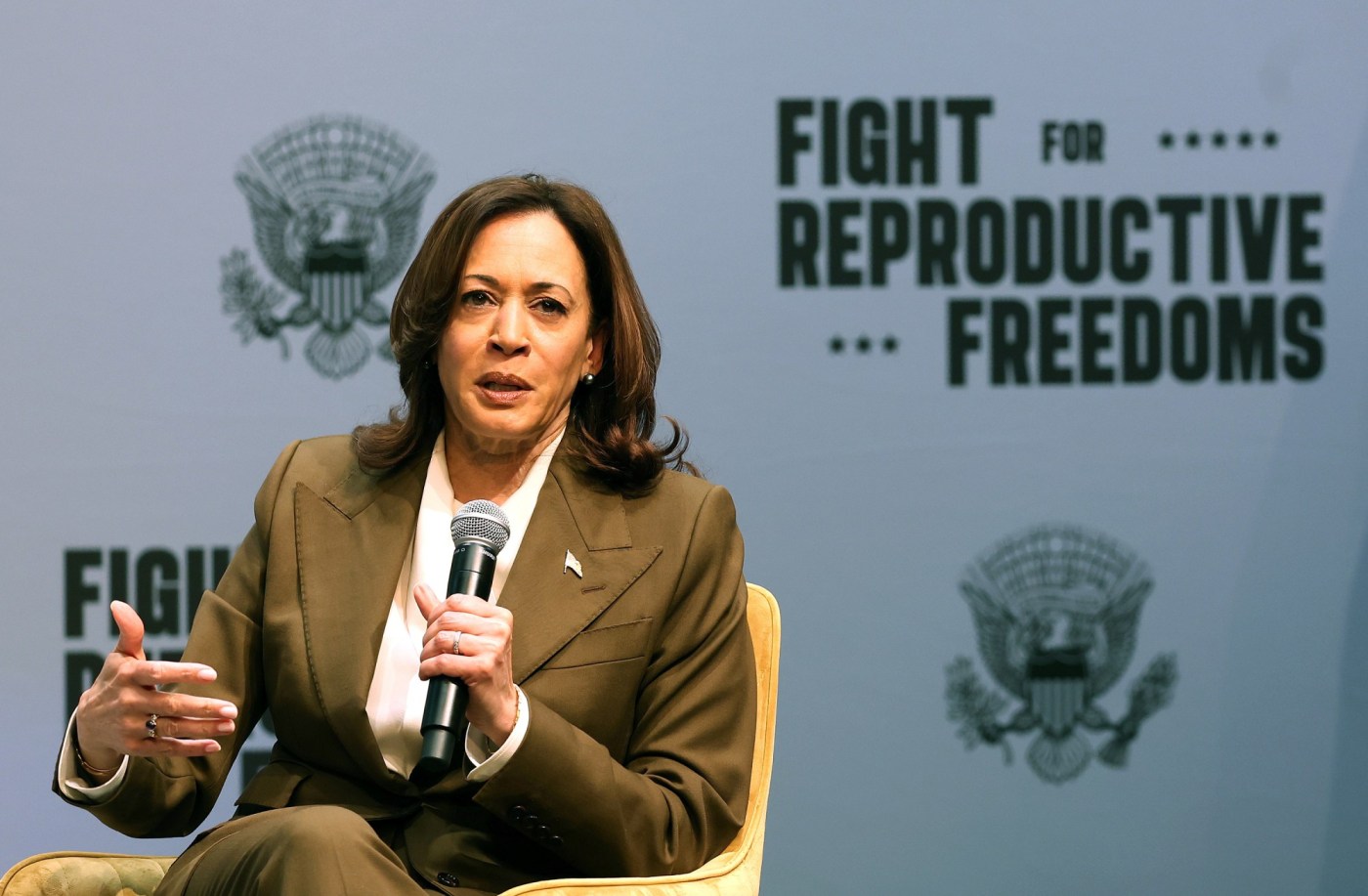
Harris has heard the criticism since she entered the White House to historic triumph in 2021. While she seldom responds directly, she has stepped up her appearances with core Democratic groups, often keeping a more robust campaign and travel schedule than Biden. Many allies believe her role as the administration’s leading voice on abortion rights will boost her and the Democratic ticket on an issue that helped carry the party to unexpected success in the 2022 midterm elections.

She spoke Friday in Tucson, three days after the state’s Supreme Court ruled that a 1864 ban on abortion can be enforced in the coming weeks. She framed the Democrats’ case against Trump, who has claimed credit for shifting the Supreme Court against abortion rights and last week said each state should decide on the issue.

“Just like he did in Arizona, he basically wants to take America back to the 1800s,” Harris said.

Several voters said in interviews in Phoenix on Monday that they were not aware Harris was in their state just a few days ago, underscoring the challenge of getting attention as a vice president in an era of information overload.

“If she is coming for us, she doesn’t show it,” said Tracey Sayles, a 52-year-old Black Democrat.

Sayles voted in prior elections for Democrats Hillary Clinton and Biden but now says her choice is 50-50 in the coming election, despite calling Trump “vulgar,” because Biden “looks like he’s ill.” She would have driven to see Harris in Tucson if she’d known she was in the state, she said, but feels the vice president has been hiding.

Another voter who dislikes both Trump and Biden, Jeff Garland, said he has not seen much of Harris either.

“But from what I have seen of her, she doesn’t look like someone I want running my country,” said Garland, a 57-year-old retired member of the military who said he voted for Trump in 2016 and Biden in 2020 and planned to sit out 2024.

Kellie Hoverson, a 31-year-old Democrat, said she “was not thrilled about Biden” but was more bullish on Harris, despite hearing concerns from younger friends and relatives about her history as a prosecutor in California.

“I just want a woman president,” she said. “I just want to see it in my lifetime.”

Studies by the Barbara Lee Family Foundation, which works to advance women’s equality in politics, suggest women face an “imagination barrier” when they run for the highest executive offices, because voters have a harder time picturing them in the job than they do white men, who have historically held the posts.

“Men can tell and women have to show,” said Amanda Hunter, the foundation’s executive director.

Polls suggest Harris, who dropped out early in the 2020 presidential primary, has made strides with the Democratic base. Three quarters of Democrats had a favorable view of her in the USA Today/Suffolk poll, which showed a little more than a quarter of independents view her favorably.

Brian Fallon, who serves as her campaign communications director, said she “has proven to be a highly effective messenger on issues from reproductive freedom to gun violence prevention” and said she is “uniquely positioned to mobilize critical groups across the Biden-Harris coalition, including both progressives and independents.”

The fact that many voters say they remain unfamiliar with Harris is something her allies and advisors see as an opening, because it leaves room for persuasion when more voters focus in on the race in the early fall.

“This is not a one-speech or two-speech thing, this is four or five months of just putting in the work,” said Cornell Belcher, who served as one of former President Obama’s pollsters.

Belcher argued that the small slice of persuadable voters who give Harris her lowest marks won’t decide the race; it will instead be a question of whether Democrats can rebuild their coalition of young voters, women and people of color that delivered Obama his 2012 reelection and formed the backbone of Biden’s 2020 victory.

“I’m more worried about these younger voters taking the off-ramp, like they did in 2016,” he said, crediting Harris with her work reaching them in college campus tours and other outreach.

But there are questions there, too, with inconsistencies in polls of voters age 18-29, given the small sample sizes of subgroups. One poll conducted in early April by Emerson College showed Harris with pretty high favorable marks among those younger voters, nearly 49%, while another poll by the Economist taken a few days later showed only 34% of that age group viewed her favorably.

It’s unclear whether Trump, who has not targeted the vice president often, will pick up his attacks on Harris, who is unsurprisingly toxic among Republican base voters. “If they cheat on the election, it might be Kamala,” Trump said during a March rally in North Carolina, echoing his false claims of widespread election fraud.

He fairly quickly pivoted back to Biden: “We got enough problems with this guy.”

A senior advisor to the Trump campaign, Danielle Alvarez, called Harris irrelevant. “Political reality is that Biden’s under water and he is a failed president,” she said. “She is certainly probably equal to him in those failures, but he is the target.”

Whit Ayres, a longtime Republican pollster, agrees that running mates do not generally impact votes but points to Sarah Palin in 2008 as an exception, in large part because polls showed dual concerns about John McCain’s health and Palin’s fitness for office. He argues that Harris, whom he characterizes as a walking gaffe, presents a similar problem.

“There may be plenty of time, but if you don’t have the ability to be more articulate and look like you’re ready to be leader of the free world, it’s going to be difficult to accomplish that,” Ayres said.

Harris is counting on that time. She is fairly busy with public events, but vice presidents, by design, don’t tend to draw much attention compared with the president.

As the campaign heats up, and Trump picks a running mate, they are likely to see more of her, and, potentially, in a different light.

“For people who have misgivings about her, ultimately the question for them is going to be how does she look as opposed to X?” said Joel Goldstein, a historian who studies the vice presidency. “Now, she’s measured against an ideal figure.”

_____

©2024 Los Angeles Times. Visit latimes.com. Distributed by Tribune Content Agency, LLC.

Recipe: Micah Siva’s Passover Black and White Cookies

posted in: News | 0

Black and white cookies are a staple of New York delis, writes Micah Siva, author of “Nosh: Plant-Forward Recipes Celebrating Modern Jewish Cuisine” (The Collective Book Studio, $35).

They’re sweet and soft with a lemon scent and, of course, chocolate. Plus, this version is vegan, gluten-free and great for Passover — just be sure to check that all of your ingredients are kosher.

Passover Black and White Cookies

Makes 8 cookies

INGREDIENTS

Cookies:

1½ cups almond flour, sifted

1/4 cup arrowroot starch

1 teaspoon baking powder

1/4 teaspoon sea salt

1 tablespoon melted coconut oil

1/4 cup maple syrup

1 teaspoon vanilla extract

1/2 teaspoon lemon zest

11/2 teaspoons lemon juice

Frosting:

1½ cups powdered sugar

1/2 teaspoon vanilla extract

2 teaspoons lemon juice

1 to 2 tablespoons water

1 tablespoon light agave syrup or corn syrup

2 to 3 tablespoons cocoa powder

DIRECTIONS

Make the cookies: In a medium bowl, whisk together the almond flour, arrowroot starch, baking powder and salt. Add the coconut oil, maple syrup, vanilla, lemon zest and lemon juice and mix well until combined. Cover with plastic wrap and refrigerate for at least 30 minutes or up to overnight.

When you’re ready to bake, preheat the oven to 350 degrees. Line a large sheet pan with parchment paper.

Divide the dough into 8 equal pieces and roll them into balls. Transfer the balls to the prepared sheet pan and press each one into ½-inch-thick circles. Note: The cookies will not spread.

Bake for 11 to 13 minutes or until just golden. Let cool on the sheet pan for at least 20 minutes or until fully cool. (Icing warm cookies will make them appear messy, and the icing will not set.)

Make the frosting: In a medium bowl, combine the powdered sugar, vanilla, lemon juice and water, 1 tablespoon at a time, whisking to combine. The frosting should be quite thick and run off the spoon in thick ribbons, holding its shape for 2 to 3 seconds before settling back into the bowl. Whisk in the agave.

Divide the frosting equally between 2 bowls. In one bowl, add the cocoa powder. If it looks too thick, add an additional 1 to 2 teaspoons of water.

Using an offset spatula, spread the vanilla frosting on one-half of the bottom (flat) side of the cookie. Place the cookie on a clean sheet pan. Repeat with the rest of the cookies, place in the refrigerator, and let rest for 20 minutes, until the frosting is set.

Spread the chocolate frosting on the other side of the cookies and return them to the refrigerator to set for about 20 minutes.

Note: Store for up to two weeks in an airtight container in the fridge or 3 weeks in the freezer. Layer the cookies with wax paper to prevent sticking during storage.

— Courtesy Micah Siva, “Nosh: Plant-Forward Recipes Celebrating Modern Jewish Cuisine” (The Collective Book Studio, $35).

Republicans scrutinize voting rolls and ramp up for mass challenges ahead of election

posted in: News | 0

Matt Vasilogambros | Stateline.org (TNS)

When Scott Hoen ran to be Carson City, Nevada’s chief election official two years ago, he campaigned on “election integrity,” promising to make sure voter registration lists were accurate.

In the chaotic aftermath of the 2020 presidential election, he believed that too many of his fellow Republicans were convinced that there was widespread voter fraud. By keeping voter rolls current, Hoen thought he could restore voter trust in his county’s election system.

He won. And every day since he took office, he and his staff have tried to keep that focus, using data from all levels of government to remove voters who have moved or died from the active voter list.

Hoen was surprised, then, to be named in a lawsuit the Republican National Committee and the Nevada Republican Party filed last month against him, four other Nevada county clerks and the secretary of state. The lawsuit alleges that five localities had “inordinately high” voter registration rates, and that the state is violating federal law by not having what are known as “clean” voter rolls.

Hoen said the lawsuit is “unfortunate” and “a distraction” in a pivotal election year. The state responded by saying the data Republicans used in the lawsuit are “highly flawed” and that the RNC’s analysis was like “comparing apples to orangutans.” Former President Donald Trump’s lawyers asserted without evidence that more than 1,500 dead Nevadans voted in 2020 and that an additional 42,000 in the state voted twice.

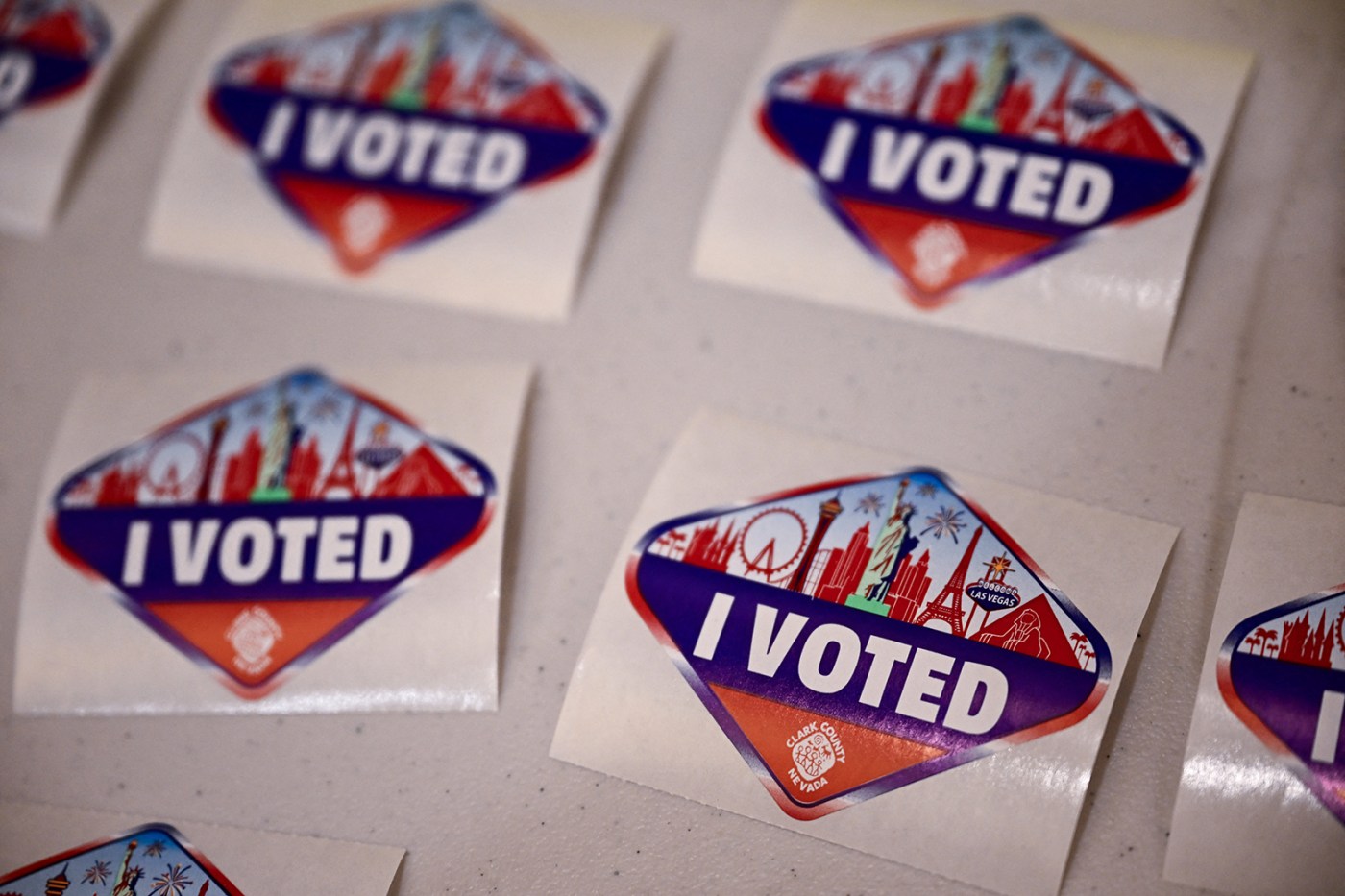
The Nevada lawsuit is just one example of the tactics Republicans and conservative activists are using ahead of November’s presidential election, as they seek to purge voter rolls of allegedly ineligible voters. The efforts have election experts worried about voter access.

Changing a voter’s status is routine for election officials. Like others across the country, Hoen moves voters from active to inactive when election mail is repeatedly returned or when he gets death notices, and moves them to active status when he gets motor vehicle records for newly registered voters.

Nevada also is a member of the Electronic Registration Information Center, known commonly as ERIC, an interstate data-sharing pact that seeks to help states keep updated voter lists. Recently, ERIC has been a target of conspiracy theories that led to an exodus of nine Republican-led states over the past two years.

“Who knows where they got their numbers. But they didn’t consult me or ask me, or no one’s talked to me about what we do with voter roll maintenance,” Hoen said of the lawsuit in an interview with Stateline. “We do everything we can, per the law, to keep our voter rolls as plain as possible.”

The RNC filed a similar lawsuit against Michigan last month. Conservative groups have recently filed lawsuits in many other states, seeking access to state voter registration lists and claiming they might be bloated.

Some states, including Georgia and Indiana, have made it easier to remove registered voters from the rolls. And Trump-aligned groups have launched data analysis tools to aid in large-scale challenges to voter registrations.

Related Articles

National Politics |


Asian Americans and Pacific Islanders in US more likely to believe in climate change: AP-NORC poll

National Politics |


Trump goes from court to campaign at a bodega in his heavily Democratic hometown

National Politics |


Supreme Court questions obstruction charges brought against Jan. 6 rioters and Trump

National Politics |


Trump trial: Why can’t Americans see or hear what is going on inside the courtroom?

National Politics |


Only 1 in 3 US adults think Trump acted illegally in New York hush money case, poll shows

Election experts say maintaining accurate voter lists is a key part of election administration, but they are concerned that the challenges and lawsuits could bolster unfounded claims of rampant voter fraud. They also worry it could create undue hardships on voters who may have to prove their eligibility close to an election, and bog down election offices with frivolous data requests and challenges.

“When you see efforts to do mass challenges in the midst of the presidential primaries and months before a major election, you’ve got to wonder whether the intent is to create chaos and confusion amongst voters rather than legitimate list maintenance,” said David Becker, founder and executive director of the Center for Election Innovation & Research, a nonpartisan organization that advises local election officials nationwide.

Voter challenges aren’t inherently bad, he said. There are legitimate reasons to bring a challenge: A neighbor may have died or moved away, for example, and a voter wants to let an election official know.

But Becker is concerned that mass challenges and lawsuits could make voter lists less accurate, which could lead to problems at polling places, more provisional ballots and longer lines — creating the conditions for candidates to claim an election was stolen.

Mass voter challenges

Georgia enacted a law in 2021 that allows residents to make unlimited challenges to voter registrations, and requires local election officials to respond to those challenges within 10 business days. Thousands of registrations were challenged, and local election officials raced frantically to check the data and send responses.

The next year, 10 election staffers in Gwinnett County, Georgia, worked more than 40 days straight to handle 47,000 challenges in the midterm election, said Zach Manifold, the county elections supervisor. Fair Fight, a local voting rights group, said data showed those challenges disproportionately targeted people of color and younger voters.

The county’s voter roll is “a living and breathing document,” Manifold said. His office processes thousands of routine changes weekly. In addition to regular updates at the county level and being a member of ERIC, Georgia conducts large-scale list maintenance on odd years.

While a federal judge ruled in January that mass challenges in Georgia are not illegal intimidation, he did emphasize that the list of potentially ineligible voters that conservative activists compiled to contest registrations “utterly lacked reliability” that “verges on recklessness.”

A scenario similar to 2022’s mass challenges may repeat itself this year.

Last month, the Republican-led Georgia legislature passed a bill that would more clearly define existing law by setting standards for probable cause to challenge voters and for how much evidence is needed for a successful challenge. It also would cut off registration removals within 45 days of an election.

Some Democrats worried the change would lead to a rush of challenges, hurting voters. But Republican state Sen. Max Burns, one of the sponsors of the bill, said during a March committee hearing that the legislation may lead to fewer challenges.

“I think we need to clean up our voter rolls, so that people have confidence that those who are on the voter rolls are legitimate,” Burns said.

Republican Gov. Brian Kemp, who also is Georgia’s former secretary of state, has until early May to sign the legislation. His office told Stateline there will be a thorough review process.

Last month, Indiana Republican Gov. Eric Holcomb signed into law a bill that makes it easier to remove voters from the rolls by requiring state officials to compare voter registration lists with motor vehicle lists for noncitizens. People who are flagged would have 30 days to prove their citizenship.

The New Hampshire House also passed a bill that would allow voter registration challenges on Election Day. The measure is sitting in a state Senate committee.

To assist with those challenges, several right-wing groups that claim American elections are rigged because of voter fraud are releasing voter list tools that activists can use to scour voter registrations.

A company called EagleAI developed a tool to scan Georgia’s voter registration records. There are similar efforts in Nevada and Michigan, all coordinated through the Election Integrity Network, which is run by former Trump campaign attorney Cleta Mitchell. The network did not respond to an interview request.

“They’re perpetuating these lies that our voter rolls are full of fraudulent voters and bloated,” said Kristin Nabers, Georgia state director for All Voting is Local Action, a voting rights group that has opposed mass challenges in the Peach State. “The burden on election offices is really considerable.”

More lawsuits

Challenges to registrations are getting an assist from court cases that are making voter rolls public.

Since 2020, there have “been a lot of questions” surrounding elections, said Lauren Bowman Bis, director of communications and engagement for the Public Interest Legal Foundation, one of several conservative groups that have sued states to release voter registration lists.

Transparency in elections is crucial for people to have more confidence in the system, she added. By gaining access to voter names, addresses and party registration, groups like Bis’ can check states to make sure lists are accurate and they’re not sending multiple ballots to people or are ensuring dead people are removed from the rolls.

Bis has gone to cemeteries in Michigan where, she said, she has seen the names of active voters on tombstones.

The foundation, often known as PILF, has active lawsuits in Hawaii, Michigan and South Carolina over their voter roll maintenance. Over the past four years, they have successfully sued Illinois and Maryland and gained access to those states’ voter lists.

In February, a federal appeals court ruled that Maine had to release its voter rolls to the Public Interest Legal Foundation. The group has appealed a ruling in Michigan that it lost in a district court last month, arguing the state did not make a “reasonable effort” to clean its rolls.

Another conservative group that posts voter rolls online, the Voter Reference Foundation, sued Pennsylvania in February over access to its registration lists. The group did not respond to emailed questions.

“The voter roll really is the most essential election integrity document,” said Bis. “We’re just trying to make sure that federal law is enforced in states or localities where we find election officials aren’t doing what they are required to by law to have a secure election that people can have confidence in the results.”

But the disagreement over these efforts once again comes down to the data — the methodology that plaintiffs use in their complaints.

Conservative groups sometimes compare the current number of registered voters to an outdated estimate of the number of voting-age citizens in that jurisdiction, said Eliza Sweren-Becker, a senior counsel at the Brennan Center for Justice, a voting rights group housed at the New York University School of Law.

“You’re really comparing apples and oranges in suggesting that there’s something improper with high voter registration rates,” she said. “We should hope and expect that all eligible Americans who want to participate in our democratic system are registered to vote and can stay on the rolls.”

Some Republicans are concerned too.

Dennis Lennox, a Michigan-based Republican political consultant, told Stateline that while he does not agree with the way that many Democratic state officials changed voting rules in recent years, he worries that some Republicans are more focused on lawsuits and curbing ballot access than adapting to new early voting realities to get out the vote in a bigger way.

“Republicans, by and large, have been caught flat-footed,” Lennox wrote in an email. “The party nationally and in many states is basically divided between those wanting to focus on so-called lawfare and those willing to adapt and accept the reality of campaigns and elections in 2024.”

Stateline is part of States Newsroom, a national nonprofit news organization focused on state policy.

©2024 States Newsroom. Visit at stateline.org. Distributed by Tribune Content Agency, LLC.