Tennessee judge wants more information on copyright before ruling on school shooter’s writings

posted in: News | 0

By TRAVIS LOLLER (Associated Press)

NASHVILLE, Tenn. (AP) — A Tennessee judge on Wednesday seemed ready to agree with an attorney for Nashville police that the writings of a school shooter could be released as public record once the investigation is officially closed.

But the parents of children at the Covenant School added an extra twist to an already complicated case by asserting that they have gained legal ownership of the writings from the shooter’s parents and now hold the copyright.

None of the eight attorneys arguing before Davidson County Chancery Court Judge I’Ashea Myles during a two-day hearing claimed to be a copyright expert. Their answers to Myles’ pointed questions about the interplay of federal copyright protections and the Tennessee Public Records Act seemed at times only to muddy the waters further.

In the end, Myles said she will write an order outlining specific questions she wants them to address. Only after that will she rule on when, if ever, the writings can be released to the public.

Police have said the writings that they collected as part of their investigation into the March 27, 2023, shooting at the Covenant School that killed three 9-year-old children and three adult staff members are public records. However, they have said they cannot be released until their investigation is concluded.

Those asking that the writings be released immediately include news outlets, a Tennessee state senator, a gun-rights group and a law enforcement nonprofit. They argue that the open investigation is a formality at this point. The shooter was killed by police at the scene, and no other suspects have been identified.

Meanwhile, three other groups that have been allowed to intervene in the case argued that none of the writings should ever be released.

In addition to the copyright issues, attorneys representing the Covenant parents, the Covenant School and the Covenant Presbyterian Church presented a united front in arguing that the writings fall under a Tennessee law that protects the privacy of information, records and plans related to school security. Giving the law the broadest possible reading, the writings could inspire copycats and therefore threaten Covenant’s security, they argued.

Myles seemed to take exception to that interpretation.

“Right now, you’re asking me to adopt an interpretation of this statute that information written in a journal should be construed as a plan related to school security,” she said. She noted that any decision she makes is sure to be appealed and will have to survive the scrutiny of a higher court.

Eric Osborne, the parents’ attorney, had yet another reason to keep the writings secret. All of the children of Covenant School are victims under the Tennessee Constitution and have a right to be free from abuse, harassment and intimidation. Releasing the writings publicly could harm the children and would violate the law, he argued.

Myles again pushed back on such a broad approach.

“Is ‘harm’ synonymous with harassment, intimidation and abuse?” she asked. “You’re asking this court to perhaps create new law.”

Myles offered the example of a victim undergoing cross-examination in a criminal trial. It might be upsetting, but it is not a violation of their constitutional rights, she said.

Myles added that she reads the law to protect victims during the pendency of criminal justice proceedings. “To say it is in perpetuity, after the investigation is closed — I don’t see it,” she told Osborne.

He replied that there is no expiration. “Once you are involved in the criminal justice system, you have the constitutional rights that Tennesseans have given to all victims,” Osborne said.

Myles then asked whether there might be some parents at the school who want the writings released. “You represent your clients’ interests. What you are asking the court to do puts a bar on what they want. Are you elevating one group of parents over another?” she said.

Osborne said that 103 of the 112 families with children at the school at the time of the March 27, 2023, attack have signed on to their position that the writings should be suppressed.

At the end of the hearing, Myles made clear that the decision was a difficult one.

“Before I’m a chancellor, I’m a human,” she said. “I’m also a mom.”

Although her “heart grieves” for the children, Myles said she has to put emotion aside. “I have to take how I feel out of it. I have to interpret the law as written by the legislature,” she said.

St. Paul police, Minnesota National Guard team up to steer military members to careers as officers

posted in: News | 0

As law enforcement agencies struggle to find new officers, St. Paul police and the Minnesota National Guard are teaming up to work on recruitment and find career paths for soldiers when they leave the service.

The Army has a long-standing program called Partnership for Your Success (PaYS) that works with private industry, academia and federal, state and local government. People who are ending their service with the Army, along with Minnesota National Guard members and Reserve Officers’ Training Corps cadets, are guaranteed five job interviews for potential employment.

“It serves as a bridge between the individual skills acquired in the military and the opportunities awaiting them in the civilian workforce,” said Major General Shawn Manke, Minnesota National Guard adjutant general. And employers who take part in PaYS can select from a “pool of highly skilled, motivated and responsible candidates,” he added.

The Minnesota National Guard and St. Paul police signed an agreement Wednesday to mark their collaboration.

St. Paul Police Chief Axel Henry thanked the Guard members who were gathered and said the agreement means going beyond just saying “thank you.”

“How are we expressing that thanks for your service, how are we supporting people who serve when they go to move on to a new career?” Henry said. “… We want those people who serve, we want people that understand there’s something bigger and broader than just themselves.”

Members of the Armed Forces “have demonstrated what it means to go all in, in service to our community, and service to our country,” said St. Paul Mayor Melvin Carter.

“This agreement, this relationship is about demonstrating to you that we are invested in your future, just the same as you’ve been invested in our community,” Carter said.

Related Articles

Crime & Public Safety |


Tim Walz says copper wire theft bills are ‘top priority,’ urges legislators to move them forward

Crime & Public Safety |


Jacob Wetterling Resource Center director honored with national award

Crime & Public Safety |


Court says private vehicle is ‘public place’ under Minnesota gun law

Crime & Public Safety |


25 years after Nathan Edberg’s truck was found abandoned in Vadnais Heights, search for answers continues

Crime & Public Safety |


Hennepin County Attorney Mary Moriarty campaigned on change. Some say she’s gone too far.

Here’s why experts don’t think cloud seeding played a role in Dubai’s downpour

posted in: News | 0

By SETH BORENSTEIN and BRITTANY PETERSON (Associated Press)

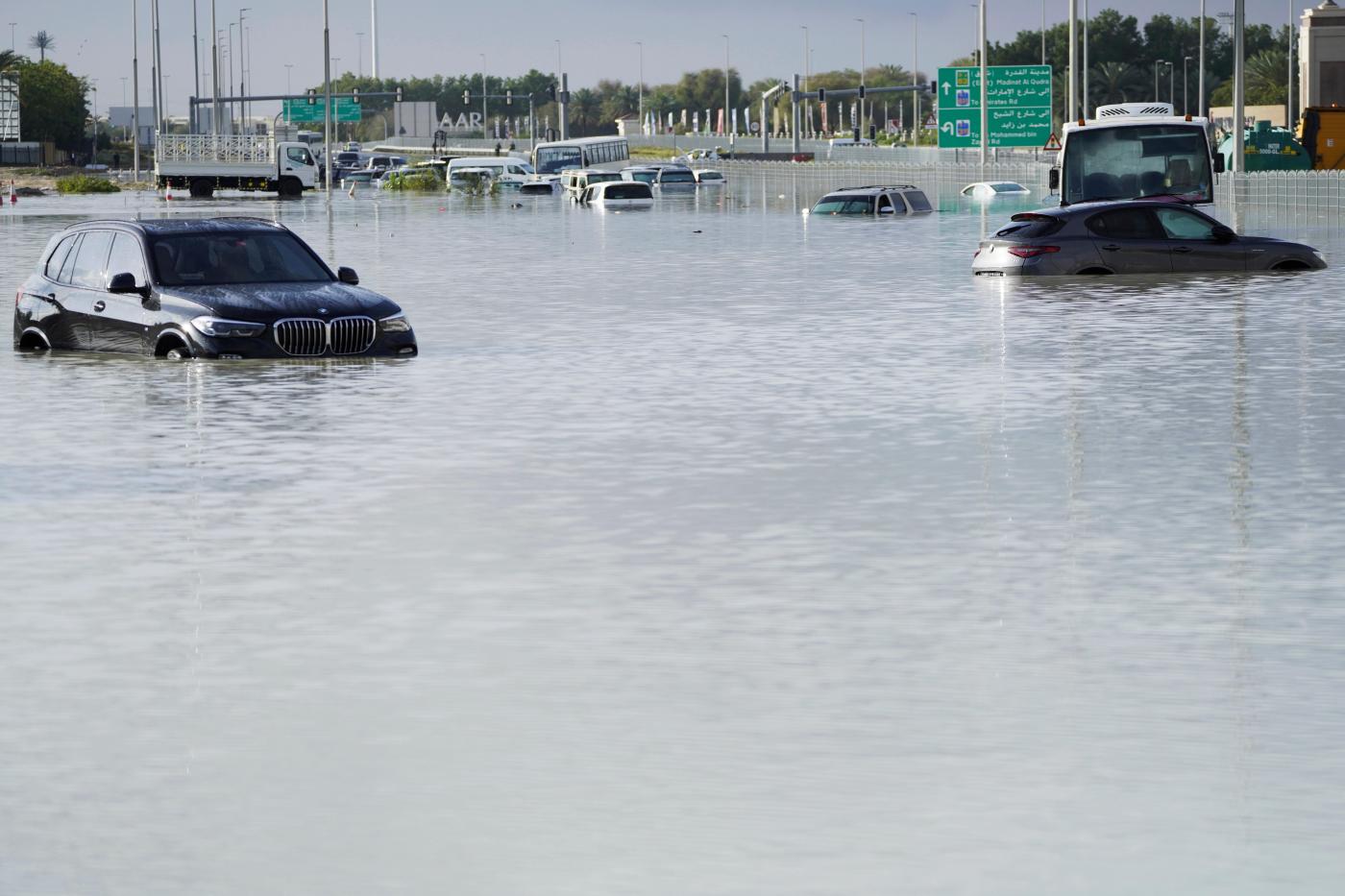
With cloud seeding, it may rain, but it doesn’t really pour or flood — at least nothing like what drenched the United Arab Emirates and paralyzed Dubai, meteorologists said.

Cloud seeding, although decades old, is still controversial in the weather community, mostly because it has been hard to prove that it does very much. No one reports the type of flooding that on Tuesday doused the UAE, which often deploys the technology in an attempt to squeeze every drop of moisture from a sky that usually gives less than 4 or 5 inches (10 to 13 centimeters) of rain a year.

“It’s most certainly not cloud seeding,” said private meteorologist Ryan Maue, former chief scientist at the U.S. National Oceanic and Atmospheric Administration. “If that occurred with cloud seeding, they’d have water all the time. You can’t create rain out of thin air per se and get 6 inches of water. That’s akin to perpetual motion technology.”

Meteorologists and climate scientists said the extreme rainfall is akin to what the world expects with human-caused climate change, and one way to know for certain that it was not caused by tinkering with clouds is that it was forecast days in advance. Atmospheric science researcher Tomer Burg pointed to computer models that six days earlier forecast several inches of rain — the typical amount for an entire year in the UAE.

Three low-pressure systems formed a train of storms slowly moving along the jet stream — the river of air that moves weather systems — toward the Persian Gulf, said University of Pennsylvania climate scientist Michael Mann. Blaming cloud seeding ignores the forecasts and the cause, he said.

Many of the people pointing to cloud seeding are also climate change deniers who are trying to divert attention from what’s really happening, Mann and other scientists said.

“When we talk about heavy rainfall, we need to talk about climate change. Focusing on cloud seeding is misleading,” said Imperial College of London climate scientist Friederike Otto, who heads a team that does rapid attribution of weather extremes to see if they were caused by global warming or not. “Rainfall is becoming much heavier around the world as the climate warms because a warmer atmosphere can hold more moisture.”

WHAT IS CLOUD SEEDING?

Clouds need tiny water or ice droplets called nuclei to make rain. The weather modification method uses planes and ground-based cannons to shoot particles into clouds making more nucleai, attracting moisture that falls as snow and rain. Usually silver iodide is used, but it can also be dry ice and other materials. The method, first pioneered in the 1940s, became popular in the U.S. West starting in the 1960s, mostly for snow.

It can’t create water from a clear sky — particles must be shot into a storm cloud that already holds moisture to get it to fall, or to fall more than it otherwise would naturally.

HOW EFFECTIVE IS IT?

A recent study of aerial seeding found a clear precipitation pattern on a radar that mirrored the seeding and offers evidence the method works. But exactly how effective it is remains unclear, scientists say.

The physics makes sense, but the results have been so small that scientists just can’t agree on whether it is fair to say it really works, said Maue and Mann.

Atmospheric forces are so huge and so chaotic that technically cloud seeding “is way too small a scale to create what happened,” Maue said. Extra rainfall from cloud seeding would have been minimal, both said.

WHO USES IT?

Despite not knowing its efficacy, governments in drought-stricken regions like the U.S. West and the UAE are often willing to invest in technology like seeding in the hopes of getting even a small amount of water.

Utah estimates cloud seeding helped increase its water supply by 12% in 2018, according to an analysis by the state’s Division of Water Resources. The analysis used estimates provided to them by the contractors paid to do the seeding.

Dozens of countries in Asia and the Middle East also use cloud seeding.

The U.S. Bureau of Reclamation spent $2.4 million last year on cloud seeding along the overtapped Colorado River. Utah recently increased its seeding budget by tenfold.

SO WHAT CAUSED THE DELUGE?

That part of the Middle East doesn’t get many storms, but when it does, they are whoppers that dwarf what people in the United States are used to, Maue said.

Huge tropical storms like this “are not rare events for the Middle East,” said University of Reading meteorology professor Suzanne Gray. She cited a recent study analyzing nearly 100 such events over the southern Arabian Peninsula from 2000 to 2020, with most in March and April, including a March 2016 storm that dropped 9.4 inches (almost 24 centimeters) on Dubai in just a few hours.

The 2021 study said “a statistically significant increase in the (whopper storms) duration over southeast Arabian Peninsula has been found, suggesting that such extreme events may be even more impactful in a warming world.”

SIZE IS IMPORTANT

While cloud seeding can work around the margins, it doesn’t do big things, scientists say.

“It’s maybe a little bit of a human conceit that, yeah, we can control the weather in like a Star Trek sense,” Maue, who was appointed to NOAA by then-President Donald Trump, said. “Maybe on long time scales, climate time scales, we’re affecting the atmosphere on long time scales. But when it comes to controlling individual rain storms, we are not anywhere close to that. And if we were capable of doing that, I think we would be capable of solving many more difficult problems than creating a rain shower over Dubai.”

___

Borenstein reported from Washington, Peterson from Boulder, Colorado.

___

The Associated Press receives support from the Walton Family Foundation for coverage of water and environmental policy. The AP is solely responsible for all content. For all of AP’s environmental coverage, visit https://apnews.com/hub/climate-and-environment

Republican AGs attack Biden’s EPA for pursuing environmental discrimination cases

posted in: Society | 0

ST. LOUIS — Republican attorneys general attacked the Biden administration’s stated goal of pursuing environmental justice, calling it a form of “racial engineering.‘’

Florida Attorney General Ashley Moody and 22 other GOP officials asked the EPA Tuesday to stop using civil rights laws to investigate actions and policies that result in harm to Black people or other minority groups — even unintentionally — more than white residents.

“The EPA should be focusing on enforcing the environmental laws passed by Congress, not so called ‘environmental justice,’ which is a euphemism for Biden’s extreme agenda,‘’ Moody said. Their petition demands that the EPA change decades-old rules, though the civil rights law could still be used where discrimination was intentional.

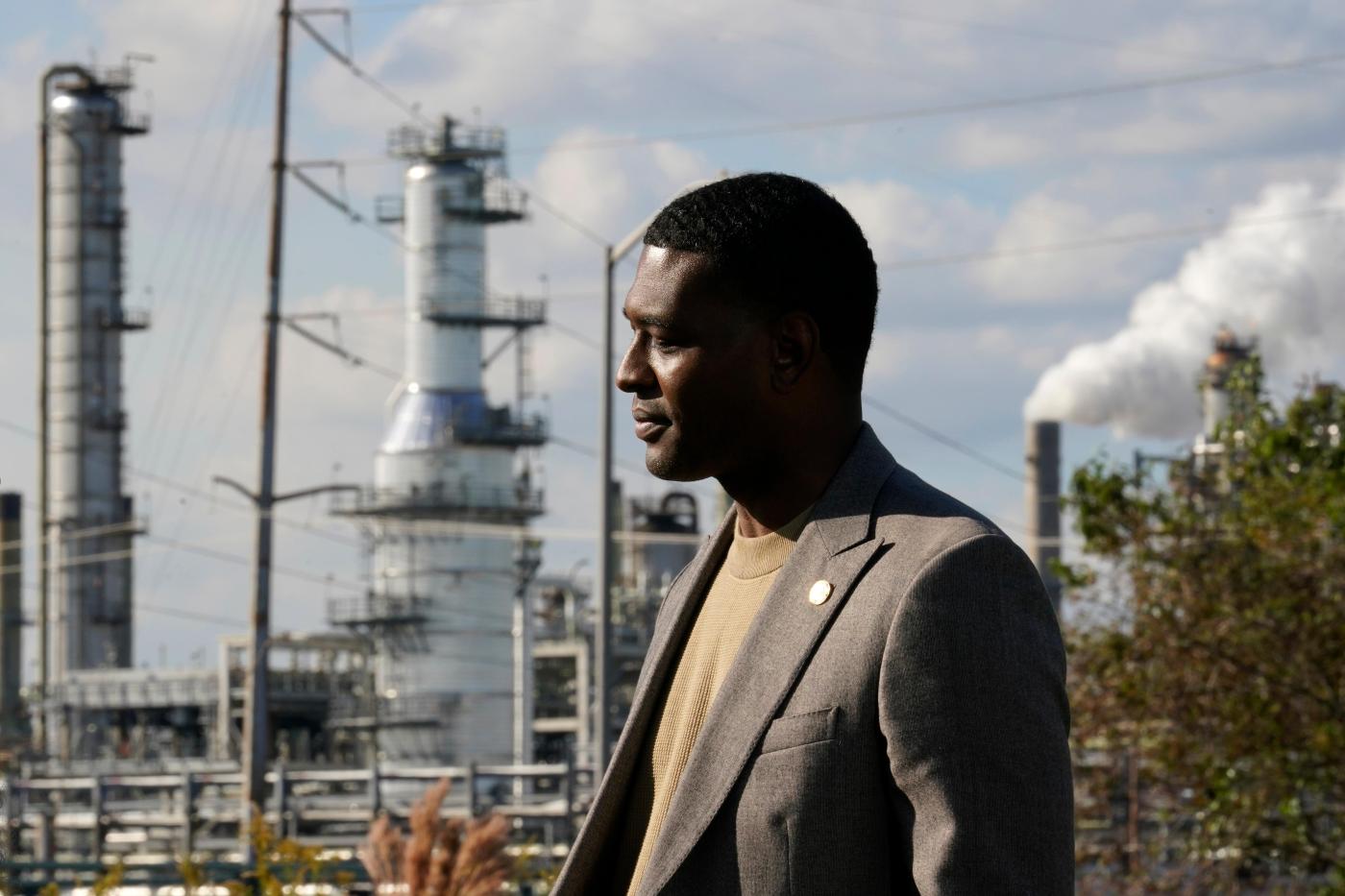
The petition is unlikely to convince the Biden administration to back away from an issue EPA Administrator Michael Regan has taken pains to highlight. Regan, for example, went on a “Journey to Justice” tour to places like the industrial stretch of Louisiana typically called Cancer Alley to show how majority-Black communities living near polluters were being hurt. To address such harms, the EPA has turned in part to a section of the Civil Rights Act of 1964 called Title VI to open investigations and pressure states to make changes.

The petition in an election year is the latest in Republicans’ expanding fight against federal policies aimed at addressing historic racial discrimination and they believe courts are on their side. They cited the recent Supreme Court decision that eliminated affirmative action in college admissions, arguing it shows the court is wary of race-conscious federal policies.

“Because the EPA’s regulations prohibit any action that results in racial disparities, a funding recipient must set demographic targets for their projects to maintain compliance,” the attorneys general wrote. “This kind of allocation based on group membership is a constitutional nonstarter.”

The Florida attorney general’s office, which took the lead on the petition, said the states would sue if the EPA does not amend its rules.

EPA declined to comment, citing ongoing litigation around the issue.

Title VI aims to prevent discrimination in programs that receive federal funds. The agency can investigate allegations of discrimination, publish their findings and pressure states and local governments to agree to change policies. The federal government can yank funding if they find a Title VI violation.

Debbie Chizewer, managing attorney in the Midwest office at the environmental group Earthjustice, said Title VI is part of the country’s historic fight against discrimination and is still a critical tool. Elected officials across the county permitted numerous polluting factories, chemical plants and refineries near minority communities that now are burdened with the effects, including poorer health, lower property values and economic blight.

“I think it is a perversion of our civil rights laws to say otherwise, to say that you can’t account for these past harms by creating policies that protect communities that are disproportionately harmed,” she said.

Previously, Title VI has been a relatively weak environmental weapon, rarely resulting in significant changes to environmental policy. Under the Biden administration, however, environmental and civil rights groups were hopeful it could be used to do more.

Those groups asked the EPA to investigate Louisiana’s regulation of air pollution, arguing that it disproportionately hurt majority-Black communities near heavy industry. They highlighted the Denka Performance Elastomer plant that makes synthetic rubber and emits harmful chloroprene. It’s located a half-mile from an elementary school. The agency agreed to investigate and released initial findings saying there was evidence of discrimination.

But before the state agreed to any changes, the EPA dropped its investigation. The end came soon after Louisiana sued the agency, arguing that focusing on policies that may harm one group more than another but weren’t intentionally discriminatory went too far.

That lawsuit has so far seen success. In January, a federal judge in Louisiana put a temporary halt on the EPA’s power to investigate discrimination that had a so-called “disparate impact.” A final decision in the case hasn’t come yet.

Environmental groups have worried that the EPA’s move in Louisiana amounts to a pullback on the Biden administration’s commitment to fighting environmental discrimination.

EPA officials are wary of unfavorable court rulings and a conservative Supreme Court that has already curtailed its regulatory power. The Supreme Court restricted the EPA’s authority to fight air and water pollution — including a landmark 2022 ruling that limited the EPA’s authority to regulate carbon dioxide emissions from power plants that contribute to global warming.

Regan said earlier this month that he believes strongly in using Title VI to fight environmental discrimination, but it’s complicated.

“It is not just on this issue, we face headwinds in the courts on a lot of issues,” Regan said. He added that the EPA is trying to ensure every action it takes can withstand a court challenge.

But the agency has other options to hold polluters accountable, he said. Recently, for example, the EPA finalized new, tougher, emissions limits for more than 200 chemical plants, including the Denka facility under scrutiny in Louisiana.

___

The Associated Press receives support from the Walton Family Foundation for coverage of water and environmental policy. The AP is solely responsible for all content. For all of AP’s environmental coverage, visit https://apnews.com/hub/climate-and-environment

Related Articles

Politics |


House’s Ukraine, Israel aid package gains Biden’s support as Speaker Johnson fights to keep his job

Politics |


Andreas Kluth: Even Republicans are now calling out Putin’s lies

Politics |


Alison Schrager: The 4-day work week is decades away

Politics |


Other voices: Iran’s attack failed. Its threat to peace remains

Politics |


James Stavridis: Putin’s new front in the Ukraine war is in the Balkans