US says it’s taking first steps to possibly reopen embassy in Venezuela after Maduro’s ouster

posted in: All news | 0

By MATTHEW LEE, Associated Press

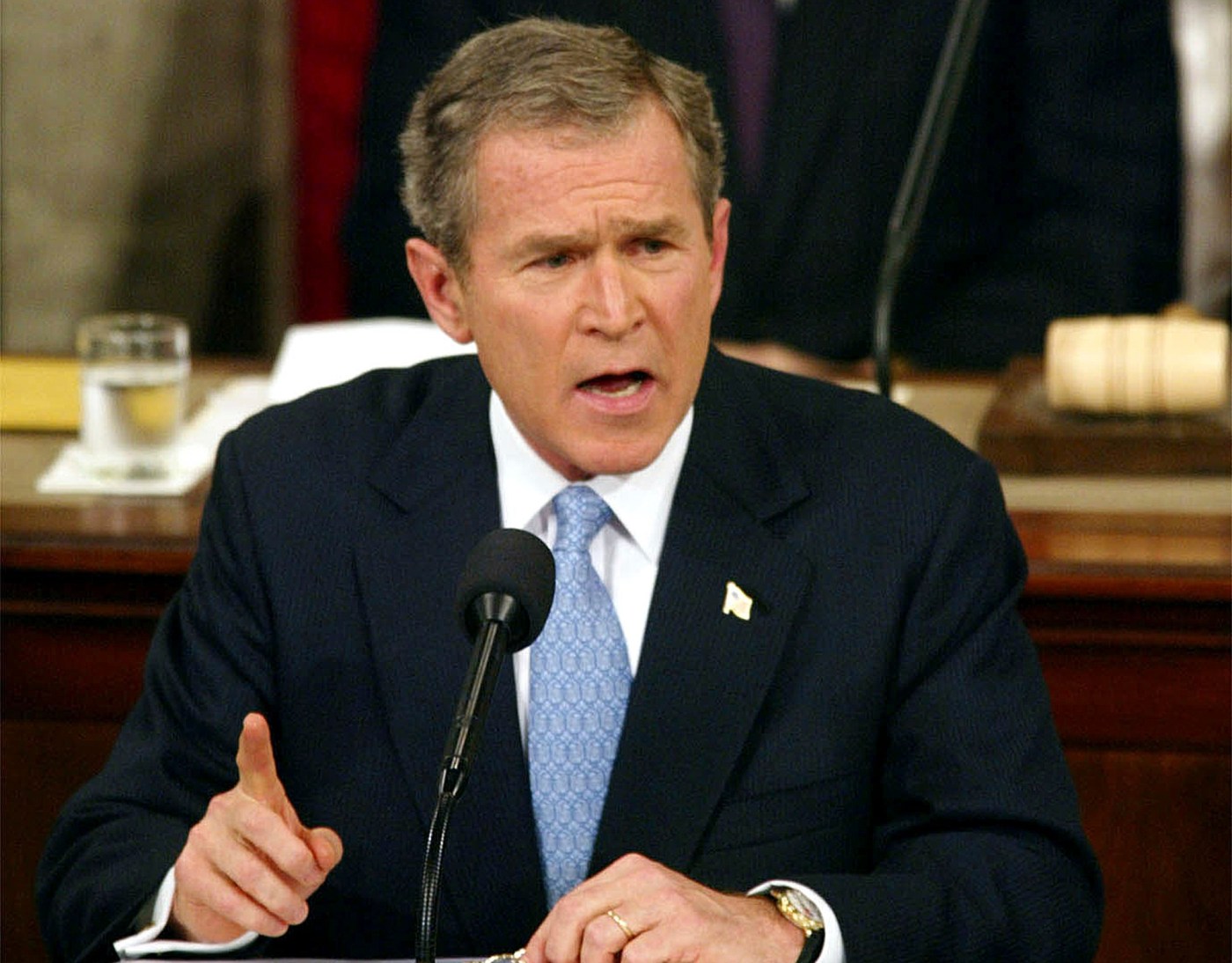
WASHINGTON (AP) — The Trump administration has notified Congress that it is taking the first steps to possibly reopen the shuttered U.S. Embassy in Venezuela as it explores restoring relations with the South American country following the U.S. military raid that ousted then-President Nicolás Maduro.

Related Articles


Carney rolls his eyes at US Treasury secretary, telling Trump he meant what he said at Davos


Families of 2 men killed in boat strike sue Trump administration over attack they call ‘unlawful’


What to know about Gregory Bovino, the commander of Trump’s immigration crackdown


Top US trading partners pledged to invest $5 trillion in America. These researchers have doubts.


Trump’s use of AI images pushes new boundaries, further eroding public trust, experts say

In a notice to lawmakers dated Monday and obtained by The Associated Press on Tuesday, the State Department said it was sending in a regular contingent of temporary staffers to conduct “select” diplomatic functions.

It said the staffers would live and work in a temporary facility while the existing embassy compound is brought up to standard. It was shuttered in March, 2019.

“We are writing to notify the committee of the Department of State’s intent to implement a phased approach to potentially resume Embassy Caracas operations,” the department said in separate but identical letters to 10 House and Senate committees.

This is a developing story; check back for updates.

Gophers report $2.4 million surplus due to Big Ten revenue jump

posted in: All news | 0

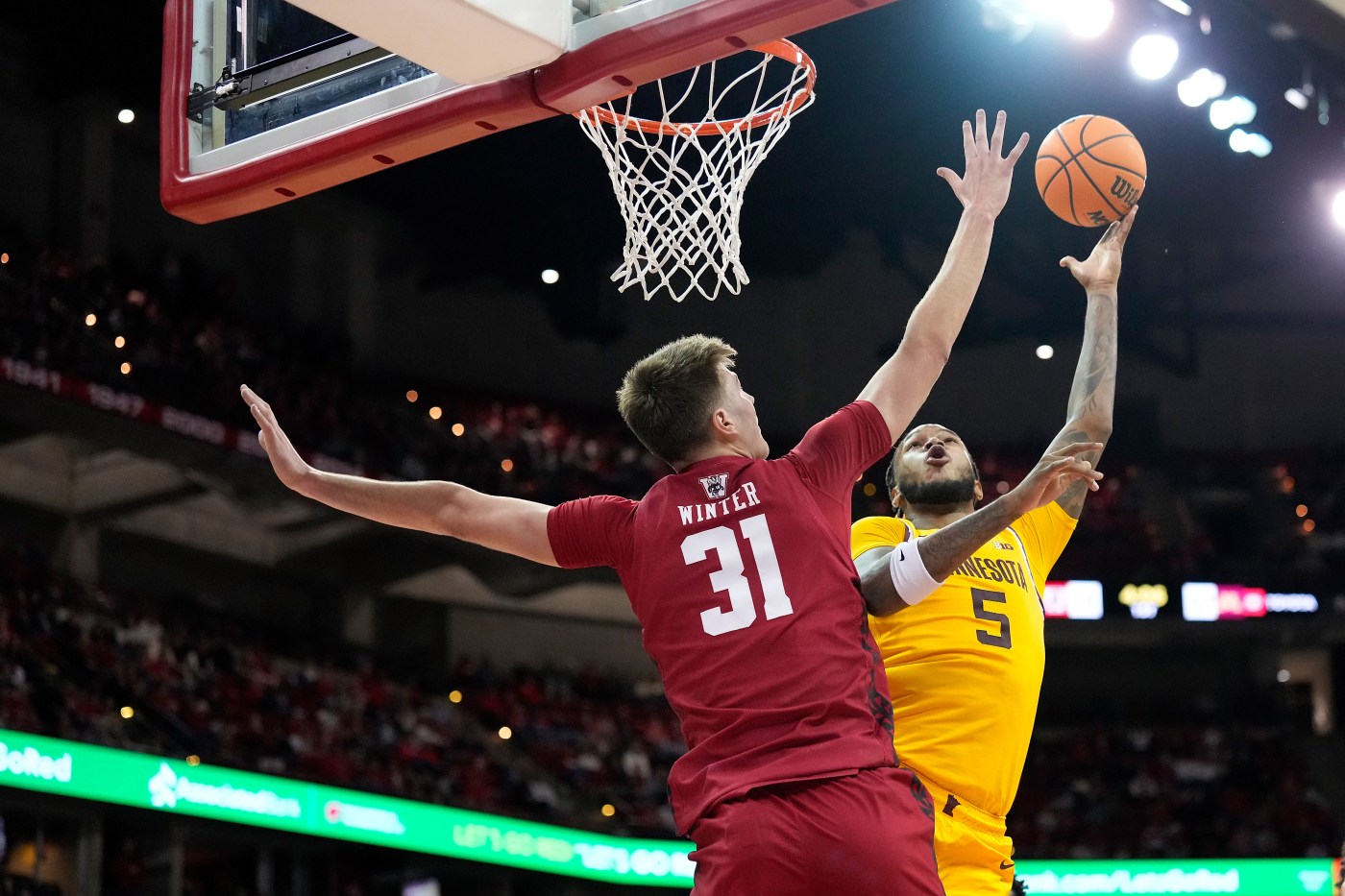
The Gophers athletics department reported a $2.4 million surplus for fiscal year 2025, according to U documents made public this month. That seems likely to change for fiscal 2026.

The University of Minnesota reported $163.6 million in revenue and $161.2 in expenses for last year, but the 2025 fiscal year didn’t include the combined $20.5 million the school began paying student-athletes for the 2025-26 school year. With that on the books, the Gophers told the Board of Regents they forecast a deficit of nearly $9 million.

As part of a Congressional settlement with NCAA athletes, the NCAA began allowing $20.5 million annually that schools can share with student-athletes in addition to the money they can make on Name, Likeness and Image (NIL) deals. According to the recent report, the House Settlement had no financial implications for the 2025 fiscal year.

According to the recent report, there were roughly $10 million increases in revenues and expenses from fiscal year 2024, when the U had a $1.4 million shortfall on $151.1 million on 52.5 million in expenses.

Here are some broad strokes on the budget numbers in the annual report:

Media rights

The Gophers’ revenue from the Big Ten Conference from TV, radio, internet and e-commerce rose from $50.8 million in 2024 to $63 million in 2025.

Football accounted for $56.7 million and men’s basketball for $6.3 million. A year ago, that was $45.8 million for football and $5 million for men’s basketball.

The Big Ten also has increased distributions of bowl-generated revenues from $7.8 to $11.5 million year over year.

Ticket sales

The U reported a decrease of $3.1 million in ticket sales revenue, going from $22.6 million in fiscal year 2024 to $19.5 million in 2025.

Football ticket revenue fell from $14 million in 2024 to $11.6 million in 2025; men’s hockey was at $3.9 million in both fiscal years; and men’s basketball went from $2.3 million to $2.1 million.

Licensing, sponsorships

While revenue from ticket sales have dipped, the accounting pot for licensing agreements, sponsorships, advertisements and royalties has gone up from $11.2 million to $13 million in that same span.

Contributions

The U reported a decrease money given by individuals, corporations and other organizations for the operations of the athletics department. That went from $24.1 to $22.2 million in 2024 to ’25. The amount of in-kind contributions, non-monetary donations of goods or services, decreased from $1.1 million to $7,556.

Institutional support

UMN lists two types of institutional support — direct and indirect — and those two funding sources combined has grown from $9.7 million to $11.4 million in that same span.

Direct support is defined as funds for tuition, federal work study support and endowment income. Indirect is described as administrative services, facilities management, security, risk management and utilities.

The budget spot for “other operating revenues” grew from $5.8 to $7.5 million, while the “other operating expenses” pot has decreased from $6.1 to $4.5 million.

Compensation

The Gophers line items for coaches, support staff and administrative workers’ salaries, benefits and bonuses grew from $58.2 million to $62.8 million. This also includes an $800,000 increase in severance paid.

Related Articles


Men’s basketball: Gophers lose again in overtime, 82-74 to Ohio State


Gophers’ 2026 schedule: National champs, a trip to Seattle and an SEC foe


Ranking the Gophers’ top 10 transfer portal additions


Koi Perich is going to Oregon. Where are other Gophers transfers headed?


Ex-Gophers star Koi Perich commits to Oregon over Texas Tech

Tourism in Cuba plummets as tensions with US increase and Venezuela oil shipments drop

posted in: All news | 0

By DÁNICA COTO, Associated Press

HAVANA (AP) — It’s almost noon in Havana when a handful of tourists tumble out of a small yellow bus and rush toward a row of shiny classic cars, cameras in hand.

Nearby, under the shade of a beach almond tree, a group of drivers jump to their feet, some hoping for their first customer of the day.

But the tourists take a couple of quick selfies in front of brightly colored cars ranging from a 1950 Pontiac to a 1960 Buick and walk away.

“This is grim,” said Reymundo Aldama, who drives a bubblegum pink 1957 convertible Ford Fairlane. “We’re waiting for them to come, we’re waiting for work.”

Tourists traverse a street in Havana, Monday, Jan. 26, 2026. (AP Photo/Ramon Espinosa)

Tourism in Cuba is plummeting at a time when the island desperately needs that revenue, with the number of visitors dropping by more than half since 2018. For almost two decades, a steady stream of visitors sparked a boom in tourism, only for the COVID-19 pandemic and severe blackouts to hit, coupled with increased U.S. sanctions.

Now, Cubans whose livelihood depends on tourism are among those suffering the most as the island braces for what experts warn could be a catastrophic economic crisis following a disruption in oil shipments from Venezuela after the U.S. attacked the South American country and arrested its president.

The situation is already acute for Rosbel Figueredo Ricardo, 30, who sells a popular Cuban street food known as “chivirico,” fried flour chips sprinkled with sugar.

He used to load 150 bags of chips every morning onto a plastic tray he balances on his shoulder and sell out by late afternoon. Nowadays, he only loads 50 bags a day, works from dawn until nighttime and sometimes doesn’t sell a single bag.

“I’m a mid-level industrial mechanical technician, and look at me here,” he said.

Figueredo has a partner and three children, with a fourth one on the way, so he frets.

“This is our day-to-day, so we can eat,” he said.

On a recent afternoon, unable to find any tourists near Havana’s famed seawall, he walked toward the Spanish embassy, hoping that some of the dozens of Cubans who line up daily seeking a visa to leave the island will buy from him.

A taxi drives customers in Havana, Monday, Jan. 26, 2026. (AP Photo/Ramon Espinosa)

‘A brutal drop’

For decades, tourism generated up to $3 billion a year for Cuba.

Visitors would pack into restaurants, crowd along Havana’s seawall and gather at imposing monuments and state buildings. The constant flow of passengers boosted employment and led to the opening of hundreds of small businesses including hostels and restaurants.

Nowadays, the seawall is dotted mostly with Cuban couples or fishermen hoping to catch their next meal.

Nearby, tablecloths at empty seaside restaurants flutter in the wind while employees clutch menus and scan the horizon for customers that never arrive.

Some 2.3 million tourists visited Cuba from January to November 2025, significantly lower than the 4.8 million in 2018 and the 4.2 million in 2019, before the pandemic hit.

Some Cubans worry that growing tensions between the U.S. and Cuba, cuts in water and power supply and large piles of garbage in popular tourist areas have spooked visitors.

The dramatic drop in tourists hits especially hard because U.S. sanctions stripped Cuba of nearly $8 billion in revenue from March 2024 to February 2025, a loss that is nearly 50% higher compared with the previous period, according to government statistics.

On a recent afternoon, only three people boarded a double-decker tourism bus driven by Gaspar Biart.

He’s been driving for 16 years and recalled with a small smile how crowded buses would get.

“There’s been a huge change,” he said, noting that sanctions imposed by U.S. President Donald Trump have closed Cuba’s doors. “We can’t even breathe.”

Soldiers dressed in historical uniforms fire a cannon during a nightly ceremony at San Carlos de la Cabaña Fortress in Havana, Monday, Jan. 26, 2026. (AP Photo/Ramon Espinosa)

When tourism was booming and petroleum was flowing, eight double-decker sightseeing buses would make three trips a day across Havana. Now, there are only four, and most are largely empty when they take off, Biart said

“What we’re missing are customers,” he said. “That’s what all Cubans want…Tourism is a driving force for a country’s economy.”

Long lines used to form near the rows of classic cars awaiting passengers. There was so much demand that sometimes tourists would have to take whatever car was available, not the make and model they preferred.

Aldama, who drives a classic car, recalled how he would sometimes work until 9 p.m. Nowadays, he’s lucky if he takes one or two tourists for a spin in a day.

He blames Trump, who in June 2019 banned cruise ships from visiting Cuba, one of the most popular forms of travel to the island.

That led to what Aldama described as “a brutal drop” in tourists that he says has worsened in the past six months.

He used to charge $50 for a drive around the capital. Now, given the lack of demand, he has lowered his price to $25 and even $20 if a tourist insists on bartering.

“The day that we run out of fuel, we’ll stop driving and look for another job,” Aldama said. “There’s no other choice.”

Related Articles


Activists say Iran’s crackdown has killed at least 6,159 people, as the country’s currency plunges


Carney rolls his eyes at US Treasury secretary, telling Trump he meant what he said at Davos


Families of 2 men killed in boat strike sue Trump administration over attack they call ‘unlawful’


Iran-backed militias in Iraq and Yemen threaten new attacks as US aircraft carrier arrives


World pauses to commemorate International Holocaust Remembrance Day

‘Political craziness’

On a recent sunny afternoon, Vincent Seigi of Russia relaxed on a wooden bench and faced the deep blue sea and Cuba’s imposing Morro Castle built during the colonial era.

He scraped the white fleshy meat off several coconuts along with two friends.

He had only been in Cuba for two days.

“I expected it to be a little bit chaotic, not so maybe tourist friendly because of the complicated economic situation,” he said. “It’s kind of like time is a bit stopped here.”

Seigi said he wasn’t worried about the chronic blackouts and garbage galore but said it was strange not having a mobile connection.

He worried that what he was observing in Cuba could soon happen in Russia.

“Politics is not great, to say it lightly,” he said. “We have many sanctions already because of political craziness.”

With Venezuela, Cuba’s strongest political and economic ally vanished for now, some wonder whether China or Russia would step in.

“I think our country now is only able to provide rhetorical help,” he said, like making statements that the U.S. is bad for Cuba. He added that he doesn’t believe Russia has any resources to offer and that it’s struggling already to win the war against Ukraine.

Seigi said it felt like some Cubans were desperate to make money off tourists, with some selling expensive cigars claiming they came from a festival sponsored by former President Raúl Castro. “So many poor people, sadly,” he said

Meanwhile, Brazilian tourist Gloraci Passos de Carvalho, a teacher, said she had long been curious about Cuba’s political and educational system and was not spooked by the island’s deepening crisis or the ongoing tensions with the U.S.

She said she was struck by Cuba’s welcoming atmosphere, architecture, but above all, its resilience.

“It’s a lesson for people, to survive with less,” she said. “In Brazil we call it making lemonade out of lemons…So I see it in that sense, I see it in a positive light.”

When the Timberwolves defend, they win. The numbers to prove it

posted in: All news | 0

Minnesota beat a severely short-handed Warriors team Monday to snap the Timberwolves’ five-game losing streak. But Wolves coach Chris Finch was quick to point out many of the guys in Monday’s rotation were the ones pouring it on Minnesota a day earlier.

They had no such opportunity to do so in the Wolves’ 108-83 victory. Minnesota cut off all air space in the win, as Golden State shot just 35% from the field and 23% from 3-point range while turning the ball over 19 times.

Rudy Gobert was dominant, as was the team-wide gameplan discipline.

“Guys just flying around, covering for each other,” Finch said. “With that group, you just gotta keep closing out, keep containing the ball. And I thought that was better for us.”

It was where it needed to be if Minnesota wants to win games at a high clip. Monday marked the 14th time this season the Wolves have held an opponent to fewer than 106 points per 100 possessions in a game. Minnesota is undefeated in those bouts.

Defense is the ultimate barometer for Timberwolves’ team success. When they defended at a high level on a nightly basis two seasons ago, the end result was 56 victories.

That effort has waxed and waned each of the last two seasons, and the success has been equally inconsistent.

Monday was another reminder of what’s possible on that end of the floor. Minnesota still has the personnel to be an elite defensive team, anchored by the likes of Jaden McDaniels and Gobert.

“It’s a start,” Wolves forward Naz Reid said. “With the urgency we had to have, we had to make the step in the right direction and do what we’re supposed to do.”

“Our activity, our trust set the tone for the guys,” Gobert added. “I thought we did a great job just being physical, running back, communicating and contesting everything.”

Asked what keyed Monday’s defensive turnaround, Finch responded: “Desperation, of course.”

It’s easier to muster up effort and energy when you desperately need a victory. The Wolves had a lengthy team chat after Sunday’s blowout loss to Golden State. It was nearly an expectation they’d respond a day later.

A speech or circumstance may be a motivator for a game or two. But it’s not a long-term solution.

“This needs to be something that is a night in and night out thing where you play with energy,” Wolves guard Donte DiVincenzo said. “You’re going to miss shots. You’re going to turn the ball over. You’re going to have lapses. But a team to just come in and play harder than us, that’s not acceptable. And that is the collective thought  process of what we got out of this. We have the talent. We have the Xs and Os, we have the coaching, we have everything we need, but we need to play hard and, top to bottom, you need to come out there and play with energy at all times.”

Truthfully, that’s not easy. Eighty-two game seasons are long. Reid described the current stretch of the campaign as “the dog days” for everyone across the league. But he noted Minnesota has to push through it and find itself again as a team.

The good news for the Wolves is they know what that optimal identity is – a ferocious defensive collective that makes opponents work for everything on the floor. It’s not what’s sexy. Gobert noted you’re far more likely to get recognized for the number of points you score. It’s why he thinks defense does so frequently slip across the league.

But it’s what wins.

Minnesota is 26-8 this season when holding opponents south of 118 points per 100 possessions in games, and 2-11 when it doesn’t. In wins this year, the Wolves’ defensive rating is 106.3. In losses, that number plummets to 120.5.

“I think hopefully we realize that this is what we need to hang our hat on. That’s what we need to bring every single night. If we bring that every single night, good things happen,” Gobert said. “We might not play great all the time, we might not make shots all the time. But if we bring that level of urgency, that level of intensity defensively, starting from, obviously, the leaders down to everybody else, we’re a great team.”

It looked like Minnesota remembered as much Monday. But is that mentality now here to stay?

“This team forgets a lot of things,” Finch said. “We’ll go through moods, and everything starts at the defensive end.”

Related Articles


Bones Hyland makes case for himself as Timberwolves eye trade deadline


Takeaways: Timberwolves snap 5-game losing streak with win over short-handed Warriors


How Sam Darnold ‘shut a lot of people up’ by leading Seahawks to Super Bowl


Frederick: Timberwolves wanted to provide joy Sunday. There was none to be found in somber arena


Warriors overwhelm Timberwolves