Judge orders ICE chief to appear in court to explain why detainees have been denied due process

posted in: All news | 0

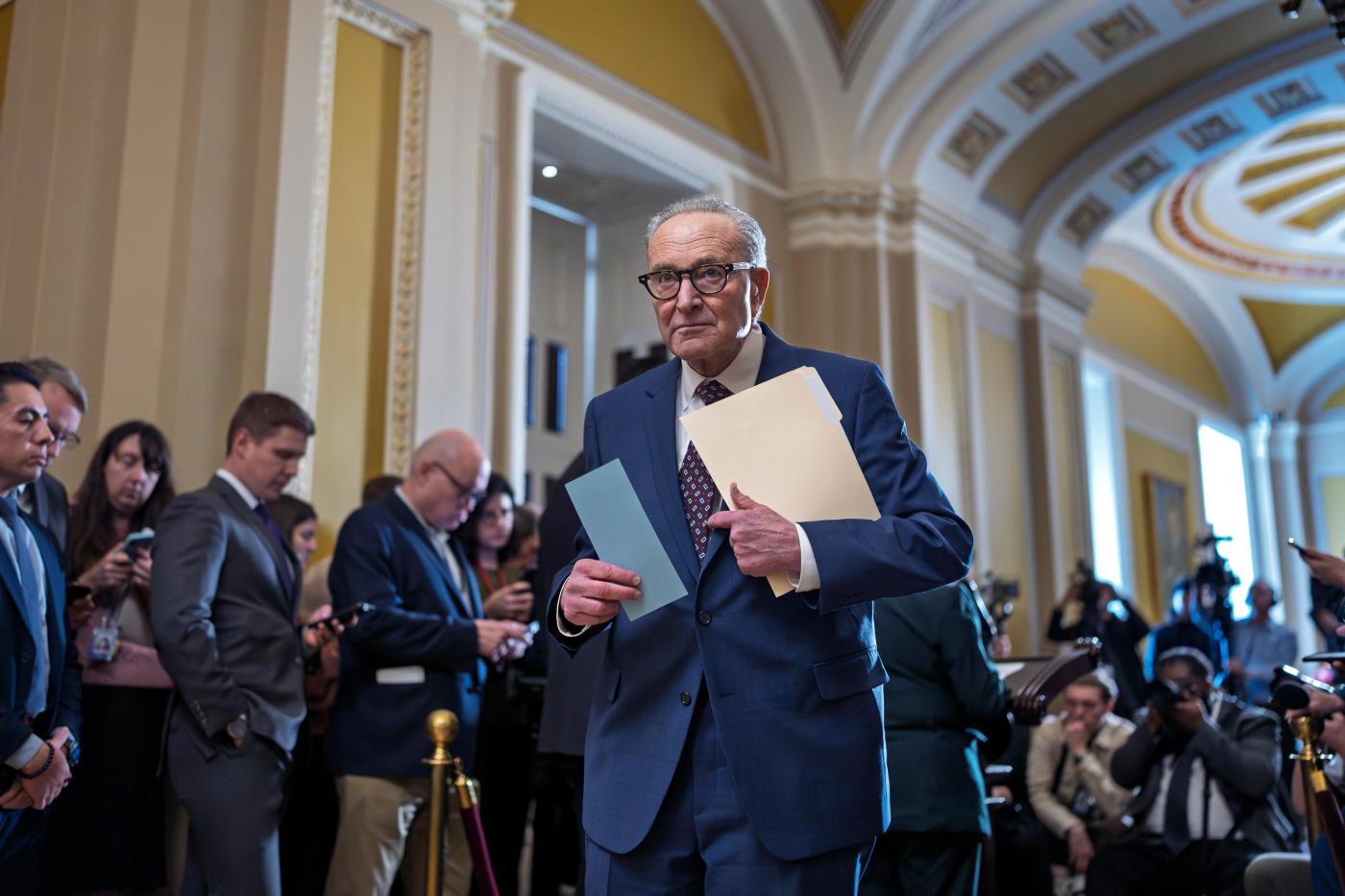
The chief federal judge in Minnesota says the Trump administration has failed to comply with orders to hold hearings for detained immigrants and ordered the head of Immigration and Customs Enforcement to appear before him Friday to explain why he shouldn’t be held in contempt.

In an order dated Monday, Chief Judge Patrick J. Schiltz said Todd Lyons, the acting director of ICE, must appear personally in court. Schlitz took the administration to task over its handling of bond hearings for immigrants it has detained.

“This Court has been extremely patient with respondents, even though respondents decided to send thousands of agents to Minnesota to detain aliens without making any provision for dealing with the hundreds of habeas petitions and other lawsuits that were sure to result,” the judge wrote.

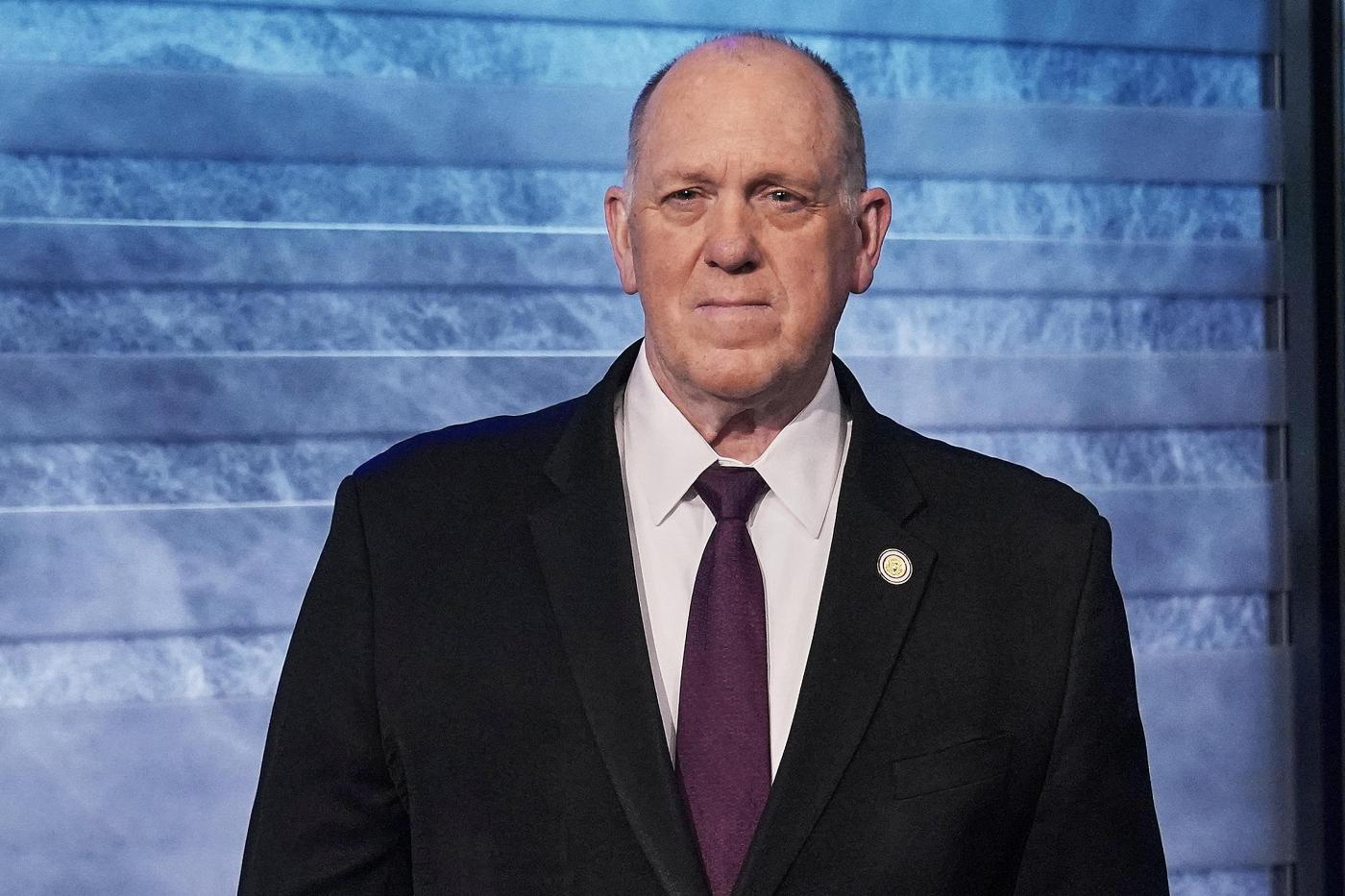
The order comes a day after President Donald Trump ordered border czar Tom Homan to take over his administration’s immigration crackdown in Minnesota following the second death this month of person at the hands of an immigration law enforcement officer.

Messages were sent Tuesday to ICE and a DHS spokesperson seeking a response.

“Respondents have continually assured the Court that they recognize their obligation to comply with Court orders, and that they have taken steps to ensure that those orders will be honored going forward,” Schlitz continued in the order. “Unfortunately, though, the violations continue.”

The judge said he recognizes that ordering the head of a federal agency to appear personally was extraordinary. “But the extent of ICE’s violation of court orders is likewise extraordinary, and lesser measures have been tried and failed,” Schlitz wrote.

Schlitz’s order lists the petitioner by first name and last initials: Juan T.R. It says the court granted a petition on Jan. 14 from the person to provide him with a bond hearing within seven days. On Jan. 23, the person’s lawyers told the court the petitioner remained detained.

The order says Schlitz will cancel Lyons’ appearance if the petitioner is released from custody.

___

Catalini reported from Trenton, New Jersey.

Related Articles


In Minneapolis, memorial continues to grow for Alex Pretti, nurse killed by federal officers


The shootings in Minneapolis are upending the politics of immigration in Congress


MN prisons say many fed ‘arrests’ are routine transfers to ICE


Who are the 3 charged in St. Paul church protest? St. Paul school board member, civil rights attorney, social media personality


Federal judge hears arguments over lawsuit to end immigration action

In Minneapolis, memorial continues to grow for Alex Pretti, nurse killed by federal officers

posted in: All news | 0

A sprawling memorial to Alex Pretti, the 37-year-old intensive care nurse killed by federal immigration officers Jan. 24, continues to grow in South Minneapolis.

People pay respects to Alex Pretti at a memorial to him on Nicollet Avenue in Minneapolis on Sunday, Jan. 25, 2026. Pretti, 37, an intensive care nurse at the Veterans Administration hospital, was killed by federal agents on Saturday. (John Autey / Pioneer Press)

The site where Pretti was killed, on Nicollet Avenue near 26th Street, was decorated with hundreds of pillar and votive candles and dozens of flower bouquets and signs left by neighbors and mourners by midday Monday. At the center, Pretti’s name was spelled out in pinecones, one of the first parts of the memorial to take shape late afternoon on Jan. 24 once federal agents had left the neighborhood.

Vigils for Pretti took place Saturday and Sunday evenings at the site, as well as in other neighborhood parks throughout the Twin Cities. At about 6 p.m. Jan. 25, some 150 attendees gathered to sing “Amazing Grace,” “Lean on Me,” and other songs. Neighbors handed out hand warmers, water and other snacks and chanted, “This is what community looks like.”

“Nurse Alex — thank you for your compassion and love toward everyone you have cared for,” read one sign at the memorial Monday.

“The beauty of the world lies in the diversity of its people. RIP Alex Pretti. RIP Renee Good,” one sign read, referring to another Minneapolis resident, a 37-year-old mother, fatally shot by federal agents earlier in the month.

Traffic access to the 2600 block of Nicollet Avenue, which had been closed Saturday and Sunday, resumed Monday.

By 1 p.m. Jan. 24, some four hours after the shooting, the scene itself had largely been cleared save for police tape loosely wrapped around some garbage bins and lampposts. The Minnesota Bureau of Criminal Apprehension said it had been blocked earlier in the day from accessing the scene by federal officials, and ongoing disputes remain between federal and local officials around handling evidence.

People pay respects to Alex Pretti at a memorial to him on Nicollet Avenue in Minneapolis on Sunday, Jan. 25, 2026. Pretti, 37, an intensive care nurse at the Veterans Administration hospital, was killed by federal agents on Saturday. (John Autey / Pioneer Press)

Pretti was shot while agents were evidently seeking to detain a man, Jose Huerta-Chuma, whom Border Patrol Commander Greg Bovino said had an extensive criminal record including domestic assault. However, the Minnesota Department of Corrections said their records only show misdemeanor-level traffic offenses from more than a decade ago, and that federal agents had briefly detained but released Huerta-Chuma in 2018, during Donald Trump’s first term.

The shooting took place in the heart of the Eat Street restaurant district in Minneapolis’s particularly diverse Whittier neighborhood, where about half the 14,000 residents were people of color as of 2022, according to the city’s demographics data.

Long-running German restaurant Black Forest Inn closed Saturday but opened Sunday and Monday as a community space, offering free coffee and soup as well as an escape from the cold weather.

Banh mi shop Lu’s Sandwiches and Greek restaurant Christos both closed over the weekend but reopened Monday. Good Grocer, a nonprofit volunteer-run grocery store, is hosting “a moment of healing with our neighbors” from 10 a.m. to 1 p.m. Jan. 28 with music, art and snacks.

Glam Doll Donuts, a bakery directly across from the site, opened for limited hours Sunday and announced it would close Monday and Tuesday.

“The experience we had yesterday will haunt us all for life,” owners wrote on social media. “Our love to (Pretti’s) family, friends and community is immeasurable.”

A grilled cheese sandwich, a cup of hot chocolate and a bowl of tomato soup rest among dozens of candles at a memorial to Alex Pretti on Nicollet Avenue in Minneapolis on Sunday, Jan. 25, 2026. Pretti, 37, an intensive care nurse at the Veterans Administration hospital, was killed by federal agents on Saturday. (John Autey / Pioneer Press)

Related Articles


MN prisons say many fed ‘arrests’ are routine transfers to ICE


Who are the 3 charged in St. Paul church protest? St. Paul school board member, civil rights attorney, social media personality


The Zac Brown Band will headline Target Center in October


Anti-ICE protesters clash with federal agents at Minneapolis hotel


Thomas Friedman: Minneapolis and Gaza now share some of the same violent language

In Texas Cities, Let a Hundred Mamdanis Bloom

posted in: All news | 0

The ascent of Zohran Mamdani, a 34-year-old socialist Muslim, to New York City’s mayoralty once seemed an almost absurdist dream. Yet, propelled by an army of 100,000 volunteers who took on the city’s political machine from below, the question now is not whether someone like Mamdani can win but whether his victory can carry beyond the borders of the Big Apple. 

Here in Texas, to the Republicans and the billionaires whose power they entrench, the prospect of the Lone Star State being swept up in a similarly insurgent candidacy still sounds like its own far-fetched fantasy. Perhaps fearful that movements here might recover our state’s buried but rich left-populist past, the GOP has spent decades building fail-safes against the emergence of grassroots power anywhere under these big blue skies. 

Indeed, it would be implausible to say that Mamdani’s municipal victory bears directly on our infamously repressive state as an abstract unit. But Texas and the State of Texas are not exactly one—this sprawling place we call home contains five of the 15 most-populous cities in the country. All lean to the left, all see their power currently suppressed, and all are where the lessons of Mamdani can apply.

I have spent more than 10 years organizing in localities across this great state, participating in grassroots issue campaigns, labor union drives, voter registration and turnout efforts, and multiple legislative sessions. I’ve come to know hundreds of community organizers, from Denton to the Rio Grande Valley and everywhere in between. I’m a co-founder of a statewide nonprofit, and I’ve co-chaired a Democratic Socialists of America (DSA) chapter. More than mere credentialing, I share this background so you’ll know my optimism has survived the trenches—and to explain how I know there is a Texas Left out there waiting to be cohered, a disjointed chorus that could one day speak as one.

What Mamdani’s victory reveals for me, once stripped of novelty, is not really a suspension of political gravity but an alignment with forces that were waiting for the opportunity. Electoral success followed social organization. The campaign operated squarely inside a Democratic primary while rejecting the assumption that party politics must be donor-driven, consultant-managed, or ideologically thin. Independent organizations stepped into roles once filled by mass parties. Tenant unions, labor locals, socialist chapters of the DSA, and community groups built a base, trained leaders, disciplined messaging, and turned people out at scale. The formal party remained hollow; the social party did not.

This distinction matters because Texas Democrats have been attempting the inverse maneuver for a generation: trying to win elections without taking into account the eroded civic foundations of the state.

The last time Democrats won statewide office in Texas was 1994. That year coincides closely with an important index of organizational power: peak union density in the state. Since then, union membership has declined, along with one of the few remaining sites where ordinary people routinely practice collective decision-making. Unions do not simply bargain wages and benefits. They’re democracy in practice. When this erodes, campaigns lose their most reliable partners and are forced into a position of paltry substitution: mere messaging for the credible threat of deep organization.

Even the still-too-rare candidates who adopt a populist bent in their speeches can get only halfway there—naming Texas hardships but missing the link with organizations undertaking class formation to call upon. Calls to “get involved” are too vague. We need candidates who implore voters to form unions, who can teach the hows and whys of that process, precisely because they see themselves as organizers bound to a theory of change and not just as leaders pursuing their own ascent.

Texas is not truly devoid of forces like the tenant organizers and taxi drivers’ union of New York; they’re at work now, often in isolation from electoral politics. Starbucks workers striking across the state. Unite Here members walking out of Hilton hotels in Houston. Airport workers in the DFW region picketing for higher pay. Alongside them, community organizations are fighting against everything from omnipresent debt traps and predatory fines to voter intimidation and language exclusion. These are not sideshows of the Texas political scene, distractions from turning the state blue. They’re the nerve endings of Texans’ shared experience, yet they pass through election cycles largely unacknowledged.

This frequent gap between organizers and candidates sharpens into a set of questions that Mamdani’s victory makes salient: Do Texas candidates regularly embrace these fights as their own? Who has treated them as the base of a campaign rather than as background noise? Who has said plainly that winning office means carrying these struggles forward, co-planned the actions, and even engaged in civil disobedience? 

The stakes of these questions could hardly be higher. We lead the nation in the share of residents without health insurance. After the state’s abortion ban took effect, hospitals reported sharp increases in severe pregnancy complications. These are not marginal injustices. They are life in Texas, and they demand a different politics than that offered by most of the state’s fleeting Democratic stars.

In reorienting the left politics of this state, we need to learn to use our history, as Mamdani did in hearkening back to his city’s earlier struggles over housing, labor, and public provision. Texas campaigns often shy away from this, yet our state has a deep and usable political history.

“Red Tom” Hickey gave Texas socialism a public voice through journalism and agitation when class politics still carried mass meaning. Emma Tenayuca helped lead the 1938 pecan shellers’ strike in my hometown of San Antonio, organizing thousands of Mexican-American women against starvation wages and brutal conditions. Jovita Idar used journalism and organizing along the border to confront segregation and build institutions for Mexican-American dignity. La Raza Unida Party and San Antonio’s Committee for Barrio Betterment demonstrate that independent political vehicles have been built when existing parties refused representation. Barbara Jordan and Ann Richards stand as reminders that movement pressure has, at moments, translated into governing power without surrendering moral clarity.

This historical reframing is especially crucial here. As Mamdani showed, you must love a place to lead it—and so you must love its story, yet Texas mythmaking has long reinforced the state’s reactionary spirit despite its long history of insurgence.

Mamdani’s strategy artfully mined New York City’s complexity, past and present, its richness and its diversity. People did not come together because they shared one identity. They came together because they were all trying, and often failing, to make ends meet as New Yorkers. Texas cities live inside the same reality. People may worship in different buildings and speak different languages, but they shop at the same grocery stores, ride the same buses, and open the same overdue bills. 

The lesson worth carrying forward is not necessarily, then, about a city or a candidate but about what might be called syncretism. Mamdani’s campaign made clear that unlikely victories are built by bringing together things that are usually still avoided in mainstream politics. Texas politics has been organized to frustrate efforts at getting those same elements to ever meet. Union-busting, zealous preemption, and bootstrap austerity have hollowed out civic life, leaving campaigns and movements each adrift and bereft of one another. The affordability crisis is placed neatly into policy silos instead of being treated as the class war that stands between us and better lives. History is conceded, books are banned, and the grassroots is kept at arm’s length.

And yet the raw material remains: cities full of people facing the same costs, workers organizing against long odds, and a past that shows Texans have fought together before. The idea that a Mamdani-esque politics cannot happen here is not an iron law; it is a disbelief locked in place by power. It will break when candidates truly come from the rank and file and believe, as testified through consistent action, that they will accomplish little unless the ranks behind them grow alongside their electoral wins.

The post In Texas Cities, Let a Hundred Mamdanis Bloom appeared first on The Texas Observer.

Mizutani: If you’re not happy for Sam Darnold, you’re doing it wrong

posted in: All news | 0

It was only 16 months ago that Sam Darnold was in the very early stages of a comeback story made for a Hollywood script. He had just helped lead the Vikings a 28-6 win over the New York Giants at MetLife Stadium in what has proven to be a launching pad for his turnaround.

The location wasn’t insignificant.

It was the same place where he used to play home games after being drafted by the New York Jets, the same place where he was first labeled a bust, and the same place where he almost watched his career go up in flames.

After completing 19 of 24 passes for 208 yards and a pair of touchdowns for the Vikings in the win over the Giants, Darnold was given a chance to respond to everybody that might have doubted him with the Jets.

“Obviously it’s great to be back,” Darnold said with a smile. “It’s been a while since I’ve played here.”

It’s been a similar refrain from Darnold whenever he has been asked about his past. He hasn’t concerned himself with the narratives that have been attached to him every step of the way. He has openly acknowledged the role he’s played in his shortcomings and kept it pushing.

That’s why it should be easy to be happy for Darnold as he prepares for the Super Bowl after finding a forever home with the Seattle Seahawks. The winding road it took for him to get to where he is now would’ve been enough to break most people.

After being thrown away like a piece of garbage by the Jets, Darnold ended up in the middle of disaster with the Carolina Panthers. He found some stability with the San Francisco 49ers and parlayed that into an opportunity that changed his life.

As his success with the Vikings started to become undeniable last season, he refused to throw shade whenever the Jets or the Panthers came up in conversation. He never took the bait. He always took the high road.

In the process, Darnold led the Vikings to a 14-3 record, showing flashes of the generational talent he was supposed to be when the Jets selected with the No. 3 pick in the 2018 NFL Draft. It still wasn’t enough for the Vikings to keep him around long term.

After he came up small in in a loss to the Detroit Lions with the No. 1 seed on the line, then looked overwhelmed in a loss to the Los Angeles Rams in the first round of the playoffs, the Vikings ultimately let Darnold walk out the door in free agency, perhaps feeling that they had reached their ceiling with him at the helm.

The magnitude of that miscalculation doesn’t need to be litigated anymore than it already has been. This isn’t about the Vikings. This is about the franchise quarterback they willingly let slip through their fingertips.

As his success with the Seahawks started to become undeniable this season, he refused to throw shade whenever the Vikings have come up in conversation. He has never taken the bait. He has always taken the high road.

In the process, Darnold led the Seahawks to a 14-3 record, proving his resurgence with the Vikings was far from a fluke. It was actually the tip of the iceberg for everything he could accomplish as the unquestioned leader of a locker room.

That hasn’t stopped the doubters from assuming that Darnold would eventually turn back into a pumpkin. They have constantly claimed he has been carried by a talented roster around him while anxiously awaiting for the other shoe to drop.

That argument went out the window in the NFC Championship Game as Darnold was the straw that stirred the drink for the Seahawks in a 31-27 win over the Rams. He completed 25 of 36 passes for 346 yards and a trio of touchdowns amid a a masterful performance that helped the Seahawks clinch a spot in the Super Bowl.

As he celebrated in the immediate aftermath, Darnold was asked to describe the journey he’s been on to get to this point.

“I haven’t really thought about that much,” Darnold said with a smile. “I take it one day at a time.”

There it is. That mentality that kept him going when nobody believed in him. Now he’s getting ready for the biggest game of his life.

Related Articles


Vikings reportedly lose defensive backs coach Daronte Jones


Paul Allen taking time off after protester comment, releases apology


KFAN’s Paul Allen quiet Sunday after suggesting protest marchers were paid


Charley Walters: J.J. McCarthy will have to beat out a veteran to be the Vikings’ QB in 2026


Steelers and Mike McCarthy reach verbal agreement, likely securing Flores’ return to Vikings