After one month, how is Minnesota paid leave holding up?

posted in: All news | 0

Minnesota’s new paid family and medical leave program is off to a steady start, with more than $30 million in payments and 13,700 benefit approvals in its first month, according to data state officials shared Monday.

The 13,700 approvals are slightly above pace for the 130,000 people the Department of Employment and Economic Development expects in the first year. Though the number is boosted in part by early applications for child bonding leave — something known in paid leave circles as a “baby bump.”

That initial bump is expected to even out over time.

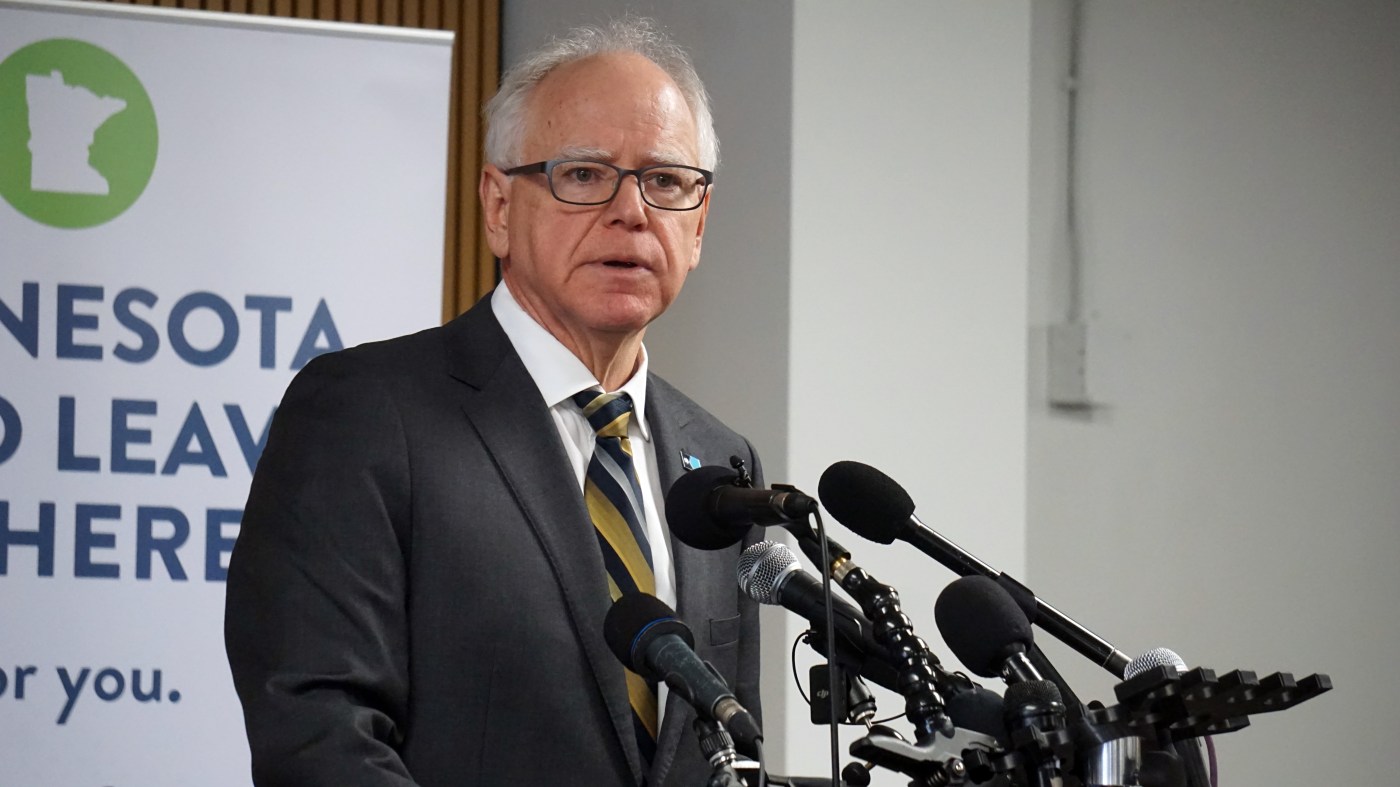
“We’ve seen weekly applications start to trend down over time … in line with experience in other states,” DEED Deputy Commissioner Evan Rowe said in a call with reporters Monday.

Paid family and medical leave was approved by the Democratic-Farmer-Labor-controlled Legislature in 2023. It officially launched Jan. 1 and is the 13th state program of its kind. Applications for bonding leave opened in November, inflating the first month’s numbers, according to DEED, which is tasked with running the program.

About 4,500 of the approved applications were from the soft launch in November and December of 2025. The total number of applications from January that got state approval was closer to 9,200 though there are still pending applications for that month.

How it works, how much is it expected to cost?

The new paid leave benefit requires most employers to offer employees 12 weeks of family leave and 12 weeks of medical leave. Annual time off will be capped at 20 weeks. Events like having a child, a serious illness, or caring for a sick family member are eligible for coverage.

It’s expected to cost Minnesota around $1.6 billion in its first year and is covered by a 0.88% payroll tax split between employers and employees. Asked Monday how long that rate would stand, DEED officials said that would depend on an actuarial analysis expected in the coming months.

The state will have to send employers updated premium rates by July 31, so there will need to be an official estimate before then, Rowe said.

The maximum benefit payout is $1,432 per week — roughly the average wage in Minnesota. The average weekly payout for approved leave in January was around $1,132 per week, according to DEED.

The first round of payments was scheduled to start on Jan. 12. Close to 3,000 Minnesotans received payments in the first round.

Applications

So far, the state has received 38,000 paid leave applications and made more than 21,000 approvals, denials and cancellations. Phone wait times for paid leave assistance remained under 5 minutes, according to DEED officials.

Rejections for paid leave applications were largely due to employees already having access to a similar benefit through their employer, state officials said. Other reasons for rejection included a lack of proper documents.

So far, most leave requests have been for bonding with a child — around 48%. Medical leave was at 41% for the first month and continues to grow, according to Rowe. In the coming months, that proportion likely will continue its climb.

The remainder of approved leave requests broke down as follows — 10% was leave to care for a relative or loved one, and less than 1% each for military and personal safety-related issues.

Average leave durations parental bonding were for nine weeks, medical leaves for six and a half weeks and care for relatives six weeks.

Other types of leave, such as for military service or personal safety did not have enough applicants to show meaningful trends in January, according to DEED.

Fraudulent claims

There have been some attempts at fraud in the program in its first month, Rowe said. Though it may be too early to demonstrate any significant vulnerabilities to the system.

DEED has forwarded possible fraud cases to the Minnesota Bureau of Criminal Apprehension. State officials did not have a number of fraud attempts or details about any particular cases on Monday, though Rowe said some applicants had attempted to supply false information in order to obtain benefits.

Minnesota paid leave requires significant levels of verification for an applicant to qualify for payments.

DEED uses existing data from Minnesota’s unemployment insurance program, which has a strong reputation for fraud prevention, to identify and lock accounts suspected of being compromised by hackers or impostors.

To access benefits

To access benefits, applicants must submit identification and take a photo of themselves to sign up through an online platform called LoginMN, a centralized sign-in site for state services. All claims must be certified by a health care provider or other appropriate professional.

A team with access to data analytics to spot overall trends in the paid leave system will review claims. Minnesota will be the first state to integrate electronic health records into its paid leave system. The state will also conduct random audits of claims.

State officials in November said they expect cybercrime and identity theft to be among the main forms of fraud they’ll face. But they’ll also need to ensure applicants are telling the truth on claims. Multiple points of validation will help combat dishonest applicants, Rowe told lawmakers at the time.

Related Articles


Burnsville takes new approach to implement affordable housing programs


Audit: Changing procedures may safeguard $1 billion in MN Medicaid programs


Greater Minnesota cities ask lawmakers to invest in ‘the basics’ as hot-button issues loom


MN governor hopeful Lisa Demuth focuses on fraud while visiting Moorhead


DFL wins in St. Paul, Woodbury special elections. MN House remains tied

Catherine O’Hara died from a pulmonary embolism. Cancer was the underlying cause

posted in: All news | 0

By ANDREW DALTON

LOS ANGELES (AP) — Catherine O’Hara died from a pulmonary embolism, with cancer as the underlying cause.

Related Articles


Person is shot in a high school in Maryland and a suspect is in custody, police say


Trump’s immigration crackdown is straining federal courts. Judges are raising the alarm


US military boards sanctioned oil tanker in the Indian Ocean after pursuit from the Caribbean


Trial against Meta in New Mexico focuses on dangers of child sexual exploitation on social media


New video footage released from day of the fatal Brown University shooting

A Los Angeles County death certificate issued Monday lists the pulmonary embolism, which occurs when a blood clot blocks an artery in the lungs, as the immediate cause of the actor’s Jan. 30 death at age 71. Rectal cancer was the long-term cause.

The oncologist who signed off on the certificate indicated that he had been treating O’Hara since March of last year, and last saw her on Jan. 27. She died at a hospital in Santa Monica, California.

The beloved Canadian-born comic actor and “SCTV” alum starred as Macaulay Culkin’s mother in two “Home Alone” movies and won an Emmy as the dramatically oblivious wealthy matriarch Moira Rose in “Schitt’s Creek.”

Her death was a surprise to most, and an initial statement from her representatives said only that she died “following a brief illness.”

Collaborators including Culkin, Christopher Guest, Eugene Levy and Pedro Pascal paid her loving tribute after her death.

The document said she was cremated. It lists her profession as “actress” and her business as movies. It said she practiced her trade for 50 years.

Person is shot in a high school in Maryland and a suspect is in custody, police say

posted in: All news | 0

ROCKVILLE, Md. (AP) — One person was shot inside a high school in Maryland on Monday as police said that a person was in custody and the school’s campus was on lockdown.

Related Articles


Catherine O’Hara died from a pulmonary embolism. Cancer was the underlying cause


Trump’s immigration crackdown is straining federal courts. Judges are raising the alarm


US military boards sanctioned oil tanker in the Indian Ocean after pursuit from the Caribbean


Trial against Meta in New Mexico focuses on dangers of child sexual exploitation on social media


New video footage released from day of the fatal Brown University shooting

Police have a person in custody related to the shooting, according to the Montgomery County Department of Police in a post on X.

Officers were dispatched at 2:15 p.m. because of reports of shots fired at Thomas S. Wootton High School in Rockville, a suburb of Washington, D.C., the department said.

“We’re just still in lockdown, the police are here, the kids are all in the classrooms,” said Tabitha Davis, an administrator at the school, who wasn’t able to provide more information in a brief phone interview with The Associated Press.

Rockville is the seat of Montgomery County, Maryland’s most populous.

Governors tackle rising cost of living with relief checks, tax cuts and housing policy

posted in: All news | 0

By GEOFF MULVIHILL, Associated Press

State officials are attempting to address voters’ worries about the rising cost of living, including housing and everyday items such as groceries, utilities and child care.

As governors give their annual state of the state speeches, many of them are designing their messages to speak to constituents’ concerns about affordability.

Because the issue is so broad, there are a lot of things governors can try. But for the same reason, there’s no one policy that’s likely to bridge the gap between stagnated wages and expenses that are growing for many people.

Maine’s Democratic Gov. Janet Mills for example, wants to send $300 relief checks to 725,000 residents. Others are imposing caps on utility hikes or calling for easier ways to build more housing.

FILE – Democratic Gov. Janet Mills delivers her State of the State address, Jan. 30, 2024, at the State House in Augusta, Maine. (AP Photo/Robert F. Bukaty, File)

Affordability is a major concern across US

The idea of improving affordability was at the heart of New York City Mayor Zohran Mamdani’s campaign last year, and it’s resonating nationally.

About half of U.S. adults — 54% — said the cost of groceries was a “major source” of stress in their lives, according to an AP-NORC poll from October. At least 4 in 10 said the cost of housing, their savings, their pay, and the cost of health care were “major” sources of stress in that poll.

AP-NORC polling from December found about 9 in 10 U.S. adults said they had experienced higher prices than usual for groceries in recent months, and about 7 in 10 said that about electricity.

The government’s main measure of inflation shows that average annual prices rose by less than 3% from 2012 until 2021, when prices rose sharply. Since the middle of 2023, annual increases have been hovering around 3% — but price tags are higher than they were before the surge. And some costs — including electricity and housing — have risen faster than the average.

Democrats and Republicans disagree over approach

Republicans have long prioritized tax cuts as a way to give some people relief. Officials in states including Florida, Georgia and North Dakota are aiming to eliminate property taxes for homeowners over time. Kentucky and Mississippi are on long-term paths to get rid of income taxes. Critics of those approaches warn that such moves could increase states’ reliance on sales taxes, which disproportionately affect low-income people.

When President Donald Trump was seeking a return to the White House in 2024, he promised to “make America affordable again” and has recently returned to the theme.

But he’s been critical of the way his political opponents talk about affordability, repeatedly calling it a hoax or scam by Democrats, whom he blames for higher prices.

That made an opening for Democratic governors to criticize the president as out of touch with everyday Americans without uttering his name.

“There are some who have even called affordability a hoax or a con job,” Virginia’s new governor, Abigail Spanberger, said in her address. “And I would invite them to come to Virginia and engage with the families and the business leaders I have met … because the facts tell a different story.”

FILE – California Gov. Gavin Newsom reacts during a news conference in Wasco, Calif., Tuesday, Feb. 3, 2026. (AP Photo/Damian Dovarganes, File)

Housing may be the biggest affordability factor

California Gov. Gavin Newsom, Massachusetts Gov. Maura Healey and Arizona Gov. Katie Hobbs, all Democrats, have called for multiprong approaches to affordability with a focus on housing.

In her state of the commonwealth speech last month, Healey called for converting empty offices into apartments and using government-owned property to build housing. Hobbs proposed charging a nightly fee on vacation rentals and using the money it generates to help families with housing and utility costs. Newsom told lawmakers they should pass a law to stop institutional investors from buying homes in bulk.

Francis Torres, director of housing and infrastructure projects at the Bipartisan Policy Center, said that some of the most sweeping actions don’t immediately lead to new housing. “There’s a difference between legalizing housing on paper and the housing actually being built,” he said. And that’s a reason that officials are also trying to offer support with down payments and other methods intended to help in the meantime.

Trump has argued for policies to keep the value of housing high — which protects current homeowners but hurts many renters and people looking to buy their first home.

FILE – U.S. Sen. Mike Braun, R-Ind., announces his run for Indiana governor on Dec. 12, 2022, in Indianapolis. (AP Photo/Michael Conroy, File)

Governors pay attention to rising utility costs

In New Jersey, utility rates were a big part of the conversation in last year’s governor race. When Democrat Mikie Sherrill was sworn in in January, she immediately signed two executive orders: one to freeze utility rates and another aimed at establishing more electricity production, including solar and nuclear power.

Indiana Republican Gov. Mike Braun is supporting a measure that wouldn’t allow investor-owned utilities to increase their profit margins unless they provide customers with affordable energy.

Healey, who is running for reelection this year, announced in her January state of the state speech that all customers’ electric bills would be reduced by 25% and gas bills by 10% in February and March. Part of the electric reduction is to come from a fund that would otherwise pay for clean energy and efficiency projects. Utilities agreed to the rest of the reductions.

Related Articles


Trump’s immigration crackdown is straining federal courts. Judges are raising the alarm


US snowboard star Chloe Kim calls for unity after Trump bashes teammate over immigrant crackdown


Ghislaine Maxwell appeals for clemency from Trump as she declines to answer questions from lawmakers


Vance is in Armenia, a country no sitting US president or vice president has visited before


Masks emerge as symbol of Trump’s ICE crackdown and a flashpoint in Congress

Other approaches include income taxes and higher wages

In Washington state, Democratic Gov. Bob Ferguson, is calling for an income tax on those who make over $1 million a year — in a state that now has no income taxes.

He’s framing it as a way to help other Washington residents with their expenses — by using some of the revenue to pay for an expanded tax credit for working families and to give small business owners a tax break.

Indiana’s Braun said the key to affordability is attracting more and higher-wage jobs to the state, something he said has been happening already, pointing to hourly earnings that grew faster than the national average last year.

In Rhode Island, Democratic Gov. Daniel McKee this month unveiled what he calls an “Affordability for All” agenda that leans heavily on tax policy and includes creating a refundable child tax credit, lowering taxes on gasoline and eliminating them on Social Security, as most states already have.

Associated Press journalists Michael Casey and Linley Sanders contributed to this article.