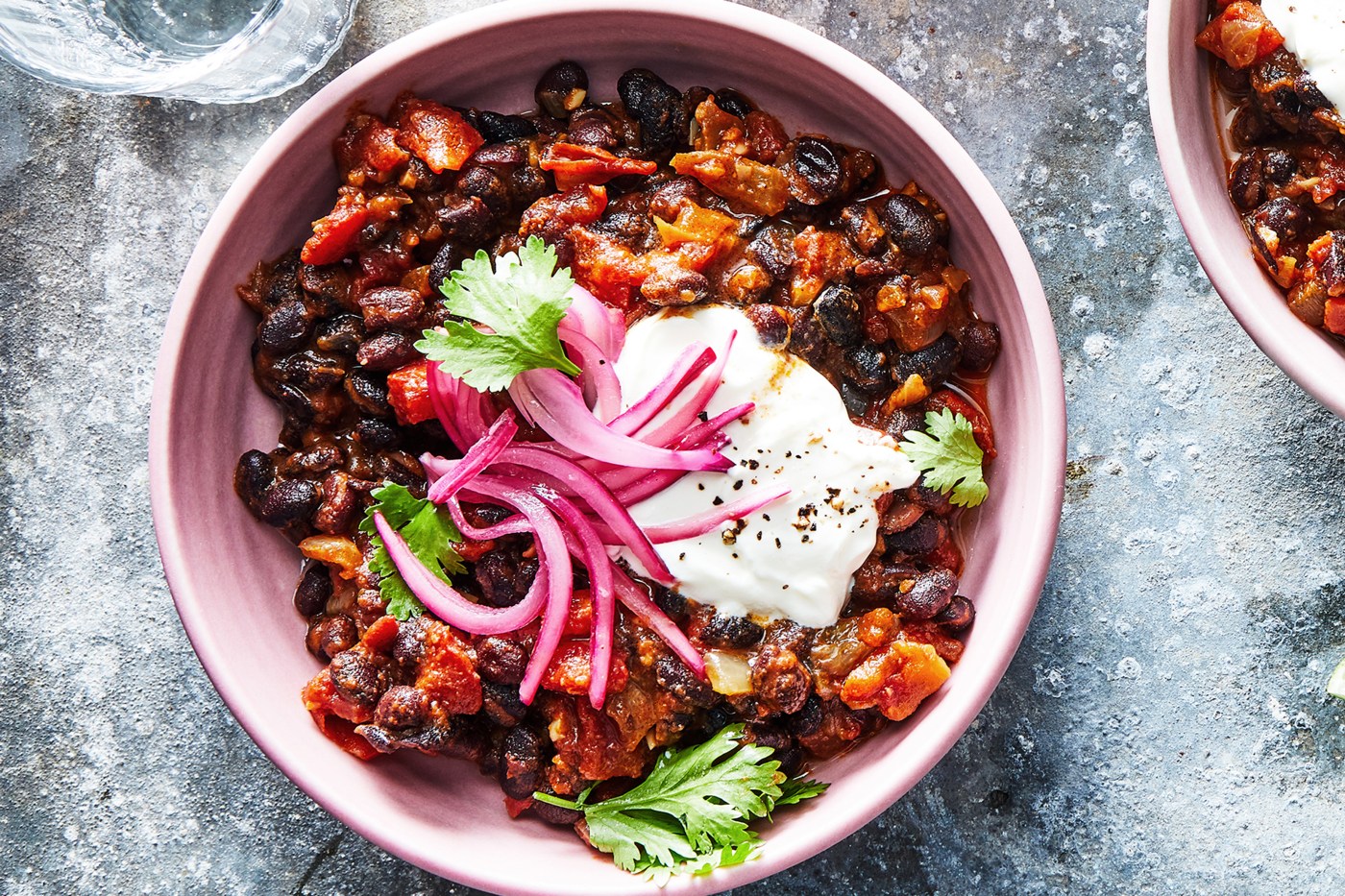
Chili has no season, really. Yet once we hit February it seems we all need a bowl of it, consciously or not, with the same urgency with which we need a clean slice of watermelon no later than July 1.
I didn’t grow up eating chili; it wasn’t a staple at my house. But I have come to love it deeply in its many manifestations. We have many good chili recipes on New York Times Cooking — helpful intel, since the Super Bowl is coming up on Sunday — but among the fastest and most cooked is the vegetarian skillet chili from Melissa Clark below, which you can truly make after work even if you’re dead tired. As with all bowls of chili, I believe you should garnish as maximally as you can.
1. Vegetarian Skillet Chili
If you keep canned beans, tomatoes, onion and garlic in your pantry, you can make this dish on any weeknight without having to shop. The pickled onions aren’t strictly necessary, but they are simple to make and add a welcome tangy contrast to the beans. Pickled peppers are a fine substitute. If you have a bell pepper or jalapeño or two, chop them up and sauté them with the onions. And if you want to be fancy, grate the zest off the lime before juicing for the pickles, and stir it into the sour cream.
By Melissa Clark
Yield: 4 servings
Total time: 30 minutes
INGREDIENTS
For the Pickled Onions:
1 lime
1 red onion or shallot, thinly sliced
Large pinch of kosher salt
Small pinch of granulated sugar
For the Chili:
Olive or grapeseed oil
1 large onion, chopped
3 garlic cloves, or to taste, minced
1 teaspoon chile powder, plus more to taste
1 teaspoon dried oregano, plus more to taste
2 (15-ounce) cans beans, drained
1 (15-ounce) can diced tomatoes with their juices
Kosher salt
Fresh cilantro, diced avocado and sour cream, for garnish (optional)
DIRECTIONS
1. Make the pickled onions: Squeeze lime juice into a bowl, and add onion, salt and sugar. Let rest while you make the chili.
2. Prepare the chili: Heat a large skillet over medium-high. Add the oil. When hot, add onion and sauté until softened, 5 to 7 minutes. Add garlic, chile powder and oregano and sauté until fragrant, 1 to 2 minutes longer. Add beans and tomatoes and a few large pinches of salt and let simmer until the tomatoes break down, about 20 minutes.
3. Taste and add more salt, chile powder and/or oregano to taste. Serve with the pickled onions and any of the garnishes you like.
2. Sheet-Pan Gochujang Chicken and Roasted Vegetables
Gojuchang Chicken with Roasted Vegetables, a sheet pan recipe. Food Stylist: Chris Lanier. Prop Stylist: Carla Gonzalez-Hart. (Christopher Testani/The New York Times
Gochujang, a Korean fermented chile paste, enlivens a straightforward dinner of roast chicken and vegetables with a salty, spicy and umami-rich layer of flavor. Freshly grated ginger, sliced scallions and quick-pickled radishes elevate the flavor even further. This recipe calls for a wintry mix of squash and turnips, but equal amounts of root vegetables like carrots, potatoes and beets, or lighter vegetables like cauliflower, Brussels sprouts or broccoli will work well, too.
By Yewande Komolafe
Yield: 4 to 6 servings
Total time: 45 minutes
INGREDIENTS
3 tablespoons gochujang
2 tablespoons soy sauce
1 (1-inch) piece fresh ginger, peeled and grated (about 1 tablespoon)
3 tablespoons neutral oil, like grapeseed or canola, plus more for drizzling
2 pounds squash, such as butternut, acorn or delicata, unpeeled, seeded and cut into 2-inch pieces (about 5 loose cups)
1 pound turnips, trimmed and cut into 2-inch pieces (about 3 1/2 loose cups)
10 scallions, ends trimmed, green and white parts separated, but not chopped
Kosher salt
2 1/2 to 3 pounds bone-in, skin-on chicken thighs, drumsticks or breasts, patted dry
1 bunch radishes (about 10 ounces), trimmed
2 tablespoons rice vinegar
1 tablespoon sesame oil (optional)
Steamed rice (optional)
DIRECTIONS
1. Heat the oven to 425 degrees. Combine the gochujang, soy sauce, ginger and 3 tablespoons oil in a medium bowl or resealable bag. Add the squash, turnips and scallion whites, toss to coat with glaze, or seal bag and shake to coat. Lightly season with salt and transfer to a rimmed baking sheet.
2. Season the chicken with salt and toss to coat in whatever is left of the glaze in the bowl or bag. Arrange the chicken pieces skin-side up between the vegetables on the sheet.
3. Roast until vegetables are tender, chicken is cooked through and the skin crispy and browned in spots, about 40 minutes.
4. While the chicken cooks, thinly slice the scallion greens. Using a sharp knife or a mandoline, cut the radishes into thin rounds. In a small bowl, toss the sliced scallion greens and radishes with the rice vinegar and sesame oil, if using. Season to taste with salt and set aside to lightly pickle.
5. Top the roast chicken and vegetables with the quick-pickled scallion-radish mix and transfer to serving plates. Serve with steamed rice, if desired.
3. One-Pan Roasted Fish With Cherry Tomatoes
One-Pan Roasted Fish With Cherry Tomatoes. Food Sylist: Barrett Washburne. (Andrew Purcell for The New York Times.)
In this quick, elegant dinner, cherry tomatoes are roasted with garlic, shallots, sherry vinegar and a drizzle of honey, turning them into a sweet and savory condiment for simple roasted fish. This versatile, year-round recipe is delicious with juicy end-of-summer tomatoes or even with a pint from the grocery store. Thick white fish such as cod or halibut work best here. Serve with rice, couscous or your favorite grains, and a green salad.
By Lidey Heuck
Yield: 4 servings
Total time: 30 minutes
INGREDIENTS
1 pint cherry tomatoes, halved
1/2 cup thinly sliced shallots (about 1 large)
2 teaspoons minced garlic (about 2 large cloves)
2 tablespoons olive oil, plus more for brushing
1 tablespoon sherry or red wine vinegar
1 teaspoon honey
1 teaspoon kosher salt, plus more to taste
1/2 teaspoon black pepper, plus more to taste
4 (6-ounce) skin-on mild white fish fillets, such as cod or halibut
1 teaspoon freshly grated lemon zest (from about 1/2 lemon)
Chopped fresh basil, for serving
Chopped fresh mint, for serving
DIRECTIONS
1. Heat the oven to 400 degrees. Place the tomatoes, shallots and garlic in a 9-by-13-inch nonreactive baking dish. In a small bowl, whisk together the olive oil, vinegar, honey, salt and pepper. Pour over the tomatoes and toss to combine. Roast until the tomatoes have collapsed and the shallots are translucent, about 15 minutes.
2. While the tomatoes roast, pat the fish dry with paper towels, brush all over with olive oil, and season generously with salt and pepper.
3. Toss the tomatoes, move them to the sides of the dish and place the fish fillets, evenly spaced, in the center. Roast until the fish is cooked through and flakes easily with a fork, 10 to 12 minutes.
4. Sprinkle the entire dish with the lemon zest, basil and mint. Serve the fish with the tomatoes, spooning any remaining juices on top.
4. BBQ Pepper Shrimp
BBQ pepper shrimp. Food styled by Hadas Smirnoff. (Armando Rafael/The New York Times)
This dish, inspired by the BBQ pepper shrimp at the Lobster Pot — the busy seafood restaurant in Provincetown, Massachusetts, that the McNulty family began operating in 1979 — is a rich, satisfying shrimp dinner that comes together quickly. The chef and owner Tim McNulty came up with the idea for the dish after trying New Orleans-style BBQ shrimp. He blends those spicy flavors with the richness of beurre blanc, a classic French butter sauce. “It’s a big seller for us,” McNulty says of the dish, which has been on the menu for more than 10 years. The sauce is an ideal topping for pasta or crusty bread and is a perfect match for any seafood: “It’s a great base recipe and you can add scallops or lobster to it instead of the shrimp.” The sauce also makes a luscious topping for steak, similar to an au poivre.
Recipe from Tim McNulty
Adapted by Korsha Wilson
Yield: 4 servings
Total time: 35 minutes
INGREDIENTS
4 tablespoons unsalted butter, cut into chunks
1 pound large shrimp, peeled and deveined
Salt
2 tablespoons extra-virgin olive oil
3 garlic cloves, minced
1 medium shallot, diced small (about 1/4 inch)
1/3 cup dry white wine
1 rosemary sprig
1 thyme sprig
1/2 cup heavy cream
2 tablespoons Worcestershire sauce
1 tablespoon cayenne hot sauce (such as Tabasco)
1 tablespoon fresh lemon juice, plus lemon wedges for serving
1 1/2 teaspoons coarsely ground black pepper
Crusty bread or cooked pasta, for serving
DIRECTIONS
1. Place the butter in the freezer until ready to use.
2. Pat the shrimp dry on a paper towel-lined plate and season with salt. In a large (12-inch) skillet, heat 1 tablespoon oil over medium-high for 2 minutes. Swirl the pan to coat the bottom. Add half of the shrimp and cook until lightly golden in spots and starting to curl (they’ll be almost cooked through), 2 to 3 minutes per side. Use a slotted spoon to transfer the cooked shrimp to a plate. Repeat with the remaining shrimp, using the remaining tablespoon of oil to coat the pan. Transfer the remaining shrimp to the plate.
3. Adjust heat to medium and add the garlic and shallot. Cook, stirring, until shiny and fragrant, about 1 minute. Add the wine, rosemary and thyme and stir, scraping up any browned bits. Let simmer until the skillet is almost completely dry, 1 to 2 minutes. Add cream, Worcestershire, hot sauce, lemon juice and black pepper. Continue to simmer and let reduce until the sauce thickens and coats the back of a wooden spoon, about 5 minutes more. Taste and adjust salt if desired.
4. Remove the butter from the freezer. Adjust heat to low and add half the butter. Stir until completely melted, and then add the remaining butter. Stir constantly until butter is melted and sauce is smooth.
5. Return the shrimp to the pan and cook, stirring to coat in the sauce, until shrimp is piping hot and cooked through, about 2 minutes. Serve immediately with crusty bread (or over pasta), with lemon wedges alongside.
5. Preserved Lemon Pasta
Preserved Lemon Pasta. Food styled by Spencer Richards. (Rachel Vanni/The New York Times)
While preserved lemons are often used as a background flavor to invigorate stews, soups and salads, they take on a starring role in this zesty and lively pasta. Fresh lemons add brightness, but cured ones bring deep, complex umami to a dish, brimming with heavy floral notes from the tamed peel. While some recipes suggest using the peel only, whole lemons are used here, minced so finely they almost melt into the buttery sauce. The brine is a valuable ingredient, too, and incorporating a couple of tablespoons adds tang, further reinforcing the pickled attitude of this dish. You can also use preserved lemon paste, where the whole fruit has been puréed, incorporating it in the same quantity (no brine necessary). While there is no substitute for the deep funky saltiness — or silky texture — of preserved lemon, in a pinch, see the tip below on how to make a quick version.
By Hetty Lui McKinnon
Yield: 4 to 6 servings
Total time: 25 minutes
INGREDIENTS
Salt and pepper
1 pound spaghetti, linguine or other long pasta
1/4 cup unsalted butter
3 garlic cloves, grated
1/3 cup finely chopped preserved lemons (see Tip for a shortcut version), plus 2 tablespoons of brine
1 cup grated Parmesan or pecorino, plus more for topping
Extra-virgin olive oil
Handful basil leaves
DIRECTIONS
1. Bring a large pot of lightly salted water to the boil. Add the pasta and cook according to package instructions until al dente. Drain and reserve about 1 cup of pasta cooking water.
2. Place the pot back on medium heat. Add the butter, garlic and preserved lemon and stir until the butter has melted. Add the pasta, preserved lemon brine, Parmesan and 1/2 cup of pasta cooking water and toss to coat the pasta; if it looks dry, add another 1/4 to 1/2 cup of pasta cooking water to loosen it up. Taste and, if needed, season lightly with salt, season very generously with pepper, and give it a final toss.
3. To serve, divide among plates, drizzle with olive oil, top with more grated Parmesan and scatter basil leaves over the top.
Tip: To make a quick preserved lemon substitute at home, wash and dry 2 unwaxed lemons. (Unwaxed lemons won’t be shiny and their skin is a duller yellow; you could use regular lemons but make sure to scrub the skin well.) Remove any stems. Slice one lemon crosswise into thin rounds; discard any seeds. Juice the other lemon; you should get 2 to 3 tablespoons of juice. Place the lemon slices and any juice from the cutting board, the lemon juice and 1 tablespoon of fine sea salt into a small saucepan and place on low heat. Stir until the salt has dissolved and then cover and cook for 10 minutes, stirring halfway through. Chop up the peel and flesh as instructed above, and add the liquid in place of the brine. Store in the fridge in an airtight container for 1 week.
Related Articles
Girl Scouts moving cookie sales online in response to ICE actions
Marcus Samuelsson shares a comfort-food recipe for oxtail pepperpot with dumplings
Make cheesy broccoli chicken bake like you remember
It’s Friday fish fry time! Here’s where to catch your fill
Valentine’s Day: Chocolate and beer pairings to woo your date