
Callais, Routledge: The economic common ground America isn’t talking about

posted in: All news | 0

These days, it can feel like Americans across the political divide cannot agree on much of anything.

But there is encouraging news: When it comes to the economic foundations of human progress and flourishing, we are not as divided as we might think.

Political polarization has become a defining feature of American life. More and more people are avoiding dating or befriending those with opposing political views, and growing numbers describe those on the other side as closed-minded, dishonest, immoral and unintelligent. This divide extends to economics, where debates over capitalism versus socialism are often defined by what team you are on rather than honest thinking about how to improve living standards.

Of course, political parties have long differed along economic lines. However, that divide has grown in recent decades, largely driven by Democrats souring on capitalism and becoming more favorable toward socialism. According to Gallup, from 2010 to 2025, Republican views on capitalism and socialism remained fairly stable, with favorable views of capitalism hovering between 71% and 74% and favorable views of socialism staying mostly below 20%.

Democratic views shifted more notably. Favorable views of capitalism fell from 51% to 42%, while favorable views of socialism climbed from 50% to 66%. This and similar polls suggest that the majority of Democrats now prefer socialism over capitalism.

Look beneath the surface, though, and a different story emerges. A 2019 Gallup poll found that while only 60% of Americans had a positive attitude toward capitalism, 87% had a positive attitude toward free enterprise, and 90% had a positive attitude toward entrepreneurs. The building blocks of capitalism appear to enjoy broad support even if the label doesn’t.

Our team at the Archbridge Institute’s Human Flourishing Lab wanted to explore this further. If you describe the core mechanics of capitalism and socialism without using those loaded labels, which system do Americans actually believe will advance human progress and flourishing?

To find out, in our latest Progress Pulse survey of over 2,000 American adults conducted in partnership with The Harris Poll, we presented two viewpoints:

One held that businesses competing freely in the marketplace, driven by private companies and entrepreneurs, are the best way to solve today’s big challenges and improve people’s lives. The other held that government agencies coordinating resources and setting priorities are the better path forward.

The results revealed more consensus than these polarized times might suggest. Though political differences emerged as expected, clear majorities of both Republicans (76%) and Democrats (60%) chose free markets, private companies, and entrepreneurship over government coordination and planning. Economic freedom won out across every demographic group we examined, even among young adults, who are often assumed to be socialism’s most receptive audience. Nearly 6 in 10 adults under 25 choose free markets, private companies and entrepreneurship.

So what is going on?

Part of the answer likely lies in how the meaning of these terms has shifted in public discourse. On the political left, capitalism has become increasingly associated with inequality, corporate power and corruption, and instability, while socialism is framed around equality, fairness and security. Entertainment media, long dominated by those on the political left, tend to depict capitalism as a destructive force. Inspiring entrepreneurial stories are told regularly, yet rarely acknowledged as products of the economic system that made them possible.

The result is a strange disconnect. Many who have grown skeptical of the word capitalism still embrace and celebrate the economic freedom that defines it.

Two paths forward are worth considering. One is rehabilitating the term capitalism, making a sustained case for what it actually means and what it has achieved. The other is simply bypassing the arguments over labels and centering public conversations on the ideas most Americans already embrace, namely entrepreneurship, innovation, free enterprise and individual agency. Given how deeply the word capitalism has been politicized in an already-divided country, the latter may be the more pragmatic near-term strategy, which could pave the way for an eventual reclaiming of the term itself.

Social psychologists use the concept of “superordinate identity” to describe a shared framework that transcends group divisions. When people tap into that kind of larger identity, they are more likely to set aside tribal loyalties and work together toward shared goals. Republicans and Democrats remain divided on many policies and priorities. However, our data suggest there is a shared economic foundation for a superordinate American identity. A belief in economic freedom that cuts across party lines could be the basis for more productive conversations about how to expand opportunity and remove barriers to entrepreneurship and social mobility.

Progress requires cooperation. And cooperation is facilitated by finding common ground. Most Americans already believe in the engine of prosperity. They just do not always agree on what to call it.

Justin Callais is chief economist and Clay Routledge is executive vice president and COO at the Archbridge Institute, a nonpartisan think tank. They wrote this column for the Chicago Tribune.

Related Articles


Amanda Cats-Baril: Warrantless home searches sparked the Revolution – now ICE wants to bring them back


Lisa Jarvis: What adults get wrong about girls and autism


Rich Harwood: As America turns 250, it’s time to begin again


Carl P. Leubsdorf: Trump’s threats to next November’s elections


Other voices: Killing of ‘El Mencho’ signals renewal in the US-Mexico relationship
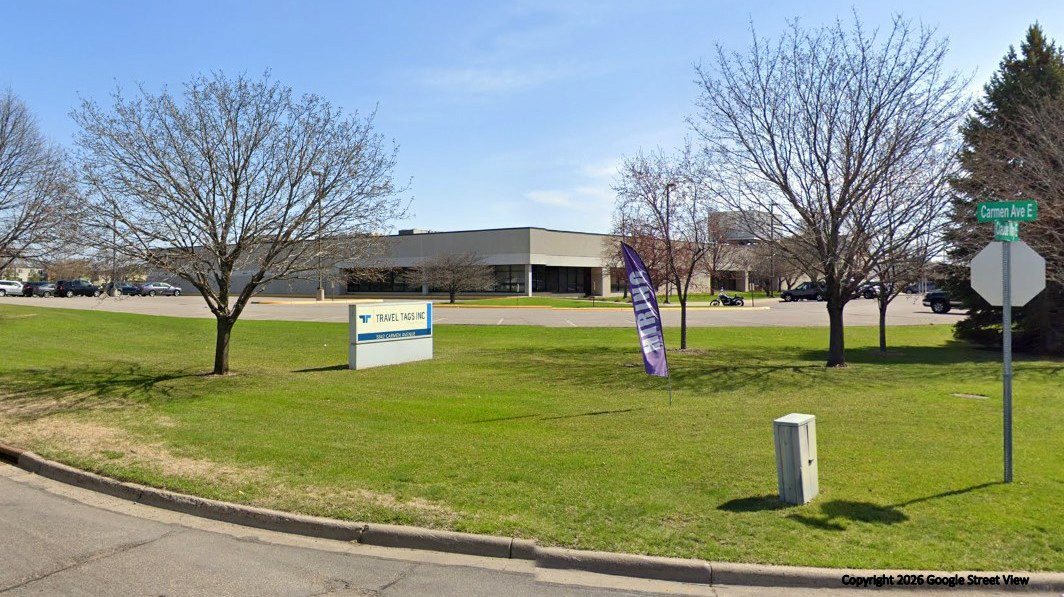
Inver Grove Heights: Could former Travel Tags site add up to new data center?

posted in: All news | 0

Demolition crews are clearing a site on the border of Inver Grove Heights and South St. Paul that, according to preliminary talks, could find a second life as a data center.

A zoning and land use application for a data center was filed last week for the 14-acre site located at 5890 Carmen Ave. in Inver Grove Heights, which formerly housed a business known as Travel Tags. It rests on the border of South St. Paul, near the South St. Paul Municipal Airport.

Inver Grove Heights city staff said this week they had not completed a review of the application, which was received Feb. 26, and could not comment on what it includes. Zoning for the site in question currently allows for a data center as a permitted use.

The site was sold in December to Fortress Investment Group, a California-based investment firm. Fortress Investment Group is a subsidiary of Mubadala Investment Company, a state-owned investment fund of the government of Abu Dhabi in the United Arab Emirates.

Travel Tags was founded in 1973 and began as a printing company for luggage tags and travel accessories. The business was purchased by the Glen Taylor-owned Taylor Corporation in 1993, and over the years pivoted to printing retail gift cards. Notably, the company became a printer for the gift cards sold by Apple Inc.

Speaking generally about the application process, Inver Grove Heights Community Development Director Jason Ziemer said the procedure is collaborative between city planning and engineering staff and the developer to ensure the project meets city standards.

“We do the best we can to collaborate with an entity to make sure that all the plans are completed, and that they’ve addressed all the particular comments that we have,” Ziemer said.

Once an application is deemed complete, the project would go before the planning commission. The commission’s recommendation would then go to the city council.

Based on the size of the Travel Tags land parcel, a data center would take a smaller form than other proposed sites elsewhere in Dakota County that have brought contention and outcry from local residents. For example, a particularly embattled data center development in Farmington covers some 340 acres, which is nearly 25 times the size of the former Travel Tags site.

Representatives for Fortress Investment Group declined comment regarding plans for the Carmen Avenue property.

Data center trends

Some data center projects in other cities have raised questions about non-disclosure agreements, and whether cities are signing them. Ziemer said Inver Grove Heights has not signed any non-disclosure agreements.

“Inver Grove Heights does not have any of that,” he said. “I’ve been here for a year and a half, almost two years, and that subject has never come up with any development that has come into the city.”

While data centers themselves have existed for decades, the rise of cloud computing has created a need for larger dedicated facilities. As of late, this trend has been compounded by the rise of artificial intelligence among tech titans like Amazon, Meta, Microsoft and Google. This has led to the rise of hyperscale data centers – like the Farmington project – massive sites with colossal energy and water demands for the intensive computation power required to operate A.I. applications.

Other types of data centers include “edge” data centers, smaller centers built near a business or its end users, named for being near the so-called edge of a network. There also are “enterprise” data centers, facilities for a single organization and its information technology team; and also “co-located” data centers, shared spaces where more than one company might subcontract and locate IT needs. There are data centers that focus on cloud computing, too.

Elsewhere in the county, the Eagan City Council recently passed a moratorium pausing any further data center development within the city for at least a year. Eagan city staff have said they plan to use the time to study long-term infrastructure impacts, and review how future data centers best fit within city zoning regulations. Aside from the hyperscale project in Farmington, work continues on a 280-acre development in Rosemount with Meta, Facebook’s parent company.

Dakota County data center review

Dakota County Commissioner Joe Atkins addressed the Inver Grove Heights data center scuttlebutt with a detailed Facebook post on Feb 24.

The County Board would not be in control of any approval decisions in this Inver Grove Heights project, but commissioners are set to hear a review of the impacts of data centers across the county at the board’s April 7 meeting.

For Atkins, he is concerned about regional issues like the demand data centers make on the power grid, water supply impacts and infrastructure planning.

Related Articles


Farmington police squad car involved in serious injury crash


St. Paul: Ex-gas station employee gets 3-year prison term for shooting 2 men during fight outside store


Waiting for a mentor: Zeek


‘It’s the work that paid off’: How ‘two-a-days’ all season led Simley to another state wrestling title


Lakeville teen charged with robbery at school allegedly had gun, though no weapon found

Residents had been asking him more often about the site, Atkins said, and while he again reiterated that county commissioners do not control city development decisions, he felt it was important to respond to his constituents by making the social media post.

When the County Commissioners review data center development across Dakota County in April, Atkins is hoping to see how all of the projects fit in the bigger scheme of anticipated impacts. He mentioned specifically energy costs and grid use, county water use, as well as potential economic impacts in terms of additional property tax proceeds, and added construction jobs during site development.

“I hope that will be the start of an ongoing conversation, and review, of all that we have going on with data centers,” Atkins said.

Man dies after being trapped under snow groomer north of Duluth

posted in: All news | 0

St. Louis County authorities on Wednesday identified a man who died after becoming trapped under a snow groomer.

On Tuesday, Timothy Peterson, 67, was pronounced dead at the scene on the 6800 block of Carlson Road, in the Twig area, according to the St. Louis County Sheriff’s Office. The call was placed shortly after 3 p.m.

Authorities described the tracked vehicle as an “older piece of equipment” that was privately owned and was being used to plow the driveway of a private property. No further details were immediately made available about the circumstances of the incident, though the sheriff’s office said foul play was not suspected.

The Midwest Medical Examiner’s Office was also called to the scene and is assisting the sheriff’s office in the investigation.

Related Articles


Google behind proposed Hermantown data center


A look at the Twin Cities’ largest snowfall of the season


Apostle Island ice caves likely closed for season after storm


Here’s why the Apostle Islands ice caves closed a day after opening


Authorities identify 2 deputies, man they fatally shot in Duluth

Gophers blowout loss to Indiana might help U’s postseason position

posted in: All news | 0

Indiana’s runaway 77-47 win over the Gophers in the penultimate Big Ten regular-season game on Wednesday actually helps both teams’ postseason positioning.

The Hoosiers needed the home win to help them get off the NCAA Tournament bubble and into the field, while Minnesota could benefit from Indiana going to March Madness because it could open up one of the few conference spots for the U to make the College Basketball Crown tournament.

The Big Ten is projected to get roughly 10 teams into the NCAA Tournament, with the next two teams in the NET ranking pegged for the Crown. The Net has Minnesota at 13th Big Ten team (69), behind Washington (61) and Southern Cal (63).

Gophers coach Niko Medved is intrigued in the potential opportunity in the Crown, a second-year tournament to be held in Las Vegas in early April. But he seemed reticent about a spot in the next option, the National Invitational Tournament (NIT).

“It just depends on how it’s set up: Who you would play? And when you would play? What that looks like?” Medved told the Pioneer Press on Monday. “I just think we have to decide. I’m not saying I would or I wouldn’t. We would be interested in any postseason, but I have a pretty good feel about how the Crown would be set up. I think that one would make sense.”

The Gophers’ final regular-season game is Saturday against Northwestern (11-16, 5-13) at Williams Arena, followed by the Big Ten tournament in Chicago next week. Minnesota (14-16, 7-12) has secured a first-round bye in the conference tourney.

At Assembly Hall on Wednesday, the Hoosiers (18-12, 9-10 Big Ten) played with urgency over their postseason fate. They had an early a 14-2 run to take 20-6 lead.

Cade Tyson — the Gophers’ best bet for all-Big Ten honors next week — got hot with a pair of 3-pointers and two 3-point plays to help keep Minnesota in the game at 26-22. But Indiana closed the half with an 8-0 lead to make it 43-28 at the break.

The Gophers’ 2-3 zone defense was a key piece in winning three of the previous four games, but the Hoosiers unlocked it. Sam Alexis was on the receiving end with 23 points on 9 of 11 shooting.

Back on Dec. 3, Minnesota beat the then-22nd-ranked Hoosiers in the Big Ten opener at The Barn, but on the road Wednesday, the U lost its ninth straight game at Indiana since 2012.

Related Articles


How Niko Medved embraces change to give Gophers best chance to win


Men’s basketball: Gophers upset UCLA


Gophers succumb to big run in loss to No. 3 Michigan


Gophers’ Grayson Grove was humbled by Dawson Garcia, but it helped


Gophers’ hot shooting leads to blowout of Rutgers