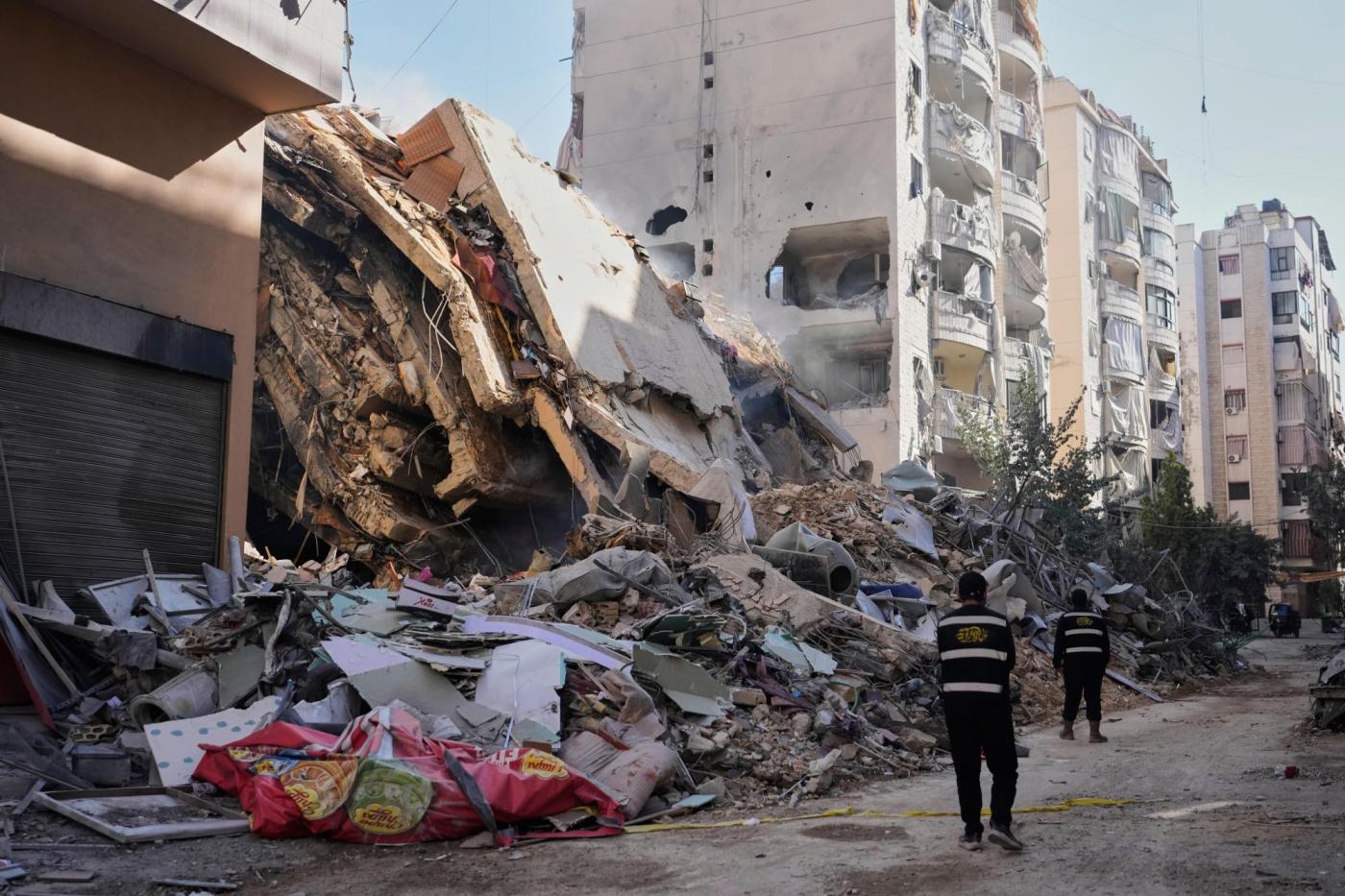
BEIRUT — Traffic was gridlocked in Lebanon ‘s capital on Thursday as panicked residents tried to flee after Israel’s military issued a notice ordering all of Beirut’s southern suburbs to evacuate, apparently signaling plans for a major bombardment of the area.
The notice for the area known as Dahiyeh advised residents to “save your lives and evacuate your homes immediately,” and specified which routes residents of different areas could take.
Related Articles
Chaos sown by Iran’s attacks across the Persian Gulf is key to its strategy
US jobless claims filings unchanged from previous week at 213,000 as layoffs remain low
Haitian man dies in US immigration custody with untreated toothache, brother says
Most US stocks fall as oil prices climb more
Today in History: March 5, John Belushi dies of an overdose
Since the resurgence of hostilities between Israel and the Hezbollah militant group, Israel has struck sites in Beirut’s suburbs and issued a blanket warning for residents south of the Litani River to evacuate their homes, but had not previously issued a blanket evacuation order for areas outside of Beirut’s capital.
After the attacks by the U.S. and Israel on Iran triggered a new war in the Middle East, Hezbollah launched missiles and drones into Israel on Monday for the first time in over a year, and Israel has retaliated with bombardment of southern Lebanon and Beirut’s southern suburbs.
The conflict had claimed 102 lives and forced the displacement of more than 83,000 people in Lebanon before Thursday’s evacuation order.
Hadi Kaakour, a resident of Beirut’s southern suburbs who was fleeing said he is not sure that even after leaving he will be safe.
“We don’t put anything past them (Israel), they will strike us no matter where we go,” he said.
Others expressed frustration at Lebanon being pulled into the larger war in the Middle East.
“We got sucked into a mess that we have nothing to do with,” said Yousef Nabulsi, another fleeing resident. “People have been displaced and are now staying on the streets, and this is wrong.”
U.N. peacekeepers in southern Lebanon have seen and heard clashes in the area as more Israeli forces have moved across the border, a spokesperson for the United Nations Interim Force in Lebanon, or UNIFIL, said Thursday. It was the first confirmation of combat taking place.
“Ground combat was observed west of Kfar Kila,” a village near the border with Israel, overnight, which included “firing of shots,” UNIFIL spokesperson Tilak Pokharel said. In Khiyam, a town about 3 miles from the border, he said peacekeepers saw “air attacks and flares and heard explosions.”
On Tuesday, Israel said it sent additional troops into southern Lebanon. Israeli forces had already been occupying several border points in Lebanon since a November 2024 ceasefire halted the previous Israel-Hezbollah war.
The Lebanese army has pulled back from the border as the Israeli troops moved in, while Hezbollah has issued a series of statements announcing attacks on Israeli troops attempting to advance and published a video showing a tank being struck by a missile. The Israeli army on Wednesday said two of its soldiers were wounded by anti-tank fire in Lebanon.
Here’s a simple, foolproof way to cook fish so it stays moist and tender every time. Gently poach the fillets in barely simmering water for just 4 to 5 minutes. The secret is to make sure the water is at a low simmer. Finish it with a light, flavorful sauce topped with briny capers.
Related Articles
Ross Raihala: The newly revived Chi-Chi’s is all about nostalgia
Quick, bright dinners for winter days
5 dishes to make with a grocery rotisserie chicken
Recipe: This salad in a jar will add pizzazz to workday lunches
Rotisserie chicken meets grapes and pecans in a crisp romaine wrap
A vibrant corn and tomato side dish comes together in just 5 minutes in the microwave, making this an easy, colorful, and satisfying dinner.
HELPFUL HINTS:
Any type of white fish can be used instead of cod such as mahi mahi, halibut, tilapia.
COUNTDOWN:
Assemble ingredients.
Mix sauce and set aside.
Microwave the corn and tomatoes.
Poach fish.
SHOPPING LIST:
To buy: 12 ounces cod, 1 container reduced fat sour cream, 1 jar reduced-fat mayonnaise, 1 jar Dijon mustard, 1 small jar capers, 1 container frozen corn kernels, 1 container cherry tomatoes, 1 bunch fresh basil.
Staples: olive oil, onion, salt and black peppercorns
Simple Poached Fish with Caper Sauce
Recipe by Linda Gassenheimer
2 tablespoons reduced-fat sour cream possible 1 more
2 tablespoons reduced fat mayonnaise possible 1 more
1 tablespoon Dijon mustard
3 teaspoons salt
3/4 pound cod
1 tablespoon capers
Mix sour cream, mayonnaise and mustard together in a small bowl and set aside. Fill a medium size saucepan half full of water. Add the salt and bring to a simmer. Place fish in saucepan and simmer gently for 4 to 5 minutes. Do not let the water boil. A meat thermometer should read 130 degrees. Remove the fish from the pan to a plate and pat dry with a paper towel. Divide into two portions and place on two dinner plates. Spoon the sauce over the fish. Sprinkle the capers on top of the sauce and serve.
Yield 2 servings.
Per serving: 217 calories (23 percent from fat), 8.1 g fat (2.1 g saturated, 2.0 g monounsaturated), 78 mg cholesterol, 31.4 g protein, 3.3 g carbohydrates, 0.6 g fiber, 395 mg sodium.
Quick Corn and Tomatoes
Recipe by Linda Gassenheimer
2 cups frozen corn kernels
2 cups cherry tomatoes cut in half
1 cup frozen diced onion
2 teaspoons olive oil
Salt and freshly ground black pepper
2 tablespoons basil leaves
Place corn and tomatoes in a microwave safe bowl and microwave on high 5 minutes. Drain any water that may remain. Mix in the olive oil and salt and pepper to taste. Sprinkle on the basil. Divide in half and serve on the two dinner plates with the fish.
Yield 2 servings.
Per serving: 224 calories (24 percent from fat), 6.0 g fat (0.9 g saturated, 2.5 g monounsaturated), no cholesterol, 6.6 g protein, 42.7 g carbohydrates, 6.5 g fiber, 16 mg sodium.
HARRISBURG, Pa. (AP) — Sofia Tepichin was about 30 minutes into her club soccer team practice in October when she spotted a fast-approaching defender. She tapped the ball away and hopped over the defender’s outstretched foot, came down awkwardly and heard a “pop.”
She immediately fell to the ground, pain shooting through her left knee and knew it wasn’t good. It was, she said, “heartbreaking.”
“And I knew personally that I tore my ACL,” Tepichin said.
Tepichin joined the growing ranks of female high school athletes tearing their anterior cruciate ligament, a devastating knee injury that researchers are pressing the sports world to take more seriously.
Decades of research on prevention methods is available, but parents, researchers and trainers say that teams, coaches and leagues aren’t doing enough to protect the girls and educate parents.
High school female athletes are most vulnerable
Sports fans hear often about high-profile athletes like U.S. Olympic skier Lindsey Vonn tearing their ACLs, and many ACL injuries are chalked up to bad luck or a part of sports that will continue to happen at all competitive levels.
Still, high school-age female athletes suffer these injuries at much higher rates than their male counterparts — up to eight times more likely, one study says — and adults, most often in noncontact situations in sports that require fast changes in direction, researchers say.
Biomechanics researchers, trainers and physical therapists say there are pre-workout warm ups and strengthening routines — such as FIFA 11+ or PEP — that can at least reduce the risk of an injury that takes such a high physical and mental toll on young athletes.
But, they say, most coaches lack training or expert help, and high school girls compete in settings with far fewer resources than the professional and collegiate levels. As a result, risk-reduction routines are rarely included in day-to-day coaching curricula and practices.
“The real crime in this is that the data has been out there for 25 years,” said Holly Silvers-Granelli, a physical therapist and biomechanics researcher who advises athletes, professional teams and major sports leagues on injury prevention. “People are clamoring for answers, and the answers are largely there.”
The trendline of ACL injuries isn’t entirely clear, but the National ACL Injury Coalition — formed by the Aspen Institute and the Hospital for Special Surgery in New York — said its analysis of data from high school athletic trainers showed that the average annual ACL injury rate for high school athletes grew almost 26% from 2007 to 2022.
The rate for girls grew more than 32%, compared to 14.5% for boys, it said.
Plano East High School soccer player Sofia Tepichian, right, has her movement analyzed with help from sports biomechanics researcher Sophia Ulman at the Movement Science Laboratory at Scottish Rite for Children in Frisco, Texas, Jan. 22, 2026. (AP Photo/LM Otero)
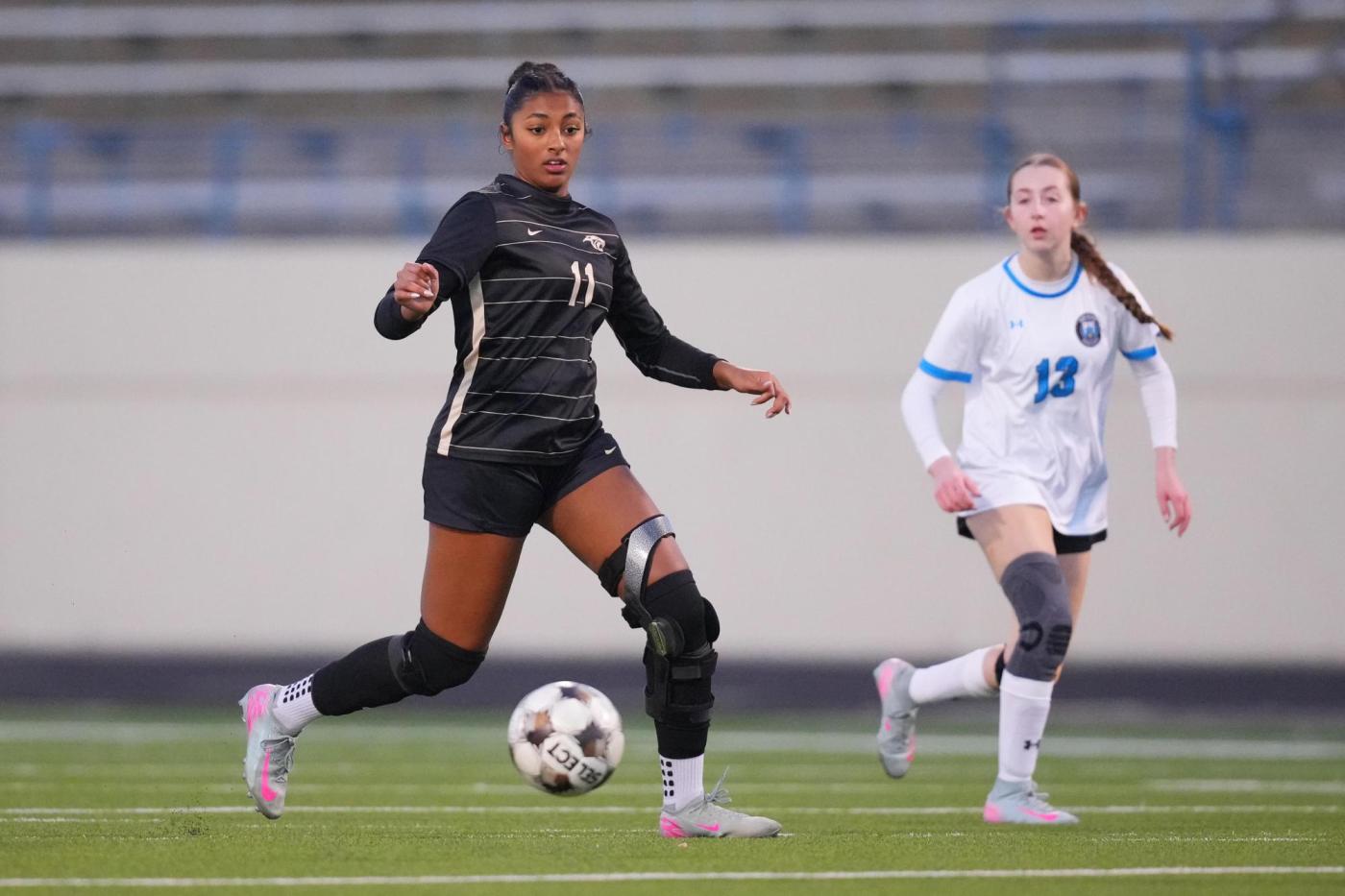
Plano East varsity soccer player Aliya Jacob’s knee brace, left, is visible as she attacks Rock Hill’s Adalina Flores during a soccer game, Jan. 30, 2026, in Murphy, Texas. (AP Photo/Julio Cortez)
Plano East High School soccer player Sofia Tepichian, left, is helped by sports biomechanics researcher Sophia Ulman at the Movement Science Laboratory at Scottish Rite for Children in Frisco, Texas, Jan. 22, 2026. (AP Photo/LM Otero)
Plano East varsity soccer player Aliya Jacob, center, wears a knee brace as she is introduced onto the field prior to a soccer game against Rock Hill, Jan. 30, 2026, in Murphy, Texas. (AP Photo/Julio Cortez)
Plano East varsity soccer player Aliya Jacob wears a knee brace as she gathers for prayer with teammates prior to a soccer game against Rock Hill, Jan. 30, 2026, in Murphy, Texas. (AP Photo/Julio Cortez)
Cameras analyze Plano East High School soccer player Sofia Tepichian, right, as she walks at the Movement Science Laboratory at Scottish Rite for Children in Frisco, Texas, Jan. 22, 2026. (AP Photo/LM Otero)
Plano East High School soccer player Sofia Tepichian works to strengthen her knees at the Movement Science Laboratory at Scottish Rite for Children in Frisco, Texas, Jan. 22, 2026. (AP Photo/LM Otero)
A skeletal representation of high school soccer player Sofia Tepichian is seen at the Movement Science Laboratory at Scottish Rite for Children in Frisco, Texas, Jan. 22, 2026. (AP Photo/LM Otero)
Plano East varsity soccer head coach Cristy Cooley reacts during a soccer game against Rock Hill, Jan. 30, 2026, in Murphy, Texas. (AP Photo/Julio Cortez)
1 of 9
Plano East High School soccer player Sofia Tepichian, right, has her movement analyzed with help from sports biomechanics researcher Sophia Ulman at the Movement Science Laboratory at Scottish Rite for Children in Frisco, Texas, Jan. 22, 2026. (AP Photo/LM Otero)
When they get injured, high school athletes and their parents often find themselves on their own to deal with it. ACL injuries can require surgery and a year of rehab, physical therapy and strength training, which insurance may not fully cover.
Recovery changes their routine and identity: They miss out on the camaraderie of the team and stand on the sidelines, which can be as hard as the physical trauma, parents say.
Many high school athletes who tear their ACL never perform again at the same level, if they even return to the sport, the National ACL Injury Coalition says. And once injured, they carry a heightened risk of another ACL injury and long-term complications like degenerative joint disease, researchers say.
The coalition has urged the sports world to treat ACL injuries like brain injuries, now that professional and youth sports have tried to improve training, rules and equipment standards to prevent and detect concussions.
Sophia Gerardi, a sophomore at Pennsylvania’s Apollo Ridge High School who tore her ACL during a basketball game in December, was told by her doctors that she’ll forever have to wear a knee brace to play sports. She had surgery in January, will miss volleyball season and hopes to be back for next winter’s basketball season.
Like many girls who tore their ACL, she didn’t recall getting any ACL injury-prevention training.
Surveys of coaches show that many don’t know about risk-reduction programs, aren’t trained to do them or aren’t encouraged to learn about them, said Vince Minjares, who leads the Aspen Institute’s ACL injury prevention project. Some coaches tell Minjares that it takes too much time.
He hopes that’s changing.
‘What is the solution’
This spring, the American Youth Soccer Organization — one of major national organizations in U.S. youth soccer — will roll out new age- and stage-based neuromuscular training programs aimed at preventing ACL injuries through warm-ups.
Related Articles
What to know about how GLP-1 medications might fight addiction
Top FDA drug official is trying to hire a friend who’s seeking a bold new warning on antidepressants
US maternal deaths fell in 2024 and may have dropped again last year, government data shows
Experts talk how to navigate distressing news stories and finding coping mechanisms
State lawmakers seek restraints on wage garnishment for medical debt
Coaches will get a regimen of exercises in bite-sized chunks, with video instructions. The goal is to build good habits before preteens age into more physical and demanding competition.
“My biggest shock was that this didn’t already exist,” said Scott Snyder, AYSO’s senior director of programs and education. “Everyone I talk to says, ‘Yeah, that makes perfect sense,’ but nobody’s done it yet.”
Last year, biomechanical researchers at the Scottish Rite for Children hospital in metropolitan Dallas began providing high school teams with resources typically only available or affordable at the professional and collegiate levels.
They created pre-season injury-prevention trainings, tailored for female athletes, to improve strength and movement quality. At the start of the eight-week program, each athlete gets a free motion-capture 3D-level assessment to identify weaknesses in strength, movement or balance. Another assessment at the end determines if the program reduced risk.
Future trainings could include nutrition and sleep, said Sophia Ulman, who directs the hospital’s Movement Science Laboratory.
“My team and I got tired of studying ‘why, why, why’ when there’s so many different possibilities to answer that question. And we wanted to move into the ‘what is the solution,’” said Ulman. Other biomechanics labs in the U.S. are trying similar outreach, she said.
One of the teams that participated was Plano East High School in Texas, where players — including Tepichin — had suffered a rash of ACL tears the past couple years.
Cristy Cooley, Plano East’s coach, said that getting a hands-on demonstration from trained professionals in proper exercises and movement patterns makes a big difference.
“It’s one thing talking about it,” Cooley said. “But it’s a totally different thing to show us.”
‘Something’s got to change’
Like other parents, Tiffany Jacob said she learned a lot about preventing ACL injuries that she wished she had known before her daughter — East Plano sophomore Aliya Jacob — tore her ACL last February. For instance, the surgeon told them three days a week of strength training is an absolute must for soccer players.
“Something’s got to change,” Tiffany Jacob said. “Coaches, clubs, something. They have to do something to prevent this because it’s just such a horrible injury.”
Aliya — who knows at least seven other female soccer players who tore an ACL, her mother said — is back playing for East Plano now. She endured twice-a-week physical therapy, the isolation of rehabilitation and, her mother said, “figuring out who you are when you’re not playing soccer.”
Tepichin, a high school senior, recalls her surgeon telling her to take a couple days to get all her sadness and anger out — and then devote herself to her recovery.
She’ll miss her last year of playing high school and club team soccer. Her next time on a field could be for Saint Vincent College in Pennsylvania, where she committed to the NCAA Division III team.
Tepichin has seen a sports psychologist, gotten comfort from others who underwent the surgery — her sister, her father and her friend — and found a new routine after having been constantly busy with two soccer teams and a job.
“There’s not a day that I go that I’m not working out or doing something,” she said, “or getting better for my health and my recovery.”
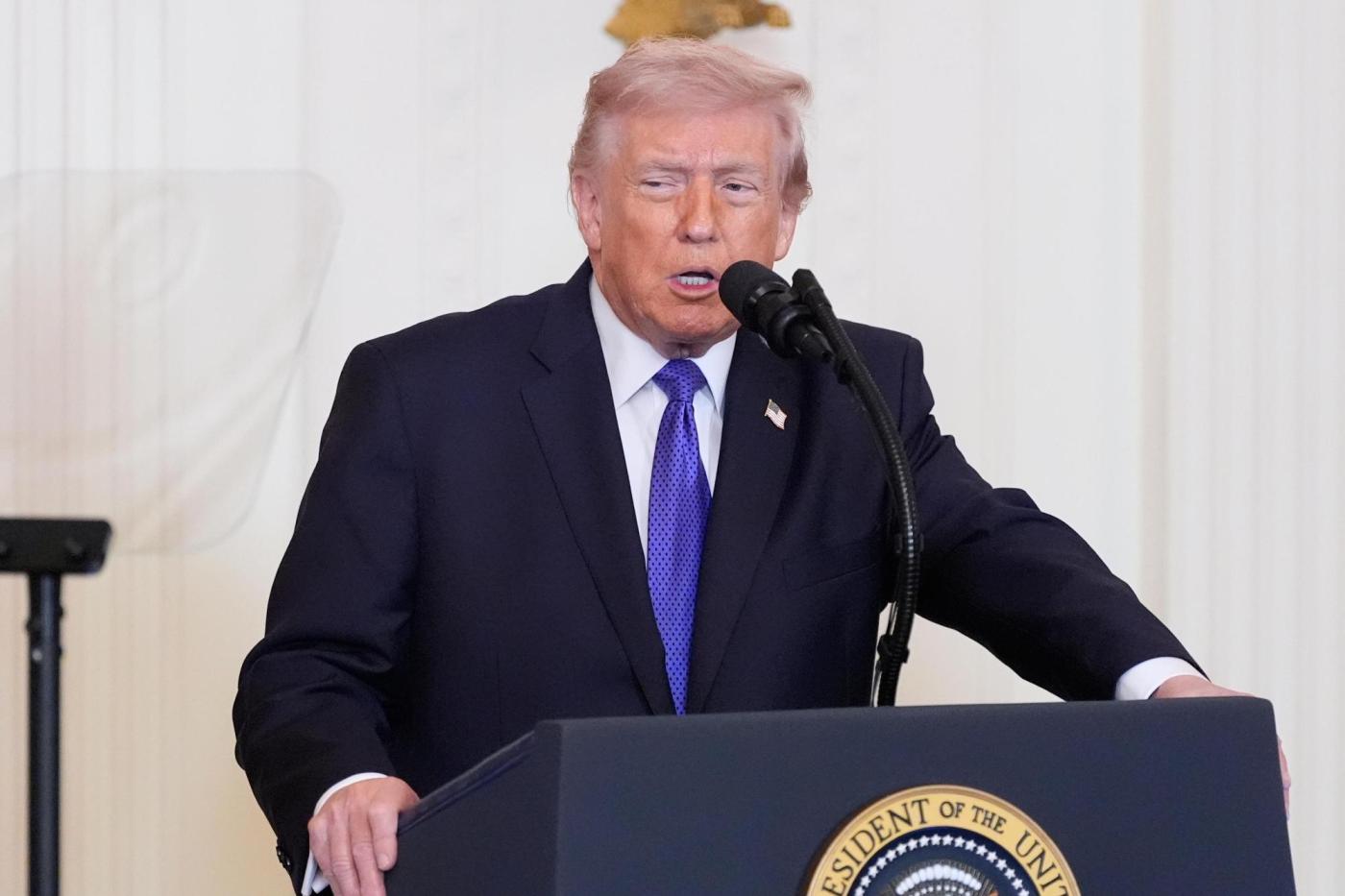
Multiple times during Donald Trump’s second presidency, Congress has debated his military authority, first in Latin America and now the Middle East.
The latest test will come in the GOP-controlled House on Thursday after the Senate voted down a Democratic measure to limit Trump, at least theoretically, in the U.S.-Israeli war against Iran.
Related Articles
Republicans take another crack at Homeland Security funding, citing Iran war
House will vote on an Iran war powers resolution in a test of Trump’s strategy
Iran is pummeled by airstrikes as it launches a new wave of attacks against Israel and US bases
Trump’s White House ballroom is too big, architect says, as 2nd panel prepares to vote on it
Whether primary ballots set aside in two Texas counties will be counted remains uncertain
Like many predecessors, Trump claims broad, even unlimited power over U.S. forces. He approved boat strikes near Venezuela, established a naval blockade and authorized a military operation to arrest and depose its leader, Nicolás Maduro — all arguable acts of war under international law. He made noise about additional action in Greenland and Latin America, before launching a sweeping bombing campaign in Iran.
Under the Constitution, the military reports to the president. But the document grants oversight roles to Congress. Trump says he won’t sign anything limiting his options — proof for some experts that control over a civilian-led military has skewed from its original design.
“The Constitution gives war powers to two different branches of government,” said military historian Peter Mansoor, an Ohio State University professor and retired U.S. Army colonel. “The pendulum has swung towards the executive,” he lamented, arguing that “the framers meant for Congress to be the most powerful branch.”
Here is a look at what the Constitution says and how U.S. war powers have played out.
What the constitution says about war powers
Article I, which established Congress, states that lawmakers “shall have power … to declare war.” Article II, which established the presidency, makes the chief executive the “commander in chief of the Army and Navy.” The Constitution also gives Congress authority over military budgets.
Congress has not declared an official state of war since World War II. Yet since 1945, U.S. service members have fought and died in full-scale conflicts in Korea, Vietnam, Iraq and Afghanistan, among other places.
In the Maduro mission, an Army pilot was injured, leading Trump to award him the Medal of Honor — recognition legally restricted to actions taken when fighting a foreign enemy. As of Wednesday, six U.S. service members had died in the Iran war.
During Senate debate last month on Venezuela, Sen. Rand Paul, R-Ky., mocked an “elaborate song and dance” and said it’s “an absurdity” to argue that Trump’s actions were anything other than waging war.
Sen. Tim Kaine, the Virginia Democrat who sponsored Venezuela and Iran war powers resolutions, said the latest version — which failed 47-53 — would prevent a presidential “end-run around the Constitution.”
Speaker of the House Mike Johnson, R-La., gestures as he and the GOP leadership talk about the war against Iran, during a news conference at the Capitol in Washington, Wednesday, March 4, 2026. (AP Photo/J. Scott Applewhite)
Declarations of war: 11 — but none since World War II
Congress has declared war against 11 nations across across five wars. Three declarations came in the 19th century, two during World War I and six during World War II. Each time, the president formally asked Congress to act, citing some specific attack on the U.S. or another national interest.
President James K. Polk asked even for the Mexican War, which was principally about expanding U.S. territory.
Over the same span, Congress voted many times to authorize force without declaring war. Early measures were usually for specific naval actions defending U.S. commercial interests. Congress first took this route in 1798; it became a roadmap for the post-World War II era.
The Korean War marked a turn toward presidential power
President Harry Truman won World War II under declarations issued while Franklin Roosevelt was president. Then, in 1950, the fledgling United Nations voted to act in Korea and asked member nations to assist.
Citing the U.N., Truman engaged U.S. troops in a so-called “police action” without seeking lawmakers’ approval. Congress later that year approved the Defense Production Act to mobilize U.S. war capacity. It was an after-the-fact endorsement of Truman’s decision, and the law remains a potential Pentagon tool.
Vietnam showed the span of congressional and presidential power
Presidents from Dwight Eisenhower to Gerald Ford presided over what history remembers as the “Vietnam War,” though it was often called “the Vietnam conflict” as U.S. administrations expanded southeast Asia operations.
Lyndon Johnson persuaded Congress to pass the Gulf of Tonkin Resolution in 1964 and used that to accelerate U.S. involvement.
As U.S. deaths rose, the war grew unpopular, but Johnson — and then Richard Nixon — had broad authority from lawmakers. “Congress approves and supports the determination of the President, as Commander-in-Chief, to repel any armed attack against the forces of the United States and to prevent further aggression,” the 1964 resolution stated.
Congress repealed that measure in 1971, but Nixon did not withdraw.
Mansoor said war declarations don’t just define the start of a war. They also effectively require an official end — which triggers the Senate’s role in ratifying peace treaties. Sidestepping those legal bookends, Mansoor said, is “how you get in these forever wars.”
Congress answers with the War Powers Act
In 1973, as the U.S. limped toward its Vietnam exit, Congress passed the War Powers Resolution, intending to impose guardrails on presidents by requiring certain communication with lawmakers and allowing Congress to hold votes setting parameters for military action. That was the legislative trigger this year for failed Venezuela resolutions and the Iran resolutions.
In 2020, a Democratic-controlled House narrowly adopted a measure intended to curtail Trump’s powers against Iran at that point. But in practice the War Powers Resolution has not served as a functional check on executive power.
House Minority Leader Hakeem Jeffries, D-N.Y., talks about President Donald Trump’s decision to attack Iran and Democratic efforts to force congressional approval for going to war, during a news conference at the Capitol in Washington, Wednesday, March 4, 2026. (AP Photo/J. Scott Applewhite)
After Vietnam, presidents assert role as commander in chief
Ronald Reagan sent troops to Lebanon in 1982 as part of a multinational peacekeeping force. He did not cite the War Powers Resolution when notifying Congress and did not agree to congressional authorization until 1983 — after service members already had died.
In 1990, George H.W. Bush notified Congress under the War Powers Resolution that he’d dispatched troops to the Middle East after Iraq invaded Kuwait. Bush asked Congress for “support” — as opposed to “authorization” — only after securing U.N. backing for action by an international coalition led by U.S. forces. Congress authorized force in January 1991.
Bill Clinton deployed U.S. troops multiple times — to Somalia, Haiti, Rwanda, Bosnia and Herzegovina, Kosovo and Iraq. He asked Congress for appropriations but not explicit authorizations. When some lawmakers pressed Clinton to seek approval for strikes in Iraq in 1998, Clinton asserted his interpretation of presidential authority — not unlike Trump’s arguments.
Bush calls 9/11 an act of war — but never seeks a declaration
George W. Bush quickly mobilized the military after terrorist attacks on Sept. 11, 2001. He consulted quickly with Congress, resulting in a joint resolution authorizing sweeping action. It was unique because no specific country was targeted and it initially focused on al-Qaida. Congress nearly unanimously supported the measure but asked for reports every 60 days.
Mansoor, the military historian, noted that Bush used the vote to conduct antiterrorism efforts anywhere in the world. Bush returned to Congress in 2002, telling leaders he wanted authorization for action against Iraq.
What Congress passed for Bush had no effective end date. His successor, Barack Obama, inherited troops in Iraq and did not initially withdraw them. Afghanistan carried on through Obama’s two terms and Trump’s first presidency and into Joe Biden’s term.
Biden withdrew U.S. troops from Afghanistan after it had become the longest U.S. war — never declared — in the nation’s history.