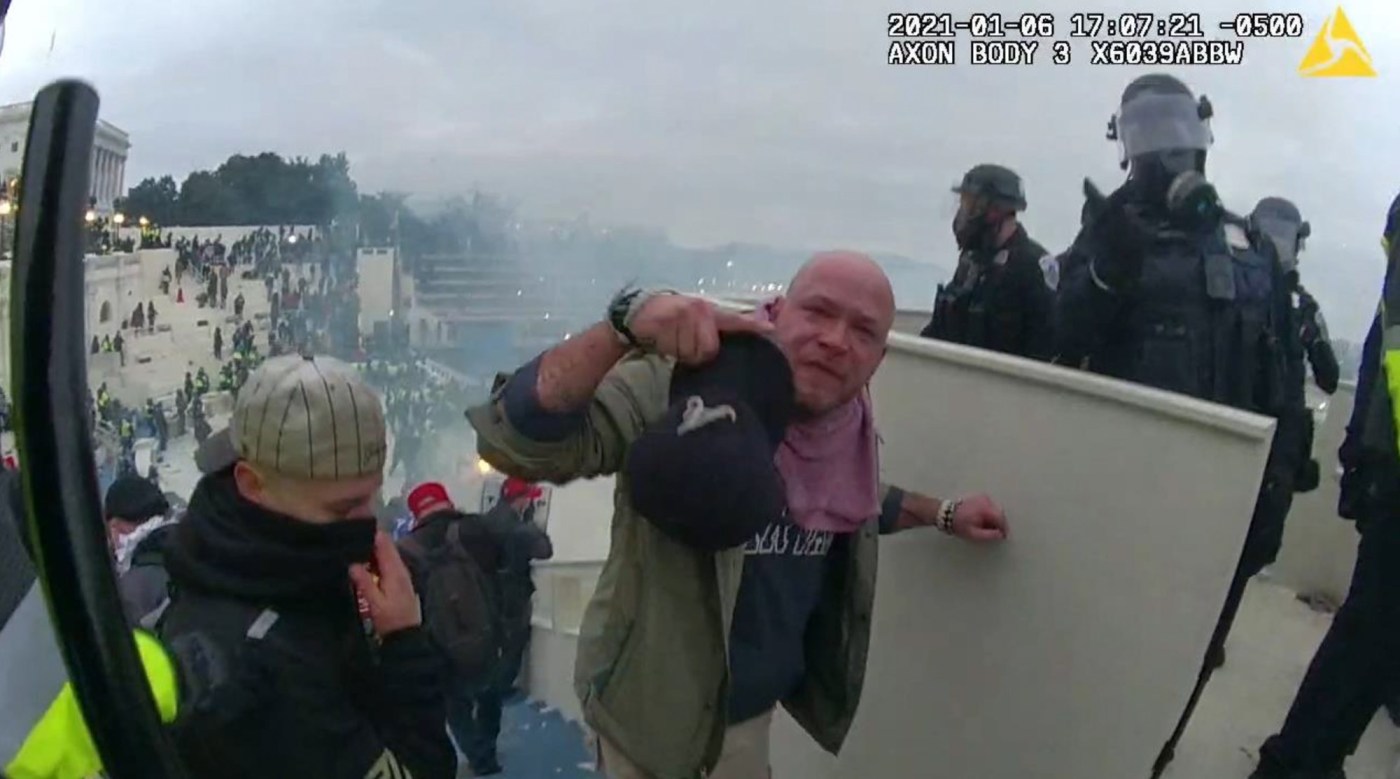
WASHINGTON (AP) — A Florida handyman who was sentenced on Thursday to life in prison for molesting two children had been convicted of storming the Capitol on Jan. 6, 2021, but was pardoned by President Donald Trump.
Related Articles
Elon Musk defends tweets in lawsuit alleging they caused Twitter stock to fall before acquisition
No chance asteroid will slam into the moon in 2032, NASA says
Suspect in custody in Colorado in the case of 3 women found dead in Utah
Man on trial in assassination plot says possible targets included Trump, Biden, Haley
Savannah Guthrie makes offscreen visit to ‘Today’ show, first since her mother went missing
Andrew Paul Johnson, 45, is among several Jan. 6 defendants who have been charged with new crimes since Trump’s sweeping act of clemency for Capitol rioters. On his first day back in the White House last year, Trump pardoned, commuted prison sentences or ordered the dismissal of cases for all 1,500-plus people charged in the attack.
Johnson was convicted last month of two counts of lewd or lascivious molestation of a child and one count of electronically transmitting material harmful to a minor, according to prosecutors in Hernando County, Florida. County Circuit Judge Judge Stephen Toner handed down Johnson’s life sentence.
Sheriff’s deputies began investigating the child molestation allegations against Johnson in July 2025. One of his victims told investigators that the abuse started around April 2024, several months before Johnson was sentenced for his Capitol riot conviction.
Johnson told one of his victims that he expected to be compensated for being a pardoned Jan. 6 defendant and would be putting the child in his will to inherit any leftover money, according a sheriff’s office report.
“This tactic was believed to be used to keep (the child) from exposing what Andrew had done,” the report said.
Investigators found sexually explicit messages that Johnson exchanged with one of his victims on the Discord messaging app, according to Fifth Judicial Circuit State Attorney Bill Gladson’s office.
“In the messages, Johnson attempted to have the victim download another application for a more private conversation and encouraged the victim to delete their messages afterwards,” Gladson’s office said in a news release.
Chief U.S. District Court Judge James Boasberg in Washington sentenced Johnson in August 2024 to one year behind bars after he pleaded guilty to four misdemeanor charges stemming from the riot. Johnson had asked to withdraw his guilty plea, claiming that he was pressured into it, but the judge rejected his request before sentencing.
Johnson, of Seffner, Florida, was carrying a bullhorn as he marched to the Capitol after attending Trump’s “Stop the Steal” rally near the White House. He entered the building through an office window that other rioters had smashed, according to federal prosecutors. Johnson cursed and yelled at police officers after they used tear gas to disperse the mob of Trump supporters, prosecutors said.
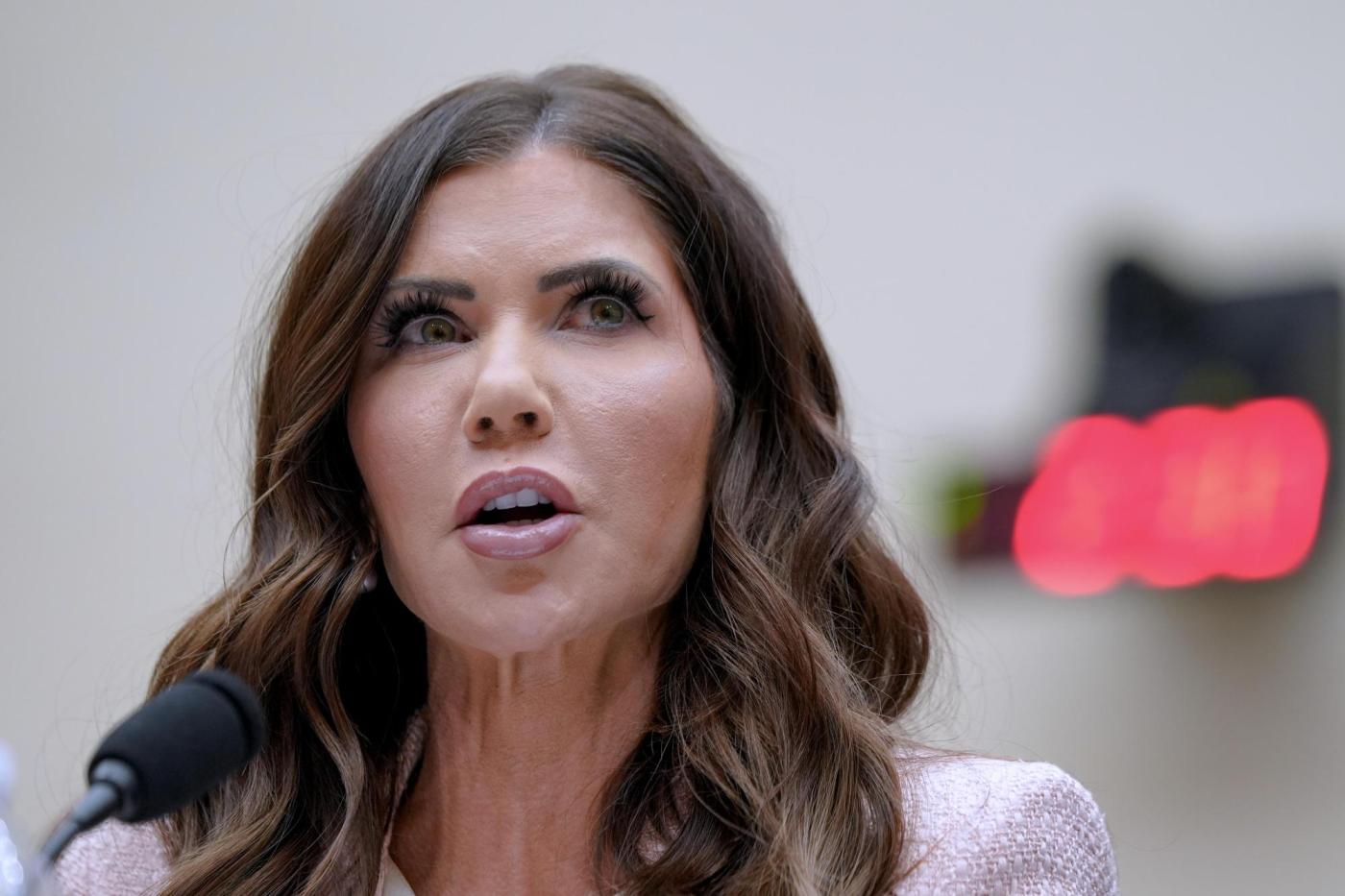
WASHINGTON — President Donald Trump on Thursday fired his embattled Homeland Security Secretary Kristi Noem, after mounting criticism over her leadership of the department, including the handling of the administration’s immigration crackdown and disaster response.
Trump, who said he would nominate in her place Oklahoma Republican Sen. Markwayne Mullin, made the announcement on social media on Thursday, two days after Noem faced a grilling on Capitol Hill from GOP members as well as Democrats.
FILE – Sen. Markwayne Mullin, R-Okla. speaks during a Senate Armed Services Committee hearing, Jan. 14, 2025, on Capitol Hill in Washington. (AP Photo/Jacquelyn Martin, File)
Trump says he’ll make Noem a “Special Envoy for The Shield of the Americas,” a new security initiative that he said would focus on the Western Hemisphere.
Noem, took the stage to address a Department of Homeland Security event moments after Trump’s announcement but made no immediate mention of her ouster. Instead, she read from prepared remarks, including reinforcing Trump’s message from the State of the Union last month.
Noem is the first Cabinet secretary to leave during Trump’s second term. Noem’s departure caps a tumultuous tenure overseeing immigration enforcement tactics that have been met with protests and lawsuits.
Noem’s tenure looked increasingly short-lived after hearings in Congress this week where she faced rare but blistering criticism from Republican lawmakers. One particular point of scrutiny was a $220 million ad campaign featuring Noem that encouraged people in the country illegally to leave voluntarily.
Noem told lawmakers that Trump was aware of the campaign in advance, but Trump disputed that in an interview Thursday with Reuters, saying he did not sign off on the ad campaign.
Noem has faced waves of criticism as she’s overseen Trump’s immigration crackdown, especially since the shooting deaths of two protesters in Minneapolis at the hands of immigration enforcement officers. The former South Dakota governor was also criticized over the way her department has spent billions of dollars allocated to it by Congress.
Related Articles
House Republican leaders urge Gonzales to end reelection bid after he admitted to affair with aide
More than 20 states sue over new global tariffs Trump imposed after his stinging Supreme Court loss
‘Christ is king’ becomes a loaded phrase in US political debates, especially on the right
Panel reviewing Trump’s White House ballroom project will vote on it April 2
Families turn to states for civil rights support as Trump dismantles the Education Department
Frustrations over Noem’s execution of the Republican president’s hard-line immigration agenda — particularly her leadership after the shooting deaths of the two U.S. citizens in Minneapolis — as well as her handling of disaster response, paved the way for her downfall. She faced blistering criticism from Democrats, and some Republicans, in Congress hearings this week over those issues and others.
Aside from immigration, Noem also faced criticism — including from Republicans — over the pace of emergency funding approved through the Federal Emergency Management Agency and for the Trump administration’s response to disasters.
Mullin would need to be confirmed by the Senate, but under a federal law governing executive branch vacancies, he would be allowed to serve as an acting Homeland Security secretary as long as his nomination is formally pending.
Navigating conversations with children about war, conflict and other traumatic events
Man on trial in assassination plot says possible targets included Trump, Biden, Haley
Meet Pedro Sánchez, Europe’s most vocal critic of Trump’s attacks on Iran
Panic in Beirut as Israel warns people to evacuate from the city’s southern suburbs
Chaos sown by Iran’s attacks across the Persian Gulf is key to its strategy
All of the above are part of the Trump administration’s shifting rationale for pummeling Iran and killing its leader without first seeking the buy-in of Congress and U.S. allies. There’s more that’s unclear about the widening war launched by the president and Board of Peace leader — including an exit strategy, a timeline and who President Donald Trump wants to take control of Iran from what he calls the “sick people” who run it now.
What makes the latest U.S.-Iran conflict different from a series of others is that the Trump administration’s own officials do not appear to be clear or uniform on the important questions at hand: Why and why now?
“It’s the standard practice to agree on the rationale before you start and then stick to delivering a consistent messaging,” said David Schenker, a former Trump administration official who is now a fellow at the Washington Institute for Near East Policy. “But that’s a challenge for this administration.”
By Wednesday, the White House was describing the Republican president’s decision to launch Operation Epic Fury as a consideration of past Iranian threats to the U.S. “and the president’s feeling, based on fact, that Iran does pose an imminent and direct threat to the United States of America.” Analysts say that’s unclear.
Here’s a curated selection of the Trump administration’s explanations over the last week as the U.S.-Israel conflict with Iran expanded into a war.
FILE – Secretary of State Marco Rubio, left, speaks next to Defense Secretary Pete Hegseth during a meeting between U.S. President Donald Trump with NATO Secretary General Mark Rutte at the NATO summit of heads of state and government in The Hague, Netherlands, June 25, 2025. (Brendan Smialowski/Pool Photo via AP, file)
FILE – Boys stand on a launcher of an Iranian domestically-built missile during an annual rally marking 1979 Islamic Revolution at the Azadi (Freedom) sq. in Tehran, Iran, Feb. 11, 2026. (AP Photo/Vahid Salemi, file)
FILE – The Iranian national flag flies during a special session of an IAEA Board of Governors meeting in Vienna, Austria, March 2, 2026. (AP Photo/Heinz-Peter Bader, file)
FILE – A Qadr H long-range ballistic surface-to-surface missile is fired by Iran’s powerful Revolutionary Guard during a maneuver in an undisclosed location in Iran, March 9, 2016. (AP Photo/Omid Vahabzadeh, File)
President Donald Trump speaks during a meeting with German Chancellor Friedrich Merz in the Oval Office at the White House, Tuesday, March 3, 2026, in Washington. (AP Photo/Mark Schiefelbein)
1 of 5
FILE – Secretary of State Marco Rubio, left, speaks next to Defense Secretary Pete Hegseth during a meeting between U.S. President Donald Trump with NATO Secretary General Mark Rutte at the NATO summit of heads of state and government in The Hague, Netherlands, June 25, 2025. (Brendan Smialowski/Pool Photo via AP, file)
WHAT THEY SAID after the U.S.-Israel strikes on Iran last summer:
— “THE NUCLEAR SITES IN IRAN ARE COMPLETELY DESTROYED!” — Trump in a June 24, 2025, post on Truth Social.
WHAT THEY SAID after a reported intelligence analysis suggested Iran’s nuclear program had only been set back a few months:
— “That is a false story, and it’s one that really shouldn’t be re-reported.” — Secretary of State Marco Rubio in a June 25, 2025, interview with Politico.
— “If we didn’t do what we’re doing right now, you would have had a nuclear war and they would have taken out many countries because, you know what? They’re sick people.” — Trump on Tuesday at the White House.
THE BACKGROUND:
Iran has long insisted its program is peaceful, but the United Nations’ nuclear watchdog and Western nations say Tehran had an organized nuclear weapons program up until 2003.
The current state of the program remains a mystery as officials have not allowed the International Atomic Energy Agency access to the nuclear facilities that were bombed since June. That is according to a confidential report by the watchdog circulated to member states and seen Feb. 27 by The Associated Press.
Iran is legally obliged to cooperate with the IAEA under the Treaty on the Non-Proliferation of Nuclear Weapons, but it suspended all cooperation after the war with Israel.
Iran’s ballistic missiles
WHAT THEY SAID:
— “Iran possesses a very large number of ballistic missiles, particularly short-range ballistic missiles, that threaten the United States and our bases in the region, and our partners in the region, and all of our bases in the UAE, Qatar and Bahrain.” — Rubio to reporters on Feb. 25.
— “The regime already had missiles capable of hitting Europe and our bases — both local and overseas — and would soon have had missiles capable of reaching our beautiful America.” — Trump during a Medal of Honor ceremony at the White House on Monday.
— Iran “was building powerful missiles and drones to create a conventional shield for their nuclear blackmail ambitions.” — Defense Secretary Pete Hegseth during the Monday Pentagon briefing.
THE BACKGROUND:
Iran hasn’t acknowledged that it is seeking to build intercontinental ballistic missiles. The country currently has a self-imposed limit on its ballistic missile program, limiting their range to 2,000 kilometers (1,240 miles). That puts all of the Mideast and some of Eastern Europe in range.
Trump administration officials told congressional staffers in private briefings on Sunday that U.S. intelligence did not suggest Iran was preparing to launch a preemptive strike against the U.S. The administration officials instead acknowledged there was a more general threat from Iran and proxy forces.
“There’s been a lot of reporting that the assessments from the intelligence and military didn’t suggest that there was going to be an Iranian first strike,” said Naysan Rafati, senior Iran analyst at the Washington-based International Crisis Group. “My sense has been that opportunity is at least as much of a significant factor as threats, certainly.”
Israel’s role
WHAT THEY SAID:
— “We knew that there was going to be an Israeli action. And we knew that if we didn’t preemptively go after (Iran) before they launched those attacks, we would suffer higher casualties.” — Rubio to reporters on Monday.
— “Israel was determined to act in its own defense here, with or without American support.” — House Speaker Mike Johnson, R-La., told reporters. If that happened, he added, “exquisite intelligence” by the U.S. indicated that Iran would retaliate against American assets. “If we had waited, the consequences of inaction on our part could have been devastating,” he said.
— “No,” Trump told reporters at the White House on Tuesday, when asked if Israel had forced his hand on attacking Iran. “If anything, I might have forced Israel’s hand.”
THE BACKGROUND:
There is no sign that Israel was forced into cooperating with the U.S. in the strike.
An Israeli military official, on customary condition of anonymity, on Wednesday described lockstep planning between the U.S. and Israel. Three weeks before the strikes, Israel understood that the operation was pointing toward another confrontation with Iran and sent a team to the Pentagon, the official said. On Friday, the Israeli army deliberately suggested that the military was standing down for the weekend, releasing photos suggesting that staffers and senior commanders were heading home for Shabbat dinner.
The shared information allowed the strikes to be carried out hours later in a surprise daylight attack, people familiar with the operation told the AP over the weekend. The eventual barrage of U.S.-Israeli attacks on Iran came so quickly that they were nearly simultaneous — with three strikes in three locations hitting within a minute — killing Khamenei and some 40 senior figures, another Israeli military official said Sunday.
During the strikes, the U.S. and Israeli war rooms were synchronized in real time to allow for quick adjustments, the first Israeli military official said Wednesday.
In a televised address, Prime Minister Benjamin Netanyahu declared that Israel had carried out the strikes “in full cooperation” with the U.S.
Trump has been both for and against regime change in Iran. Now what?
WHAT THEY SAID:
— “If Iran shoots and violently kills peaceful protesters, which is their custom, the United States of America will come to their rescue. We are locked and loaded and ready to go.” — Trump on Truth Social on Jan. 2.
— “When we are finished, take over your government. It will be yours to take.” — Trump to Iranians on Truth Social just after the first strikes.
— “This is not a so-called regime change war. But the regime sure did change, and the world is better off for it.” — Hegseth at the Pentagon on Monday.
And in Iran, the CIA in 1953 helped engineer a coup that toppled Iran’s democratically elected leader and gave near-absolute power to Shah Mohammad Reza Pahlavi. But as with the shah, who was overthrown in Iran’s 1979 Islamic Revolution, regime change rarely goes as planned.
That’s in part because it’s fundamentally out of Trump’s complete control, as he acknowledged Tuesday.
“Most of the people we had in mind are dead,” he told reporters. “Now we have another group. They may be dead also based on reports. So, I guess you have a third wave coming, and pretty soon we’re not going to know anybody.”
Josef Federman and Julia Frankel in Jerusalem contributed to this report from Jerusalem.
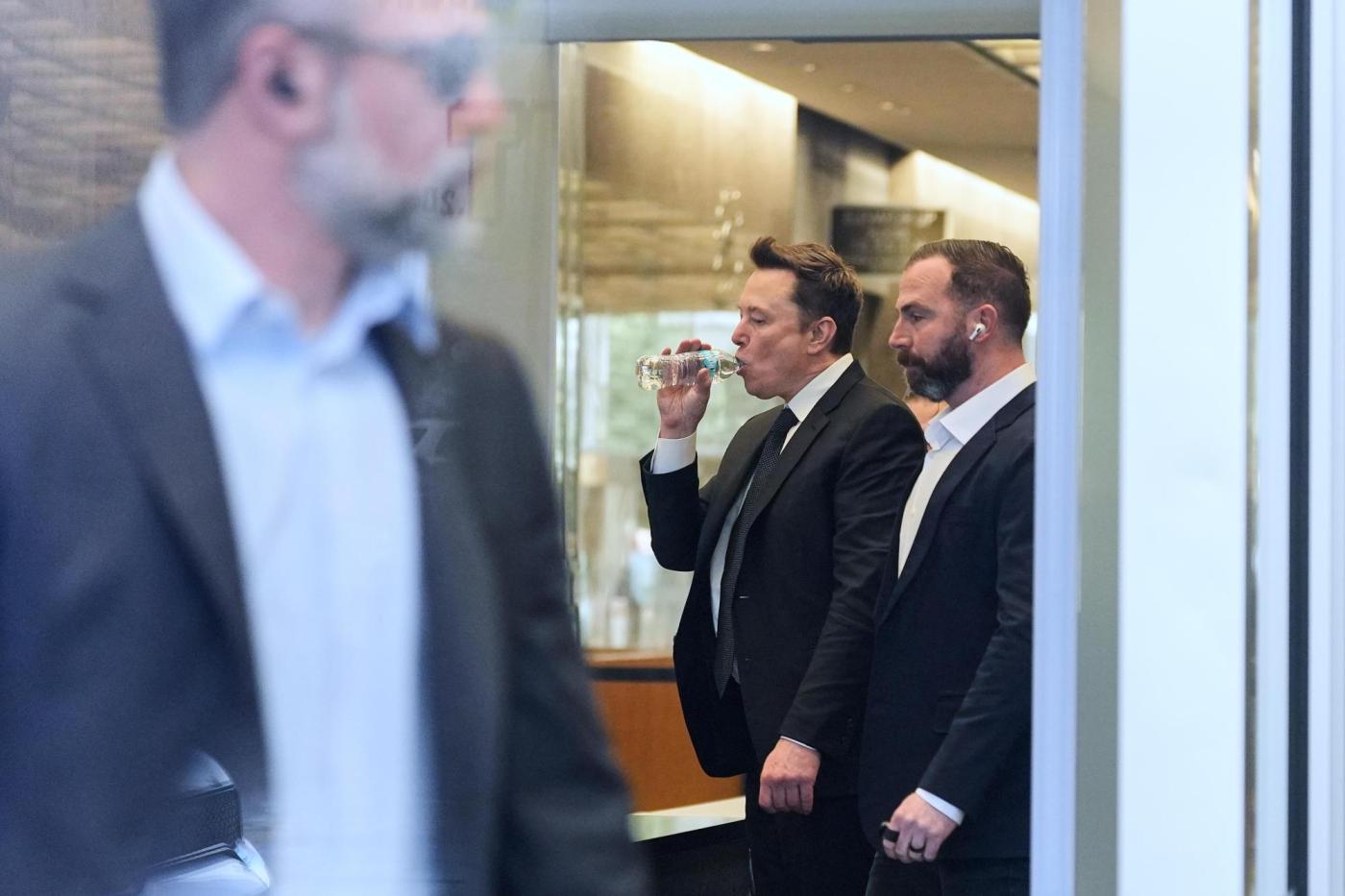
SAN FRANCISCO (AP) — Elon Musk continued to defend his actions in the months leading up to his 2022 purchase of Twitter in court Thursday as he faces a class action lawsuit claiming he misled investors and caused them to lose millions of dollars.
Related Articles
Average US long-term mortgage rate ticks up to 6%, ending a three-week slide
Best tax software of 2026
US jobless claims filings unchanged from previous week at 213,000 as layoffs remain low
Dow drops 1,000 points as oil prices climb more
Inver Grove Heights: Could former Travel Tags site add up to new data center?
The civil trial in San Francisco centers on a class-action lawsuit filed just before Musk took control of Twitter, a social media service he renamed X, in October 2022, six months after agreeing to buy the embattled company for $44 billion, or $54.20 per share.
The case, which represents Twitter shareholders who sold the stock between May 13 and Oct. 4, 2022, revolves around allegations that Musk violated federal securities laws while taking a series of calculated steps to drive down the company’s stock price in an attempt to either blow up the deal or wrangle a lower sales price.
Taking the stand for the second day, Musk continued to double down on his assertion that Twitter had a much higher number of fake and spam accounts than the 5% it disclosed in regulatory filings.
Elon Musk, right, arrives for a Twitter shareholder trial at the U.S. District Court for the Northern District of California in San Francisco, on Wednesday, March 4, 2026. (AP Photo/Godofredo A. Vásquez)
Attorney Stephen Broome, who represents Elon Musk, arrives for a Twitter shareholder trial at U.S. District Court for the Northern District of California, Wednesday, March 4, 2026, in San Francisco. (AP Photo/Godofredo A. Vásquez)
Elon Musk, left, arrives for a Twitter shareholder trial at the U.S. District Court for the Northern District of California, Wednesday, March 4, 2026, in San Francisco. (AP Photo/Godofredo A. Vásquez)
1 of 3
Elon Musk, right, arrives for a Twitter shareholder trial at the U.S. District Court for the Northern District of California in San Francisco, on Wednesday, March 4, 2026. (AP Photo/Godofredo A. Vásquez)
The problem of bots and fake accounts on Twitter wasn’t new at the time Musk negotiated the deal. The company had paid $809.5 million in 2021 to settle claims it was overstating its growth rate and monthly user figures. Twitter also disclosed its bot estimates to the Securities and Exchange Commission for years, while also cautioning that its estimate might be too low.
But Musk and some outside analysts say the number was much higher, at least 20%. Saying the bot number was at least this high was like “saying the grass is green or the sky is blue,” Musk said.