By JACQUELYN MARTIN
Lying breathless on the floor next to a pool table, Mary Bocock pulls a stretchy exercise band in tandem with Keely Cashman. Laughing, they encourage each other to keep going. Next to them, Ava Sunshine cycles through sets of heavy barbell weights in a makeshift gym in the Copper Mountain condo where the U.S. women’s ski team is staying.
World champ Malinin leads one of the strongest US Figure Skating teams ever into Winter Olympics
Lindsey Vonn rising once again
Lindsey Vonn impresses in 2nd victory of Olympic season
No flag, anthem or parade: An isolated Winter Olympics beckons for Russian athletes
What to know about biathlon at the Milan Cortina Winter Olympics
“When I first came on, I was a little nervous about how it was going to be, but everyone was super welcoming especially the older girls,” says Sunshine, 23, who has been on the team since 2022. “It was very, ‘‘let’s lift up these rookies.’”
Veteran racer Nina O’Brien even wrote welcoming notes to all the newcomers. “That was super nice,” Sunshine says. “We have a mentor-mentee program. It’s less getting advice and more like having an automatic friend.”
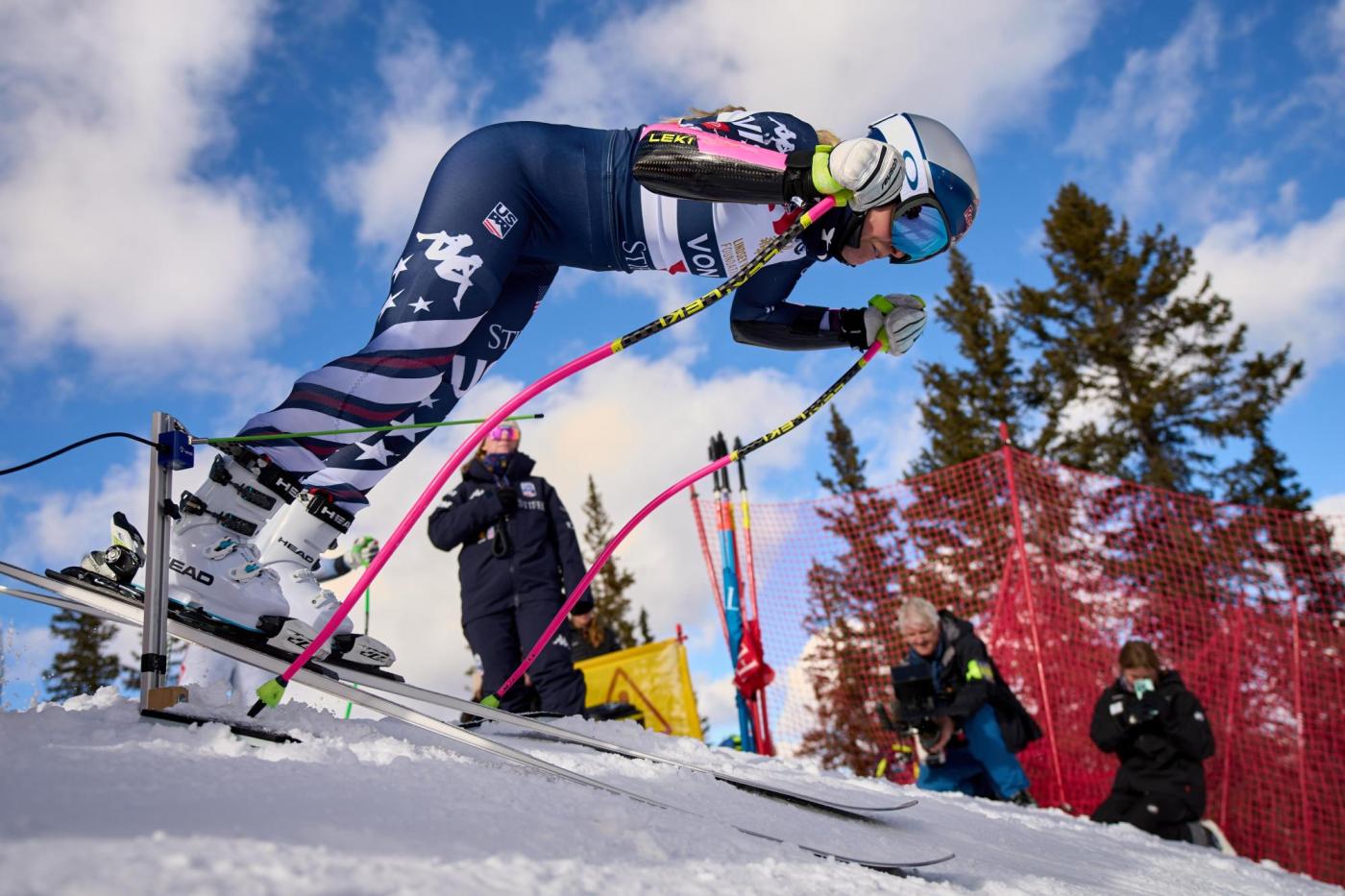
This collection of U.S. ski racers has become a close-knit group, bonded by traveling together, playing pool, working out — and the constant desire to get faster on skis.
The closer they become, the more they want to inspire each other. That’s the feeling for Lauren Macuga, out for the season after recently tearing her ACL.
“One person does well one week and then everyone comes along with them,” Macuga says. “It’s so cool to see. I think we have this really healthy relationship of wanting each other to do well. … We just keep building all together.”
Lindsey Vonn, 41, the legendary racer who came out of retirement last season and will compete at her fifth Olympic Games in Italy, may have instant name recognition, but on the U.S. Women’s Ski Team she is also just part of the crew. Even as the three-time Olympic medal winner gets swamped by excited kids holding out their helmets for autographs, she’s willing to dispense advice to the next generation.
“It’s so cool to have people like Lindsey to ask tactical advice on the course … who I grew up admiring in ski racing,” says Bocock, 22.
Jackie Wiles, 33, also takes others under her wing. “As a veteran, I remember experienced teammates helping me,” Wiles says. “I’m lucky to be able to continue that for the young ones.”
At the top of Copper Mountain in Colorado, many essential items are on hand to assist the athletes training for the World Cup season and, down the road, the Winter Olympics.
There are items for stretching, warming up and a key ingredient to help power them down the mountain — Sour Patch Kids candy. Handfuls were dispensed into waiting gloves while team members prepared for practice on a sunny but brisk recent day.
One rule the team tries to live by: making sure no one feels left out. If, for instance, two team members go out to dinner, they always make sure everyone receives an invitation.
“It’s a hard and lonely and frustrating sport,” says teammate Tricia Mangan, “so to have a good environment around you is so important.”
AP Olympics: https://apnews.com/hub/milan-cortina-2026-winter-olympics
Skier Lauren Macuga, left, looks at her cell phone with ski technician Rok Javor and skier Jackie Wiles as they take the chairlift up the hill for U.S. Women’s Ski Team practice at Copper Mountain, Colo., Nov. 19, 2025. (AP Photo/Jacquelyn Martin)
Mary Bocock waves at a teammate after arriving for practice with the U.S. Women’s Ski Team at Copper Mountain, Colo., Nov. 19, 2025. (AP Photo/Jacquelyn Martin)
Members of the U.S. Women’s Ski Team including Lindsey Vonn, center, with Tricia Mangan, of Buffalo, NY, left, joke together after making a dancing video for social media at Copper Mountain, Colo., Nov. 19, 2025. (AP Photo/Jacquelyn Martin)
Skier Bella Wright, 28, of Salt Lake City, poses for a photograph by the team photographer in a makeshift studio inside an underground parking garage at Copper Mountain, Colo., Nov. 19, 2025. (AP Photo/Jacquelyn Martin)
Skier Jackie Wiles, left, of Portland, jumps for a fun photo being taken by skier Bella Wright, 28, of Salt Lake City, between shoots by the team photographer in a makeshift photo studio in an underground parking garage at Copper Mountain, Colo., Nov. 19, 2025. (AP Photo/Jacquelyn Martin)
Her nails painted in an ode to Japanese nail art, skier Bella Wright, 28, of Salt Lake City, waits for her turn for a portrait by the team photographer at a makeshift photo studio in an underground parking garage at Copper Mountain, Colo., Nov. 19, 2025. (AP Photo/Jacquelyn Martin)
Skier Jackie Wiles, of Portland, Ore., skateboards while waiting for her turn for a photo shoot by the team photographer in a makeshift photo studio in an underground parking garage at Copper Mountain, Colo., Nov. 19, 2025. (AP Photo/Jacquelyn Martin)
Members of the U.S. Women’s Ski Team have a team meeting with coaches after a full day of practice at Copper Mountain, Colo., Nov. 19, 2025. (AP Photo/Jacquelyn Martin)
Skier Lauren Macuga, 23, of Park City, Utah, laughs while playing pool with members of the U.S. Women’s Ski Team after practice at Copper Mountain, Colo., Nov. 19, 2025. (AP Photo/Jacquelyn Martin)
Members of the U.S. Women’s Ski Team, Mary Bocock, 22, of Salt Lake City, left, and Keely Cashman, 26, of Strawberry, Calif., right, who is sporting a tattoo of the Olympic rings on her forearm, do arm exercises as part of “dryland training” after ski practice at Copper Mountain, Colo., Nov. 20, 2025. (AP Photo/Jacquelyn Martin)
U.S. Women’s Ski Team skier Lauren Macuga, 23, of Park City, Utah, is high-fived by U.S. Women’s Alpine Speed Team Physical Therapist Shannon Colleton, right, during Macuga’s physical therapy session at Copper Mountain, Colo., Nov. 20, 2025. (AP Photo/Jacquelyn Martin)
After lunch in the condo they share during training, skiers Jackie Wiles, of Portland, Ore., left, and Bella Wright, of Salt Lake City, leave to meet members of the U.S. Women’s Ski Team at Copper Mountain, Colo., Nov. 19, 2025. (AP Photo/Jacquelyn Martin)
Skier Keely Cashman, 26, of Strawberry, Calif., rides the chairlift up for practice with the U.S. Women’s Ski Team at Copper Mountain, Colo., Nov. 20, 2025. (AP Photo/Jacquelyn Martin)
Skier Allison Mollin, right, watches as Foreste Peterson, a strength coach, demonstrates an exercise during U.S. Women’s Ski Team practice in Copper Mountain, Colo., Nov. 20, 2025. (AP Photo/Jacquelyn Martin)
Skier Bella Wright, 28, of Salt Lake City, heads down the hill for a practice run with members of the U.S. Women’s Ski Team at Copper Mountain, Colo., Nov. 20, 2025. (AP Photo/Jacquelyn Martin)
Skier Lindsey Vonn chats with fan Lauren Krip, 9, of Puerto Rico, after members of the U.S. Women’s Ski Team took a team photo after practice at Copper Mountain, Colo., Nov. 19, 2025. (AP Photo/Jacquelyn Martin)
Members of the U.S. Women’s Ski Team, including Lindsey Vonn, bottom right, and Breezy Johnson, top left, joke together while gathering for a team photo at Copper Mountain, Colo., Nov. 19, 2025. (AP Photo/Jacquelyn Martin)
Skier Allison Mollin takes a run during practice with the U.S. Women’s Ski Team at Copper Mountain, Colo., Nov. 19, 2025. (AP Photo/Jacquelyn Martin)