Malaysia and Indonesia become the first countries to block Musk’s Grok over sexualized AI images

posted in: All news | 0

By EILEEN NG and EDNA TARIGAN, Associated Press

KUALA LUMPUR, Malaysia (AP) — Malaysia and Indonesia have become the first countries to block Grok, the artificial intelligence chatbot developed by Elon Musk’s company xAI, as concerns grew among global authorities that it was being misused to generate sexually explicit and nonconsensual images.

Related Articles


Trump says Iran wants to negotiate as the death toll in protests rises to at least 544


China says US shouldn’t use other countries as ‘pretext’ to pursue its interests in Greenland


Today in History: January 12, Joe Namath, New York Jets win Super Bowl III


Why Israel is divided over how to investigate Oct. 7 failures


Today in History: January 11, Mark McGwire admits to steroids use

The moves reflect growing scrutiny of generative AI tools that can produce realistic images, sound and text and concern that existing safeguards are failing to prevent their abuse. The Grok chatbot, which is accessed through Musk’s social media platform X, has been criticized for generating manipulated images, including depictions of women in bikinis or sexually explicit poses, as well as images involving children.

Last week, Grok limited image generation and editing to paying users following a global backlash over sexualized deepfakes of people, but critics say it didn’t fully address the problem.

An emailed request for comment by The Associated Press to xAI resulted in an automated reply from the media support email address which stated, “Legacy Media Lies.” This was the same message received from a different email when asked for comment regarding the global backlash.

Regulators in the two Southeast Asian nations said that existing controls weren’t preventing the creation and spread of fake pornographic content, particularly involving women and minors. Indonesia’s government temporarily blocked access to Grok on Saturday, followed by Malaysia on Sunday.

“The government sees nonconsensual sexual deepfakes as a serious violation of human rights, dignity and the safety of citizens in the digital space,” Indonesian Communication and Digital Affairs Minister Meutya Hafid said in a statement Saturday.

The ministry said the measure was intended to protect women, children and the broader community from fake pornographic content generated using AI.

Initial findings showed that Grok lacks effective safeguards to stop users from creating and distributing pornographic content based on real photos of Indonesian residents, Alexander Sabar, director-general of digital space supervision, said in a separate statement. He said that such practices risk violating privacy and image rights when photos are manipulated or shared without consent, causing psychological, social and reputational harm.

In Kuala Lumpur, the Malaysian Communications and Multimedia Commission ordered a temporary restriction on Grok on Sunday, after what it said was “repeated misuse” of the tool to generate obscene, sexually explicit and nonconsensual manipulated images, including content involving women and minors.

The regulator said that notices issued this month to X Corp. and xAI demanding stronger safeguards drew responses that relied mainly on user reporting mechanisms.

“The restriction is imposed as a preventive and proportionate measure while legal and regulatory processes are ongoing,” it said, adding that access will remain blocked until effective safeguards are put in place.

Investigation launched in U.K.

Launched in 2023, Grok is free to use on X. Users can ask it questions on the social media platform and tag posts they’ve directly created or replies to posts from other users. Last summer, the company added an image generator feature, Grok Imagine, that included a so-called spicy mode that can generate adult content.

The Southeast Asian restrictions come amid mounting scrutiny of Grok elsewhere, including in the European Union, the United Kingdom, India and France.

On Monday, the U.K.’s media regulator said that it launched a formal investigation into whether Grok “complied with its duties to protect people in the U.K. from content that is illegal.”

The regulator, Ofcom, said that Grok-generated images of children being sexualized or people being undressed may amount to pornography or child sexual abuse material.

“The content created and shared using Grok in recent days has been deeply disturbing,” Technology Secretary Liz Kendall said.

___

Edna Tarigan reported from Jakarta, Indonesia.

Pope Leo XIV meets with Venezuelan opposition leader María Corina Machado in a surprise audience

posted in: All news | 0

ROME (AP) — Pope Leo XIV met with Venezuelan opposition leader and Nobel Peace Prize winner María Corina Machado in a private audience at the Vatican on Monday.

This image released by Vatican Media shows Pope Leo XIV meeting with Nobel Peace Prize laureate María Corina Machado of Venezuela, right, inside his private library at the Vatican, Monday, Jan. 12, 2026. (Vatican Media via AP, HO)

The meeting, which hadn’t been previously included in the list of Leo’s planned appointments, was later listed by the Vatican in its daily bulletin, without adding details.

Machado is touring Europe and the United States after she reemerged in December after 11 months in hiding to accept her Nobel Peace Prize in Norway.

Pope Leo, the first American pontiff, has called for Venezuela to remain an independent country after U.S. forces captured former Venezuelan President Nicolás Maduro from his compound in Caracas and flew him to New York to face federal charges of drug-trafficking.

Related Articles


Trump says Iran wants to negotiate as the death toll in protests rises to at least 544


China says US shouldn’t use other countries as ‘pretext’ to pursue its interests in Greenland


Today in History: January 12, Joe Namath, New York Jets win Super Bowl III


Why Israel is divided over how to investigate Oct. 7 failures


Today in History: January 11, Mark McGwire admits to steroids use

Leo had said he was following the developments in Venezuela with “deep concern,” and urged the protection of human and civil rights in the Latin American country.

Venezuela’s opposition, backed by consecutive Republican and Democratic administrations in the U.S., had vowed for years to immediately replace Maduro with one of their own and restore democracy to the oil-rich country. But U.S. President Donald Trump delivered them a heavy blow by allowing Maduro’s vice president, Delcy Rodríguez, to assume control.

Meanwhile, most opposition leaders, including Machado, are in exile or prison.

After winning the 2025 Nobel Prize for Peace, Machado said she’d like to give it to or share with Trump.

Machado dedicated the prize to Trump, along with the people of Venezuela, shortly after it was announced. Trump has coveted and openly campaigned for winning the Nobel Prize himself since his return to office in January 2025.

The organization that oversees the Nobel Peace Prize — the Norwegian Nobel Institute — said, however, that once it’s announced, the prize can’t be revoked, transferred or shared with others.

“The decision is final and stands for all time,” it said in a short statement last week.

US futures slip while world shares are mixed as Fed chair Powell faces legal threat

posted in: All news | 0

By ELAINE KURTENBACH and MATT OTT, Associated Press Business Writers

U.S. futures sank Monday after Federal Reserve Chair Jerome Powell said the Department of Justice had served the central bank with subpoenas and threatened it with a criminal indictment over his testimony about the Fed’s building renovations.

Related Articles


Business People: Richard Coffey named to lead Ujamaa Place


Double-decker downtown: Your guide to every lunch spot in the St. Paul skyways


Double-decker downtown: At skyway shop Cedar Printing, paper is hotter than ever


Double-decker downtown: Cycling Museum of Minnesota brings over a century of two-wheeled history to the skyway


Double-Decker Downtown: After 43 years, Paul Hartquist’s personal service keeps skyway jewelry store shining

Futures for the S&P 500 declined 0.5% before the opening bell, while futures for the Dow Jones Industrial Average fell 0.7%. Nasdaq futures slid 0.8%.

The threat of a criminal indictment over Powell’s testimony about the Fed’s building renovations is the latest escalation in President Donald Trump’s feud with the Fed. Trump has criticized the $2.5 billion renovation of two office buildings as excessive.

Trump has repeatedly attacked Powell and the Fed for not cutting its key interest rate as sharply as he prefers. The renewed fight is expected to rattle financial markets Monday and could over time escalate borrowing costs for mortgages and other loans.

Powell issued a video statement in which he bluntly characterized the threat of criminal charges as simple “pretexts” to undermine the Fed’s independence when it comes to setting interest rates.

In a brief interview with NBC News Sunday, Trump insisted he didn’t know about the investigation into Powell. When asked if the investigation is intended to pressure Powell on rates, Trump said, “No. I wouldn’t even think of doing it that way.”

Powell’s term as chair ends in May, and Trump administration officials have signaled that he could name a potential replacement this month. Trump has also sought to fire Fed governor Lisa Cook.

The renewed attacks on the Fed’s independence, and Powell’s full-throated defense, reignite what had appeared to be a dormant battle between Trump and the chair he appointed in 2017. The subpoenas will renew fears that the Fed’s independence from day-to-day politics will be compromised, which could undermine global investors’ confidence in U.S. Treasury securities.

Treasurys were modestly weaker early Monday following Powell’s video statement, with yields for the 2-year and 10-year both ticking up a couple of basis points.

Bank and credit card stocks tumbled in premarket after Trump said in a social media post that he wanted a one-year, 10% cap on credit card interest rates.

The hardest hit were Capital One Financial and Sychrony, which each fell more than 8% in premarket. Visa and Mastercard each retreated around 2%.

Shares of Wells Fargo and Bank of America were off close to 2%, while JPMorgan lost 2.8% and Citigroup slid 4%. Those big U.S. banks also report their latest financial results this week.

Trump was not clear whether a cap might take effect through executive action or legislation, but that he hoped the rule would be in place Jan. 20, one year after he took office.

Strong opposition is expected from Wall Street and the credit card companies, which donated heavily to Trump’s 2024 campaign.

Shares of ExxonMobil inched down after Trump said Sunday that he is “inclined” to keep the U.S. oil giant out of Venezuela after its top executive was skeptical about oil investment efforts in the country after the toppling of former President Nicolás Maduro.

Trump told reporters on Air Force One on Sunday that he didn’t like ExxonMobil’s response. “They’re playing too cute,” Trump said.

Shares of Chevron and ConocoPhillips were both up modestly in early trading Monday.

Investors will also be analyzing a several important economic reports this week, including an update on U.S. inflation at the consumer level on Tuesday, followed by a report on wholesale prices on Wednesday. New data on retail sales and the housing market also come this week.

Elsewhere, in Europe at midday the CAC 40 in Paris shed 0.1% and Britain’s FTSE 100 edged 0.1% higher. Germany’s DAX was up 0.5%.

In Asian trading, Hong Kong’s Hang Seng gained 1.4% to 26,608.48, while the Shanghai Composite index jumped 1.1% to 4,165.29 after reports that Chinese leaders were preparing more help for the economy.

Tokyo’s markets were closed for a holiday.

In South Korea, the Kospi added 0.8% to 4,624.79, while Australia’s S&P/ASX 200 gained 0.5% to 8,759.40.

Taiwan’s Taiex gained 0.9%.

U.S. benchmark crude oil gave up early gains, falling 20 cents to $58.91 per barrel. Brent crude, the international standard, shed 17 cents to $63.17 per barrel.

The price of gold rose 2.2% and the price of silver jumped 6%. Copper was up 1.4%.

Venezuelans in the US are torn between joy and worry after ousting of Maduro

posted in: All news | 0

By MICHAEL WEISSENSTEIN and ADAM GELLER, Associated Press

NEW YORK (AP) — In the days since the Trump administration ousted Venezuelan President Nicolás Maduro in a late-night military raid, Alejandra Salima has spoken to fellow Venezuelan migrants in her role as an advocate. Like her, most voice feelings that seesaw between joy and trepidation, she said.

The removal of Maduro is “a first step, but we’re nervous,” said Salima, who fled to the U.S. three years ago with her 7-year-old son and assists other Venezuelans at the Miami office of the National TPS Alliance. With the regime that Maduro led still in place, “at this moment, returning would put me and my son at risk,” she said.

For more than 770,000 Venezuelans living in the U.S., reactions to Trump’s forceful moves in the country they left behind — and the one that has taken them in — are as intense as they are complicated.

People celebrate after President Donald Trump announced Venezuelan President Nicolás Maduro had been captured and flown out of the country, in Doral, Fla., Saturday, Jan. 3, 2026. (AP Photo/Jen Golbeck)

Many are thrilled by the removal of Maduro, who harassed and jailed political opponents while presiding over an economic collapse, driving millions of Venezuelans from the country. But as they try to figure out what’s next for them and for families and friends still in Venezuela, many share Salima’s conflicted feelings.

The Trump administration’s move to deport Venezuelans without permanent residency has increased worry. Many were allowed to stay in the U.S. after they were granted Temporary Protected Status, or TPS, a designation Trump revoked after taking office. At the same time, the fear instilled by the government Maduro left behind makes many wary of returning.

“First, they grabbed Maduro, and I feel happy, happy, happy, grateful to the Trump administration,” said Manuel Coronel, a lawyer who left Venezuela in 2017 and now lives just north of Salt Lake City. But he worries the change will be too limited.

“They got him, but the criminals are still there,” said Coronel, who is 54 and works at an immigration law practice. “There’s no new government. Everything’s exactly the same.”

Manuel Coronel, a 54-year-old lawyer who left Venezuela in 2017 and eventually settled in Utah, sits for a portrait in front of the state’s Capitol Building in Salt Lake City, Friday, Jan. 9, 2026. (AP Photo/Hannah Schoenbaum)

No rush to return

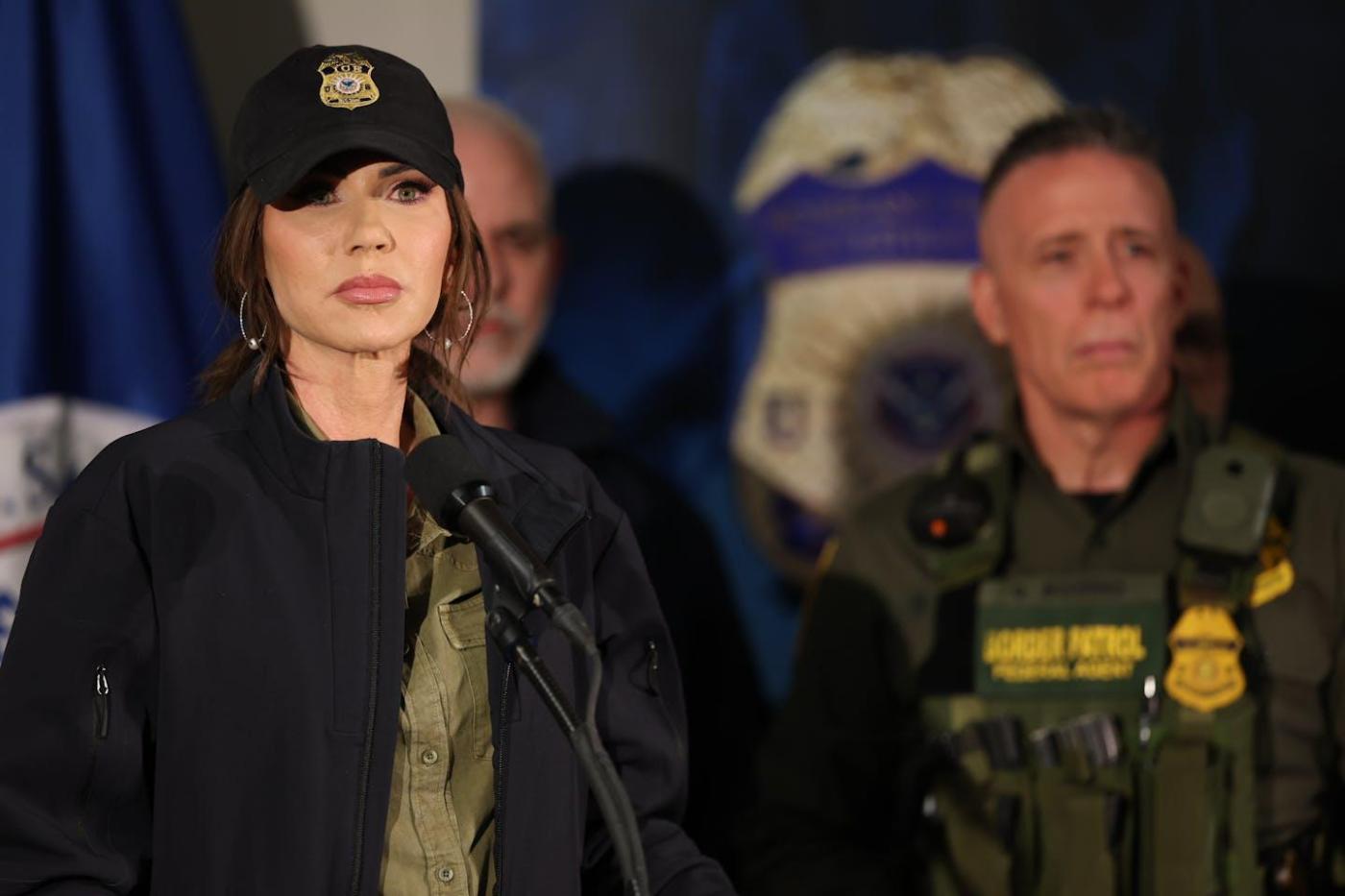
The tensions belie assurances by Homeland Security Secretary Kristi Noem, who asserted that “overwhelmingly the Venezuelans that I’ve heard from or talked to are excited about the changes.”

“They have more opportunities to go back to their country and have it be more successful and provide for their families today than they did a week ago when Maduro was still in charge,” Noem said last week.

But in interviews with Venezuelans who live in communities around the U.S. there was little indication of a rush to return.

Related Articles


Thousands of nurses go on strike at several major New York City hospitals


Today in History: January 12, Joe Namath, New York Jets win Super Bowl III


Federal Reserve Chair Powell says DOJ has subpoenaed central bank, threatens criminal indictment


A Minneapolis church holds a service of ‘Lament and Hope’ amid fears over immigration crackdown


Celebrities wear pins protesting ICE on the Golden Globes red carpet

“Thank God we’re here,” said José Luis Rojas, who ended up in New York City after fleeing the Venezuela capital of Caracas in 2018.

Rojas, 31, recounted how Venezuela’s hyperinflation, which topped 1 million percent the year he fled, made it impossible to buy essentials like diapers after his partner became pregnant. They went first to Ecuador then Peru, but left to escape crime, joining thousands of Venezuelans who migrated on foot through the jungle of Panama’s Darién Gap.

Since the couple and their son arrived in the U.S., Rojas has obtained political asylum, a work permit and a driver’s license.

In an interview this week at a Venezuelan restaurant on a New York City street lined with immigrant-run businesses, Rojas welcomed the toppling of Maduro “so there can be change in Venezuela, because many people are struggling.”

But he expressed doubt about the Trump administration’s tightened policies on Venezuelans in the U.S. that have already pushed a number of his friends to leave for countries in South America and elsewhere.

For Venezuelans in the U.S., Trump has “done good things and he’s done bad things,” said Rojas as he and his wife tucked into the restaurant’s $30 special: a heaping platter of fried potatoes, cassava, corn cakes, sausages, beef, chicken, plantains, fried pork rinds and cheese.

“It all depends on your point of view.”

New lives in the US

About 8 million Venezuelans have fled the country over the past decade, with the great majority landing elsewhere in Latin America. Hundreds of thousands have made their way to the U.S., with large numbers settling in suburban communities like Kissimmee, Florida, outside Orlando, and Herriman, Utah, outside Salt Lake City.

Venezuelans quickly became among the largest nationalities to immigrate to the U.S. after COVID-19, lured in part by job prospects. The Biden administration offered new or expanded temporary legal protections, largely ended by Trump after he took office. Hundreds of thousands more were released in the United States after entering illegally from Mexico to pursue asylum or other forms of relief in immigration court.

For people like Jesus Martinez, who fled to the U.S. in 2021 after facing physical threats and persecution, “life in Venezuela is behind us.”

Martinez, who now lives with his wife and children in Orem, Utah, and has applied for political asylum, recalled how life in Venezuela had become intolerable. While it is a relief that Maduro has been removed, he said, the Trump administration’s push to send Venezuelans back to a country whose government they still deeply distrust presents a paradox.

“It’s obviously a contradictory situation,” said Martinez, 50. He noted that it will take considerable time before loyalists to Maduro are rooted out and Venezuela can make a transition to a stable democracy.

Reservations about going back

Salima, 48, who works in the Miami advocacy office, was active in opposition politics in Venezuela, where she trained as a lawyer and marched in peaceful protests. She came to the U.S. legally with her son, who is now 10 years old, on a temporary permit for humanitarian reasons, which Trump has revoked. She is elated by Maduro’s ouster.

But those feelings are tempered by her unease over Venezuela’s future while his allies are still in power. Her mother remains in Venezuela and, even with Maduro gone, she refuses to discuss politics during chats on an encrypted app, fearful that government authorities who remain in power will find out, Salima said.

With that reality still in place, the pending end of Temporary Protected Status for Venezuelans makes her feel “very unstable,” Salima said.

Asking for a choice

Jorge Galicia, a Venezuelan political activist who requested asylum seven years ago, wears a Venezuelan flag around his neck, as he talks about his support of the capture of Venezuelan President Nicolas Maduro by the U.S., Monday, Jan. 5, 2026, in Doral, Fla. (AP Photo/Lynne Sladky)

Rallying with other Venezuelans this week in Doral, Florida, to celebrate Maduro’s ouster, Jorge Galicia recounted fleeing in 2018 after a fellow student activist was arrested during a wave of demonstrations against the regime.

After settling in the Miami area, Galicia said he joined Charlie Kirk’s conservative Turning Point USA movement, whose politics closely align with Trump’s. But Galicia, 30, said his support for the Trump administration began to waver as the White House’s crackdown on immigrants intensified, breaking up families.

Now, with Maduro gone, he expects many of the Venezuelans who fled to neighboring countries and the U.S. to start returning home. But he hopes Trump will reconsider his decision to deport Venezuelans like himself who have built new lives in the U.S. but still lack permanent status.

“The reason we’re here is because there was a horrible regime that forced millions of us to leave,” said Galicia, wrapped in a Venezuelan flag. But, he said, “everyone deserves to have the choice of returning home.”

Associated Press writers Valerie Gonzalez in McAllen, Texas; Josh Goodman in Doral, Florida; Elliot Spagat in San Diego and Hannah Schoenbaum in Salt Lake City contributed to this report.