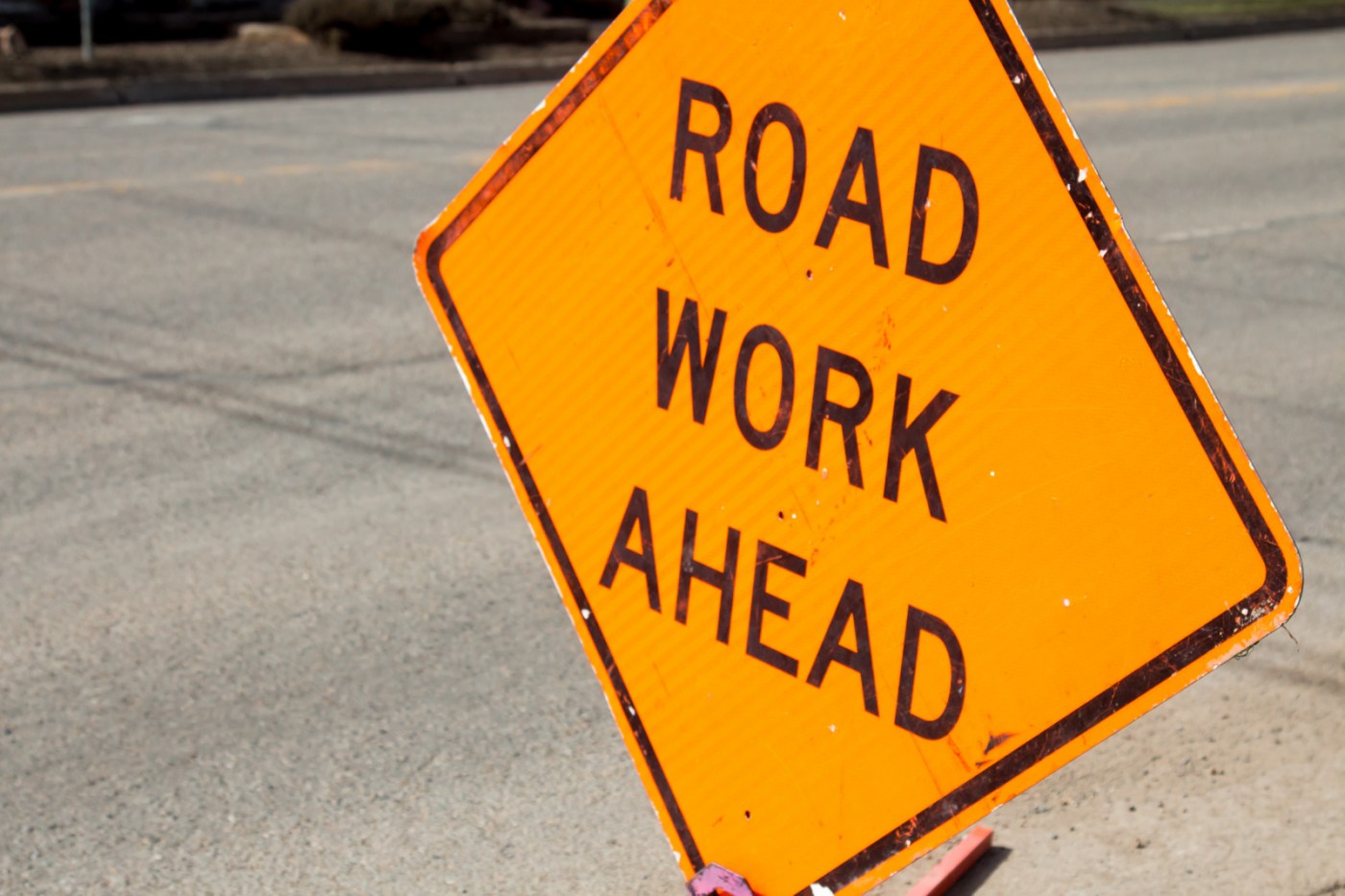
Public meetings are planned for road improvement projects for Minnesota Highway 280 from Interstate 94 in St. Paul to Minnesota Highway 36/Interstate 35W in Roseville.
The work — which will involve a closure of that section of the highway later this year — is scheduled to begin in April of 2026.
State Department of Transportation officials will host an in-person meeting from 5 to 7 p.m. on Wednesday, Jan. 21 at the CASE building atrium, located at 767 Eustis St. N, St. Paul. Those attending will learn about the project and can ask questions. No formal presentation is planned and those interested can stop by at any time.
Also, a virtual meeting is planned from 6 to 7 p.m. on Tuesday, Feb. 3. This meeting will include a presentation and those attending can ask questions. A link to register for the virtual meeting is available on the MnDOT project website.
Starting in April through fall of 2026, MnDOT will resurface that section of the highway as well as repair bridges, ramps, drainage and make additional improvements to make for a smoother, safer ride, according to MnDOT officials.
Closure of MN 280 from I-94 to MN 36/I-35W
Related Articles
Claire D. Way: Washington County snowplow naming contest finalists announced
Sun Country to merge with Allegiant in 2026
Allegiant to buy Sun Country Airlines in $1.5 billion deal
I-94 to close this weekend in both directions in downtown St. Paul
MN 280 from St. Paul to Roseville to fully close for portion of 2026
Motorists can expect a full closure of 280 from Interstate 94 to Highway 36/Interstate 35W in 2026. The will allow crews to handle construction quickly and safely.
That section of highway will reopen before the start of the State Fair in late August. After the State Fair, state officials say they will make efforts to limit traffic impacts to lane closures through the fall of 2026.
DUBAI, United Arab Emirates (AP) — The nationwide protests challenging Iran’s theocracy appeared increasingly smothered Thursday, a week after authorities shut the country off from the world and escalated a bloody crackdown that activists say has killed at least 2,637 people.
Related Articles
European troops arrive in Greenland as talks with US highlight ‘disagreement’ over island’s future
Trump is meeting with Venezuelan opposition leader after cozying up to Maduro’s successor
Remains of 32 Cuban officers killed during strike on Venezuela repatriated as US threat lingers
Turkish Airlines flight makes emergency landing in Barcelona after ‘threat’ alert
What’s next for Greenland and Denmark after difficult meeting with Trump administration
The prospect of U.S. retaliation for the deaths of protesters still hung over the region, though President Donald Trump signaled a possible de-escalation, saying the killing appeared to be ending.
Meanwhile, the U.S. announced new sanctions on Iranian officials accused of suppressing the protests, which began late last month over the country’s faltering economy and the collapse of its currency. The Group of Seven industrialized democracies and the European Union said they too were looking at new sanctions to ratchet up the pressure on Iran’s theocratic government.
The U.N. Security Council scheduled an emergency meeting on Iran for Thursday afternoon at the request of the United States.
In Iran’s capital, Tehran, witnesses said recent mornings showed no new signs of bonfires lit the night before or debris in the streets. The sound of gunfire, which had been intense for several nights, has also faded.
A man walks on a sidewalk in downtown Tehran, Iran, Thursday, Jan. 15, 2026. (AP Photo/Vahid Salemi)
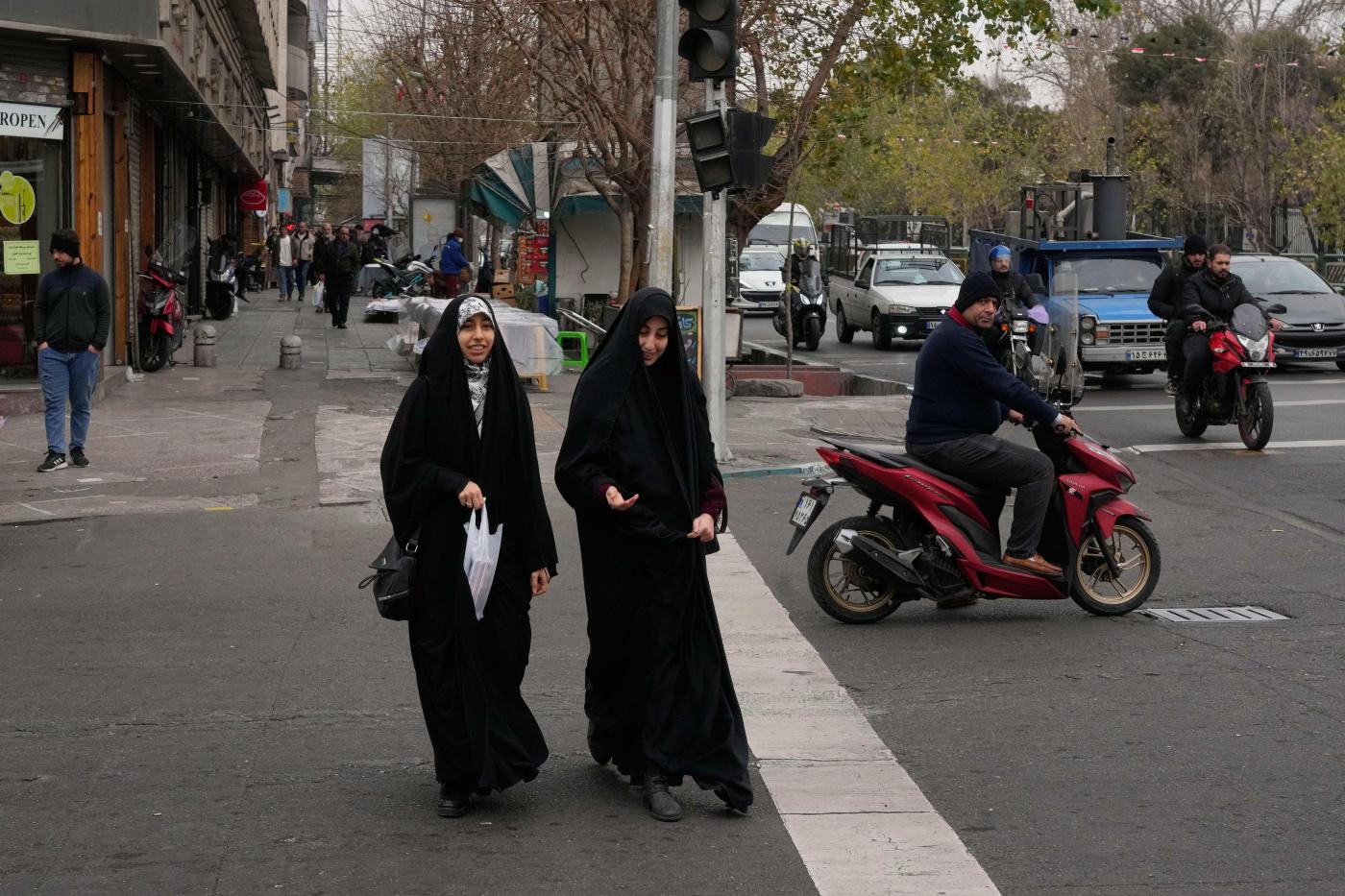
People cross an intersection in downtown Tehran, Iran, Thursday, Jan. 15, 2026. (AP Photo/Vahid Salemi)
People walk on a sidewalk in downtown Tehran, Iran, Thursday, Jan. 15, 2026. (AP Photo/Vahid Salemi)
A man looks at books which are placed for sale on a sidewalk in downtown Tehran, Iran, Thursday, Jan. 15, 2026. (AP Photo/Vahid Salemi)
Women cross an intersection in downtown Tehran, Iran, Thursday, Jan. 15, 2026. (AP Photo/Vahid Salemi)
1 of 5
A man walks on a sidewalk in downtown Tehran, Iran, Thursday, Jan. 15, 2026. (AP Photo/Vahid Salemi)
Iranian state media has announced wave after wave of arrests by authorities, targeting those it calls “terrorists” while also apparently looking for Starlink satellite internet dishes, which offer the only way to get videos and images out to the internet.
“Since Jan. 8, we saw a full-fledged war, and anybody who was in the gathering since then is a criminal,” said Justice Minister Amin Hossein Rahimi, according to a report Wednesday from the judiciary’s Mizan news agency.
Iranian state media broadcast a roster of damage from what it called a “terrorist operation,” including damage to hundreds of stores and public buildings, scores of cars and ambulances and several “heritage sites.” including mosques and shrines.
China’s foreign ministry said Iranian Foreign Minister Abbas Araghchi told his Chinese counterpart that the situation in the country was now stable.
But as Iran tries to assert control at home, it has signaled worries about threats from abroad, including the United States, which has threatened military action over the killing of peaceful demonstrators. Tensions soared after Trump’s comment Tuesday that “help is on its way” to Iranian protesters.
The Islamic Republic shut down its airspace for hours early Thursday without explanation, something it has done in previous rounds of attacks between it and Israel, as well as during the 12-day war in June. The U.S. also took steps to move some personnel from Qatar’s Al Udeid Air Base while warning diplomats in Kuwait to stay away from military bases where American troops are stationed. Britain closed its Tehran embassy and withdrew British staff from Iran.
Airspace shut
The airspace closure lasted for over four hours, according to pilot guidance issued by Iran, which lies on a key east-west flight route. International carriers diverted north and south around Iran, but after one extension, the closure appeared to have expired, and several domestic flights were in the air just after 7 a.m.
Even before the closure, several international airlines had reduced or suspended services to Iran, “and most carriers are avoiding Iranian airspace,” said the website SafeAirspace, which provides information on conflict areas and air travel. “The situation may signal further security or military activity, including the risk of missile launches or heightened air defense, increasing the risk of misidentification of civil traffic.”
Videos of demonstrations have stopped coming out of Iran, likely signaling the slowdown of their pace under the heavy security force presence in major cities. In the meantime, protests against Iran have been held around the world as global attention has focused on the crackdown.
Trump made a series of statements that left unclear what action, if any, the U.S. would take. In comments to reporters Wednesday, Trump said he had been told that plans for executions in Iran have stopped, without providing many details. On Thursday he hailed as “good news” reports that a protester’s death sentence had been lifted.
Araghchi, Iran’s foreign minister, also sought to tone down the rhetoric, urging the U.S. to find a solution through negotiation.
Asked by Fox News what he would say to Trump, Araghchi said: “My message is: Between war and diplomacy, diplomacy is a better way, although we don’t have any positive experience from the United States. But still diplomacy is much better than war.”
Activists warned that hangings of detainees could come soon, though Araghchi said “there is no plan for hanging.”
Among those hit with U.S. sanctions Thursday was the secretary of Iran’s Supreme Council for National Security, whom the Treasury Department accuses of being one of the first officials to call for violence against protesters. The Group of Seven, of which the U.S. is a member, also warned they could impose more sanctions if Iran’s crackdown continues.
European Union chief Ursula von der Leyen said the 27-nation bloc was looking at strengthening sanctions “to push forward that this regime comes to an end and that there is change.”
The clampdown on the demonstrations has killed at least 2,637, according to the U.S.-based Human Rights Activists News Agency. The figure reported Thursday is an increase of 22 from the figure a day earlier, and the organization says the number will likely continue to climb. The death toll exceeds that of any other round of protest or unrest in Iran in decades and recalls the chaos surrounding the country’s 1979 Islamic Revolution.
The U.S.-based agency, founded 20 years ago, has been accurate throughout multiple years of demonstrations, relying on a network of activists inside Iran that confirms all reported fatalities.
With communications greatly limited in Iran, the AP has been unable to independently confirm the group’s toll. The government of Iran has not provided casualty figures.
MCLEAN, Va. (AP) — The average long-term U.S. mortgage rate is now down to its lowest level in more than three years.
The benchmark 30-year fixed rate mortgage rate eased to 6.06% this week, down from 6.16% last week, mortgage buyer Freddie Mac said Thursday. One year ago, the rate averaged 7.04%.
The last time the average rate was lower was Sept. 15, 2022, when it was at 6.02%.
Lower mortgage rates boost homebuyers’ purchasing power, good news for home shoppers at a time when the housing market remains in a deep slump after years of soaring prices and elevated mortgage rates have shut out many aspiring homeowners.
Borrowing costs on 15-year fixed-rate mortgages, popular with homeowners refinancing their home loans, also fell this week, dropping to 5.38% from 5.46% last week. A year ago it averaged 6.27%, Freddie Mac said.
Related Articles
Grok blocked from undressing images in places where it’s illegal, X says
Verizon says hourslong outage that disrupted calling and data services has been resolved
Wall Street steadies as Big Tech bounces back and oil prices ease
Just 198,000 Americans filed jobless claims last week, fewer than expected as layoffs remain low
Sales of a powerful Nvidia AI chip to China gets the greenlight, with conditions
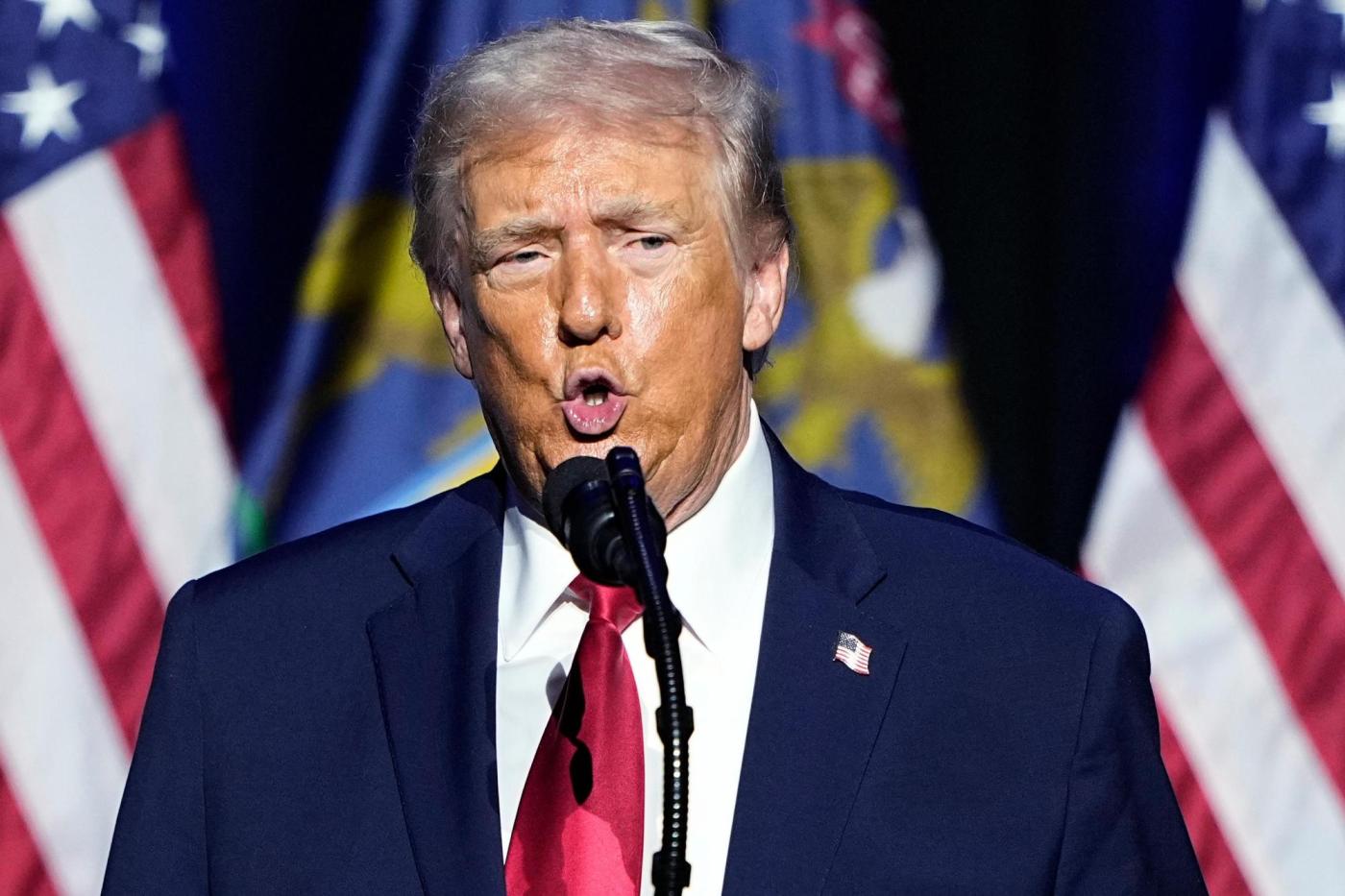
WASHINGTON (AP) — President Donald Trump on Thursday announced the outlines of a health care plan he wants Congress to take up as Republicans have faced increasing pressure to address rising health costs and a jump in insurance premiums after lawmakers let subsidies expire.
Related Articles
Judge hands offshore wind industry another victory against Trump in clearing way for NY project
Press freedom advocates worry that raid on Washington Post journalist’s home will chill reporting
Final day to select ACA health plans arrives in most states, with no subsidy deal yet
Trump set to meet Venezuelan opposition leader after cozying up to Maduro’s successor
Democrats propose state laws to limit ICE after Minneapolis shooting of Renee Good
The White House said Trump’s plan would codify his efforts to lower drug prices by tying prices to the lowest price paid by other countries.
The cornerstone is his proposal to send money directly to Americans for health savings accounts so they can bypass the federal government and handle insurance on their own. Democrats have rejected the idea as a paltry substitute for covering the high costs of health care.
“The government is going to pay the money directly to you,” Trump said in a taped video the White House released to announce the plan. “It goes to you and then you take the money and buy your own health care.”
It was not immediately clear if any lawmakers in Congress were working to introduce the Republican president’s plan.
The idea mirrors one floated among Republican senators last year. Democrats have largely rejected this idea, saying the accounts would not be enough to cover costs for most consumers.
Enhanced tax credits that helped reduce the cost of insurance for the vast majority of Affordable Care Act enrollees expired at the end of 2025 even though Democrats had forced a 43-day government shutdown over the issue.
Sen. Bernie Moreno, R-Ohio, has been leading a bipartisan group of 12 senators trying to devise a compromise that would extend those subsidies for two years while adding new limits on who can receive them. That proposal would create the option, in the second year, of a health savings account that Trump and Republicans prefer.
Trump said his plan will seek to bring down premiums by fully funding cost-sharing reductions, or CSRs, a type of financial help that insurers give to low-income “Obamacare” enrollees on silver-level, or mid-tier plans.
From 2014 until 2017, the federal government reimbursed insurance companies for CSRs. In 2017, the first Trump administration stopped making those payments. To make up for the lost money, insurance companies raised premiums for silver-level plans. That ended up increasing the financial assistance many enrollees got to help them pay for premiums.
As a result, health analysts say that while restoring money for CSRs would likely bring down silver-level premiums, as Trump says, it could have the unwelcome ripple effect of increasing many people’s net premiums on bronze and gold plans.