
Pregnancy care was always lacking in jails. It could get worse

posted in: News | 0

Renuka Rayasam | (TNS) KFF Health News

It was about midnight in June 2022 when police officers showed up at Angela Collier’s door and told her that someone anonymously requested a welfare check because they thought she might have had a miscarriage.

Standing in front of the concrete steps of her home in Midway, Texas, Collier, initially barefoot and wearing a baggy gray T-shirt, told officers she planned to see a doctor in the morning because she had been bleeding.

Police body camera footage obtained by KFF Health News through an open records request shows that the officers then told Collier — who was 29 at the time and enrolled in online classes to study psychology — to turn around.

Instead of taking her to get medical care, they handcuffed and arrested her because she had outstanding warrants in a neighboring county for failing to appear in court to face misdemeanor drug charges three weeks earlier. She had missed that court date, medical records show, because she was at a hospital receiving treatment for pregnancy complications.

Despite her symptoms and being about 13 weeks pregnant, Collier spent the next day and a half in the Walker County Jail, about 80 miles north of Houston. She said her bleeding worsened there and she begged repeatedly for medical attention that she didn’t receive, according to a formal complaint she filed with the Texas Commission on Jail Standards.

“There wasn’t anything I could do,” she said, but “just lay there and be scared and not know what was going to happen.”

Collier’s experience highlights the limited oversight and absence of federal standards for reproductive care for pregnant women in the criminal justice system. Incarcerated people have a constitutional right to health care, yet only a half-dozen states have passed laws guaranteeing access to prenatal or postpartum medical care for people in custody, according to a review of reproductive health care legislation for incarcerated people by a research group at Johns Hopkins School of Medicine. And now abortion restrictions might be putting care further out of reach.

Collier’s arrest was “shocking and disturbing” because officers “blithely” took her to jail despite her miscarriage concerns, said Wanda Bertram, a spokesperson for the Prison Policy Initiative, a nonprofit organization that studies incarceration. Bertram reviewed the body cam footage and Collier’s complaint.

Instead of taking Angela Collier to get medical care when they arrived at her home for a wellness check, police handcuffed and arrested her because she had outstanding warrants in a neighboring county for failing to appear in court to face misdemeanor drug charges three weeks earlier. (Screen grab of body camera footage from the Madison County Sheriff’s Office/KFF Health News/TNS)

“Police arrest people who are in medical emergencies all the time,” she said. “And they do that regardless of the fact that the jail is often not equipped to care for those people in the way an emergency room might be.”

After a decline during the first year of the pandemic, the number of women in U.S. jails is once again rising, hitting nearly 93,000 in June 2022, a 33% increase over 2020, according to the Department of Justice. Tens of thousands of pregnant women enter U.S. jails each year, according to estimates by Carolyn Sufrin, an associate professor of gynecology and obstetrics at Johns Hopkins School of Medicine, who researches pregnancy care in jails and prisons.

The health care needs of incarcerated women have “always been an afterthought,” said Dana Sussman, deputy executive director at Pregnancy Justice, an organization that defends women who have been charged with crimes related to their pregnancy, such as substance use. For example, about half of states don’t provide free menstrual products in jails and prisons. “And then the needs of pregnant women are an afterthought beyond that,” Sussman said.

Researchers and advocates worry that confusion over recent abortion restrictions may further complicate the situation. A nurse cited Texas’ abortion laws as one reason Collier didn’t need care, according to her statement to the standards commission.

Texas law allows treatment of miscarriage and ectopic pregnancies, a life-threatening condition in which a fertilized egg implants outside the uterus. However, different interpretations of the law can create confusion.

A nurse told Collier that “hospitals no longer did dilation and curettage,” Collier told the commission. “Since I wasn’t hemorrhaging to the point of completely soaking my pants, there wasn’t anything that could be done for me,” she said.

Angela Collier testifies before the Texas Commission on Jail Standards in November 2022. Collier’s case highlights the limited mandatory oversight and absence of federal standards for reproductive care for pregnant women in the criminal justice system, say advocates for prisoner rights. (Krishnaveni Gundu/KFF Health News/TNS)

Collier testified that she saw a nurse only once during her stay in jail, even after she repeatedly asked jail staffers for help. The nurse checked her temperature and blood pressure and told her to put in a formal request for Tylenol. Collier said she completed her miscarriage shortly after being released.

Collier’s case is a “canary in a coal mine” for what is happening in jails; abortion restrictions are “going to have a huge ripple effect on a system already unequipped to handle obstetric emergencies,” Sufrin said.

‘There Are No Consequences’

Jail and prison health policies vary widely around the country and often fall far short of the American College of Obstetricians and Gynecologists’ guidelines for reproductive health care for incarcerated people. ACOG and other groups recommend that incarcerated women have access to unscheduled or emergency obstetric visits on a 24-hour basis and that on-site health care providers should be better trained to recognize pregnancy problems.

In Alabama, where women have been jailed for substance use during pregnancy, the state offers pregnancy tests in jail. But it doesn’t guarantee a minimum standard of prenatal care, such as access to extra food and medical visits, according to Johns Hopkins’ review.

Policies for pregnant women at federal facilities also don’t align with national standards for nutrition, safe housing, and access to medical care, according to a 2021 report from the Government Accountability Office.

Even when laws exist to ensure that incarcerated pregnant women have access to care, the language is often vague, leaving discretion to jail personnel.

Since 2020, Tennessee law has required that jails and prisons provide pregnant women “regular prenatal and postpartum care, as necessary.” But last August a woman gave birth in a jail cell after seeking medical attention for more than an hour, according to the Montgomery County Sheriff’s Office.

Pregnancy complications can quickly escalate into life-threatening situations, requiring more timely and specialized care than jails can often provide, said Sufrin. And when jails fail to comply with laws on the books, little oversight or enforcement may exist.

In Louisiana, many jails didn’t consistently follow laws that aimed to improve access to reproductive health care, such as providing free menstrual items, according to a May 2023 report commissioned by state lawmakers. The report also said jails weren’t transparent about whether they followed other laws, such as prohibiting the use of solitary confinement for pregnant women.

Krishnaveni Gundu, as co-founder of the Texas Jail Project, which advocates for people held in county jails, has lobbied for more than a decade to strengthen state protections for pregnant incarcerated people.

In 2019, Texas became one of the few states to require that jails’ health policies include obstetrical and gynecological care. The law requires jails to promptly transport a pregnant person in labor to a hospital, and additional regulations mandate access to medical and mental health care for miscarriages and other pregnancy complications.

But Gundu said lack of oversight and meaningful enforcement mechanisms, along with “apathy” among jail employees, have undermined regulatory protections.

“All those reforms feel futile,” said Gundu, who helped Collier prepare for her testimony. “There are no consequences.”

Angela Collier works on her laptop the evening before her testimony to the Texas Commission on Jail Standards in November 2022. Collier was about 13 weeks pregnant when police came to her home in 2022 for a wellness check; an anonymous caller worried she may have had a miscarriage, an officer told her. Instead of taking Collier for medical care, the police arrested her on outstanding warrants. (Krishnaveni Gundu/KFF Health News/TNS)

Before her arrest, Collier had been to the hospital twice that month experiencing pregnancy complications, including a bladder infection, her medical records show. Yet the commission found that Walker County Jail didn’t violate minimum standards. The commission did not consider the police body cam footage or Collier’s personal medical records, which support her assertions of pregnancy complications, according to investigation documents obtained by KFF Health News via an open records request.

In making its determination, the commission relied mainly on the jail’s medical records, which note that Collier asked for medical attention for a miscarriage once, in the morning on the day she was released, and refused Tylenol.

“Your complaint of no medical care is unfounded,” the commission concluded, “and no further action will be taken.”

Collier’s miscarriage had ended before she entered the jail, argued Lt. Keith DeHart, jail lieutenant for the Walker County Sheriff’s Office. “I believe there was some misunderstanding,” he said.

Brandon Wood, executive director of the commission, wouldn’t comment on Collier’s case but defends the group’s investigation as thorough. Jails “have a duty to ensure that those records are accurate and truthful,” he said. And most Texas jails are complying with heightened standards, he said.

Bertram disagrees, saying the fact that care was denied to someone who was begging for it speaks volumes. “That should tell you something about what these standards are worth,” she said.

Last year, Chiree Harley spent six weeks in a Comal County, Texas, jail shortly after discovering she was pregnant and before she could get prenatal care, she said.

I was “thinking that I was going to be well taken care of,” said Harley, 37, who also struggled with substance use.

Jail officials put her in the infirmary, Harley said, but she saw only a jail doctor and never visited an OB-GYN, even though she had previous pregnancy complications including losing multiple pregnancies at around 21 weeks. This time she had no idea how far along she was.

She said that she started leaking amniotic fluid and having contractions on Nov. 1, but that jail officials waited nearly two days to take her to a hospital. Harley said officers forced her to sign papers releasing her from jail custody while she was having contractions in the hospital. Harley delivered at 23 weeks; the baby boy died less than a day later in her arms.

The whole experience was “very scary,” Harley said. “Afterwards we were all very, very devastated.”

Comal County declined to send Harley’s medical and other records in response to an open records request. Michael Shaunessy, a partner at McGinnis Lochridge who represents Comal County, said in a statement that, “at all times, the Comal County Jail provided Chiree Harley with all appropriate and necessary medical treatment for her and her unborn child.” He did not respond to questions about whether Harley was provided specialized obstetric care.

‘I Trusted Those People’

In states like Idaho, Mississippi, and Louisiana that installed near-total abortion bans after the Supreme Court eliminated the constitutional right to abortion in 2022, some patients might have to wait until no fetal cardiac activity is detected before they can get care, said Kari White, the executive and scientific director of Resound Research for Reproductive Health.

White co-authored a recent study that documented 50 cases in which pregnancy care deviated from the standard because of abortion restrictions even outside of jails and prisons. Health care providers who worry about running afoul of strict laws might tell patients to go home and wait until their situations worsen.

“Obviously, it’s much trickier for people who are in jail or in prison, because they are not going to necessarily be able to leave again,” she said.

Advocates argue that boosting oversight and standards is a start, but that states need to find other ways to manage pregnant women who get caught in the justice system.

For many pregnant people, even a short stay in jail can cause lasting trauma and interrupt crucial prenatal care.

Collier remembers being in “disbelief” when she was first arrested but said she was not “distraught.”

“I figured I would be taken care of, that nothing bad was gonna happen to me,” she said. As it became clear that she wouldn’t get care, she grew distressed.

After her miscarriage, Collier saw a mental health specialist and started medication to treat depression. She hasn’t returned to her studies, she said.

“I trusted those people,” Collier said about the jail staff. “The whole experience really messed my head up.”

___

(KFF Health News, formerly known as Kaiser Health News (KHN), is a national newsroom that produces in-depth journalism about health issues and is one of the core operating programs of KFF — the independent source for health policy research, polling and journalism.)

©2024 KFF Health News. Distributed by Tribune Content Agency, LLC.
The best time for high CD rates might be right now

posted in: News | 0

By Spencer Tierney | NerdWallet

The investing information provided on this page is for educational purposes only. NerdWallet, Inc. does not offer advisory or brokerage services, nor does it recommend or advise investors to buy or sell particular stocks, securities or other investments.

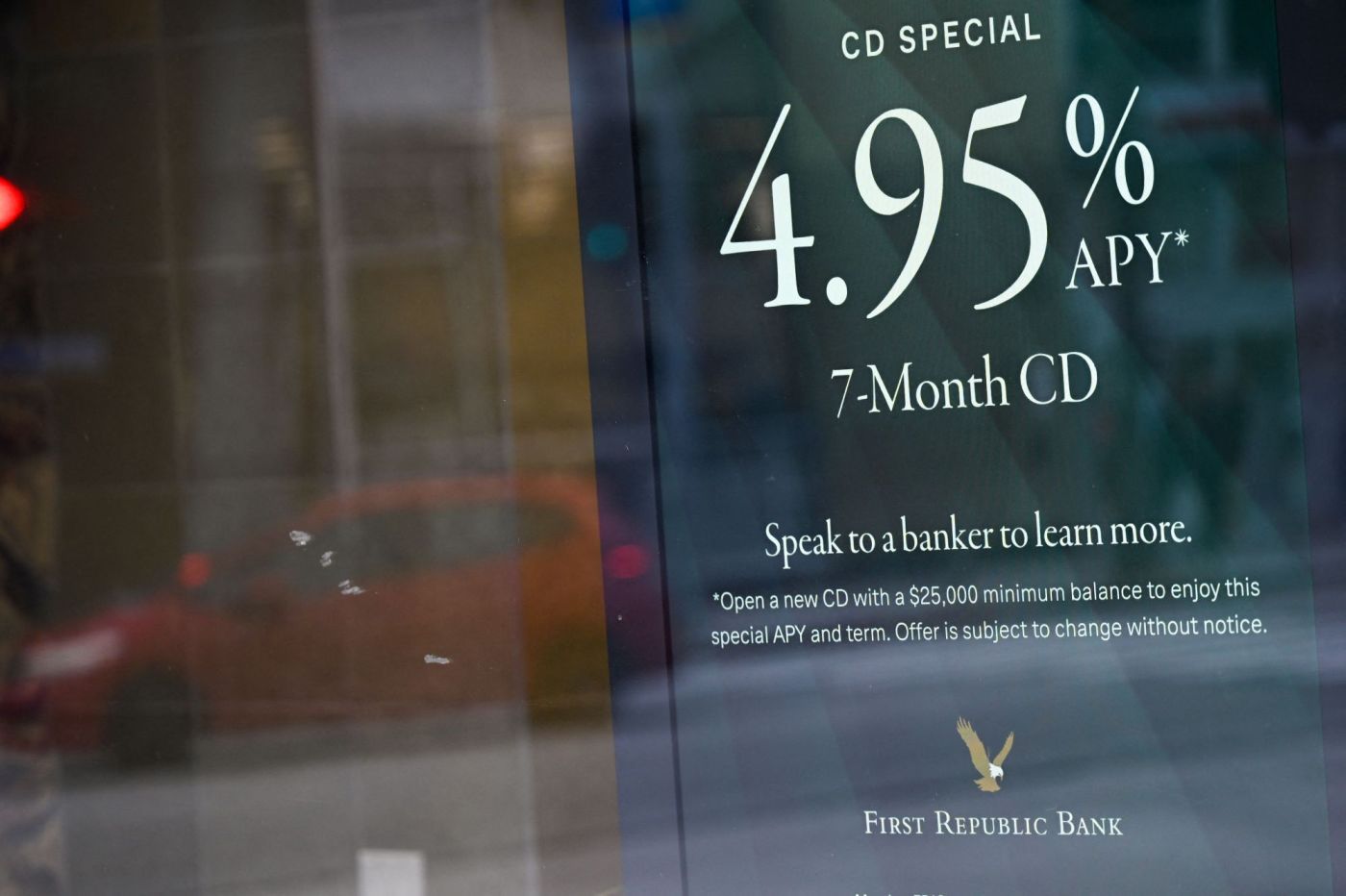
Competitive rates on certificates of deposit have started to dip this year. If that trend continues, you might have a savings decision to make: Should you lock in CD rates now or wait?

Yields on savings accounts and CDs are some of the highest in more than a decade — above 5% at best, as of mid-February — but there are signs that these rates may not last. CDs are federally insured like savings accounts are, but their rates are fixed for the term you choose, generally from three months to five years.

Getting a CD with a yield multiple percentage points higher than the national average might be a boost for some of your savings.

CD rates: Their rise — and slow fall?

Since March 2022, the Federal Reserve raised its benchmark interest rate 11 times to curb inflation. Banks and credit unions generally take their cue to follow the direction of Fed rate changes. As a result, the highest CD rates soared from below 1% in January 2022 to their current heights of above 4% or 5% depending on term length. In contrast, CDs’ national average rates have remained below 2%.

However, CD yields might’ve peaked. The Fed’s last rate increase was in July 2023, and the Fed expects to begin rate cuts this year, according to its mid-December projections. But it’s unclear when.

“We expect that the Fed will lower its benchmark rate later in 2024, as early as March, but more likely, markets indicate later in the year, perhaps at a meeting this summer,” Rob Williams, managing director of financial planning at Charles Schwab, said in an email. Market rates for new brokered CDs longer than one-year terms have fallen modestly in part due to the expectation of rate cuts, he said.

High-yield CD rates outside brokerages have also seen dips. Nearly two dozen online banks and credit unions started dropping rates incrementally across many CD terms from December 2023 to January 2024, according to a NerdWallet analysis. For example, the midpoint for one-year CD rates in this group dropped from 5.10% to 5.00% since September 2023, while five-year CD rates stayed the same.

Traditionally, savers can expect that the higher the CD term, the higher the rate you can get. But this trend hasn’t been the case since January 2023 when short-term CDs, such as one-year rates, surpassed long-term CDs (such as five-year rates), based on NerdWallet data.

“Markets aren’t expecting a dramatic drop in rates in 2024, but for investors looking to lock in short-term rates now, it’s likely a good time,” Williams said.

The time and place for CDs

CDs can be best for earmarking funds for a large upcoming purchase, such as a car or home, or to maintain a guaranteed return for some of the cash portion of your investments.

Related Articles

Business |


How solo agers, those older people without children, can prepare for later years

Business |


What’s the difference between a $3 bottle of wine and a $300 bottle? 10 value-focused recommendations.

Business |


Nearly 25% of US pet owners insure their pets. Should you?

Business |


The new FAFSA: Here’s what you need to know before applying for federal student aid for the 2024-25 academic year

Business |


The best things to buy at Costco are daily essentials, not TVs

Since you give up access to funds during a CD’s term, CDs aren’t for everyday savings or an emergency fund. Withdrawing early from a CD usually means paying a penalty of at least several months of interest. CDs also don’t have the highest returns, so they’re not for long-term savings to grow your money, such as for retirement. Top CD yields are higher than the current inflation rate of 3.1%, so using CDs to protect some savings from inflation is possible now — but not always.

“A diversified portfolio of stocks, backed up by the stability and diversification of cash and bonds, based on an investor’s time horizon and risk tolerance, has generally been the most effective way to outpace inflation over time,” Williams said.

Choosing where you open CDs is important, too. Online banks and online credit unions tend to have some of the best CD rates and are generally accessible to anyone in the U.S. CDs at investment firms, known as brokered CDs, can offer competitive yields, but you need a brokerage account and some investing know-how to navigate the buying process. Community credit unions can have high yields too, but watch for membership restrictions and minimum or maximum deposit requirements.

Big traditional banks tend to have some of the lowest CD rates. They might offer promotional CDs with unusual terms such as seven or 13 months. Read the fine print since these CDs can automatically renew into more standard terms with lower rates.

Hedging bets instead of timing CDs

If you’re hoping for a crystal ball to know how much and how soon CDs will fall, don’t hold your breath. Even the first Fed rate cut may depend on inflation.

“That January [inflation] report was not reassuring that inflation is coming down and [so] it may be sticky, staying higher for longer,” says Daniel Talley, professor of economics and statistics at Dakota State University. “If inflation sticks around, then that means that could push out further when we can expect the Fed to lower rates.”

One strategy that takes the pressure off timing CDs is a CD ladder, which consists of opening several CDs of staggered term lengths such as one-year, two-year and three-year terms. You can redeem CDs at regular intervals and decide each time whether to renew in a long-term CD or withdraw. Given current rates, though, you might shorten your ladder, such as terms of three, six and nine months and one year, to take advantage of the highest yields.

If juggling multiple CDs sounds complicated, you can also open a no-penalty CD, allowing you to redeem early, then choose another CD or a different investment.

Compare CDs with other options

For regular access to funds, consider high-yield savings accounts while rates remain high. For comparable and stable returns to CDs, but more investing knowledge required, there are Treasury bills and bonds, which are backed by the full faith and credit of the U.S. government. Williams sees money market funds, which hold Treasury bills and other short-term, low-risk investments, as another cash investment option that can sell generally within 24 hours to access cash.

If your short-term goals align best with CDs, consider locking in high rates sooner rather than later.


Spencer Tierney writes for NerdWallet. Email: spencer.tierney@nerdwallet.com.

State wrestling tournament primer

posted in: News | 0

The high school wrestling state tournament will take over downtown St. Paul for the next three days, with the team state tournament taking place Thursday and the individual tournament playing out over the course of Friday and Saturday before individual champs across three classes are crowned Saturday night. All competition will be held at Xcel Energy Center.

Action can be streamed at https://prep.spotlight.tv/MSHSL

Here are East Metro teams and individuals to watch:

TEAMS

Class 2A

No. 1 Simley

Hastings’ Blake Beissel holds up the first place trophy after defeating St. Michael-Albertville to win the Class 3A team championship of the State Wrestling Tournament at Xcel Energy Center in St. Paul on Thursday, March 2, 2023. (Craig Lassig / Special to the Pioneer Press)

Class 3A

No. 1 Mounds View, No. 4 Hastings (defending champion), Apple Valley and Forest Lake

BOYS INDIVIDUALS

(those ranked in the top three of their respective weight classes by The Guillotine)

Class 2A

Simley’s Turner Ross (107), Simley’s Austin Grzywinski (114), Simley’s Cash Raymond (152), Mahtomedi’s Evan McGuire (189)

Class 3A

Eagan’s Dylan St. Germain (107), Stillwater’s Joe Dauffenbach (107), St. Thomas Academy’s Grayson Eggum (114, son of Gophers coach Brandon Eggum), Mounds View’s Brett Swenson (114), Hastings’ Blake Beissel (121), Hastings’ Trey Beissel (127), Farmington’s Davis Parrow (139), Apple Valley’s Jayden Haueter (139), Woodbury’s Alex Braun (145), Mounds View’s Apollo Ashby (152), Woodbury’s Brad Little (152), Mounds View’s Colton Loween (160), Mounds View’s Ethan Swenson (172), Farmington’s Cole Han-Lindemyer (189), Mounds View’s Quin Morgan (215), Lakeville North’s Antonio Menard (215), Forest Lake’s Mark Rendl (285), Stillwater’s Cito Tuttle (285)

GIRLS INDIVIDUALS

(those ranked in the top three of their respective weight classes by The Guillotine)

One-class tournament

Apple Valley’s Hanah Schuster (112), Simley’s Charli Raymond (118), Apple Valley’s Andrea Quinones (124), Rosemount’s Kamdyn Saulter (124), Eastview’s Riley Myers (130), Centennial’s Nora Akpan (130), Apple Valley’s Cassy Gonzales (136), Stillwater’s Audrey Rogotzke (142), Hastings’ Skylar Little Soldier (148), Apple Valley’s Esperanza Calvillo (148), Roseville’s Alyzabeth Hiler (155), Apple Valley’s Grace Alagbo (170), Forest Lake’s Nas’Jarae White (170), Eastview’s Elsie Olson (170), Apple Valley’s Gloriann Vigniavo (190), Humboldt’s Brantajia Loggins (190)

How solo agers, those older people without children, can prepare for later years

posted in: News | 0

Q. As a single woman in my late 70s with no children or grandchildren, I worry. Who will be there for me when I need someone – particularly if I need care? Also, as the years go by, I am increasingly uncomfortable when friends go to great lengths to tell stories about their children and share their photos. I am happy for them but feel like an outsider. Any suggestions? G.T.

Solo aging is an often overlooked topic. The term refers to singles or couples without children or other family support. AARP designates 50 as the qualifying age. The concern about care in later life is based on reality. Among those age 65 and older, 70 percent will need care at some point. However, 30 percent are unlikely to need care. Unfortunately, it is nearly impossible to determine which percentage will apply to which individual. 

I recently had the opportunity to speak with Sara Zeff Geber, author of “Essential Retirement Planning for Solo Agers: A Retirement and Aging Roadmap for Single and Childless Adults” (Mango, 2018). She advocates to “plan, form and maintain a community that becomes one’s support network.” And geography matters. Social networks evolve around where one lives. In our mobile society, families often live far away. Those in our network can help with a trip to the grocery store, a ride to an appointment, or assist with technology. See the Village movement as a support network in later life: https://www.vtvnetwork.org/

The other important task is to create directives. This gives someone the decision-making power to ensure that we live our future-older lives the way we want particularly if unwilling or unable to make decisions for ourselves. 

An advanced directive is a legal document that provides instructions for medical care that goes into effect if persons cannot communicate their wishes. The second legal document is a durable power of attorney that gives a person authority to manage one’s financial affairs and healthcare if unable (or unwilling) to manage them.

Geber says solo agers “often bury their heads in the sand” when an attorney asks for the names of individuals that will be named in the legal documents. She suggests considering a niece or nephew or a son or daughter of family-like friends and cultivating these relationships early on. 

Then there is the decision of where to live. Economics matter. Those with the financial resources might consider moving into a community that assures them care for the rest of their lives. These are called Continuing Care Communities that offer options for independent living, assisted living and memory care. Costs are based on amenities, floor plan, contract type, and location. 

Affordable options continue to be developed. One example is the 2Life Communities in the Boston area. Their communities are aimed at lower– and middle-income boomers, all designed with the belief that everyone deserves to live a life of stability, purpose, and connection. 

Shared housing is another option. Think of “The Golden Girls.” You might ask someone to share your home or consider moving into someone else’s home. Silvernest is a matching service that can facilitate an arrangement anywhere in the country. 

Another option is creating an ADU, which are legal auxiliary dwelling units on a property with an existing home. Then there is co-housing, “an intentional, collaborative neighborhood that combines private homes with shared indoor and outdoor spaces designed to support an active and interdependent community.” 

Geber writes a warning in a Forbes article about “The Cost of Denial,” stating: “Without good planning and foresight, one cardiac incident, one moment of disorientation that leads to a fall, one cancer diagnosis (and so much more) can lead to months or even years of being shuttled around from one unpleasant nursing home to the next, possibly even being rendered a ward of the court. No one wants that!

Empowerment is key. Each of us, with or without children, wants to have some control over how we live our later years. We need to exercise that power, taking the initiative and assuming the responsibility. 

A final comment about feeling like an outsider. As one solo ager said to me, “I feel outside the cultural norm. It seems normal to have a dog, kids or a partner, but not to be a solo ager.” Perhaps all of us can be more sensitive to the fact we are not all the same and realize that some may not be able to relate to grandchild experiences. At the same time, solo agers can seek out those with similar life circumstances. 

Thank you, G.T., for your good question. Stay well and know small acts of kindness can change the world.

Helen Dennis is a nationally recognized leader on issues of aging and the new retirement with academic, corporate and nonprofit experience. Contact Helen with your questions and comments at Helendenn@gmail.com. Visit Helen at HelenMdennis.com and follow her on facebook.com/SuccessfulAgingCommunity